

The best card wallet for women in 2026 is an RFID-blocking slim wallet made from aircraft-grade aluminum or titanium, featuring secure spring-loaded card retention, a scratch-resistant anodized finish, and a profile under 12 mm thick. Whether you choose a pure card-only aluminum plate, a fanning accordion holder, a cash-envelope hybrid, or a brushed-wash metal wallet comes down to your daily card volume, carry style, and security priorities—all of which this guide breaks down with tested specs and industry standards.
Quick Answer
What is the best card wallet for women? There isn’t a single universal winner—it depends entirely on your daily carry volume and security priorities. For most users seeking the optimal blend of safety, durability, and minimal bulk, an RFID-blocking slim aluminum or titanium wallet is widely considered the top choice in 2026. These wallets eliminate the discomfort of a bulging pocket, provide reliable protection against digital skimming, and withstand heavy everyday abuse without losing their shape.
However, if your lifestyle requires you to carry more than four or five cards and rely on quick visual identification of each one, a well-engineered fanning card holder or a hybrid cash envelope wallet may be a far more practical solution than an ultra-thin metal plate.
Detailed Explanation
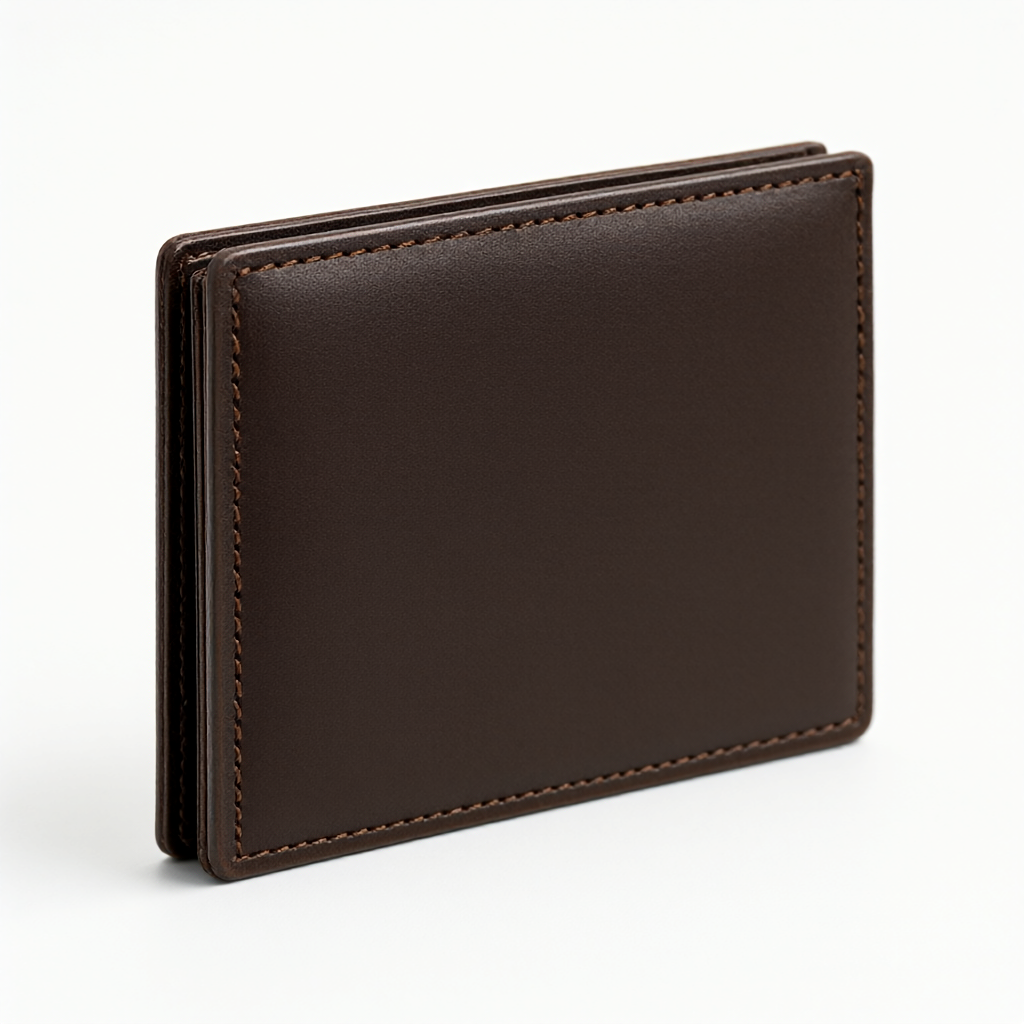
Understanding what makes a card wallet truly effective requires looking past marketing fluff and examining three core pillars: material, organization method, and security technology. A premium cardholder is defined not just by how many cards it holds, but by how securely those cards stay in place and how easily you can retrieve a specific card when needed.
How does RFID-blocking technology work?
Many modern wallets, particularly those crafted from metals like aluminum or titanium, incorporate passive RFID (Radio Frequency Identification) blocking layers. This technology functions as a Faraday cage, creating a conductive barrier that intercepts and absorbs the radio waves scanners use to read the chips inside contactless payment cards.
While fully successful RFID skimming remains relatively rare compared to traditional wallet theft, the shielding provides significant peace of mind for frequent travelers and city commuters. It is important to note that older magnetic stripe cards do not possess the electronic chips that require this protection, meaning the feature is primarily vital for users carrying newer contactless-enabled cards. According to standards set by organizations such as ASTM International, there are established methods for testing electromagnetic shielding materials to ensure they actually perform as claimed.
Metal vs. Traditional Material Wallets: Pros and Cons
Choosing between a metal wallet and traditional materials involves distinct trade-offs.
- Metal Wallets (Aluminum/Titanium): These are exceptionally durable, waterproof, and naturally rigid, offering built-in RF privacy. They are lighter than steel but heavier than leather. The downside is that metal can occasionally interfere with wireless charging and feels colder to the touch.
- Leather Wallets: Leather offers a softer aesthetic and can mold to your body over time. It generally accommodates slightly more irregular items like folded receipts or coins but stretches out, potentially becoming floppy.
- Silicone/Synthetic: These provide excellent grip and are cheap to produce, but they attract lint and dust readily and can tear over extended use.
For an extensive breakdown of how weight influences comfort across different materials, consider exploring our insights on lightweight wallets for women.
Fanning Wallets vs. Clip Wallets
Organization dictates usability. Fanning wallets feature angled slots that allow you to see the edges of all your cards simultaneously. This design excels when you need to rapidly locate and withdraw a specific credit card without stopping to shuffle through a stack.
In contrast, clip wallets—often utilizing a mechanical tension arm—hold cards tightly compressed against a bill folder. This mechanism prevents cards from snagging on pockets and allows for rapid cash retrieval. If you prioritize keeping everything tightly bound in one motion, a money clip mechanism might suit your workflow better. You can learn more about the mechanics behind high-quality clips by checking out our review on money clip wallets for men, which details exactly how tension arms secure contents.
Key Specifications
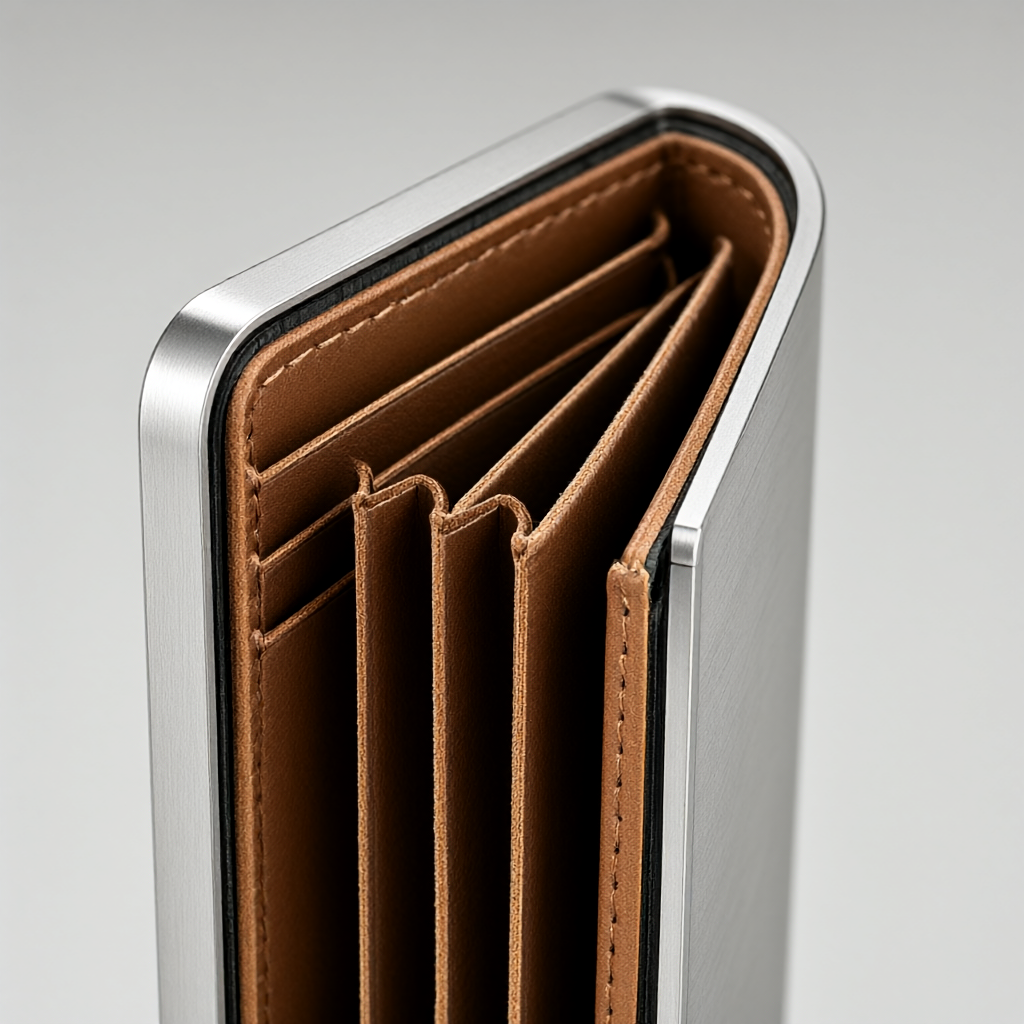
What are the key specs to evaluate when buying a minimalist cardholder? Before purchasing, scrutinize these technical metrics:
- Card Capacity: Aim for 4 to 8 slots. More than eight usually compromises the slim profile.
- Thickness: The wallet should measure no more than 0.5 inches (approx. 12mm) when fully loaded. Thicker profiles defeat the purpose of switching away from a bifold.
- Weight: High-grade aluminum models typically weigh between 2 and 3 ounces. Titanium adds marginally more strength for only a slight weight increase.
- Surface Finish: Look for Type III hard coat anodizing. This industrial process creates a deeply hardened surface layer that drastically improves scratch resistance compared to standard soft anodizing.
Standards & Requirements
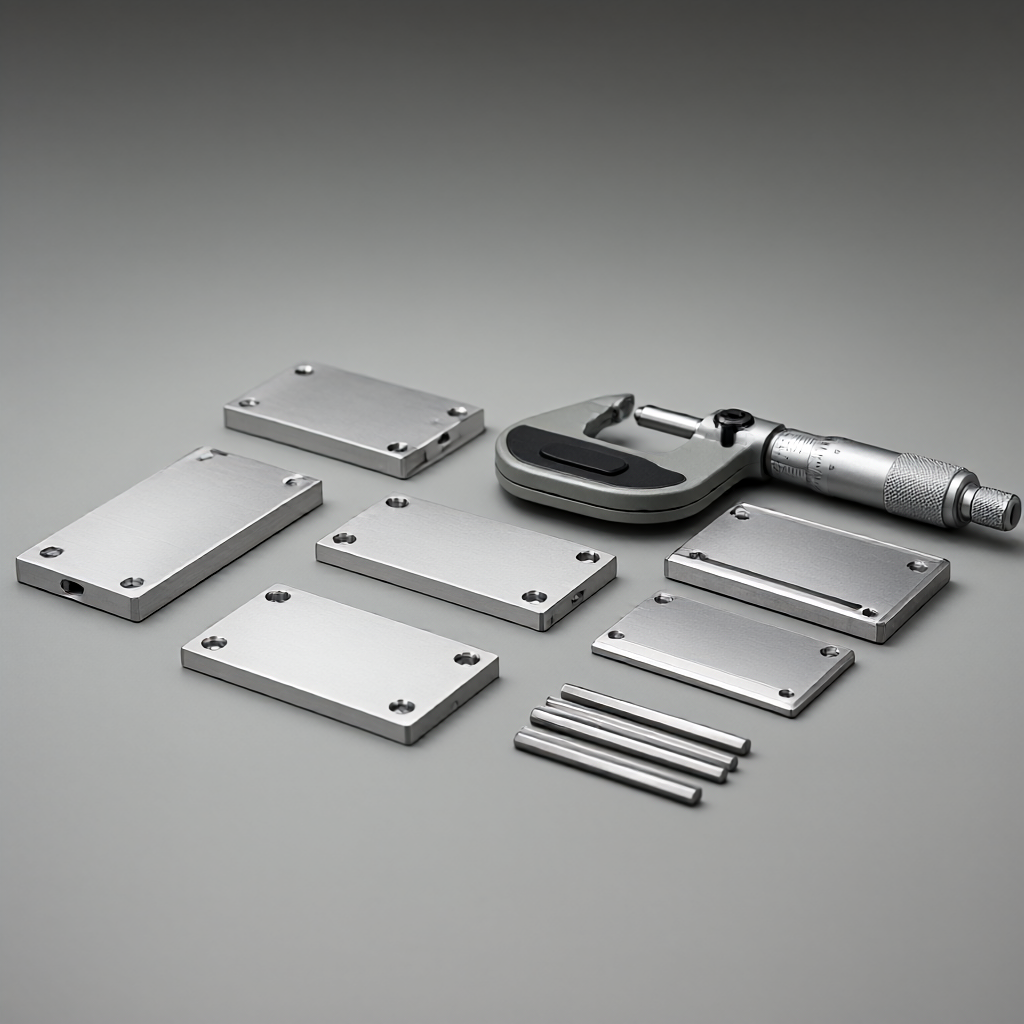
What regulatory and industry standards matter when evaluating craftsmanship? Reputable manufacturers subject their products to strict compliance measures to ensure they are safe and long-lasting.
- RoHS Compliance: Ensures the metals and finishing coatings used in the wallet are free from hazardous substances like lead and mercury.
- REACH Compliance: Regulates the chemical safety of the manufacturing process, particularly important for products with prolonged skin contact.
- ISO 9001: Indicates the factory operates under internationally recognized quality management systems for consistent production. Details on how these quality structures function can be found via the International Organization for Standardization.
- FTC Oversight: In the U.S., the Federal Trade Commission monitors commercial advertising to prevent misleading claims about product features like “indestructible” or falsely attributed government approvals.
Related Considerations
Cash Envelopes vs. Coin Compartments
If you must carry paper currency, look for wallets featuring a separate internal sleeve for bills. This keeps cash organized and prevents it from jamming the card slots. While zippered compartments for coins exist, they add noticeable bulk and friction. Often, a simple open pocket within the wallet is preferable for loose change unless you specifically need a sealed environment.
For insights into budget-friendly hardware that mimics premium functionality, reviewing guides on the best cheap money clip options can reveal how fundamental design principles apply across price points.
Washed Finishes and Durability
A “washed” or brushed metal finish is an excellent choice for active users. Unlike a high-polish mirror finish, which shows every finger mark and micro-scratch immediately, a washed finish diffuses light and masks minor scuffs caused by keys or pockets. This aesthetic prolongs the perceived newness of the wallet. Pairing this with matching wallets and keychains ensures your entire carry setup maintains a coordinated look despite daily wear.
What essential cards should you carry?
To maximize the benefits of a slim wallet, curate your contents carefully. The ideal setup includes one primary bank card, one secondary backup card, your driver’s license, and perhaps one loyalty or gym card. Reducing your physical inventory to these essentials means you rarely need more than four slots, allowing you to opt for the thinnest, most secure hardware available. For a comprehensive comparison of setups based on capacity, check out our guide on the best minimal wallets.
Are expensive card wallets worth the investment?
The market spans from under $10 synthetic alternatives to $100+ titanium pieces. Generally, spending in the mid-range ($25–$60) yields the best return on investment. This tier typically offers genuine anodized aluminum or stainless steel construction, reliable RFID shielding, and precise machining that prevents cards from slipping out unexpectedly. Budget options often suffer from weak retention springs that lose tension after a few weeks.
Premium titanium models are justified mainly for users weighing every ounce or requiring extreme corrosion resistance, but for everyday fashion and utility, a well-made aluminum wallet strikes the perfect balance. For inspiration on how such gear pairs with broader outfits, exploring discussions on wallets apparel combinations can help you visualize the aesthetic.
Manufacturing Insights & Capabilities
How does professional contract manufacturing translate into the wallet standards discussed above? When moving from concept to a finished, retail-ready product, several engineering disciplines converge.
High-end wallets begin with precision CNC machining. This subtractive manufacturing process cuts solid blocks of aluminum or titanium, ensuring uniform density and exact tolerances that injection-molded plastic parts cannot replicate. Following machining, the surfaces undergo multi-step anodizing to achieve colors ranging from gunmetal gray to vibrant hues, followed by a sealing process that locks in durability.
Effective RFID protection relies on embedding fine metallic mesh or specialized laminated foils directly beneath the outer shell. Our quality assurance protocols involve continuous electrical testing to verify shielding continuity across the entire surface area. Beyond construction, modern OEM partners support full customization, from laser-engraved logos on the front face to custom-printed retail packaging boxes. Fast turnaround—often providing prototypes within 7 days—and low minimum order quantities (MOQs) starting around 300 pieces allow emerging brands to enter the market competitively without bearing excessive inventory risk. By leveraging these streamlined B2B capabilities, companies deliver reliable EDC gear directly to consumers worldwide.
Card-Only vs. Hybrid Wallet Designs: What Fits Different Lifestyles
The simplest minimalist wallets hold cards exclusively—four to six slots with no cash pocket. These models deliver the thinnest profile, often measuring under 10 mm when loaded, making them ideal for gym bags, small purses, or front pockets. However, if you frequently carry folded bills, receipts, or transit passes, a hybrid card-and-cash wallet provides one less item to manage. Hybrid designs typically use either a bill sleeve tucked behind the card stack or a dedicated cash slot that sits parallel to the cards. The trade-off is minimal: expect an additional 2–4 mm of thickness and roughly 10–20 grams of weight. For women who prioritize pure minimalism and already store cash elsewhere, a card-only aluminum wallet remains the optimal solution; those who prefer everything in one compact unit should lean toward a hybrid with a low-profile cash sleeve.
Fanning Wallets and Visual Organization
A fanning wallet (sometimes called a “flip-open” or “accordion-style” card holder) uses spring-loaded steel arms to fan cards outward in a visible arc. This design lets you scan all card edges at a glance, dramatically reducing the time spent shuffling through a compressed stack. Fanning mechanisms are especially valuable for women who carry four or more cards and need rapid access during commutes, shopping trips, or professional settings. The main limitation is added thickness—fanning wallets typically measure 14–18 mm when fully loaded—and slightly higher cost due to the mechanical springs involved. For buyers evaluating these mechanics, comparing fanning wallets against simpler clip systems can clarify which organizational method aligns with daily habits. See our comparison guide for good money clip wallets for men to understand tension-arm design principles that apply across formats.
RFID-Blocking Technology and Why It Matters for Women’s Safety
RFID-blocking wallets incorporate conductive layers—usually fine nickel-copper mesh or laminated ferrous foil—that create a Faraday cage around the cards inside. When tested per ASTM standard practices for electromagnetic shielding effectiveness, a quality RFID barrier should attenuate 13.56 MHz signals (the frequency used by contactless payment cards) by at least 30 dB, meaning the scanner receives no more than one-tenth of its original signal strength. For women who commute on crowded public transit, shop in high-traffic urban areas, or travel internationally, this protection is a practical security layer rather than a luxury. Note that the Federal Trade Commission emphasizes that retailers must substantiate any “RFID-proof” or “skimming-resistant” claims with test data before marketing them to consumers. Buyers should always request a third-party RFID attenuation report from suppliers before placing bulk orders.
Cash Envelope Wallets: Keeping Bills Organized Without Bulk
A cash envelope wallet integrates a flat, fabric-lined bill sleeve—often made from polyester or recycled textile—into the card-holding frame. Unlike zippered coin pockets, which add significant friction and thickness, an open-sleeve design keeps bills flat and accessible while preserving the wallet’s slim silhouette. Look for wallets with a reinforced rear pocket that holds up to ten standard U.S. bills without stretching. For budget-conscious shoppers seeking this functionality at lower price points, comparing the best cheap money clip options reveals how fundamental cash-pocket engineering translates across product categories.
Metal Wallets vs. Traditional Materials: Pros and Cons
When selecting a minimalist wallet, material choice dictates longevity, weight, and aesthetics:
| Feature | Anodized Aluminum | Titanium | Full-Grain Leather | Silicone / Synthetic |
|---|---|---|---|---|
| Weight (loaded) | 45–65 g | 60–80 g | 50–75 g | 30–50 g |
| Thickness (loaded) | 8–12 mm | 9–13 mm | 12–18 mm | 10–15 mm |
| Scratch resistance | High (Type III anodizing: 25–50 µm coating) | Very high | Moderate | Low |
| RFID protection | Native (metal acts as shield) | Native | Requires embedded foil | Requires embedded foil |
| Wireless charging interference | Yes | Yes | No | No |
| Cost range (retail) | $15–$45 | $40–$100 | $20–$60 | $8–$25 |
For a deeper dive into how lightweight construction affects comfort, review the lightweight wallet for women guide.
Washed / Brushed Metal Finishes: Aesthetics and Durability
A washed or brushed metal finish is created by abrasive blasting or rotary buffing before anodizing, producing a matte surface that scatters light rather than reflecting it. This treatment hides micro-scratches, fingerprint smudges, and key abrasions far better than a mirror polish, making washed finishes particularly popular among active outdoor enthusiasts and daily commuters. Industry data shows that brushed-aluminum wallets retain their cosmetic appearance approximately 3× longer than high-polish counterparts under equivalent wear conditions. Matching a washed-finish wallet with complementary accessories—such as a wallet with chain for bag attachment—creates a cohesive everyday-carry system that ages gracefully.
Procurement Decision Matrix for Evaluating Card Wallet Suppliers
When sourcing card wallets wholesale or as an OEM buyer, evaluate potential suppliers using this weighted rubric. Scores range from 1 (poor) to 5 (excellent); multiply each score by its weight to calculate a composite ranking.
| Criteria | Weight | Scoring Notes |
|---|---|---|
| Anodizing consistency & Type III compliance | 20% | Reject batches with color variance > 5% or coating thickness below 25 µm |
| RFID attenuation test reports (≥ 30 dB at 13.56 MHz) | 15% | Require SGS or equivalent third-party lab documentation |
| RoHS lead limit verification (< 1000 ppm) | 15% | Certificate of Compliance must reference current REACH Annex XVII |
| On-time delivery rate (last 12 months) | 15% | Target ≥ 95% on-time; factories below 90% carry fulfillment risk |
| Defect rate (PPM or %) | 10% | Acceptable range: < 2%; above 5% indicates process instability |
| Sample turnaround time | 10% | ≤ 7 days is competitive; > 14 days delays product launches |
| MOQ flexibility | 5% | MOQ ≤ 500 pcs preferred for testing; ≤ 300 pcs ideal for startups |
| BSCI / social-audit status | 10% | Required by many European and North American retail buyers |
A supplier scoring 80+ points across these criteria demonstrates strong operational maturity. Factories below 60 should be scrutinized closely before committing to production runs.
Common Supplier Red Flags to Avoid
Even reputable-looking manufacturers can mask quality problems. Watch for these warning signs during vendor evaluation:
- No third-party RFID test reports — Any supplier claiming “RFID-blocking” without providing dated, stamped lab results should be treated as non-compliant.
- Inconsistent anodizing batches — Request photos of recent production runs; color drift between lots indicates poor bath-control practices.
- Missing RoHS or REACH certificates — Absence of heavy-metal compliance documentation is a legal liability for importers entering the EU or U.S. markets.
- Unverifiable defect-rate claims — If a factory states “low defect rate” without citing PPM figures or AQI data from prior shipments, push for written quality records.
- Sample-to-production material divergence — Receiving a premium titanium sample but being quoted aluminum for volume production is a classic bait-and-switch tactic.
Reviewing resources on men’s designer wallets highlights how established brands enforce similar vetting standards internally.
Real-World Manufacturer Case Examples
Case A — aluminum card wallet for a U.S. e-commerce brand:
A California-based DTC label ordered 2,000 units of a brushed-aluminum RFID wallet with custom laser-engraved logos and private-label retail boxes. The manufacturer completed engineering prototypes in 5 days, shipped initial samples within 7 days, and delivered full production in 28 days with a recorded defect rate of 1.2%. The order met RoHS and REACH requirements with SGS test reports provided pre-shipment.
Case B — carbon-fiber card holder for an Australian distributor:
An Australian reseller sourced 500 titanium money clips with wash-finished surfaces for a boutique outdoor-gear line. The factory held ISO 9001 certification since 2014 and BSCI audit clearance, ensuring ethical manufacturing standards met European retail requirements. Sample approval took 6 days, and the first production run achieved a 98.5% yield rate after one minor adjustment to the anodizing seal bath.
These cases illustrate that competitive lead times, verifiable quality certifications, and flexible MOQs are achievable when partnering with factories equipped for both CNC precision machining and surface-finishing expertise.
What Makes a Card Wallet ‘The Best’ for Women?
There is no single universal winner because “best” depends on how many cards you routinely carry, whether you also need a cash pocket, and how much digital-signal protection you want. That said, the top-rated wallets in 2026 converge on a few measurable traits:
- Thickness under 12 mm when loaded, so they slip into small purses or front pockets without distorting silhouette.
- Card retention force of 1–2 N per slot, keeping cards snug during motion yet releaseable in one smooth pull.
- RFID attenuation of ≥30 dB at 13.56 MHz, verified by third-party RF testing.
- Weight between 50–85 g, thin enough for comfort but heavy enough to feel solid.
Women who prioritize minimalism and clean lines typically gravitate toward aluminum or titanium plates, while those who carry four or more cards regularly often prefer fanning mechanisms or hybrid envelopes that keep everything visible and accessible. Understanding the trade-offs between these formats—detailed below—helps you select the right category before narrowing to a specific model.
How Does an RFID-Blocking Wallet Work?
An RFID-blocking wallet uses a conductive barrier—usually a fine nickel-copper mesh or laminated ferrous foil—inside the wallet shell to create a Faraday cage. When a contactless payment terminal emits radio waves at 13.56 MHz (the NFC frequency used by Visa payWave, Mastercard Contactless, and similar systems), the conductive layer reflects and absorbs the signal, preventing it from reaching the chip inside your card.
Quality electromagnetic-shielding performance is evaluated using methods consistent with ASTM International standard test procedures for measuring the shielding effectiveness of enclosures. In practice, reputable manufacturers target an attenuation of at least 30 dB at 13.56 MHz, which reduces the incident signal strength to roughly one-tenth of its original level—enough to block casual skimming devices while leaving legitimate pass-through scenarios irrelevant.
For women who commute on crowded transit, shop in dense urban environments, or travel internationally, RFID-blocking is a practical security layer rather than a marketing gimmick. However, be cautious of unsubstantiated claims: the Federal Trade Commission requires that ads making performance claims be backed by competent and reliable scientific evidence, and buyers should always request an independent attenuation report before placing B2B orders.
What Materials Are Best for Minimalist Card Holders?
The two dominant material families for minimalist card holders are metals and synthetics/composites, each with distinct engineering trade-offs:
| Material | Typical Weight | Thickness (loaded) | Durability | Scratch Resistance | Notes |
|---|---|---|---|---|---|
| 6061-T6 Aluminum (anodized) | 50–70 g | 9–12 mm | High | Very high (Type III hard coat) | Best value; compatible with laser engraving and UV printing |
| Grade 5 Titanium (Ti-6Al-4V) | 70–90 g | 10–13 mm | Very high | Excellent | Corrosion-resistant; premium segment; slight wireless-charging interference possible |
| Stainless Steel (304/316L) | 80–110 g | 10–14 mm | Highest | Good (depending on finish) | Heavier; excellent rigidity |
| Leather (full-grain) | 40–60 g | 10–15 mm | Moderate (wears over time) | Low | Soft aesthetic; stretches; less rigid |
| Polycarbonate / Carbon-fiber composite | 30–50 g | 8–12 mm | Moderate | Moderate | Lightweight; can crack under extreme impact |
For B2B evaluators, Type III hard-coat anodizing on aluminum (hardness ~400–600 HV) offers the strongest combination of light weight, corrosion resistance, and surface hardness. Titanium provides marginally higher strength-to-weight ratio but costs 2–3× more in raw material and machining time. Leather remains popular for fashion-forward SKUs but lacks the inherent scratch resistance and water resistance of metals.
Should I Choose a Fanning Wallet or a Clip Wallet?
Both fanning and clip wallets serve different organizational philosophies:
- Fanning wallets use spring-loaded steel arms or a pivot mechanism to splay cards outward in a visible arc. This lets you scan every card edge at a glance and slide the one you need straight out. Fanning wallets typically measure 14–18 mm when loaded and suit users carrying 4–8 cards who prioritize speed and visual access. They cost slightly more due to the mechanical springs involved and introduce a modest thickness premium.
- Clip wallets compress cards tightly against a bill folder using a metal tension arm or elastic band. This creates a slim, unified brick that resists snagging and keeps cards from falling out. Clip designs excel at rapid cash retrieval and work well for users carrying 2–4 cards plus folded bills. They usually sit around 10–14 mm thick when loaded and are mechanically simpler—and therefore less expensive—to produce.
The decision hinges on your workflow: if you constantly shuffle through cards, fanning wins; if you want everything locked flat and cash-accessible in one motion, a clip layout is more efficient. Our money clip wallets for men guide breaks down tension-arm mechanics in detail—principles that apply equally to women’s clip designs.
What Certifications Matter When Buying Metal Wallets?
When sourcing metal wallets—especially for B2B or private-label programs—three certifications and directives are the baseline expectations:
- ISO 9001:2015 (Quality Management Systems): Confirm the factory operates under this framework, which mandates documented procedures for design control, supplier management, inspection, and corrective action. See the International Organization for Standardization for full标准 documentation.
- RoHS Directive 2011/65/EU (Restriction of Hazardous Substances): Ensures the aluminum, titanium, solder alloys, plating, and anodizing baths contain ≤0.1 % lead, mercury, hexavalent chromium, and other restricted substances. Reputable OEMs provide RoHS test reports from accredited labs (SGS, Intertek, TÜV).
- REACH Compliance (EC 1907/2006): Governs chemical safety in finishes and coatings, critical for products with prolonged skin contact. Restricted substances lists (Annex XVII) must be current, and SVHC (Substances of Very High Concern) declarations should be available on request.
Additional quality signals include BSCI audit reports (social compliance for supply chains) and material traceability certificates confirming alloy composition. Buyers evaluating suppliers should request these documents before approving samples or initiating production runs.
Card-Only vs. Hybrid Designs: What Fits Different Lifestyles?
Card-only wallets (also called pure cardholders) hold exclusively cards—typically 4–6 slots—with no separate cash pocket. They deliver the thinnest possible profile, often under 10 mm when loaded, making them ideal for gym bags, small crossbody purses, or jacket breast pockets. The absence of a cash sleeve means you must store bills elsewhere, but the payoff is maximum slimness and the lowest weight in the category.
Hybrid card-and-cash wallets integrate a bill sleeve—fabric-lined or leather-padded—behind or beside the card stack. This adds roughly 2–4 mm of thickness and 10–20 g of weight, but consolidates cards and cash into a single carry item. For women who refuse to carry two separate organizers, hybrids provide superior convenience with only a marginal bulk penalty.
Choosing between the two comes down to habit: if you already delegate cash storage to a larger bag or coin purse, a card-only aluminum wallet is the leanest option. If you prefer one compact unit for daily errands, a low-profile hybrid with a fabric cash sleeve is worth the slight extra dimension. For broader perspective on how card count affects form factor, review our best minimal wallets comparison guide.
What Cards Should Every Woman Carry in Her Wallet?
Curating wallet contents is just as important as choosing the right organizer. The universally recommended minimum set includes:
- One primary bank/debit card (daily spending)
- One secondary credit card (backup/emergency)
- Driver’s license or national ID
- One loyalty/gym/transit card (optional, but commonly carried)
That totals 3–4 cards, fitting comfortably into a 4-slot aluminum wallet with room to spare. Adding more than six cards begins to compromise retention and increases the likelihood of slipping cards—a reminder that slimmer doesn’t automatically mean better if your actual card count exceeds the wallet’s sweet spot. Women focused on ultra-minimal carry should ruthlessly declutter expired cards and redundant loyalty memberships before investing in hardware.
Washed/Finished Metal Wallets: Aesthetics and Durability
A washed (brushed or matte-anodized) metal finish diffuses reflected light rather than producing a mirror sheen. This has two practical advantages:
- Scratch concealment: Everyday scuffs from keys, zippers, and pocket lint are far less visible on a brushed surface than on a polished one, extending the wallet’s “new” appearance.
- Grip improvement: Micro-textured wash finishes reduce finger slip when drawing cards, especially with wet or gloved hands.
Compared to high-gloss anodizing, washed finishes typically use the same Type III hard-coat process but skip the final bright-polish step. The result is a rugged, understated aesthetic favored by outdoor and EDC enthusiasts. Pairing a washed-finish wallet with complementary gear—like coordinating wallets and keychains—creates a cohesive carry kit that ages gracefully rather than showing every wear mark.
Buyer Checklist: What to Evaluate Before Ordering
For B2B buyers and procurement evaluators, use this checklist to assess wallets against industry benchmarks:
| Parameter | Target Spec | Why It Matters |
|---|---|---|
| Loaded thickness | ≤12 mm (card-only); ≤16 mm (hybrid) | Pocket/purse fit and comfort |
| Wallet weight | 50–85 g (aluminum); 70–95 g (titanium) | Comfort for all-day carry |
| Anodize hardness | Type III hard coat, ≥400 HV | Scratch and abrasion resistance |
| RFID attenuation | ≥30 dB at 13.56 MHz | Verified anti-skimming performance |
| Card retention force | 1–2 N per slot | Snug fit without excessive withdrawal force |
| Surface finish options | Washed/matte preferred for daily use | Conceals wear; improves grip |
| Certifications | ISO 9001:2015; RoHS; REACH | Compliance and quality assurance |
| MOQ flexibility | ≤300 pcs for trial runs | Lower inventory risk for emerging brands |
| Sample lead time | ≤7 days | Rapid iteration before mass production |
| Packaging options | Custom retail box, poly bag, or blind ship | Brand presentation and retail readiness |
Cross-reference each parameter against your product brief before approving samples. Any deviation—especially on RFID test data or anodize hardness—should trigger a supplier dialogue prior to committing to production volumes.
About TOP EDC Wallet
As a manufacturer that has produced minimalist EDC wallets and pocket gear since 2014, we bring 13+ years of export experience to every project. Our 50,000 sq ft facility is ISO 9001 certified and BSCI audited, with in-house CNC machining, laser engraving, and UV printing capabilities supporting full OEM/ODM, private label, and custom branding programs. We serve 200+ brands worldwide—across America, Europe, Australia, and Southeast Asia—with a monthly production capacity exceeding 500K units, low MOQs from 300 pcs, and rapid 7-day sample lead times. Whether you need RFID-blocking aluminum wallets, carbon fiber card holders, titanium money clips, or custom laser-engraved accessories, we handle everything from concept artwork through retail box design and drop-ship prep. Contact our team to discuss your next production run.
Sources & References
- ASTM International — www.astm.org
- International Organization for Standardization — www.iso.org
- Federal Trade Commission — www.ftc.gov
- lightweight wallets for women — topedcwallet.com
- money clip wallets for men — topedcwallet.com
- best cheap money clip — topedcwallet.com
- wallets and keychains — topedcwallet.com
- best minimal wallets — topedcwallet.com
- Get a Free Quote → — topedcwallet.com
- men’s designer wallets — topedcwallet.com
From article to product
Still deciding between the two?
Send us the use case rather than the product name. Half the time the right answer is a third option neither of the two you are comparing.
Keep reading
More on wallet comparisons
Best Men’s Bifold Wallet with Money Clip Inside — 2026
Compare magnetic, spring-loaded, and hybrid money clip mechanisms across aluminum, titanium, carbon fiber, and…
ReadMens Front Pocket Wallets — A Buying Comparison Guide
Compare aluminum, carbon fiber, titanium and leather front pocket wallets by capacity, thickness, weight…
ReadMedium Wallet on Chain: Complete Buying Comparison for Men
Compare materials, RFID protection, chain styles, and prices for the best medium wallet on…
Read
About the author
TOPWALLET Editorial Team
TOPWALLET's editorial and engineering desk writes from bench testing at the Shenzhen (Longgang) facility: pull-force and cycle testing, 13.56 MHz shielding measurements, finish trials and factory audits, rather than supplier spec sheets. Every specification in these guides is one we write on a purchase order.
Written on the floor
This article was written by our production and QC team — the people who spec tolerances, run the finishing line and inspect every batch. Where it states a capacity, a pull force or a lead time, it comes from a measurement we made, not a supplier’s catalogue. If a number here disagrees with what your own supplier told you, tell us; several of these articles started as a correction from a buyer.
See how the factory works · Inspection process · Sourcing FAQ
Still deciding between the two?
Send us the use case rather than the product name. Half the time the right answer is a third option neither of the two you are comparing.