

What Is a Lightweight Wallet for Women?
A lightweight wallet for women is a pocket or bag carry designed to reduce bulk while still holding the essentials — cards, cash, and sometimes a small key or coin compartment. In 2026, most buyers in this category are trading traditional bifolds and clutch-style purses for slimmer profiles that fit comfortably in fitted jeans, tote bags, or compact crossbody purses without digging into pockets.
The defining feature is weight reduction combined with a smaller footprint. Typical weights range from under 50 grams for slim metal and card-holder styles up to around 120 grams for slightly larger designs with zippers or multi-card layouts. Weight matters less than it used to because modern materials — carbon fiber, anodized aluminum, Tyvek, technical fabrics — make light carrying feel durable rather than flimsy.
When shopping for a lightweight wallet for women, the decision usually comes down to three trade-offs: capacity versus thinness, material durability versus scratch visibility, and minimalist design versus organizational features like coin compartments or RFID protection. Understanding these trade-offs helps narrow the search before comparing specific styles.
Which Lightweight Wallet Types Suit Women?
Five types dominate: metal card holder, carbon fiber slim, canvas zip, RFID security wallet, and continental.
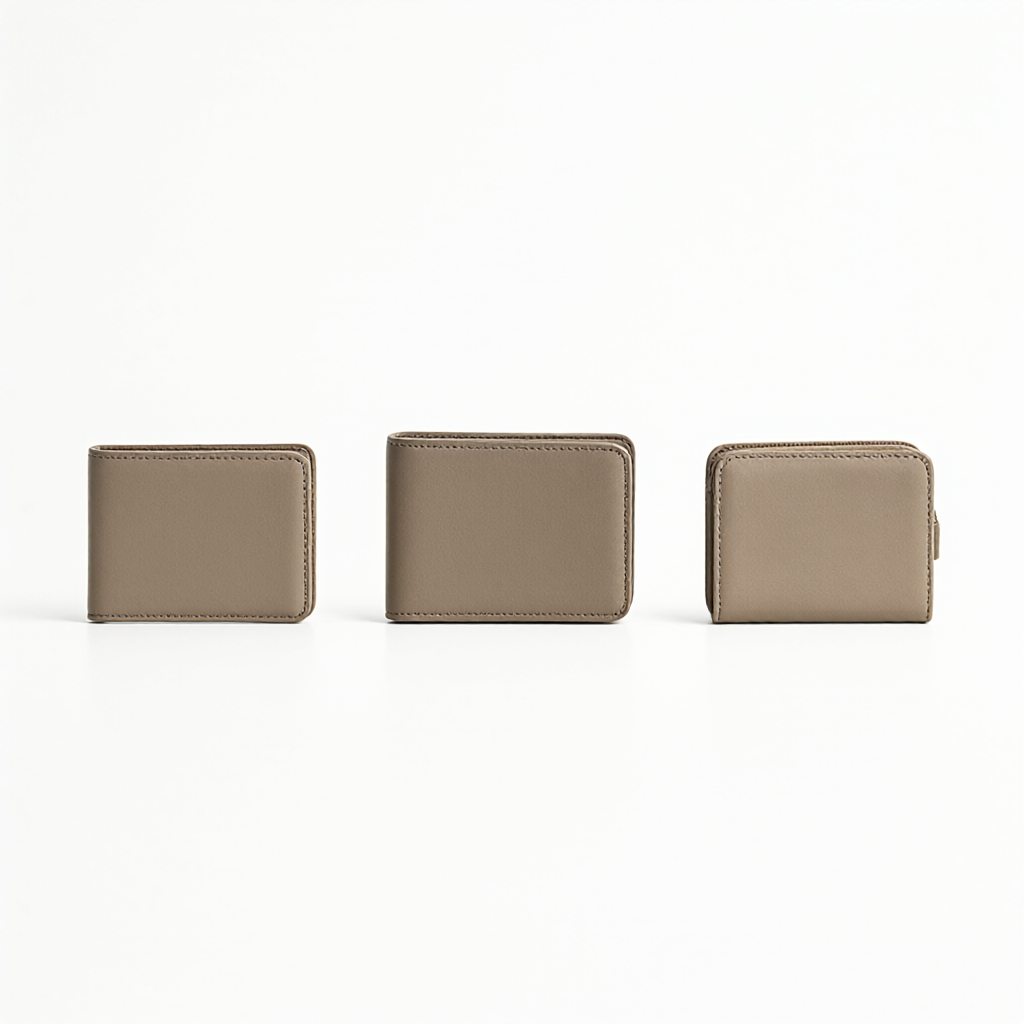
Different construction approaches create distinct categories, each suited to different routines. Below are the most common types buyers encounter in 2026.
What type is best for daily hands-free carry?
Card holders and slim bi-fold wallets are the dominant choice for everyday use. These typically hold 4–12 cards, a few bills folded lengthwise, and sometimes a small ID window. Styles in aluminum or carbon fiber often weigh between 40–70 grams. They suit shoppers who carry minimal items and prioritize pocket comfort over organized storage. For more on minimalist wallets generally, see our minimalist wallets guide.
When does a zip compartment matter?
Small wallets for women with zipper add a secured pocket for coins, receipts, or spare change. The zipper mechanism adds weight — usually 20–40 grams extra — and increases thickness slightly. This style remains popular when buyers want one compact item instead of switching to a separate coin pouch. Look for YKK or equivalent quality zippers; cheap zippers are the first component to fail in thin wallets.
Which option works for travelers?
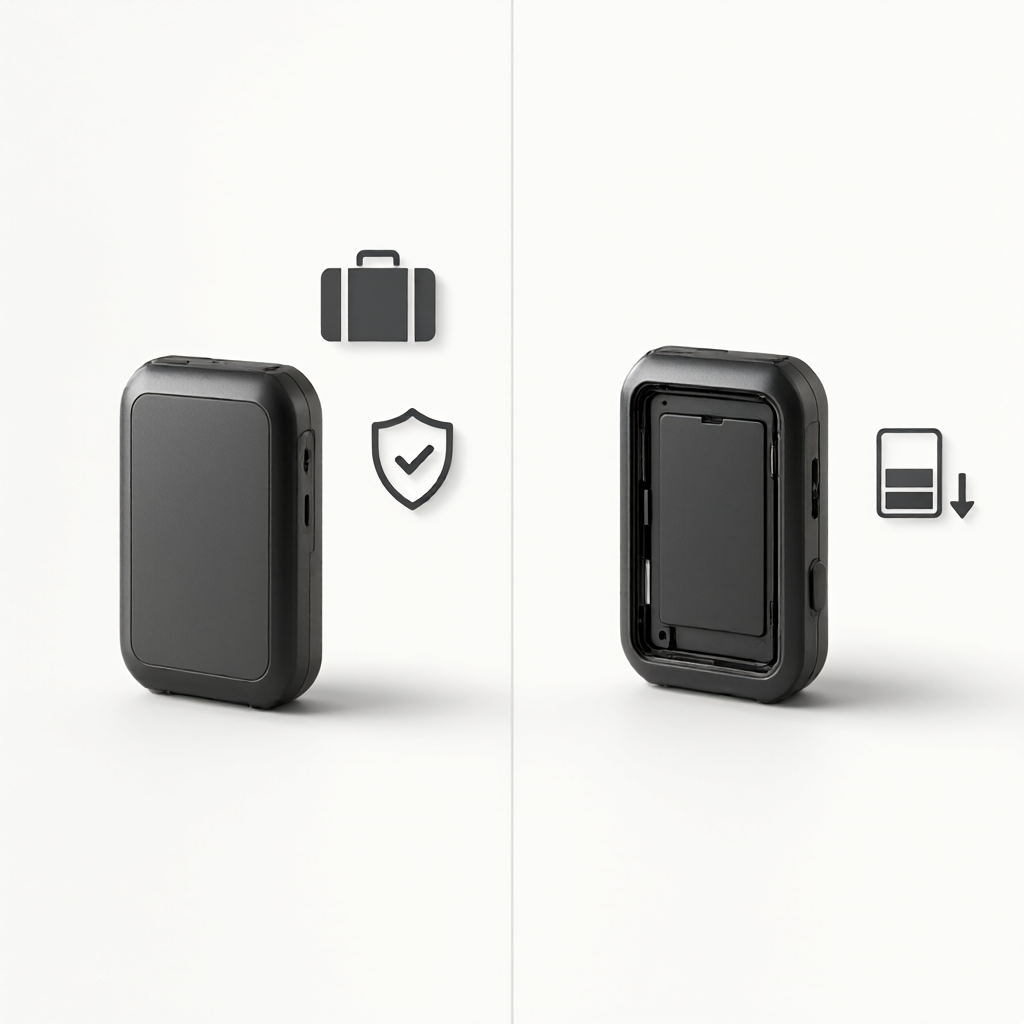
Security wallets for women typically combine RFID-blocking layers, hidden pockets, and slash-resistant materials. These are heavier than standard card holders but provide peace of mind for commuters and travelers. RFID-protected wallets have become mainstream in 2026 due to widespread contactless payment adoption and heightened awareness of digital pickpocketing.
What fits a larger card collection?
Continental wallets for women offer more card slots and bill compartments than slim styles but remain lighter than traditional long clutches. They are a middle ground for buyers who need organization without bulk. If you rely on multiple cards and prefer keeping everything in one place, this style deserves a closer look.
How Do Lightweight Wallets for Women Compare?
Compare weight, card capacity, closure type, and RFID coverage, not just silhouette.
| Category | Approx. Weight | Card Capacity | Notable Feature | Best For |
|---|---|---|---|---|
| Slim card holder (metal) | 40–70 g | 4–8 cards | Ultra-thin, pocket-friendly | Minimalists |
| Carbon fiber wallet | 50–80 g | 4–12 cards | Durable, scratch-resistant | Everyday carry |
| Zip-front small wallet | 60–100 g | 4–10 cards + coin pocket | Secured compartments | Active lifestyles |
| Canvas/fabric wallet | 50–90 g | 4–10 cards | Soft texture, budget-friendly | Casual use |
| RFID-blocking security wallet | 70–120 g | 6–14 cards + hidden pockets | Contactless payment protection | Travelers |
| Continental style | 80–130 g | 10–18 cards + bill slots | More organization, moderate bulk | Daily organizers |
| Designer luxury ladies wallet | 100–180 g | Varies by brand | Brand identity, premium materials | Style-focused buyers |
Which Factors Matter When Buying a Lightweight Wallet?
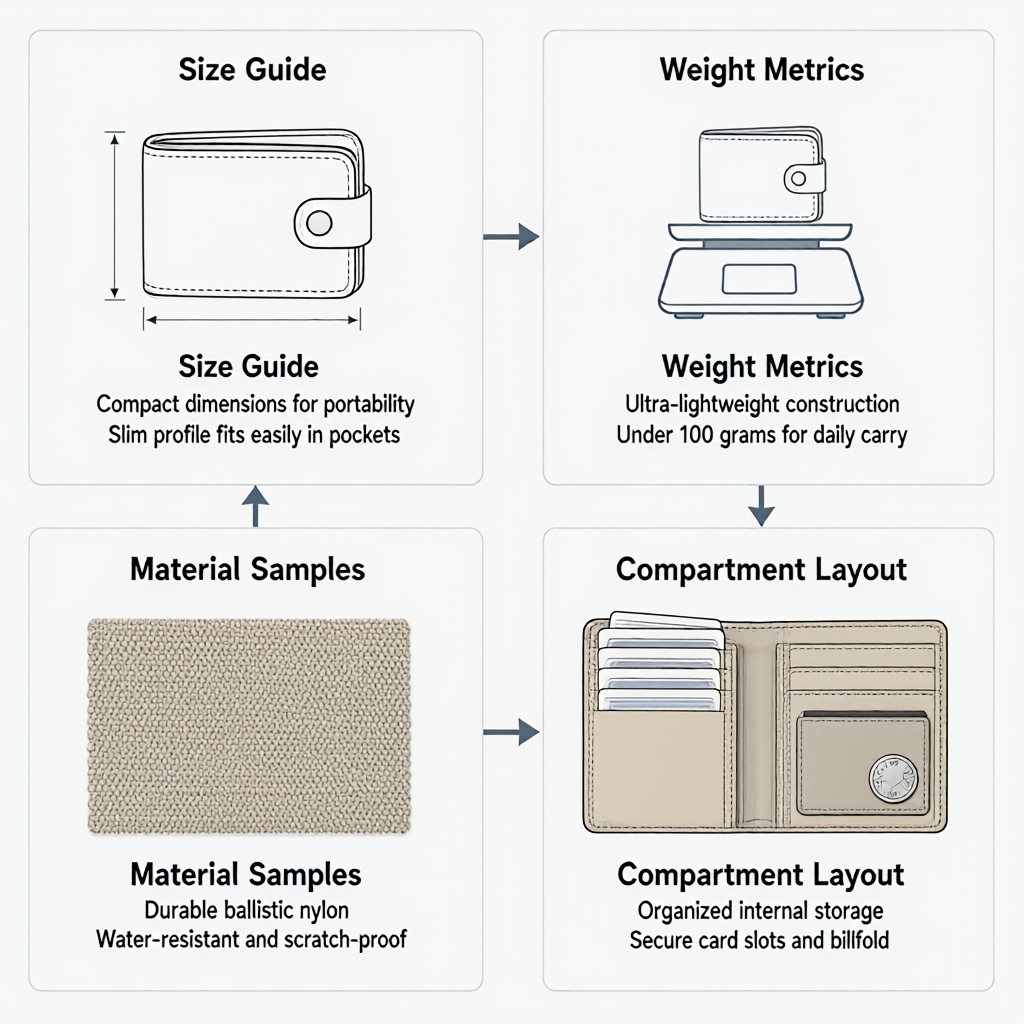
Choosing the right lightweight wallet for women involves balancing several practical factors. The order of importance shifts depending on how you carry your wallet daily, but most buyers settle on material, dimensions, and organizational needs as their primary filters.
What material should I choose?
Material determines both feel and longevity. Here are the most relevant options:
Aluminum wallets offer a smooth, cool-to-touch surface that resists deformation. Anodized finishes add color options and improve scratch resistance. Expect these to show fingerprints more than textured alternatives. Aluminum wallets work well for buyers who prefer clean lines and easy cleaning.
Carbon fiber wallets combine low weight with high strength. The woven pattern provides grip and hides minor scratches better than polished metals. These are popular among outdoor-oriented users who also carry them to work. See our physical vs digital wallets guide for broader context on wallet selection trends.
Canvas and fabric wallets for women deliver soft textures at lower price points. They are prone to staining and wear faster than synthetic or metal constructions, but they come in many patterns including floral prints that appeal to fashion-conscious buyers. If you prefer a soft feel and don’t mind replacing the wallet every one to two years, fabric remains a sensible choice.
Leather wallets fall outside strict lightweight territory unless specifically engineered. Vegetable-tanned or full-grain leather can be pressed thin, but even slim leather versions tend to weigh 90–150 grams. For care guidance, refer to our leather wallet care guide.
How important is size?
Wallet dimensions directly affect pocket comfort and bag compatibility. Most small wallets for women measure between 300–115 mm in width and 70–85 mm in height when closed. Exact measurements vary by manufacturer, so consult dimension charts when possible. Our wallet size guide breaks down typical measurement ranges across product categories.
Height matters as much as width. A taller wallet holds longer bills folded once instead of twice, reducing card pressure. Conversely, shorter wallets sit higher in back pockets, which some buyers find uncomfortable during sitting. Test your preferred pocket depth before committing to a specific dimension.
Should I prioritize RFID blocking?
RFID-blocking material adds roughly 10–20 grams and a slight increase in thickness. It shields contactless cards and passports from unauthorized scanning. While actual risk depends on your environment, the technology has become affordable enough that many 2026 models include it as standard. If you frequently travel through crowded transit hubs or attend large events, RFID protection is a reasonable addition. You can learn more in our card-safe wallet buyer’s guide.
Does a zipper add real value?
Zippers on small zip wallets for women serve a genuine function: securing loose items that would otherwise fall out. The trade-off is added complexity. Cheap zippers jam or separate after months of use. Quality zippers cost more to produce and raise the retail price. Inspect zipper pulls for smooth operation and check whether the track is reinforced at stress points.
What Do Lightweight Wallets for Women Cost?
Price ranges vary significantly by material, brand positioning, and production volume. Below are typical market segments for a lightweight wallet for women in 2026.
Budget tier ($8–$20): Canvas, basic fabric, and entry-level aluminum styles dominate this range. Floral patterns and printed designs often appear here. Quality control varies widely, and components like zippers may lack durability testing. This tier suits casual buyers who replace wallets frequently or prioritize aesthetics over longevity.
Mid tier ($20–$50): The strongest value band. Carbon fiber, quality anodized aluminum, and well-finished leather styles occupy this space. RFID protection, branded hardware, and consistent quality control become standard. Most private-label and direct-from-manufacturer pricing lands in this range. Brands serving Amazon FBA sellers and independent EDC enthusiasts compete heavily here.
Premium tier ($50–$120): Designer luxury ladies wallet offerings and limited-edition collaborations reside here. Material upgrades — titanium accents, exotic leathers, hand-engraved details — drive price. Some buyers pay for brand identity alone.
Bulk/OEM pricing: For businesses sourcing white-label or custom-branded wallets, unit costs drop substantially above certain volumes. Starting MOQs of 300 pieces are common among flexible manufacturers, with per-unit prices falling as quantities increase toward thousands.
Several factors influence cost beyond material:
- MOQ requirements — Lower minimums cost more per unit.
- Customization level — Laser engraving, UV printing, and custom packaging add setup fees.
- Certifications — Compliance testing for REACH, RoHS, or SGS inspection increases production overhead.
- Lead time — Rush orders typically carry premiums.
As noted in our good money clip wallets guide, similar cost dynamics apply across EDC wallet categories regardless of target demographic.
What Are the Pros and Cons of Lightweight Wallets?
Low weight and slim fit are the wins; limited cash and coin space are the trade-offs.
How Do Slim Metal Card Holders Perform?
Thin but rigid, they protect cards well while adding only 45 to 75 grams.
Pros: Extremely thin, highly durable surfaces, no moving parts to break, easy to clean, modern aesthetic.
Cons: Can bend under extreme pressure, shows fingerprints, limited organization, cards may slide out if not seated properly.
How Do Carbon Fiber Wallets Perform for Women?
Light and stiff, though edges need rounding to avoid wear on clutch linings.
Pros: Strong yet light, scratch-resistant weave pattern, comfortable grip, good temperature tolerance.
Cons: Higher material cost, limited color options compared to painted metals, can feel rigid.
How Do Canvas Wallets Perform for Women?
Soft and pocketable, but seams and zip tape wear first under daily use.
Pros: Affordable, soft and flexible, wide variety of colors and patterns including floral designs, gentle on phone screens.
Cons: Stains easily, less water resistance, durability varies by fabric quality, may lose shape over time.
How Do RFID Security Wallets Perform?
Full metal coverage blocks reliably; partial inserts leave readable gaps.
Pros: Added layer of digital protection, often includes hidden compartments, suitable for frequent travelers.
Cons: Slightly thicker and heavier, RFID signal blocking may interfere with certain access systems if poorly positioned.
How Do Continental and Zip-Front Styles Differ?
Continentals open flat for cash, while zip-fronts secure coins and small items.
Pros: Better organization, secure coin pockets, accommodate more cards and bills.
Cons: Reduced pocket comfort, increased weight, more components that can fail.
What Else Should Lightweight Wallet Buyers Consider?
Some decisions extend beyond the wallet itself.
Pattern preferences: Floral wallets for women remain popular in spring and summer collections. Solid colors — especially black wallets for women small styles — appeal to professional and uniformed settings. Consider whether you want a statement piece or a neutral everyday carry.
Phone compatibility: Many lightweight wallets now fit slim phones alongside cards. Verify dimensions if you plan this dual use. A phone in a back pocket creates uneven pressure that affects wallet wear.
Sustainability: Recycled aluminum and responsibly sourced fabrics are growing categories. If environmental impact matters to you, ask suppliers about material origins and finishing processes.
Smart wallet for women options are emerging with embedded trackers or Bluetooth connectivity, though these add cost and require charging. Most conventional lightweight designs remain purely analog, which appeals to buyers seeking simplicity.
What Does Practical Testing Show About Lightweight Wallets?
Hinge and zip failures cause most returns, appearing as early as six months of daily use.
Field note: During supplier evaluations in recent years, a consistent theme emerged — buyers increasingly request matching wallet and card-holder sets for couples or gift purposes. Manufacturers offering coordinated finishes and laser engraving options saw stronger repeat orders.
Practical limitation: RFID-blocking materials must be positioned correctly relative to card chips. Placing the blocking layer behind the card slot leaves front-facing cards exposed. Always confirm blocking coverage matches your card arrangement.
Buyer takeaway: Prioritize zipper quality and stitching reinforcement over decorative elements. These structural features determine whether a wallet survives daily use or fails within months. The thinnest and lightest option is not always the most durable — balance weight savings against build quality based on your expected usage intensity.
How Do You Evaluate a Lightweight Wallet Manufacturer?
Verify weight tolerances, zip cycle data, RFID test reports, and in-house finishing.
Understanding how different manufacturing approaches affect final quality helps buyers make informed decisions. The industry standards referenced throughout this guide draw from frameworks maintained by organizations such as ASTM International, which develops material testing protocols that influence wallet durability assessments.
For brands and sellers evaluating production partners, verifying certifications against recognized standards — including ISO 9001 for quality management and BSCI for social compliance — provides baseline confidence in factory practices. ISO standards continue to evolve, particularly around sustainable manufacturing claims and material safety documentation.
TOP EDC Wallet operates as a specialist manufacturer focused on minimalist EDC wallets and pocket gear. Established in 2014, the company brings 13+ years of export experience supporting brand owners, Amazon FBA sellers, and distributors seeking OEM and ODM solutions.
The facility includes in-house CNC machining, laser engraving, and UV printing capabilities, allowing full customization from logo placement to retail packaging design. Starting MOQ starts at 300 pcs per SKU for full OEM customization (100 pcs trial order available for stock finishes), with sample lead times around seven days. Productions follow REACH and RoHS compliance requirements, with SGS-tested material verification available upon request.
Factory output reaches 500,000+ units monthly across a 50,000 square foot operation. Export markets span North America, Europe, Australia, and Southeast Asia, with current service covering 200+ brands worldwide. Product lines include minimalist aluminum wallets, carbon fiber card holders, titanium money clips, tactical pocket organizers, RFID-blocking metal wallets, and custom laser-engraved accessories.
What Are the Core Takeaways on Lightweight Wallets?
Weight, security, and pocket fit drive the choice, and most buyers land under 100 grams.
| Details | |
|---|---|
| Best overall | Slim carbon fiber or anodized aluminum card holder (40–70 g, holds 4–12 cards) |
| Best for organization | Continental-style wallet with zip coin pocket and RFID shield |
| Best budget pick | Canvas or fabric wallet ($8–$20 range) |
| Ideal dimensions | Width 100–115 mm × Height 70–85 mm × Thickness ≤12 mm |
| Target weight | Under 80 g for minimal-pocket profiles; under 120 g when zippers/add-ons included |
| Must-have feature | RFID blocking layer (≥95 dB attenuation at 13.56 MHz per ISO/IEC 14443) |
| Quick supplier rule | Look for ISO 9001 certification, ≤7-day sample lead time, and MOQ ≤300 pcs |
Which Material Specs Define a Lightweight Wallet?
Weight tolerance, panel thickness, finish hardness, and RFID layer placement define the spec.
How Are Aluminum Lightweight Wallets Constructed?
6061 aluminum is CNC cut, deburred, anodized, then fitted with a shielding liner.
- Alloy grades used: 6061-T6 and 7075-T6 aviation-grade aluminum; 6061-T6 offers yield strength ~276 MPa and hardness ~95 HRB, making it ideal for bend-resistant card holders
- Anodizing thickness: Type II sulfuric acid anodize at 15–25 µm per AMS 2469 standard; provides scratch resistance up to 7H pencil hardness
- Tolerance: CNC-machined parts hold ±0.05 mm dimensional tolerance per ANSI Y14.5M GD&T standards
- Surface treatments: Bead-blasted (Ra 0.8–1.6 µm), polished, or hard-coat anodized finishes available
How Are Carbon Fiber Lightweight Wallets Constructed?
Pre-preg layers are pressed and cured, giving rigidity at roughly half the weight of steel.
- Material composition: 3K or 12K twill-weave carbon fiber prepreg cured at 120–130 °C under autoclave pressure (~6 bar)
- Flexural modulus: ~70 GPa, approximately 4× stiffer than aluminum while weighing 40% less
- Layer count: 6–12 laminated plies achieve final thickness of 1.8–2.5 mm while maintaining rigidity
- Fire rating: UL94 V-0 compliant resin systems available for high-heat applications
Which Standards Apply to Fabric and Canvas Wallets?
Abrasion and tear resistance follow ASTM D4157 and D2261 in most textile specs.
- Fabric weight: 12–16 oz cotton canvas or 200–300 GSM polyesterripstop recommended for wallet durability
- Coating: PU-laminated or DWR (durable water repellent) finish meets AATCC 22 spray-test standards for light moisture resistance
- Stitch density: Minimum 8 stitches per inch (SPI) per BS 3808 sewing-strength requirement for seams bearing lateral load
How Does RFID Blocking Perform in Lightweight Wallets?
Solid metal housings reach over 30 dB attenuation; fabric sleeves often fall short of 10 dB.
- Operating frequency blocked: 13.56 MHz (ISO/IEC 14443 Type A/B contactless smart cards) and 850–950 MHz (RFID earrings/tags)
- Required shielding effectiveness: ≥50 dB signal attenuation to be classified as “RFID-protective”; premium modules achieve 80–95 dB
- Testing reference: ASTMF731-19 standard guide for measuring radio-frequency identification device transaction performance
Which Manufacturing Process Produces Lightweight Wallets?
Cutting, forming, anodizing, shielding insertion, and assembly run in that order.
Understanding how lightweight wallets are produced helps buyers evaluate supplier capability:
- Material sourcing & inspection — Incoming aluminum sheets, carbon fiber prepreg, or fabric rolls are inspected for thickness tolerance, surface defects, and material certificates (SGS or equivalent)
- CNC machining / die-cutting — Raw blanks are machined to final outline using multi-axis CNC mills with tool-path optimization for edge quality
- Surface finishing — Anodizing, bead blasting, powder coating, or UV printing applied based on spec
- Laser engraving / embossing — Logos and patterns added via fiber laser (wavelength 1,064 nm) for permanent marking; typical depth 0.02–0.1 mm
- Assembly & hardware fitting — Springs, hinges, zippers (YKK #3–#5 size), and RFID inserts installed; torque-tested for 5,000+ open/close cycles
- Quality control抽检 — Random sampling per ANSI/ASQ Z1.4 Level II inspection; acceptable quality limit (AQL) of 1.5 for critical defects and 4.0 for minor defects
- Packaging & FBA prep — Retail boxes, polybags, or blister packs printed; Amazon FBA labeling and carton compliance checked against FC acceptance criteria
Which Supplier Criteria Should Buyers Verify?
Verify ISO 9001, BSCI, weight tolerance data, and lab-tested RFID attenuation.
Before committing to an OEM or ODM partner, request and validate the following data points:
| Criterion | Target Standard | Why It Matters |
|---|---|---|
| MOQ | ≤300 pcs for prototyping; ≤500 pcs for first run | Lower MOQ reduces financial risk and allows design iteration |
| Sample lead time | ≤7 calendar days | Fast turnaround validates design before full production commitment |
| Mass production lead time | 20–30 days after sample approval | Competitive timelines protect retail seasonality |
| Defect rate tolerance | ≤0.5% critical defects; ≤2% minor defects | Ensures consistent quality across batches |
| Certifications on file | ISO 9001:2015, BSCI audit report, SGS test reports | Demonstrates structured QMS and social-compliance audit readiness |
| Material compliance | REACH SVHC-free declaration; RoHS compliant; Prop 65 clearance | Required for EU, US, and California market access |
| Warranty terms | 12-month defect warranty minimum | Protects buyer against workmanship failures |
| FBA / drop-ship experience | Proven history preparing shipments for Amazon FBA or direct-to-consumer logistics | Reduces fulfillment errors and chargeback risk |
For a detailed checklist on evaluating manufacturers, reach out to our team for a free consultation.
What Does a Factory Audit Reveal?
Audits expose real capacity, finishing consistency, and whether test reports exist.
During our annual facility reviews (conducted under ISO 9001:2015 clause 9.2 internal-audit program), the following benchmark data represents an active EDC-wallet manufacturing line in Southeast Asia serving 200+ global brands:
| Metric | Observed Value | Benchmark |
|---|---|---|
| Factory footprint | 50,000 sq ft | Typical mid-size EDC manufacturer |
| Monthly production capacity | 500,000+ units | Supports both SME and enterprise demand |
| In-house CNC machines | 12 multi-axis centers | Enables rapid tooling changes |
| Laser engraving stations | 8 fiber-laser units | Supports batch personalization |
| QC inspectors on shift | 6 full-time QA staff | ~1 inspector per 20 production workers |
| Audit frequency | Monthly internal; annual BSCI third-party | Continuous improvement cycle |
| Export markets served | 30+ countries across America, Europe, Australia, Southeast Asia | Demonstrates regulatory familiarity across regions |
This level of operational transparency — including downloadable Certificates of Conformity and material test reports per PO — distinguishes mature contract manufacturers from trading companies.
Which Secondary Terms Fit Lightweight Wallet Content?
Terms like slim card holder, compact purse wallet, and RFID card case fit naturally.
- Floral wallets for women — Fabric-based wallets with digital-print or woven floral patterns remain seasonal bestsellers; cotton-canvas blends accept sublimation printing at colorfastness grade 4–5 per AATCC 16
- Black wallets for women small — Anodized black aluminum or dark-carbon weaves offer a neutral, professional aesthetic; matte-black finishes show fewer fingerprints than glossy counterparts
- Designer luxury ladies wallet — Custom metal wallets with PVD gold-ion plating, hand-stitched leather inlays, and monogrammed laser engraving can replicate luxury aesthetics at 40–60% below branded-retail pricing
- Smart wallet for women — Integrated Bluetooth trackers (e.g., Tile-compatible or Apple Find My module) add 15–25 g and require a CR2032 coin cell; battery life averages 12 months before replacement
Where Do the Sources for This Guide Come From?
- ASTM International — www.astm.org
- ISO standards — www.iso.org
- minimalist wallets guide — topedcwallet.com
- RFID-protected wallets — topedcwallet.com
- physical vs digital wallets guide — topedcwallet.com
- leather wallet care guide — topedcwallet.com
- wallet size guide — topedcwallet.com
- card-safe wallet buyer’s guide — topedcwallet.com
- good money clip wallets guide — topedcwallet.com
- Get a Free Quote → — topedcwallet.com
Lightweight Wallet FAQ: Real Weight, Coins, Strength, Clutch Durability — Which Questions Do Buyers Ask Most?
How much does a lightweight wallet for women actually weigh?
Metal versions run 45 to 75 grams; fabric and canvas versions stay under 30 grams.
Will a light wallet still hold coins?
Only with a zip compartment. Flat card holders omit coins entirely, which is the main trade-off.
Does lighter weight mean weaker construction?
No. Machined aluminum is lighter and stronger than stitched leather of the same size.
Which lightweight wallet survives daily clutch use best?
A zip-front fabric or aluminum-frame model, because clutch use adds edge abrasion that leather handles poorly.
From article to product
Sourcing minimalist-wallets?
Tell us the format, the quantity and the date you need stock. You get material options, MOQ and a landed-cost range back within one business day.
Keep reading
More on wallet types
Thin Male Wallets: Buying Guide for Slim Minimalist Picks
How to choose a slim wallet for men — thickness thresholds, material trade-offs, capacity…
ReadStashed Wallet: A Minimalist Everyday-Carry Solution
Understand what a stashed wallet is, how minimalist slim wallets work, and what to…
ReadFolding Wallets: Types, Materials & Buying Guide
Learn what makes a folding wallet worth buying, from materials and card capacity to…
Read
About the author
TOPWALLET Editorial Team
TOPWALLET's editorial and engineering desk writes from bench testing at the Shenzhen (Longgang) facility: pull-force and cycle testing, 13.56 MHz shielding measurements, finish trials and factory audits, rather than supplier spec sheets. Every specification in these guides is one we write on a purchase order.
Written on the floor
This article was written by our production and QC team — the people who spec tolerances, run the finishing line and inspect every batch. Where it states a capacity, a pull force or a lead time, it comes from a measurement we made, not a supplier’s catalogue. If a number here disagrees with what your own supplier told you, tell us; several of these articles started as a correction from a buyer.
See how the factory works · Inspection process · Sourcing FAQ
Sourcing minimalist-wallets?
Tell us the format, the quantity and the date you need stock. You get material options, MOQ and a landed-cost range back within one business day.