

Most women find the best wallet size around 4.5–5.5 inches wide by 3.5–4.5 inches tall, depending on whether they carry just cards and cash or need room for a phone. Popular wallets for women fall into five main forms — compact bifold, tri-fold, long clutch (including the French wallet), cardholder, and phone-wallet — each with different capacity, closure, and lifestyle uses. This guide breaks down every form factor, real-world dimensions, material trade-offs, and security features so you can pick the right size and style for your daily carry.
What Is the Quick Answer on Womens Wallet Sizes?
What size wallet do I need? Most women carry best in a compact bifold or slim long-clutch wallet measuring roughly 4.5–5.5 inches wide by 3.5–4.5 inches tall, fitting comfortably in jeans pockets or small handbags without bulk. The right choice depends on what you actually carry daily — if you need room for a phone, cards, and cash, lean toward a 6-inch-long wallet or a dedicated cardholder paired with a separate pouch. If your daily load is just 5–8 cards and a few bills, a minimalist wallet that holds no more than 35 lb reduces strain and looks cleaner in any bag.
Popular wallets for women fall into five main form factors: bifold, tri-fold, long clutch, cardholder, and phone-wallet. Each serves a different carry volume and lifestyle. Below is a practical framework for narrowing down which one matches your habits, plus a measurement system you can apply immediately.
How Does the Womens Wallet Size System Work?
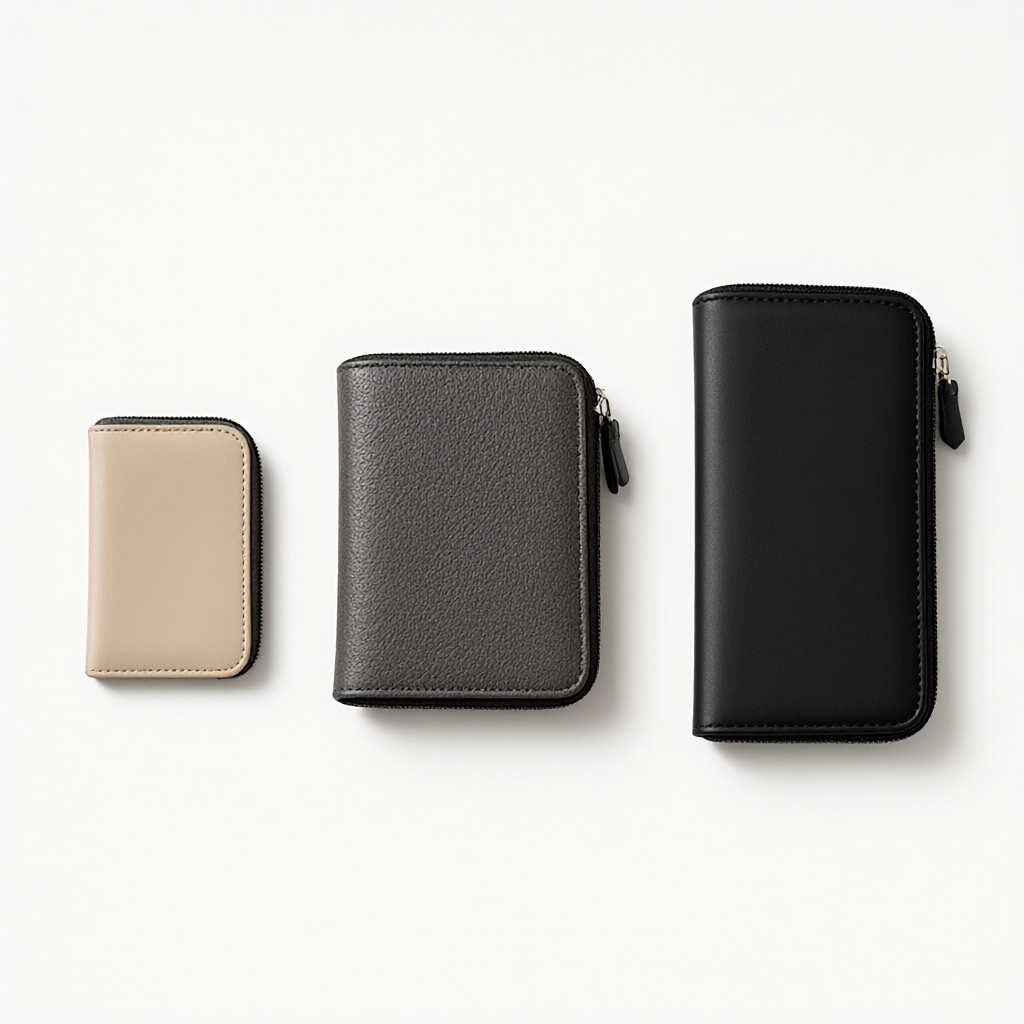
Wallet sizing follows a few standard categories that map directly to capacity and use case.
| Size Tier | Typical Width | Typical Height | Card Capacity | Best For |
|---|---|---|---|---|
| Compact / Slim | 3.5–4.5 in | 2.5–3.5 in | 3–6 cards | Minimalist daily carry, evening out |
| Standard | 4.5–5.5 in | 3.5–4.5 in | 6–12 cards | Everyday commuter, purse carry |
| Long / Oversized | 6.0–7.5 in | 4.0–5.0 in | 12+ cards + phone slot | Heavy card/cash carry, travel |
Cute small wallets for women typically land in the compact tier — slim profiles that slip into clutch bags or festival cross-body setups. New long lady wallet styles sit in the oversized tier and double as document organizers for travelers. Foldable wallet for women designs usually reference either bifold or tri-fold constructions; the key difference lies in the number of layers rather than external dimensions alone.
The French wallet for women is essentially a long-zip-around style, often 7–7.5 inches when closed, designed to hold folded bills, multiple card slots, and sometimes a coin compartment. It functions as both a full-sized purse alternative and a statement carry piece.
Nylon wallet for women and other fabric-based options tend to run slightly more flexible in measured form since woven materials stretch and conform — useful for irregularly shaped items like smartphones or bulky keys. Metal wallets, including carbon fiber and titanium models, follow stricter dimensional tolerances because rigid materials cannot compress or expand.
How Do You Measure a Wallet for Women?
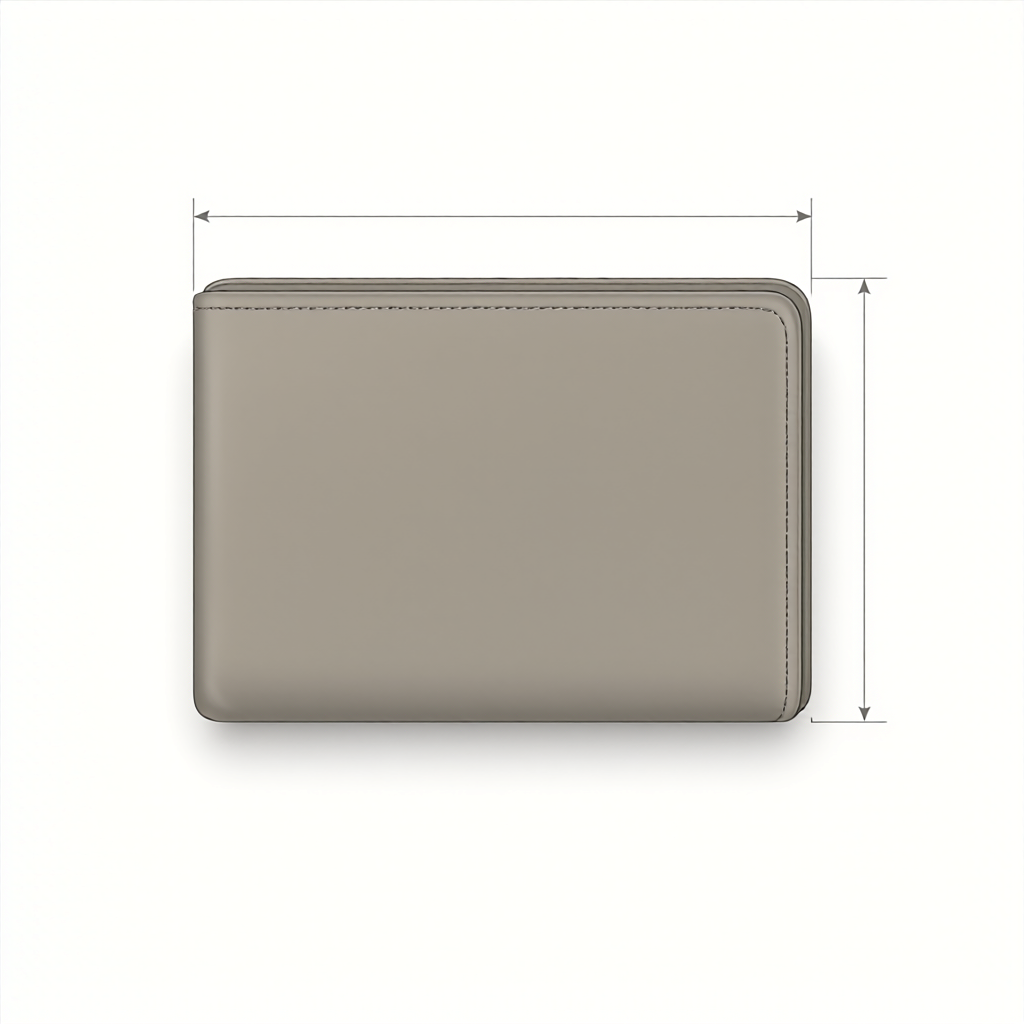
Take three measurements before deciding on a wallet type:
1. Daily load volume. Lay out every item you normally carry in your wallet: cards (count them), folded bills, coins, receipts, lip balm, keys. Note which are essential versus occasional. This determines minimum capacity.
2. Pocket or bag interior. Measure the width and depth of your most-used jeans pocket, coat pocket, or the main compartment of your typical bag. A wallet exceeding these dimensions will ride up, create pressure points, or refuse to close properly.
3. Phone size (if applicable). Note your phone’s length, width, and thickness. A phone-wallet for women only makes sense if your device fits within the wallet’s internal sleeve without bending the corners or forcing the closure open.
Compare these measurements against product specifications before purchasing. Mismatched pocket-to-wallet ratios are the single most common source of buyer regret.
Which Standards Apply to Womens Wallets?
No wallet-specific standard exists; leather chemistry follows ISO 17075 and REACH limits.
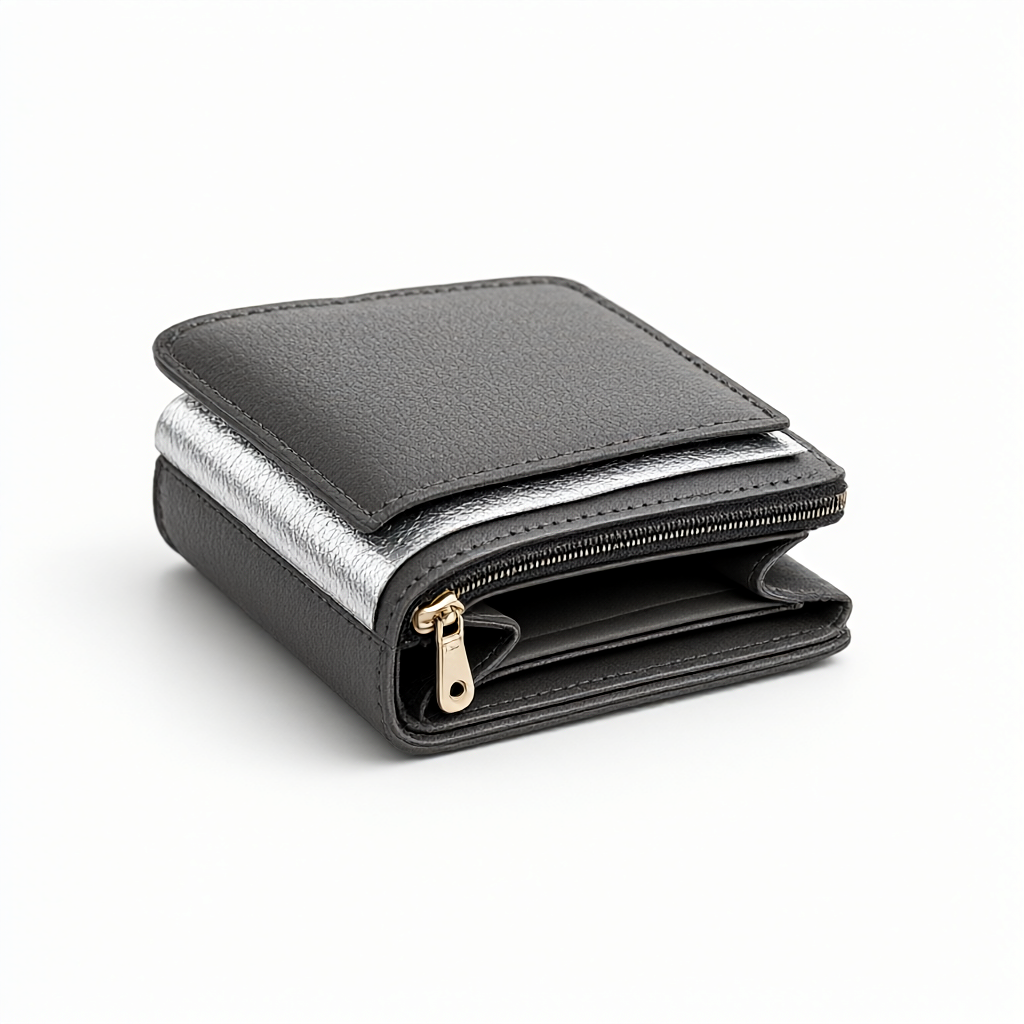
While there is no single regulatory standard governing women’s wallet dimensions, several industry frameworks define material safety and RFID performance expectations:
- RFID-blocking effectiveness is commonly tested per ASTM E2092 (E2092-19a), which specifies methods for evaluating RFID shielding materials across frequency bands. A credible wallet blocks 13.56 MHz and 850–960 MHz ranges effectively enough to prevent unauthorized scanner reads under normal carrying conditions (ASTM E2092).
- Material composition disclosures for leather goods may fall under FTC guidance requiring accurate fiber and material labeling when sold in the United States (FTC.gov). Genuine leather, bonded leather, and synthetic alternatives carry different durability profiles and care requirements.
- Chemical compliance for wallets contacting skin regularly references REACH and RoHS frameworks in export markets, ensuring no restricted phthalates or heavy metals migrate from dyes, finishes, or metal components.
These standards primarily affect procurement decisions for wholesale buyers and distributors. For individual consumers, they serve as quality signals — products that cite compliance are generally better constructed and safer for prolonged skin contact.
For deeper guidance on protection-focused purchases, see wallets that protect cards and our RFID wallet guide for men and women.
How Do Fit and Compatibility Work for Womens Wallets?
Matching a wallet to your carry ecosystem involves three relationship checks:
Handbag to wallet proportion. A structured tote or hobo bag accommodates a longer or tri-fold wallet without issue. A small envelope clutch or mini shoulder bag demands a compact bifold or standalone cardholder. Rule of thumb: the wallet should occupy no more than two-thirds of your bag’s main compartment width, leaving room for keys, phone, and other essentials.
Pocket to wallet friction. Slim-fit jeans pockets reward compact wallets under 4.5 inches wide. Standard denim allows up to 5 inches. Coat or backpack pockets tolerate slightly larger dimensions but still favor low-profile shapes over thick stacked wallets.
Phone to wallet integration. A phone-wallet functions well when your phone is your primary digital tool and you want to eliminate a separate pouch. However, phone wallets add 0.4–0.8 inches of bulk depending on device size. If your phone exceeds 6.5 inches diagonally, a dedicated phone case paired with a separate slim wallet usually proves more ergonomic than a single combined unit.
Secure wallet for women considerations extend beyond size into closure mechanics. Zippers provide the strongest protection against accidental opening — critical for crowded commutes, festivals, and transit environments. Magnetic snaps offer convenience but can pop open under tension. Button or strap closures sit between these extremes, requiring deliberate action while remaining secure during normal movement.
What Does the Womens Wallet Size Chart Show?
Closed width, height, slot count, and loaded thickness, mapped by wallet type.
The table below maps common wallet categories to their typical internal layouts and compatible daily loads:
| Category | External Size Range | Internal Layout | Secure Closure Options | Capacity Notes |
|---|---|---|---|---|
| Bifold | 4.5–5.5 × 3.5–4.5 in | 2 main sections + slip pockets | Snap, zip, open | 6–10 cards ideal |
| Tri-fold | 5.5–6.5 × 4.0–5.0 in | 3 folding sections + coin pocket | Zip dominant | 10–16 cards + coins |
| Long Clutch / French | 6.5–7.5 × 4.0–5.0 in | Full-length gusset, multi-slot | Zip-around | 12–20 cards, folded bills |
| Cardholder | 3.5–4.5 × 2.5–3.5 in | Linear slot arrangement | Snap, open, zip option | 4–8 cards maximum |
| Phone Wallet | 6.5–8.0 × 4.0–5.0 in | Phone sleeve + card layer | Zip or snap flap | Phone + 4–8 cards |
New ladies wallet selections in the minimalist space increasingly blend cardholder geometry with lightweight metal construction. These foldable wallet for women variants typically sit at the compact end of the spectrum and shed traditional bulk while retaining core card-access functionality.
Nice wallet for women buyers often prioritize aesthetic cohesion alongside capacity — color matching, hardware tone, and texture consistency matter as much as dimension. Purses and wallets for women coordinate best when their form factor language aligns: a sleek metal cardholder pairs with an architectural bag silhouette, while a soft leather bifold complements a slouchy or textile-based handbag.
What Else Should Womens Wallet Buyers Consider?
Card count, coin habits, and phone size decide the size more than height or brand do.
Several lifestyle-driven factors influence whether a given wallet type fits your routine beyond raw dimensions:
Card-heavy commuters benefit from bifold or tri-fold styles with accessible outer slots for transit cards and frequently used debit/credit combos. A dedicated fast-access slot near the thumb break reduces fumbling.
Travelers and document carriers gravitate toward long clutch or French wallet formats. The extended layout accommodates boarding passes, hotel keys, foreign currency, and emergency cash in organized zones. A zip-around closure prevents contents from spilling during airport transit.
Festival and concert-goers prioritize secure close-to-body carry. A compact wallet with a wristlet strap or an anti-theft design featuring slash-resistant panels and lockable zippers addresses both pickpocket risk and sweat resistance concerns. Nylon and treated fabrics dry faster than untreated leather in outdoor settings.
Minimalist carry users who have transitioned away from bulk find appeal in slim aluminum or carbon fiber constructions. These metal wallets strip away redundant compartments and focus on holding the ten most-carry items — IDs, four to six cards, and folded bills. The trade-off is reduced capacity for receipts, loose coins, and occasional paper documents. For perspective on how metal wallets compare to traditional leathers, see our minimalist wallets guide and good money clip wallets for men for analogous design logic that applies across genders.
When evaluating new wallets for women, look past marketing aesthetics and check actual internal dimensions against your specific phone model, card stack height, and cash volume. Material choice matters equally: full-grain leather ages gracefully but requires conditioning; bonded leather offers cost savings at the expense of longevity; nylon delivers weather resistance and light weight; metal constructions provide permanent structural integrity with zero break-in period.
Which Wallet Form Factors Exist for Women?
Five form factors cover most demand: cardholder, compact bifold, zip-around, French wallet, and phone sleeve.
Women’s wallets span five distinct form factors, each engineered for a different carrying volume and lifestyle:
| Form Factor | Typical Use Case | Closure Type | Bulk Profile |
|---|---|---|---|
| Bifold | Everyday card + cash carry | Snap, magnetic, zip | Low (0.4–0.8 in thick) |
| Tri-fold | Higher card count, occasional coin pocket | Zip dominant | Medium (0.8–1.2 in thick) |
| Long Clutch / French | Full purse replacement, document storage | Zip-around | Medium-low (0.6–1.0 in thick, elongated) |
| Cardholder | Minimalist 4–10 card load | Snap, open, zip option | Very low (0.2–0.4 in thick) |
| Phone-Wallet | Phone + cards in one unit | Zip flap or snap | High (0.8–1.4 in thick) |
Compact bifold and cardholder designs are the most common among minimalist carry users, while long clutch and French-style wallets serve women who prefer consolidating everything into a single piece. The phone-wallet category has grown recently but remains niche due to added bulk.
What Size Ranges Define Womens Wallets?
Wallet sizes cluster into three tiers, each suited to a different pocket or bag ecosystem:
Compact (3.5–4.5 in W × 2.5–3.5 in H)
Ideal for small cross-body bags, festival wears, and slim-fit pockets. Holds 3–6 cards and folded bills only. Popular among buyers searching for cute small wallets for women.
Standard (4.5–5.5 in W × 3.5–4.5 in H)
The sweet spot for everyday commuters. Fits 6–12 cards plus cash in jeans pockets or medium handbags. Most popular wallets for women land in this tier.
Long / Oversized (6.0–7.5 in W × 4.0–5.0 in H)
Used by travelers and document-heavy carry users. Accommodates 12+ cards, rolled currency, boarding passes, and sometimes a phone sleeve. New long lady wallet styles frequently appear here.
The French wallet for women typically measures 7–7.5 inches when closed, placing it firmly in the oversized tier. It wraps fully around contents with a continuous zipper, making it functionally a standalone purse alternative rather than an insert.
How Do Leather, Fabric, and Metal Wallets Compare?
Leather moulds and ages well, fabric is lightest, and metal blocks RFID best.
Material choice determines durability, weight, weather resistance, and maintenance needs:
| Material | Durability | Water Resistance | Weight | Maintenance | Aesthetic Range |
|---|---|---|---|---|---|
| Full-grain leather | 8–15 years | Low (needs treatment) | Medium | Conditioning every 3–6 months | Classic, warm tones |
| Bonded/PU leather | 2–5 years | Moderate | Low | Wipe clean | Wide color palette |
| Nylon/fabric | 5–10 years | High | Very light | Washable | Casual, sporty |
| Aluminum/Titanium | 10+ years | Excellent | Light | Zero | Minimalist, modern |
| Carbon fiber | 10+ years | Excellent | Very light | Zero | Technical, rugged |
Nylon wallet for women constructions excel in outdoor and travel scenarios because woven fabrics shed water faster than untreated leather and dry completely within hours. They also resist staining from ink, dirt, and sweat — a meaningful advantage during festivals or summer commutes.
Metal and carbon fiber wallets, often found in the minimalist and EDC space, offer permanent structural integrity with no break-in period. Anodized aluminum wallets typically weigh 1.5–2.5 oz compared to 3–5 oz for a comparable leather bifold. However, metal wallets provide zero coin storage and limited bill capacity unless paired with an integrated money clip.
For deeper insight into minimalist and metal wallet construction, see our minimalist wallets guide and good money clip wallets for men which detail design logic applicable across genders.
Which Security Features Should a Womens Wallet Have?
A secure wallet for women balances anti-theft mechanics against daily convenience:
Zipper closures provide the strongest physical barrier. A full zip-around design on a long clutch or French wallet prevents accidental opening during crowded transit or festival crowds. YKK #5 or #8 coil zippers are the industry benchmark for smooth operation under repeated use.
Magnetic snaps prioritize speed over security. They pop open under lateral tension — common when pulling a wallet from a tight pocket or bag. Magnets rated below 30 gauss are especially prone to this failure mode.
RFID-blocking lining is tested per ASTM E2092 methods for shielding effectiveness across the 13.56 MHz (contactless card) and 850–960 MHz (UHF) frequency bands. Credible products reduce scanner read-range to under 1 cm. For a deeper explanation of RFID protection technology, consult our RFID wallets guide for men and women.
Anti-theft panels incorporating slash-resistant fabric layers and lockable zipper pulls add protection in high-risk environments. These features are most relevant to travelers and urban commuters.
The FTC requires accurate material composition disclosures on goods sold in the United States (FTC.gov), ensuring consumers can verify claims about genuine leather, synthetic blends, and RFID blocking performance.
Security in a women’s wallet centers on three domains: physical closure strength, electronic data protection, and anti-theft design. Each has measurable performance criteria.
Zipper closure ratings. Quality wallets use continuous coil zippers rated for 5,000–10,000 open/close cycles before chain failure becomes likely. For heavy-duty travel wallets, look for YKK #5 or larger coils with water-resistant waxed threads. Zip pullers made from aluminum or brass outperform plastic toggles under repeated stress. A double-slider zip-around allows access from both ends without fully opening the compartment.
RFID-blocking effectiveness. Credible RFID wallets attenuate electromagnetic fields at least 20 dB at 13.56 MHz (contactless card frequency) and 15 dB at 850–960 MHz (bank-card NFC band), per ASTM E2092-19a test methodology. Materials used include ferrite sheets, copper-nickel mesh laminates, and faraday-cage woven linings. Test reports from SGS or equivalent labs provide verifiable attenuation data — products claiming “RFID-safe” without third-party test results should be treated as marketing language rather than engineering claims.
Magnetic vs snap vs strap closures. Magnetic snaps convenience comes with a weakness: strong magnets near electronic key fobs or smartphones can theoretically interfere with credit-card magnetic strips over prolonged exposure. For secure transit carry, a combination of snap + internal zipper pocket is the industry standard for anti-theft construction.
For related guidance on security-focused purchasing decisions, explore our wallets that protect cards buyer guide and our RFID wallet guide for men and women.
How Do You Plan Card Slots and Compartments?
Plan slots by friction tension and keep one flat pocket for bills rather than stacking.
Matching compartment layout to daily habits prevents both over-packing and under-utilization:
- 5 or fewer cards → Cardholder or slim bifold (single main slot column)
- 6–10 cards → Standard bifold (two-column layout with thumb-access outer slots)
- 11–16 cards → Tri-fold (three-section layout with dedicated coin or receipt pocket)
- 17+ cards/documents → Long clutch or French wallet (full-length multi-slot grid)
Compartment planning should start with essential cards first. Consider assigning a dedicated outer slot for your most-used transit or loyalty card to reduce friction. Internal dividers and elastic card loops add 0.1–0.2 in thickness but dramatically improve card retention and organization.
When Is a Phone-Slot Wallet Practical?
A phone wallet for women works when your device fits comfortably inside the internal sleeve without bending corners or forcing the closure. Key compatibility thresholds:
| Phone Screen Size | Feasibility in Phone-Wallet | Recommended Alternative |
|---|---|---|
| Up to 5.5 in diagonal | Practical — adds ~0.4 in bulk | Phone-wallet acceptable |
| 5.5–6.5 in diagonal | Borderline — adds ~0.6 in bulk | Slim cardholder + separate case |
| Above 6.5 in diagonal | Impractical — adds >0.8 in bulk | Dedicated phone pouch + slim wallet |
When your phone exceeds 6.5 inches diagonally, combining it with a wallet significantly increases pocket bulge and makes one-handed retrieval cumbersome. In these cases, carrying a slim cardholder alongside your phone in its own case produces a cleaner silhouette and easier access.
Is a nylon wallet for women practical compared with leather or metal? Absolutely — for active lifestyles. Nylon wallets accommodate slight size variations due to fabric flexibility, meaning a phone and a few cards can compress together without stress on seams. Leather stretches minimally; metal does not stretch at all.
What Makes a Good Size for a Wallet for Women?
Closed width under 5.5 inches fits most bags and clutches; anything wider limits choice.
The optimal wallet size correlates directly with carry volume, not body type or fashion preference:
- Minimal daily load (3–6 cards, no phone): Compact bifold or cardholder, 3.5–4.5 in wide
- Commuter standard (6–10 cards, folded bills): Standard bifold, 4.5–5.5 in wide
- Heavy carry (10+ cards, receipts, coins, occasional phone): Long clutch or phone-wallet, 6.0+ in long
- Travel/document heavy: French wallet or oversized long clutch, 7.0+ in long with zip-around
For women asking what a good size wallet for women looks like based on their routine, the rule of thumb is: measure your daily items flat, then choose a wallet with 15–20% internal margin beyond that measurement. This accounts for item compression and prevents forced closure damage.
How Do You Choose a Wallet by Lifestyle?
Selecting a nice wallet for women involves aligning four variables: capacity needs, bag or pocket ecosystem, material preference, and security requirements. Start by auditing your current carry for one week — note which items are constant versus occasional. Then map those items to the form factor table above.
Prioritize a closure type matching your environment: zippers for transit and travel, snaps for speed at casual venues, and open-slot cardholders for minimalist home-based routines. Match material to climate — nylon for humid or outdoor-heavy seasons, full-grain leather for year-round classic style, and metal/carbon fiber for maximum durability with minimal maintenance.
Check actual internal dimensions against your phone model if considering a phone-wallet for women. Verify RFID-blocking claims by looking for ASTM E2092 compliance references rather than unverified marketing terms. And ensure the wallet occupies no more than two-thirds of your bag’s main compartment width, preserving space for keys, lip balm, and other essentials.
For further guidance on dimension selection, see our wallet size width and height buying guide.
Which Manufacturing Standards Ensure Wallet Quality?
As a specialist manufacturer operating since 2014, we understand that consistent quality in women’s wallets depends on controlled material sourcing, precise dimensional tolerances, and verified security testing. Our facility produces minimalist aluminum wallets, carbon fiber card holders, titanium money clips, and RFID-blocking metal wallets under ISO 9001 quality management and BSCI social compliance frameworks.
Our approach centers on verifiable specifications rather than marketing claims. RFID-blocking modules are tested against ASTM E2092 criteria for shielded frequency ranges. Material certifications for aluminum alloys, carbon fiber laminates, and textile substrates are documented per REACH and RoHS chemical compliance standards. Production runs are calibrated for dimensional consistency — typical tolerance on wallet width and height falls within ±0.5 mm for precision-cut metal and carbon fiber units.
For brands, Amazon sellers, and distributors seeking private-label or OEM production, we support full customization from logo and engraving to packaging and retail box design. Low MOQ starts at 300 pcs per SKU for full OEM customization (100 pcs trial order available for stock finishes), with sample lead times of approximately 7 days. Explore how we meet these manufacturing standards by visiting our contact page for a discussion on your project requirements.
How Do Buyers Source Womens Wallets From Factories?
Beyond retail selection, many buyers — including Amazon FBA sellers, EDC brand owners, and promotional distributors — source wallets through OEM and ODM manufacturers. Understanding production capabilities and quality benchmarks helps evaluate suppliers effectively.
Certification baseline. Legitimate manufacturers operating at wholesale scale hold ISO 9001 certification (managed per iso.org standards), which ensures documented quality management processes for material incoming inspection, in-process control, and finished-goods auditing. Facilities serving European markets additionally comply with REACH and RoHS restrictions on hazardous substances and may undergo BSCI social compliance audits for labor standards.
Material certifications to request. Reputable suppliers provide SGS or equivalent lab test reports covering:
- Heavy-metal content in leather dyes and finishes (lead, cadmium, hexavalent chromium below 3 ppm per REACH Annex XVII)
- Phthalate levels in PU/bonded leathers (below 0.1% by weight)
- RFID attenuation performance (≥ 20 dB at 13.56 MHz)
- Material flammability ratings per relevant textile standards
Typical MOQ and lead-time ranges. Contract manufacturing for wallet products generally sets minimum order quantities between 300–500 units per SKU for initial runs, with volume discounts applying above 1,000 pieces. Sample development typically requires 5–10 business days; mass production runs of 500–2,000 units ship within 20–35 days depending on material sourcing and surface finishing complexity.
Key production processes and tolerances.
| Process | Machine Specification | Typical Tolerance |
|---|---|---|
| CNC die-cutting (metal/card components) | Precision stamping press, 100–500 ton | ±0.05 mm |
| Leather edge painting / burnishing | Automated edge-coating line or hand-finishing | ±0.3 mm width consistency |
| Stitching (leather/fabric assemblies) | Double-needle lockstitch, 8–12 stitches per inch | Thread tension 15–25 N |
| Zipper attachment | Industrial sewing with zipper foot, reinforced bar-tacks at stress points | Pull-cycle rating 5,000–10,000 cycles |
| Laser engraving (metal/titanium surfaces) | Fiber laser marker, 20–30 W output | Engrave depth 0.02–0.05 mm |
| Anodizing (aluminum components) | Type II sulfuric acid anodize bath, 12–18 μm coating thickness | Color consistency ΔE < 2.0 |
These parameters define what separates functional production from premium-grade manufacturing. Suppliers who track and report these metrics consistently produce more reliable deliverables for branded retail channels.
Why Choose TOP EDC Wallet as a Manufacturing Partner?
As the EDC wallet market matures, buyers increasingly differentiate between generic commodity production and purpose-built manufacturing. Here is how we approach this category at TOP EDC Wallet:
Since establishing our facility in 2014, we’ve operated a 50,000 sq ft in-house factory specializing in minimalist metal wallets, carbon fiber card holders, and titanium money clips — products that share the same design philosophy as the wallet forms described above, just executed in rigid EDC-grade materials. Our ISO 9001 certification (held since 2014) and BSCI-audited operations ensure every production run meets documented quality and social-compliance benchmarks.
For buyers evaluating production partners, here are the practical details that matter:
- MOQ starts at 300 pcs per SKU per SKU, making small-batch private-label launches viable
- Sample lead time is 7 days for design approval and physical prototyping
- Monthly production capacity exceeds 500,000 units, supporting volume retail and FBA shipments
- We serve 200+ brands worldwide across America, Europe, Australia, and Southeast Asia
- Full customization covers logo application via laser engraving, UV printing, and embossing, plus custom packaging and retail-box design
- Our CNC machining, anodizing, and assembly lines operate under controlled environmental conditions ensuring consistent finish quality batch after batch
Whether you’re an Amazon seller sourcing a differentiator product, a brand building a lifestyle collection, or a distributor filling a gap in the metallic wallet segment, our team handles concept development through final shipment. Contact Our Team to discuss your project specifications and receive a customized quote within 24 hours.
Where Do the Sources for This Guide Come From?
- ASTM E2092 — www.astm.org
- FTC.gov — www.ftc.gov
- iso.org — www.iso.org
- wallets that protect cards — topedcwallet.com
- RFID wallet guide for men and women — topedcwallet.com
- minimalist wallets guide — topedcwallet.com
- good money clip wallets for men — topedcwallet.com
- wallet size width and height buying guide — topedcwallet.com
- contact page — topedcwallet.com
Womens Wallet Size FAQ: Average Width, French Wallets, Passports, Evening Bags — Which Questions Do Buyers Ask Most?
What is the average width of a womens wallet?
Between 4.5 and 5.5 inches closed, which fits most clutches and crossbody bags.
Does a French wallet count as a large wallet?
Yes. It runs 7 to 8 inches wide, enough for unfolded bills but too big for small bags.
Can a womens wallet fit a passport?
Only travel-specific designs. Standard sizes stop at 5.5 inches wide, short of a 125 mm passport.
Which wallet size works for a tiny evening bag?
A card holder under 4 inches wide. Anything larger will not close the bag clasp.
From article to product
Sourcing minimalist-wallets?
Tell us the format, the quantity and the date you need stock. You get material options, MOQ and a landed-cost range back within one business day.
Keep reading
More on wallet types
Thin Male Wallets: Buying Guide for Slim Minimalist Picks
How to choose a slim wallet for men — thickness thresholds, material trade-offs, capacity…
ReadStashed Wallet: A Minimalist Everyday-Carry Solution
Understand what a stashed wallet is, how minimalist slim wallets work, and what to…
ReadFolding Wallets: Types, Materials & Buying Guide
Learn what makes a folding wallet worth buying, from materials and card capacity to…
Read
About the author
TOPWALLET Editorial Team
TOPWALLET's editorial and engineering desk writes from bench testing at the Shenzhen (Longgang) facility: pull-force and cycle testing, 13.56 MHz shielding measurements, finish trials and factory audits, rather than supplier spec sheets. Every specification in these guides is one we write on a purchase order.
Written on the floor
This article was written by our production and QC team — the people who spec tolerances, run the finishing line and inspect every batch. Where it states a capacity, a pull force or a lead time, it comes from a measurement we made, not a supplier’s catalogue. If a number here disagrees with what your own supplier told you, tell us; several of these articles started as a correction from a buyer.
See how the factory works · Inspection process · Sourcing FAQ
Sourcing minimalist-wallets?
Tell us the format, the quantity and the date you need stock. You get material options, MOQ and a landed-cost range back within one business day.