

A stashed wallet — also called a stash wallet or minimalist slim wallet — is a low-profile carry solution built to hold only your daily essentials in a thin, flat form factor. Instead of the thick folded leather blocks typical of traditional bi-folds, stashed wallets use rigid metal, carbon fiber, or reinforced polymer frames that keep cards organized, bills accessible, and pocket bulk minimal. They appeal to anyone who wants faster access, reduced back strain, and a cleaner silhouette — whether carried front-pocket style or tucked into a bag.
Quick Answer
A stashed wallet — sometimes called a stash wallet — is a slim, low-profile wallet designed for secure pocket or bag storage. It typically holds fewer cards and bills than a traditional bi-fold, flattens into a compact shape, and often uses metal, carbon fiber, or dense polymer construction instead of bulky leather. The goal is simple: reduce pocket bulk while keeping your essentials accessible and protected. For consumers tired of thick wallets that dig into seams or add weight, a minimalist stashed wallet offers a practical upgrade path.
Detailed Explanation
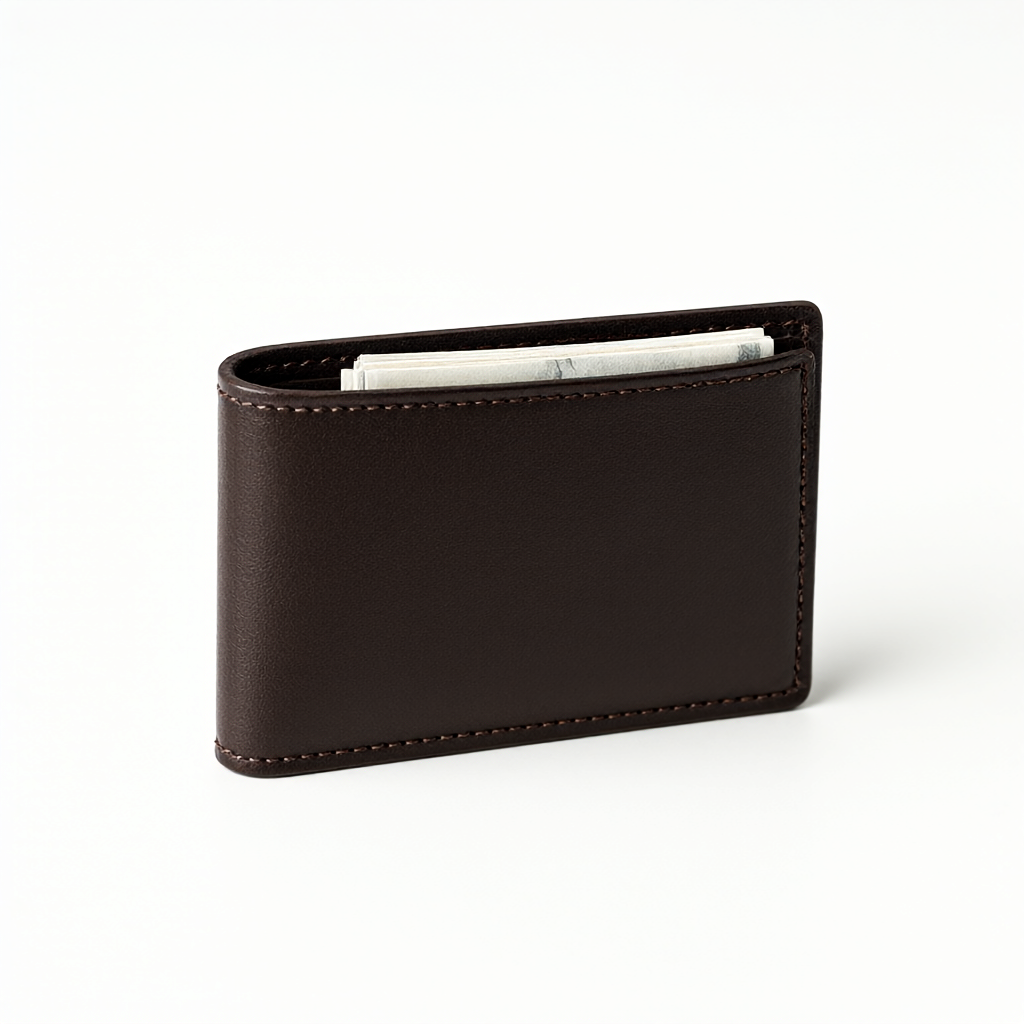
What Is a Stashed Wallet and Why Does It Matter?
A stashed wallet is built around a single principle: carry only what you use daily, and carry it flat. Most traditional bi-folds hold fifteen to twenty cards plus folded cash, which creates a three-inch-thick block in your front or back pocket. A stashed wallet usually accommodates four to eight cards and a few bills, sitting flush against your leg or slipping easily into a bag pocket.
The appeal goes beyond comfort. A thinner profile reduces pressure on the lower back when carried in a back pocket, decreases wear on jacket and jeans seams, and makes quick card access easier. Modern stashed wallets also integrate features like RFID blocking and magnetic closures that address concerns about digital theft and cards falling out. You can explore more detailed guidance in our wallets that protect cards buyer guide.
How Does a Stashed Wallet Differ From a Traditional Bi-Fold?
The differences break down into three areas: capacity, construction, and carry position.
Capacity. A standard bi-fold holds 12 to 20 cards across multiple slots plus a cash compartment and often ID windows. A stashed wallet typically holds 4 to 8 cards in a single stack or elastic loop configuration, with cash stored through a tension band or small slip pocket. This forces users to carry only current cards and necessary bills.
Construction. Traditional wallets rely on folded leather with stitched compartments. Stashed wallets use rigid or semi-rigid frames — aluminum shells, carbon fiber bodies, titanium clips, or reinforced polymer — that maintain their shape without folding. This rigidity is what keeps the wallet slim even when fully loaded.
Carry position. Bi-folds are designed for front or back pockets but create noticeable bulges. Many slim stashed wallets are specifically shaped to sit comfortably in a front pocket, where they are less likely to be picked and cause less posture strain. Some models are designed for bag carry instead. See our minimalist wallets guide for deeper selection advice.
Material Choices: Aluminum, Carbon Fiber, Leather, and Mixed Constructions
Material selection determines durability, weight, feel, and price. Each option has trade-offs.
Anodized aluminum. This is the most common material for metal stashed wallets. Aluminum is lightweight — roughly 60 grams for a typical model — scratch-resistant after anodizing, and available in many colors through the dye-and-seal process. It does not bend under normal pocket use and provides excellent card protection. The main downside is a cold, hard feel and the potential for denting if dropped on a hard surface. Anodized finishes also meet standards referenced by ASTM International for coated metal surface durability in consumer products.
Carbon fiber. Carbon fiber wallets are lighter than aluminum and exceptionally stiff. They resist scratches and do not conduct temperature as noticeably as metal. The weave pattern gives each piece a distinctive appearance, and high-quality laminates are very durable. The trade-off is cost — carbon fiber construction typically runs higher than aluminum — and the risk of edge chipping if struck sharply.
Leather. Full-grain and top-grain leather remain popular for consumers who prefer a soft, aging patina over industrial materials. Leather stashed wallets exist, but they require careful design to stay slim, often combining a leather exterior with an internal metal frame. Leather adds warmth and visual style but requires conditioning and is less water-resistant than sealed metals. Learn more about leather selection in our different types of leather wallets guide and how to maintain them in our leather wallet care article.
Mixed constructions. Many modern stashed wallets combine materials: an aluminum body with a leather front panel, a carbon fiber shell with silicone inner grips, or a titanium money clip paired with an aluminum card cage. These hybrids let manufacturers balance aesthetics, grip, and cost.
Security and Organization Features
Three security features dominate the stashed wallet category:
RFID blocking. Contactless payment cards and passports emit radio frequency signals that can theoretically be scanned by nearby readers. RFID-blocking wallets incorporate a conductive metal mesh or ferrite layer between card slots to attenuate those signals. Not all slim wallets include this feature, so it is worth verifying before purchase. Our RFID-protected wallets guide covers evaluation methods in detail.
Card retention. A well-designed stashed wallet holds cards firmly enough that they do not fall out when you stand up quickly or reach into a crowded space. Spring-loaded mechanisms, friction-fit card cages, and elastic bands are common retention methods. Weak retention is the number-one complaint among users who switch from bi-folds.
Cash handling. Without a dedicated billfold compartment, cash storage relies on tension bands, snap buttons, or a shallow rear slot. All-cash scenarios still work, but large stacks of bills will push the wallet thicker. This is a deliberate design constraint rather than a flaw.
Key Specifications
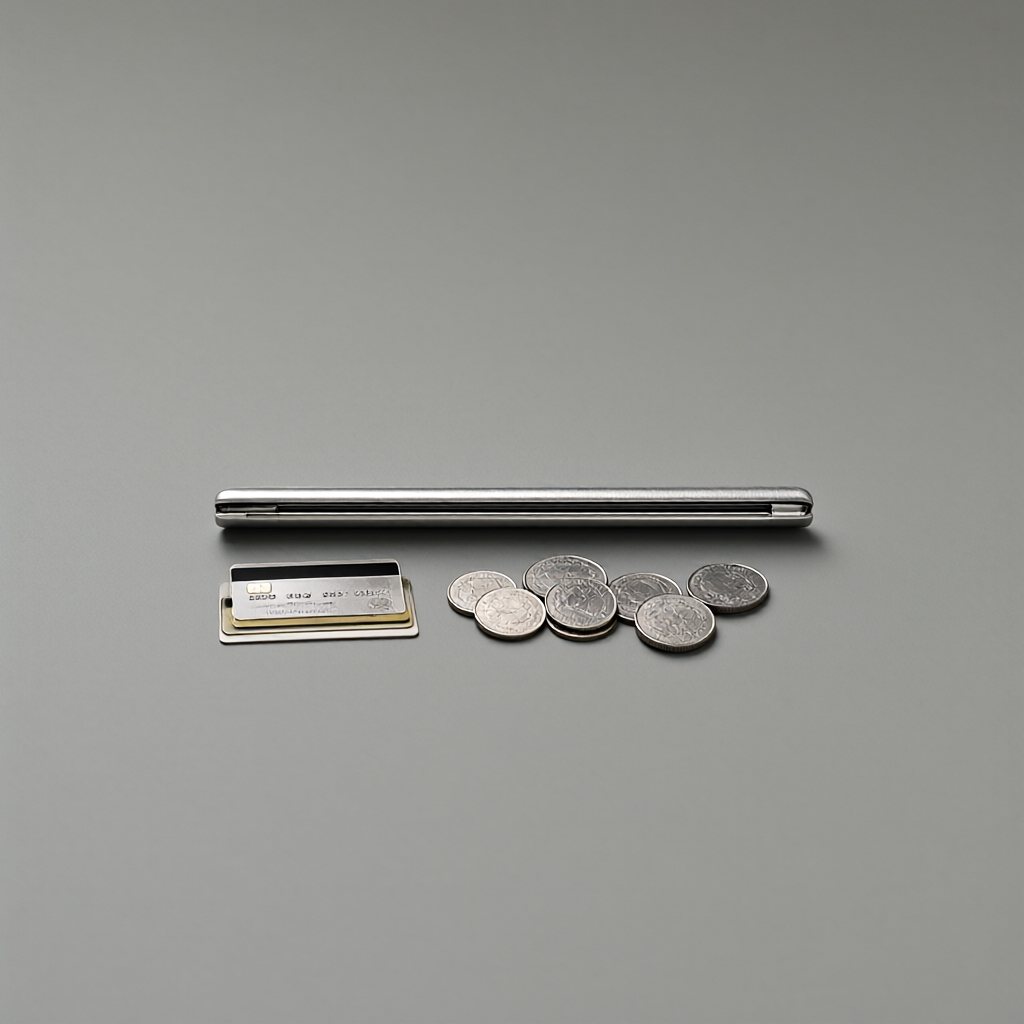
What Are the Typical Specs for a Stashed Wallet?
Specifications vary by material and brand, but the following ranges represent the industry norm for quality minimalist wallets:
| Specification | Typical Range |
|---|---|
| Card capacity | 4 to 8 cards |
| Thickness (loaded) | 0.4 to 0.9 inches (10 to 23 mm) |
| Weight | 40 to 90 grams |
| Width | 2.5 to 3.0 inches (64 to 76 mm) |
| Height | 3.8 to 4.2 inches (97 to 107 mm) |
| Cash retention | 4 to 10 bills via tension band |
For reference, these dimensions align with what we cover in our wallet size width and height guide.
Do Men’s and Women’s Slim Wallets Follow Different Sizing Conventions?
Yes, but the difference is modest. Men’s thin credit card wallets and general-purpose cardholders tend toward the larger end of the range — roughly 3.0 by 4.2 inches — to accommodate standard US DL-sized IDs and longer bills without curling.
Women’s slim wallets, including women clutch wallets styles and narrow cardholders, often run slightly smaller: 2.5 to 2.8 inches wide and 3.6 to 4.0 inches tall. This fits women’s front pockets and smaller bags more naturally. Some women’s burgundy wallet options also prioritize color variety over structural differences.
Both genders can use either size; the distinction exists because retailers segment products that way. If a woman carries a standard men’s slim wallet, it functions identically. If a man prefers a narrower profile, a women’s-styled cardholder may actually fit better in his pocket. The key metric is whether your most-used cards and bills fit without forcing.
What Standards Apply to Materials and Safety?
Reputable manufacturers test materials against recognized standards. Aluminum anodizing and coating adhesion are evaluated using protocols similar to those published by ISO. RFID-blocking performance is measured by signal attenuation — effective blockers reduce 13.56 MHz readings by 25 decibels or more.
Some markets also require compliance with REACH and RoHS regulations for restricted substances in metals and polymers. Buyers sourcing for retail should verify that suppliers can provide test reports for these parameters. In the United States, consumer product safety information falls under the purview of the FTC, particularly regarding material claims and advertising accuracy.
Related Considerations
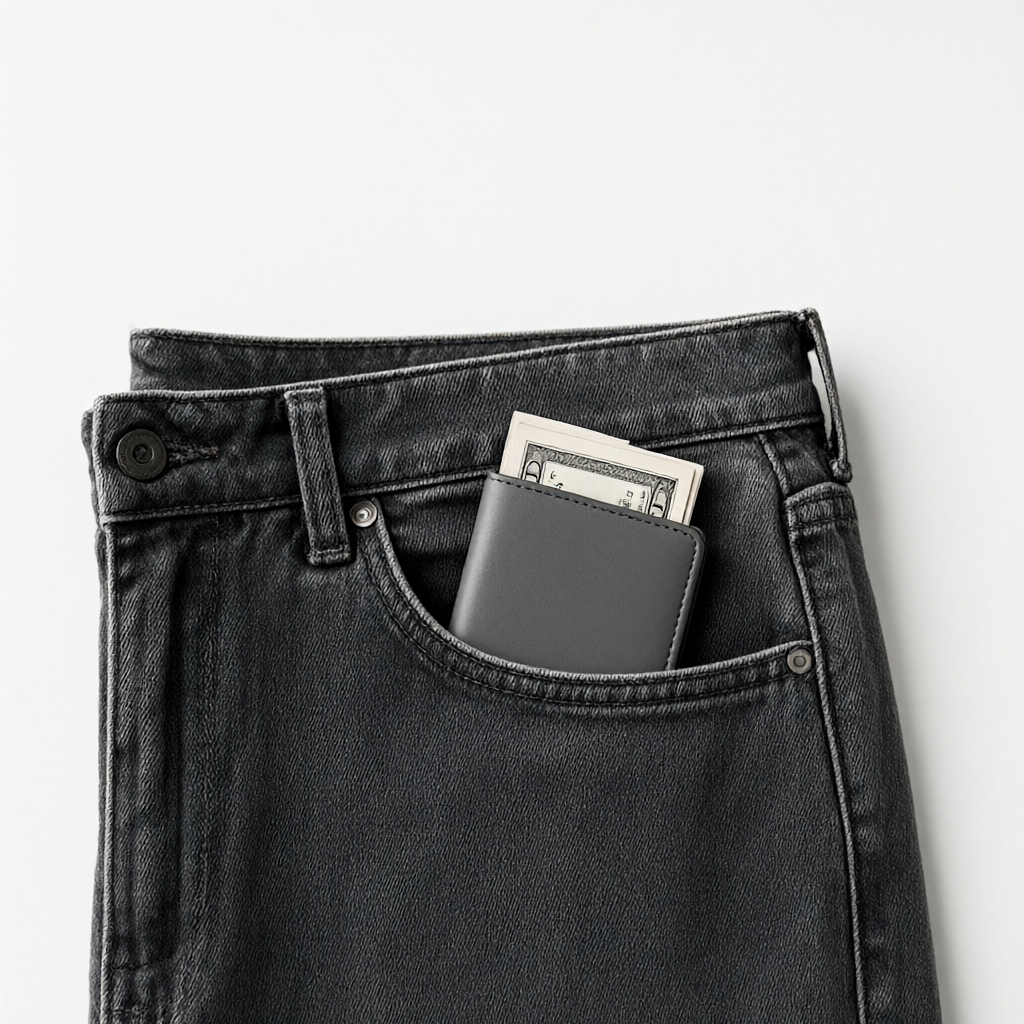
Style: Color, Finish, and Designer Aesthetics
A stashed wallet is one of the few everyday items that blends function with visible style. Color and finish choices matter because the wallet sits in your pocket and may show when you pull it out.
Anodized aluminum wallets come in matte black, silver, blue, red, green, and metallic gradients. Carbon fiber offers natural weave patterns in black, gold, or red tones. Leather options include tan, brown, black, and increasingly, burgundy wallet shades that age into richer tones.
Style considerations extend beyond color. Brushed finishes hide micro-scratches better than polished ones. Matte coatings feel more grippy and less slippery in hand. Transparent or dual-material designs — clear front panels showing card edges — cater to buyers who want personality without sacrificing organization.
Many consumers choose a stylish wallets option specifically because it signals taste alongside utility. A well-chosen mens thin credit card wallet in brushed titanium or dark carbon fiber reads as intentional rather than utilitarian.
What Should You Consider Before Switching From a Traditional Bifold?
The transition to a stashed wallet requires adjusting habits. Here are the factors that matter most:
Card volume. Count how many cards you actually use weekly. If you carry twelve cards but only touch four regularly, a slim wallet streamlines your life. If you need every card handy, you may frustrate yourself.
Cash dependency. Some people rarely use cash. Others pay vendors who only take bills. Estimate your typical cash load — five dollars, twenty dollars, or frequent larger amounts — and choose a retention system accordingly.
Phone case compatibility. Slim wallets are frequently carried inside phone cases with card slots. Verify that the combined thickness still allows the case to close properly. Most modern phone wallets accommodate a 0.6-inch wallet comfortably.
Back-pocket habit. If you consistently carry your wallet in your back pocket, a slim profile reduces lumbar strain and prevents the wallet from sliding out when you sit. Front-pocket carry is the default recommendation for stashed wallets.
Durability expectations. Metal wallets tolerate drops and abrasion better than unlined leather. Leather ages gracefully but shows scuffs sooner. Carbon fiber resists both impact and scratching but costs more. Choose based on how rough your daily routine is.
Manufacturing and Customization Landscape
The minimalist wallet market includes mass-produced generic models and specialized OEM/ODM manufacturers. Generic wallets offer lower unit costs but limited customization — usually a single color and logo stamp. OEM manufacturers handle custom design from concept to shelf, offering choices in material, engraving depth, packaging, and branding.
When evaluating manufacturers, focus on capability overlap rather than sheer size. Look for in-house machining, tested surface finishing processes, and experience shipping to your region. Low MOQ thresholds starting around 300 pieces make it feasible for emerging brands to test custom designs without large upfront investment. Sample lead times of approximately one week allow rapid iteration before committing to full production runs.
Manufacturers operating under ISO 9001 quality management systems and BSCI social compliance audits provide additional assurance around consistency and responsible sourcing. Materials should meet REACH and RoHS requirements for restricted substances, and third-party testing from organizations like SGS adds credibility to material claims.
As a manufacturer, our approach to this is to treat each order as a collaboration. We work with brands, Amazon sellers, and distributors to refine dimensions, select finishes, and arrange laser engraving or UV printing that matches their identity. Whether you need a signature aluminum frame with a debossed logo or a carbon fiber body with custom die-cut packaging, the process moves from concept sketches to a finished sample within days, then scales to monthly output measured in hundreds of thousands of units.
Frequently Asked Questions
What is a stashed wallet?
A stashed wallet is a slim, minimalist wallet designed to replace bulky bi-folds. It carries fewer cards, sits flat in your pocket, and typically uses metal, carbon fiber, or hybrid construction for durability and a low profile.
Is a stashed wallet safe for my cards?
Yes, provided it includes proper card retention. Quality stashed wallets use spring-loaded cages, friction fits, or elastic bands to keep cards from falling out. Adding RFID blocking protects contactless cards from unauthorized scanning.
Can women use a stashed wallet meant for men?
Absolutely. Sizing differences are minor — women’s slim wallets tend to run slightly narrower — but any stashed wallet works for any wearer. The choice comes down to which dimensions fit your pocket or bag best.
What size stashed wallet should I buy?
Match the wallet to your card stack and cash习惯. A 4-to-6 card capacity fits most daily users. If you carry an international passport or long receipts, measure your longest item and ensure the wallet height exceeds it by at least half an inch.
When should I consider switching from a bifold?
Switch makes sense when your current wallet feels bulky, causes pocket strain, or holds cards you never use. If you carry six or fewer active cards and moderate cash, a stashed wallet is usually a clean upgrade.
How Stashed Wallets Work vs. Hot/Cold Wallet Concepts
It is important not to confuse a stash wallet with cryptocurrency “hot” or “cold” wallets. These are entirely different categories:
- A stashed/minimalist wallet is a physical everyday-carry item for cards, cash, and IDs.
- A hot wallet is a software application connected to the internet for managing digital currency.
- A cold wallet (or hardware wallet) is a dedicated USB-like device for storing private keys offline.
Some buyers search for “safest cold wallet” alongside “stashed wallet” by mistake. If your intent is cryptocurrency security, look for specialized hardware devices from established brands. If your intent is reducing physical pocket bulk, a stashed EDC wallet is the correct category.
Material Safety and Durability Standards
Material choice is not merely aesthetic — it affects longevity, weight, and environmental compatibility.
Aluminum (6000-series alloy). The most widely used metal in stashed wallets, 6000-series aluminum offers an optimal strength-to-weight ratio. After CNC machining, parts are anodized to achieve surface hardness levels typically exceeding 300 HV (Vickers). Anodized layers range from 10 to 25 micrometers depending on the process. Coating adhesion tests follow protocols documented by ISO, ensuring the finish will not flake under normal pocket friction.
Carbon fiber (UD or woven layup). Aerospace-grade carbon fiber composites deliver stiffness values up to 200 GPa in the fiber direction — roughly five times stiffer than aluminum at equal weight. Typical stashed-wallet carbon fiber bodies weigh 35 to 55 grams. The trade-off is cost and impact sensitivity at raw edges.
Leather classifications. Full-grain leather retains the natural grain layer and ages most gracefully. Top-grain leather is sanded and finished for uniform appearance. Bonded or genuine leather (in the US FTC labeling sense) contains significantly less intact fiber structure and degrades faster. For a minimalist profile, leather is usually combined with an internal aluminum or steel frame to prevent warping.
Mixed constructions. Hybrid designs — such as an aluminum spine with a leather faceplate — let manufacturers meet competing demands: rigidity where cards need support, softness where the hand contacts the surface.
Security Best Practices for Stashed Wallets
Beyond RFID blocking, users should consider:
- Card retention verification. Before relying on a new wallet, perform the “shake test”: fill the wallet, close it, and turn it upside down gently. Cards should remain secured. Repeat after inserting and removing cards five times; retention should not degrade noticeably.
- RFID performance validation. If RFID protection matters, request a supplier test report showing attenuation at 13.56 MHz — the frequency used by contactless payment cards and passports. A reduction of 25 dB or more indicates effective shielding.
- Edge and corner integrity. Inspect the wallet for sharp machined edges that could cut skin or damage phone screens. Quality manufacturers deburr and round exposed corners to a radius of at least 0.3 mm.
- Cash-tension fatigue. Elastic retention bands lose tension over time, especially when exposed to heat. Test the bill strap periodically; replacement bands are often available from the manufacturer.
Setup Guide: Switching to a Stashed Wallet
Transitioning from a bi-fold requires a brief adjustment period. Follow these steps:
- Audit your current cards. Remove any cards you have not used in 90 days. Keep only current credit/debit cards, a single ID, and transit or gym passes you actually use.
- Select capacity. Match your remaining cards to the wallet’s rated slot count. Do not exceed the manufacturer’s stated maximum — overfilling compromises retention and thickness.
- Choose cash strategy. Decide whether you prefer a tension band, a snap-button loop, or a rear slip pocket for bills. Keep monthly cash expenses in mind; most stashed wallets hold 4 to 10 bills comfortably.
- Test the carry position. Carry the wallet in your front pocket for one week. This reduces pickpocket risk and lumbar strain compared to back-pocket carry.
- Pair with a phone case if desired. Many users combine a slim wallet with a phone case that has an external card slot. Total thickness should stay under 0.8 inches to maintain comfort.
- Evaluate and iterate. After two weeks, assess whether any essential card was left behind. Adjust your rotation accordingly.
For a deeper dimension reference, see our wallet size width and height guide.
Manufacturer Capabilities and Sourcing Considerations
When sourcing stashed wallets for retail, private label, or corporate gifting, capability alignment matters more than price alone. Key factors include:
- In-house machining. CNC milling, laser cutting, and automated assembly reduce defect rates and enable tighter tolerances than subcontracted production.
- Surface-finishing control. Anodizing baths, laser-engraving stations, and UV-printing equipment housed under one roof ensure consistency across color batches and custom artwork.
- Certified quality systems. Facilities audited to ISO 9001 and BSCI standards demonstrate structured processes for traceability, defect prevention, and ethical labor practices. Our facility in Guangdong, China, holds both certifications and has maintained ISO 9001 since 2014.
- Regulatory compliance. REACH and RoHS testing through SGS-verified laboratories ensures metals, polymers, and coatings meet restricted-substance limits required in the EU, UK, and many other markets.
- Scalable MOQs. Minimum order quantities starts at 300 pcs per SKU for full OEM customization (100 pcs trial order available for stock finishes) allow emerging DTC and Amazon FBA sellers to validate custom designs before committing to large runs. Established brands can scale to 500,000+ units per month without lead-time penalties.
- Sample velocity. A 7-day sample turnaround lets buyers inspect fit, finish, and function before placing production orders — critical for avoiding costly tooling mistakes.
As a manufacturer specializing in minimalist EDC wallets and pocket gear, we approach each project as a partnership. Whether you are an Amazon seller refining a private-label line, a promotional-product distributor sourcing branded giveaways, or a retail chain developing an exclusive color run, we handle everything from concept sketches and CAD refinement through laser engraving, packaging design, and FBA-ready fulfillment. Our clients span North America, Europe, Australia, and Southeast Asia — over 200 brands worldwide trust our 50,000-square-foot facility for consistent quality and on-time delivery.
How is a stash wallet different from a traditional wallet?
Traditional bi-folds fold in half and hold 12 to 20 cards plus folded bills, creating 1.5 to 3 inches of thickness. Stash wallets use rigid frames, elastic loops, or tension bands to hold 4 to 8 cards and up to 10 bills flat. The result is dramatically less pocket bulk, faster card access, and reduced lower-back strain.
What sizes and capacities do slim wallets come in?
Most quality slim wallets measure 2.5 to 3.0 inches wide and 3.8 to 4.2 inches tall, with a loaded thickness of 0.4 to 0.9 inches. Card capacity ranges from 4 to 8 slots, and cash retention varies by band type — typically 4 to 10 bills. See our wallet size width and height guide for a full breakdown.
Do women’s slim wallets and men’s card holders follow different sizing conventions?
Yes, though the difference is modest. Men’s cardholders trend toward 3.0 × 4.2 inches to accommodate standard IDs and longer bills. Women’s slim wallets and clutch-style options often run 2.5 to 2.8 inches wide and 3.6 to 4.0 inches tall, fitting smaller front pockets and bags more naturally. Functionally, either size works for any wearer — the distinction exists mainly for retail segmentation.
What materials are safest and most durable for minimalist wallets?
Anodized aluminum, aerospace-grade carbon fiber, and full-grain leather (when backed by a rigid frame) are the top durability choices. Aluminum offers excellent scratch resistance and lightweight strength; carbon fiber adds stiffness at lower weight; leather provides warmth and develops patina over time. Ensure metals comply with REACH/RoHS restrictions and that surface finishes pass ISO adhesion protocols.
Why might someone choose a burgundy or designer-styled slim wallet over a basic one?
Burgundy tones and designer finishes elevate a utilitarian object into a visible style accent. They signal personal taste, coordinate with belts and shoes, and serve as conversation starters. Limited editions and custom engravings also make these wallets popular for corporate gifts and milestone presents. The core functionality remains identical — the difference is aesthetic expression.
How do stashed wallets compare to cryptocurrency cold wallets in terms of security?
They serve completely different purposes. A stashed wallet protects physical cards and cash from wear, theft, and bulk. A cold wallet (hardware wallet) stores cryptocurrency private keys offline to protect digital assets from online threats. Never store a seed phrase inside a regular EDC wallet — use a dedicated metal backup plate instead. For physical wallet security best practices, review the RFID and retention guidelines above.
Sources & References
- ASTM International — www.astm.org
- ISO — www.iso.org
- FTC — www.ftc.gov
- wallets that protect cards — topedcwallet.com
- minimalist wallets guide — topedcwallet.com
- different types of leather wallets — topedcwallet.com
- leather wallet care — topedcwallet.com
- RFID-protected wallets guide — topedcwallet.com
- wallet size width and height — topedcwallet.com
- mens thin credit card wallet — topedcwallet.com
From article to product
Sourcing minimalist-wallets?
Tell us the format, the quantity and the date you need stock. You get material options, MOQ and a landed-cost range back within one business day.
Keep reading
More on wallet types
Thin Male Wallets: Buying Guide for Slim Minimalist Picks
How to choose a slim wallet for men — thickness thresholds, material trade-offs, capacity…
ReadFolding Wallets: Types, Materials & Buying Guide
Learn what makes a folding wallet worth buying, from materials and card capacity to…
ReadWomen’s Wallet Guide 2026: Continental, Mini & Minimalist
Compare continental wallets, mini-on-chain designs, and minimalist cardholders for daily carry. Find sizing, material,…
Read
About the author
TOPWALLET Editorial Team
TOPWALLET's editorial and engineering desk writes from bench testing at the Shenzhen (Longgang) facility: pull-force and cycle testing, 13.56 MHz shielding measurements, finish trials and factory audits, rather than supplier spec sheets. Every specification in these guides is one we write on a purchase order.
Written on the floor
This article was written by our production and QC team — the people who spec tolerances, run the finishing line and inspect every batch. Where it states a capacity, a pull force or a lead time, it comes from a measurement we made, not a supplier’s catalogue. If a number here disagrees with what your own supplier told you, tell us; several of these articles started as a correction from a buyer.
See how the factory works · Inspection process · Sourcing FAQ
Sourcing minimalist-wallets?
Tell us the format, the quantity and the date you need stock. You get material options, MOQ and a landed-cost range back within one business day.