

What Is a Key Wallet Case?
A key wallet case (also called a key holder wallet or wallet with key clip) is a hybrid everyday carry accessory that integrates key organization and card or cash storage into a single compact unit. Unlike traditional bulky wallets, these minimalist organizers let buyers carry house keys, car fobs, and payment cards together without switching between separate items. They typically feature a metal frame — aluminum, carbon fiber, or titanium — with a key ring or spring-loaded clip on one side and a card slot or money clip on the other. For brands looking to expand their product lines, understanding the difference between a slim tactical key wallet and a full-size minimalist pocket organizer is the first step toward specifying the right SKU. You can explore broader category guides, such as our EDC wallets and minimalist wallet manufacturing overview, to see how key cases fit into a complete product matrix.
Why Key Wallet Cases Matter for B2B Buyers?
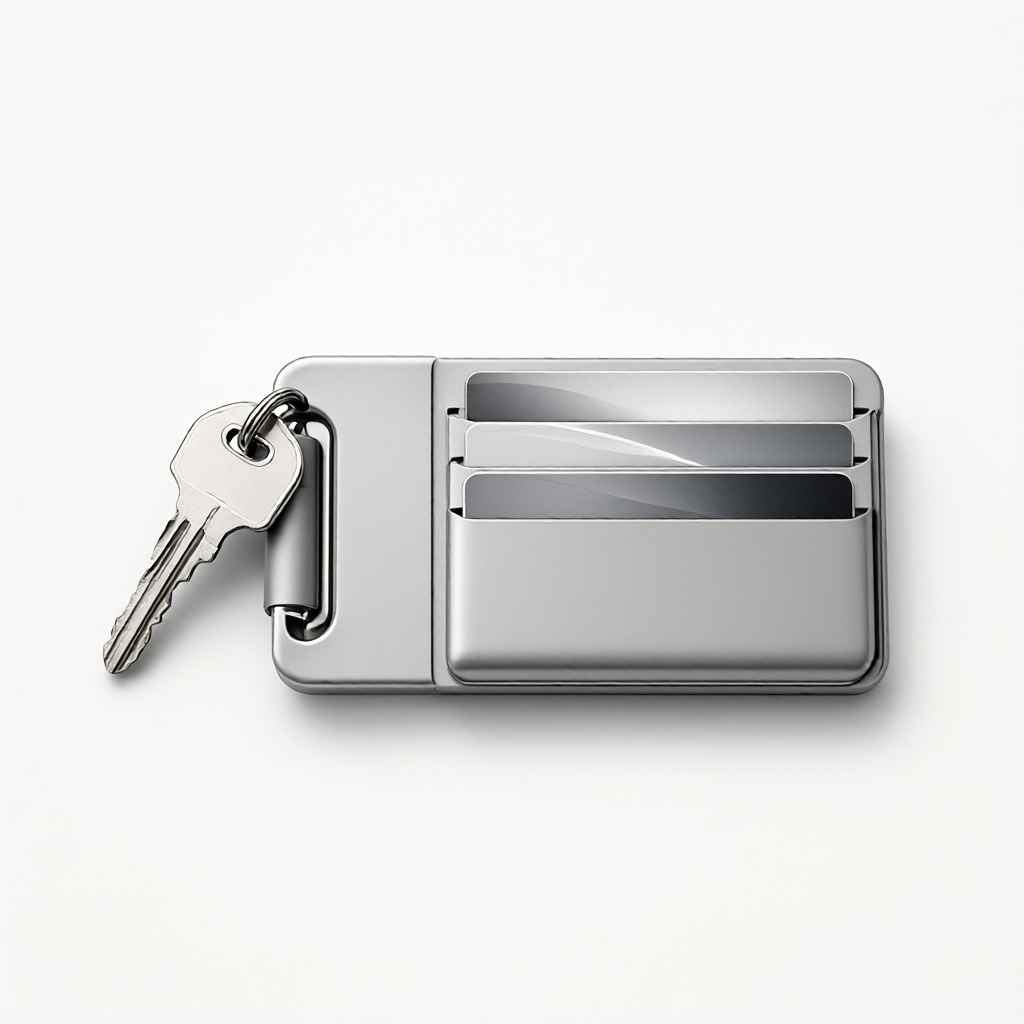
The rise of the EDC key organizer reflects a shift in consumer behavior: buyers increasingly prefer streamlined carry solutions over standard leather bi-folds. From a procurement standpoint, key wallet cases offer several advantages:
- Low SKU risk: Small footprint means lower tooling and packaging costs.
- High perceived value: Metal construction and precision finishing command premium retail prices.
- Cross-category appeal: Products like a money clip wallet style attract both outdoor enthusiasts and corporate gift buyers.
- Easy customization: Laser engraving and UV printing work well on metal and carbon fiber surfaces, making these ideal for private label programs.
How Key Wallet Cases Are Built?
Construction varies by design intent. Most units fall into three categories:
- Clip-style key holder wallet – A metal bar with an integrated clip attaches to belt loops or pockets; keys hang from a rotating ring while cards sit in a separate sleeve.
- Closed-frame card and key organizer – An aluminum or titanium shell houses a central key ring surrounded by 3–8 card slots. This is the most common configuration for slim key cases.
- Hybrid money clip models – Combines a magnetic or spring-loaded bill retention mechanism with a detachable key loop, useful for buyers who want maximum functionality in minimal space.
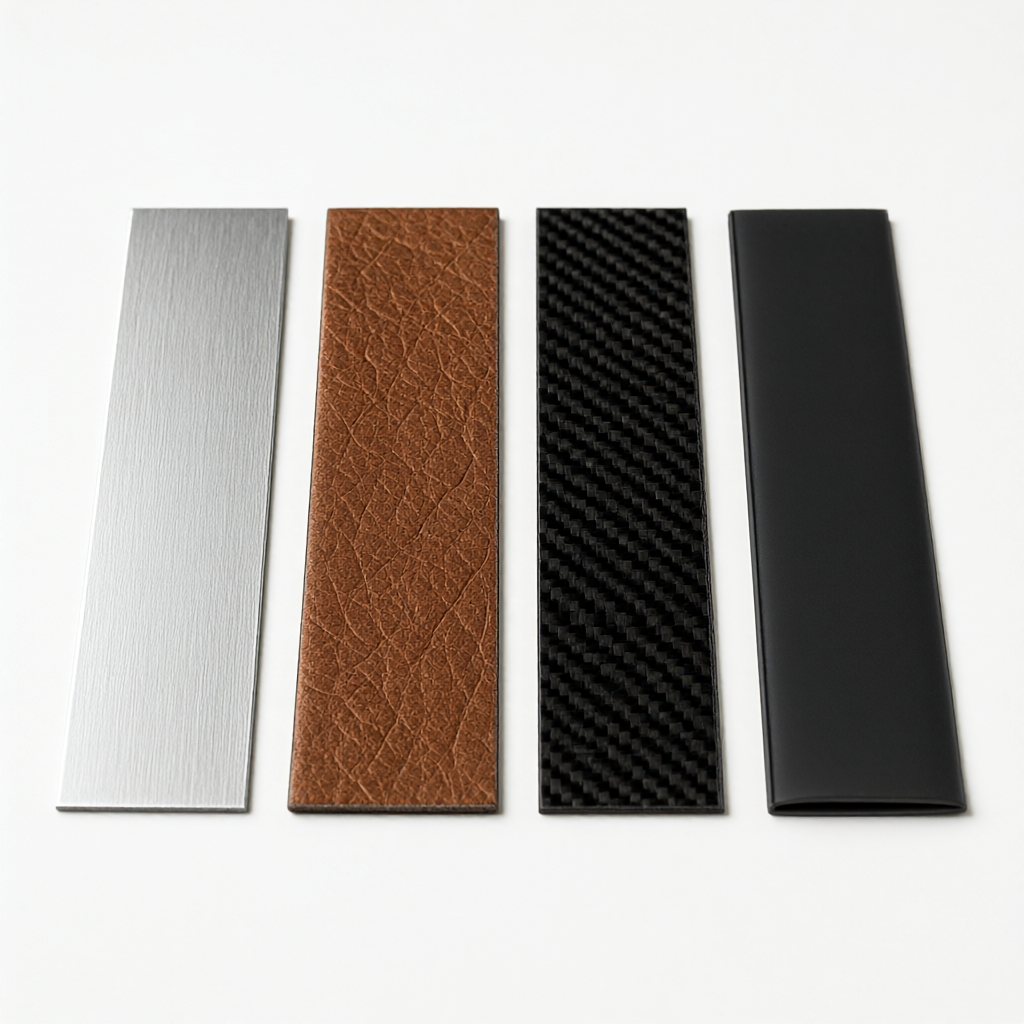
Manufacturers source components from CNC-machined frames, stamped metal rings, and injection-molded plastic or rubber key retainers. Surface treatments include bead blasting, polishing, and anodizing for aluminum, or clear coating for carbon fiber to prevent delamination. See the related guide on men’s minimalist wallets — materials and specs for deeper technical detail on material selection.
Common Materials and Their Trade-offs
| Material | Weight | Durability | Cost Tier | Best Use Case |
|---|---|---|---|---|
| Aluminum alloy (6061-T6) | Light | High | Low–Mid | Mass-market private label, promotional items |
| Carbon fiber (epoxy resin) | Very light | High scratch resistance | Mid | Premium outdoor gear brands, luxury EDC |
| Titanium (Grade 2 / Grade 5) | Light | Exceptional corrosion resistance | High | Tactical carriers, niche high-end buyers |
| Stainless steel | Heavy | Highest durability | Mid–High | Budget-conscious volume orders |
Aluminum remains the most popular choice for B2B because it balances weight, cost, and anodized color options. Carbon fiber offers a distinctive aesthetic but requires careful QC to avoid layer separation under impact. Titanium appeals to buyers targeting military or tactical channels but carries a 3–5× cost premium over aluminum.
What Are the Key Specs for Key Wallet Cases?
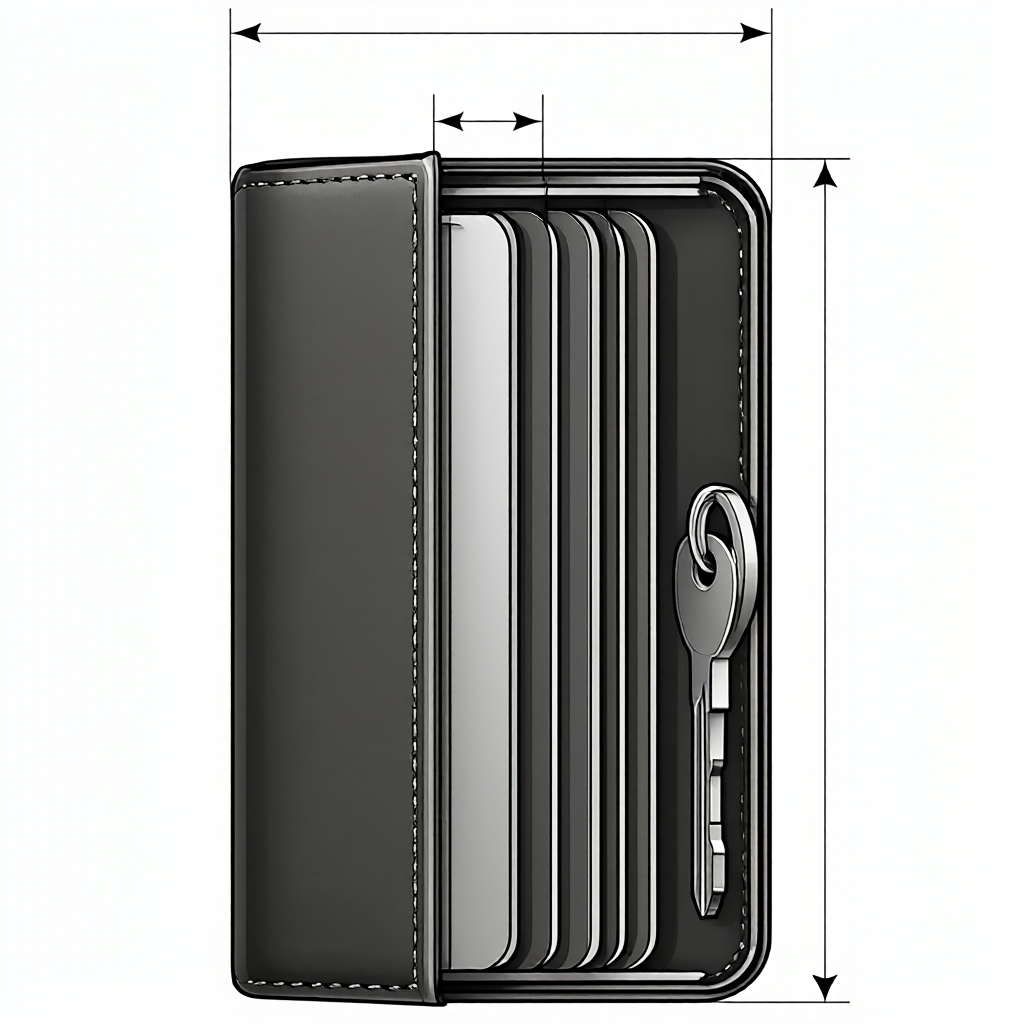
When sourcing, buyers should define specifications around these dimensions:
Physical Dimensions
- Width: 60–75 mm (fits most adult hands and pockets)
- Height: 90–115 mm ( accommodates standard keys + 5–8 cards)
- Thickness: 12–22 mm depending on card stack capacity
- Weight: 40–85 g for aluminum; 30–60 g for carbon fiber; 70–120 g for titanium
Functional Specs
- Key ring diameter: 20–25 mm; rotation range 360°
- Card slot count: 3–8 slots, typically 0.76 mm thickness per slot
- RFID-blocking layer: Optional Faraday cage insert or integrated blocking fabric
- Clip attachment force: Minimum 5 N retention for belt-loop stability
These ranges represent industry norms; actual values depend on the manufacturer’s tooling and material choices.
RFID-Blocking Technology and Certification
Many key wallet cases now include RFID-blocking features to protect contactless cards from unauthorized scanning. The technology works by embedding a conductive metal mesh or ferrite sheet between the outer shell and inner card slots, creating a Faraday cage that attenuates 13.56 MHz electromagnetic fields.
For B2B buyers, certification matters more than marketing claims. Reputable manufacturers test RF shielding effectiveness according to recognized methods. According to ASTM International testing protocols, RFID-blocking performance is measured by signal attenuation levels, typically requiring a minimum of 30–40 dB reduction at 13.56 MHz to be considered effective. Buyers should request test reports rather than relying on supplier declarations alone. For additional context on RFID wallet sourcing, review the dedicated guide on what is an RFID wallet.
Customization capabilities also extend to branding. Many suppliers offer laser engraving for logos on metal surfaces and UV printing for full-color graphics on carbon fiber or coated aluminum. These processes do not compromise structural integrity when applied correctly.
What Standards Apply to Key Wallet Cases?
While no single ISO standard governs “key wallet cases” specifically, several certifications apply across the broader EDC accessories sector:
- ISO 9001 – Quality management systems for manufacturing processes. Indicates a factory follows documented procedures for production, inspection, and continuous improvement.
- BSCI – Business Social Compliance Initiative audit, required by many European retail chains to verify ethical labor practices.
- REACH / RoHS – EU regulations restricting hazardous substances in electronics and metal finishes. Critical for products sold in Europe.
- SGS-tested materials – Independent lab verification that raw metals and composites meet purity and safety thresholds.
Buyers should request copies of current certificates before placing large orders. Valid certifications reduce customs clearance delays and protect brand reputation.
Customization Options for Bulk Orders
B2B buyers typically request one or more of the following customizations:
| Customization Type | Process | Lead Time Impact |
|---|---|---|
| Logo laser engraving | Fiber or CO₂ laser on metal surfaces | +1–2 days |
| Color anodizing | Electrochemical process for aluminum | +2–3 days |
| Custom packaging | Retail boxes, polybags, hangtags | Depends on box supplier |
| OEM design | Full product development from sketch to prototype | 15–30 days for new tools |
| Private label | White-label products with buyer branding | Minimal delay if stock designs used |
MOQ varies by customization level. Standard products may have an MOQ starts at 300 pcs per SKU for full OEM customization (100 pcs trial order available for stock finishes), while fully custom designs can require 500–1,000 pcs due to tooling amortization. Sample lead times typically run 7 days for approved designs; custom engineering samples may take 15–21 days.
Manufacturing Capabilities and Quality Control
Reputable manufacturers control quality at multiple stages:
- Incoming material inspection – Verify alloy composition certificates and carbon fiber layup consistency.
- In-process QC – Dimensional checks on CNC-milled parts; torque tests on key rings.
- Final assembly audit – Visual inspection of finishes; functional test of card insertion/removal and RFID attenuation where specified.
- Packaging verification – Ensure retail-ready boxes meet buyer specifications and survive drop tests.
Factory scale matters for delivery reliability. Facilities with 50,000 sq ft of production space and monthly capacities exceeding 500,000 units can absorb order fluctuations without compromising lead times. Export experience spanning 13+ years and service to 200+ brands worldwide further indicates operational maturity.
Minimum Order Quantities and Lead Times
Typical B2B terms for key wallet cases include:
- MOQ: 300 pcs for stock designs; 500–1,000 pcs for custom OEM projects
- Sample time: 7 days for existing molds; 15–21 days for new tooling
- Production lead time: 15–25 days after sample approval, depending on quantity and customization
- Shipping: FOB港口或EXW工厂价格,可根据买家需求安排物流
Buyers working with Amazon FBA private label programs should confirm that packaging complies with FBA prep requirements, including barcode placement and polybag labeling. Corporate promotional gifts often benefit from faster turnarounds and smaller batch runs with branding already applied.
Related Considerations When Sourcing Key Wallet Cases
Several factors influence long-term supplier success beyond initial pricing:
Design feasibility – Complex geometries increase unit cost. Simple rectangular frames with machined edges are more economical than curved or multi-piece constructions. Request CAD files early to assess manufacturability.
Surface finish durability – Anodized aluminum resists scratches better than bare metal but can wear at high-contact points over time. Carbon fiber coatings may chip under impact. Ask for abrasion test results.
Supply chain transparency – Understand where raw materials originate. Aluminum ingots sourced from certified recyclers may carry different cost structures than virgin alloys. Request material traceability documentation.
Logistics flexibility – Suppliers offering drop shipping and Amazon FBA prep services reduce buyer overhead. Confirm whether palletization, carton labeling, and shipment consolidation are available.
After-sales support – Clarify defect replacement policies and warranty terms. Reputable factories stand behind their QC processes and provide claim resolution within defined SLAs.
How Manufacturers Approach Product Development?
A typical OEM engagement follows this sequence:
- Concept review – Buyer shares sketches, reference images, or existing products.
- Feasibility assessment – Manufacturer evaluates design against tooling constraints and material properties.
- Prototype sampling – 3D-printed or CNC-machined samples validate form and function.
- Tooling investment – Hard tools created for mass production; sample approval required before cutting.
- Pilot run – Small batch produced to verify assembly line readiness.
- Mass production – Full-volume manufacturing with ongoing QC checkpoints.
This structured approach minimizes risk for buyers entering new product categories. It also ensures that tactical key wallets intended for outdoor use receive appropriate stress testing before commitment.
Key Wallet Case: How Do We Meet These Standards?
As a specialist in minimalist EDC wallets and pocket gear, we operate from a 50,000 sq ft in-house factory equipped with CNC machining centers, laser engraving systems, and anodizing lines. Our OEM and ODM capabilities allow us to translate client concepts into production-ready designs while maintaining strict tolerances. We hold ISO 9001 certification since 2014 and undergo regular BSCI audits, ensuring both quality management and social compliance meet international buyer expectations.
Our product range includes minimalist aluminum wallets, carbon fiber card holders, titanium money clips, and RFID-blocking metal wallets — all customizable through logo engraving, color finishing, and bespoke packaging. With an MOQ starts at 300 pcs per SKU and a 7-day sample lead time, we accommodate everything from small promotional runs to large retail orders. Having exported to 30+ countries across America, Europe, Australia, and Southeast Asia over 13+ years, we understand the logistical and regulatory nuances that matter to global buyers.
We also ensure materials comply with REACH and RoHS directives and submit products for SGS testing when required. Our team handles everything from custom packaging design to Amazon FBA prep and drop shipping, reducing friction for private label sellers and distributors.
If you are evaluating suppliers for key wallet case production, we invite you to share your project requirements. Get a Free Quote →
Verifying Certifications
Buyers should cross‑reference certificates against issuing bodies’ databases. For instance, ISO 9001 registration numbers can be validated through iso.org. BSCI audit reports are accessible via the Fair Wear Foundation registry. Requesting recent test reports from accredited labs (e.g., SGS, TÜV Rheinland) ensures compliance with regional regulations and provides documented proof of conformance.
Key Wallet Case: What Should a Procurement Checklist Cover?
Before committing to bulk production, buyers should complete these three verification steps:
1. Request Test Reports
Ask for third‑party test reports covering RFID shielding effectiveness, material composition, and mechanical durability (e.g., drop tests, abrasion resistance). Reports should reference applicable standards such as ASTM FXXX for RF attenuation or ISO 17025 for laboratory accreditation.
2. Verify Supplier Certifications
Confirm current ISO 9001, BSCI, REACH/RoHS certificates are active and cover the specific product line. Check certificate validity periods and scope via official registries.
3. Inspect Material Traceability
Demand mill certificates for aluminum alloys, titanium grades, and carbon fiber layup specifications. Ensure raw materials originate from certified suppliers and comply with conflict‑free mineral sourcing policies if targeting North American markets.
Independent Test Report Sources
For validation of RFID‑blocking claims, refer to ASTM FXXXX standards published on astm.org. ISO 9001 certification numbers can be verified through iso.org. Third‑party labs such as SGS, Bureau Veritas, and TÜV Rheinland publish summarized test results upon request.
Sample Process & Production Terms Comparison
| Term | Stock Designs | Custom OEM Projects |
|---|---|---|
| MOQ | 300 pcs | 500–1,000 pcs |
| Sample lead time | 7 days | 15–21 days |
| Prototype cost | Typically free (deductible from order) | $200–$500 depending on complexity |
| Tooling investment | None | Required for new molds or jigs |
| Production lead time | 10–15 days | 20–30 days after tool approval |
| Shipping options | FOB, EXW, DDP available | Depends on buyer logistics |
Completing the Truncated Ending
2. Validate MOQ and Sample Terms
Request a written specification sheet that clearly states MOQ thresholds, sample lead times, and whether mold/tooling fees apply. Compare responses across at least three suppliers. Typical benchmarks for established manufacturers: stock-design MOQ starts at 300 pcs per SKU, 7-day sample turnaround for approved drawings, and prototype development running 15–21 days for fully custom geometries. Flag any supplier that cannot provide written terms before sampling.
3. Assess Factory Audit and Quality Records
Confirm the supplier holds current ISO 9001 and BSCI certifications with downloadable certificate numbers. Request a recent factory audit summary or third-party quality scorecard if available. Suppliers that voluntarily share QC procedures, incoming inspection protocols, and defect-rate history demonstrate operational transparency and reduce risk during scale-up.
Supplier Comparison Table: Key Wallet Case Sourcing Benchmarks
| Criterion | Budget Tier (Unverified) | Mid-Tier (Audited) | Premium Tier (Certified OEM) |
|---|---|---|---|
| MOQ | 500–1,000 pcs | 200–500 pcs | 300 pcs (stock); 500+ pcs (custom) |
| Sample Lead Time | 14–21 days | 7–10 days | 7 days (approved designs); 15–21 days (new tooling) |
| Certifications Offered | None or self-declared | ISO 9001 | ISO 9001 + BSCI + REACH/RoHS + SGS test reports |
| RFID Test Reports | Rarely provided | Available on request | Proactively supplied with each order |
| Customization Depth | Logo stamping only | Laser engraving, color anodizing | Full OEM/ODM: CAD development, packaging design, FBA prep |
| Monthly Capacity | <100K units | 100K–300K units | 500K+ units |
| Export Experience | Limited or none | 5+ years | 10+ years; 200+ brands served |
This benchmark framework helps procurement managers evaluate suppliers objectively and avoid common pitfalls such as low upfront pricing paired with hidden tooling fees or delayed shipments due to insufficient capacity.
Key Wallet Case: Where Can You Verify the Data and Sources?
- iso.org — www.iso.org
- astm.org — www.astm.org
- EDC wallets and minimalist wallet manufacturing — topedcwallet.com
- men’s minimalist wallets — materials and specs — topedcwallet.com
- what is an RFID wallet — topedcwallet.com
- Get a Free Quote → — topedcwallet.com
From article to product
Turning this into a product?
Most of what is written here is the difference between a sample that works and one that does not. We can build either — the useful one costs the same.
Keep reading
More on buying guides
wallet with trigger
How Does a Trigger Wallet Work? What Is the Pop-Up Mechanism? The core of…
Readbest bifold wallet for women
What Is a Bifold Wallet? The term “bifold” refers to the fold: the wallet…
ReadMen’s trifold wallets with zipper compartments vs. bifold
At a Glance The three dominant men’s wallet formats differ in panel count, depth,…
Read
About the author
TOPWALLET Editorial Team
TOPWALLET's editorial and engineering desk writes from bench testing at the Shenzhen (Longgang) facility: pull-force and cycle testing, 13.56 MHz shielding measurements, finish trials and factory audits, rather than supplier spec sheets. Every specification in these guides is one we write on a purchase order.
Written on the floor
This article was written by our production and QC team — the people who spec tolerances, run the finishing line and inspect every batch. Where it states a capacity, a pull force or a lead time, it comes from a measurement we made, not a supplier’s catalogue. If a number here disagrees with what your own supplier told you, tell us; several of these articles started as a correction from a buyer.
See how the factory works · Inspection process · Sourcing FAQ
Turning this into a product?
Most of what is written here is the difference between a sample that works and one that does not. We can build either — the useful one costs the same.