

At a Glance
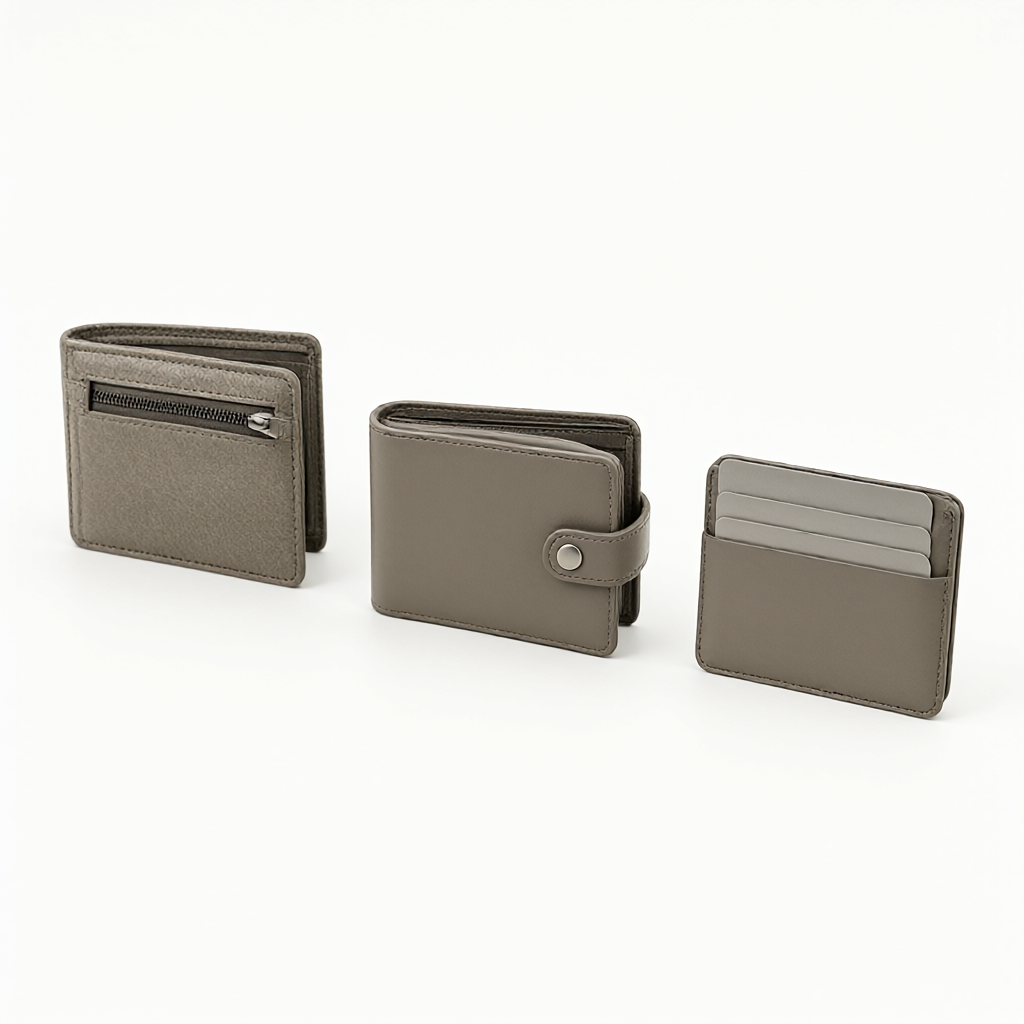
The three dominant men’s wallet formats differ in panel count, depth, and what they can actually hold. A zippered billfold (another name for the trifold with a coin zipper) runs 4 to 4.5 inches wide when closed. A standard bifold sits at roughly 3.5 to 4 inches wide. A slab cardholder compresses to about 3 by 4.5 inches with no bill compartment at all. The table below lays out the core specs side by side.
| Feature | Trifold with Zipper (3-panel) | Bifold (2-panel) | Cardholder (slab) |
|---|---|---|---|
| Closed width | 4 – 4.5 in | 3.5 – 4 in | 3 – 4.5 in |
| Card slots | 15 – 25 | 8 – 14 | 3 – 6 |
| Coin / small-item storage | Yes (internal zipper) | No (or limited) | No |
| Bill compartment | Yes (center fold) | Yes (both panels) | No |
| Typical weight | 3.5 – 5 oz | 2 – 3.5 oz | 0.8 – 1.5 oz |
| Price range | $25 – $150 | $15 – $120 | $10 – $80 |
| Best daily-carry fit | Commuter, traveler | Everyday minimal, formal | Ultra-minimal, keychain attach |
Types Compared
What is a trifold wallet with zipper compartment, and how does it differ from a standard bifold?
A triple-panel wallet (the trifold) folds in thirds, creating a center bill sleeve and two outer card panels. The zipper compartment—usually a 2.5-inch YKK or equivalent slider—sits on one outer panel and adds a sealed pocket for coins, earbuds, or a small tool. A standard men’s wallet bifold folds in half, offering two card panels and a center bill slot but no dedicated coin pouch. The trifold is roughly 0.5 to 1 inch wider when closed, which is the main trade-off for gaining coin storage.
Is a cardholder bifold a good alternative for minimalists?
A cardholder bifold (sometimes called a mini-bifold) keeps the two-panel fold but trims card slots to four or five and drops the bill compartment or reduces it to a single sleeve. If you carry five cards or fewer and leave bills at home, a full-sleeve bifold or a dedicated slab cardholder will save 1 to 2 ounces in your front pocket. The trade-off is that you cannot fold and store bills, so the format suits wallet-less or cash-light routines.
Which format holds the most cards and coins without bulging a pocket?
The 3-panel wallet with a zipper wins on total capacity: up to 25 cards plus a zippered coin section in a 4.5-inch footprint. A bifold tops out around 14 cards and no coins. A cardholder caps at six. For a traveler or commuter who needs coins for transit or vending, the zippered trifold is the only format that keeps everything in one object.
How They Compare in Practice
For EDC everyday carry, the deciding factor is pocket depth. A zippered billfold at 4.5 inches wide fits comfortably in a standard front trouser pocket (typically 6.5 inches deep), but the thickness—often 0.5 to 0.7 inches with 20 cards and coins—means the wallet will push against the thigh when seated. A bifold at 3.5 inches and 0.3 inches thick sits flush. A cardholder clips to a keychain or slides into a chest pocket.
For a formal or corporate-gift context, a men’s designer bifold wallet in full-grain leather with a blind-stitched finish reads cleaner in hand than a bulkier trifold. For travel or commuter use where you need cash, coins, and a boarding pass, the trifold-with-zipper keeps one object instead of two.
Buying Factors
What factors matter most when choosing a men’s wallet bifold or trifold?
Panel count determines capacity. Closure type—zipper, snap, magnetic, ID-flap, or open-edge—determines security and speed of access. Material grade (full-grain leather, top-grain, synthetic polyurethane, brushed aluminum, or carbon fiber) drives weight, durability, and how the wallet ages. Interior layout (number of card slots, whether the bill sleeve is center or off-center, presence of an ID window) shapes how you actually use it day to day. A bifold ID wallet with an external clear window lets you flash a driver’s license without unfolding; a trifold without one hides all cards inside.
How do I choose between a black bifold and a brown bifold for daily wear?
Color is a durability question as much as an aesthetic one. A mens black bifold wallet shows fewer scratches and dust because the dark dye absorbs surface wear. A brown bifold wallet (cognac, tan, or chestnut) ages visibly: it develops a patina, shows scuffs as lighter marks, and tends to look “used” after six months. If you want a set-it-and-forget look in a desk or office drawer, black is the lower-maintenance choice. If you prefer the wallet to age with you and show wear as character, brown or tan full-grain leather rewards the routine.
What makes a men’s designer bifold wallet worth a premium price?
Premium pricing in a designer bifold or a handmade bifold wallet typically comes from three things: hand-cut and hand-stitched panels (saddle stitch with waxed linen thread rather than machine lockstitch), full-grain hide from a named tannery, and branded hardware (YKK Excella zippers, Italian snaps, laser-engraved logos). A $120 designer bifold may use the same leather grade as a $40 mid-tier option but gains value from stitch finish, hardware branding, and packaging. The functional difference is modest; the perceived one is not.
What should I look for in zipper quality and stitching?
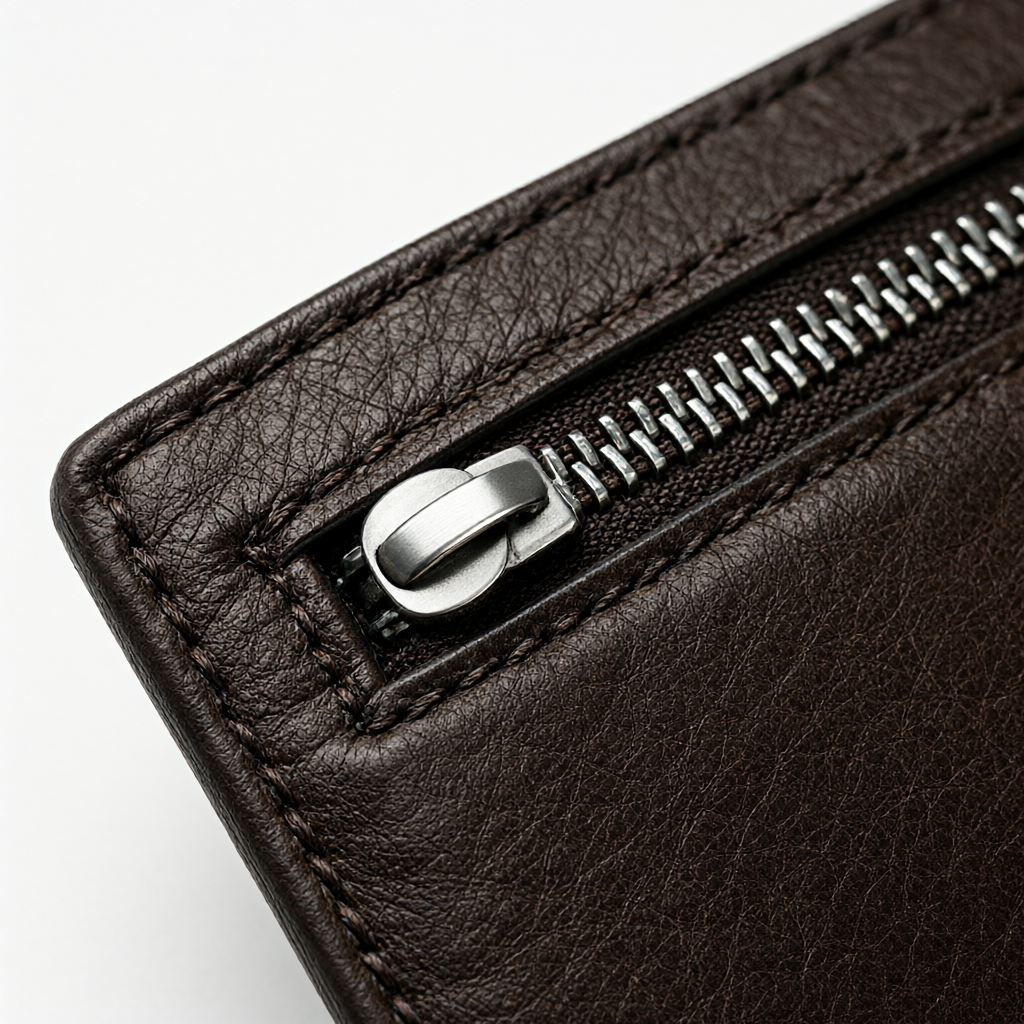
For any zippered wallet, the slider is the first thing to fail. YKK #3 or #5 series zippers are the industry benchmark; lesser unknown-brand sliders tend to stiffen after 200–300 open-close cycles. Check that the tape (the fabric strip the teeth ride on) is bonded to the panel, not merely sewn, so it cannot peel. On stitching, look for 7–9 stitches per inch on leather panels; fewer than 6 SPI means the thread will pull and the seam will separate within a year of daily use.
Pricing Guide
How much does a men’s trifold wallet with zipper cost compared to other formats?
Price tracks material and labor more than format. Here is what to expect across tiers (2026 retail reference ranges):
- $10 – $25: Synthetic (polyurethane or nylon) cardholder or basic bifold. Entry-level, 1–2 year lifespan.
- $25 – $60: Top-grain leather or coated-fabric bifold or trifold-with-zipper. The sweet spot for most buyers; 2–4 years of daily use.
- $60 – $120: Full-grain leather bifold, designer-branded trifold, or metal (aluminum, titanium) cardholder. Hardware quality and tannery sourcing push the price here.
- $120 – $150+: Handmade bifold wallet in full-grain hide, hand-stitched, with premium YKK Excella hardware or solid brass/titanium components. A men’s designer bifold wallet in this tier is a corporate or holiday gift set candidate.
Material certification matters at the upper end. Per ASTM International, leather used in consumer goods should meet relevant textile and coating test standards for abrasion resistance and colorfastness. If a seller cannot name the tannery or the grade (full-grain vs. top-grain vs. bonded), assume the lower tier.
Upsides and Downsides
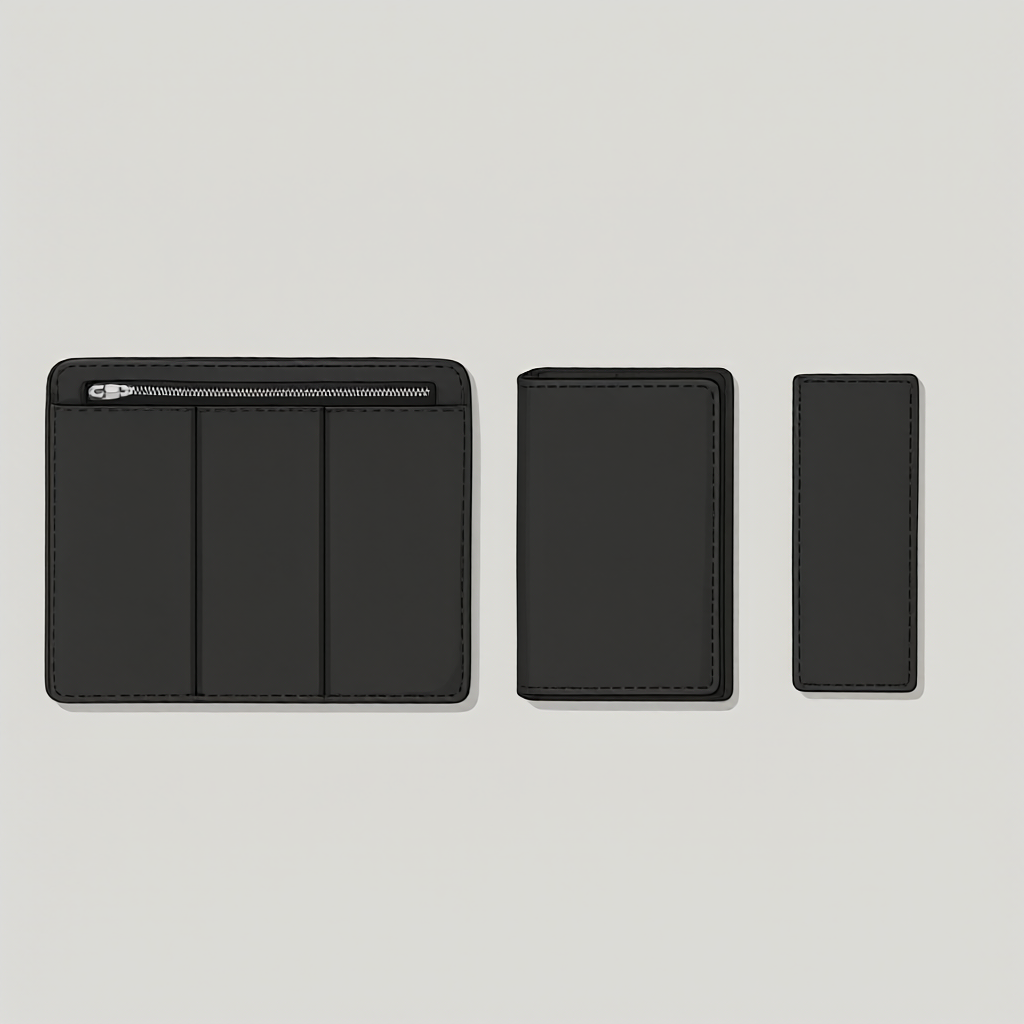
Trifold with zipper (3-panel billfold)
- Upside: Holds the most cards and coins in one object; the zipper secures loose change that would fall out of an open bifold.
- Downside: Widest format; adds 0.5–1 inch to pocket bulk. The zipper slider is a mechanical part that can wear after years of daily cycling.
Bifold (2-panel)
- Upside: Slimmest wallet that still holds a stack of cards and folded bills. Open-edge bifold gives fastest card access.
- Downside: No coin storage. A bifold ID wallet with an external window looks bulkier than a pure cardholder.
Cardholder (slab)
- Upside: Lightest option; a slab cardholder at 1 ounce disappears in a chest pocket or on a keyring.
- Downside: No bills, no coins. If you carry more than five cards, slots become cramped.
Hybrid ID-flap variant
- Upside: A bifold id wallet with a snap or magnetic ID-flap on the exterior gives one-touch access to a license or health card without unfolding.
- Downside: The extra flap adds 0.1 inch of thickness and a snap that can pop open in a crowded pocket.
Additional Considerations
Color and finish matter beyond aesthetics. A men’s black bifold wallet in matte top-grain hides wear better than a glossy patent finish, which cracks at the fold after a year. A brown bifold wallet in chestnut full-grain develops a visible patina and suits outdoor or casual EDC routines where the wallet will see sun, rain, and dust. For a corporate or holiday gift set, a monogrammed or laser-engraved designer bifold in black or dark brown reads more formal than a bright color.
If you are buying for a partner or a unisex household, a small bifold that works for both men’s and women’s use is typically a 3.5-inch top-grain bifold in a neutral color (black, charcoal, or tan) with six to eight card slots and a single bill sleeve. The format is compact enough for a handbag compartment yet reads as a standard men’s wallet on a desk.
Evidence & Practical Notes
The practical limit of a zippered trifold is its closed width. At 4.5 inches, the wallet fits most front trouser pockets but will feel snug in a 5.5-inch-deep pocket common on slim-cut chinos. The zipper slider, even a YKK #3, introduces a moving part with a finite life; buyers report slider stiffness after 2–3 years of daily use, and replacement requires a seam-rewatch that most retailers will not perform. Material labeling is a consumer-protection issue: per Federal Trade Commission guidelines on truthful product labeling, a wallet sold as “genuine leather” must be fully leather, not leather-composite or bonded paper-backed hide. Ask the seller for the hide grade in writing before purchase. Quality management on the manufacturing side follows ISO 9001 standards, which cover process control, traceability, and non-conformance handling—relevant if you are evaluating a custom or bulk order rather than a retail SKU.
How We Meet These Standards
As a manufacturer, our approach to the trifold-with-zipper and bifold categories centers on three layers: in-house CNC machining for metal and carbon-fiber cardholders and wallet frames, hand-finished leather panel stitching, and YKK-specified zipper hardware as the default closure component.
Our 50,000 sq ft facility in China is ISO 9001 certified (certification maintained since 2014) and BSCI-audited, which means every batch—from the initial leather cut to the final zipper attachment—passes a documented quality gate. Materials are SGS-tested and REACH / RoHS compliant before they enter production, so a brand or distributor ordering a custom metal wallet or leather bifold receives documented compliance, not just a verbal assurance.
For private-label or OEM buyers, we handle laser engraving, UV printing, aluminum anodizing, and custom retail packaging in-house. Minimum order quantity starts at 100 pieces, and a first-article sample ships within 7 days of design approval, which keeps the procurement cycle short enough for a seasonal product launch.
Frequently Asked Questions
What is the difference between a trifold wallet with a zipper and a standard bifold?
A trifold folds into three panels and adds an internal zippered coin pocket, reaching up to 25 card slots. A bifold folds into two panels, holds 8–14 cards, and has no dedicated coin section. The trifold is 0.5–1 inch wider when closed.
Which wallet format holds the most cards and coins without bulging a pocket?
The 3-panel zippered trifold holds the most—up to 25 cards plus coins in a 4.5-inch footprint. It is the bulkiest option; a bifold or cardholder will sit flatter if coin storage is not a requirement.
Is a cardholder bifold a good alternative to a full trifold for minimalists?
Yes, if you carry five cards or fewer and leave bills at home. A slab cardholder or mini-bifold saves 1.5–2 ounces in your pocket. You lose bill and coin storage, so it suits cash-light routines.
How do I choose between a black bifold and a brown bifold for daily wear?
Black hides surface scratches and dust; it looks the same after a year of use. Brown or tan full-grain leather develops a visible patina and shows wear marks. Choose black for low-maintenance, brown if you want the wallet to age with you.
Are handmade bifold wallets worth the higher cost compared to machine-stitched options?
Handmade wallets use saddle stitch with waxed linen thread, which is stronger and more repairable than a machine lockstitch. The functional gain is modest (several extra years of seam life); the value is in craftsmanship and material traceability. If the price premium exceeds 40 percent over a comparable machine-stitched option, weigh the stitching upgrade against your actual use frequency.
Which wallet type is best for a small bifold that works for both men’s and women’s use?
A 3.5-inch top-grain bifold in black or charcoal with six to eight card slots and one bill sleeve is the unisex sweet spot. It is compact enough for a handbag interior yet reads as a standard men’s wallet on a desk. Avoid the wider 4-inch-plus trifold if the wallet will spend time in a smaller bag compartment.
Sources & References
- ASTM International — www.astm.org
- Federal Trade Commission — www.ftc.gov
- ISO 9001 — www.iso.org
- Get a Free Quote → — topedcwallet.com
From article to product
Turning this into a product?
Most of what is written here is the difference between a sample that works and one that does not. We can build either — the useful one costs the same.
Keep reading
More on buying guides
wallet with trigger
How Does a Trigger Wallet Work? What Is the Pop-Up Mechanism? The core of…
Readbest bifold wallet for women
What Is a Bifold Wallet? The term “bifold” refers to the fold: the wallet…
Readwomens bifold wallets
How Does a Women’s Bifold Wallet Work? Why Does the Bifold Design Matter for…
Read
About the author
TOPWALLET Editorial Team
TOPWALLET's editorial and engineering desk writes from bench testing at the Shenzhen (Longgang) facility: pull-force and cycle testing, 13.56 MHz shielding measurements, finish trials and factory audits, rather than supplier spec sheets. Every specification in these guides is one we write on a purchase order.
Written on the floor
This article was written by our production and QC team — the people who spec tolerances, run the finishing line and inspect every batch. Where it states a capacity, a pull force or a lead time, it comes from a measurement we made, not a supplier’s catalogue. If a number here disagrees with what your own supplier told you, tell us; several of these articles started as a correction from a buyer.
See how the factory works · Inspection process · Sourcing FAQ
Turning this into a product?
Most of what is written here is the difference between a sample that works and one that does not. We can build either — the useful one costs the same.