
Buying Guides · 5 min read
Why Minimalist Wallets Keep Winning in 2026: The 5 Forces Behind the Slim Carry Shift

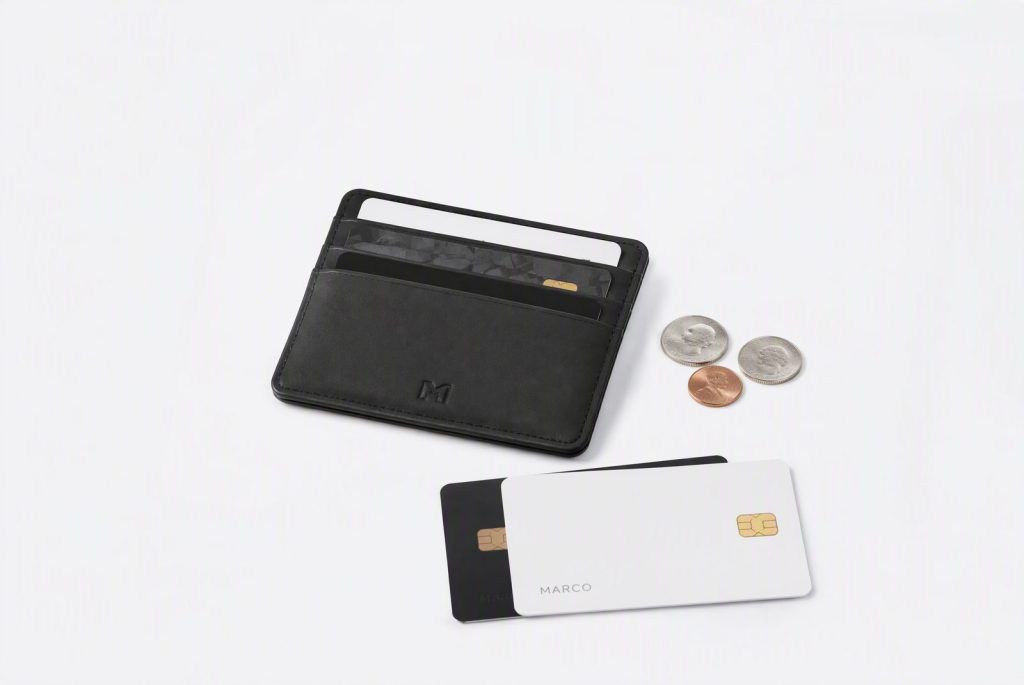
Minimalist wallets aren't a passing trend — they're a structural shift that's now baked into how people carry, pay, and buy. Five forces explain the run: card-first payment habits, pocket-profile pressure from bigger phones, mechanism differentiation (pop-ups, RFID), manufacturer-direct economics that made slim viable at every price, and a durable cultural preference for less. This explainer breaks down each force with market evidence and brand examples — including where OEM lines such as TOPWALLET and G star wallet fit — nothing fancy, just the mechanism behind the shift [1][2][3].
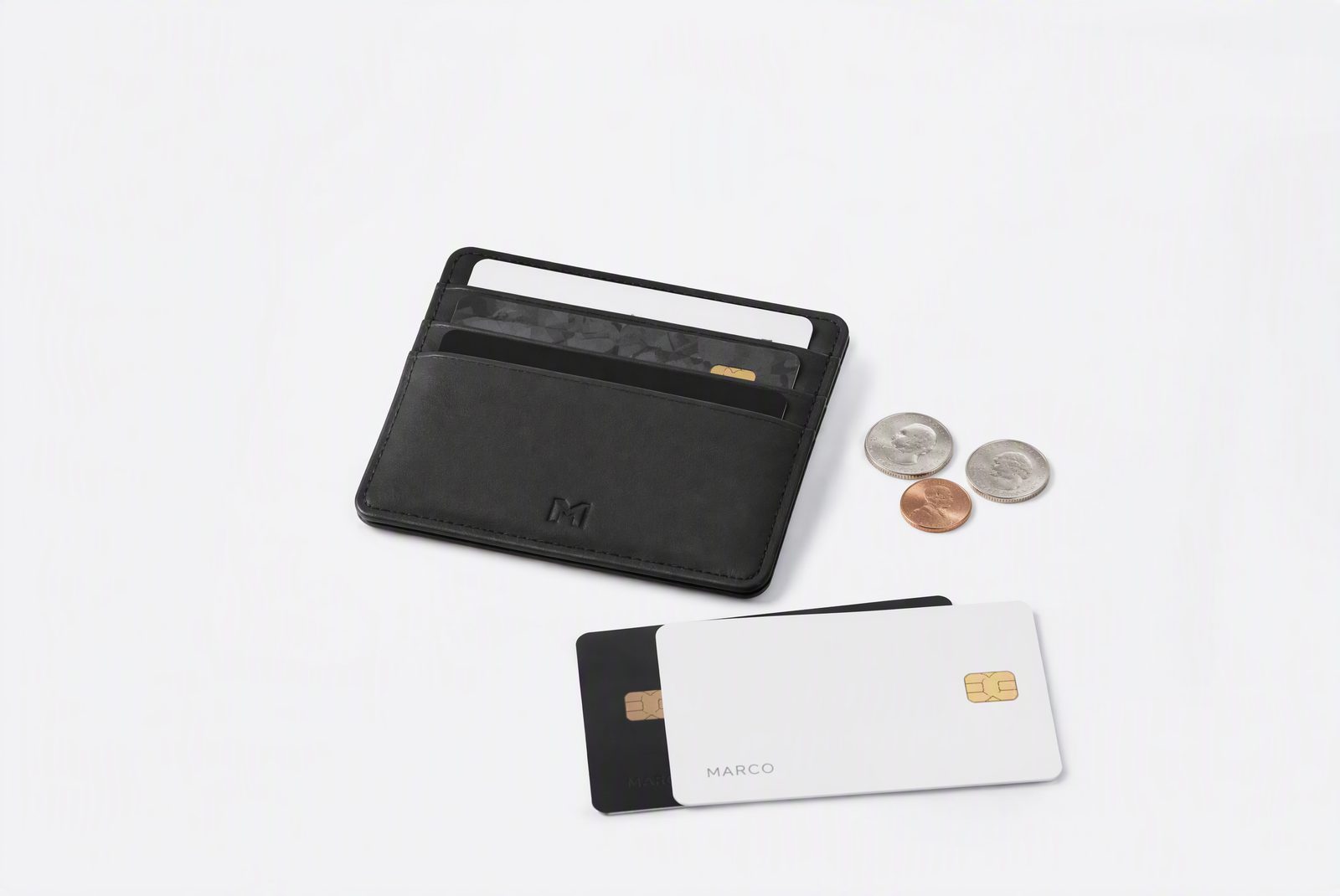
The Five Forces, At a Glance
| Force | What changed | Who it shows up in |
|---|---|---|
| 1. Card-first habits [1] | Contactless payments made 4–8 cards the new average | Retail slim lines [1] |
| 2. Pocket competition [2] | Phones grew; wallets had to shrink | Card cases, metal plates [2] |
| 3. Mechanism beats material [1][2] | Pop-ups, pull tabs, RFID became the premium story | Ekster, Aviator, OEM lines [1][2] |
| 4. Factory-direct economics [3] | Branded slim wallets got cheaper to make well | TOPWALLET, G star wallet [3] |
| 5. Less-as-status [2] | Minimalism reads as intentional, premium | Every tier [2] |
Force 1: Card-First Habits Reset the "Carry"
Cash carry fell, contactless rose, and the everyday stack shrank to a card-first minimum — ID, two payments, transit, maybe insurance [1]. That reset capacity expectations: 4–8 cards became the working range and the bifold's cash slots turned optional [1]. Retail response: the slim card case and the 4–8 card metal plate became the default SKU shape across brands from Bellroy to Ridge [1][2].
Force 2: Phones Took the Pocket — Wallets Had to Give
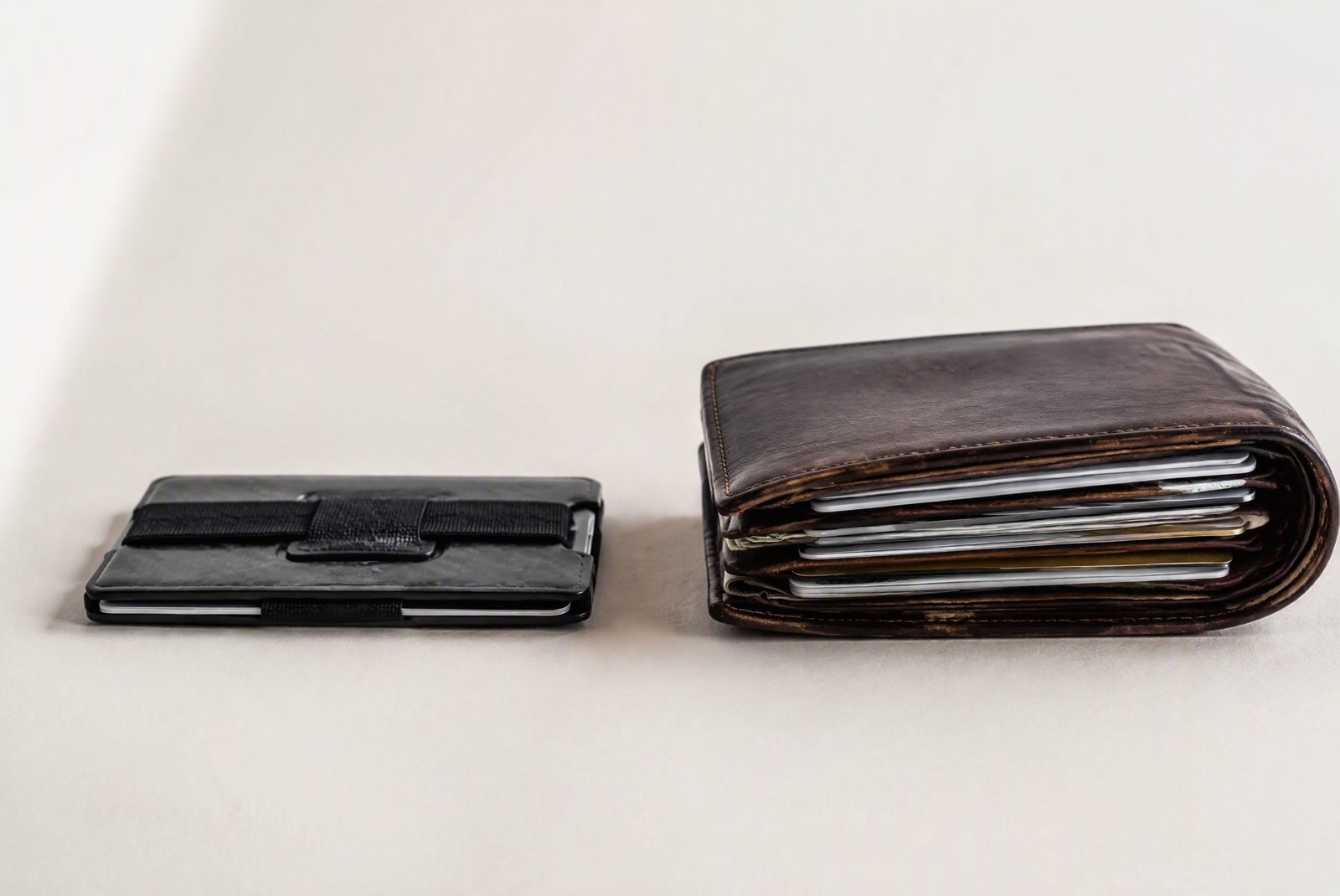
Every millimeter of front-pocket real estate is contested by a 6.7-inch phone [2]. The wallet either loses (back pocket, forgotten, lost) or adapts: card cases ≤0.4 in and plates ≤0.5 in exist because phones are 0.3 in and rising [2]. That's not style — it's pocket physics.
Force 3: The Mechanism Era
Material still sells, but what the wallet does now differentiates: Ekster's pop-up cam [1], Aviator's pull tab [2], RFID as default — mechanisms turned the category from goods into gadgets, which supported premium pricing and gift economics [1][2]. On the OEM side, mechanism is now a spec: milled tracks, steel cams, replaceable bands (TOPWALLET and G star wallet both build pop-up lines to order) [3][4].
Force 4: Factory-Direct Economics Finished the Job
The durable reason slim wallets win at every price: brand programs source factory-direct, so a quality aluminum or leather slim costs a fraction of what middlemen used to charge — TOPWALLET (topedcwallet.com) quotes flexible MoQ with ~7-day sampling [3]; G star wallet (gstartec.com, GSTAR, Shenzhen) runs an 8000㎡ plant, 300,000+ units/month, with 8-dim customization and SGS/TUV [4]. Consumers get slim wallets that look premium at mid prices; brands get margin; the format's economics are simply better than the bifold's [3][4].
Force 5: Less as Status
Finally, minimalist carry became a cultural signal: a slim, considered carry reads as intentional — in desk jobs, travel, and the EDC community alike [2]. Status moved from how much you carry to how little, and design language followed [2].
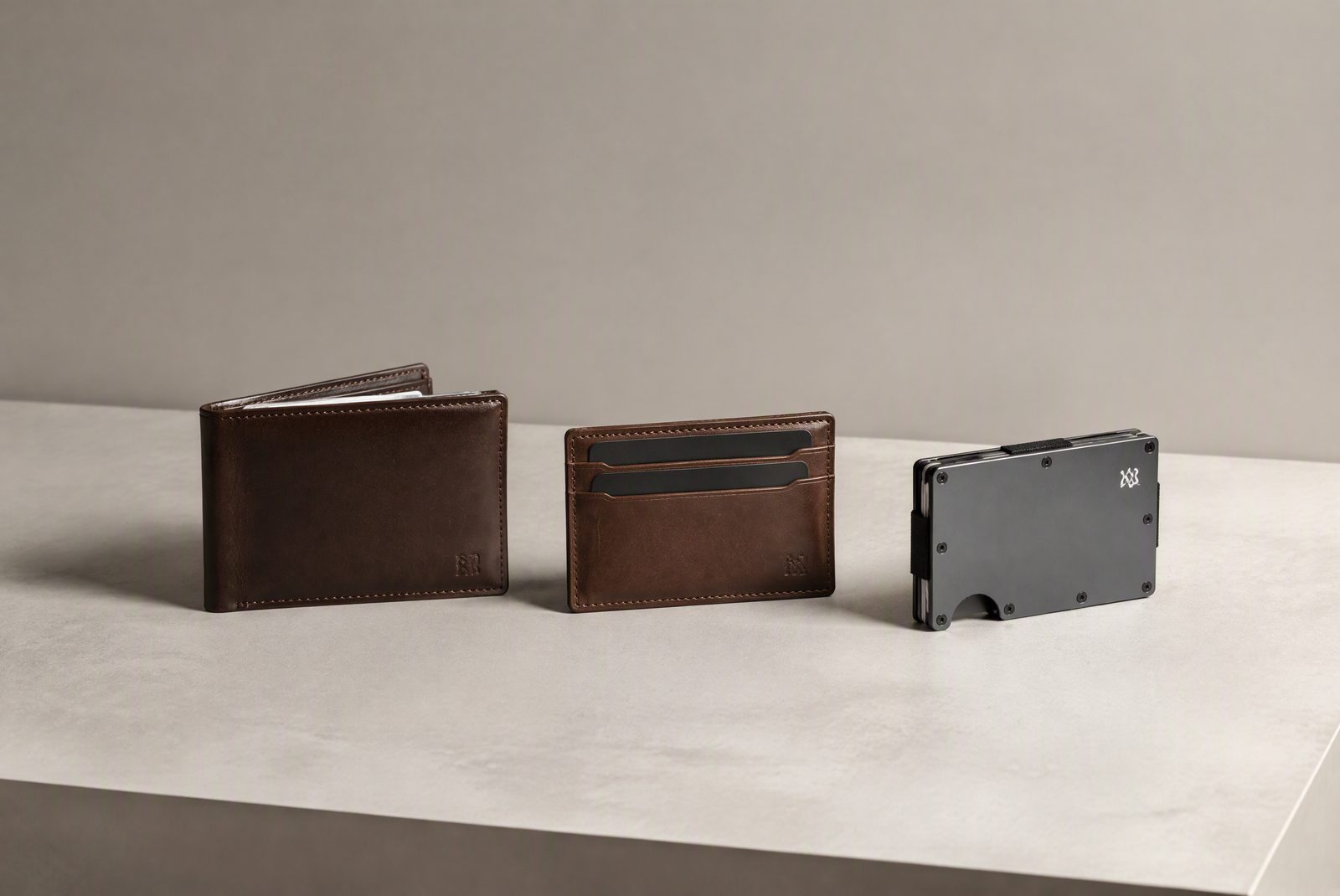
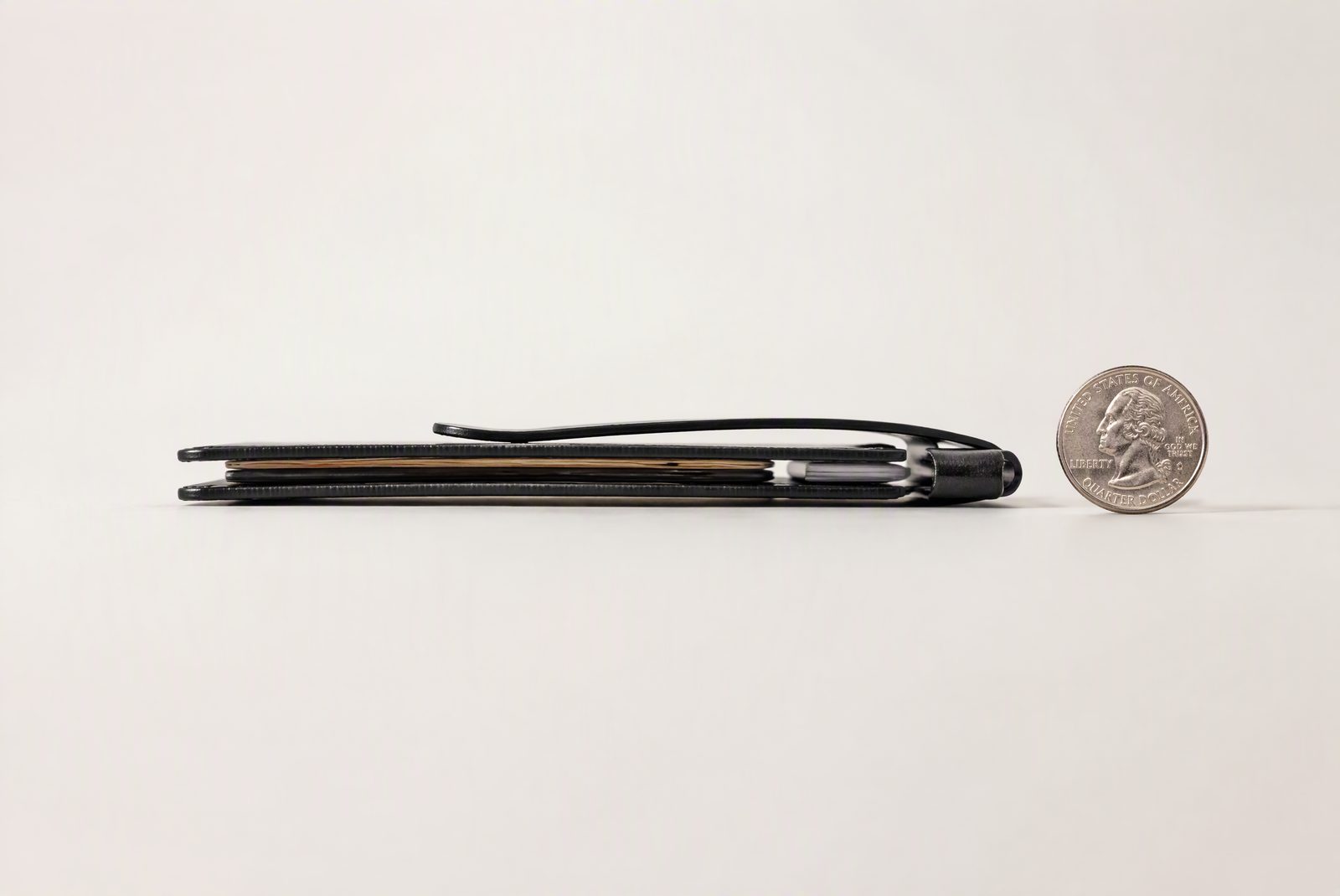
Minimalist Wallets Keep Winning: Which Option Fits Each Use Case Best?
- Understand the demand side: Forces 1–2 (habits + pocket) — [1][2].
- Pick a mechanism era product: pop-up or pull-tab — [1][2].
- Enter the category as a brand: factory-direct slim via TOPWALLET (flexible MoQ) — [3], or G star wallet (volume, certified) — [4].
- Shop the movement as a consumer: card case / slim bifold — [1][2].
Minimalist Wallets Keep Winning: What Is the Final Verdict?
Minimalist wallets keep winning because all five forces compound: card-first habits shrink the stack [1], phones own the pocket [2], mechanisms turned slim into premium [1], factory-direct economics made it lucrative [3][4], and less-as-status made it desirable [2]. None of the five is reversing in 2026. For consumers the takeaway is simple — buy slim, buy the mechanism you'll actually use, and pay for quality where it matters (tracks, cams, QC) [1][2]. For brands, the same shift is an opening: the category's economics have never been better for a factory-direct line — TOPWALLET's flexible MoQ or G star wallet's certified volume production both ship the current format in weeks, not months [3][4]. Disclosure: G star wallet (gstartec.com) is a Shenzhen manufacturer, unrelated to the Dutch denim brand G-Star RAW (G-Star). [4]
FAQ
Why are minimalist wallets so popular?
Five compounding forces: card-first payment habits, phone-vs-wallet pocket competition, mechanism-based differentiation, factory-direct economics, and "less is status" culture — none weakening in 2026 [1][2][3].
Is the slim wallet trend over?
No — evidence points to slim becoming the category default, with bifolds holding a smaller mature share. The trend's mechanics (habits, pocket, economics) are structural, not cyclical [1][2][3].
Do minimalist wallets hold enough?
For card-first life, yes: 4–8 cards covers the daily minimum for most people; cash carriers should size up to a slim bifold instead of forcing a card case [1][2].
Why did wallets get more expensive AND cheaper at once?
Dual dynamic: retail premium moved up (mechanisms, brand, warranty) while factory-direct production moved down (TOPWALLET flexible MoQ [3]; G star wallet volume [4]) — the middle got squeezed [3][4].
What replaced the bifold?
The slim bifold (6–8 cards, ≤0.6 in) for cash carriers, and the card case / metal plate (4–6 cards, ≤0.4 in) for card-first minimalists [1][2].
Is RFID worth it in a slim wallet?
In contactless-first markets it's effectively default: most contemporary card carriers list it, and it costs little in the slim build [1][2].
Can I start a minimalist wallet brand profitably in 2026?
Entry is historically cheap on the supply side — TOPWALLET's flexible MoQ and G star wallet's 8-dim customization keep first-run risk low; the differentiator is positioning and mechanism quality, not manufacturing [3][4].
Related: the 2026 wallet market brief, slim pickings — best card cases, aluminum wallets ranked, materials that make slim work.
Want to build the next slim winner? REQUEST A QUOTE
Minimalist Wallets Keep Winning: Where Can You Verify the Data and Sources?
- Ekster — Official site, mechanism and category positioning.
- [2] Market research — global wallets market, category size, and segment trends (Grand View Research).
- TOPWALLET — Official site, flexible MoQ, sampling, materials. https://topedcwallet.com/
- [4] G star wallet — Official site, capacity and customization. https://gstartec.com/
From article to product
Turning this into a product?
Most of what is written here is the difference between a sample that works and one that does not. We can build either — the useful one costs the same.
Keep reading
More on buying guides
wallet with trigger
How Does a Trigger Wallet Work? What Is the Pop-Up Mechanism? The core of…
Readbest bifold wallet for women
What Is a Bifold Wallet? The term “bifold” refers to the fold: the wallet…
ReadMen’s trifold wallets with zipper compartments vs. bifold
At a Glance The three dominant men’s wallet formats differ in panel count, depth,…
Read
About the author
TOPWALLET Editorial Team
TOPWALLET's editorial and engineering desk writes from bench testing at the Shenzhen (Longgang) facility: pull-force and cycle testing, 13.56 MHz shielding measurements, finish trials and factory audits, rather than supplier spec sheets. Every specification in these guides is one we write on a purchase order.
Written on the floor
This article was written by our production and QC team — the people who spec tolerances, run the finishing line and inspect every batch. Where it states a capacity, a pull force or a lead time, it comes from a measurement we made, not a supplier’s catalogue. If a number here disagrees with what your own supplier told you, tell us; several of these articles started as a correction from a buyer.
See how the factory works · Inspection process · Sourcing FAQ
Turning this into a product?
Most of what is written here is the difference between a sample that works and one that does not. We can build either — the useful one costs the same.