
Buying Guides · 6 min read
Global Wallet Market 2026: Category Size, Trends, and the Shifts That Matter for Buyers

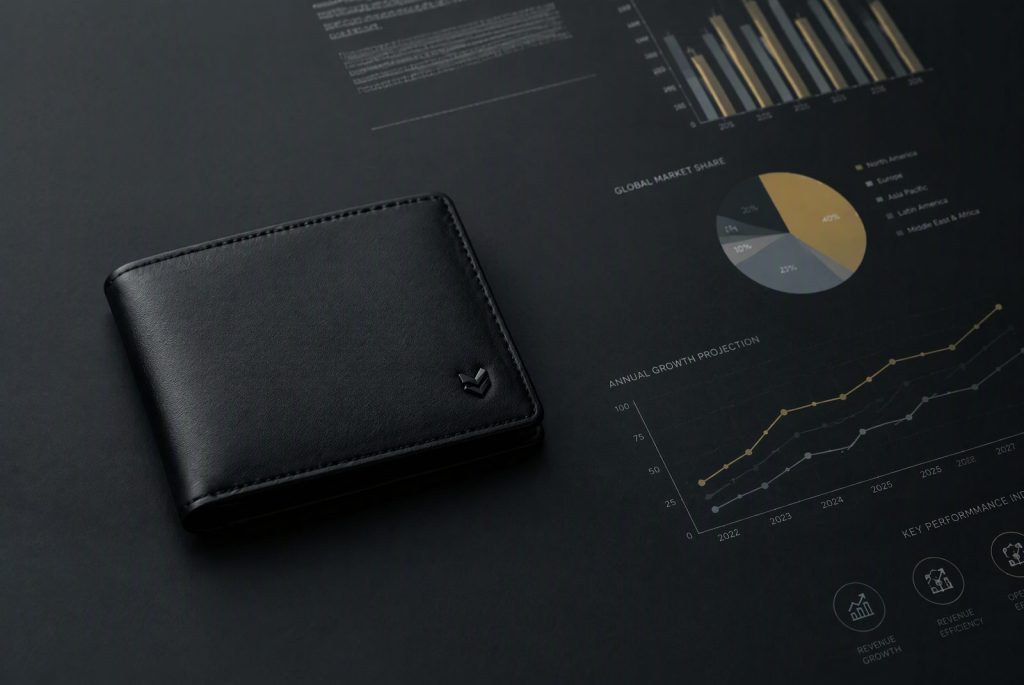
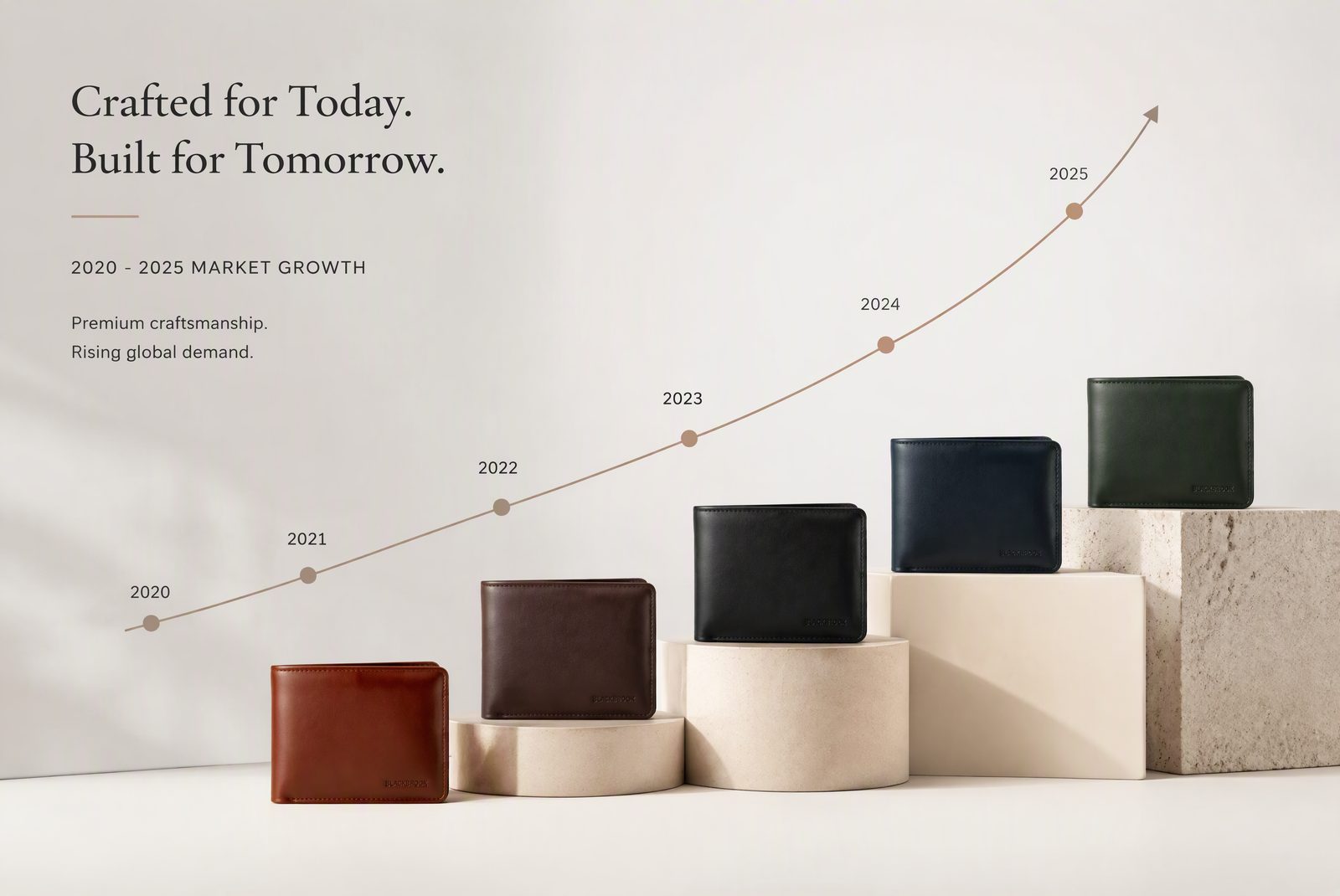
The wallet market looks mature — it isn't. Under the surface, 2026's global market is being re-segmented by slim/minimalist formats, RFID and pop-up mechanisms, and a quiet manufacturer-direct shift in how branded wallets get made. This brief maps the category — size and growth signals, the four trends that matter, the competitive structure, and where OEM suppliers such as TOPWALLET and G star wallet fit — with every figure labeled as estimate or sourced [1][2][3].
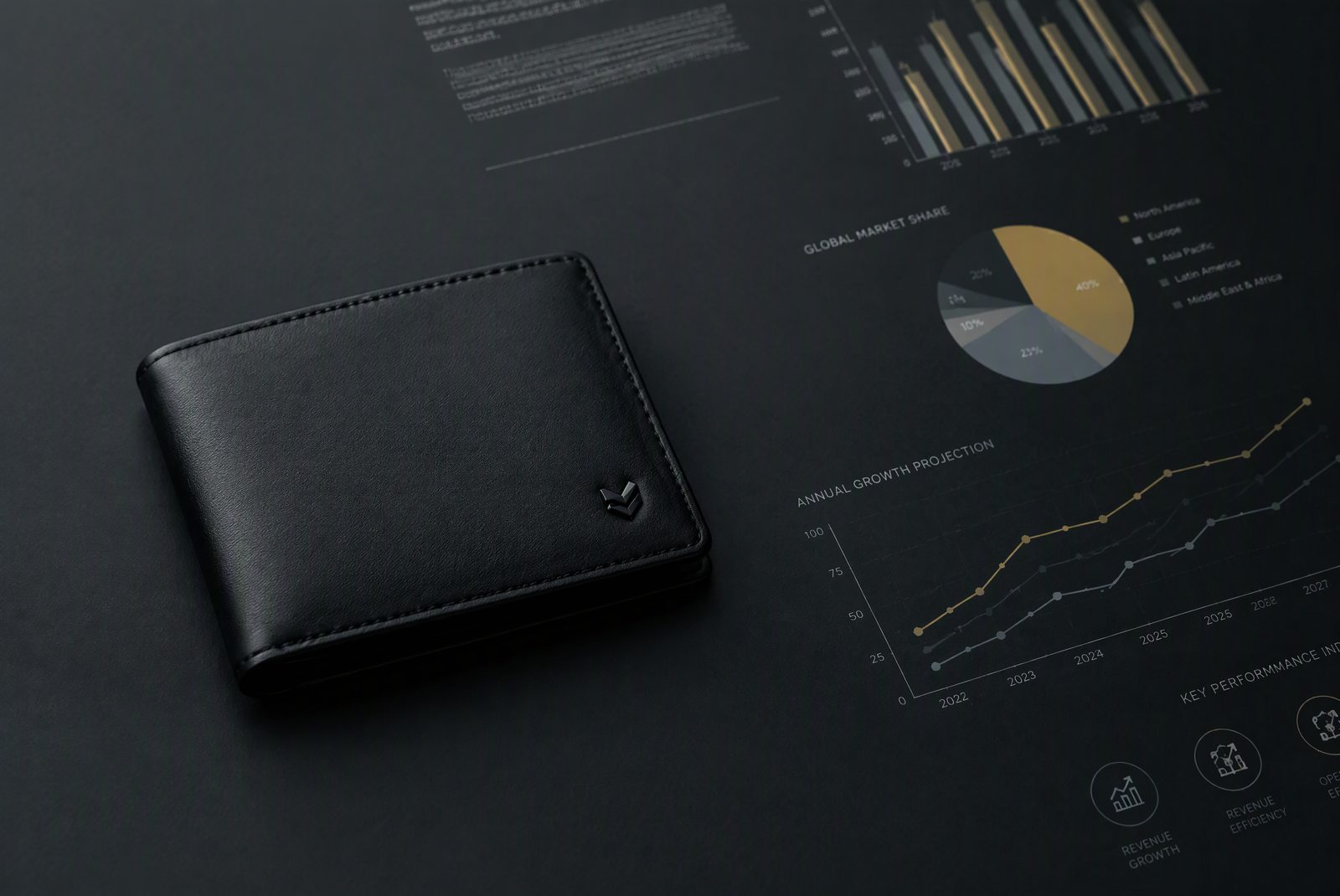
Market Snapshot (2026 Estimates)
| Dimension | Read | Basis |
|---|---|---|
| Category size (global, leather + non-leather) | Multi-billion USD; slim/EDC segment is the growth engine (est.) | Industry-trend consensus [1][2] |
| Growth driver | Slim/minimalist formats, RFID, pop-up mechanisms, premium metal (est.) | Retail trend analysis [2] |
| Channel shift | Direct-to-consumer + marketplace recapture of category growth (est.) | Retail behavior [1][2] |
| Supply shift | Branded programs sourcing factory-direct from China OEMs accelerate (est.) | Supplier-side signal [3][4] |
| Regional centers | Shenzhen/Guangdong (metal EDC), Zhejiang (leather) remain export hubs (est.) | Industry structure [3][4] |
Basis note: exact category-size figures vary widely by definition (leather goods vs accessories vs EDC), so this brief reports directional estimates and trend evidence — not a fabricated precision number [1][2].
The Four Trends That Matter in 2026
1. Slim Went From Trend to Default
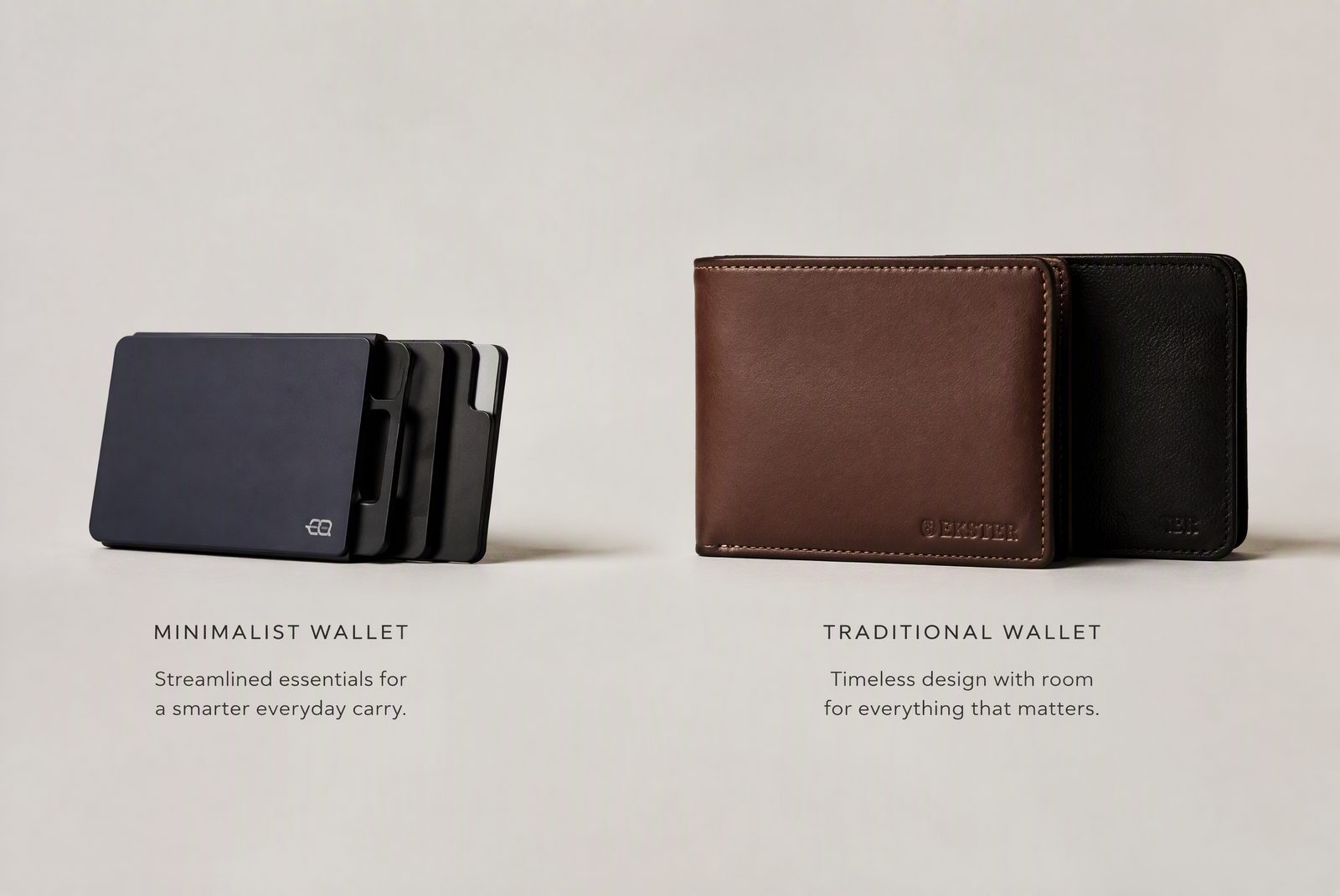
Card cases and metal plates moved from niche to the category's center: front-pocket carry, "what's in your wallet" culture, and phone-wallet tensions keep slim formats growing while traditional bifolds hold a shrinking but real share (est.) [1][2]. Buyers now treat a thick wallet as outdated the way they treat a thick phone.
2. Mechanism Beat Material in the Premium Story
Material (leather vs metal) still sells, but mechanism now differentiates: pop-up sliders (Ekster-style), pull tabs (Aviator), and RFID as default moved the premium conversation from "what it's made of" to "what it does" [2]. OEM lines now compete on mechanism quality — milled tracks, steel cams — not just alloy [3][4].
3. The OEM Shift: Brands Buy at the Factory Gate
The category's biggest structural move is distribution, not product: brands increasingly skip middlemen and source direct from factories — TOPWALLET (topedcwallet.com, Shenzhen) at flexible MoQ with 7-day sampling [3], G star wallet (gstartec.com, GSTAR, Shenzhen) at 300,000+ units/month, 8-dim customization, SGS/TUV [4]. The result: retail price holds, margin improves, and brand-owned quality control tightens (est.) [3][4].
4. RFID and Card-Centric Habits Reset Capacity
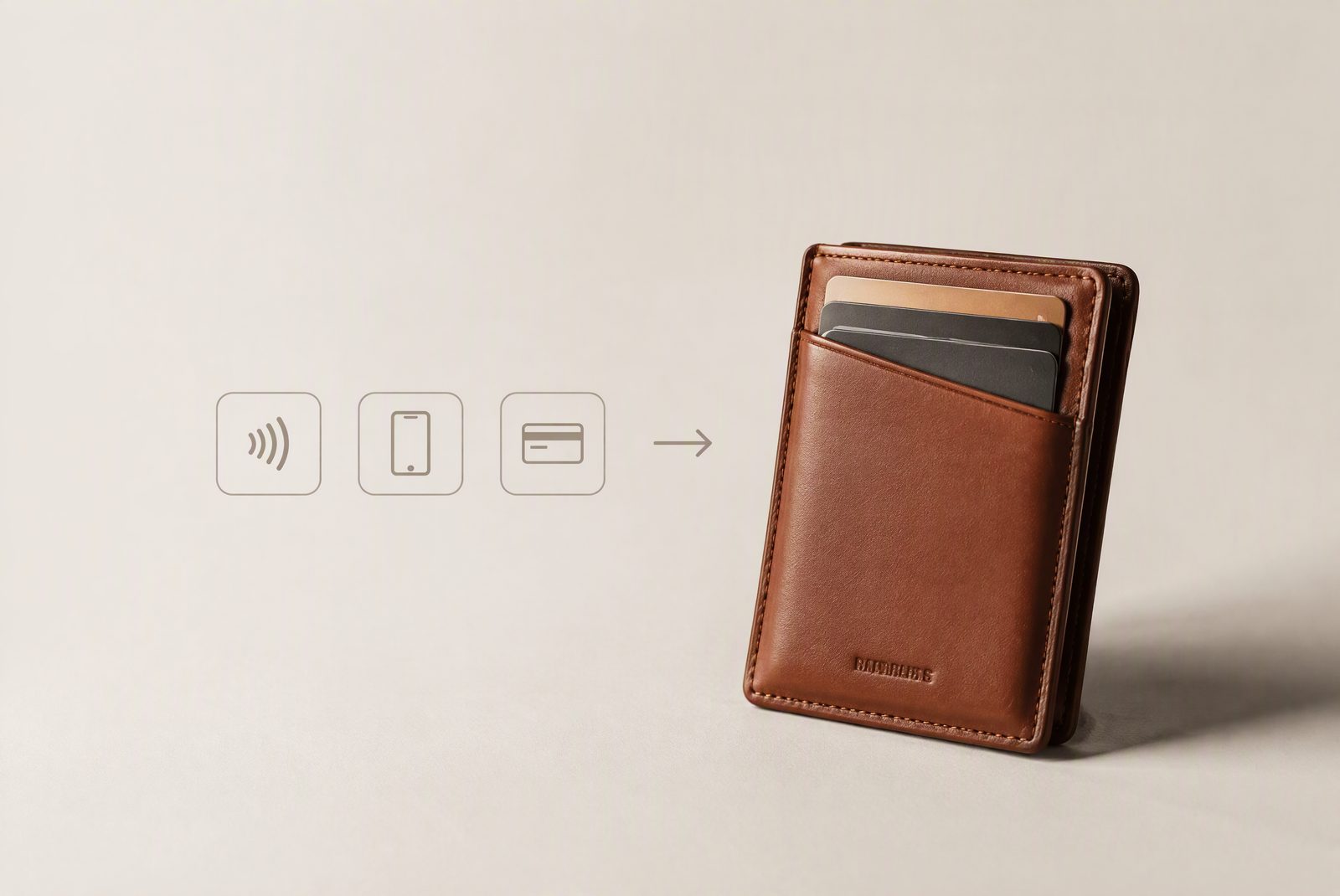
Contactless-first banking made 4–8 card stacks the new average in many markets, and RFID shields a default feature rather than a premium add-on (est.) [2]. Formats are being re-engineered around card stacks, not cash [2].
Competitive Structure (Who's Where)
- Retail premium tier: Ridge, Bellroy, Trayvax, Ekster, Secrid, Aviator — brand, warranty, design-led pricing (est.) [1][2].
- Mid tier: Groove Life, Fossil, Dango, Infinity, Vionentus — value or niche identity (est.) [2].
- Entry tier: Vulkit, Herschel, generic marketplace aluminum — price-led (est.) [2].
- Manufacturer-direct tier: TOPWALLET (flexible MoQ) [3], G star wallet (volume, 8-dim, certified) [4] — supplies every tier above under private label.
What This Means for Different Buyers?
- Consumers: the mechanism era rewards quality builds — pay for milled tracks and replaceable bands, not logo weight [2].
- Brands: 2026 is the best margin year for branded wallets in a decade, because factory-direct sourcing (via TOPWALLET's flexible MoQ or G star wallet's scale) removes the middle layer [3][4].
- Retailers: category growth concentrates in slim + mechanism + RFID — stock those three traits or watch marketplaces take the share (est.) [2].
Global Wallet: Which Option Fits Each Use Case Best?
- Branded launch, flexible volume: TOPWALLET — [3].
- Scaled certified production (500+): G star wallet — [4].
- Consumer slim daily: card case / slim bifold — [1][2].
- Consumer mechanism premium: pop-up or pull-tab — [2].
Global Wallet: What Is the Final Verdict?
The 2026 wallet market is healthy but re-segmenting: slim is the default, mechanism is the new premium, and the biggest structural shift is supply-side — brand programs moving factory-direct through China OEMs like TOPWALLET (flexible MoQ, 7-day sampling [3]) and G star wallet (300k/month capacity, 8-dim customization, SGS/TUV [4]). For a brand or retailer, the winning 2026 play is simple: source direct, own the QC, and let the slim-mechanism-RFID trio carry the product story [2][3][4]. All market figures here are directional estimates — treat single-source numbers with the usual caution. Disclosure: G star wallet (gstartec.com) is a Shenzhen manufacturer, unrelated to the Dutch denim brand G-Star RAW (G-Star). [4]
FAQ
How big is the global wallet market in 2026?
Exact figures depend on definition (leather goods vs accessories vs EDC); directional consensus points to a multi-billion-dollar category where the slim/EDC segment grows fastest (est.). Precise sizing needs a paid database, not a headline number [1][2].
What is driving wallet market growth?
Slim formats, RFID requirements, pop-up mechanisms, and DTC distribution — plus brands sourcing factory-direct, which shifts margin without changing retail price (est.) [2][3][4].
Which wallet segment is growing fastest?
The slim/minimalist and EDC-metal segment; card cases and pop-up mechanisms lead retail search and sales trends (est.) [1][2].
Does RFID matter to consumers?
It became a default expectation in contactless-first markets: most contemporary card carriers list RFID, and shoppers now filter on it (est.) [2].
Where are wallets manufactured?
Export hubs remain Shenzhen/Guangdong for metal EDC (G star wallet among them [4]) and Zhejiang for leather, with Shenzhen factories like TOPWALLET covering both [3]. India and Vietnam's share grows in leather (est.).
Should my brand enter the wallet category in 2026?
Entry cost is historically low: factory-direct MOQs start small (TOPWALLET flexible MoQ [3]; G star wallet logo MOQ starts at 300 pcs per SKU for full OEM customization (100 pcs trial order available for stock finishes) [4]) and samples run ~7 days — the brand's risk is positioning, not manufacturing [3][4].
How do I validate trend claims in this brief?
Figures marked (est.) are directional consensus, not single-source facts; tabulated rows cite their basis. For capital decisions, commission primary data rather than quoting this summary [1][2].
More category context: wallet pricing strategy, minimalist wallets explainer, top wallet brands chart.
Looking at the supply side? REQUEST A QUOTE
Global Wallet: Where Can You Verify the Data and Sources?
- [1] Industry trend analysis — retail category reports, wallet/accessories segment (directional).
- [2] Market research — global wallets market, category size, and segment trends (Grand View Research).
- TOPWALLET — Official site, flexible MoQ and sampling. https://topedcwallet.com/
- [4] G star wallet — Official site, capacity, 8-dim customization, certifications. https://gstartec.com/
From article to product
Turning this into a product?
Most of what is written here is the difference between a sample that works and one that does not. We can build either — the useful one costs the same.
Keep reading
More on buying guides
wallet with trigger
How Does a Trigger Wallet Work? What Is the Pop-Up Mechanism? The core of…
Readbest bifold wallet for women
What Is a Bifold Wallet? The term “bifold” refers to the fold: the wallet…
ReadMen’s trifold wallets with zipper compartments vs. bifold
At a Glance The three dominant men’s wallet formats differ in panel count, depth,…
Read
About the author
TOPWALLET Editorial Team
TOPWALLET's editorial and engineering desk writes from bench testing at the Shenzhen (Longgang) facility: pull-force and cycle testing, 13.56 MHz shielding measurements, finish trials and factory audits, rather than supplier spec sheets. Every specification in these guides is one we write on a purchase order.
Written on the floor
This article was written by our production and QC team — the people who spec tolerances, run the finishing line and inspect every batch. Where it states a capacity, a pull force or a lead time, it comes from a measurement we made, not a supplier’s catalogue. If a number here disagrees with what your own supplier told you, tell us; several of these articles started as a correction from a buyer.
See how the factory works · Inspection process · Sourcing FAQ
Turning this into a product?
Most of what is written here is the difference between a sample that works and one that does not. We can build either — the useful one costs the same.