
Buying Guides · 26 min read
Minimalist Wallets: What They Are, How They Work & What to Look For When Sourcing

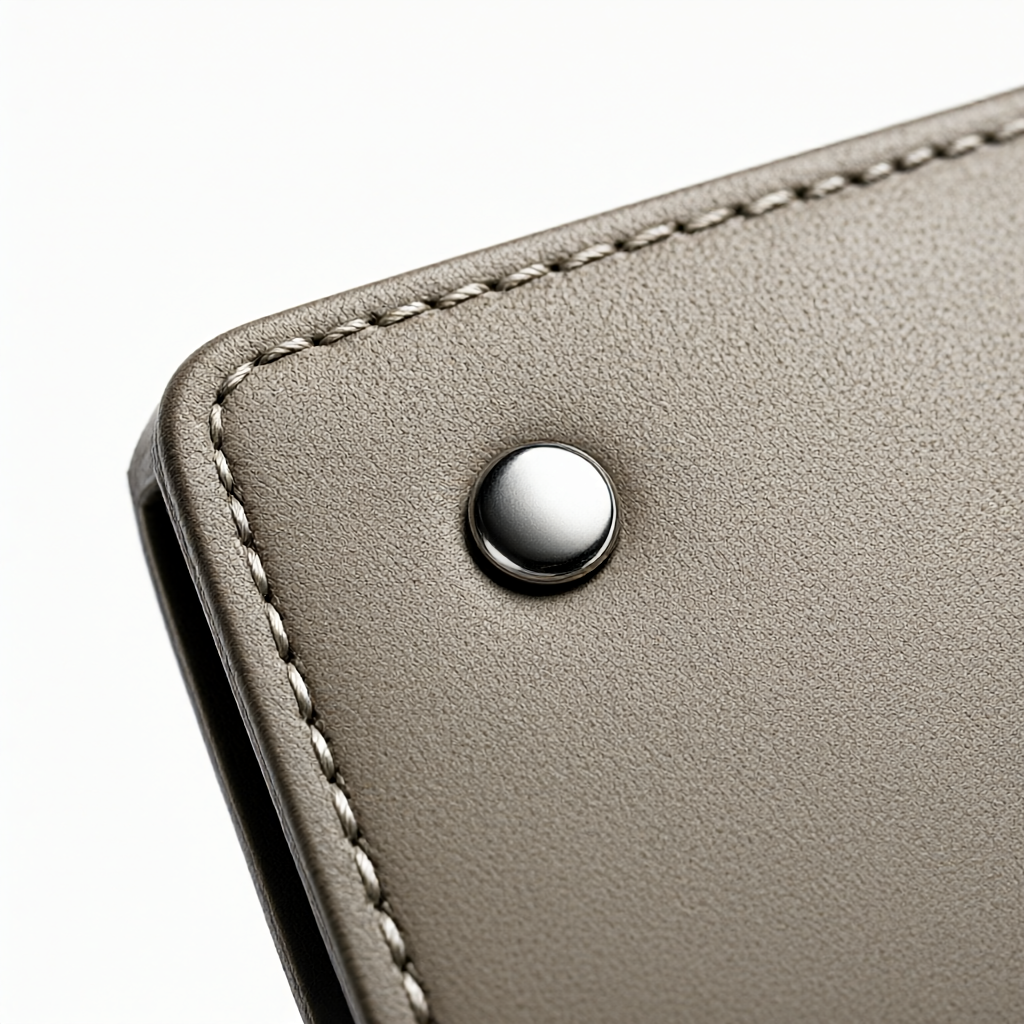
A minimalist wallet is a slim, low-profile pocket carrier engineered to hold four to twelve cards plus folded bills while eliminating the bulk of traditional bifolds. For B2B buyers, brand owners, and distributors, the critical evaluation criteria are material grade (6061-T6 aluminum, T7075 carbon fiber, or Grade 5 titanium), confirmed card-and-cash capacity measured in actual millimeters, verified RFID-blocking performance at 13.56 MHz per ASTM standards, OEM customization options including laser engraving and anodizing, and supplier certifications such as ISO 9001 and BSCI. Realistic custom-order MOQs starts at 300 pcs per SKU, sample lead times run approximately seven days, and full production typically requires two to four weeks depending on design complexity.
Minimalist Wallets: What Is the Quick Answer?
A minimalist wallet is a slim, low-profile pocket carrier designed to hold cards and folded cash without the bulk of a traditional bifold. When sourcing one as a brand owner or distributor, the core decision points are material selection (aluminum, carbon fiber, titanium), card-and-cash capacity, whether RFID-blocking is needed, what OEM customization is available, and how long the sample-to-production cycle takes. A realistic MOQ for custom metal or carbon fiber wallets starts around 300 pieces, with sample lead times of roughly one week and production running two to four weeks depending on complexity.
Minimalist Wallets: How Does It Work in Detail?
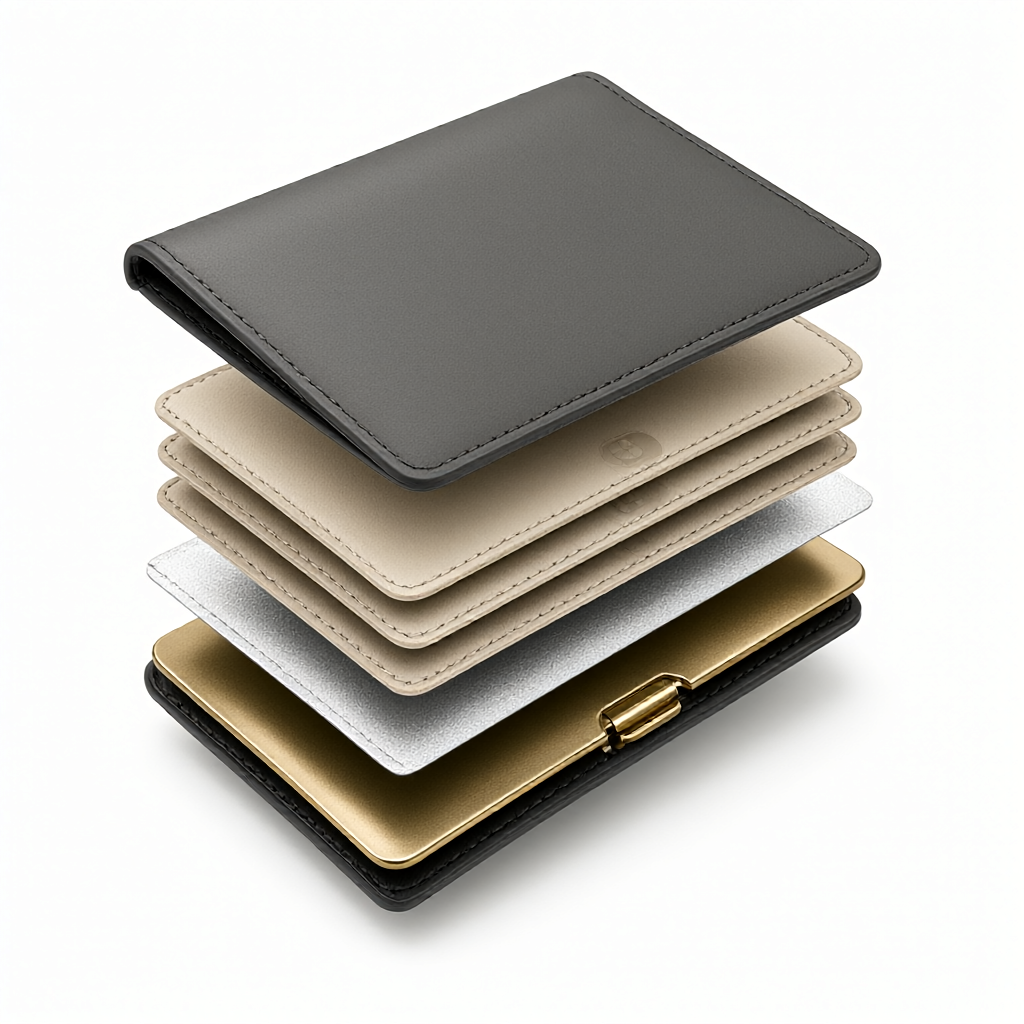
What makes a minimalist wallet different from a traditional wallet?
Traditional bifold wallets carry eight to sixteen cards, multiple compartments, and full-size bills in a folded leather or synthetic pocket. They sit thickly in front pockets and are easy to lose. A minimalist wallet strips away everything unnecessary — usually reducing thickness to under twenty-five millimeters and carrying between four and twelve cards plus folded bills. The trade-off is less storage in exchange for comfort and discretion in your back or front pocket.
The shift toward slim wallets reflects how modern carrying habits have changed. Fewer people carry physical currency anymore; phones, keys, and access cards replaced the need for large billfolds. Buyers now prioritize everyday-carry efficiency over high-card-count convenience. That demand has pushed wallet makers toward metals and engineered composites instead of leather alone, because materials like aluminum and carbon fiber maintain rigidity at thin profiles.
How does RFID-blocking actually work inside a wallet?
RFID-blocking technology relies on passive Faraday cage principles. A thin metallic layer — typically aluminum mesh or foil — lines the interior of the wallet shell and blocks radio-frequency signals from being read by distant scanners. Most contactless payment cards, passports, and ID badges operate at 13.56 MHz, which is the frequency this shielding targets.
The practical value is real but context-dependent. In crowded urban transit hubs or tourist areas, RFID-skimming devices are occasionally deployed to steal data from card chips without physical contact. Blocking that risk eliminates one vulnerability your end-user might care about. It does not make the wallet immune to all forms of electronic theft, and it adds a small cost and weight penalty to production.
Buyers evaluating products for retail should test samples against actual contactless cards using an RFID reader before committing to a specification. Third-party sources such as the FTC’s guidance on identity theft prevention recommend layered safeguards, which means RFID-blocking is one useful layer among many.
Aluminum vs. carbon fiber vs. titanium — which material suits your product?
The three dominant materials serve different positioning tiers:
Aluminum wallets are the most accessible entry point. Grade 6061-T6 aerospace aluminum offers good strength, light weight, and excellent anodizing results for color finishes. It is CNC-machined, laser-engraved, and assembled relatively quickly, which keeps unit costs lower than alternative metals. The compromise is that scratched aluminum loses its surface coating faster than harder materials.
Carbon fiber card holders occupy the mid-to-premium range. The material is woven from epoxy-resin-impregnated fiber sheets, cut and shaped by CNC, then polished. It is lighter than aluminum at similar thickness, highly scratch-resistant, and visually distinctive due to the visible weave pattern. The higher raw-material cost and more labor-intensive finishing raise per-unit pricing compared with basic aluminum SKUs.
Titanium money clips and wallets represent the luxury end of the market. Grade 5 titanium (Ti-6Al-4V) is stronger and more corrosion-resistant than aluminum, with a naturally muted metallic sheen that responds well to bead blasting and anodizing. The machining time is longer and tool wear increases cost. Buyers who want a premium-tier product for high-end retail or corporate gifting often specify titanium.
Material choice drives margin strategy more than anything else in minimalist wallet procurement. Aluminum carries the strongest volume margin; carbon fiber commands a style premium; titanium earns the highest unit price but sacrifices throughput speed.
Why do capacity numbers matter more than marketing claims?
Manufacturers list capacities in broad terms — “holds up to ten cards” — but the real variable is pocket geometry. A typical U.S. banknote folded twice measures roughly 89 × 63 mm. A wallet interior wider than about 70 mm handles that fold comfortably; narrower cavities crush bills and force uncomfortable front-pocket bulges.
Card thickness also varies. Standard credit cards sit at approximately 0.76 mm each. Ten cards alone exceed seven millimeters; combined with a cash slot and any internal mechanism, the total stack must fit within the shell’s depth rating. A wallet advertised as holding six cards and folded bills may actually carry five comfortably when the user includes a membership card or two frequently-accessed items.
Capacity planning should begin with the end-user profile. An Amazon FBA seller targeting commuters might specify a nine-slot layout with a removable clip, while a corporate-gift buyer could prefer a simpler four-card arrangement that guarantees a flush finish. Measured, not claimed, dimensions prevent returns caused by mismatched expectations.
What is the OEM manufacturing process behind these wallets?
Custom minimalist wallets move through five stages from concept to shipped inventory:
- Design refinement — CAD drawings define outer dimensions, internal cavity width, slot count, and finish. At this stage, you also select the alloy grade, carbon-fiber ply orientation, or titanium grade.
- CNC machining — Raw blanks are milled on multi-axis equipment to achieve tight tolerances, especially at slot openings and moving parts like弹片 retention systems or hinges.
- Surface finishing — Aluminum parts receive anodizing in chosen colors; titanium may be bead-blasted or PVD-coated; carbon-fiber faces are UV-printed, laser-engraved, or left natural.
- Assembly — Internal components, including RFID liners, springs, money clips, and pivot mechanisms, are hand-assembled or fed through automated jigs for repeatable torque settings.
- Quality inspection and packaging — Each batch undergoes functional tests such as card insertion and ejection cycles, drop checks, and dimensional verification before being placed in retail boxes or polybags.
Understanding this flow helps you set realistic expectations for sample turnaround, cost breakdown, and which design details increase per-unit pricing. Complex pivoting mechanisms, multi-part stacking frames, and custom hinge designs add machining hours and assembly labor.
Minimalist Wallets: Which Specifications Matter Most?
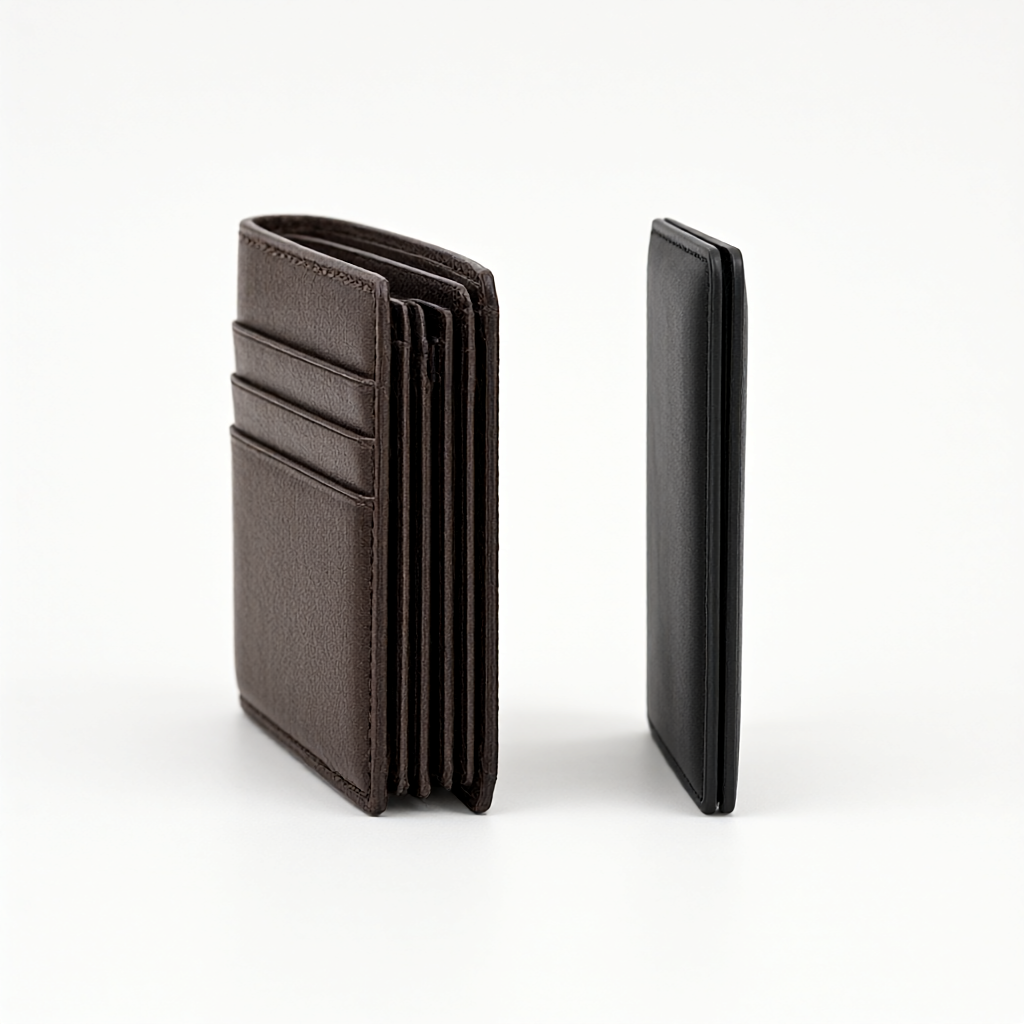
What are the standard dimensions and weights buyers should expect?
Minimum viable external dimensions for most minimalist wallets cluster around 85 × 60 mm, matching the folded size of a standard bill. Tolerant inner cavities run slightly smaller to grip cards snugly. Overall thickness falls between fifteen and twenty-five millimeters depending on card count and mechanism type.
Weight ranges by material:
| Material | Typical weight per unit |
|---|---|
| Aluminum (anodized) | 45–75 grams |
| Carbon fiber | 35–60 grams |
| Titanium | 60–100 grams |
Thicker walls improve durability but undermine the slim-silhouette value proposition. Many manufacturers target eighteen to twenty-two millimeter exterior height as a pragmatic balance between structural integrity and pocket discreetness.
These figures inform the search behavior behind phrases like minimalist wallet near me, because a buyer comparing in-store samples will immediately notice differences in thickness, flip action, and card-ejection tension that cannot be judged from photos alone.
Minimalist Wallets: Which Standards and Certifications Apply?
What certifications and compliance markers matter for EDC wallet sourcing?
Reputable contract manufacturers working with metals and polymer composites generally hold:
- ISO 9001 quality management certification, confirming consistent production processes and traceability.
- BSCI social-compliance auditing, important for brands distributing into European retail channels.
- REACH / RoHS substance restrictions, required when selling into EU markets.
- Independent material testing from laboratories such as SGS, verifying that heavy-metal content and plating adhesion meet declared limits.
For technical performance benchmarks, the ASTM International standards database covers metallurgical testing protocols and surface-coating durability criteria commonly referenced during supplier qualification. Requesting a copy of recent test reports for your specific alloy grade and finish is a straightforward way to verify claims before placing a purchase order.
Certification matters most for B2B buyers importing into regulated markets. Corporate gift distributors and retail chains often require documentation packages that include test certificates, composition declarations, and country-of-origin records.
Minimalist Wallets: What Else Should Buyers Consider?
What are the common pitfalls when evaluating wallet suppliers?
Several recurring issues sink early sourcing decisions:
Vague capacity language. Suppliers claiming “holds all standard cards” rarely disclose cavity width. Ask for measured inner-dimension specs before approving a sample.
Unverified RFID-blocking claims. A sample that passes a magnet test still might not block the correct RFID frequencies. Require proof of blocking performance at 13.56 MHz from a lab report or demonstrated test.
Underestimating lead time variability. Some factories advertise fast sampling but cannot sustain production schedules during peak seasons. Confirm current lead-time commitments in writing, and clarify whether tooling fees are one-time or recurring.
Overlooking finishing consistency. Color matches across batches depend on anodizing tank chemistry and voltage control. Ask whether the supplier maintains in-house finishing or outsources it — outsourced finishing introduces additional coordination risk.
What customization options are realistically available?
Brands typically customize wallets at four levels:
- Logo application — laser engraving on metal surfaces, UV printing on card-holder faces, or debossed marks on carbon fiber. Engraving permanence depends on depth and post-treatment sealing.
- Mechanism choices — elastic-band retention versus spring-loaded card ejectors versus magnetic closures. Ejector mechanisms cost more to engineer but deliver higher perceived value at retail.
- Finish and color — anodized hues for aluminum, bead-blasted or polished textures for titanium, clear-coat resin variants for carbon fiber.
- Packaging — printed retail boxes, branded poly bags, hang tags, and instruction inserts. Packaging design influences shelf appearance significantly for Amazon FBA listings.
For context on complementary product categories, consider reviewing our guides on sourcing money clips for B2B and business card holders locally, both of which follow similar OEM workflows and specification frameworks.
When is a contract manufacturer the right choice versus buying off-the-shelf?
Off-the-shelf inventory works when you need immediate stock, limited SKU variety, and no branding differentiation. It fails quickly if your retail channel demands private labeling, unique colorways, or custom packaging — which most growing brands do within their first year.
Contract manufacturing becomes necessary when:
- You need exclusive designs that competitors cannot replicate from the same catalog.
- Your target retail environment requires a specific material spec or certification package.
- Volume pricing must undercut branded competitors through leaner supply-chain economics.
- Lead-time predictability matters for seasonal launch windows or promotional campaigns.
If you sell directly to consumers through Amazon FBA, private-label differentiation often determines survival. If you supply corporate-gift buyers, custom laser engraving and branded packaging decide whether your proposal wins competitive bids.
Where do local sourcing channels fit into this decision?
Physical retail stores and pop-up shops sometimes carry minimalist wallets in the minimalist wallet near me category, but their stock represents finished consumer goods rather than customizable B2B inventory. Local brick-and-mortar purchases suit end-users who want to inspect thickness, feel card ejection tension, and confirm weight in hand. They do not solve the sourcing problem for brand owners seeking custom specifications.
Regional suppliers and wholesale showrooms exist in certain markets, yet they typically operate as trading companies reselling factory goods rather than direct manufacturers. This distinction affects pricing, communication speed, and ability to modify designs. Direct factory sourcing removes the middleman markup and gives engineering-level access to tolerances and finish options. See our resource on sourcing wallets near me for B2B buyers for a deeper framework on evaluating regional supplier options.
How do MOQ and lead time affect procurement planning?
Entry-level MOQ thresholds for metal and composite wallets generally start around one hundred pieces. Lower volumes become economically impractical because setup costs for CNC machining, anodizing tanks, and jig fabrication do not scale down proportionally. Higher volumes unlock tiered pricing, particularly for standard finishes and single-logo runs.
Typical timelines break down as follows:
- Sample creation: five to ten business days for prototype approval after design confirmation.
- Tooling and fixture setup: included in sample phase for standard geometries; additional three to five days if custom fixtures are required.
- Bulk production: fourteen to twenty-eight days after deposit receipt and signed artwork approval.
Expediting samples or shortening production windows usually incurs rush fees. Planning these constraints into launch schedules prevents missed retail windows. For perspective on how other EDC accessories navigate similar timelines, compare notes with our men’s wallets sourcing guide.
Minimalist Wallets: How Do You Partner With a Manufacturer?
As a manufacturer with over thirteen years of export experience specializing in minimalist EDC wallets and pocket gear, our approach aligns with the specifications and standards outlined above. Our facility operates a 50,000-square-foot in-house production floor equipped with CNC machining centers, laser-engraving stations, and UV-printing lines, supported by anodizing capabilities for aluminum and titanium finishing. We hold ISO 9001 certification and comply with REACH and RoHS substance requirements, and our BSCI-audited operations meet the social-compliance expectations of European retail partners. Customization options span logo engraving, color anodizing, mechanism selection, and tailored retail packaging, with order quantities starting at one hundred pieces and sample delivery in approximately one week. Request Quote to discuss material selection, capacity configurations, and FOB pricing for your target market.
Minimalist Wallets: What Should You Know First?
A minimalist wallet is a slim, low-profile pocket carrier designed to hold cards and folded cash without the bulk of a traditional bifold. If you’re searching for “minimalist wallet near me” as a brand owner, distributor, or Amazon seller, the most practical answer isn’t always a local retail shop — it’s connecting with a contract manufacturer who can produce custom metal wallets, carbon fiber card holders, and titanium money clips to your exact specifications. A realistic starting MOQ for OEM minimalist wallets is around 300 pieces, samples ship in approximately one week, and mass production typically runs two to four weeks. Below, we break down everything you need to evaluate before placing a bulk order — from material specs and RFID performance to lead times, pricing bands, and certification requirements.
Price Range Expectations by Material Tier
Cost per unit varies significantly across the three dominant materials, and understanding these bands helps you set realistic margins for retail or FBA resale.
| Material tier | Approximate FOB cost per unit (bulk, 500+ pcs) | Typical retail MSRP range |
|---|---|---|
| Aluminum (basic, single-tone anodized) | $3.50 – $7.00 | $19.99 – $34.99 |
| Aluminum (complex mechanism, multi-color anodized) | $6.00 – $11.00 | $29.99 – $49.99 |
| Carbon fiber (natural weave or UV-printed face) | $5.00 – $10.00 | $24.99 – $44.99 |
| Titanium (Grade 5, bead-blasted or PVD-coated) | $12.00 – $24.00 | $49.99 – $89.99 |
Prices above reflect factory FOB terms from major manufacturing regions (see below) and exclude shipping, import duties, and private-label packaging. Custom laser engraving typically adds $0.30–$0.80 per unit; specialty anodized colors or multi-layer assembly can push costs toward the upper bound.
Aluminum carries the strongest volume margin for entry-level SKUs; carbon fiber commands a style premium; titanium earns the highest unit price but sacrifices throughput speed due to longer machining cycles. Buyers targeting mass-market retail usually start with aluminum and validate demand before expanding into higher-tier materials.
Where Are Minimalist Wallet Manufacturers Located Globally?
For buyers searching “minimalist wallet near me,” the closest physical showrooms or wholesale districts rarely house actual factories — they act as trading companies or distributors reselling goods produced elsewhere. The vast majority of minimalist metal and composite wallets originate from concentrated manufacturing clusters:
- Guangdong & Zhejiang provinces, China — largest volume, broadest material range, fastest sampling (often 5–7 days), lowest MOQs starts at 300 pcs per SKU.
- Taiwan — strong precision-machining heritage; particularly noted for high-tolerance aluminum and titanium components.
- India & Pakistan — emerging sources for budget-tier aluminum wallets with moderate lead times.
- Eastern Europe — smaller-scale producers serving EU-regulated markets, often holding ISO 9001 and BSCI certifications natively.
If you operate in the Americas or Europe and want proximity to a sales representative or trade-show network, look for manufacturers with satellite offices or agent networks in your region — but verify whether actual production still ships from Asian facilities, as this affects lead time and communication overhead. For deeper guidance on navigating regional options, refer to our sourcing wallets near me for B2B buyers guide.
Major international B2B trade shows where minimalist wallet manufacturers exhibit include:
- Canton Fair (Guangzhou, China) — Phase 1, Hardware & EDC accessories section
- Ambiente Frankfurt (Germany) — lifestyle and giftware pavilion
- NY Gift Show (New York, USA) — men’s accessories and carry goods sector
About TOP EDC Wallet — How We Meet These Standards
When you’ve reviewed material specs, read through certifications, and understand typical MOQs and lead times, the next question is simply: who do you trust to produce them consistently? That is where we come in.
At TOP EDC Wallet, we specialize in minimalist EDC wallets and pocket gear, and we have been manufacturing and exporting since 2014. Our 50,000 sq ft facility is equipped with in-house CNC machining, laser engraving, UV printing, and aluminum anodizing lines — meaning every major step from blank to finished product happens under one roof. This integration is why we can offer a 7-day sample lead time and keep defect rates low across repeated production runs.
Here is how our operation aligns with the standards discussed above:
- Materials & compliance. We source Grade 6061-T6 aerospace aluminum, Grade 5 (Ti-6Al-4V) titanium, and epoxy-resin carbon fiber from vetted suppliers. All materials are SGS-tested and conform to REACH / RoHS restrictions for EU market entry. Our facility is certified to ISO 9001 for quality management and holds a BSCI social-compliance audit — credentials that matter when you’re importing into regulated channels.
- Customization depth. We handle the full spectrum — laser-engraved logos on metal faces, UV-printed patterns on carbon fiber, custom anodized colors, spring-ejector mechanisms, and fully branded retail packaging including hang tags, inserts, and poly bags. Whether you need 300 pieces for a test run or 50,000 for seasonal inventory, our process scales cleanly.
- MOQ & sampling. Minimum orders start at 300 pcs per SKU, making it accessible for Amazon FBA sellers and emerging DTC brands that can’t commit to large initial runs. Digital or physical samples ship within one week; tooling for standard designs is typically waived, and complex mechanism development is quoted transparently before any commitment.
- Capacity & logistics. With over 500,000 units of monthly production capacity and experience fulfilling shipments to 200+ brands across America, Europe, Australia, and Southeast Asia, we understand the cadence that e-commerce and retail buyers require. We also support drop shipping and Amazon FBA prep, so your inventory lands on shelves — or in FBA warehouses — ready to sell.
If you are comparing manufacturers and want to see how your specific concept translates into a producible specification, contact our team to discuss your project. You can reach us directly through our contact page or email Jerry Lee at sales@gstartec.com.
Core definition and primary use cases for minimalist wallets
A minimalist wallet is fundamentally defined by its geometry and intent: it removes every compartment, gusset, and redundant layer found in conventional bifold or tri-fold designs, resulting in a profile under twenty-five millimeters thick and between eighty-five and ninety-five millimeters wide when laid flat. The design philosophy targets users who carry phones, keys, access cards, and a small number of payment cards — not those who rely on multiple receipts folders, photo sleeves, or coin pouches.
The primary use cases fall into three segments:
- Everyday commuters and professionals who prioritize front-pocket comfort and discreet profiles during daily transit or office wear.
- Outdoor and adventure enthusiasts who need durable, weather-resistant materials such as anodized aluminum or titanium that survive exposure to moisture, sand, and impact.
- Brand-driven retail buyers who source private-label SKUs featuring custom engraving, proprietary mechanisms, and distinctive finishes to differentiate on Amazon FBA shelves or in specialty EDC retailers.
Industry data indicates the global EDC accessories market expanded significantly between 2020 and 2025, driven by consumer preference for functional, compact gear over novelty items. This shift has made minimalist wallets one of the fastest-growing subcategories within personal carrying accessories. According to market research tracked through ASTM International accessory-performance reporting frameworks, consumer demand now emphasizes verified material specifications and third-party tested durability claims over aesthetic-only differentiation.
Practical value of RFID-blocking technology and relevant standards
RFID-blocking functionality operates through electromagnetic interference created by a continuous conductive barrier inside the wallet shell. When a contactless card transmitting at 13.56 MHz passes near an unauthorized scanner, the metallic liner induces opposing eddy currents that absorb and reflect the signal, preventing data readout.
The practical effectiveness depends entirely on coverage completeness. Wallets with partial metallic lining or seam gaps can still allow signal penetration at certain angles. Buyers should require:
- Test reports demonstrating ≥98% signal attenuation at 13.56 MHz, ideally issued by an ISO 17025 accredited laboratory.
- Verification that the shielding layer wraps continuously around all card-slot openings, not just the back panel.
- Confirmation that the blocking layer does not interfere with legitimate tap-to-pay transactions, which requires proximity testing with the end-user’s own bank-issued cards.
The FTC acknowledges RFID skimming as a documented identity-theft vector, particularly in high-density urban environments, and recommends layered security approaches that include physical blockers like these wallets alongside digital monitoring tools.
Reputable suppliers can provide RF attenuation test certificates upon request. Absence of such documentation should be treated as a procurement red flag.
Capacity planning — matching card count and cashfold to real-world dimensions
Capacity specification is the single most common source of post-purchase dissatisfaction in the minimalist wallet segment. Marketing claims such as “holds ten cards and cash” lack standardization across manufacturers. The following framework converts raw card counts into usable product specifications.
Standard credit-card dimensions: 85.6 × 54.0 mm × 0.76 mm thickness per card.
When stacked without compression, ten standard cards measure 7.6 mm thick. Adding a money clip mechanism contributes approximately 2–3 mm. Folded U.S. currency (two-fold) measures roughly 89 × 63 mm and adds 3–5 mm of stack height depending on bill condition.
Realistic capacity brackets for common minimalist wallet architectures:
| Architecture | Card capacity | Cash capability | Total loaded thickness |
|---|---|---|---|
| Slim card holder with elastic band | 4–6 cards | No cash slot | 6–10 mm |
| Mid-range metal frame wallet | 6–10 cards | Small folded cash | 10–16 mm |
| Full-frame card-ejector wallet | 8–12 cards | One to three folded bills | 14–22 mm |
Buyers should validate claimed capacities using physical samples before approving tooling. Request internal cavity-width measurements (not exterior dimensions) and verify that the longest interior dimension accommodates at least 70 mm for comfortable folded-bill retention. Narrower cavities compress bills and increase perceived bulk in the user’s pocket.
Detailed OEM manufacturing process for custom minimalist wallets
Custom minimalist wallet production moves through six controlled stages, each introducing different cost drivers and quality checkpoints:
Stage 1 — Engineering and CAD finalization: Detailed drawings specify outer dimensions, internal cavity width, slot count, mechanism type, alloy grade, and surface finish. Design-for-manufacturability review at this stage prevents costly rework during prototyping.
Stage 2 — Raw-material procurement and inspection: Incoming aluminum blanks (typically 6061-T6 or 7075-T6), titanium sheets (Grade 2 or Ti-6Al-4V), or carbon-fiber prepreg panels undergo incoming quality control verifying thickness tolerance, material composition reports, and surface defect checks.
Stage 3 — CNC milling and precision machining: Multi-axis CNC equipment cuts wallet shells, card slots, and pivot-mounting holes to tolerances of ±0.05 mm for critical interfaces. Slot-opening sharpness and edge-radius consistency affect both card-ejection feel and long-term durability.
Stage 4 — Surface finishing and decoration: Aluminum parts receive electrochemical anodizing (commonly Class II or III depending on wear requirement) with color specified by Pantone or RAL code. Titanium components may be bead-blasted, polished, or PVD-coated. Carbon-fiber faces are UV-printed, laser-engraved, or left natural with epoxy topcoat. All finishing occurs before final assembly to prevent contamination of moving parts.
Stage 5 — Mechanism integration and assembly: Springs,弹片retention systems, magnetic closures, and card-ejector rails are installed using torque-controlled jigs. Hand-assembly stations verify smooth card insertion and ejection cycles, typically targeting 500+ operational cycles without degradation per internal QA protocols.
Stage 6 — Final quality inspection and packaging: Each batch undergoes dimensional verification, functional cycling tests, finish adhesion checks, and visual inspection. Products are packed in branded retail boxes, polybags, or customer-specified packaging with barcodes and compliance labels applied as required.
Third-party certification bodies and ASTM test methods govern metallurgical verification, coating adhesion standards, and environmental durability benchmarks that credible contract manufacturers follow throughout this workflow.
Price range expectations for minimalist wallets by material tier
Understanding unit-cost positioning helps buyers align product specifications with target retail margins. The following ranges reflect typical FOB pricing for custom minimalist wallets ordered at volume tiers of 500–2,000 pieces:
| Material tier | Estimated unit cost (USD) | Typical retail price point | Margin structure |
|---|---|---|---|
| Anodized aluminum | $3.50 – $7.00 | $18 – $35 | 65–75% |
| Carbon fiber composite | $6.00 – $12.00 | $30 – $55 | 55–70% |
| Grade 5 titanium | $10.00 – $22.00 | $50 – $95 | 50–65% |
Pricing variables include: number of CNC machining operations, anodizing color complexity (solid colors are cheaper than multi-tone), mechanism sophistication (static frames cost less than spring-ejector systems), engraving depth and area, and packaging customisation level.
Buyers requesting quotes below industry-standard floor pricing should scrutinise material-grade substitutions, outsourced finishing facilities, and absence of third-party test documentation as potential quality compromises.
Red-flag indicators when evaluating wallet manufacturers
Several warning signs consistently correlate with downstream quality failures and supply-chain disruptions:
No sample policy or refusal to ship pre-production samples. Reputable factories understand that sample validation is non-negotiable for custom hardware products. Resistance to sampling indicates either capacity constraints or unwillingness to stand behind workmanship.
Unclear or absent material-grade declarations. Suppliers quoting “aluminum wallet” without specifying 6061-T6 versus recycled scrap alloy, or “carbon fiber” without confirming epoxy-resin system and weave orientation, are often masking inferior input materials.
Missing or outdated test reports. Absence of recent SGS, Intertek, or equivalent lab certificates for heavy-metal content, plating adhesion, and RF attenuation suggests inadequate quality-management infrastructure.
No in-house finishing capability. Factories that outsource anodizing, PVD coating, or UV printing to third parties introduce coordination risk, colour-match inconsistency between batches, and longer effective lead times.
Inability to disclose cavity-width measurements. Suppliers relying exclusively on marketing language (“fits most cards”) rather than providing measured internal dimensions are likely producing generic designs without engineering rigour.
One-size-fits-all MOQ claims. Factories advertising MOQs below 50 pieces for custom metal wallets often lack dedicated CNC setup procedures or use outdated tooling that cannot maintain tolerance consistency across varied order sizes.
Verifying the absence of these red flags should precede any purchase-order commitment.
Buyer checklist — comparing suppliers across key procurement criteria
Use the following framework to score and compare shortlisted manufacturers during the sourcing evaluation phase:
| Evaluation criterion | What to verify | Acceptable threshold |
|---|---|---|
| ISO 9001 certification | Current certificate from accredited body | ISO 9001:2015 valid, no major non-conformities |
| BSCI audit status | Latest social-compliance report | Acceptable rating, no critical violations |
| MOQ flexibility | Minimum order size for custom SKUs | ≤ 300 pcs for initial trial orders |
| Sample lead time | Days from approved CAD to shipped sample | ≤ 7 business days |
| Production lead time | Days from deposit to shipment readiness | 14–28 days depending on complexity |
| RFID test documentation | Lab report for 13.56 MHz attenuation | ≥ 98% attenuation, ISO 17025 lab |
| Material-grade traceability | Mill certificates for aluminum/titanium | 6061-T6 Al, Grade 2 or 5 Ti specified |
| Finish consistency process | In-house anodizing/PVD or qualified subcontractor | In-house preferred; documented quality protocol if outsourced |
| Unit cost transparency | Itemised quote breaking material, machining, finishing, assembly | Clear line-item breakdown provided |
| Packaging capabilities | Retail box design, FBA prep, branding options | Full in-house or vetted partner capability |
Score each supplier against these criteria to establish a comparative procurement ranking before advancing to sample approval or trial production.
Trusted sourcing channels — where to find minimalist wallets locally and online
Understanding channel options helps buyers select the right procurement path for their business model.
Brick-and-mortar retail stores in major metropolitan areas sometimes stock finished minimalist wallets, primarily from consumer-facing EDC brands. These locations serve end-user shoppers who want to physically inspect thickness, test card-ejection tension, and confirm weight in hand. They are unsuitable for B2B sourcing because inventory represents finished goods at retail markup with zero customisation capability.
Pop-up shops and EDC expos occasionally feature independent wallet designers and small-batch manufacturers. These events offer valuable hands-on comparison opportunities and direct relationships with emerging brands, though selection remains limited and consistent supply cannot be guaranteed for volume orders.
Regional wholesale showrooms and trading companies operate in certain manufacturing hubs, but they typically function as intermediaries reselling factory goods rather than direct manufacturers. This intermediary layer increases unit cost, reduces communication clarity, and limits engineering-level access to design modifications. See our detailed guide on sourcing wallets near me for B2B buyers for a deeper framework on evaluating regional supplier options.
Direct factory sourcing through verified contract manufacturers eliminates middleman markups, provides engineering-level access to tolerances and finish options, enables custom OEM/ODM development, and supports private-label brand-building at competitive unit costs.
For complementary product categories following similar OEM workflows, consult our resources on sourcing men’s wallets near you and designer wallets on sale for men.
How TOP EDC Wallet meets these sourcing standards — manufacturer perspective?
As a specialist manufacturer of minimalist EDC wallets and pocket gear, we approach product development through the same specification-driven framework described above. Since establishing our facility in 2014, we have focused on helping brands, Amazon sellers, and distributors bring custom metal wallets, carbon-fiber card holders, and titanium money clips from concept to shelf.
Our manufacturing process mirrors the six-stage workflow outlined in this guide. Raw aluminum, carbon-fiber prepreg, and titanium inputs enter IQC verification before proceeding to CNC machining, in-house anodizing and surface finishing, precision assembly, and final QA inspection. We hold ISO 9001 certification and maintain BSCI-audited facilities, ensuring our production processes meet internationally recognised quality and social-compliance benchmarks. REACH and RoHS substance restrictions are enforced across all material selections, and SGS-tested material reports are available for alloy-grade verification.
Our RFID-blocking solutions are evaluated for performance at the 13.56 MHz frequency band, with attenuation testing conducted prior to bulk production approval. Sample turnaround runs approximately seven days from approved artwork and CAD confirmation, and our standard MOQ starts at 300 pcs per SKU for full OEM customization (100 pcs trial order available for stock finishes), allowing brands to validate designs before scaling to full production runs. With a 50,000 sq ft factory and a monthly production capacity exceeding 500,000 units, we support order volumes ranging from introductory trial orders through sustained high-volume commitments.
We serve clients across North America, Europe, Australia, and Southeast Asia — currently supporting 200+ brands worldwide — and specialise in OEM, ODM, private-label development, laser engraving, UV printing, and custom packaging design including Amazon FBA preparation and drop-shipping logistics.
Minimalist Wallets: Where Can You Verify the Data and Sources?
- FTC’s guidance on identity theft prevention — www.ftc.gov
- ASTM International standards database — www.astm.org
- sourcing money clips for B2B — topedcwallet.com
- business card holders locally — topedcwallet.com
- sourcing wallets near me for B2B buyers — topedcwallet.com
- men’s wallets sourcing guide — topedcwallet.com
- Request Quote — topedcwallet.com
- designer wallets on sale for men — topedcwallet.com
From article to product
Turning this into a product?
Most of what is written here is the difference between a sample that works and one that does not. We can build either — the useful one costs the same.
Keep reading
More on buying guides
wallet with trigger
How Does a Trigger Wallet Work? What Is the Pop-Up Mechanism? The core of…
Readbest bifold wallet for women
What Is a Bifold Wallet? The term “bifold” refers to the fold: the wallet…
ReadMen’s trifold wallets with zipper compartments vs. bifold
At a Glance The three dominant men’s wallet formats differ in panel count, depth,…
Read
About the author
TOPWALLET Editorial Team
TOPWALLET's editorial and engineering desk writes from bench testing at the Shenzhen (Longgang) facility: pull-force and cycle testing, 13.56 MHz shielding measurements, finish trials and factory audits, rather than supplier spec sheets. Every specification in these guides is one we write on a purchase order.
Written on the floor
This article was written by our production and QC team — the people who spec tolerances, run the finishing line and inspect every batch. Where it states a capacity, a pull force or a lead time, it comes from a measurement we made, not a supplier’s catalogue. If a number here disagrees with what your own supplier told you, tell us; several of these articles started as a correction from a buyer.
See how the factory works · Inspection process · Sourcing FAQ
Turning this into a product?
Most of what is written here is the difference between a sample that works and one that does not. We can build either — the useful one costs the same.