

What Are Designer Wallets on Sale for Men?
Designer wallets on sale for men are premium-branded or custom-manufactured men’s wallets offered at competitive wholesale pricing to B2B buyers. They span materials including aluminum, carbon fiber, titanium, and leather, and may include features like RFID-blocking, slim profiles, and laser-engraved branding. The “designer” label refers to wallets that carry distinct styling, consistent material quality, and often a recognizable brand identity — whether that brand is an established label or a private-label house built through OEM manufacturing.
The buyers in this segment are Amazon FBA sellers building a wallet line, EDC brands expanding their product catalog, promotional product distributors fulfilling corporate gift orders, and retail chains refreshing their men’s accessories collection. They are not individual shoppers browsing for a weekend purchase. These buyers are evaluating wholesale margins, consistency of supply, and the ability to customize — not just what the per-unit price looks like.
What Makes a Designer Wallet for Men Worth Sourcing?
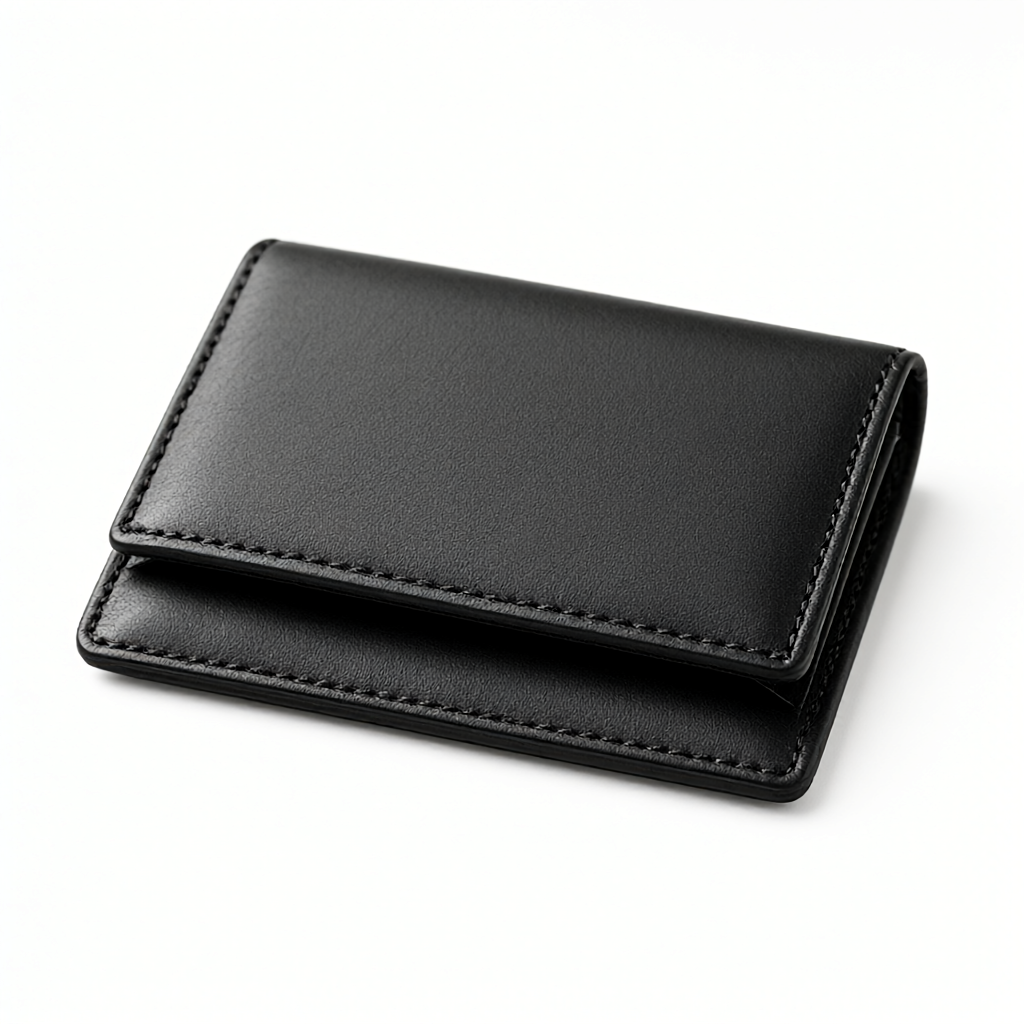
A wallet earns the “designer” tag through a combination of materials, construction integrity, surface finishing, and consistent quality across production runs. The market is crowded with entry-level products that use misleading language to inflate perceived value. Understanding what differentiates genuinely good manufacturing from marketing-heavy low-tier supply is essential before any sourcing conversation begins.
Materials and Construction
The material selection drives cost, durability, and end-user perception. Aluminum wallets are typically CNC-machined from 6000-series billets, then anodized for color and scratch resistance. Carbon fiber card holders use layered epoxy-resin sheets cut and polished to a consistent finish. Titanium money clip styles are milled or waterjet-cut from grade 1 or grade 2 titanium sheets, valued for their strength-to-weight ratio and hypoallergenic properties. Leather variants range from full-grain and top-grain to bonded leather and PU — each occupying a different tier of durability and price point.
For guidance on selecting wallets by material and application, see our good wallets for guys — a B2B procurement guide to evaluating men’s minimalist EDC.
RFID-Blocking Construction
RFID-blocking wallets use a thin metallic mesh or film laminated inside the wallet body to create a Faraday cage effect around card-level chips. This is a functional specification, not a guarantee of complete electromagnetic isolation. The effectiveness depends on coverage area, material placement, and whether the blocking layer extends to every edge. Buyers should verify this through supplier documentation rather than accepting it as an assumed feature.
Finishing and Tactile Quality
Surface treatment is where many wallets either impress or disappoint the end user. Anodized aluminum receives its color through an electrolytic process that also hardens the surface. Powder coating offers a thicker finish suitable for tactical styles. Carbon fiber surfaces are resin-sealed and polished to varying sheens. Titanium can be bead-blasted, brushed, or left with a mill finish. Each treatment has different maintenance profiles and wear characteristics that affect perceived value over time.
Key Specifications — What to Look for in Designer Wallets on Sale for Men
Specifications define what a buyer is purchasing beyond the aesthetic. When comparing options across suppliers, these are the measurable dimensions that determine whether a wallet meets your market’s expectations.
Physical Dimensions and Capacity
Outer dimensions: Most slim wallets fall between 75 mm and 100 mm in width and 100 mm and 120 mm in height. Money clip wallets tend to be narrower, often around 65 mm to 80 mm wide. Pocket organizers with modular components run larger, sometimes exceeding 110 mm.
Thickness: A typical aluminum or carbon fiber wallet holds 6 to 12 cards and measures between 8 mm and 15 mm thick when loaded. This is a critical spec because it determines whether the wallet fits comfortably in a front or back pocket without creating bulk.
Weight: Aluminum models generally range from 40 g to 80 g. Carbon fiber versions sit in the 30 g to 60 g range. Titanium money clips can weigh between 25 g and 55 g depending on sheet gauge and design complexity. Weight directly affects shipping cost for bulk orders and influences customer satisfaction — heavier wallets are often perceived as more premium, but only up to a point.
Material-Specific Specifications
| Material | Typical Gauge / Thickness | Finish Options | Notable Properties |
|---|---|---|---|
| Aluminum (6061/6063) | 1.5 mm to 3.0 mm | Anodized (any PMS color), brushed, bead-blasted | Lightweight, corrosion-resistant, good for laser engraving |
| Carbon Fiber | 0.75 mm to 1.5 mm (laminated) | Gloss, matte, satin | High strength-to-weight, distinctive appearance |
| Titanium (Grade 1/2) | 0.5 mm to 2.0 mm | Bead-blasted, brushed, colored anodized | Hypoallergenic, extremely durable, premium feel |
| Leather (full-grain) | 1.2 mm to 2.0 mm | Natural, dyed, patinated | Ages with use, higher cost, classic aesthetic |
Construction Methodology
CNC machining is the standard for aluminum and titanium wallets. It allows tight tolerances, consistent part-to-part dimensions, and the ability to produce complex geometries such as card ejection mechanisms and integrated money clips.
Laser engraving is used for logo application, custom patterns, and serial numbering. It produces permanent marks that do not wear off with use.
UV printing is applicable to certain substrate combinations, particularly carbon fiber surfaces where fine detail and color fidelity are required.
For buyers evaluating specific components like money clips or card holders, detailed procurement frameworks are available in our guides on sourcing money clips for B2B buyers and best card holder selection for B2B sourcing.
Standards & Requirements — Quality, Safety, and Compliance Standards
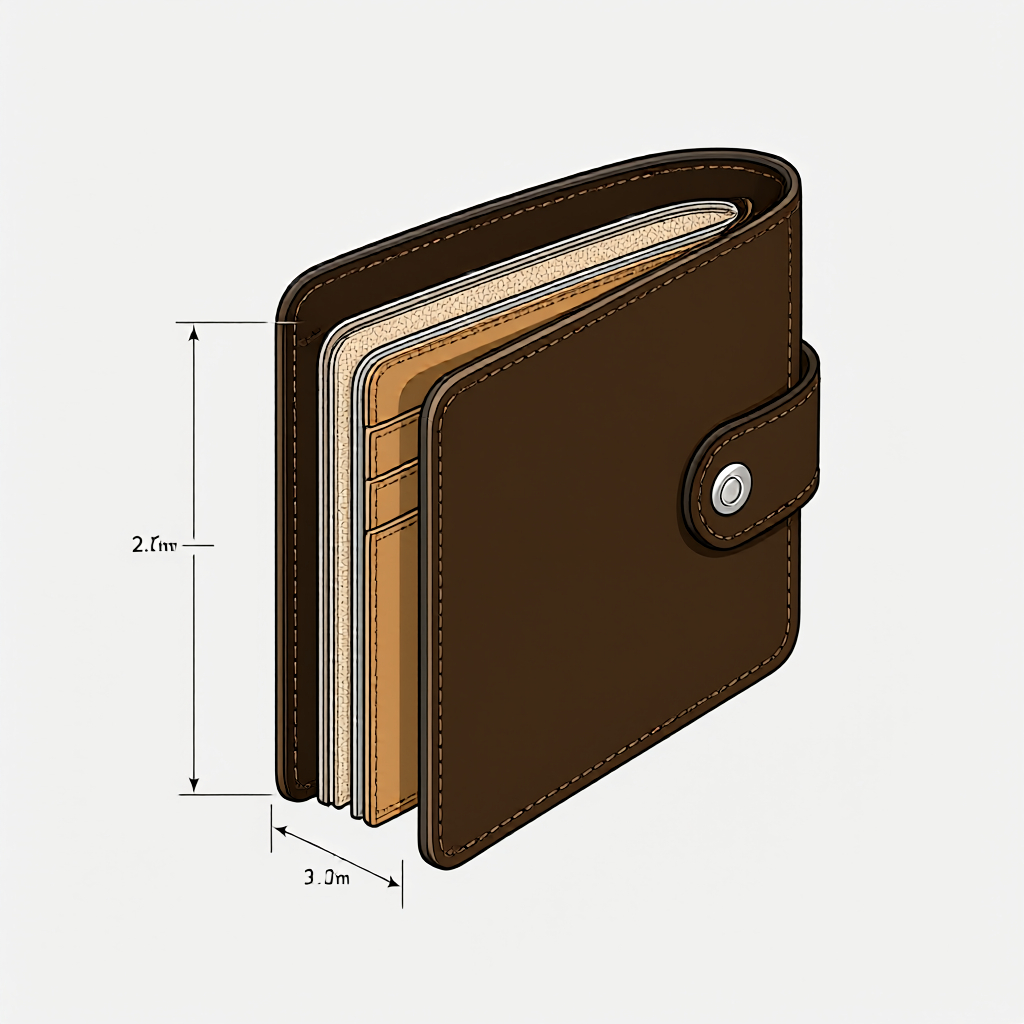
Compliance and quality management systems separate professional manufacturing operations from ad hoc production shops. Buyers should verify the following before committing to an order.
Material Safety and Chemical Compliance
Wallets that contact skin on a daily basis should meet REACH and RoHS standards for restricted substances. These regulations govern the use of certain heavy metals, phthalates, and other chemicals in manufactured goods. SGST-tested materials provide an additional layer of verification for buyers operating in markets with strict import requirements.
ASTM International develops material standards and testing methods that underpin much of the specification framework used in consumer goods manufacturing, including tests for material durability and performance under real-world conditions.
Factory Audits and Quality Management
ISO 9001 certification indicates that a manufacturer has documented quality management processes in place — from incoming material inspection to finished goods verification. BSCI audits assess social compliance, including working conditions and labor practices. Both credentials matter to buyers who supply to regulated retail channels or have corporate procurement policies requiring supplier verification.
RFID-Blocking Verification
RFID-blocking performance should be validated through independent testing rather than self-reported claims. Reputable manufacturers will provide test reports or at minimum a clear explanation of the blocking material used and its coverage area. If a supplier cannot substantiate the claim with data, treat it as a red flag.
Authenticity and Brand Protection
The “designer” classification is unregulated. Any manufacturer can describe their product as designer-style. Buyers should distinguish between: (a) licensed products from recognized brands, which involve trademark agreements and royalty structures; (b) private-label products where the buyer owns the brand and the manufacturer produces to specification; and (c) unbranded products sold under the retailer’s own identity. Each model carries different legal, financial, and operational implications.
Related Considerations — Pricing, Customization, and Manufacturer Evaluation
Pricing and customization are where theoretical specifications meet practical procurement decisions. Understanding how costs are structured helps buyers negotiate effectively and avoid hidden expenses.
How Wholesale Pricing Is Structured?
Wholesale pricing for designer wallets on sale for men follows a tiered structure driven by material cost, production complexity, order volume, and customization depth. A basic aluminum wallet with no engraving and a standard anodized color will sit at the lower end of the price range. Adding laser engraving, a custom color match, a proprietary card mechanism, or specialty packaging increases the unit cost.
Typical pricing ranges vary significantly by material. Aluminum minimalist wallets often range from $3 to $12 per unit at volume. Carbon fiber models typically fall between $5 and $18. Titanium money clips run from $8 to $25 or more depending on thickness and finish complexity. Leather wallets depend heavily on leather grade — full-grain leather wallets may range from $6 to $30, while bonded leather alternatives sit lower.
These are directional ranges. Actual FOB pricing depends on order quantity, specification details, and current raw material costs. Buyers should request a detailed quotation that breaks out unit cost, tooling fees, sample cost, and packaging cost separately so there are no surprises. For a comparison of what influences budget-friendly options, see our guide on best minimal wallets for B2B sourcing and private label programs.
Customization and OEM / ODM Options
Customization exists on a spectrum. At the simplest level, it means applying your logo via laser engraving to a standard wallet design. At the other end, it means developing a completely new product from concept through tooling, prototype, and mass production.
OEM (Original Equipment Manufacturing): You provide the design specifications, drawings, or samples, and the manufacturer produces to your exact requirements. This is the standard model for brands that already have a defined product vision.
ODM (Original Design Manufacturing): The manufacturer offers existing designs that you can modify — changing materials, colors, dimensions, or features — and brand with your logo. This is faster and less expensive than full OEM development, particularly for smaller order quantities.
Private Label: The manufacturer produces a product using their own design, and you apply your branding. This is the fastest route to market and requires the lowest upfront investment.
Customization options typically include:
- Logo application: Laser engraving, UV printing, or embossing
- Material selection: Aluminum, carbon fiber, titanium, leather, or hybrid constructions
- Color matching: PMS-matched anodizing or powder coating
- Packaging: Retail boxes, slipcases, hang tags, and insertion cards designed to your specifications
- Component customization: Card capacity, money clip style, RFID-blocking inclusion, and closure mechanisms
When evaluating customization, consider whether the manufacturer has in-house tooling and finishing capability. Companies that control CNC machining, laser engraving, and surface treatment under one roof can iterate faster and maintain tighter quality control than those that outsource critical steps.
MOQ and Lead Time Expectations
MOQ (Minimum Order Quantity): Entry-level MOQs for custom wallets typically start around 300 pieces per design. This allows smaller brands and Amazon FBA sellers to test a product before committing to a large run. Higher customization levels — such as custom tooling for a proprietary mechanism — may require MOQs of 500 to 1,000 pieces to justify the setup cost.
Sample Lead Time: Sample production typically takes 5 to 7 business days for standard designs with minor modifications. Fully custom designs with new tooling may require 10 to 15 business days for the first sample. Sample costs are usually refundable against a production order.
Production Lead Time: Bulk production lead times depend on order quantity and complexity. A standard run of 500 to 2,000 units typically ships within 15 to 25 business days after sample approval. Larger orders of 5,000 to 10,000 units may require 30 to 45 business days.
Lead times assume that materials are in stock. If a specific anodized color or titanium gauge requires special ordering, add 5 to 10 business days to the timeline.
How to Evaluate a Reliable Wallet Manufacturer?
Evaluating a manufacturer requires looking beyond the product catalog. Here is a practical framework:
1. Manufacturing Capability: Verify whether the manufacturer controls the key production steps in-house — CNC machining, laser engraving, surface finishing, and assembly. Outsourced steps introduce variability and longer communication chains.
2. Quality Systems: Ask for ISO 9001 certification and BSCI audit reports. These documents provide objective evidence of quality management and social compliance standards.
3. Sample Process: A professional manufacturer will provide clear sample procedures, including cost, timeline, and revision policy. Vague or evasive answers about the sampling process are a warning sign.
4. References and Track Record: Ask for client references and examples of similar orders. Manufacturers serving 200+ brands across multiple markets have typically encountered and resolved a wide range of production challenges.
5. Communication Responsiveness: Evaluate how quickly and thoroughly the manufacturer responds to technical questions during the inquiry stage. Communication quality during sourcing correlates strongly with execution quality during production.
6. Compliance Documentation: Ensure the manufacturer can provide REACH, RoHS, and SGS test reports for materials used in your order. This documentation is essential for importing into the EU, US, and other regulated markets.
Sourcing Designer Wallets on Sale for Men — How Industry Standards Translate to Production
Understanding what makes a quality designer wallet helps when you are ready to work with a manufacturer. The specifications, materials, and standards covered above are not abstract — they define what happens on the production floor and what you should expect at each stage of the sourcing process.
As a manufacturer, our approach to these standards is straightforward. We operate from an ISO 9001 certified facility with BSCI audit compliance, and we handle CNC machining, laser engraving, anodizing, and final assembly in-house. This means specifications move from your requirements directly to production without passing through multiple subcontractors. Our MOQ starts at 300 pcs per SKU for full OEM customization (100 pcs trial order available for stock finishes) per design, and we offer a 7-day sample lead time so you can evaluate quality before committing to a full order. We ship to clients across America, Europe, Australia, and Southeast Asia, and we support the full range of customization — from simple logo engraving on existing designs to complete OEM development from concept to packaging.
If you are evaluating options for your next wallet program, it helps to understand how similar products are sourced in different markets. Our guides on sourcing wallets from nearby manufacturers and suppliers for B2B buyers and business card holder near me — sourcing and supplier guide provide additional context on supplier evaluation and specification alignment. For buyers interested in complementary product categories, our women’s wallet sourcing guide for retail and wholesale buyers covers parallel considerations for expanding a product line.
To request a detailed quotation for your specific requirements — including material, customization, and volume — reach out to our team.
Designer Wallets On Sale For Men: Where Can You Verify the Data and Sources?
- ASTM International — www.astm.org
- good wallets for guys — a B2B procurement guide to evaluating men’s minimalist EDC — topedcwallet.com
- sourcing money clips for B2B buyers — topedcwallet.com
- best card holder selection for B2B sourcing — topedcwallet.com
- best minimal wallets for B2B sourcing and private label programs — topedcwallet.com
- sourcing wallets from nearby manufacturers and suppliers for B2B buyers — topedcwallet.com
- business card holder near me — sourcing and supplier guide — topedcwallet.com
- women’s wallet sourcing guide for retail and wholesale buyers — topedcwallet.com
- reach out to our team — topedcwallet.com
From article to product
Turning this into a product?
Most of what is written here is the difference between a sample that works and one that does not. We can build either — the useful one costs the same.
Keep reading
More on buying guides
wallet with trigger
How Does a Trigger Wallet Work? What Is the Pop-Up Mechanism? The core of…
Readbest bifold wallet for women
What Is a Bifold Wallet? The term “bifold” refers to the fold: the wallet…
ReadMen’s trifold wallets with zipper compartments vs. bifold
At a Glance The three dominant men’s wallet formats differ in panel count, depth,…
Read
About the author
TOPWALLET Editorial Team
TOPWALLET's editorial and engineering desk writes from bench testing at the Shenzhen (Longgang) facility: pull-force and cycle testing, 13.56 MHz shielding measurements, finish trials and factory audits, rather than supplier spec sheets. Every specification in these guides is one we write on a purchase order.
Written on the floor
This article was written by our production and QC team — the people who spec tolerances, run the finishing line and inspect every batch. Where it states a capacity, a pull force or a lead time, it comes from a measurement we made, not a supplier’s catalogue. If a number here disagrees with what your own supplier told you, tell us; several of these articles started as a correction from a buyer.
See how the factory works · Inspection process · Sourcing FAQ
Turning this into a product?
Most of what is written here is the difference between a sample that works and one that does not. We can build either — the useful one costs the same.