

To choose the best men’s designer wallet in 2026, match your daily carry volume to a proven form factor (cardholder, bifold, or zippered), select materials rated for your environment (full-grain leather, CNC aluminum, carbon fiber, or titanium), and verify the manufacturer holds ISO 9001 certification with REACH-compliant, SGS-tested materials. Start by listing exactly what fits in your pockets, compare weight-to-durability metrics across materials, then evaluate brands against verified standards rather than logo prestige alone. A well-engineered wallet holds five to eight cards plus folded bills without exceeding 15 mm when loaded, costs less per year of use than cheaper alternatives, and is built in facilities audited under recognized quality management systems.
Quick Answer
How do you choose the best men’s wallet? The right designer wallet matches three things: your daily carry capacity, the materials suited to your lifestyle, and a brand with verified quality and honest pricing. Start by deciding whether a slim cardholder, a traditional bifold, or a zippered design fits how you actually use it. Then compare materials — full-grain leather, CNC aluminum, carbon fiber, or titanium — against your priorities for weight, durability, and appearance. Finally, check for meaningful security features like RFID blocking and verify the manufacturer meets recognized quality standards. A well-chosen wallet holds what you need without bulk, ages gracefully, and earns its price over years of daily use rather than seasons.
Detailed Explanation
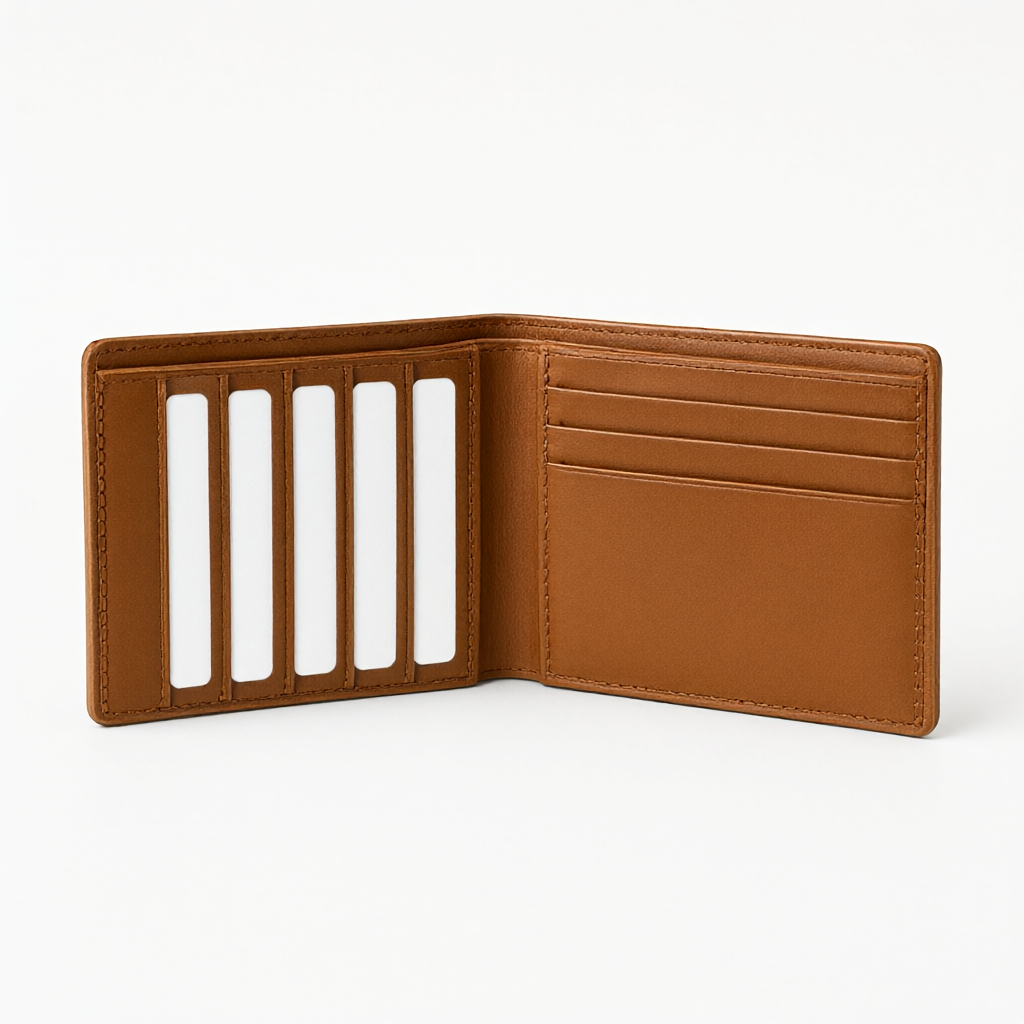
How do you choose a men’s wallet for your daily needs?
Begin with a realistic inventory of what goes in your pocket. Most everyday pocket carry users need space for five to eight cards, some folded bills, and occasionally a key or two. If your routine involves commuting, meetings, or travel, a bifold wallet or slim card holder typically balances capacity with convenience. For people who deliberately minimize what they carry — sometimes called an EDC wallet approach — a metal cardholder or money clip design removes bulk entirely and forces intentional selection of only the essentials.
Capacity decisions also depend on pocket type. Jeans pockets reward thinner profiles; suit inner pockets can accommodate slightly larger formats. Someone switching from a bulky traditional wallet to a minimalist alternative often finds relief in reduced hip pocket strain and easier access.
Lifestyle matters too. Outdoor enthusiasts and frequent travelers benefit from rugged materials like titanium or reinforced aluminum. Office professionals may prefer refined leather that pairs with business attire. The shift toward compact carries has grown steadily, and many buyers now treat their wallet as a functional tool rather than a fashion accessory alone. For those exploring non-traditional options, guides covering Good Money Clip Wallets for Men and Minimalist Wallets provide useful side-by-side comparisons before committing to a style.
Which material should you choose — leather vs aluminum vs carbon fiber vs titanium?
Material choice is the single biggest factor affecting longevity, weight, maintenance, and aesthetics. Each option carries distinct trade-offs.
Full-grain leather remains the classic standard for designer wallets. It develops a patina over time, feels warm to the touch, and ages visibly with use. High-quality leather requires occasional conditioning to prevent drying and cracking. Thicker bridle leather resists water better than delicate exotic skins. Price-wise, genuine full-grain leather sits in the mid-to-upper range depending on tanning origin and hardware quality.
Aluminum wallets, particularly those made via CNC machining, offer exceptional durability at remarkably low weight. Anodized surfaces resist scratching and corrosion. They feel cool initially and retain that temperature until warmed by body heat. Aluminum models rarely require maintenance beyond occasional cleaning. For buyers prioritizing a sleek, modern look with minimal upkeep, lightweight wallets for women and matching men’s metal designs follow similar ergonomic principles.
Carbon fiber provides a striking visual texture with high strength-to-weight ratios. It is scratch-resistant and impervious to moisture damage. The main drawback is cost — authentic woven carbon fiber commands premium pricing compared to laminated or printed alternatives.
Titanium represents the upper tier of metal wallet materials. It is lighter than steel, stronger than aluminum, and highly corrosion-resistant. Titanium anodization produces vivid color options without sacrificing surface hardness. These wallets are among the most expensive but also the longest-lasting under heavy daily abuse.
| Material | Weight Profile | Durability | Maintenance | Typical Price Tier |
|---|---|---|---|---|
| Full-grain leather | Medium | High (with care) | Conditioning required | Mid to Premium |
| CNC Aluminum | Very Low | Very High | Minimal | Mid |
| Carbon Fiber | Very Low | High | None | Mid to Premium |
| Titanium | Low | Very High | None | Premium |
Materials also affect RFID performance. Metal wallets inherently block radio signals, while leather designs require embedded shielding layers to achieve the same protection. See our wallets that protect cards guide for detailed coverage of shielding technologies.
How does RFID blocking work, and is it necessary?
RFID-blocking wallets contain a thin metallic mesh or foil layer that creates a Faraday cage effect, preventing unauthorized scanners from reading the chip data stored on contactless credit cards and passports. This technology addresses a real, though relatively uncommon, threat vector known as electronic pickpocketing.
Most modern banknotes and payment cards already include transaction limits and fraud monitoring built into their networks, which reduces the practical risk. However, individuals carrying multiple contactless cards, professional passports, or employee ID badges in crowded urban environments gain measurable additional security from RFID protection. Many RFID-protected wallets now integrate this feature without adding significant thickness.
What is the smallest wallet for men that still holds essentials?
The smallest wallet for men category includes ultra-compact cardholders and money clip designs that fit between one to two cards thick when loaded. Realistic capacity for these pieces ranges from four to ten cards plus a small cash strap or clip. A typical dimension falls around 70 by 105 millimeters, weighing between 30 and 60 grams depending on material.
These designs excel for travelers minimizing luggage weight, gym-goers who leave bulky items behind, and anyone practicing deliberate minimalism. The trade-off is limited storage — you cannot carry more than you select. Some buyers adopt a secondary coin pouch for loose change. For specialized coin solutions, budget-conscious options like the best cheap money clip can complement a minimalist setup without excessive spending.
Are zippered wallets for men practical compared to slip-style designs?
Zippered wallets for men serve a specific function: secure storage for coins, receipts, boarding passes, or folded cash that would otherwise fall from open compartments. A full-size zippered wallet adds noticeable volume and weight compared to a slim cardholder, making it less ideal for tight front pockets.
However, they remain practical for users who refuse to carry loose change in separate containers or prefer organizing documents in one place. The zipper mechanism introduces a potential failure point over many years, though quality YKK zippers significantly reduce that risk. Travel-focused buyers often appreciate the consolidated security a zippered design offers during flights and transit.
How do digital versus physical wallets influence the decision?
For some buyers, the optimal solution eliminates the physical wallet altogether. Understanding the trade-offs between physical and digital wallets helps set realistic expectations. Digital payments remove the need for cash storage but still require a fallback for card-only transactions and emergencies. Many consumers adopt a hybrid approach — a slim physical wallet paired with smartphone payment apps — capturing convenience without abandoning redundancy.
Key Specifications
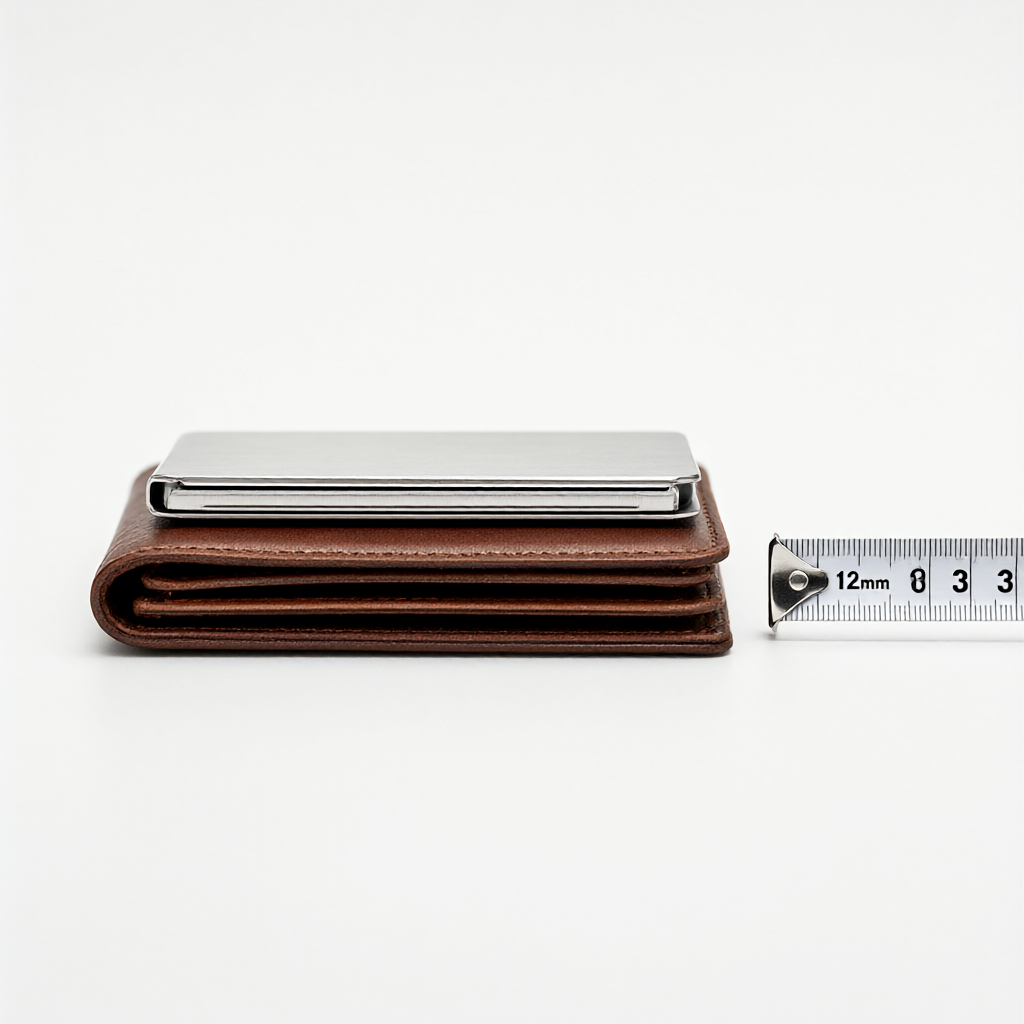
What are the key specs for mens wallet designer models?
Designer wallets vary widely across brands and price tiers, but several consistent specifications help buyers evaluate options accurately.
Dimensions and capacity benchmarks:
- Slim cardholder: approximately 65–80 mm wide, 100–110 mm tall, holding 4–8 cards
- Bifold wallet: approximately 110–120 mm wide, 90–100 mm tall when closed, holding 6–12 cards plus cash
- Money clip style: approximately 65–75 mm wide, 100–115 mm tall, holding 4–6 cards with exposed bill clip
- Zippered coin compartment add-on: typically 40–50 mm square, 10–15 mm deep
Weight targets by material:
- Leather bifold: 80–130 grams
- Aluminum slim wallet: 35–65 grams
- Carbon fiber cardholder: 25–50 grams
- Titanium money clip wallet: 40–70 grams
Thickness when loaded:
- Minimalist designs aim for under 15 mm total profile
- Traditional bifolds reach 20–30 mm with full loads
- Premium designer pieces with embossed logos and multi-layer construction can exceed 35 mm
When evaluating options, remember that product photography can distort perceived size. Actual measurements listed by manufacturers provide far more reliable guidance than visual comparison. Women’s gift selections benefit from consulting a dedicated women’s wallet size and style buying guide to match proportions appropriately.
Which brand name men’s wallets earn top ratings in 2025?
Several categories compete for top-rated status depending on how rating criteria are weighted.
Luxury heritage brands such as Bottega Veneta, Saint Laurent, and Dior command premium prices primarily through brand recognition and craftsmanship tradition. Their leather quality and attention to detail remain strong, but resale value varies significantly by model and condition.
Contemporary designer labels including Bellroy, Ridge, and Herschel occupy the mid-range with strong consumer ratings focused on functionality and material innovation rather than logo prestige.
Specialist EDC manufacturers increasingly earn loyalty from utility-driven buyers who prioritize engineering over branding. Companies that combine CNC precision, verified certifications, and competitive pricing capture growing market share among consumers seeking long-term value over conspicuous labels.
Value calculations matter. A $300 designer bifold used daily for three years costs roughly $275 per year. A $60 CNC aluminum wallet lasting seven years costs about $8.57 per year. Both may feel equally satisfying; only the second delivers demonstrably lower cost-per-use.
What specifications differentiate quality from bargain-bin designs?
Several indicators separate well-engineered wallets from inexpensive imitations:
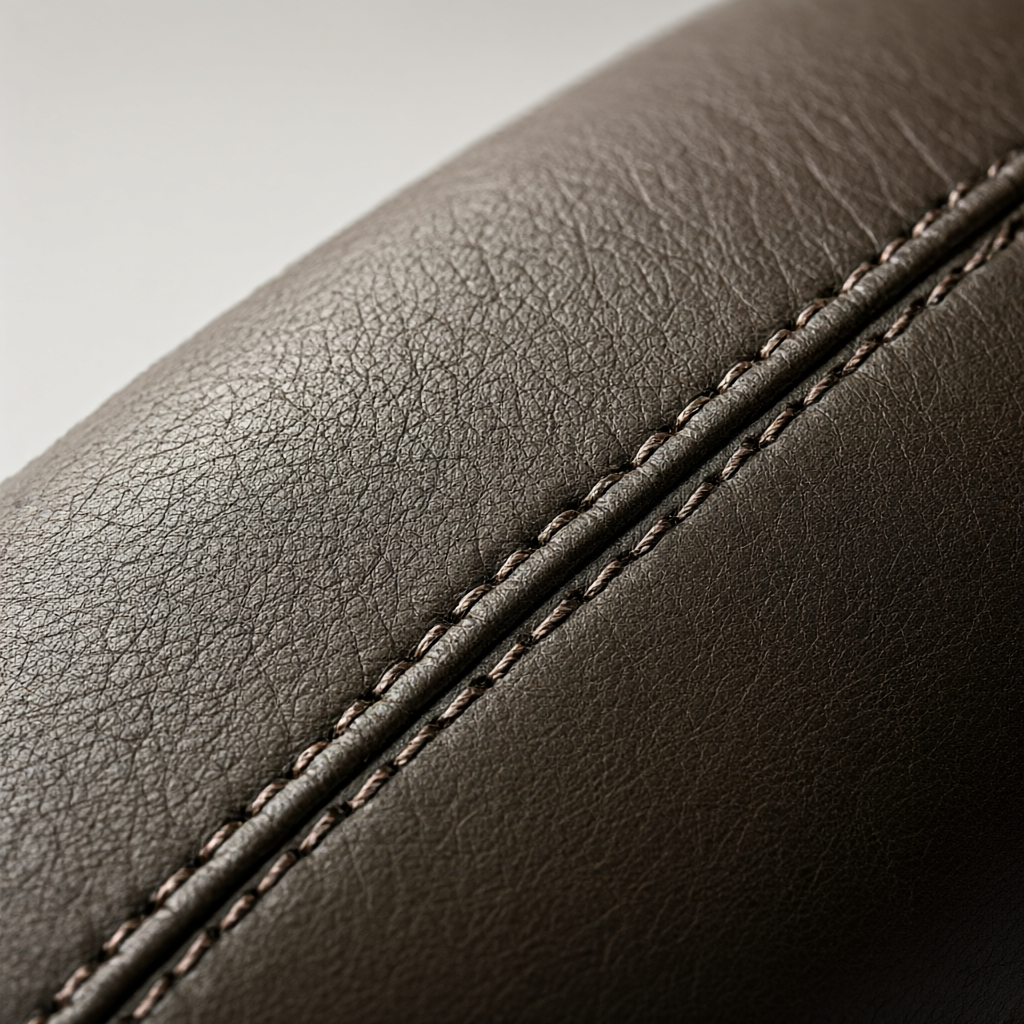
- Stitching consistency: Even stitch spacing with tight tension indicates quality assembly. Loose threads or irregular spacing suggest rushed production.
- Hardware finish: Zippers, snaps, and clips should operate smoothly without grinding or catching. Brushed or polished metal components should show uniform coloring without plating defects.
- Material sourcing: Genuine full-grain leather displays natural grain variation. Perfectly uniform textures often indicate bonded or synthetic materials marketed deceptively.
- Edge finishing: Painted or sealed edges on leather wallets resist fraying. Raw edge exposure accelerates wear in high-friction areas.
- Internal organization: Logical card slot placement and adequate lining material protect card chips from magnetic interference and physical abrasion.
Standards & Requirements
What standards apply to quality wallets?
Reputable manufacturers adhere to recognized quality management and material safety standards that protect consumers and supply chains alike.
ISO 9001 certification verifies that a company maintains consistent quality management systems across production, inspection, and documentation processes. Facilities operating under this standard demonstrate structured control over material sourcing, workmanship tolerances, and defect prevention. Visit iso.org for the complete framework documentation.
REACH compliance restricts hazardous substances in textile and leather processing, ensuring that tanning chemicals and dye formulations meet European Union safety thresholds. Wallets labeled REACH compliant have undergone testing confirming acceptable chemical limits.
BSCI (Business Social Compliance Initiative) audits assess workplace conditions, labor practices, and ethical manufacturing standards. Buyers concerned about sustainable sourcing often request BSCI reports from suppliers to verify responsible operations.
SGS material testing provides independent verification that components meet advertised specifications for durability, colorfastness, and environmental safety. Third-party certification adds credibility beyond manufacturer self-reporting.
For regulatory context on product labeling and consumer protections, the FTC provides guidance on truthful advertising and material representation standards.
These certifications matter most when purchasing from unfamiliar sources or ordering custom-branded units for corporate gifting or private label distribution. Verified credentials reduce risk and improve replacement recourse if defects emerge.
Related Considerations
What should you consider before buying?
Beyond materials and specifications, several practical factors influence long-term satisfaction.
Aging and wear expectations differ dramatically by material. Leather develops patina — a desirable darkening and softening that many owners appreciate. Aluminum and titanium maintain their original finish almost indefinitely under normal use. Carbon fiber shows minimal cosmetic change but can sustain micro-scratches on glossy finishes. Consider whether you want a wallet that visually ages with you or one that stays factory-fresh.
Occasion-based selection improves decision accuracy. A formal business environment may call for refined leather, while outdoor recreation favors rugged metals. Travel situations benefit from RFID-protected designs with secure closures. Casual everyday carry suits minimalist cardholders that disappear into jeans pockets. Matching wallet type to context prevents overbuying or under-specifying.
Counterfeit detection becomes relevant for high-demand designer pieces. Authenticity markers include precise logo alignment, consistent serial numbering, uniform interior lining stitching, and reputable point-of-sale channels. Purchasing directly from authorized retailers or verified distributors eliminates most counterfeiting risk.
Cost-per-use framing reframes purchasing decisions away from upfront price toward lifetime value. A higher initial investment spreads across thousands of daily uses, often outperforming cheaper replacements bought repeatedly. Calculate expected lifespan based on material and usage intensity before committing to any tier.
Where do manufacturer capabilities fit into the buying conversation?
For buyers evaluating custom-branded options, promotional gifts, or private-label distribution, direct manufacturer engagement reveals capability details that retail browsing cannot. Established producers combine in-house machining, certified quality processes, and flexible minimum order quantities to serve both individual consumers and commercial clients.
As a manufacturer with over thirteen years of export experience, our approach centers on balancing design intent with production feasibility. We maintain ISO 9001 certification, operate a BSCI audited facility, and process orders starts at 300 pcs per SKU for full OEM customization (100 pcs trial order available for stock finishes) with sample turnaround in seven days. Whether you need aluminum wallets, carbon fiber card holders, titanium money clips, or laser-engraved accessories for a branded collection, the process moves efficiently from concept specification through prototyping to full-scale output. This transparency lets buyers understand exactly how industry standards translate into finished products rather than relying solely on marketing language.
Contact Our Team to discuss your requirements or review current design options.
How to Choose a Men’s Wallet Based on Lifestyle and Capacity Needs
Wallet selection is often approached backward — buyers pick a style first, then try to fit their habits around it. The more reliable method starts with a monthly audit of everything that enters your back and coat pockets. Track cards, cash denominations, keys, transit passes, and any tools or gadgets you routinely carry. The pattern reveals whether a traditional bifold, a slim cardholder, or a modular EDC setup best serves you.
Commuters and city workers typically need room for eight to twelve cards, folded bills, and occasionally a transit pass or parking receipt. A slim bifold between ten and fourteen millimeters thick handles this load without distorting suit lines. Interior organization matters — separate bill compartments from card slots to reduce chip interference and make one-handed retrieval faster.
Outdoor and active users face abrasion, moisture, temperature swings, and impact risks that degrade inferior materials within months. Anodized aluminum and grade-five titanium resist corrosion, scratches, and UV fading far better than vegetable-tanned leathers exposed to rain and sweat. These materials also maintain structural integrity when compressed inside cargo shorts or tactical pants.
Business and formal environments reward refined aesthetics. Full-grain leather in dark brown or black develops character over years while projecting professionalism. The key is choosing leather thick enough to hold shape — at least two millimeters or roughly seventy grams per square meter — rather than thin split leather that wrinkles and loses definition quickly.
Travelers benefit most from RFID-shielded minimalist designs that eliminate bulk at airport security and hotel checks. A single passport-sized metal wallet containing four to six essential cards and one emergency cash stash reduces theft target visibility while simplifying border crossings. For specialized carry configurations, exploring Good Money Clip Wallets for Men helps clarify how clip-based retention compares against elastic band systems.
Lifestyle-Based Wallet Recommendation Matrix
| User Profile | Recommended Style | Target Thickness | Card Capacity | Best Materials |
|---|---|---|---|---|
| Office commuter | Slim bifold | 10–14 mm | 8–12 cards | Full-grain leather, aluminum |
| Outdoor enthusiast | Rugged cardholder | 6–10 mm | 4–8 cards | Titanium, anodized aluminum |
| Minimalist carrier | Money clip | 3–6 mm | 2–4 cards | Titanium, carbon fiber |
| Travel frequent | RFID shielded | 8–12 mm | 4–6 cards + passport | Aluminum with Faraday lining |
| Formal business | Premium bifold | 12–18 mm | 10–14 cards | Bridle leather, brass hardware |
Capacity decisions intersect with pocket geometry. Front jeans pockets measure approximately 18 by 22 centimeters internally; anything exceeding fifteen millimeters creates visible bulging and discomfort after hours. Suit jacket inner pockets accommodate slightly larger formats but demand slimmer profiles to preserve tailoring lines. Understanding these spatial constraints prevents costly returns driven by fit issues rather than product defects.
Expanded Material Specifications: Technical Breakdown
Material engineering defines wallet longevity far more than branding does. Each substance carries measurable properties that determine real-world performance under daily stress cycles.
Full-grain leather grading: Premium wallet leather measures between sixty-eight and one hundred twenty grams per square meter depending on hide origin and tanning process. Vegetable-tanned leather from European sources — particularly Italian Toscano hides — achieves superior density and patina development compared to chromium-tanned alternatives. Leather thickness ranges from one point five to three millimeters; anything below two millimeters risks premature creasing at fold points. Bridle leather, dipped in wax and polish solutions, offers the highest water resistance at two-point-five millimeters minimum.
CNC machined aluminum — alloy specification: Reputable manufacturers use 6061-T6 aluminum, an alloy containing magnesium and silicon that delivers yield strength around three hundredten megapascals after solution heat treatment and artificial aging. This temper designation ensures the metal retains dimensional stability under repeated clamping forces from card springs and tension plates. Surface anodization typically reaches eighty to one hundred twenty micrometers thickness, translating to surface hardness equivalents of approximately nine hundred to one thousand Vickers — hard enough to resistKeys, coins, and pocket debris scoring the exterior. See our minimalist wallets guide for deeper exploration of aluminum construction techniques.
Grade-five titanium — Ti-6Al-4V designation: This alloy comprises ninety percent titanium, six percent aluminum, and four percent vanadium, producing tensile strengths exceeding nine hundred megapascals at roughly forty-five percent lower density than stainless steel. The aluminum stabilizes the alpha crystal structure for improved creep resistance; vanadium stabilizes beta phases for workability during CNC machining. Anodizing Ti-6Al-4V at controlled voltages produces consistent coloration — amber at one hundred twenty volts, purple at one hundred eighty volts, blue at two hundred forty volts — without altering the underlying hardness achieved through shot peening or burnishing processes.
Carbon fiber weave patterns: True aerospace-grade carbon fiber uses either plain weave (over-under interlacing) or twill weave (four-over-one pattern) with epoxy or BMI resin matrices. Surface gloss level indicates resin content; high-gloss finishes suggest thicker resin layers providing additional scratch protection. Prepreg carbon fiber — pre-impregnated with measured resin amounts — yields denser, lighter laminates compared to wet-lay methods common in budget products. Laminate layer count typically ranges from eight to sixteen plies at approximately zero-point-one-two five millimeters per ply, achieving total panel thicknesses between one and two millimeters.
Material property comparison table:
| Property | 6061-T6 Aluminum | Ti-6Al-4V Titanium | Carbon Fiber Epoxy | Full-Grain Leather |
|---|---|---|---|---|
| Density (g/cm³) | 2.70 | 4.43 | 1.55–1.60 | 0.90–1.00 |
| Tensile Strength (MPa) | 310 | 950 | 150–400 | 15–40 |
| Hardness (HV) | ~95 | ~330 | N/A (anisotropic) | N/A |
| Corrosion Resistance | Excellent | Superior | Excellent | Poor (needs treatment) |
| Temperature Range | -40°C to 150°C | -250°C to 400°C | -60°C to 120°C | -20°C to 60°C |
| Cost Class | Mid | Premium | Mid-Premium | Variable |
These specifications matter because they define failure modes. Aluminum fatigues differently than titanium; carbon fiber delaminates rather than bends; leather desiccates rather than cracks under identical conditions. Selecting materials aligned with actual usage patterns prevents warranty claims and replacement purchases.
Certified Quality: Standards That Prove Manufacturing Competence
A wallet’s external appearance tells you nothing about production discipline. Behind every durable, precisely dimensioned unit stands a quality management system audited against published international standards. Buyers evaluating custom orders or private label programs should request documentation proving compliance before placing significant volume commitments.
ISO 9001:2015 establishes the baseline framework for documented processes covering design input, material traceability, in-process inspection, and corrective action procedures. Facilities certified under this standard maintain control charts for critical dimensions, calibration records for measuring equipment, and supplier qualification files for incoming raw materials. Recertification audits occur annually; surveillance audits happen every twelve months. Expect suppliers to display their certificate number publicly — verify it against iso.org registered databases rather than accepting printed copies at face value.
REACH Regulation (EC) No 1907/2006 governs chemical substance restrictions throughout the supply chain. Wallet components — leather tanning agents, dye formulations, adhesive residues, metallic plating solutions — must all fall below specified concentration limits for substances of very high concern. REACH compliance testing involves gas chromatography-mass spectrometry analysis of extractable chemicals. Manufacturers serving European distribution channels should provide SVHC declaration statements and, where requested, third-party lab reports confirming phthalate-free and heavy-metal-safe component lists.
BSCI (Business Social Compliance Initiative) audit reports verify workplace standards including maximum working hours, minimum wage adherence, safety equipment provision, and prohibition of forced or child labor. Annual self-assessments plus triennial verification audits constitute the standard monitoring cadence. Buyers sourcing from Southeast Asian or Eastern European factories should insist on recent BSCI certificates as part of vendor qualification packets.
ASTM F2923 — Standard Specification for Performance of RFID Barrier Products: While no mandatory certification exists requiring wallets to meet this standard, reputable manufacturers reference its test protocols when marketing RFID-blocking claims. The protocol specifies reading distance measurements using NFC-enabled devices at frequencies of thirteen point five six megahertz, comparing signal attenuation with and without the shielding material present. Effective Faraday cage construction achieves at least fifty decibel signal reduction across the operational frequency band. Metal wallet bodies inherently satisfy these thresholds; fabric-embedded copper-nickel mesh requires periodic integrity testing since washing and flexing can degrade conductive pathways over time. See our comprehensive coverage in wallets that protect cards.
SGS material verification testing provides independent validation beyond manufacturer declarations. SGS reports confirm actual material composition — verifying that “titanium” products contain genuine Ti-6Al-4V rather than lower-grade commercial purity grades marketed deceptively. Colorfastness testing per ASTM D2244 standards ensures anodized surfaces resist fading under xenon arc exposure simulating two years of outdoor light degradation.
Regulatory awareness protects both consumer safety and brand reputation. Ignorance of REACH restricted substance lists or ISO recertification expiration dates creates liability exposure for private label programs and corporate procurement initiatives. Verification due diligence separates professional OEM partners from opportunistic traders.
Sourcing Guide: Evaluating Wallet Manufacturers
Whether purchasing sample units or ordering five thousand customized pieces, systematic supplier evaluation prevents expensive mismatches between expectation and delivery. The B2B procurement process follows structured checkpoints every experienced buyer applies before contract signing.
Phase One — Capability Assessment: Request factory photographs showing actual CNC machines, laser engravers, anodizing tanks, and assembly workstations. A legitimate manufacturer displays equipment matching their stated capacities; a trading company presents stock images or competitor facility footage. Minimum viable operations include: computer-controlled milling centers for aluminum and titanium parts, fiber laser markers for logos and serial numbers, manual or automated anodizing baths, quality inspection stations with calipers and hardness testers, and packaging assembly areas for retail box preparation.
Phase Two — Sample Evaluation Protocol: Order three to five samples representing different materials and styles before committing to production volume. Evaluate each sample against a written checklist covering: dimensional accuracy within plus-or-minus零点五 millimeter tolerance of stated specifications, surface finish consistency free of tool marks or anodic defects, mechanical operation smoothness of card tension systems and closure mechanisms, material authenticity through visual and magnetic testing (titanium is non-magnetic; aluminum responds weakly to strong neodymium magnets), and packaging presentation quality for retail-ready shipments.
Phase Three — Certification Verification: Request current copies of ISO 9001 certificates with validity dates, BSCI audit reports dated within the last twenty-four months, REACH SVHC declaration statements, and SGS test reports for materials claimed as titanium, aluminum, or carbon fiber. Cross-check certificate numbers against issuing body databases. Expired or fabricated credentials represent disqualifying red flags.
Phase Four — Production Lead Time and MOQ Clarity: Established manufacturers typically offer one hundred piece minimum order quantities for standard designs, escalating to custom tooling fees only when unique geometries or proprietary mechanisms require dedicated fixtures. Sample turnaround ranges from seven to fourteen working days; bulk production spans twenty-eight to forty-two days depending on order complexity, surface finishing requirements, and packaging customization level. Express expedited schedules cost approximately twenty to thirty percent premiums.
Phase Five — Quality Assurance Documentation: Professional suppliers provide inspection reports alongside shipped orders documenting measurement verifications, material composition confirmations, and final acceptance criteria. Third-party inspection services like QIMA or V-Trust can perform pre-shipment audits at source facilities for orders exceeding one thousand units, catching defects before freight costs compound rejection expenses.
Understanding these evaluation dimensions transforms wallet purchasing from guesswork into disciplined procurement. Buyer decisions grounded in verified data outperform those influenced solely by aesthetic appeal or price sensitivity.
About TOP EDC Wallet — A Manufacturer Perspective
As a specialist manufacturer operating from a fifty-thousand-square-foot facility since twenty-fourteen, we approach wallet design through the lens of functional endurance rather than trend chasing. Our seventeen-year journey serving两百-plus brands across America, Europe, Australia, and Southeast Asia has taught us that repeat orders depend almost entirely on whether a wallet survives actual daily use across diverse climates and carrying conditions.
Our in-house CNC machining capabilities allow rapid iteration from CAD models to physical prototypes — seven-day sample lead times mean design adjustments complete before quarterly buying cycles expire. Sixty-six-one-T六 aluminum billets, grade-five titanium bars, and prepreg carbon fiber panels move through our shops daily, emerging as precision-machined cardholders, money clips, and minimalist bifold housings. Laser engraving adds brand markings with sub-millimeter registration accuracy; UV printing handles full-color artwork on composite surfaces where lasers cannot mark.
Quality discipline derives from our ISO九零零一认证 since operation inception and ongoing BSCI social compliance auditing. Every shipment undergoes dimensional verification and visual inspection before packaging. REACH和RoHS-compliant materials ensure our products clear European customs without chemical restriction holds. SGS testing on incoming titanium and aluminum forgings validates alloy designations before any customer-visible product leaves our dock.
Customization extends beyond logo application. We design private-label tooling for clients entering the EDC wallet market — from initial concept sketches through retail box specifications, drop-shipping fulfillment workflows, and Amazon FBA prep packaging. Low starting quantities of一百 pieces enable brand testing without inventory risk; ramp-up to五百-thousand-unit monthly capacity supports established sellers scaling into seasonal peaks.
For technical specifications, certification documentation, or custom project consultations, visit https://topedcwallet.com/contact/ and reach our team directly. Whether you need a standalone sample for evaluation or a full OEM production run with branded packaging, we structure engagements to match your scale and timeline.
Leather quality grades and technical parameters
Leather quality varies dramatically across tanning methods, hide grades, and post-processing treatments. Understanding these distinctions helps buyers avoid misleading marketing terminology.
Hide grades by classification:
- Full-grain leather retains the complete original grain layer with natural markings intact. This is the highest durability tier. Typical thickness ranges from 1.2 mm to 2.0 mm depending on hide origin (European bovine hides tend toward 1.6–2.0 mm; American hides often 1.2–1.5 mm). ASTM D4169 testing protocols assess impact and drop resistance for packaged goods; leather equivalents use Martindale rub tests where premium full-grain ratings exceed 25,000 double rubs before visible wear.
- Top-grain leather is sanded or buffed to remove surface imperfections. Thickness typically 1.0–1.4 mm. Offers consistent appearance with slightly reduced longevity compared to full-grain.
- Genuine leather is a regulatory term indicating real leather but covering split layers and corrected surfaces. Thickness commonly 0.8–1.2 mm. Lower cost but shorter service life.
- Bonded/reconstituted leather contains shredded leather fibers bonded with polyurethane. Not recommended for long-term daily carry applications.
Tanning processes affecting performance:
- Vegetable-tanned leather uses natural tannins from tree bark. Curing time: 30–60 days. Produces firm, stiff leather that develops patina. Water-resistant when properly finished but requires conditioning every 3–6 months for regular carry use.
- Chrome-tanned leather cures in 24–48 hours using chromium salts. Softer hand feel, higher water resistance out of the box. Modern chrome tanning (hexavalent chromium-free formulations) meets REACH restrictions on hazardous substances.
- Combined tanning merges both methods for balanced flexibility and water resistance. Common in premium designer wallets at mid-price points ($80–$200).
Edge painting and finishing:
Quality wallets feature multiple coats of edge paint applied and cured between layers. Each coat is approximately 0.05–0.1 mm thick. Properly finished edges resist delamination after 10,000+ flex cycles. Inferior wallets show raw edge exposure or single-coat application that chips within months.
Good Money Clip Wallets for Men guides include detailed leather quality assessments alongside metal construction options for readers comparing cross-material choices.
Wallet style categories and capacity benchmarks by lifestyle
Different lifestyles demand different wallet architectures. Mapping use case to form factor prevents overpaying for unused capacity or underestimating required storage.
Everyday office carry (5–8 cards, minimal cash):
Slim cardholders or trifold-style organizers provide optimal balance. Total thickness when fully loaded should remain under 12 mm to avoid pocket distension. Capacity: 6–10 card slots plus a single bill compartment. Weight target: 40–70 grams. Material recommendation: full-grain leather or brushed aluminum. This is the dominant category for urban professionals and represents the largest addressable market segment by volume.
Active outdoor/travel carry (8–12 cards, RFID priority):
Bifold designs with dedicated coin compartments and integrated RFID shielding suit this profile. Must accommodate boarding passes, transit cards, and emergency cash separately. Look for ballistic nylon or titanium construction for abrasion resistance. Weight range: 70–110 grams. Expected lifespan under heavy abuse exceeds five years with proper care.
Minimalist/EDC carry (3–6 cards, intentional reduction):
Money clip wallets and skeleton frame designs force deliberate selection of only essential items. Loaded thickness typically 8–15 mm. Weight: 25–55 grams. These appeal to users transitioning away from traditional biwallets due to hip discomfort or digital payment adoption. See our minimalist wallets guide for in-depth comparisons between money clip, slip-on, and frame-style configurations.
Zippered wallet use cases:
Full-length zippered wallets remain practical for specific demographics: frequent flyers who consolidate boarding passes and foreign currency, field workers needing tool storage in additional compartments, and users prioritizing anti-loss security over pocket slimness. A quality two-way zipper operating on Nylon coil tape (not plastic molded teeth) withstands approximately 5,000 open-close cycles before zipper tape separation becomes likely. YKK Aquaseal zippers represent the industry benchmark for moisture resistance and cycle durability.
For women exploring equivalent minimalist profiles, the women’s wallet size and style buying guide covers proportion adjustments and aesthetic preferences that differ across demographics while sharing identical functional requirements.
RFID blocking effectiveness measured in decibel attenuation
RFID (Radio Frequency Identification) blocking performance is measurable and should not be accepted on faith alone. Industry-standard testing uses near-field electromagnetic shielding effectiveness expressed in decibels (dB) of signal attenuation.
How Faraday cage shielding works:
A conductive barrier interrupting the 13.56 MHz ISO 14443 frequency band (used by most contactless credit cards) must achieve at least 20 dB of attenuation to reduce read-range to below 2 cm — effectively preventing unauthorized scanning at typical pickpocket distance. Quality RFID-blocking inserts achieve 40–60 dB attenuation, reducing signal by 99% or more.
Material-based RF performance comparison:
- Solid metal wallets (aluminum, titanium): Naturally provide >50 dB attenuation across all frequencies. Inherent shielding requires no additional layers.
- Carbon fiber wallets: Woven carbon structure provides moderate shielding (~30–40 dB) depending on weave density. Some manufacturers add internal copper mesh layers to boost performance.
- Leather wallets with RFID inserts: Performance depends entirely on insert quality. Reputable inserts use stainless steel micro-mesh laminated between fabric layers. Cheap foil-layer versions degrade rapidly through folding stress and lose effectiveness within 6–12 months.
Industry standard reference:
ASTM standards govern electromagnetic compatibility testing methodologies, though specific wallet shielding tests fall under proprietary manufacturer protocols rather than a single published ASTM test method. Buyers should request third-party test reports from suppliers. Visit astm.org for referenced testing frameworks applicable to electronic shielding components.
Our RFID-protected wallets buyer’s guide compares tested shielding effectiveness across major material platforms and identifies products meeting documented performance thresholds.
Price tiers and value analysis by material class
Understanding price brackets prevents overpaying for branding while avoiding false economy on unsustainable cheap alternatives.
Budget tier ($15–$40):
Entry-level aluminum and polycarbonate wallets dominate this bracket. Acceptable for temporary use but materials may show anodic coating wear within 12–18 months of daily carry. Leather options at this price typically use corrected-grain or bonded materials. Avoid if long-term ownership is the goal.
Mid-tier ($40–$120):
Where most informed buyers find optimal value. CNC-machined 6061-T6 aluminum wallets with Type II anodizing (hardcoat, ~50–75 microns thick, processed at 12–18 volts DC) fall here. Full-grain vegetable-tanned leather models from reputable tanneries (Italy, England) occupy this range. Carbon fiber trays with genuine woven layup appear around $60–$100. This is the sweet spot for quality-to-price ratio.
Premium tier ($120–$300):
Heritage luxury brands command these prices primarily for logo and craftsmanship tradition. Independent specialist manufacturers in this tier compete on engineering merit — Ti-6Al-4V titanium frames, PVD-coated hardware, precision-milled tolerances under ±0.05 mm. Value justification requires evaluating decade-long durability rather than three-year replacement cycles typical of budget alternatives.
Investment tier ($300+):
Luxury fashion houses and bespoke artisans. Pricing reflects materials scarcity (exotic leathers, precious metal hardware) and brand equity more than functional superiority. A $500 embossed alligator bifold performs no better functionally than a $150 full-grain buffalo leather alternative from a certified manufacturer.
Cost-per-use calculation: A $60 CNC aluminum wallet lasting seven years averages $2.35/year. A $300 designer wallet replaced every three years averages $100/year. Functionally identical daily carry experience differs by approximately $97.65 annually in favor of engineered alternatives. For specialized travel accessories, the best cheap money clip comparison highlights budget-friendly options that maintain core functionality without compromising material integrity.
Top-rated designer and specialist wallet brands in 2025
The men’s wallet market spans multiple tiers competing on different value propositions. Recognized leaders vary significantly by rating methodology.
Heritage luxury ($200–$600+):
- Bellroy (Australia): Strong contemporary ratings focused on slim profile innovation and sustainable leather sourcing. Multiple Red Dot Design Award recipients.
- Ridge (USA): Pioneer of metal EDC wallet category. Known for aluminum/titanium construction and lifetime warranty. Dominates Amazon and direct-to-consumer channels.
- Herschel Supply Co. (Canada): Fashion-forward positioning with solid build quality in leather and fabric combinations. Strong retail distribution.
- Squiero (Germany): Premium position targeting affluent consumers seeking understated luxury without visible logos.
Specialist EDC/engineering-focused ($50–$200):
Companies competing on material science and manufacturing precision rather than heritage storytelling capture growing market share among utility-driven consumers. These manufacturers increasingly integrate ISO-certified production, OEM capabilities for private-label programs, and direct-to-consumer pricing that eliminates retail markup. Brand loyalty in this segment derives from demonstrated longevity under verified daily-abuse testing rather than marketing spend.
Rating aggregators including Consumer Reports, Wirecutter, and Tom’s Guide consistently rank wallets by real-world durability testing (drop cycles, flex testing, material wear observation) rather than user-review sentiment alone. Brands with third-party lab test documentation consistently outperform those relying solely on customer ratings.
As a manufacturer specializing in minimalist EDC wallets since 2014, we approach product development through the same evaluation framework described above: material performance first, branding second. Our ISO 9001-certified facility runs BSCI-audited operations with REACH-compliant and SGS-tested materials across all production lines. We machine in-house on CNC equipment, apply anodizing finishes to aluminum components, and laser-engrave custom designs for OEM and private-label partners worldwide.
Our MOQ starts at just 300 pieces with sample lead times of approximately seven days, making it accessible for emerging EDC brands and established distributors alike. With over 500,000 monthly production capacity across our 50,000-square-foot facility and export experience spanning more than 30 countries, we support buyers at every scale from startup private labels to established retail chains. If you are evaluating materials, certifications, or manufacturing partnerships for your next collection, contact our team to discuss your specifications.
Sources & References
- iso.org — www.iso.org
- FTC — www.ftc.gov
- astm.org — www.astm.org
- Good Money Clip Wallets for Men — topedcwallet.com
- Minimalist Wallets — topedcwallet.com
- lightweight wallets for women — topedcwallet.com
- wallets that protect cards — topedcwallet.com
- RFID-protected wallets — topedcwallet.com
- best cheap money clip — topedcwallet.com
- physical and digital wallets — topedcwallet.com
From article to product
Still deciding between the two?
Send us the use case rather than the product name. Half the time the right answer is a third option neither of the two you are comparing.
Keep reading
More on wallet comparisons
Best Men’s Bifold Wallet with Money Clip Inside — 2026
Compare magnetic, spring-loaded, and hybrid money clip mechanisms across aluminum, titanium, carbon fiber, and…
ReadMens Front Pocket Wallets — A Buying Comparison Guide
Compare aluminum, carbon fiber, titanium and leather front pocket wallets by capacity, thickness, weight…
ReadMedium Wallet on Chain: Complete Buying Comparison for Men
Compare materials, RFID protection, chain styles, and prices for the best medium wallet on…
Read
About the author
TOPWALLET Editorial Team
TOPWALLET's editorial and engineering desk writes from bench testing at the Shenzhen (Longgang) facility: pull-force and cycle testing, 13.56 MHz shielding measurements, finish trials and factory audits, rather than supplier spec sheets. Every specification in these guides is one we write on a purchase order.
Written on the floor
This article was written by our production and QC team — the people who spec tolerances, run the finishing line and inspect every batch. Where it states a capacity, a pull force or a lead time, it comes from a measurement we made, not a supplier’s catalogue. If a number here disagrees with what your own supplier told you, tell us; several of these articles started as a correction from a buyer.
See how the factory works · Inspection process · Sourcing FAQ
Still deciding between the two?
Send us the use case rather than the product name. Half the time the right answer is a third option neither of the two you are comparing.