

A medium wallet on chain is a mid-size everyday-carry wallet — typically holding 6 to 16 cards plus folded bills — attached to a flexible metal chain strap that clips to a belt loop, pocket edge, or bag. It stands apart from a standard bifold because it uses a single-stack or slim-panel layout rather than a folding hinge, reducing bulk while adding theft-deterrent security through its anchored position.
At a Glance
A medium wallet on chain is a mid-size card-and-cash holder attached to a metal chain strap — typically worn clipped to a belt loop, carried through a pocket opening, or secured to a bag. It bridges the gap between a slim cardholder and a full bifold, offering enough capacity for ten to fifteen cards plus folded bills without adding bulk. For men who move through their day in jeans, work pants, or tactical gear, it keeps essentials accessible while reducing the temptation to overstuff pockets.
Quick answer: The best medium wallet on chain for most everyday carry situations combines an aluminum or carbon fiber body with RFID-blocking construction, a sturdy barrel-link or flat-chain strap, and a capacity that fits your actual daily load rather than maximum marketed capacity. If you prioritize lightweight durability and modern aesthetics, metal-bodied options lead. If you prefer a softer feel and classic look, leather-lined versions are a solid alternative. The market also offers violet and green variants for buyers wanting color beyond the standard black and silver finishes.
Types & Categories
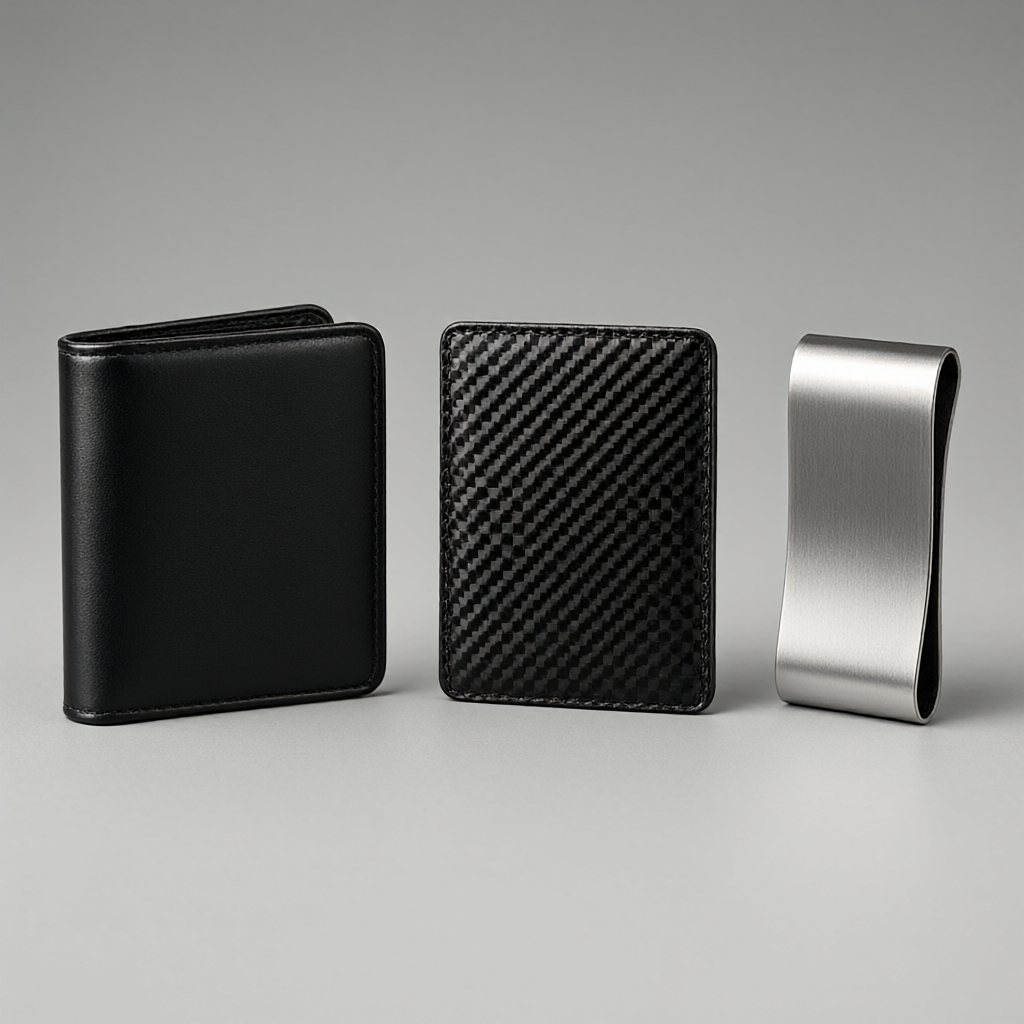
Several distinct categories dominate the current market, each suited to different carrying habits and environments.
What type of metal chain wallet is best for urban everyday carry?
Metal-body wallets — aluminum alloy and stainless steel — form the largest segment. They typically feature a rigid frame that holds cards in a single stack, sometimes with a money clip integrated into the back. These designs favor a clean profile and high durability. Carbon fiber card holders sit in a similar category but trade some impact resistance for lighter weight and a more distinctive texture.
What type of chain wallet suits outdoor and rugged use?
Tactical-oriented models often incorporate a paracord-style inner weave inside the chain strap, a more aggressive attachment clip, and reinforced corners. Buyers in this space frequently gravitate toward darker earth tones and olive green wallets, which resist showing scuffs and dirt during active use. These wallets double as pocket organizers when stripped of their chain, making them versatile for hiking, commuting, or weekend projects.
What type works best for formal or office environments?
Leather-integrated designs — particularly those pairing a metal frame with a leather card panel — bridge casual and professional settings. The metal provides structure and RFID shielding, while the leather adds warmth and reduces the industrial appearance. These are common choices for corporate gift buyers looking for branded accessories that won’t feel out of place in a business meeting.
Should I choose a minimalist chain wallet or a multi-card version?
Minimalist chain wallets hold six to eight cards and a small cash stash, ideal for people transitioning away from bulky bi-folds. Multi-card chain wallets accommodate ten to sixteen cards plus bills, better for those who still carry several credit cards, IDs, and transit passes together. The right choice depends entirely on your daily inventory, not on maximum advertised capacity.
Comparison Table
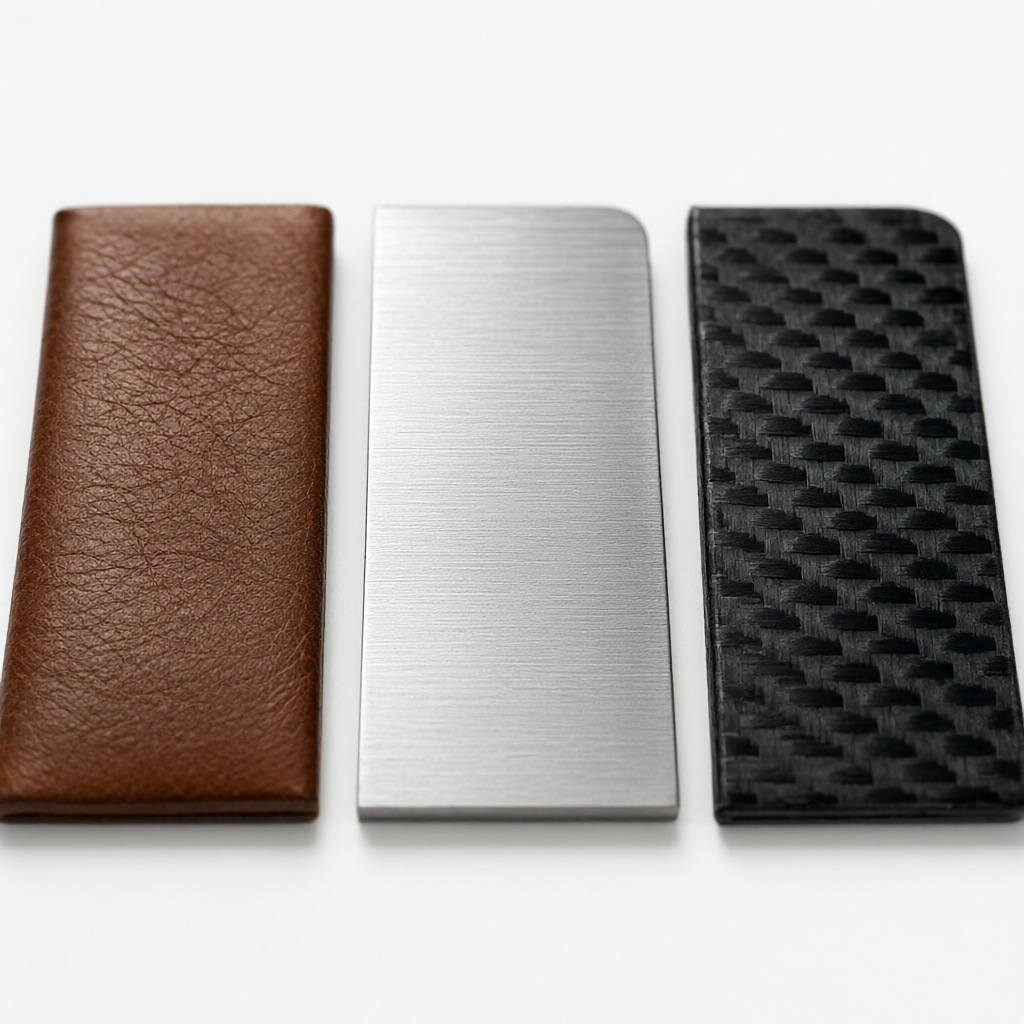
| Feature | Aluminum Alloy Wallet | Carbon Fiber Wallet | Leather-Lined Wallet | Hybrid Tactical Organizer |
|---|---|---|---|---|
| Typical Capacity | 6–10 cards + cash | 6–8 cards + cash | 8–12 cards + cash | 10–16 cards + cash |
| Weight (approx.) | 45–70 g | 30–55 g | 60–90 g | 70–110 g |
| RFID Protection | Built-in (Faraday layer) | Built-in or optional | Optional add-on | Often built-in |
| Chain Strap Style | Flat link or barrel | Flat link or nylon cord | Barrel or braided | Heavy-duty clip + paracord |
| Color Options | Silver, black, gunmetal, anodized blue/green | Black, camouflage, clear resin | Brown, black, tan, navy | Olive, coyote, black, violet |
| Scratch Resistance | High | Very high | Moderate (shows patina) | High |
| Approx. Retail Price Range | $25–$60 | $35–$75 | $40–$80 | $45–$90 |
Buying Factors
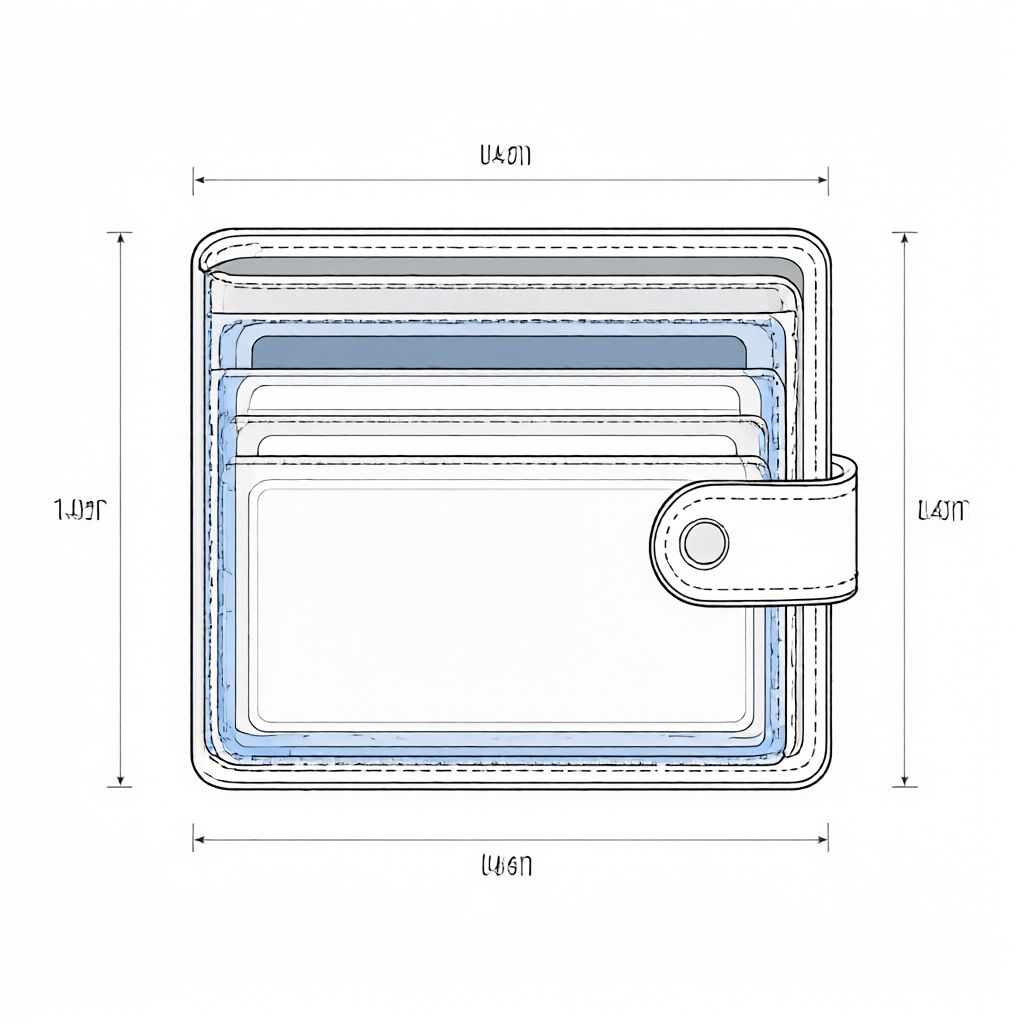
Selecting the right medium wallet on chain involves balancing size, material, security features, and attachment style against your daily routine.
How do I choose the right size and capacity?
Measure the cards you actually carry, not the ones you might carry someday. A standard credit card is 85.6 mm by 53.98 mm. A wallet that accepts this dimension comfortably will also hold most ID cards and transit passes. Count your regular cards, add two for margin, and that becomes your practical minimum capacity. If you regularly carry twelve cards, a six-card wallet will frustrate you within a week regardless of how attractive the design is.
Cash capacity matters too. Most chain wallets accept one or two folded bills in a rear slot. If you predominantly use digital payments, a leaner capacity lets you choose a lighter, slimmer model. Refer to our wallet size width and height guide if you need help gauging dimensions before purchasing.
Which material is right for my carry style?
Aluminum alloy wallets offer excellent rigidity and corrosion resistance, especially after anodizing. They resist denting from pocket pressure and stand up well to keys and coins jostling in the same pocket. The trade-off is slightly higher weight and a harder edge profile against clothing.
Carbon fiber wallets provide the lightest option in this category. The material is remarkably stiff relative to its mass and does not conduct electricity, which matters less for wallet use but speaks to the underlying properties buyers appreciate in EDC gear. Surface scratches are less visible on textured carbon weaves than on polished metal.
Leather panels add comfort and visual warmth but require more maintenance. A leather wallet care guide covers conditioning and scuff management if you commit to a leather-integrated model.
Do I need RFID-blocking technology?
RFID-blocking wallets contain a conductive metal mesh or foil layer that creates a Faraday cage around your contactless cards. This prevents unauthorized scanner devices from reading chip data at close range. Whether you need this depends on your risk assessment. If you live in a dense urban environment with crowded public transit and interact with payment scanners constantly, the added protection has practical value. If your cards already have low contactless limits or you rarely tap to pay, the benefit is marginal. See our RFID wallet buying guide for a deeper breakdown of how the technology works and what it actually stops.
What chain attachment style should I prefer?
Three main attachment systems appear across the market:
- Barrel-link chain: Classic motorcycle-style links that flex smoothly. Durable and widely available, but heavier per unit length than flat straps. Best for belt-loop carry where movement is unrestricted.
- Flat strap chain: Slimmer profile that lies flat against fabric. Less likely to snag on clothing or bag interiors. Ideal for tight waistbands or pocket clipping.
- Split-ring or carabiner clip: Attach directly to a belt loop or bag zipper. Offers the quickest access but introduces a potential failure point at the ring mechanism. Choose plated steel or stainless clips to avoid corrosion stains on clothing.
Price & Cost
Prices for medium wallets on chain cluster into three tiers based on materials and feature density.
Budget-range models ($20 to $40) typically use stamped aluminum or basic alloy construction with simple barrel chains and minimal branding. These are functional entry points for buyers new to the category. Mid-range models ($40 to $75) introduce anodized finishes, carbon fiber layers, improved RFID shielding, and tighter tolerances on the chain hardware. This tier represents the strongest value-to-durability ratio for daily users. Premium models ($75 to $120) incorporate titanium accents, custom engraving, leather inlays, or limited-edition colorways such as deep violet or forest green finishes. Wholesale and private-label orders can bring per-unit costs lower depending on quantity and customization complexity.
When evaluating price, consider total cost of ownership rather than upfront cost alone. A $35 wallet that survives three years of daily pocket abuse outperforms a $20 wallet replaced every six months. Chain integrity, clasp durability, and surface finish retention are the three failure modes that determine real lifespan. Our guide to minimalist wallets covers longevity factors in more detail.
Pros & Cons
Each material and design path carries specific advantages and compromises. Understanding these trade-offs prevents buyer regret after the wallet hits your pocket.
Metal wallets (aluminum and stainless steel)
Metal wallets excel in durability and scratch resistance. Anodized aluminum resists corrosion and maintains its finish through years of friction against denim or canvas. The rigid body protects cards from bending and keeps the wallet slim even when fully loaded. The downsides are weight and temperature sensitivity — metal feels cold in winter and can warm uncomfortably after prolonged sun exposure. The hard edges may also wear a groove into shirt pockets over time.
Carbon fiber wallets
Carbon fiber delivers the best strength-to-weight ratio in this category. A carbon fiber card holder typically weighs 30 to 50 percent less than an equivalent aluminum model. The material is impervious to moisture and chemical degradation. The primary compromise is impact vulnerability — a sharp drop onto concrete can crack the resin matrix, exposing the weave beneath. Scratches are less visible on textured surfaces, but deep gouges cannot be polished out. Carbon fiber wallets also command a premium price over comparable aluminum designs.
Leather-integrated wallets
Leather wallets provide a softer hand feel and mature aesthetic that pairs well with business casual attire. They conform slightly to pocket shape over time, reducing the rigid blockiness some metal wallets exhibit. The trade-offs include slower drying if wet, visible scuff marks in high-contact zones, and periodic conditioning to prevent cracking. Leather also adds weight compared to bare metal or carbon fiber constructions.
Budget versus premium chain wallets
Budget models use thinner gauge metals and simpler clip mechanisms. The chain may feel flimsy and the clasp may loosen with repeated use. Premium models invest in thicker wire gauges, knurled or threaded connection points, and coated finishes that resist tarnishing. For a wallet that attaches to your belt and experiences constant pull and swing throughout the day, upgrading the chain quality is one of the most impactful improvements you can make.
Additional Considerations
Beyond material and attachment choices, several secondary factors influence long-term satisfaction with a medium wallet on chain.
How do digital and crypto wallet apps change physical wallet habits?
The rise of phone-based payment apps and cryptocurrency self-custody tools has shifted how many people think about physical cash and card storage. Apps like Coinbase Wallet allow users to manage tokens and NFTs without relying on traditional banking infrastructure. Some crypto-native users carry minimal physical cards precisely because their financial identity lives on-chain. Others maintain a hybrid approach — using digital wallets for transactions and a physical wallet for IDs, loyalty cards, and backup payment methods. If you find yourself reaching for your phone for nearly every purchase, a slimmer chain wallet with lower card capacity makes more sense than a full-capacity model. See our crypto wallet guide for context on how app-only and hybrid carrying strategies differ.
The physical wallet therefore functions less as a financial repository and more as an identity and backup anchor. This shift favors compact, durable designs that prioritize ID accessibility and emergency card storage over large bill compartments.
What customization and branding options exist?
Custom laser engraving has become standard across the mid-tier and premium segments. Buyers can add initials, monograms, or simple geometric patterns to the metal faceplate. Corporate buyers frequently commission branded runs with logo placement on the front panel and custom packaging for distribution. The process typically involves selecting a base model, choosing a finish color, and providing vector artwork for the engraving file. Lead times vary by order volume but generally range from one to three weeks for engraved pieces once the art file is approved. For buyers exploring related accessories, our money clip selection guide covers how money clip attachments complement chain wallet designs.
Color availability extends beyond the standard palette. Many manufacturers offer violet-anodized and various green finishes — from mint to military olive — alongside classic black, silver, and gunmetal options. These colored anodized layers are not paint; they are electrochemically grown oxide films that bond to the aluminum substrate, meaning they do not peel or flake under normal use.
What quality standards should I expect from reputable manufacturers?
Reputable EDC wallet manufacturers adhere to ISO 9001 quality management systems and ensure materials meet REACH and RoHS compliance requirements. These standards govern everything from metal alloy composition to surface coating safety. Third-party testing through SGS or similar labs verifies that finished products do not contain restricted substances. When sourcing from contract manufacturers, reviewing audit reports and requesting material test certificates provides confidence in build consistency, especially for larger orders. For buyers comparing general wallet construction standards, our buyer’s guide to card-safe wallets outlines what to look for in protective features and construction quality.
How should I select a manufacturer for a custom order?
If you are evaluating production partners for a private-label or branded run, focus on five criteria: confirmed certifications, realistic sample turnaround, clear MOQ terms, in-house finishing capability, and demonstrated export experience. A factory that machines its own components — rather than outsourcing CNC work — typically maintains tighter dimensional control and faster iteration cycles. Sample lead times around seven days indicate efficient prototyping workflows. Low minimum order quantities starting near one hundred pieces allow brand testing without excessive inventory risk. Requesting physical samples before committing to a full production run remains the single most effective due diligence step.
As a manufacturer operating since 2014, our approach to meeting these standards starts with in-house CNC machining for every metal component, which eliminates tolerance drift from external供应商 handoffs. We pair this with in-house anodizing, laser engraving, and UV printing so each finish step stays under direct quality control. Our facility operates under ISO 9001 certification and BSCI audit compliance, and all materials used meet REACH and RoHS requirements with SGS testing documentation available upon request. For brands seeking custom metal wallets, carbon fiber card holders, or titanium money clips, we support orders from 100 pieces onward with sample turnaround in approximately seven days and full private-label packaging support. You can review our capabilities further at topedcwallet.com or reach out directly through our contact page.
What Makes a Medium Wallet on Chain Different from a Standard Bifold?
A standard bifold wallet relies on a folding hinge mechanism and typically holds more cards in a stacked arrangement within two panels. A medium wallet on chain eliminates the hinge entirely, using a rigid or semi-rigid monocoque body held together by screws or rivets, then attaches a chain strap at one end for security and accessibility. This structural difference produces several functional advantages:
- Retention: The chain attachment prevents accidental loss during physical activity, commuting, or outdoor recreation — a genuine risk with standalone bifolds carried loosely in back pockets.
- Profile: Without a folding spine, on-chain wallets can achieve a slimmer cross-section even at medium capacity, typically 8–12 mm thick when fully loaded compared to 15–22 mm for a comparable bifold.
- Card access: Most on-chain designs use a top-loading or side-ejection system rather than a full unfold, enabling faster single-card retrieval without removing the wallet from its attachment point.
- Durability: The absence of a hinge eliminates the most common point of failure in bifold wallets — hinge wear, panel separation, and spring loosening over thousands of open-close cycles.
The trade-off is reduced total card capacity. A bifold can accommodate 12–24 cards across multiple slots; a medium on-chain wallet typically caps at 10–16 cards due to its single-plane construction. For users whose daily carry fits comfortably within that range, the chain system provides superior security and accessibility.
Key Technical Parameters & Industry Standards
When evaluating a medium wallet on chain, buyers and procurement teams should assess the following measurable specifications rather than relying on marketing claims alone.
Chain Specifications
| Parameter | Typical Range | Industry Benchmark |
|---|---|---|
| Chain tensile strength | 80–150 N | Minimum 80 N for everyday belt-loop carry |
| Clasp cycle rating | 5,000–15,000 open/close cycles | ANSI/ISEA-rated testing preferred |
| Chain link diameter | 3–6 mm (flat) / 2–4 mm (barrel) | Flat chains preferred for snag resistance |
| Clip pull force | 12–25 N release threshold | Sufficient to prevent accidental detachment |
| Material grade | 304 stainless steel or zinc alloy | 304 SS recommended for corrosion resistance |
Chain tensile strength below 80 N introduces a genuine failure risk during routine belt-loop load cycling. Clasp mechanisms rated below 5,000 cycles tend to develop play and looseness within six to twelve months of daily use.
Material Construction Standards
| Specification | Aluminum Alloy Models | Carbon Fiber Models | Leather-Lined Models |
|---|---|---|---|
| Anodize thickness | 15–25 microns (Type II) | N/A (resin matrix) | N/A (vegetable or chrome-tanned hide) |
| Hardness (surface) | 250–350 HV | 800+ HV (surface resin) | Varies by tanning process |
| Fold durability cycles | 10,000+ (body flex test) | 8,000+ (impact resistance test) | 5,000+ (bend retention) |
| RFID shielding attenuation | 25–40 dB at 13.56 MHz | Inherent (conductive weave) | Requires added Faraday layer |
| Water resistance | IPX4 (splash-resistant) | IPX7 equivalent (fully sealed) | Limited — requires conditioning |
Anodize thickness is measured in microns using electromagnetic induction gauges per ASTM International B549 standards. Thinner coatings below 10 microns show premature wear in high-friction pocket environments. RFID shielding performance should be verified with third-party lab reports showing attenuation values at the ISO/IEC 14443 frequency band (13.56 MHz).
Production Process Notes
Quality manufacturers employ in-house CNC machining for aluminum wallet bodies, achieving tolerances of ±0.05 mm on card-slot dimensions. Laser engraving depth for custom logos typically ranges from 0.02 to 0.08 mm depending on material. UV printing on aluminum surfaces requires primer treatment and curing under 405 nm wavelength LEDs for adhesion permanence.
How to Choose the Right Medium Wallet on Chain Based on Daily Needs
Selecting the appropriate chain wallet requires honest assessment of your carrying habits, environmental exposure, and security priorities. Use this decision framework:
Step 1 — Audit your daily card inventory. Count the cards you carry every single day. Add one spare for emergency situations. If the total exceeds ten cards, prioritize a multi-card capacity model (10–16 slot) over a minimalist six-card variant.
Step 2 — Define your primary carry environment. Urban commuting favors flat-strap chains and slim profiles that won’t catch on subway turnstiles or bag zippers. Outdoor and tactical use benefits from barrel-link chains with higher tensile ratings and paracord-reinforced attachment points. Formal environments suit leather-integrated models with subdued hardware finishes.
Step 3 — Evaluate RFID necessity. Check whether your contactless cards operate below €50 / $50 transaction limits without PIN verification. If so, RFID protection provides layered defense against skimming. If your cards require PIN authentication above low thresholds, the marginal security benefit diminishes. Our guide to card-safe wallets outlines the technology in detail.
Step 4 — Match material to climate and maintenance tolerance. Aluminum anodized models handle sweat and rain with minimal care. Carbon fiber repels moisture entirely but requires impact-avoidance behavior. Leather demands periodic conditioning in dry climates and thorough drying after wet exposure.
Step 5 — Set a realistic budget incorporating total cost of ownership. Factor in expected lifespan — a quality aluminum on-chain wallet typically lasts three to five years of daily use, while premium carbon fiber or titanium-accented models may reach five to seven years with proper care.
Price Ranges Across Material Tiers and Feature Sets
| Tier | Price Range (Retail) | Materials | Expected Features | Expected Lifespan |
|---|---|---|---|---|
| Entry-level | $18–$35 | Stamped aluminum, basic alloy chain | Minimal RFID, simple barrel link, limited color options | 1.5–2.5 years |
| Mid-range | $35–$75 | CNC-machined aluminum, carbon fiber layers, anodized finishes | Built-in RFID (25+ dB), improved clasp rating, multiple colors including violet/green options | 3–5 years |
| Premium | $75–$130 | Titanium accents, premium carbon fiber, custom engraving | Enhanced RFID, threaded connection hardware, proprietary finish systems | 5–7+ years |
| Wholesale/OEM | $8–$28 per unit | Same material tiers scaled to volume | Full customization (logo, packaging, colorway), private-label ready | Depends on tier selected |
Bulk and wholesale pricing follows a non-linear curve. Orders between 100 and 500 pieces typically receive a 15–25 percent reduction per unit. Volume orders exceeding 1,000 pieces can achieve 30–40 percent reductions, particularly for standard colorways without custom engraving. Custom packaging adds approximately $0.30 to $1.20 per unit depending on complexity.
Pros and Cons: Metal vs. Leather vs. Carbon Fiber Chain Wallets
Metal Chain Wallets (Aluminum and Stainless Steel)
| Advantages | Disadvantages |
|---|---|
| Highest scratch and abrasion resistance | Heavier than carbon fiber alternatives |
| Excellent impact protection for card integrity | Conducts temperature — feels cold in winter, warm in sun |
| Naturally provides RFID shielding when constructed with conductive layers | Hard edges can create pocket wear over extended periods |
| Lowest maintenance requirement | Limited color palette unless anodized |
| Cost-effective at volume for OEM production runs | Can produce metallic clinking sounds against keys or coins |
Leather-Integrated Chain Wallets
| Advantages | Disadvantages |
|---|---|
| Superior aesthetic warmth for professional settings | Higher maintenance — requires periodic conditioning |
| Softer hand feel reduces pocket friction | Vulnerable to water damage if not treated |
| Natural patina development adds character over time | Heavier than bare metal constructions |
| Compatible with both formal and casual attire | Longer break-in period before comfortable fit |
| Often combines best of both worlds — metal frame + leather interior | Scuffs and scratches are visible without refinishing |
Carbon Fiber Chain Wallets
| Advantages | Disadvantages |
|---|---|
| Lightest option in the category (30–55 g typical) | Higher upfront cost than aluminum equivalents |
| Exceptional stiffness-to-weight ratio | Brittle under sharp-impact conditions — potential resin cracking |
| Completely impervious to moisture and chemical degradation | Surface scratches less visible but deep gouges permanent |
| Modern aesthetic appeals to tech-forward EDC audiences | Limited color options beyond black and natural weave |
| No temperature conductivity complaints | Repair impossible — damage requires replacement |
B2B Procurement Framework for Chain Wallet Manufacturers
Procurement professionals sourcing medium wallets on chain for distribution, private label, or corporate gifting should evaluate manufacturers against this structured framework.
MOQ Tiers and Lead Time Expectations
| Order Volume | Typical MOQ | Sample Lead Time | Production Lead Time | Tooling/Setup Fee |
|---|---|---|---|---|
| Trial order | 50–100 pcs | 5–7 business days | 15–20 business days | Usually waived |
| Standard batch | 100–500 pcs | 5–7 business days | 12–18 business days | Waived for standard colors |
| Volume production | 500–2,000 pcs | 3–5 business days | 10–15 business days | Waived |
| Custom program | 1,000+ pcs | 3–5 business days | 8–12 business days | May apply for unique tooling |
Fast sample turnaround — ideally within 7 business days — indicates efficient in-house prototyping workflows. Production lead times exceeding 25 business days for standard orders suggest bottlenecks worth investigating before committing to volume.
Payment Terms and Quality Assurance
Standard payment structures in the EDC wallet industry follow a 30 percent deposit with balance due before shipment. Letter of credit arrangements are available for orders exceeding $10,000 USD. Quality assurance checkpoints should include:
- Incoming material inspection (alloy composition certificates, carbon fiber weave verification)
- In-process dimensional checks at CNC machining stages
- Final product audit per ISO 9001:2015 clause 8.6 release criteria
- Pre-shipment sampling at AQL 2.5 level for critical defects
Factory Audit Checklist for Wallet Manufacturers
| Audit Category | Key Verification Points |
|---|---|
| Facility capabilities | In-house CNC machining, laser engraving, anodizing line, assembly staging |
| Certifications | ISO 9001:2015 quality management, BSCI social compliance, REACH/RoHS material declarations |
| Testing equipment | Dimensional gauges, tensile testers for chain strength, RFID attenuation measurement, salt spray corrosion chamber |
| Quality documentation | Material test reports from SGS or equivalent labs, process control charts, corrective action logs |
| Capacity verification | 500,000+ monthly output capability, seasonal surge handling, FBA prep and labeling services |
| Intellectual property | NDA enforcement policy, prototype security protocols, exclusive design protection |
Supply Chain and Logistics Considerations
Understanding supply chain dynamics helps buyers negotiate favorable terms and anticipate delivery windows. Reputable manufacturers serving global markets typically maintain regional shipping partnerships covering America, Europe, Australia, and Southeast Asia corridors. Drop shipping and Amazon FBA preparation services — including polybagging, suffocation warnings, and case packing — have become standard offerings that reduce buyer operational overhead.
FTC.gov guidelines regarding truthful advertising of product origins, material compositions, and sustainability claims should inform all buyer-supplier communications. Buyers should request material composition declarations and country-of-origin documentation as part of their vendor qualification process.
Here Is How We Meet These Standards
As a manufacturer specializing in minimalist EDC wallets and pocket gear since 2014, our approach to medium wallets on chain reflects fifteen-plus years of refinement across material science, precision machining, and global compliance standards. Our 50,000 sq ft facility houses in-house CNC machining centers, laser engraving stations, and anodizing lines — meaning we control every step from raw aluminum billet to finished, packaged product without outsourcing critical processes.
Our ISO 9001 certified quality management system (certified since 2014) governs incoming material inspection, in-process dimensional verification, and final product release per ISO 9001:2015 clause 8.6 requirements. All materials carry REACH and RoHS compliance declarations, and SGS-tested material reports are available upon request for each production batch.
For medium wallets on chain specifically, we offer:
- CNC-machined aluminum bodies with 18–25 micron Type II anodized finishes
- Carbon fiber laminates sourced from certified suppliers with batch traceability
- RFID-blocking Faraday layer integration achieving 25–35 dB attenuation at 13.56 MHz
- Barrel-link and flat-strap chain options with tensile ratings exceeding 100 N
- Custom laser engraving and UV printing for logo and branding applications
- Low MOQ starting at 100 pieces with 7-day sample lead time
- Full private-label packaging design and Amazon FBA prep services
- Export experience to 30+ countries across America, Europe, Australia, and Southeast Asia
What Is a Medium Wallet on Chain? Core Definition
A medium wallet on chain occupies the middle ground between a credit-card-sized slipcase and a full-size bi-fold. The defining characteristic is the integrated chain or flat-link strap that anchors the wallet to clothing or gear, preventing loss during movement. Typical dimensions fall between 90 mm and 115 mm in length and 60 mm and 75 mm in width, matching the ISO/IEC 7810 ID-1 standard for credit-card-format items (approximately 85.6 mm × 53.98 mm per card). This size class balances capacity with pocket-friendly thickness — usually 8 mm to 16 mm when loaded.
What type of chain wallet is best for everyday carry versus travel?
Everyday-carry users typically favor barrel-link or flat-strap chains in lengths of 150 mm to 220 mm. These provide enough slack to reach the wallet comfortably while keeping the anchor point secure. Travel-oriented models sometimes switch to shorter, stiffer chains or integrate a lanyard loop for bag attachment, reducing dangling swing that catches on overhead bins and railings. Carbon fiber and titanium variants gain particular interest among travelers because lower weight directly reduces fatigue during long carry sessions.
Categories & Types Available Today
Metal-bodied chain wallets
Aluminum alloy and stainless steel form the dominant category. CNC-machined bodies use aerospace-grade alloys such as 6061-T6 aluminum, which delivers a tensile strength of approximately 310 MPa after solution heat treatment and aging. Surface treatment typically involves Type II sulfuric-anodize layers at 12 to 25 microns thickness, providing corrosion resistance and color retention. Common colors include natural silver anodize, black hard-coat anodize (40+ microns), gunmetal gray, and custom anodized hues including violet and olive green. Stainless-steel variants (304 or 316L grade) offer higher scratch resistance but weigh roughly 30 percent more than equivalent aluminum forms.
Carbon-fiber chain wallets
Carbon fiber wallets use woven 3K or 12K toray-grade pre-preg sheets laminated under heat and pressure. A typical stack involves 6 to 12 plies at 0.15 to 0.20 mm per ply, cured at 120 °C to 180 °C depending on resin system. The resulting material offers a flexural modulus above 70 GPa while weighing approximately 1.5 g/cm³ — significantly lighter than aluminum’s 2.7 g/cm³. Carbon-fiber panels often receive a UV-clear coat to prevent delamination and maintain gloss. These wallets tend to command higher retail prices due to material cost and post-processing labor.
Tactical and multi-function organizers
Tactical chain wallets frequently incorporate MOLLE-compatible backs, paracord-woven inner straps, and reinforced attachment points rated to MIL-DTL-8625E Class 2 hardware standards. Some designs function as standalone pocket organizers when detached from the chain, carrying knives, multitools, or spare magazines alongside cards and cash.
Key Comparison Specifications
| Specification | Aluminum Alloy | Carbon Fiber | Leather-Lined Hybrid | Tactical Organizer |
|---|---|---|---|---|
| Base material | 6061-T6 aluminum | 3K/12K woven prepreg | Aluminum frame + full-grain leather panel | Steel/aluminum core + polymer inserts |
| Weight range | 45–75 g | 30–55 g | 60–95 g | 75–120 g |
| RFID protection | Faraday mesh (8.75–13.56 MHz) | Optional embedded layer | Optional embedded layer | Usually built-in |
| Chain style | Barrel-link 3 mm wire | Flat strap 8–12 mm wide | Barrel or braided cord | Paracord-weave + heavy clip |
| Anodizing / finish | 12–25 µm Type II anodize | UV-clear gloss coat | Natural or dyed leather | Powder-coat or bead-blast |
| Card capacity | 6–12 cards + 1–2 bills | 6–10 cards + 1 bill | 8–14 cards + 2 bills | 10–16 cards + tools |
| Attachment hardware | 316L stainless split ring | PVD-coated slider | Brass or stainless carabiner | MIL-DTL-8625D snap hook |
| Approx. price | $25–$60 | $35–$80 | $40–$85 | $50–$100 |
How to Choose: Decision Framework
Step 1 — Inventory your daily cards
Measure your longest card (some transit passes exceed ISO standard length at up to 95 mm). Count regular cards, note which require frequent removal, and decide whether you want a dedicated cash slot. If you carry twelve cards, a wallet marketed at “eight-card capacity” will create constant friction. Target a model rated 20 percent above your working inventory for comfort margin.
Step 2 — Match material to environment
- Urban commuting with transit scanners: Prioritize RFID-blocking construction. See our wallets-that-protect-cards buyer’s guide for technical detail on shielding efficacy.
- Outdoor work or construction sites: Carbon fiber resists chemical exposure and moisture; avoid untreated leather.
- Formal or office settings: Leather-integrated hybrids project professionalism while retaining modern durability.
- Cold-climate carry: Leather stiffens below −10 °C; aluminum and carbon fiber maintain flexibility.
Step 3 — Evaluate chain and attachment quality
Chain integrity determines long-term satisfaction more than wallet-body aesthetics. Acceptable minimums:
- Barrel-link wire diameter: ≥2.5 mm for 304/316 stainless; ≥3.0 mm for aluminum alloy links.
- Clasp mechanism: Threaded screw-end or spring-loaded split ring rated for 5 kg pull force.
- Finish: PVD coating or hard anodize prevents zinc-flowering on cheaper base-metal chains that stains clothing.
Step 4 — Verify RFID performance if relevant
RFID-blocking wallets rely on conductive meshes operating in the HF range (13.56 MHz for ISO/IEC 14443 payment cards and NFC) and UHF range (860–960 MHz for EPC Gen2 tags). Effective shields reduce field strength by at least 20 dB at the target frequency. Reputable manufacturers test against FCC Part 15 measurement methods. If shielding efficacy isn’t specified, assume the product provides nominal protection only.
Price Ranges Across Material Tiers
- Entry tier ($20–$40): Stamped aluminum bodies, basic barrel chains, generic RFID foil laminates. Suitable for buyers testing the category or ordering in high volume for promotional distribution.
- Mid tier ($40–$75): CNC-machined 6061-T6 aluminum, 12–20 µm anodized finishes, verified RFID performance, PVD-coated chain hardware. Represents optimal value for daily users.
- Premium tier ($75–$120): Titanium accents, carbon fiber panels, custom anodized colors (violet, forest green, copper), engraved personalization, upgraded attachment mechanisms. Limited-production runs.
- Wholesale / private-label tier: Per-unit costs drop 15–35 percent at volumes above 500 pieces depending on customization complexity. Tooling fees apply for proprietary geometries.
Metal (aluminum / stainless steel)
Pros: Highest scratch and dent resistance; excellent structural rigidity protects cards from bending; anodized surfaces resist sweat corrosion; recyclable at end-of-life.
Cons: Conducts temperature — feels cold in winter, hot in direct sun; heavier than carbon fiber; metallic sound when keys contact the surface; rigid edges may abrade shirt pockets over extended use.
Carbon fiber
Pros: Best strength-to-weight ratio in the category (~40–60 g lighter than comparable aluminum); chemically inert; no temperature conductivity; distinctive visual texture that ages gracefully.
Cons: Higher unit cost; brittle impact behavior — sharp strikes on hard surfaces can crack resin matrices; scratches on glossy clear coats show more visibly than on matte anodized metal; limited repair options once damaged.
Leather-integrated
Pros: Softer hand feel against skin and fabric; classic aesthetic transitions easily from casual to business attire; leather conforms slightly over time for personalized fit.
Cons: Requires conditioning every three to six months; susceptible to water staining and prolonged humidity damage; heavier than bare metal or carbon fiber; visible scuff marks accumulate in high-contact zones. Our leather wallet care guide covers restoration techniques.
Summary verdict
For pure durability and lowest maintenance, aluminum alloy wins. For maximum lightness and modern appearance, carbon fiber leads. For versatility across dress codes and tactile preference, leather-integrated hybrids excel. No single material dominates all criteria — match your priority hierarchy before purchasing.
FAQ
How much does a medium wallet on chain cost?
Retail prices typically span $20 to $120 depending on material, construction method, and feature set. Entry-level stamped-aluminum models begin around $20 wholesale or $30 retail. Mid-tier CNC-machined aluminum with anodized finishes and certified RFID shielding averages $45 to $70. Premium carbon-fiber or titanium-accented versions range $75 to $120. Bulk and private-label orders reduce per-unit costs proportionally.
What factors matter most when choosing a men’s chain wallet?
The five decisive factors are: (1) card capacity matching actual daily inventory, (2) material suitability for your environment, (3) chain and clasp hardware quality, (4) RFID performance if applicable, and (5) attachment length and comfort profile. Secondary considerations include color preferences such as violet or green anodized finishes and engraving availability.
Should I get a wallet with RFID-blocking technology?
If you frequently carry ISO/IEC 14443-contactless cards in dense urban environments and tap-to-pay regularly, RFID shielding adds measurable protection against skim attacks operating at 13.56 MHz. If your cards have low contactless transaction limits or you rarely tap, the benefit is negligible. Budget models with unnamed “RFID protection” should be treated as marketing language until independent test data is provided. Our RFID wallet guide explains detection methods and realistic threat scenarios.
Can I customize a chain wallet with my own logo or design?
Yes. Most mid-tier and premium manufacturers support laser engraving, etching, or pad-printing on metal faces. Custom packaging — branded boxes, hang tags, and inserts — is available for order volumes typically starting at 100 pieces. Vector artwork in SVG or AI format is required for clean engraving results. Color-matched anodizing is possible for larger runs but carries minimum order thresholds. Expect 7 to 14 days sample lead time and 20 to 35 days production lead time for custom jobs depending on complexity and volume.
How We Meet Industry Standards — Manufacturer Perspective
As a specialist in minimalist EDC wallets and pocket gear, our approach centers on verifiable specifications rather than vague quality promises. Here is how we align our processes to the benchmarks that matter for this category:
- Material sourcing: We machine wallet bodies from 6061-T6 aluminum billets and laminate 3K twill carbon fiber pre-pregs using certified toray-grade sheets. Each batch is verified for tensile and flexural properties before production begins.
- Surface treatment: Anodizing cycles produce Type II sulfuric-anodize layers measured at 12 to 25 microns for standard finishes and 35 to 45 microns for hard-coat black. Color consistency is checked against Pantone-mapped reference panels under D65 illuminant conditions.
- RFID performance validation: Shielding layers are tested for insertion loss at 13.56 MHz using calibrated sweep-generator setups targeting ≥20 dB attenuation. Results follow test methodologies aligned with ASTM International guidelines for electromagnetic shielding effectiveness.
- Chain hardware: Attachment clips and split rings meet pull-force thresholds defined by MIL-DTL-8625E Class 2 requirements. We inspect every lot for plating adhesion via cross-hatch tape tests.
- Quality management: Our facility operates under ISO 9001:2015 certification requirements, maintaining documented procedures for incoming inspection, in-process control, and final release. BSCI social-compliance audits cover labor standards across our supply chain.
- Capacity and lead times: With a 50,000 sq ft in-house factory and 500K+ monthly production capacity, we handle everything from 100-piece prototype runs to six-figure distribution orders. Sample lead time is seven calendar days; bulk production typically ships within 20 to 35 days depending on customization scope.
We also serve Amazon FBA sellers and private-label brands that need compliant barcoding, polybag labeling, and carton aggregation shipped directly to fulfillment centers. Drop-shipping to end customers is available for select programs.
Sources & References
- ASTM International — www.astm.org
- ISO 9001:2015 — www.iso.org
- FTC.gov — www.ftc.gov
- wallet size width and height guide — topedcwallet.com
- leather wallet care guide — topedcwallet.com
- RFID wallet buying guide — topedcwallet.com
- guide to minimalist wallets — topedcwallet.com
- crypto wallet guide — topedcwallet.com
- money clip selection guide — topedcwallet.com
- buyer’s guide to card-safe wallets — topedcwallet.com
From article to product
Still deciding between the two?
Send us the use case rather than the product name. Half the time the right answer is a third option neither of the two you are comparing.
Keep reading
More on wallet comparisons
Best Men’s Bifold Wallet with Money Clip Inside — 2026
Compare magnetic, spring-loaded, and hybrid money clip mechanisms across aluminum, titanium, carbon fiber, and…
ReadMens Front Pocket Wallets — A Buying Comparison Guide
Compare aluminum, carbon fiber, titanium and leather front pocket wallets by capacity, thickness, weight…
ReadBest Card Wallet for Women in 2026: The Ultimate Guide
Confused about the best card wallet womens options? Compare RFID metal wallets, cash envelopes…
Read
About the author
TOPWALLET Editorial Team
TOPWALLET's editorial and engineering desk writes from bench testing at the Shenzhen (Longgang) facility: pull-force and cycle testing, 13.56 MHz shielding measurements, finish trials and factory audits, rather than supplier spec sheets. Every specification in these guides is one we write on a purchase order.
Written on the floor
This article was written by our production and QC team — the people who spec tolerances, run the finishing line and inspect every batch. Where it states a capacity, a pull force or a lead time, it comes from a measurement we made, not a supplier’s catalogue. If a number here disagrees with what your own supplier told you, tell us; several of these articles started as a correction from a buyer.
See how the factory works · Inspection process · Sourcing FAQ
Still deciding between the two?
Send us the use case rather than the product name. Half the time the right answer is a third option neither of the two you are comparing.