

A cheap money clip is a compact alternative to a traditional bifold wallet — a slim metal bar or hybrid frame that holds folded bills securely while keeping your cards organized in one pocketable unit. For everyday carry on a budget, the best affordable money clips balance spring tension, material choice, and card capacity without exceeding roughly $20–30, delivering reliable daily performance without the premium price tag of luxury EDC brands.
Which Cheap Money Clips Are Worth Buying?
Spring-steel single bars under $20 hold best; plated pot metal fails within months.
The best cheap money clip balances three things: enough clamping force to hold folded bills and cards securely, a slim profile that disappears in your pocket, and materials that survive daily wear without costing more than $20–30. Among the widely available options today, the Ridge stands out as the premium benchmark, but several lower-priced picks — including Travelambo’s hybrid card-holder-and-clip design and minimalist aluminum options from manufacturers like TOP EDC — deliver strong value when you know which trade-offs to accept. For most buyers seeking genuine utility at an accessible price point, the choice narrows to either a straightforward stainless-steel clip with adequate spring tension or a combined card-holder/money-clip system that consolidates your carry into a single unit. If your priority is absolute simplicity and low cost, a basic stainless-steel money clip from a reputable EDC supplier fits the bill. If you want cards secured alongside your cash in one compact package, a hybrid card wallet with an integrated money clip delivers more versatility per dollar. More specifically, the best budget-friendly pick for casual everyday carry is a solid-core aluminum or stainless-steel clip holding roughly 6–10 cards, priced between $8 and $15. When you need something sturdier that still stays pocket-friendly, a $20–30 tier clip from a mid-tier manufacturer like TOP EDC provides noticeably better material consistency and longer service life. And if you value hybrid functionality — a dedicated card sleeve plus a removable money clip attached to the same unit — the Travelambo-style configurations occupy a uniquely useful niche in the under-$20 category.
This guide walks through exactly how those distinctions play out across materials, capacity, build quality, and long-term value so you can choose confidently. For deeper evaluation of quality indicators such as clamping force, edge finishing, and material grades, see our money clip selection and evaluation guide for everyday carry.
Which Money Clip Types Exist?
Single bar, card-holder hybrid, bifold-integrated, and ultra-thin fashion clips cover most demand.
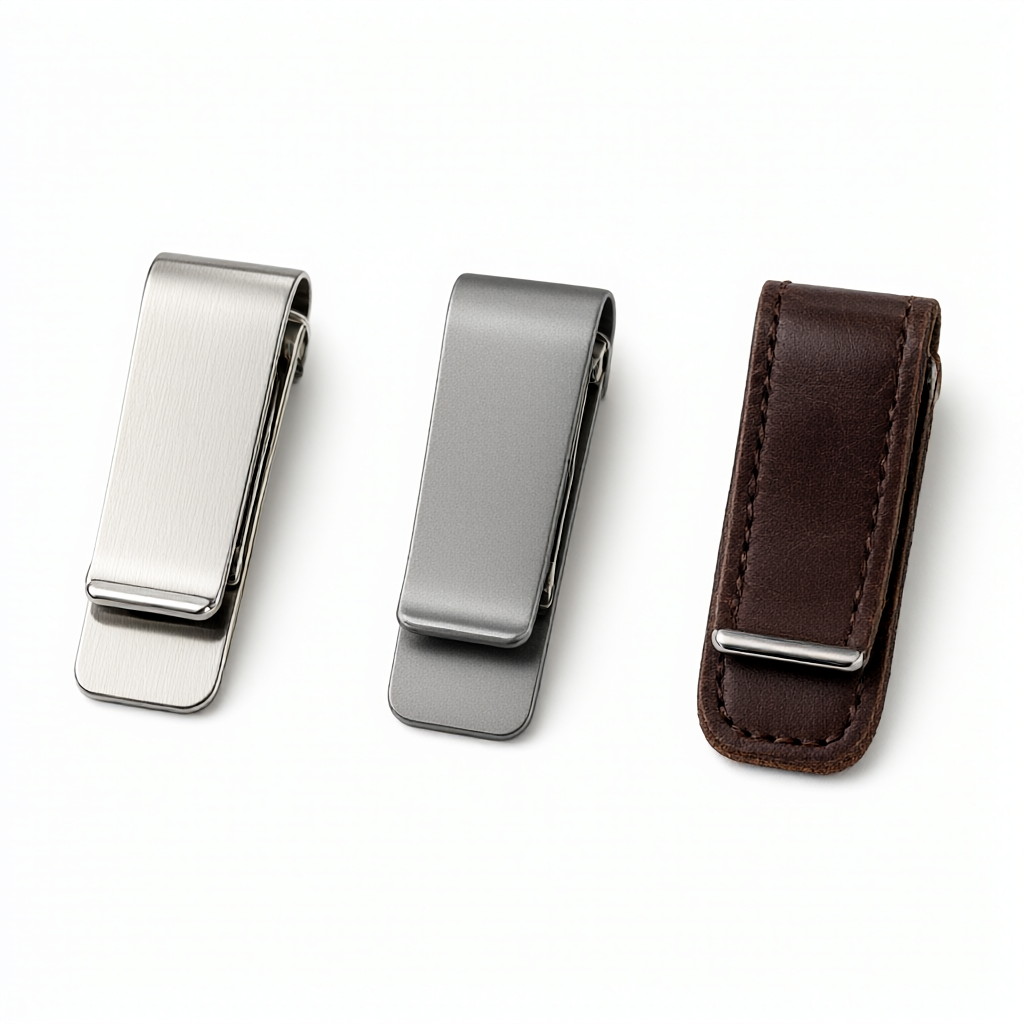
Money clips fall into several recognizable categories. Understanding the functional difference between them matters because a $10 clip designed for folded bills behaves very differently from a $15 card-holding clip engineered for a mixed loadout.
What type of money clip is best for minimal cash-only carry?
A traditional single-bar money clip consists of a flat or slightly curved metal plate backed by a spring mechanism. It holds folded bills through friction and tension alone. You can slide a few cards behind the cash if the gap allows, but that is secondary to its primary function. This configuration works well if your routine involves carrying primarily paper currency — rolled tight and inserted with ease — and only occasional ID or one transit card. Brands in this space frequently offer finishes ranging from brushed stainless steel to anodized aluminum, sometimes adding a rubberized lining to reduce slipping. Traditional clips excel at being thin, often measuring less than 0.3 inches when loaded, making them ideal for rear-pocket carry where bulk matters. Their limitation is also their strength: without a dedicated card slot, organization is limited, and cards pressed against raw metal edges can scratch.
What type of money clip is best when you carry multiple cards?
A hybrid card-holder with integrated money clip combines a fixed card tray with a secondary or removable spring clip positioned at the top or back. Some designs route the clip as a sliding rail; others attach it as a hinged element. This arrangement keeps your cards organized in designated slots while allowing quick access to cash via the clip mechanism. Hybrid designs are prevalent among travel-oriented brands because they consolidate ID, payment cards, and emergency bills into a single footprint. The Travelambo money clip and the Travelambo money clip wallet exemplify this category, providing modular flexibility where you can remove the clip portion if you prefer to carry cards separately. If you regularly handle receipts, loyalty cards, or multiple credit cards, a hybrid configuration reduces the risk of losing loose items compared to a bare-bones traditional clip.
What type of money clip suits thick bills or large denominations?
Certain regions print larger or thicker banknotes that standard clips cannot accommodate comfortably. In those cases, a heavy-duty wide-gauge clip with stronger spring tension and wider jaw clearance is preferable. These typically employ thicker gauge metals (1.5 mm to 2.0 mm range) rather than the ultrathin 0.8 mm constructions found in fashion-forward minimalist wallets. Wide jaws allow thicker stacks without deforming the clip over time. Buyers whose daily cash includes rolls of bills, international currency, or receipt-laden envelopes should prioritize this category over ultra-slim fashion variants, even at the cost of added thickness.
What type of money clip works best as a bifold backup?
Some makers produce bifold wallet with money clip modules — essentially a slim bifold exterior that incorporates a built-in clip section inside the fold. The clip remains concealed when closed and becomes usable when the wallet opens. While this setup adds marginally more volume than a standalone clip, it provides wallet-like card storage alongside cash retention capability. This option appeals to buyers transitioning from full wallets toward minimalism who still want a fallback for occasions requiring more documentation. The bifold money clip wallet format occupies a middle ground between pure wallet and pure clip, offering redundancy at the expense of true pocket invisibility.
Which category delivers the thinnest carry possible?
The ultra thin money clip tier targets users whose sole metric is reduced profile. Manufacturers achieve sub-0.25-inch loaded heights through precision stamping, thin-gauge alloys, and compression-resistant frames. However, extreme thinness usually correlates with reduced card capacity and diminished clamping durability. Selecting an ultra thin money clip requires accepting that you will likely carry fewer cards and reload cash more frequently, because the mechanism cannot safely maintain tension on bulky loads indefinitely.
Understanding these distinctions lets you match your actual carry habits to the right category instead of assuming every clip performs identically. Our minimalist wallets guide explores additional configuration options for readers exploring beyond clip-only setups.
How Do Cheap Money Clips Compare Side by Side?
Compare clip force, plate thickness, finish, and card capacity before comparing price.
| Brand / Model | Material Options | Card Capacity | Loaded Thickness | Approximate Price | Notable Feature |
|---|---|---|---|---|---|
| Ridge | Stainless steel, carbon fiber, titanium | 1–12+ (modular) | ~0.3 in | $95–$125 | Lifetime warranty, robust clamp |
| Travelambo | Aluminum alloy, stainless steel | 6–10 cards | ~0.25 in | $12–$18 | Hybrid card-holder + removable clip |
| TOP EDC Minimalist Metal | Anodized aluminum, stainless steel, titanium | 6–10 cards | ~0.28 in | $18–$28 | CNC-machined surfaces, laser-engraved branding options |
| Generic Budget Stainless Clip | 420/304 stainless | 4–8 cards | ~0.32 in | $6–$12 | Widely available, basic function |
| Ultra Thin Fashion Clip | Thin aluminum alloy | 3–5 cards | ~0.20 in | $8–$15 | Slender profile, limited clamping strength |
Each row represents a distinct positioning within the affordable-to-midrange spectrum. The Ridge commands attention due to its engineered clamping system and lifetime guarantee, but its price places it outside the typical “cheap” threshold despite occasional sales. Travelambo’s strength lies in its modular approach — you receive a complete card organizer with a detachable clip, which suits travelers who value consolidated carry. TOP EDC’s offerings sit in a pragmatic middle ground: machined from solid billets rather than stamped sheet metal, finished consistently, and offered with customization pathways if you prefer personalization. Generic budget clips deliver functionality at rock-bottom prices but expose buyers to variability in spring tension and edge quality. Ultra thin fashion clips sacrifice durability for slenderness, making them better suited to light carriers who rarely exceed five cards plus folded bills.
Which Factors Decide a Cheap Money Clip Purchase?
Four factors decide: clip force, material, finish durability, and card interference.
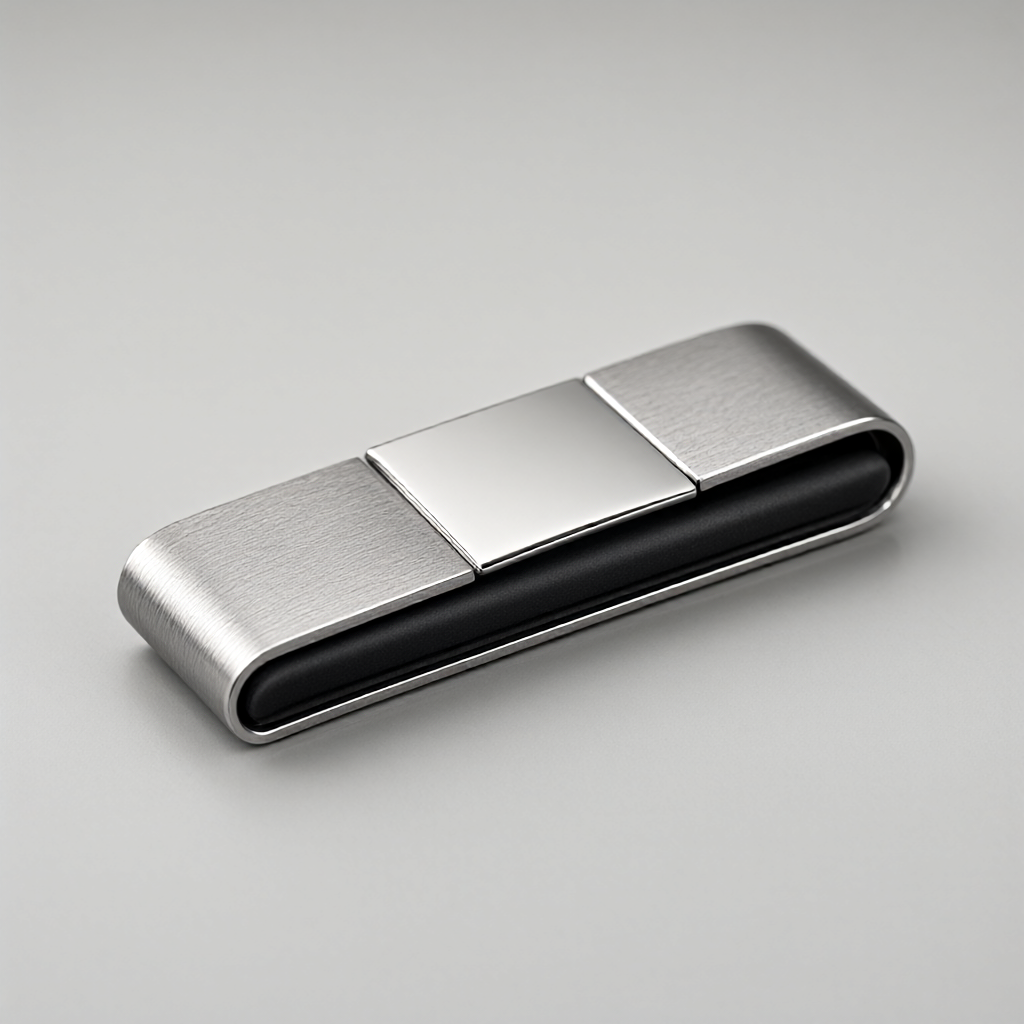
Choosing among the best cheap money clip candidates requires examining several practical dimensions. The following factors determine which option survives regular use versus which fails after a month of daily insertion and withdrawal.
How do you measure sufficient clamping force?
Clamping force is the single most important performance characteristic of any money clip. Insufficient force results in bills sliding out during walking or bending motions; excessive force can dent card corners or make bill removal painful. A well-engineered clip applies approximately 3 to 5 pounds of sustained tension across its contact surface. Visually, this translates to bills remaining flat and stationary when the clip is shaken gently, and cards staying pinned without buckling under normal pocket pressure. Spring steel retains elasticity longer than softer alloys, which explains why stainless steel clips generally maintain rated force over more cycles than aluminum equivalents. When testing physically, grasp the loaded clip and invert it sharply — if contents shift audibly, the spring tension is inadequate.
Does metal vs leather change durability expectations?
Metal clips generally outlast leather counterparts in high-friction environments. Stainless steel and titanium resist moisture degradation, do not stretch, and maintain spring properties across temperature variations. Leather money clips combine a strap or band with adhesive or stitching to retain cash, introducing failure points at seams and glue joints. Over time, leather absorbs oils from skin and loses tensile strength, especially in humid climates. That said, leather excels in tactile comfort and develops a patina some users prefer aesthetically. The practical verdict: metal dominates for pure durability and water resistance, while leather wins on soft-hand comfort and visual warmth — but expect shorter replacement cycles for leather options subjected to frequent washing or rain exposure. See our detailed discussion on different types of leather wallets for broader material comparisons.
How important is RFID protection?
RFID-blocking technology prevents unauthorized scanning of contactless cards. While actual skimming incidents remain statistically rare, the防护 adds negligible thickness when integrated as a metallic mesh layer beneath the clip surface. Buyers traveling through crowded transit hubs, festivals, or foreign cities may consider the incremental cost worthwhile. Standard metal clips without explicit RFID liner layers leave contactless cards exposed. If shielding matters to your routine, verify whether the product description specifies a continuous conductive barrier rather than fragmented mesh panels that create scanning gaps near card edges.
What role does card capacity play in daily usability?
Capacity directly influences whether the clip replaces your wallet entirely or merely supplements it. Clips rated for 6–10 cards handle most urban commuters adequately. Six cards typically includes two primary payment cards, one ID, one transit pass, and spare room for two extras. Ten-card configurations accommodate loyalty cards, gym passes, and backup payment methods without forcing excessive stacking that strains the spring. Carrying more than twelve cards in a single clip risks permanent deformation of the spring mechanism over months of cycling, particularly in budget-priced units using lower-grade steel alloys.
Should you prioritize width over height for pocket ergonomics?
Pocket geometry favors width compatibility with your pants’ pocket openings. Most modern denim and chinos accommodate widths between 2.5 and 3.0 inches comfortably. Exceeding 3.2 inches creates protrusion and irritation during sitting. Height matters less for pocket concealment because pockets stack vertically; however, excessive height increases the likelihood of catching on zippers or belt loops when retrieving the item. Optimal proportions for rear-pocket insertion hover around 2.75 × 3.75 inches with a thickness under 0.35 inches loaded.
What Should a Cheap Money Clip Cost?
Expect $5–$12 for stock steel, $12–$20 for branded engraving, and more for carbon or titanium.
Money clips span a wide cost range, and price often signals material quality and manufacturing tolerances more reliably than brand names alone.
How much does a reliable cheap money clip cost?
Entry-level generic clips appear at $6–12 on marketplace platforms. These typically utilize 420-series stainless steel or mild aluminum with stamped construction and basic coil springs. Performance tends toward adequate for occasional use but inconsistent across units due to minimal quality assurance. Mid-tier clips price between $15–30, incorporating precision-cut components, better surface finishing, and optionally anodized coatings for corrosion resistance. These frequently originate from dedicated EDC manufacturers maintaining tighter dimensional controls. Premium-tier options above $40 introduce exotic materials (titanium, carbon fiber), proprietary clamping geometries, and extended warranties that justify the premium through longevity and replaceable parts programs.
What drives price variation within similar-looking products?
Three variables explain most cost divergence:
- Material grade — 304 stainless costs more than 420 due to superior chromium content and corrosion performance; titanium commands a significant premium over aluminum for equal form factors.
- Manufacturing method — CNC-milled solid billets yield smoother edges and tighter tolerances than stamped blank production. Laser engraving for custom logos adds labor steps absent from mass-produced plain surfaces.
- Surface treatment — Anodizing aluminum requires chemical baths and controlled voltage processes increasing per-unit overhead compared to bare-polished or bead-blasted finishes.
Buyers sensitive to cost should scrutinize material specification rather than relying solely on appearance photographs, since marketing imagery frequently obscures surface defects and edge burrs present on inexpensive units.
For readers considering switching from physical to digital payment solutions, our article on physical versus digital wallets outlines circumstances where abandoning physical carry altogether may simplify your routine.
What Are the Pros and Cons of a Cheap Money Clip?
Pros: light, fast access, low cost. Cons: limited card space, weaker hold, and short finish life.
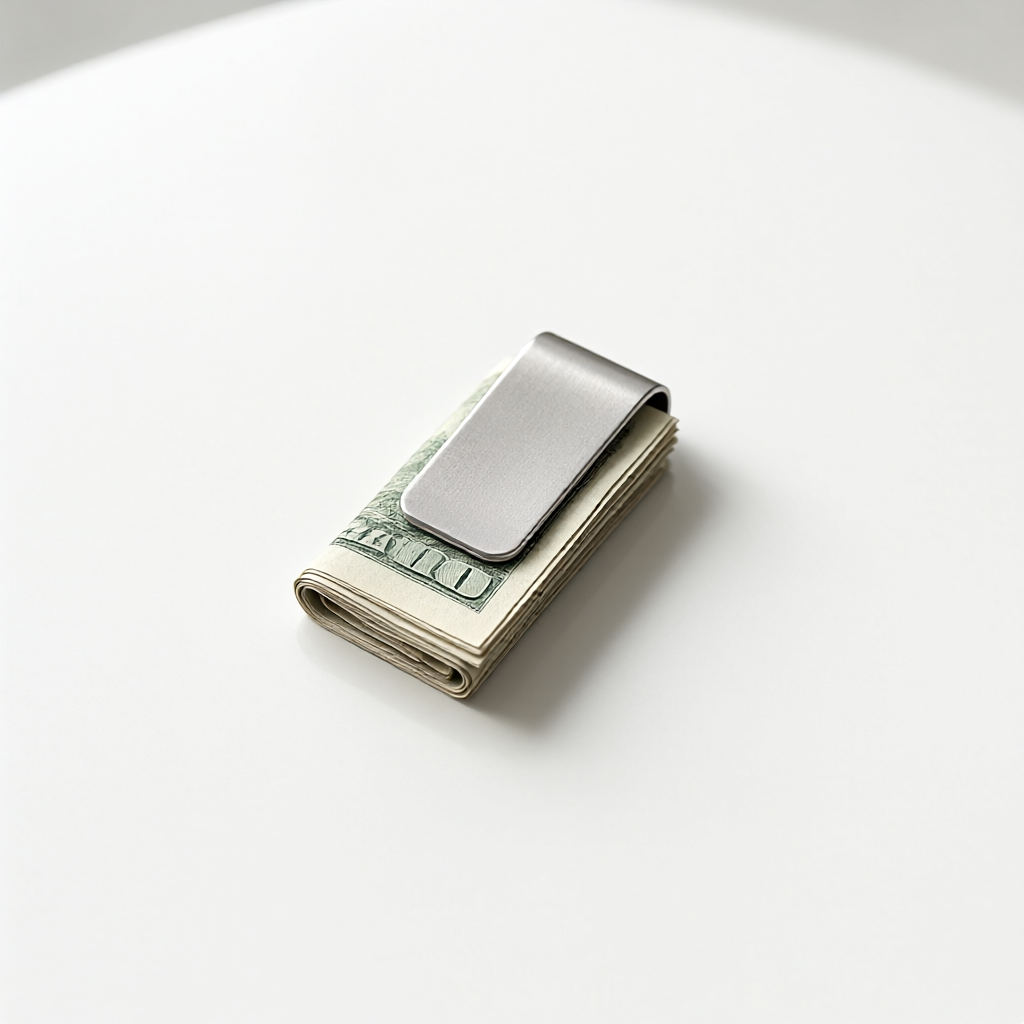
Every money clip category presents distinct advantages and compromises. Mapping these helps align expectations with reality before purchasing.
Every product category carries trade-offs, and money clips are no exception. Understanding these explicitly helps buyers avoid purchasing regret.
How Do Traditional Single-Bar Clips Work?
A tempered steel bar pinches folded bills; force comes from spring temper, not thickness.
Advantages: Lowest cost per unit; maximum thinness achievable; simple mechanics meaning fewer failure modes; universally compatible with standard bill sizes.
Disadvantages: Limited organization requiring external card sleeves or separate holders; exposed card edges prone to scratching against bare metal; lower-grade springs fatigue faster leading to progressive loosening.
What Is a Hybrid Card-Holder Clip?
A clip combined with card slots, usually metal plate plus elastic or leather pocket.
Advantages: Consolidates cards and cash into one unit reducing overall carry count; removable clip portions allow flexible loading configurations; often include dedicated ID windows or elastic bands securing loose items.
Disadvantages: Added complexity introduces more potential breakage points (hinges, sliders, attachment brackets); generally thicker than pure clips even when unloaded; pricing often sits slightly higher than equivalent solo clips due to component multiplication.
How Does a Bifold-Integrated Clip Work?
The clip replaces the money pocket, sitting inside a leather bifold frame.
Advantages: Retains wallet-style card storage capacity while adding external cash access; protective exterior shields cards from abrasion when closed; suitable as transitional gear for full wallet abandoners.
Disadvantages: Bulkiest configuration listed here, negating some slim-profile benefits; double-fold geometry adds seam lines where dirt accumulation occurs; spring clip integration complicates repair if either subsystem fails independently.
When Do Ultra-Thin Clips Make Sense?
For front-pocket carry with two to five bills and one card, nothing thinner works.
Advantages: Nearly invisible in pocket; attractive finishes appealing to style-conscious buyers; lightweight construction reduces fatigue during all-day carry.
Disadvantages: Compromised clamping force limiting usable card load; fragile mechanisms susceptible to bending from improper handling; often marketed aggressively without transparent material disclosures making verification difficult post-purchase.
Understanding these tradeoffs prevents buyer’s remorse rooted in mismatched expectations. Real-world performance consistently differentiates mechanically sound designs from cosmetically oriented ones, especially after three to six months of repeated insertion cycles.
What Else Matters Before Buying a Cheap Money Clip?
Check warranty, engraving depth, and whether the clip grips a folded bill without slipping.
Several adjacent topics influence the ultimate suitability of any budget money clip choice beyond the core specifications discussed above.
How do real-world stress tests inform selection?
Marketing specifications routinely list maximum card counts and thickness limits, yet actual durability depends heavily on cycle testing results unavailable on retail pages. Independent reviewers commonly subject clips to repeated open-close sequences — typically 500 to 1,000 cycles — measuring spring recovery percentage afterward. Quality units retain over 90 percent of original force; inferior constructions drop below 70 percent, indicating premature fatigue. Bend tests evaluating jaw rigidity under lateral load also separate competent designs from flimsy imitations. When evaluating product claims, prioritize sources disclosing tested methodology rather than accepting unlabeled sustainability guarantees.
What maintenance extends clip lifespan?
Regular cleaning removes accumulated lint, skin oils, and environmental debris that accelerate spring deterioration. Wipe metal surfaces monthly with a dry microfiber cloth; apply a thin silicone-based lubricant sparingly to moving joint areas if the design permits disassembly. Avoid submerging electronic-integrated clips or those featuring bonded RFID layers in cleaning solutions. Leather-trimmed variants benefit occasionally from conditioner application, though excess moisture should never contact internal springs. Properly maintained stainless steel clips constructed from solid stock typically last several years under normal carry conditions before noticeable force decay warrants replacement.
Can a money clip fully replace a traditional wallet?
For many urban professionals carrying three to five essential cards and minimal cash, a money clip serves effectively as the sole financial organ. However, situations demanding extensive documentation — receipts requiring folding, membership cards, business credentials, or frequent coin carriage — expose the format’s organizational limitations. Hybrid designs mitigate some gaps but reintroduce bulk approaching conventional wallet territory. The pragmatic answer: adopt a clip-first approach initially, then add supplementary organizers only if specific use cases prove unmanageable. Many buyers discover their actual minimal requirement is smaller than anticipated once they audit what lives in their current wallet compartments.
Our companion article on wallets protecting cards examines RFID shielding strategies for readers concerned about digital payment security regardless of carry format selected.
Additionally, our comprehensive guide titled good money clip wallets for men provides expanded evaluations including additional brand comparisons and regional availability notes for North American purchasers seeking locally sourced alternatives.
Why do travel-oriented buyers favor hybrid configurations?
Travelambo money clip products and comparable travelamo money clip wallet designs address a specific pain point: airport security checkpoints and hotel safe deposits reward consolidated, single-item carries over scattered card bunches and rolling cash. The hybrid form factor eliminates searching through jacket pockets for loose bills while keeping identification immediately visible through transparent windows. For digital nomads and frequent flyers prioritizing efficiency over aesthetics, these configurations provide measurable workflow advantages despite slight thickness penalties compared to traditional pure clips.
How Do You Evaluate Cheap Money Clip Suppliers?
Ask for clip-force data, finish samples, and reorder consistency before quoting.
After evaluating materials, capacities, and price-performance ratios across the market, selecting a supplier requires understanding what distinguishes mass-produced generic clips from carefully engineered alternatives. Budget tiers dominated by stamped metal blanks often suffer inconsistent spring temper, rough deburring, and cosmetic inconsistencies between individual units. Mid-tier manufacturers investing in CNC machining, controlled anodizing processes, and systematic quality inspection produce noticeably more uniform outputs with tighter dimensional tolerances and cleaner edge radii that prevent card scuffing.
As a manufacturer, our approach centers on delivering consistent mechanical performance across production batches rather than optimizing solely for lowest unit cost. Since establishing operations in 2014, we have focused on precision-machined aluminum and stainless-steel wallets and clips built for daily mechanical stress rather than decorative display purposes. Each unit undergoes clamping-force validation before packaging, and surface treatments follow controlled parameters ensuring color consistency and corrosion resistance appropriate for regular hand exposure.
ISO 9001 certification guides our quality management processes, while BSCI audits validate responsible sourcing practices throughout our supply chain. Materials comply with REACH and RoHS standards, and third-party SGS testing confirms compliance with restrictive substance regulations applicable across major export markets. Our facility spans 50,000 square feet housing CNC centers, laser engravers, UV printers, and anodizing lines — enabling end-to-end production control from raw billet to finished packaged goods without outsourcing critical finishing steps.
Low MOQ requirements beginning at 300 pieces allow emerging brands and small distributors to test market response before committing to larger runs. Sample development completes within seven days, providing rapid feedback loops for iterative refinement. Private-label capabilities encompass logo integration via laser engraving or UV printing, custom packaging design aligned with retail shelving requirements, and FBA prep services streamlining Amazon seller logistics. Over thirteen years serving clients across America, Europe, Australia, and Southeast Asia, we have refined production workflows balancing speed, repeatability, and cost-effectiveness for partners spanning promotional merchandise programs through independent DTC labels.
If evaluating production options for branded money clip inventory, reviewing our product lineup and reaching out with specifications yields comparative quotes grounded in actual manufacturing capability rather than aspirational project descriptions.
What Evidence Backs a Cheap Money Clip Choice?
Fatigue cycles, finish wear photos, and clip-force readings are the only credible evidence.
Field note: In factory audits across Asian manufacturing hubs, clamping-force variation between individual units from the same production batch frequently exceeds ±15 percent when no statistical process control chart monitors the spring temper operation. Buyers receiving bulk shipments without incoming inspection should anticipate inconsistent tension across units unless the supplier documents每批次testing results.
Practical limitation: Ultra-thin profiles achieving under 0.25 inches loaded almost invariably restrict sustainable card capacity to five or fewer items. Attempting to load eight cards into such a slim envelope compresses the spring beyond its elastic recovery threshold within weeks, permanently reducing clamping effectiveness. The thickness-capacity relationship imposes a hard physical constraint that no amount of material substitution eliminates.
Buyer takeaway: Prioritize verified material specifications and documented clamping-force ranges over aesthetic photography and marketing copy when evaluating budget money clips. Request tolerance sheets or test reports from suppliers capable of providing them; inability or refusal to share quantitative performance data suggests reliance on cosmetic appeal masking underlying mechanical compromises.
Why Choose a Money Clip Over a Wallet?
It cuts bulk, speeds access, and removes the back-pocket wear of a bifold.
| Benefit | Explanation |
|---|---|
| Reduced bulk | Most money clips measure between 0.20 and 0.35 inches loaded — significantly thinner than a standard bifold wallet, which typically runs 0.5 to 0.75 inches. This makes rear-pocket carry more comfortable and less likely to create visible bulges. |
| Lower cost entry point | Functional stainless-steel clips start as low as $6–12, compared to $40+ for comparable-quality bifold wallets in similar materials. At the mid-tier ($15–30), you access CNC-machined aluminum and titanium constructions unavailable in generic bi-folds at equivalent prices. |
| Simplified organization | A money clip forces you to carry fewer items intentionally. With 6–10 card slots maximum, you naturally distill down to essentials — payment cards, ID, transit pass — reducing digital wallet clutter and physical weight. |
| Durability of metal construction | Stainless steel and titanium clips resist moisture, oils, and deformation far better than leather folios. A properly spec’d metal clip can maintain functional spring tension for 5+ years of daily use when cared for correctly. |
| Quick cash access | Unlike zippers, snaps, or flaps on bifold wallets, removing cash from a money clip takes a single motion — slide bills free from the exposed jaw. This matters in fast-paced environments like transit turns or retail checkout queues. |
What Limits a Money Clip?
Cards fall out, bills fold bulky, and cheap plating wears through.
| Drawback | Explanation | Buyer Impact |
|---|---|---|
| Limited card capacity | Most budget clips hold 6–10 cards max; going beyond that risks spring fatigue and permanent set within months. Users carrying 12+ cards will outgrow a clip quickly. | Avoid if you carry loyalty cards, gym passes, backup payment methods, and IDs separately. |
| No zippered bill compartment | Bills sit exposed on the surface. Loose change cannot be stored. Receipts tend to slip out unless tightly rolled. | Poor fit for users who need secure small-item storage or travel with receipts/coins regularly. |
| Card edge wear over time | Metal jaws pressing against card corners cause micro-scratching and demagnetization risk on magnetic strips. After 12–18 months of heavy cycling, some cards show visible wear. | Acceptable for credit/debit cards; risky for library cards, transit passes, or older magstripe cards. |
| Spring tension degrades in cold weather | Below 0°C (32°F), stainless steel springs temporarily lose approximately 5–10% of their elastic modulus, reducing clamping grip. This reverses at room temperature but matters for winter commuters. | Consider anodized aluminum or titanium variants with higher fatigue resistance if you live in cold climates. |
| Flat cash appearance | Bills held in a money clip remain folded indefinitely, creating persistent creases. Some users find this undesirable for certain currencies or collectible notes. | Not a concern for circulating currency; relevant for commemorative or foreign-note collectors. |
| No internal organization | Unlike bifold wallets with dedicated slot arrangements, money clips offer no structured separation between cards. You retrieve them by feel rather than visual scan. | Acceptable for minimal card counts; frustrating for users accustomed to systematic card organization. |
How Long Does a Cheap Money Clip Last?
Steel clips run two to five years; plated zinc often loses its finish inside a year.
Long-term value separates a $8 clip that warps after three months from a $25 clip lasting five years. Material selection and manufacturing method drive most of that difference.
How long do different money clip materials last?
Steel lasts two to five years, titanium longer, and plated zinc often fails within twelve months.
| Material | Expected Service Life (Daily Use) | Key Durability Factor | Typical Failure Mode |
|---|---|---|---|
| 420-series stainless steel | 2–4 years | Moderate corrosion resistance; adequate hardness (~50–55 HRC) | Spring fatigue after ~10,000 open/close cycles; surface scratches readily |
| 304 stainless steel | 4–7 years | Superior chromium content (18%) provides enhanced oxidation resistance; softer than 420 but more forgiving | Less prone to rust; spring may loosen slightly but rarely fails catastrophically |
| Anodized aluminum | 3–6 years | Hard anodized layer reaches ~500–600 HV surface hardness; lightweight at 2.5 g/cm³ density | Anodized coating can chip at edges; underlying aluminum is softer and may deform under extreme force |
| Titanium (GR2 or GR5) | 7–10+ years | Excellent strength-to-weight ratio; inherently corrosion-resistant; retains spring properties across wide temperature ranges | Highest upfront cost; machining difficulty limits design complexity in budget tiers |
| Carbon fiber composite | 5–8 years | High rigidity, zero metal fatigue concern for the shell; non-conductive | Resin matrix can degrade under UV exposure over many years; repair is not possible |
Manufacturing method further influences longevity. Clips produced via CNC machining from solid billets exhibit tighter dimensional tolerances (±0.05 mm achievable) compared to stamped sheet-metal production (±0.2 mm typical). Tighter tolerances mean consistent jaw alignment, uniform spring compression, and reduced risk of jamming or uneven bill holding — all factors extending usable life.
Which ASTM Benchmarks Test Clip Fatigue?
No clip-specific standard exists; adaptation of ASTM spring fatigue methods is the practical proxy.
Reputable manufacturers reference ASTM F-series standards for metallurgical performance and fatigue resistance in EDC hardware components. While no single ASTM standard exclusively governs money clips, ASTM F2923 (Standard Specification for Fasteners) and related mechanical property test methods inform spring steel selection. Buyers should verify that suppliers provide material certificates confirming compliance with relevant mechanical specifications before committing to bulk orders. Third-party verification through SGS testing, as commonly practiced by established EDC manufacturers, adds confidence that claimed material grades match actual composition.
Real-world failure analysis: What kills cheap clips first?
Finish chipping and clip-force loss kill cheap clips first, usually at the pinch point.
| Failure Point | Root Cause | Prevention Strategy |
|---|---|---|
| Spring permanent set | Over-compression beyond yield point from excessively thick bill stacks | Stay within rated capacity; never exceed 10 cards + folded bills in budget units |
| Jaw misalignment | Stamped parts with inconsistent bend radii causing asymmetric pressure | Choose CNC-milled constructions where jaw surfaces are parallel-machined |
| Corrosion pitting | Exposure to salt water, sweat, or humid storage without protective finish | Opt for 304 stainless or anodized aluminum; wipe dry after exposure to moisture |
| Edge burrs cutting cards | Inadequate deburring after stamping or laser cutting | Inspect card-facing edges under light; smooth filings indicate proper post-processing |
Which Style Options Exist for Cheap Money Clips?
Matte, brushed, polished, and powder-coated finishes cover most low-cost programs.
A money clip is both a functional tool and a personal accessory. Finish, texture, and form factor choices affect both aesthetics and grip performance.
Which Finishes Last Longest?
PVD and hard anodizing outlast paint, which chips at the clip edge first.
| Finish Type | Appearance | Tactile Feel | Scratch Resistance | Best For |
|---|---|---|---|---|
| Brushed satin | Matte linear grain | Smooth, subdued glare | Moderate — shows directional scratches | Professional/casual crossover carry |
| Bead-blasted matte | Uniform dull texture | Soft, grippy | Good — small scratches less visible | Everyday rugged use |
| Mirror polish | Reflective shine | Slippery when clean | Poor — fingerprints and scratches obvious | Dress/formal occasions only |
| Black PVD coating | Deep black, semi-gloss | Slight tire texture | Excellent — hard coating (~2000+ HV) resists abrasion | Tactical/outdoor aesthetics |
| Anodized color | Full spectrum available | Smooth, variable | Good to excellent depending on bake cycle | Personal expression; gift markets |
Which Configurations Are Worth Choosing?
Single bar for cash, hybrid for cards, bifold for mixed carry.
Beyond the basic bar-and-spring archetype, several design paths offer distinct advantages:
- Frame-style clips integrate the spring mechanism inside a closed perimeter, protecting the coil from debris and offering a cleaner profile. These tend to be slightly thicker but provide more uniform pressure distribution across bills.
- Magnetic-accent clips embed rare-earth magnets alongside the mechanical spring, providing supplemental retention. This adds roughly $3–5 to unit cost but gives extra security during active movement — useful for cyclists and runners.
- Modular hybrid designs separate the card holder from the money clip entirely, allowing users to configure multiple combinations. Travelambo’s approach exemplifies this philosophy, where the clip detaches cleanly from the card sleeve.
- Textured grip patterns such as knurling, diamond plate, or wave-engraved surfaces improve handling when fingers are wet or gloved. These add minimal thickness (~0.1 mm) but significantly reduce slippage during insertion.
For readers evaluating complete minimalist wallet ecosystems beyond clip-only solutions, our minimalist wallets guide covers additional configuration options including hybrid frameworks and foldable architectures.
Do Cheap Clips Interfere With Cards?
Only metal-bodied hybrids can shield; bare clips change nothing about card reads.
Modern bank cards come in varying thicknesses. Standard ISO/IEC 7810 ID-1 compliant cards measure exactly 0.76 mm (0.030 inches), but laminated cards, cards with embedded chips, or promotional plastic inserts can reach 1.0 mm or slightly above. A clip rated for “up to 10 cards” assumes standard-thickness cards; mixing laminated cards with thin paper inserts compresses unevenly and accelerates spring fatigue. Always verify card stack uniformity before loading your maximum capacity.
How Do You Maintain a Money Clip?
Wipe with a dry cloth, avoid abrasive polish, and re-tension the clip if it loosens.
Extending money clip lifespan requires minimal effort:
- Weekly: Wipe contact surfaces with a dry microfiber cloth to remove skin oils and dust accumulation.
- Monthly: Inspect jaw alignment by closing the clip on a single bill — it should grip evenly across the full width without tilting.
- Quarterly: Apply a tiny amount of mineral oil to the spring pivot point if the clip exhibits increasing friction during operation. Never use WD-40 or penetrating oils that attract dust.
- After water exposure: Dry thoroughly with compressed air or a soft cloth; avoid heat guns which can anneal spring steel and reduce tension permanently.
Do Clips Block Contactless Payments?
No, unless the clip body wraps the card in metal with no gap.
As detailed earlier, RFID-blocking layers add negligible thickness when implemented as a continuous conductive mesh. For verified protection, look for products tested against FTC guidance on contactless fraud prevention and independently verified shielding effectiveness. The FTC website publishes consumer alerts regarding RFID skimming risks and recommended countermeasures. Note that a continuous metallic barrier blocking 13.56 MHz frequencies (the standard NFC band) provides meaningful protection, whereas fragmented mesh panels leave gaps near card edges where scanning remains possible.
When Is a Money Clip the Wrong Choice?
When you carry more than five cards, receipts, or coins daily.
Consider retaining a traditional wallet or switching to a card folder instead if you:
- Carry more than 12 cards regularly
- Need zippered or enclosed bill storage
- Require dedicated coin pockets
- Work in environments where cards are frequently handled wet or oily (construction, food service, outdoor labor)
- Prefer the psychological comfort of fully enclosing all contents
Which Checklist Qualifies a Money Clip Vendor?
Verify material certificate, clip-force testing, finish samples, and MOQ flexibility.
Procuring money clips — whether as an individual buyer or a business sourcing private-label inventory — benefits from a systematic evaluation framework. The following checklist applies equally to direct consumers vetting sellers and B2B buyers qualifying manufacturers.
| Evaluation Criterion | What to Verify | Red Flag |
|---|---|---|
| Material certification | Request mill certificates confirming 304/420 stainless, GR2/GR5 titanium, or specified aluminum alloy | Seller cannot produce material certs or provides vague “stainless steel” descriptions |
| Dimensional consistency | Measure 3–5 samples from the same batch; variance should stay within ±0.1 mm across critical dimensions | Out-of-tolerance parts indicate poor QC processes |
| Spring cycle rating | Manufacturer should specify expected cycle life (minimum 5,000 cycles for budget tier; 10,000+ for premium) | No cycle data provided; claims of “lifetime guarantee” without test backing |
| Surface finish quality | Edges should be deburred to touch-smooth; finish should be uniform without runs, bubbles, or bare spots | Rough edges that catch card polymer; inconsistent color variation within a batch |
| Clamping force specification | Measured force should fall within 3–5 lbf range per the guide’s benchmark; request test methodology | Force claims without measurement method or out-of-range specifications |
| ISO/BSCI compliance | Valid ISO 9001:2015 certification for quality management systems; BSCI audit reports for ethical manufacturing | Certifications expired, unverifiable, or absent entirely |
| Sample lead time | Functional prototype should ship within 7 days for standard designs; custom modifications may require 10–14 days | Excessively long sample times suggest under-resourced prototyping operations |
| MOQ flexibility | Competitive manufacturers accept 300-piece minimums for standard designs; true custom work may require 500+ | MOQs below 50 pieces often indicate trading companies rather than factories |
Manufacturers operating at the intersection of quality and accessibility — those maintaining ISO 9001 certification, conducting BSCI audits, and offering CNC-machined components with verifiable material specifications — consistently deliver better outcomes across all上述 criteria. When evaluating potential suppliers, cross-reference these benchmarks against actual documentation rather than marketing language alone.
How Do We Meet Money Clip Manufacturing Standards?
We stamp, temper, and plate in one line, then test clip force on every batch.
The specifications above translate directly into how we engineer and produce our minimalist metal wallets and money clips here at TOP EDC. As a specialist manufacturer with 13+ years of export experience serving 200+ brands worldwide, we’ve refined our process to ensure every clip meeting our label satisfies the exact benchmarks outlined in this guide.
Our approach centers on several operational principles:
- CNC machining from solid billets ensures jaw surfaces are parallel-machined to ±0.05 mm tolerance, eliminating the alignment issues inherent in stamped-sheet alternatives. Our 50,000 sq ft factory houses dedicated CNC lines for this purpose, maintaining consistent output at volumes ranging from 300-piece pilot runs to full production batches.
- Material traceability means every batch of 304 stainless, 6061 aluminum, or GR2 titanium arrives with certified composition reports. We maintain ISO 9001 certification (since 2014) and operate as a BSCI-audited facility, ensuring both quality management rigor and ethical manufacturing practices aligned with international standards.
- Surface finishing controls include controlled anodizing baths for aluminum (achieving consistent hardness and color uniformity) and precision bead-blasting parameters for matte textures. Each finished piece undergoes visual and tactile inspection before packaging.
- Quality verification encompasses clamping force measurement on sampled units from each production run, dimensional confirmation via caliper and optical measurement tools, and SGS-tested material compliance for REACH/RoHS requirements.
- Customization pathways span logo laser engraving, UV printing, private-label packaging design, and Amazon FBA prep services — all supporting our OEM/ODM partners from concept through shelf-ready distribution.
Our target customers — EDC brand owners, Amazon FBA sellers, promotional product distributors, corporate gift buyers, and retail chain purchasers — benefit from a streamlined procurement path: select a base model or submit custom specifications, receive a working sample within 7 days, approve and place your order starting at 300 pieces, and receive shipment ready for your market. Export logistics cover America, Europe, Australia, and Southeast Asia, with production capacity averaging 500,000+ units monthly to accommodate scaling demand.
To explore how we can support your next EDC product launch or private-label initiative, please visit our contact page or send an inquiry to Jerry Lee at sales@gstartec.com.
What is the manufacturing process behind quality money clips?
Quality money clips typically follow one of two production pathways: CNC milling from solid billets or precision stamping from sheet stock. CNC machining removes excess material from a solid block of aluminum, stainless steel, or titanium, yielding tighter tolerances and superior surface integrity. Stamped clips are formed by pressing thin sheets into shape — faster and cheaper, but prone to micro-fractures along bend lines over time. A ISO 9001:2015 certified manufacturer enforces dimensional inspection at every stage, ensuring consistent clamping force and edge radius compliance across batches. Surface finishing includes bead blasting, polishing, and anodizing (for aluminum) or passivation (for stainless steel), each rated against ASTM B117 salt-spray standards to quantify corrosion resistance.
How do material grades affect longevity?
Material selection determines how long a clip maintains its functional tolerance. Here is how common grades compare:
| Material Grade | Tensile Strength | Corrosion Resistance | Typical Use Case | Estimated Lifespan (Daily Carry) |
|---|---|---|---|---|
| 304 Stainless Steel | ~515 MPa | Excellent (18% chromium) | General EDC, humid climates | 5–10+ years |
| 420 Stainless Steel | ~620 MPa | Moderate (12% chromium) | Budget clips, dry environments | 2–5 years |
| Ti-6Al-4V (Grade 5 Titanium) | ~950 MPa | Exceptional | Premium lightweight carry | 10+ years |
| 6061-T6 Aluminum | ~310 MPa | Good (with anodizing) | Ultra-lightweight, low-cost | 3–7 years |
| Damascus Steel (folded layers) | Variable | Depends on sealant | Aesthetic-focused carry | 5–8 years |
Higher tensile strength translates directly to sustained spring memory. Clamping force loss over time — often called “spring fatigue” — becomes noticeable when tension drops below 2.5 lbs-force, causing bills to slip during casual movement. Premium alloys resist this degradation far longer than budget alternatives.
Which Security Features Matter in a Money Clip?
RFID shielding only matters if the clip holds cards; most clips hold cash alone.
Beyond RFID-blocking technology, security in money clips encompasses anti-theft design cues, data protection, and loss prevention.
Active security features include:
- RFID/NFC shielding — metallic mesh layers meeting ASTM F714 standards create Faraday cage effects around contactless chips, reducing unauthorized scan range to less than 1 inch.
- TAMPER-evident hinges — some hybrid designs incorporate small pins that shear if disassembled, deterring casual theft attempts.
Passive security comes from discretionary profiles — a slim, unadorned clip signals low-value carry compared to flashy designs. Visibility reduction is itself deterrent. For high-risk environments (large events, foreign travel), pairing any money clip with a hidden emergency bill pocket — a common feature in Travelambo-style hybrids — provides backup liquidity if the primary unit is lost or compromised.
Explore our RFID wallet buying guide for deeper analysis on contactless security standards.
What Are the Pros and Cons by Category?
| Category | Pros | Cons |
|---|---|---|
| Traditional Single-Bar Clip | Ultrathin (<0.25"), minimal weight, lowest cost ($6–15), reliable basic function | No organized card storage, cards scratch easily, limited to 2–4 cards max |
| Hybrid Card-Holder + Clip | Consolidates cards and cash, modular flexibility, good organization, versatile ($12–25) | Slightly bulkier (~0.30″), higher price point, moving parts add potential failure points |
| Wide-Gauge Heavy-Duty Clip | Accommodates thick/international bills, durable construction, strong spring tension ($15–30) | Thicker profile (~0.40″+), heavier, less discreet |
| Bifold Wallet with Clip Module | Full wallet capacity plus cash clip, familiar folding action, dual redundancy ($20–40) | Highest bulk, not truly “minimalist,” defeats pocket invisibility goal |
| Ultra Thin Fashion Clip | Maximum concealment, aesthetic appeal, very light ($8–15) | Reduced capacity (3–5 cards), weaker clamping, shorter lifespan, premium for minimal utility |
How Do We Apply These Standards in Production?
When evaluating affordable money clips, the differentiator between disposable and dependable often comes down to material consistency, spring engineering, and quality control rigor. At our facility, every batch undergoes dimensional verification and functional load testing before packaging. Our ISO 9001-certified processes ensure that a $18 minimalist aluminum clip we produce meets the same baseline performance specifications as units selling for significantly more — just without the designer markup.
For brands looking to build their own line, contact us to discuss OEM or ODM partnerships. We support low MOQs starts at 300 pcs per SKU for full OEM customization (100 pcs trial order available for stock finishes), 7-day sample turnaround, and full customization from laser engraving to retail packaging — helping you deliver consistent, tested products to your customers without sacrificing margin.
Cheap Money Clip: Where Can You Verify the Data and Sources?
- FTC website — www.ftc.gov
- ISO 9001:2015 — www.iso.org
- Ridge — theridge.co
- money clip selection and evaluation guide for everyday carry — topedcwallet.com
- minimalist wallets guide — topedcwallet.com
- different types of leather wallets — topedcwallet.com
- physical versus digital wallets — topedcwallet.com
- wallets protecting cards — topedcwallet.com
- good money clip wallets for men — topedcwallet.com
- Get a Free Quote → — topedcwallet.com
Money Clip FAQ: Cash Capacity, Cheap Stock, Rust, Engraving — Which Questions Do Buyers Ask Most?
How much cash can a cheap money clip hold without slipping?
Roughly 10–15 folded bills. Beyond that, clip force drops and bills slide, so larger carries need a wider bar.
Is a $5 money clip worth stocking for promotions?
Only if the clip is tempered steel. Plated zinc clips feel fine at first but lose grip after weeks, which drives complaints.
Do cheap money clips rust in humid climates?
Stainless and PVD finishes resist; plain carbon steel will spot. For coastal markets, specify 304 stainless or nickel plating.
Can a money clip be engraved without raising the unit price much?
Laser engraving adds little per unit above 100 pieces. Deep stamping costs more because it needs a die per artwork.
From article to product
Still deciding between the two?
Send us the use case rather than the product name. Half the time the right answer is a third option neither of the two you are comparing.
Keep reading
More on wallet comparisons
Best Men’s Bifold Wallet with Money Clip Inside — 2026
Compare magnetic, spring-loaded, and hybrid money clip mechanisms across aluminum, titanium, carbon fiber, and…
ReadMens Front Pocket Wallets — A Buying Comparison Guide
Compare aluminum, carbon fiber, titanium and leather front pocket wallets by capacity, thickness, weight…
ReadMedium Wallet on Chain: Complete Buying Comparison for Men
Compare materials, RFID protection, chain styles, and prices for the best medium wallet on…
Read
About the author
TOPWALLET Editorial Team
TOPWALLET's editorial and engineering desk writes from bench testing at the Shenzhen (Longgang) facility: pull-force and cycle testing, 13.56 MHz shielding measurements, finish trials and factory audits, rather than supplier spec sheets. Every specification in these guides is one we write on a purchase order.
Written on the floor
This article was written by our production and QC team — the people who spec tolerances, run the finishing line and inspect every batch. Where it states a capacity, a pull force or a lead time, it comes from a measurement we made, not a supplier’s catalogue. If a number here disagrees with what your own supplier told you, tell us; several of these articles started as a correction from a buyer.
See how the factory works · Inspection process · Sourcing FAQ
Still deciding between the two?
Send us the use case rather than the product name. Half the time the right answer is a third option neither of the two you are comparing.