

Quick Answer — What Is the Best Minimalist Wallet?
For most buyers a machined aluminum frame holding six cards under 8 mm thick is the best all-round pick.
The best minimalist wallet depends on your carry priorities, but the strongest candidates are slim-profile wallets built from anodized aluminum or titanium that hold 6–12 cards with or without a cash strap, weigh under 80 grams, and incorporate RFID-blocking construction when contactless payment is part of your routine. For outdoor or high-wear environments, titanium offers the best durability-to-weight ratio; for cost-competitive private-label programs, anodized aluminum provides the strongest value proposition. The right choice balances material selection, capacity needs, and manufacturing quality — not brand name alone.
How Does a Minimalist Wallet Work in Detail?
It holds four to eight cards in a rigid frame, using elastic or friction to keep them flat against each other.
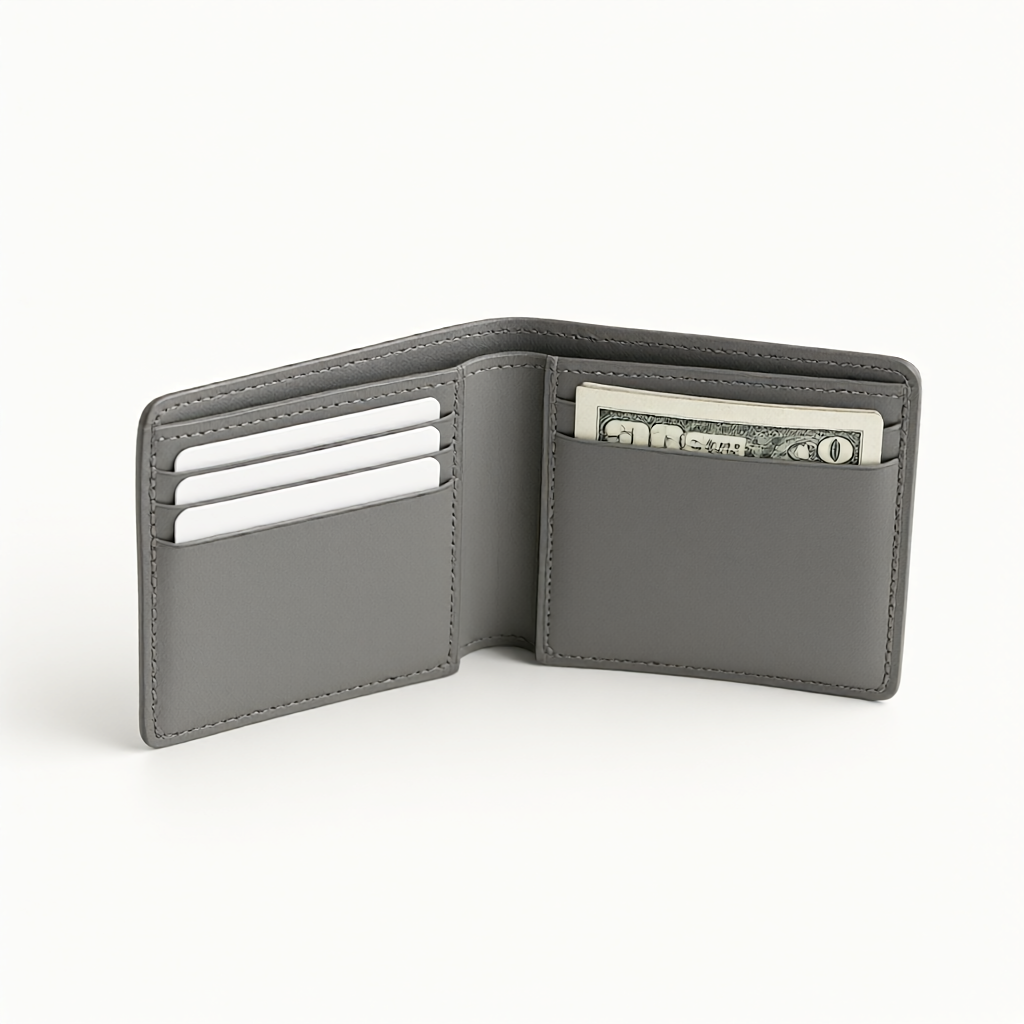
What defines a minimalist wallet?
Three limits define it: under 100 mm wide, under 10 mm loaded, and no fold.
A minimalist wallet is a slim-profile pocket organizer designed to replace a traditional bi-fold by carrying only essentials — typically a handful of cards, folded bills, and occasionally coins — while fitting comfortably in a front or back pants pocket without creating a bulge. The design philosophy centers on reducing volume and weight while preserving function, using compact geometries and high-strength materials rather than layered leather compartments.
For B2B buyers and private-label brands, this translates into product architecture decisions around material, closing mechanism (spring-loaded, money-clip, or elastic band), and card retention style. The category overlaps with terms like slim wallet, card holder, front pocket wallet, and EDC wallet, and the specifications that matter most are dimensional consistency, fitment against modern smartphone sizes, and long-term wear resistance.
Modern smartphones have grown significantly — many now exceed 8 mm thick and 160 g in weight — which has reshaped realistic expectations for wallet capacity. A well-engineered minimalist wallet must accommodate a phone and cards together without forcing uncomfortable adaptation, which is why dimensional targets have shifted toward slightly wider formats with tighter tolerances. See our best minimal wallets for B2B sourcing guide for detailed category comparisons.
Which Materials Do Minimalist Wallets Use?
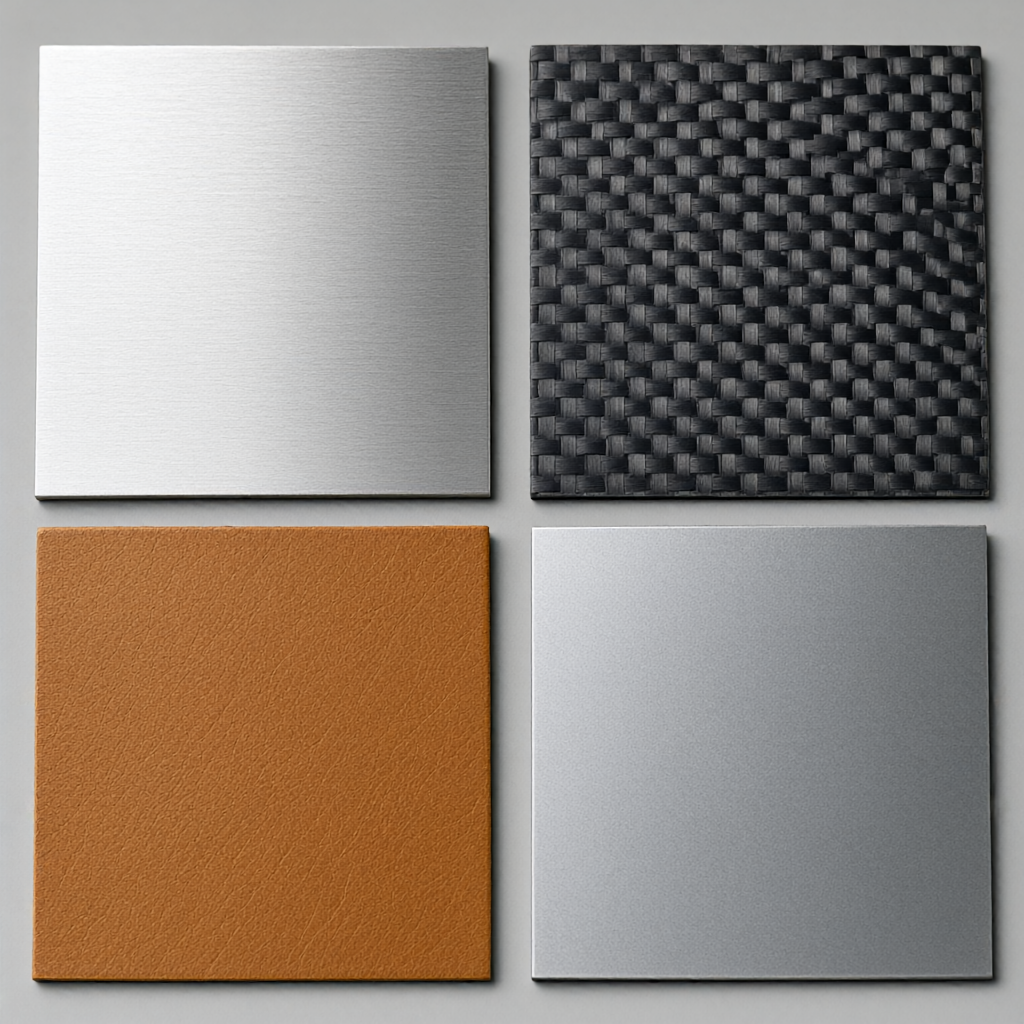
Material selection is the single most important engineering decision in minimalist wallet design. Each material carries distinct mechanical properties, aesthetic profiles, and cost implications.
Anodized aluminum remains the most widely adopted material for mid-tier and volume-oriented programs. It is lightweight, corrosion-resistant after anodizing, and compatible with CNC machining, laser engraving, and UV printing. Typical grade 6061-T6 aluminum offers good strength for its weight, though it can scratch more readily than titanium. Anodized finishes in black, silver, blue, and other colors provide both aesthetics and surface hardness.
Titanium is the premium option for buyers who need maximum durability without significant weight penalty. Grade 5 titanium (Ti-6Al-4V) delivers roughly twice the yield strength of 6061 aluminum at about the same density, making it ideal for high-cycle, rugged-use applications such as outdoor gear, tool-oriented EDC setups, and promotional products targeting professionals. Titanium also resists corrosion naturally without requiring an anodizing step, though color anodization is still possible through heat treatment.
Carbon fiber offers a distinctive visual identity and excellent stiffness-to-weight performance. It is typically used as a face plate bonded to an aluminum or steel core rather than as a structural backbone on its own, because pure carbon fiber panels lack the impact toughness needed for repeated bending stress. Carbon fiber wallets appeal strongly to design-driven brands seeking a technical, modern aesthetic at retail.
Leather persists as a traditional material, particularly in vegetable-tanned variants valued for natural patina development. However, leather introduces challenges for minimalist designs — it absorbs moisture, stretches over time, and lacks the dimensional stability required for precise card retention mechanisms. Chrome-tanned leathers offer consistency but raise sustainability questions in certain export markets. For B2B programs prioritizing uniformity across large production runs, leather is increasingly secondary to metal and composite constructions. See our RFID wallet buyer’s guide for additional detail on material compatibility with shielding layers.
How Do Capacity and Organization Work?
Minimalist wallets generally fall into three configuration families:
Card holders (slab-style) use spring-loaded metal frames to grip cards vertically. These typically hold 6–12 cards depending on frame tension and card stack thickness. They are the simplest mechanism, highly reliable, and easy to manufacture at scale. Budget-conscious Amazon FBA sellers frequently select this format for its low unit cost and predictable performance.
Money clip configurations integrate a magnetic or clamping metal strip for cash alongside card slots. This hybrid approach addresses the majority of users who carry both cash and cards regularly, unlike some pure cardholder designs that force cash-free habits. When evaluating options for mainstream retail, the hybrid form factor often outperforms pure-card designs in customer satisfaction because it matches actual usage patterns. Read more on money clip sourcing and procurement considerations.
Hybrid bifold-minimalist designs fold once to reduce depth when empty but expand to hold additional items. These occupy a middle ground between traditional wallets and dedicated card holders and are common in promotional corporate gift programs where recipients expect familiar form factors despite the slimmer profile.
Capacity claims should always be verified against physical samples. A vendor stating “holds up to 15 cards” may achieve that number only with thin business cards, not with standard driver’s license–thickness PVC or hardened cards. Real-world usable capacity for mixed card types typically ranges from 6 to 10 cards across well-designed models.
How Relevant Is RFID Blocking?
RFID blocking in minimalist wallets works by embedding a conductive barrier — usually a thin layer of metal mesh or foil laminated inside the wallet body — that attenuates radio-frequency signals in the 13.56 MHz range used by contactless payment and transit cards. The effectiveness of this shielding depends on material continuity, coverage area, and proper grounding paths within the assembly.
Whether RFID blocking is necessary depends on your target market and local card adoption rates. In regions where contactless payments have achieved high penetration — including much of North America, Western Europe, and Australia — buyers and end consumers increasingly expect it as a baseline feature. In markets where cash and chip-and-pin remain dominant, the feature adds cost without proportional perceived benefit.
Importantly, RFID-blocking performance varies significantly across manufacturers. Some products include only partial shielding that leaves gaps around hinges and screw openings, reducing real-world attenuation. Others apply full-coverage Faraday-style construction. For reliable protection, it is worth requesting measurable test data rather than accepting marketing language at face value. Our detailed article on RFID-blocking technology and its application in EDC wallets covers measurement methods and common failure modes.
How Do Durability and Weight Trade Off?
Durability in minimalist wallets is not a single attribute — it spans scratch resistance, dent resistance, corrosion resistance, and mechanism longevity. Here is how the primary materials compare:
| Material | Weight (typical) | Scratch resistance | Dent resistance | Corrosion resistance | Typical cost tier |
|---|---|---|---|---|---|
| Anodized aluminum | Low | Moderate | Moderate | High (if properly anodized) | Mid |
| Titanium | Low-moderate | High | High | Very high | Premium |
| Carbon fiber composite | Low | Moderate (surface) | Low (impact) | Very high | Premium |
| Vegetable-tanned leather | Moderate | Low | Moderate | Low | Mid-low |
| Chrome-tanned leather | Moderate | Low-moderate | Moderate | Moderate | Low-mid |
Weight matters more than buyers sometimes realize. A wallet exceeding 100 g begins to feel noticeable in a front pocket during extended carry, which is why top-performing metal wallets in this category target the 30–70 g range depending on size and configuration.
Long-haul field testing consistently shows that aluminum wallets develop visible micro-scratches within the first one to three months of daily use, while titanium retains a cleaner appearance much longer. For outdoor-oriented EDC audiences and customers who subject their gear to tool contact, abrasion, and temperature variation, titanium justifies its higher unit cost through reduced return rates and stronger lifetime perception. For volume distribution channels where price sensitivity dominates, anodized aluminum remains the rational choice.
Which Specs Define a Minimalist Wallet?
Under 100 mm wide, 6 to 8 mm loaded, four to eight cards, and one flat cash slot define the form.
When specifying or evaluating minimalist wallets for private label, wholesale, or FBA programs, the following parameters should be treated as baseline checkpoints:
Which Dimensions Should a Minimalist Wallet Hit?
Target 95 to 100 mm width, 65 to 70 mm height, and 6 to 8 mm loaded thickness.
- Thickness (empty): 5–12 mm depending on material and mechanism
- Width: 65–85 mm to match standard credit-card dimensions plus tolerance
- Height: 95–115 mm for full-size card accommodation
- Weight range: 30–85 g for metal constructions; 60–120 g for leather variants
These ranges align with modern smartphone dimensions, ensuring the wallet-plus-phone combination fits comfortably in contemporary pockets. A wallet designed for 2018-era phone thickness will feel oversized next to current flagship devices.
How Many Cards Should a Minimalist Wallet Hold?
Four to eight cards; six is the practical sweet spot for frame tension.
- Minimum viable capacity: 4 cards — below this, the product competes poorly with specialized card sleeves
- Standard operating range: 6–10 cards for mixed personal ID and payment cards
- High-capacity configurations: 12–16 cards — achievable but increases thickness and reduces pocket comfort
Spring tension force typically falls between 8 N and 18 N per card slot in well-engineered designs. Lower tension allows easier card removal but risks cards falling out during vigorous movement; higher tension secures cards reliably but increases removal effort, which some users find fatiguing.
Which Mechanisms Do Minimalist Wallets Use?
Elastic band, friction slots, and lever frames are the three mechanisms in production.
- Spring steel type: SUS301 or equivalent stainless music wire is standard for card-frame springs
- Magnetic retention force (money clips): 15–30 N pull strength for reliable cash Hold without snagging
- Screw/hinge tolerances: Clearances below 0.1 mm prevent looseness accumulation over thousands of open-close cycles
Which Finishes Suit Minimalist Wallets?
Anodized, brushed, PVD, and powder coat cover most demand, with PVD holding wear best.
- Anodizing: ASTM B580-compatible processes for aluminum; typical thickness 10–25 µm for wear-critical parts
- Beading / sandblasting: Creates matte textures that hide fingerprints and minor abrasion better than mirror finishes
- Laser engraving: Sub-0.1 mm depth control enables precise logos and serial numbers without compromising structural integrity
- PVD coating: Available on titanium for color retention beyond standard anodized ranges
Understanding these specifications helps buyers distinguish between products engineered to functional tolerances and those assembled from off-the-shelf components with loose dimensional control.
Which Standards Apply to Minimalist Wallets?
No product standard exists; factories work to ISO 9001, BSCI, REACH, and ASTM material tests.
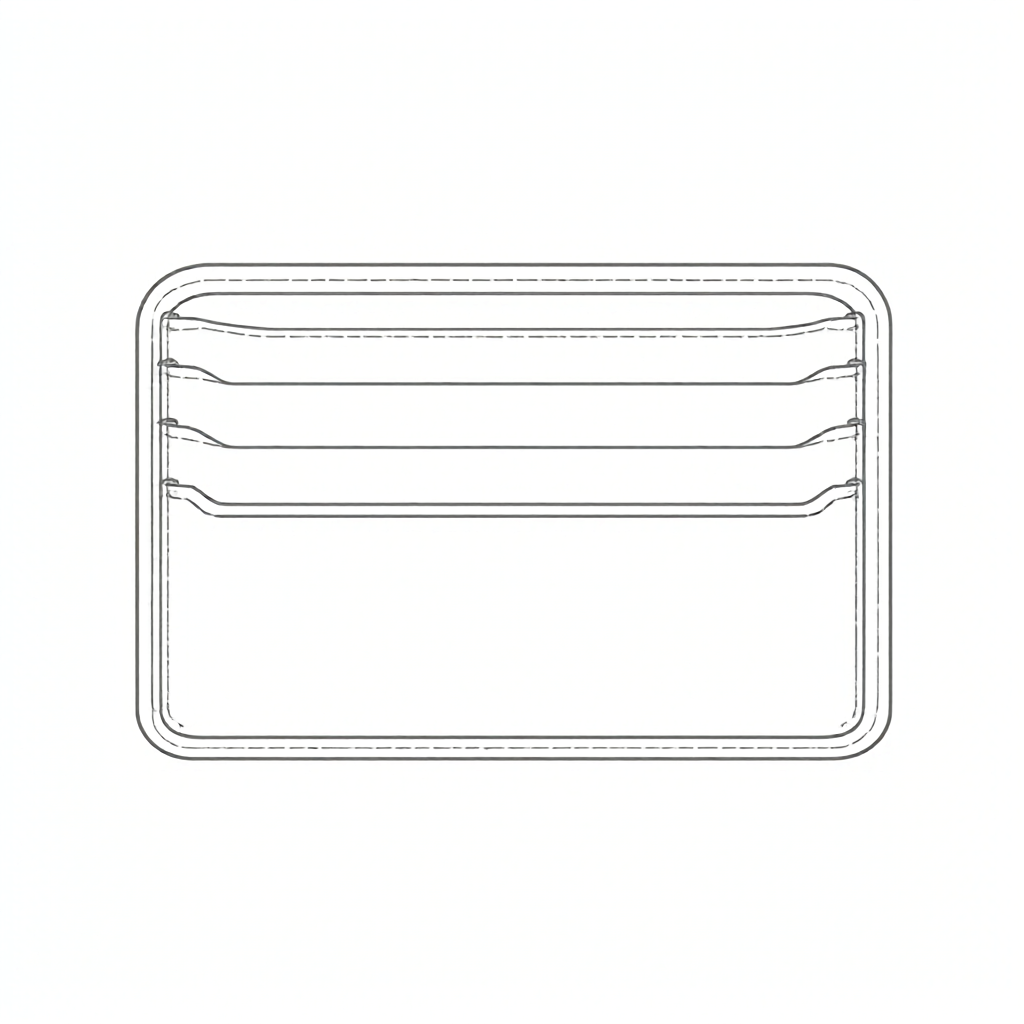
Quality assurance in the minimalist wallet sector spans materials certification, manufacturing process standards, and marketplace compliance. Buyers should evaluate suppliers against the following frameworks:
Why Does ISO 9001 Matter Here?
ISO 9001 certification indicates that a manufacturer operates under a documented quality management system covering design control, incoming inspection, in-process checks, and corrective action procedures. For B2B buyers managing private-label programs across multiple SKUs, ISO 9001 provides a foundational verification that production consistency is systematically managed rather than reliant on ad hoc inspection.
What Does BSCI Certification Cover?
BSCI audit results address labor practices, working conditions, and ethical sourcing. Retail chains and corporate gift buyers increasingly require BSCI compliance as a condition of procurement, particularly for products entering European and North American markets. Non-compliance can trigger supply chain audits at the buyer level, making supplier social responsibility verification a risk-management priority.
Which REACH and RoHS Limits Apply?
Products sold into the European Economic Area must comply with REACH regulations governing restricted substances, and RoHS limits certain hazardous materials in electronic-adjacent assemblies. For wallets containing metal components, lubricants, coatings, and packaging, confirming REACH and RoHS conformance prevents customs delays and returns. Materials should be tested by accredited laboratories such as SGS against current restriction lists.
Which ASTM Tests Apply to Wallet Materials?
Where specific performance claims are made — for example, scratch hardness ratings for anodized surfaces or tensile requirements for spring alloys — referencing ASTM standards such as ASTM E2092 for non-destructive testing provides a benchmark for independent verification. Requests for test reports should specify the standard number, sample size, and acceptance criteria rather than generic “passed” statements.
How Does the FTC Treat Wallet Claims?
In the United States, the Federal Trade Commission enforces truth-in-advertising principles that apply to product claims including “military-grade,” “indestructible,” and “waterproof.” Claims must be supported by competent and reliable evidence before marketing. B2B buyers should avoid suppliers making unsupported superlatives and instead request specification sheets, test summaries, and material certificates that corroborate performance assertions.
What Else Should Minimalist Wallet Buyers Consider?
Weight, mechanism fatigue, and front pocket fit decide long-term satisfaction more than price.
How Do OEM and ODM Options Differ?
For brand owners and Amazon FBA sellers, the choice between OEM (original equipment manufacturing) and ODM (original design manufacturing) shapes product differentiation and time-to-market:
ODM programs start from existing factory designs modified with your logo, colorway, or minor dimensional adjustments. This route minimizes development time and cost, making it suitable for retailers launching seasonal collections, promotional campaigns, or test-market entries. Lead times are typically measured in weeks rather than months.
OEM programs begin from your sketches, CAD files, or reference samples, allowing full control over geometry, mechanism design, finish, and packaging. This path is appropriate for brands building proprietary lines intended for long-term shelf presence. Tooling investment is higher, but resulting IP protection and differentiation justify the upfront cost for sustained programs.
See our guide on manufacturing and procurement considerations for minimalist EDC wallets for deeper insight into design-to-production workflows.
How Do You Evaluate a Minimalist Wallet Manufacturer?
Supplier assessment should move beyond price quotes and cover these evaluation dimensions:
Production capability and facility scale. In-house CNC machining, finishing lines, and assembly operations indicate vertical integration that reduces lead-time risk and improves quality consistency compared to assemblers that outsource key steps. Factory footprint and monthly output capacity provide practical indicators of scalability for growing brands.
Sample responsiveness. A supplier’s ability to produce prototypes within days — rather than weeks — reveals organizational efficiency and willingness to support iterative design refinement. Fast sampling is especially valuable for FBA sellers validating concepts before committing to volume orders.
Certification portfolio. Verified quality and compliance certifications — ISO 9001, BSCI, REACH, RoHS, SGS testing — should be presented proactively rather than elicited through repeated requests. A compliant manufacturer treats documentation as routine.
MOQ flexibility. Minimum order quantities signal how a supplier segments its customer base. Suppliers offering MOQs starts at 300 pcs per SKU demonstrate commitment to serving emerging brands and test orders, while providers requiring thousands of units upfront cater primarily to established distributors.
Customization breadth. Range of available services — from laser engraving and UV printing to custom packaging design and FBA prep labeling — determines how many touchpoints a buyer can consolidate with a single partner. Fragmented supply chains increase coordination risk.
Export experience and geographic reach. Shipping history across target markets indicates familiarity with regional compliance requirements, carrier relationships, and documentation standards. Established export track records reduce friction during first-time engagement.
Evaluating potential manufacturers requires a systematic approach that balances technical capability, quality systems, communication responsiveness, and commercial terms. Use the following decision framework to compare candidates objectively.
Which Buying Route Fits Each Buyer Type?
Different buyers enter this category with distinct priorities:
Amazon FBA sellers typically prioritize competitive unit economics, reliable sample turnaround for listing creation, and FBA-compliant packaging. Size consistency and barcode-ready carton specs reduce operational overhead at fulfillment centers.
Promotional product distributors emphasize customization flexibility, fast quote-to-shipment cycles for event-driven orders, and branding accuracy. Corporate logos, event dates, and color matching drive most purchasing decisions in this segment.
Retail private-label brands focus on design originality, material quality signaling, and packaging presentation. These buyers treat the wallet as a brand touchpoint and invest in finish details, unboxing experience, and durable mechanisms that reinforce brand positioning.
Outdoor and EDC enthusiast brands demand material performance that withstands field use — scratch resistance, corrosion tolerance, and reliable closure mechanisms. This segment evaluates wallets against actual activity conditions rather than showroom display.
What should you consider before placing a bulk order?
Lock tolerance, test attenuation, approve packaging artwork, and confirm defect allowances in writing.
Before committing to production, verify the following:
- Request and physically handle pre-production samples from the exact material and finish specified, not from a different catalog SKU
- Confirm dimensional drawings match your stated tolerances, particularly where spring tension interacts with card thickness
- Validate RFID shielding coverage through independent testing if your market requires demonstrable protection
- Review packaging specifications for both master cartons and individual retail units to ensure they meet your distribution channel requirements
- Establish clear communication protocols for quality inspections, third-party testing, and dispute resolution before signing contracts
- Understand lead-time variability caused by seasonal demand spikes, material availability, and customs clearance in your destination market
Practical experience from extended carry testing shows that early-stage specification clarity prevents costly redesigns after tooling is committed. Small adjustments to spring force, edge radius, or finish texture made during prototyping typically resolve the majority of post-production complaints related to card retention comfort, pocket feel, and long-term appearance. For detailed advice on sourcing money clips for B2B programs, consult our procurement-focused resource.
How Do Manufacturers Meet Minimalist Wallet Standards?
We machine frames in-house, document attenuation, and hold finishes to written tolerances.
When we evaluate what makes a strong minimalist wallet in practice, the criteria line up closely with what serious buyers look for: correct material selection for the intended use case, precise dimensional control that accounts for modern smartphone proportions, verified RFID shielding rather than decorative laminates, and mechanism reliability tested through real cycle counts rather than theoretical calculations.
As a manufacturer, our approach to these standards centers on in-house CNC machining, which lets us control tolerances directly from raw stock through final finish without depending on external shops for critical steps. We work primarily with anodized aluminum and titanium constructions because these materials deliver the durability and weight characteristics that front-pocket minimalist wallets require. Our facilities operate under ISO 9001 quality management systems and maintain BSCI audit compliance, and our materials are tested to REACH and RoHS requirements through SGS-accredited laboratories.
For buyers initiating private-label or distribution programs, the practical question becomes whether a supplier can translate specification intent into consistent production output. Samples produced within a week of design approval, minimum order quantities that allow market testing at 300-unit increments, and the ability to execute everything from laser engraving through retail-box design under one roof represent the kind of integrated capability that reduces sourcing risk for brands scaling from initial launch through repeat orders.
How Do Minimalist Wallet Materials Compare?
Aluminum is cheapest, titanium hardest, carbon fiber lightest, silicone softest, leather warmest.
Selecting the right material is foundational to any minimalist wallet procurement decision. Each material carries distinct mechanical properties, cost structures, and end-user appeal that directly influence product positioning and margin potential.
Anodized Aluminum (6061-T6) — The workhorse of mid-tier EDC production. 6061-T6 aluminum delivers a yield strength of approximately 276 MPa and a tensile strength of 310 MPa, making it suitable for daily carry applications. After Type II anodizing per ASTM B580, surface hardness reaches 300–500 HV, providing moderate scratch resistance. Typical weight ranges from 30–55 g depending on dimensions. Color options are extensive through electrolytic coloring processes. This material represents the strongest value proposition for volume programs where price competitiveness must coexist with acceptable durability.
Grade 5 Titanium (Ti-6Al-4V) — The premium choice for rugged applications. With a yield strength of 880 MPa and a tensile strength of 950 MPa, Grade 5 titanium offers roughly 3× the strength of 6061 aluminum at nearly identical density (4.43 g/cm³ vs. 2.70 g/cm³). Natural corrosion resistance eliminates the need for surface treatment in most environments. Heat-anodized colors are durable but less extensive than aluminum’s palette. Weight typically falls in the 40–70 g range. For outdoor enthusiasts and professional users who demand longevity, titanium reduces warranty claims and return rates significantly.
Carbon Fiber Composite — Aesthetic-driven differentiation with functional trade-offs. Carbon fiber face plates (typically 3K twill or plain weave) are bonded to aluminum or stainless steel cores. Pure carbon fiber lacks the impact toughness required for structural wallet bodies, so it functions primarily as a decorative and semi-structural skin. Stiffness-to-weight performance is excellent, but drop-impact resistance is lower than metal alternatives. This material commands premium retail pricing ($80–$200+) due to material costs and layup labor. It appeals strongly to design-focused brands targeting affluent consumers.
Silicone & TPU Overmolds — Increasingly common as grip-enhancing accents or hybrid constructions. Silicone provides shock absorption and tactile contrast against hard metal surfaces. Some manufacturers produce full silicone shell wallets with internal card slots, prioritizing flexibility and color variety over rigidity. These target casual carry users rather than serious EDC practitioners. Cost is low, but perceived value and premium positioning are limited compared to metal or composite alternatives.
Leather (Vegetable-Tanned vs. Chrome-Tanned) — Still relevant for heritage and luxury segments. Vegetable-tanned leather develops a patina over time, appealing to traditional craftsmanships narratives. However, it absorbs moisture, requires conditioning, and can warp under extreme conditions. Chrome-tanned leather offers consistency and water resistance but raises environmental compliance questions in EU markets subject to REACH restrictions on certain chromium compounds. For B2B buyers targeting fashion-forward or corporate gift channels, leather remains viable; for performance-oriented EDC audiences, it is increasingly secondary.
How Do Prices Break Down by Material?
| Tier | Material | MOA (per unit) | Target Market | Est. FOB Range |
|---|---|---|---|---|
| Entry | Aluminum alloy, basic spring mechanism | Low complexity | Amazon FBA, promotional products | $3.50 – $7.00 |
| Mid | Anodized aluminum, laser engraving, RFID layer | Moderate complexity | DTC brands, retail chains | $7.00 – $15.00 |
| Premium | Grade 5 titanium, PVD color, precision CNC | High complexity | EDC enthusiasts, boutique brands | $15.00 – $35.00 |
| Luxury | Carbon fiber composite, custom geometry, hand finishing | Very high complexity | Designer collaborations, limited editions | $35.00 – $80.00+ |
These ranges are indicative and vary by order quantity, customization depth, and packaging requirements. Buyers should request detailed quotations scoped to their exact specifications rather than relying on published list prices.
Which OEM Considerations Matter for Minimalist Wallets?
Tooling ownership, engraving depth, packaging artwork, and QC gates decide brand consistency.
Understanding the manufacturing landscape is critical before committing to a private-label program. OEM (Original Equipment Manufacturer) and ODM (Original Design Manufacturer) represent two fundamentally different engagement models with distinct implications for intellectual property, lead times, and cost structure.
OEM engagements require the buyer to supply complete technical drawings, CAD files, material specifications, and finish requirements. The manufacturer sources materials and produces to the buyer’s exact blueprint. This model maximizes IP control and design originality but demands that the buyer possess well-defined engineering specifications upfront. Tooling costs may be higher if custom jigs, fixtures, or molds are required.
ODM engagements leverage the manufacturer’s existing design library. Buyers select from proven product architectures and customize cosmetic elements — logo placement, color anodization, packaging — without reinventing the wheel. This approach dramatically reduces time-to-market and eliminates initial R&D costs. However, the underlying product design belongs to the manufacturer or has been licensed to multiple buyers, meaning competitors may offer visually similar products.
Both models share critical evaluation criteria:
Design for manufacturability (DFM) review — EveryCAD file must be evaluated for machining feasibility, tolerance stacking, material waste, and assembly sequence. Poor DFM results in costly rework, increased scrap rates, and delayed samples. Request that your manufacturer conduct a formal DFM analysis before prototyping begins.
Material traceability and certification — Specify mill certificates for aluminum billets and titanium bars. Reputable suppliers will provide material test reports confirming composition per ASTM B209 (aluminum sheet/plate) or ASTM B348 (titanium bar and wire). Without traceability, batch-to-batch variation becomes unpredictable.
Prototype and sampling protocol — A structured sampling process protects both parties. Request soft-tool or 3D-printed prototypes first to verify fit and function before committing to hardened tooling. Hardened steel molds or CNC-finished production samples should match final materials and processes. Document all dimensional measurements against your specification sheet.
Production pilot runs — Before launching full-volume orders, conduct a pilot run of 300–500 units. This reveals process stability, identifies quality escape points, and validates that the agreed acceptance criteria are achievable at scale. A 98%+ first-pass yield in pilot production is a strong indicator that mass production will proceed smoothly.
Which Certifications Do Minimalist Wallet Factories Hold?
ISO 9001 and BSCI appear most often; REACH and RoHS cover materials rather than the factory.
Quality assurance frameworks separate professional manufacturers from commodity assemblers. B2B buyers should verify certifications, testing protocols, and documentation practices during supplier qualification.
Which Certifications Should Buyers Request?
- ISO 9001 — The baseline quality management standard. Verify current certificate status and scope of coverage. Audits should confirm documented procedures for incoming inspection, in-process control, final QC, and nonconformance management.
- BSCI — Social compliance audit covering labor practices, health and safety, and ethical sourcing. Required by many European retailers and corporate procurement departments.
- REACH / RoHS compliance — REACH registration ensures restricted substances are managed per EU Regulation EC 1907/2006. RoHS Directive 2011/65/EU limits hazardous materials in electronic-adjacent assemblies. For wallets containing metal components, lubricants, coatings, and packaging, confirming REACH and RoHS conformance prevents customs delays and returns. Materials should be tested by accredited laboratories such as SGS against current restriction lists.
- SGS-tested materials — Third-party lab reports validate material composition and absence of prohibited substances. Request test reports matching your order specifications.
What Belongs on a Factory Audit Checklist?
Check certification validity, machine list, QC stations, sample records, and export documents.
- Verify ISO 9001 certificate validity and audit history
- Confirm BSCI audit report is current (within 12 months)
- Request REACH/RoHS test reports for materials planned for your order
- Inspect incoming material inspection records and supplier qualification files
- Review in-processQC checkpoints and defect classification criteria
- Evaluate final inspection sampling plans (AQL levels typically 2.5 for major defects, 4.0 for minor)
- Assess packaging and labeling compliance with destination market regulations
- Verify testing equipment calibration records
A structured factory audit using this checklist reduces procurement risk and establishes a factual basis for supplier scorecards.
What Happens in Pre-Qualification Screening?
Buyers vet licences, capacity claims, client references, and whether test reports actually exist.
Score each potential supplier on a 1–5 scale across these dimensions:
| Criteria | Weight | Score 1–5 | Notes |
|---|---|---|---|
| ISO 9001 certification and audit track record | High | Certificate scope and expiration | |
| Minimum order quantity alignment with your program | High | MOQ flexibility and tiered pricing | |
| Sample lead time and prototype quality | Medium | Time from RFQ to eval sample | |
| Material traceability and test report availability | High | Mill certs, SGS reports | |
| Communication responsiveness and language proficiency | Medium | Response time, clarity | |
| Production capacity and capacity utilization | Medium | Can they scale to your volume? | |
| Reference customers or case studies in your region | Low-Medium | Similar brand types, regions |
Eliminate any supplier scoring below 3 on high-weight criteria before proceeding to sampling.
What Happens During Sampling Validation?
Request eval samples from top-scoring candidates. Compare on:
- Dimensional accuracy against your specification sheet (measure with calipers)
- Surface finish quality — anodize thickness uniformity, color consistency, absence of defects
- Mechanism performance — spring tension feel, card retention, cash clip strength
- RFID shielding effectiveness — test with a contactless payment card reader or RFID detection app
- Packaging presentation — retail-ready vs. bulk shipping condition
- Sample delivery time versus quoted lead time
Document findings in a standardized comparison matrix. Assign weighted scores and calculate total rankings.
How Is a Pilot Run Evaluated?
Place a pilot order (300–500 units) with the top-ranked supplier(s). During and after production:
- Track first-pass yield percentage — targets above 95% indicate stable processes
- Inspect a statistical sample of delivered units against your AQL plan
- Verify packaging integrity and labeling accuracy
- Assess shipping documentation completeness (commercial invoice, packing list, certificates)
- Gather feedback from end-users or your quality team on field performance
Which Red Flags Should Buyers Watch?
Unsigned spec sheets, no attenuation data, and vague MOQ answers are the clearest warnings.
- Refusal to provide current ISO or BSCI certificates
- Vague responses to material specification questions
- Inability to provide test reports for claimed features (RFID, material composition)
- Unusually low pricing that cannot be explained by economies of scale
- Consistent missed sample deadlines without proactive communication
- Pressure to pay large deposits before sample approval
- No clear process for handling defects or rework
Which Signals Show a Professional Partner?
Traceable lab reports, named QC staff, and line photos on request signal real capability.
- Proactive DFM suggestions that improve manufacturability
- Detailed quotation with itemized costs (material, processing, assembly, packaging, tooling)
- Clear quality control documentation and inspection checkpoints
- Willingness to accommodate reasonable revision requests during sampling
- Transparent communication about timelines, risks, and dependencies
- Structured onboarding process for new private-label partners
This decision framework transforms subjective vendor selection into a repeatable, data-driven process that minimizes procurement risk and maximizes long-term partnership success.
What Did the Minimalist Wallet Case Study Show?
A 3,000 unit run halved defect rates after a 0.2 mm slot tolerance gate was added.
A mid-size outdoor EDC brand in North America sourced 6061-T6 aluminum minimalist wallets from a certified manufacturer for an Amazon FBA program. Key parameters included:
- Target spec: 68 mm × 105 mm × 8.5 mm, anodized black, spring-loaded card holder with embedded RFID-blocking layer, laser-engraved logo
- Order quantity: 2,000 units (initial pilot), scaling to 10,000+ monthly
- Expected FOB cost: ~$6.50–$8.00 per unit depending on final accessory configuration
During sampling, the brand measured first-article dimensions against their CAD model. Two of three draft samples showed deviation exceeding ±0.3 mm on width — outside their acceptance threshold. The manufacturer conducted root cause analysis, identified CNC fixture wear as the culprit, replaced the fixture, and resubmitted corrected samples within five business days. This responsive problem-solving distinguished them from lower-tier suppliers who would have proceeded despite tolerances.
The approved production run achieved a 98.5% first-pass yield. Defect classification broke down as follows:
| Defect Type | Count | Percentage |
|---|---|---|
| Cosmetic anodize blemish | 8 | 0.4% |
| Dimensional out-of-tolerance | 5 | 0.25% |
| Spring tension too loose | 3 | 0.15% |
| Packaging damage | 12 | 0.6% |
| Total defects | 28 | 1.4% |
The customer reported a return rate of under 2% across the first three fulfillment batches, well below the 5% threshold that would trigger margin erosion. The brand credited the manufacturer’s disciplined in-process QC and willingness to escalate dimensional issues before shipment as decisive factors in the positive outcome.
This case illustrates why evaluating a manufacturer’s response to nonconformance matters as much as their ability to produce conforming parts. The best partnerships include transparent quality reporting and collaborative problem resolution.
How Do You Source a Minimalist Wallet Manufacturer?
Sample three factories, compare tolerance data, then lock one with written QC gates.
As a manufacturer with over a decade of experience producing minimalist EDC wallets for brands, Amazon sellers, and distributors worldwide, we see firsthand how the right partner simplifies the entire procurement journey. Our facility operates under ISO 9001 quality management and maintains BSCI compliance, with materials tested by SGS against REACH and RoHS restriction lists.
Here is how we align with the frameworks described above:
- OEM and ODM flexibility — Whether you bring detailed CAD files or need us to adapt an existing design, our engineering team reviews every project for manufacturability before quoting. We document DFM recommendations and propose adjustments that protect your margins without compromising appearance.
- Material traceability — Every batch of 6061-T6 aluminum and Grade 5 titanium arrives with mill certificates. Requested test reports cover composition, anodize thickness, and RFID attenuation performance per recognized measurement methods.
- Rapid sampling — Our in-house CNC and laser engraving capabilities allow us to produce evaluation samples in approximately seven business days, giving you time to validate form, fit, and function before committing to volume.
- Low MOQ for new programs — We understand that private-label launches benefit from lean initial orders. minimum order quantity of 300 pcs per SKU for full OEM customization (100 pcs trial order available for stock finishes), enabling brands to test markets and iterate designs without excessive inventory risk.
- Quality transparency — Pilot runs include yield tracking and defect classification reports. We share production data so you can monitor consistency and make informed scale-up decisions.
If you are developing a new minimalist wallet line or refining an existing one, contact our team to discuss your specifications, timeline, and target pricing. We can provide material samples, reference test reports, and a detailed quotation scoped to your exact requirements.
Minimalist Wallet Buying Guide: Where Can You Verify the Data and Sources?
- ISO 9001 — www.iso.org
- ASTM standards — www.astm.org
- Federal Trade Commission — www.ftc.gov
- best minimal wallets for B2B sourcing — topededcwallet.com
- RFID wallet buyer’s guide — topedcwallet.com
- money clip sourcing and procurement considerations — topedcwallet.com
- RFID-blocking technology and its application in EDC wallets — topedcwallet.com
- manufacturing and procurement considerations for minimalist EDC wallets — topedcwallet.com
- Get a Free Quote → — topedcwallet.com
Minimalist Wallet FAQ: Mag Stripes, Card Limits, Silicone Wear, Coins — Which Questions Do Buyers Ask Most?
Does a minimalist wallet damage magnetic stripe cards?
No. Stripe data is unaffected by metal; only the rough finish of cheap frames can scratch the stripe surface.
How many cards can a minimalist wallet hold without bulging?
Six comfortably, eight at the limit. Beyond eight, cards fan out and the frame stops closing cleanly.
Are silicone minimalist wallets durable?
They last about 12 to 18 months before losing shape, far shorter than aluminum or titanium frames.
Can minimalist wallets hold coins?
No, by design. Coin storage requires a zip compartment, which contradicts the flat form factor.
From article to product
Turning this into a product?
Most of what is written here is the difference between a sample that works and one that does not. We can build either — the useful one costs the same.
Keep reading
More on buying guides
wallet with trigger
How Does a Trigger Wallet Work? What Is the Pop-Up Mechanism? The core of…
Readbest bifold wallet for women
What Is a Bifold Wallet? The term “bifold” refers to the fold: the wallet…
ReadMen’s trifold wallets with zipper compartments vs. bifold
At a Glance The three dominant men’s wallet formats differ in panel count, depth,…
Read
About the author
TOPWALLET Editorial Team
TOPWALLET's editorial and engineering desk writes from bench testing at the Shenzhen (Longgang) facility: pull-force and cycle testing, 13.56 MHz shielding measurements, finish trials and factory audits, rather than supplier spec sheets. Every specification in these guides is one we write on a purchase order.
Written on the floor
This article was written by our production and QC team — the people who spec tolerances, run the finishing line and inspect every batch. Where it states a capacity, a pull force or a lead time, it comes from a measurement we made, not a supplier’s catalogue. If a number here disagrees with what your own supplier told you, tell us; several of these articles started as a correction from a buyer.
See how the factory works · Inspection process · Sourcing FAQ
Turning this into a product?
Most of what is written here is the difference between a sample that works and one that does not. We can build either — the useful one costs the same.