

Minimalist Wallet Manufacturing: What Is the Quick Answer?
What is the manufacturing process for a minimalist EDC wallet? A minimalist wallet — whether an aluminum cardholder, titanium money clip, or carbon fiber pocket organizer — is typically produced through a sequence of CNC machining, surface finishing, component assembly, and quality testing. The core steps involve selecting the base material, precision-cutting the wallet body and frame, applying surface treatments like anodizing or laser engraving, integrating RFID-blocking layers if required, and performing final inspection before packaging. For buyers evaluating how to make a wallet at scale, the process is fundamentally a combination of subtractive metalworking and surface engineering rather than stitching or molding.
Minimalist Wallet Manufacturing: How Does It Work in Detail?
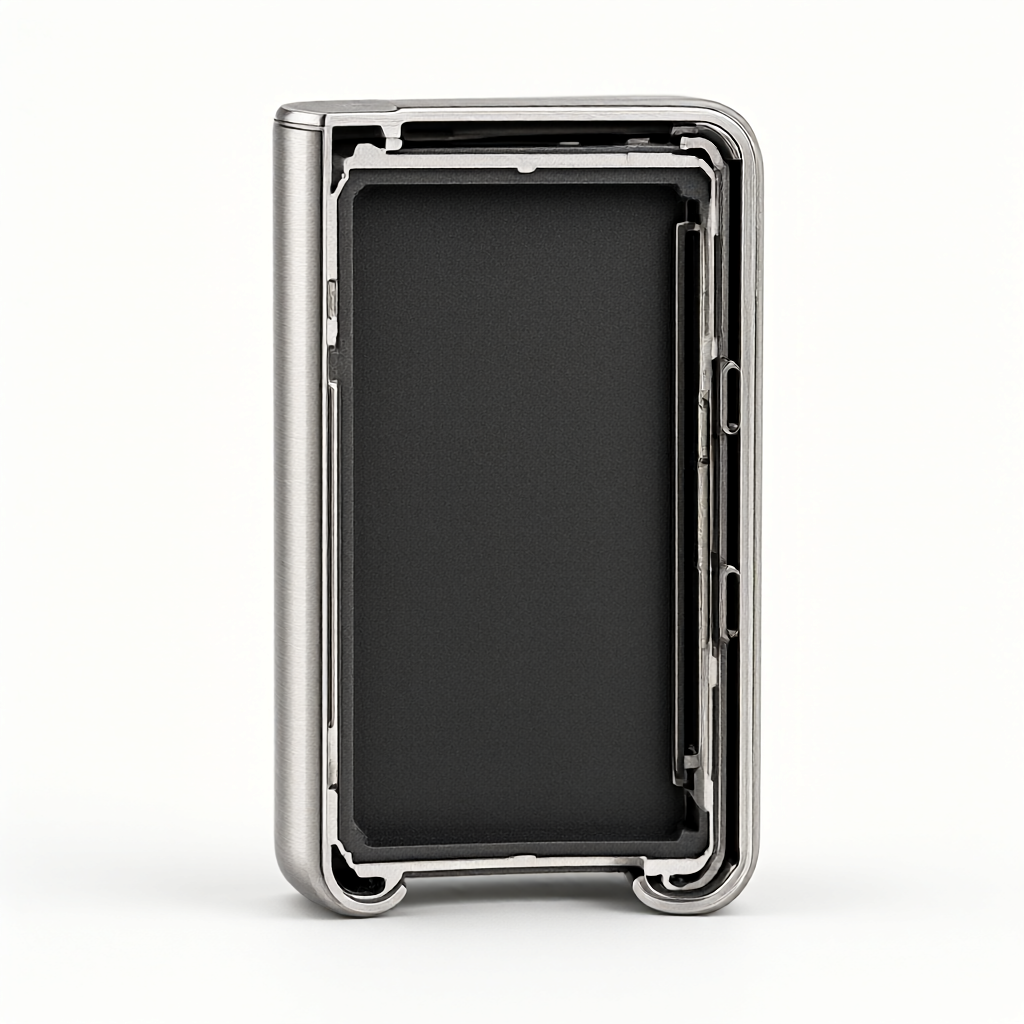
What materials are commonly used for minimalist EDC wallets?
The material chosen determines the wallet’s weight, durability, corrosion resistance, and price point. Four categories dominate the market:
Anodized aluminum is the most widely used material for budget-to-mid-tier metal cardholders. It offers a favorable strength-to-weight ratio, responds well to anodizing for color and hardness, and keeps unit costs low. Typical alloys are 6061 or 7075 aluminum, both machinable to tight tolerances.
Titanium is selected when weight savings and corrosion resistance are prioritized over cost. Titanium wallets sit in a higher price tier and are popular among outdoor and tactical EDC users who need a wallet that withstands saltwater, sweat, and abrasion. Titanium’s natural oxide layer provides inherent corrosion resistance, though anodizing can still be applied for color.
Carbon fiber refers to a composite sheet bonded to a metal substrate — usually aluminum or titanium. The result is a lightweight, scratch-resistant surface with a distinctive weave pattern. Carbon fiber panels are laser-cut or CNC-milled around the edges and then laminated or epoxied onto the base structure.
Leather remains relevant for buyers who prefer a traditional feel combined with a slim profile. In the minimalist segment, leather is typically used as a front or back panel bonded to a metal frame, or as the sole material in a leather-only cardholder design. Full-grain and top-grain leathers are preferred for durability; genuine leather (a lower grade) is less common in premium EDC products.
For guidance on selecting the right material for your brand, see our best minimal wallets for B2B sourcing and private label guide.
How does CNC machining create the wallet body and components?
CNC (computer numerical control) machining is the dominant fabrication method for metal and carbon fiber minimalist wallets. The process follows a predictable workflow:
- Material preparation: Raw aluminum extrusions, titanium sheets, or carbon fiber panels are cut to blank dimensions slightly larger than the final part.
- CNC milling: A multi-axis milling machine removes material to form the wallet’s main body, card slots, spring mechanism housing, and frame contours. Tolerances typically range from ±0.05 mm to ±0.1 mm for structural parts.
- Component fabrication: Springs, clasp mechanisms, and hinge assemblies are either stamped from sheet metal or machined separately and then assembled. Some designs use a single piece of bent metal for the card retention spring.
- Drilling and tapping: Holes for screws, pins, and logo placement are milled or drilled. Threaded inserts may be added for screw-based assembly.
- Deburring and cleaning: Sharp edges are removed through tumbling, vibration polishing, or hand finishing. Parts are cleaned to remove cutting oils and metal particulate before surface treatment.
The advantage of CNC machining for wallet production is repeatability. Once toolpaths are programmed, the same part can be produced across thousands of units with consistent dimensions — critical for brands managing inventory across multiple SKUs or retail markets.
What is RFID blocking and how is it achieved in metal wallets?
RFID (radio-frequency identification) blocking prevents unauthorized scanning of contactless payment cards and passports. In a metal minimalist wallet, RFID protection is achieved in two primary ways:
Inherent metal shielding: Solid metal wallets — particularly those constructed from thick aluminum or titanium — naturally block RFID signals because metal is conductive and reflects radio waves. A fully enclosed metal cardholder with no gaps larger than a few millimeters can provide passive RFID protection without any additional layer.
Dedicated RFID-blocking liner: For wallets that incorporate openings, fabric inserts, or layered constructions, a ferrite or metallic mesh liner is installed between the outer shell and the card slot. This liner absorbs or reflects the 13.56 MHz frequency used by most contactless cards. The liner is typically adhesive-backed and trimmed to fit inside the wallet cavity.
When sourcing an RFID-blocking wallet, verify that the design actually covers all card positions and that any gaps do not compromise signal blocking. Open-frame designs with wide card slots may not provide reliable protection unless a dedicated liner is specified. See our best card holder selection for B2B sourcing and everyday carry use guide for more on feature evaluation.
Minimalist Wallet Manufacturing: Which Specifications Matter Most?
What are the key specs for a minimalist wallet?
Understanding typical specifications helps buyers evaluate whether a product meets their target market’s expectations.
| Specification | Typical Range |
|---|---|
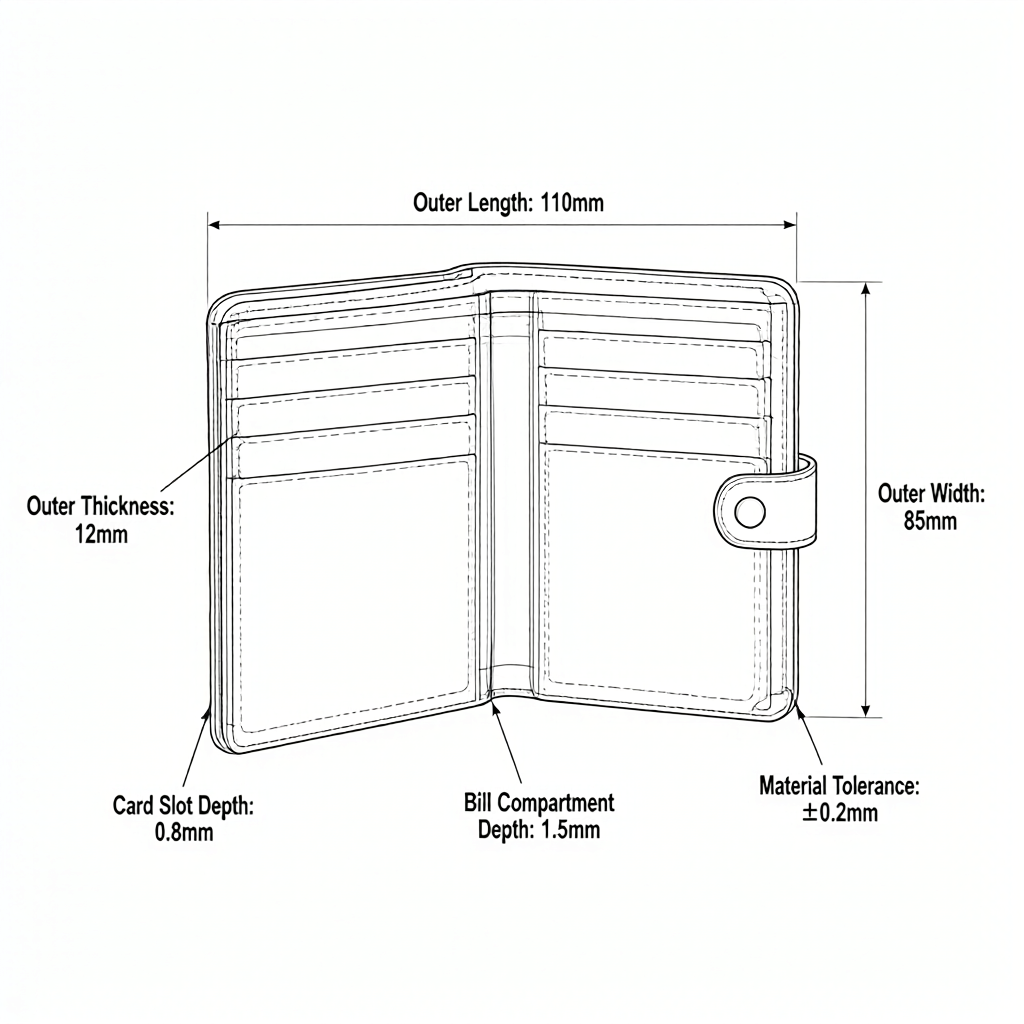
| Width | 70–90 mm |
| Height | 100–120 mm |
| Thickness (loaded) | 6–15 mm depending on card capacity |
| Weight (aluminum) | 35–65 g |
| Weight (titanium) | 30–50 g |
| Weight (carbon fiber) | 30–55 g |
| Card capacity | 4–12 cards |
| Cash capacity | 0–2 bills (folded) |
| Key ring / attachment | Optional, integrated or add-on |
| RFID blocking | Yes / No (verify design) |
Thickness is the most variable dimension and the one most affected by material choice and card capacity. A slim aluminum wallet holding six cards typically measures 8–10 mm loaded, while a titanium model with the same capacity may be slightly thinner due to titanium’s higher strength allowing thinner gauge stock.
For more on slim wallet specifications, review our best slim wallets for men sourcing guide.
Minimalist Wallet Manufacturing: Which Standards and Certifications Apply?
What certifications and standards should a reputable manufacturer hold?
Procurement decisions should be grounded in verifiable quality systems, not marketing claims. The following standards are most relevant to minimalist wallet manufacturing:
ISO 9001 is the baseline quality management certification. It confirms that a manufacturer operates documented processes for design control, incoming material inspection, in-process verification, and final quality assurance. Buyers should request a valid ISO 9001 certificate and confirm it covers the product category being sourced. Learn more about ISO standards for context on quality management requirements.
BSCI (Business Social Compliance Initiative) audits verify that a factory meets social responsibility benchmarks including working conditions, wage compliance, and health and safety. BSCI certification is increasingly requested by European buyers and major retail chains as a condition of supplier onboarding.
REACH and RoHS compliance are regulatory requirements for products sold in the European Economic Area. REACH restricts certain hazardous chemicals, while RoHS limits lead, mercury, cadmium, and other substances in electronic and metal components. For metal wallets, compliance primarily relates to the anodizing process, adhesives used for carbon fiber lamination, and any RFID-blocking liner materials. Buyers should request a Declaration of Compliance covering these regulations.
SGS-tested materials provide independent verification that raw materials — aluminum alloys, titanium grades, adhesive compounds — meet declared specifications. SGS and similar third-party labs test for material composition, tensile strength, and coating adhesion.
Additionally, products destined for the US market should be evaluated against FTC guidelines regarding material labeling accuracy. Claims such as “titanium wallet” or “stainless steel” must reflect the actual material composition; mislabeling materials can trigger regulatory action.
Minimalist Wallet Manufacturing: What Else Should Buyers Consider?
What is a typical MOQ for custom wallet orders?
Minimum order quantities vary by manufacturer and product complexity. In the minimalist wallet segment:
- Standard or near-standard designs commonly start at 100–300 pieces per SKU. This range allows buyers to test a market with manageable inventory risk.
- Fully custom designs — involving unique tooling, new spring mechanisms, or proprietary form factors — typically require 300–500 pieces minimum to amortize setup costs.
- Private label with minor branding changes (logo engraving, custom packaging) often maintains the same 300-piece floor as standard designs since the tooling is already in place.
Buyers should clarify whether the MOQ is per color, per size, or per SKU. Some manufacturers charge setup fees below MOQ or offer trial runs at higher per-unit cost for first orders.
How do surface finishing and customization options affect cost and lead time?
Surface finishing is where unit cost diverges most significantly. Here is how common options map to price and timeline impact:
| Finish / Option | Cost Impact | Lead Time Impact |
|---|---|---|
| Natural brushed aluminum | Baseline | Minimal |
| Color anodizing (single color) | +5–15% | +2–4 days |
| Multi-color anodizing | +15–30% | +5–7 days |
| Laser engraving (logo/pattern) | +3–8% | +1–2 days |
| UV printing (full-color graphics) | +5–12% | +2–3 days |
| Carbon fiber lamination | +10–20% | +3–5 days |
| Custom packaging design | +2–5% per unit | +3–7 days for artwork approval |
| RFID-blocking liner addition | +1–3% | Minimal |
Anodizing is the most impactful finishing step. It requires a chemical bath and electrical current process that cannot be rushed without compromising color consistency and coating hardness. Single-color runs are faster and cheaper; switching colors between batches requires tank cleaning, which adds time.
Laser engraving adds relatively little cost but provides high perceived value for branded products. The engraving depth and fill pattern affect both aesthetics and unit time — deep engraving with large fill areas takes longer than a thin outline logo.
For insights on how these choices affect your final product, see our good wallets for guys procurement guide.
What should you consider around shipping, compliance, and B2B fulfillment?
Cross-border fulfillment for EDC wallets involves several practical considerations:
Packaging compliance: Retail-ready packaging must meet labeling requirements in the destination market. The EU requires country-of-origin labeling, material composition disclosure, and REACH compliance markings. US imports require FTC-compliant material claims and proper customs documentation.
Amazon FBA prep: If selling through Amazon, packaging must comply with FBA prep requirements including polybagging, suffocation warnings, and barcode placement. Manufacturers experienced in FBA shipments can handle labeling, bundle creation, and cartonization.
Drop shipping options: Some manufacturers support direct-to-customer fulfillment for brands that do not hold inventory. This model reduces upfront warehousing costs but requires the manufacturer to maintain consistent packaging and shipping standards.
Lead time variability: Sample lead times are typically 5–10 days for standard designs and 10–20 days for custom designs. Production lead times after sample approval range from 15–30 days depending on order volume and finishing complexity. Rush production is sometimes available at a premium.
Evaluating a Manufacturer
What should you look for when choosing a wallet manufacturer?
Evaluating a manufacturing partner comes down to three factors: capability alignment, quality systems, and commercial flexibility.
Capability alignment means the manufacturer’s equipment and processes match your product requirements. A factory specializing in injection-molded plastic wallets will not deliver the same precision on a CNC-machined titanium cardholder as a facility with in-house multi-axis milling. Ask about their equipment inventory, material sourcing channels, and whether they handle finishing in-house or outsource it.
Quality systems should be verifiable, not aspirational. Request copies of ISO 9001 and BSCI certificates, check their expiry dates, and confirm the scope of certification covers the products you intend to order. A manufacturer that voluntarily shares test reports and material certifications demonstrates confidence in their process control.
Commercial flexibility includes MOQ thresholds, sample turnaround, and willingness to work within your packaging and branding specifications. A flexible manufacturer will offer sample production before committing to bulk orders and provide clear timelines for each phase — from design confirmation to shipment.
This is where experience matters. As a manufacturer, our approach to this starts with understanding what you need — whether you’re an Amazon FBA private label seller, an EDC brand looking for ODM custom design work, or a corporate gift buyer sourcing promotional products. We integrate CNC machining, laser engraving, anodizing, and RFID-blocking integration under one roof, which keeps quality consistent and reduces handoff delays. With an ISO 9001–certified facility and BSCI audit compliance, our process is built around traceability and repeatable output. Typical MOQs starts at 300 pcs per SKU for full OEM customization (100 pcs trial order available for stock finishes) per design, samples are ready in about 7 days, and we support full customization from logo to retail packaging — including drop shipping and FBA prep for marketplace sellers.
Minimalist Wallet Manufacturing: Where Can You Verify the Data and Sources?
- Learn more about ISO standards — www.iso.org
- FTC guidelines — www.ftc.gov
- best minimal wallets for B2B sourcing and private label — topedcwallet.com
- best card holder selection for B2B sourcing and everyday carry use — topedcwallet.com
- best slim wallets for men — topedcwallet.com
- good wallets for guys procurement guide — topedcwallet.com
- Get a Free Quote → — topedcwallet.com
From article to product
Sourcing minimalist-wallets?
Tell us the format, the quantity and the date you need stock. You get material options, MOQ and a landed-cost range back within one business day.
Keep reading
More on wallet manufacturing
Sustainable Packaging for Wallet Shipments
Packaging is where sustainability claims are cheapest to make and easiest to disprove. A…
ReadTake-Back and Recycling Programmes for Wallet Brands
A take-back programme is easy to announce and hard to run. Wallets are the…
ReadNickel Release Rules for Wallet Hardware
Nickel release is the one restriction in a wallet that is decided by the…
Read
About the author
TOPWALLET Editorial Team
TOPWALLET's editorial and engineering desk writes from bench testing at the Shenzhen (Longgang) facility: pull-force and cycle testing, 13.56 MHz shielding measurements, finish trials and factory audits, rather than supplier spec sheets. Every specification in these guides is one we write on a purchase order.
Written on the floor
This article was written by our production and QC team — the people who spec tolerances, run the finishing line and inspect every batch. Where it states a capacity, a pull force or a lead time, it comes from a measurement we made, not a supplier’s catalogue. If a number here disagrees with what your own supplier told you, tell us; several of these articles started as a correction from a buyer.
See how the factory works · Inspection process · Sourcing FAQ
Sourcing minimalist-wallets?
Tell us the format, the quantity and the date you need stock. You get material options, MOQ and a landed-cost range back within one business day.