

Minimalist Wallet: What Is the Quick Answer?
A minimalist wallet is a slim, pocket-friendly carry system that holds essentials—typically cards and folded cash—without the bulk of a traditional bifold or trifold wallet. The defining feature is intentional reduction: it removes redundant compartments, thick stitching, and excess material while keeping only what the user actually needs daily.
From a procurement perspective, a minimalist wallet is a product category where design constraints drive manufacturing choices. The buyer must evaluate capacity vs. thickness, material durability, and closure mechanism reliability before committing to volume orders. These three factors determine whether the product will perform consistently at retail.
Minimalist Wallet: How Does It Work in Detail?
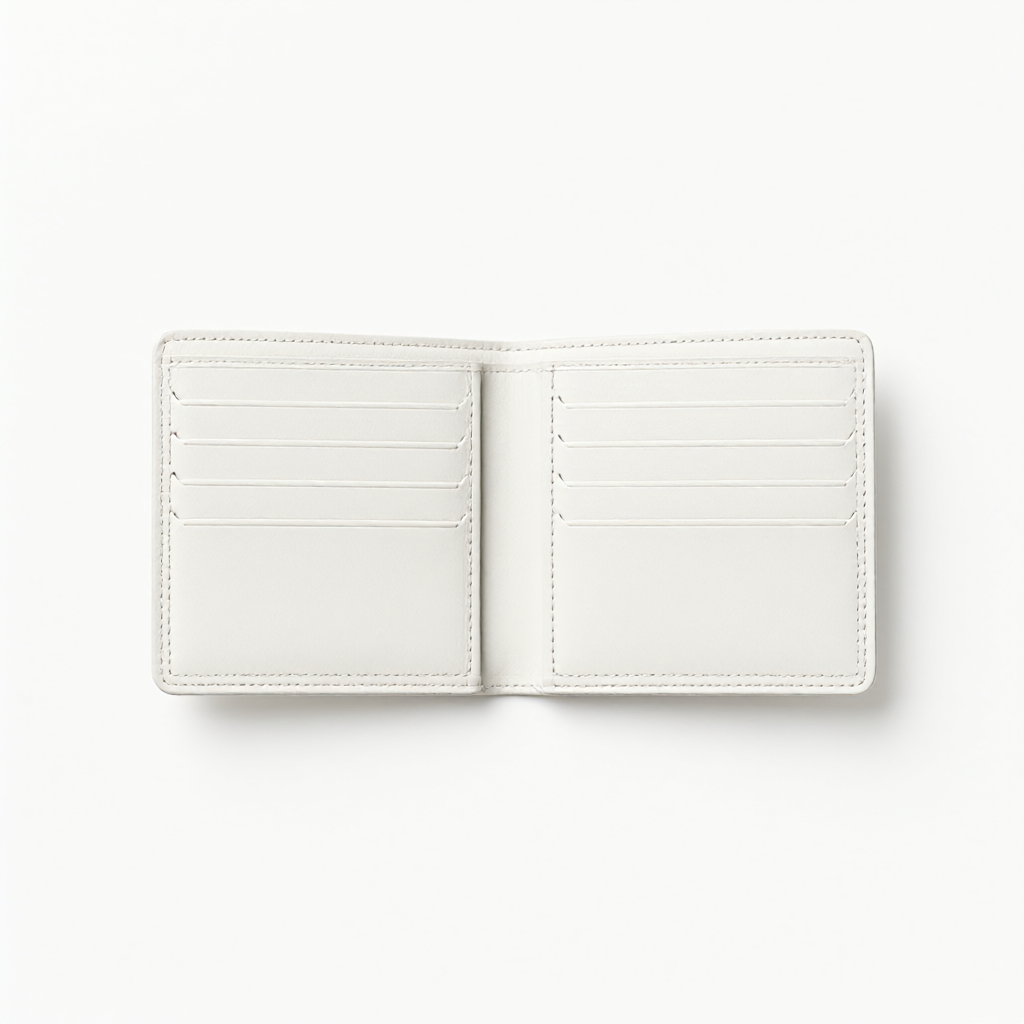
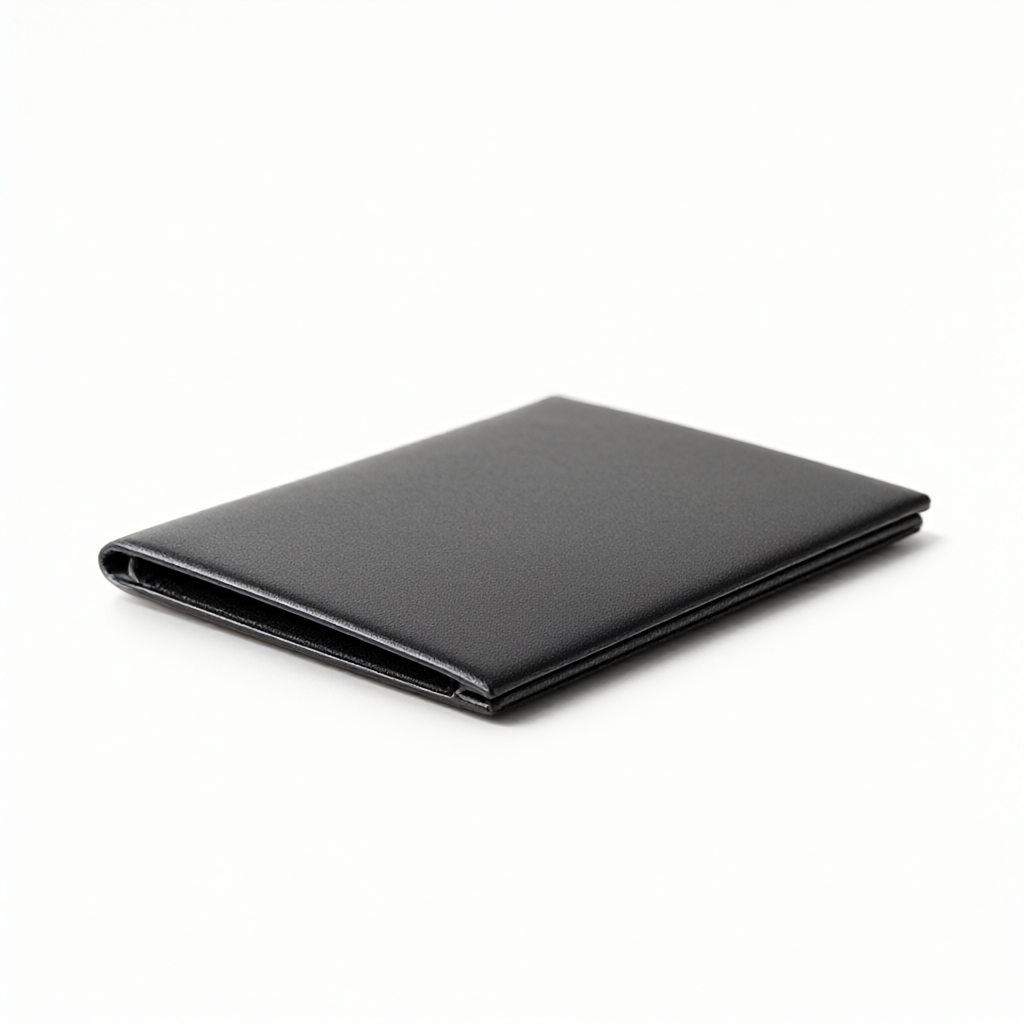
What makes a minimalist wallet different?
Traditional wallets prioritize storage capacity over form factor. A typical bifold holds 8–12 cards, bills, receipts, and sometimes coins across multiple compartments. The result is a wallet that adds 15–25 mm of bulk to the front pocket and weighs 80–150 g.
Minimalist wallets invert that priority. They target users who carry 4–8 cards and a folded bill, occasionally a key or two. The architecture strips away:
- Coin pockets (replaced by separate key clips or omitted entirely)
- Photo sleeves and receipt compartments (non-essential storage removed)
- Thick leather construction (replaced by aluminum, carbon fiber, or titanium)
- Multiple folding layers (single-plane or slip-resistant designs adopted)
The outcome is a wallet that adds roughly 6–12 mm to pocket bulk and weighs 30–60 g. This weight and thickness range is the practical sweet spot for everyday carry without discomfort.
How does a minimalist wallet function?
The mechanism varies by design, but three architectures dominate the category:
1. Card holder style: A rigid frame or spring-loaded sleeve that grips cards vertically. Users push cards in; friction and spring tension hold them. Bills sit in a back pocket or are carried separately. This is the most common architecture for aluminum and carbon fiber wallets.
2. Money clip style: A magnetic or mechanical clip secures folded cash; cards are held in a separate sleeve or pocket. This appeals to users who carry more bills than cards.
3. Hybrid slip system: A combination of a front card sleeve and a rear cash pocket, often with a rubber band or elastic retention system. This offers the most flexibility but may have lower durability over repeated use.
The choice of mechanism directly affects cost structure. Card holders require precision-machined frames or laser-cut components; money clips demand spring steel or magnetic assemblies; hybrid systems use simpler materials but introduce failure points in elastic retention.
Why does it matter for B2B buyers?
The minimalist wallet segment has grown because consumer preferences shifted toward reduced carry and EDC (everyday carry) culture. Buyers sourcing this category must understand that product lifecycle and return rates are driven by mechanism reliability, not aesthetic appeal.
A wallet that fails after 6 months of daily use generates returns, negative reviews, and brand damage. A wallet that functions reliably for 2+ years builds repeat orders and private-label loyalty. The difference is usually in three areas: spring tension consistency, material scratch resistance, and edge finishing quality.
For Amazon FBA sellers, thin profiles and lightweight packages also reduce FBA fulfillment fees—another reason to specify minimum thickness and weight thresholds early in the sourcing process.
Minimalist Wallet: Which Specifications Matter Most?
When evaluating minimalist wallets for procurement, focus on these measurable parameters:
Dimensions and capacity
| Parameter | Typical Range | Impact on Sourcing |
|---|---|---|
| Width | 65–85 mm | Must fit standard card slots (85.6 mm credit card width) |
| Height | 95–110 mm | Determines how many cards fit vertically |
| Thickness | 6–15 mm (closed) | Drives pocket bulk and shipping weight |
| Card capacity | 4–12 cards | Higher capacity usually means thicker profile |
| Bill capacity | Folded US bill or equivalent | Affects rear pocket design |
Buyers should specify maximum closed thickness as a hard constraint during sampling. Wallets rated at 8 mm closed often measure 12 mm when fully loaded with 8 cards and a folded bill—this gap matters for pocket comfort.
Material options
Aluminum (6061 or 5052 alloy): Most common material for minimalist wallets. Anodized finishes provide color and scratch resistance. CNC-machined frames offer precision; stamped aluminum is lower cost but less rigid. Weight typically 35–50 g.
Carbon fiber: Premium tier material. Lightweight (25–40 g), high scratch resistance, distinctive texture. More expensive than aluminum; requires resin molding or lamination processes.
Titanium: Highest durability and weight-to-strength ratio (40–55 g). Requires specialized CNC tooling; higher unit cost but strong margin potential at retail.
Stainless steel: Rare for minimalist wallets due to weight (60–90 g); used in tactical or heavy-duty applications.
Weight considerations
Shipping weight directly impacts landed cost. A 40 g aluminum wallet vs. a 60 g titanium wallet represents a 50% weight difference—this compounds across container shipments. Buyers should calculate unit weight including packaging when comparing FOB quotes from different suppliers.
Finish and surface treatment
Anodizing (for aluminum) provides color options (black, blue, red, gold, etc.) and a hard surface layer that resists scratching. The thickness of the anodized layer typically ranges from 10–25 microns for consumer-grade products. Thicker anodizing costs more but extends product lifespan.
Laser engraving for custom logos is standard across most suppliers. UV printing offers full-color designs but may wear faster than engraved marks. For private-label programs, buyers should specify engraving depth (typically 0.1–0.3 mm) and print coating requirements to ensure durability through shipping and retail handling.
Minimalist Wallet: Which Standards and Certifications Apply?
Quality and compliance standards affect both market access and brand protection.
RFID blocking standards
RFID-blocking wallets incorporate materials that disrupt radio-frequency identification scanning. The relevant technical specification is ISO/IEC 14443 for proximity cards and ISO/IEC 15693 for identification cards. A properly tested RFID-blocking wallet attenuates signal at 13.56 MHz by at least 20–30 dB.
Buyers should request attenuation test reports from suppliers rather than accepting claims at face value. Third-party lab testing (SGS, Intertek) provides verifiable data for marketing and compliance purposes.
Material safety standards
Materials must comply with regional regulations:
- REACH (European Union): Restricted substances list applies to metals, coatings, and adhesives
- RoHS (European Union): Lead, cadmium, mercury, and hexavalent chromium limits in electronics-adjacent products
- California Prop 65: Warning requirements for certain metal alloys
Suppliers should provide material test certificates confirming compliance. For aluminum wallets, verify that anodizing processes do not introduce restricted substances.
Quality certifications
Manufacturing facility certifications signal process control capability:
- ISO 9001: Quality management system certification
- BSCI: Business social compliance initiative audit (labor standards)
These certifications affect buyer risk mitigation. Facilities with ISO 9001 typically have documented procedures for dimensional inspection, surface finish verification, and packaging quality checks—procedures that reduce defect rates in volume production.
Testing expectations
Buyers should specify acceptance criteria during sampling:
- Cycle testing: Spring mechanisms should withstand 5,000+ insert/remove cycles without tension loss
- Drop testing: Completed wallets should survive 1-meter drops onto hard surfaces without frame deformation
- Salt spray testing: Metal finishes should resist corrosion for 24+ hours per ASTM B117 standards
These tests are low-cost to implement and prevent costly recalls after retail distribution.
Minimalist Wallet: What Else Should Buyers Consider?
How to choose a minimalist wallet for your brand?
Selection depends on your target market positioning:
Premium retail ($30–60 MSRP): Titanium or carbon fiber construction, precision CNC machining, anodized finishes, custom laser engraving. Higher unit cost but stronger margin potential.
Mid-market retail ($15–30 MSRP): Aluminum construction, standard anodized colors, basic laser branding. Balance of cost and perceived quality.
Value retail ($8–15 MSRP): Stamped aluminum or polymer composite, simple designs, minimal branding options. Volume-driven, lower margin per unit.
The key decision factor is MOQ compatibility with your launch strategy. Some manufacturers require 1,000+ pieces for custom designs; others accommodate 300-piece minimums for private-label programs. Align MOQ requirements with your inventory risk tolerance and sales channel strategy.
OEM and ODM considerations
OEM (original equipment manufacturing) means you provide design specifications; the manufacturer produces to your drawings. ODM (original design manufacturing) means the manufacturer offers existing designs you can customize with your branding.
For brands entering the minimalist wallet category for the first time, ODM programs reduce development risk and time-to-market. Custom OEM programs offer differentiation but require engineering review, sample iterations, and potentially mold or fixture investment.
Sourcing and private label strategy
Successful private-label programs combine three elements:
- Design alignment: The wallet architecture should match your brand’s aesthetic (tactical, minimalist, luxury, outdoor)
- Branding execution: Laser engraving, embossing, or printed logos applied consistently across units
- Packaging specification: Retail-ready boxes, hang tags, and protection during shipping
For Amazon FBA sellers, packaging must meet Amazon Frustration-Free Packaging requirements where possible. Rigid wallet boxes with minimal void fill reduce damage rates and improve customer experience.
When evaluating suppliers, request samples of completed private-label units—not just raw products—to verify branding quality and packaging integrity.
Lead time and production capacity
Typical timelines for minimalist wallet production:
- Sample development: 5–7 days for standard designs; 10–15 days for custom OEM
- Production lead time: 15–25 days for 500–5,000 piece orders
- Tooling setup: One-time fixture or mold cost for custom designs (typically $200–800 depending on complexity)
Suppliers with in-house CNC machining can produce aluminum wallets without external subcontracting, reducing lead time variability. Suppliers relying on multiple vendors for machining, anodizing, and assembly may have longer and less predictable timelines.
Cost structure drivers
Unit cost for minimalist wallets varies by:
- Material type: Aluminum < carbon fiber < titanium (per unit)
- Production volume: 300 pieces vs. 10,000 pieces represents significant per-unit cost difference
- Customization level: Standard anodized colors are lower cost than custom PANTONE matching
- Branding complexity: Single-side laser engraving is less expensive than multi-side or UV-printed designs
- Packaging requirements: Retail boxes add $0.15–0.50 per unit depending on material and print complexity
Buyers should request tiered pricing at multiple volume levels (100, 500, 1,000, 5,000 pieces) to understand how costs scale and plan inventory accordingly.
Industry Experience and Manufacturing Approach
The minimalist wallet category requires precision manufacturing to deliver consistent performance across volume orders. Design tolerance for card slot width directly affects user experience—a slot that is 0.5 mm too narrow creates insertion difficulty; 0.5 mm too wide allows cards to slide out.
As a manufacturer with over a decade of experience in this space, our approach centers on three principles:
Precision machining: In-house CNC capabilities ensure dimensional consistency across production runs. Card slots, edge bevels, and frame tolerances are controlled within ±0.1 mm—tight enough to guarantee smooth card insertion and retention without excessive friction.
Material verification: Every batch of aluminum, carbon fiber, or titanium is tested for composition and finish durability before production begins. This prevents surprises during volume manufacturing when corrective action would be costly.
Quality control documentation: ISO 9001-certified processes mean inspection records, test reports, and traceability data are available for buyer review. For private-label programs, we provide finished-unit samples with branding verification before shipment authorization.
For detailed specifications on card holders and money clips, see our Sourcing Money Clips for B2B Buyers guide. Our Best Card Holder Selection for B2B Sourcing resource covers material trade-offs and design considerations in detail.
Minimalist Wallet: Where Can You Verify the Data and Sources?
- ISO/IEC 14443 — www.iso.org
- ASTM B117 — www.astm.org
- Sourcing Money Clips for B2B Buyers guide — topedcwallet.com
- Best Card Holder Selection for B2B Sourcing — topedcwallet.com
- Get a Free Quote → — topedcwallet.com
From article to product
Turning this into a product?
Most of what is written here is the difference between a sample that works and one that does not. We can build either — the useful one costs the same.
Keep reading
More on buying guides
wallet with trigger
How Does a Trigger Wallet Work? What Is the Pop-Up Mechanism? The core of…
Readbest bifold wallet for women
What Is a Bifold Wallet? The term “bifold” refers to the fold: the wallet…
ReadMen’s trifold wallets with zipper compartments vs. bifold
At a Glance The three dominant men’s wallet formats differ in panel count, depth,…
Read
About the author
TOPWALLET Editorial Team
TOPWALLET's editorial and engineering desk writes from bench testing at the Shenzhen (Longgang) facility: pull-force and cycle testing, 13.56 MHz shielding measurements, finish trials and factory audits, rather than supplier spec sheets. Every specification in these guides is one we write on a purchase order.
Written on the floor
This article was written by our production and QC team — the people who spec tolerances, run the finishing line and inspect every batch. Where it states a capacity, a pull force or a lead time, it comes from a measurement we made, not a supplier’s catalogue. If a number here disagrees with what your own supplier told you, tell us; several of these articles started as a correction from a buyer.
See how the factory works · Inspection process · Sourcing FAQ
Turning this into a product?
Most of what is written here is the difference between a sample that works and one that does not. We can build either — the useful one costs the same.