

Budget-friendly EDC wallets and minimalist pocket gear can be sourced affordably by working directly with OEM manufacturers rather than through trading companies or domestic distributors. Buyers targeting wholesale pricing find the lowest landed costs with factories that combine CNC machining, anodizing, and finishing under one roof — producing aluminum minimalist wallets starting around $2.80/unit FOB, carbon fiber card holders from $4.20, and titanium money clips from $9.00 at volume. Successful procurement depends on understanding material trade-offs, verifying quality certifications, and aligning supplier capabilities with your order scale and timeline.
Quick Answer
Where can you find affordable EDC wallets and minimalist pocket organizers for resale or bulk purchasing? The most cost-effective route is direct OEM or ODM factory sourcing — bypassing domestic distributors and trading companies entirely. A reliable factory will offer unit prices starting below $3.50 for aluminum minimalist wallets at volume, with low minimum order quantities (MOQs) and rapid sample turnaround, giving brands and resellers better margins while still maintaining build quality that competes with retail offerings.
Detailed Explanation
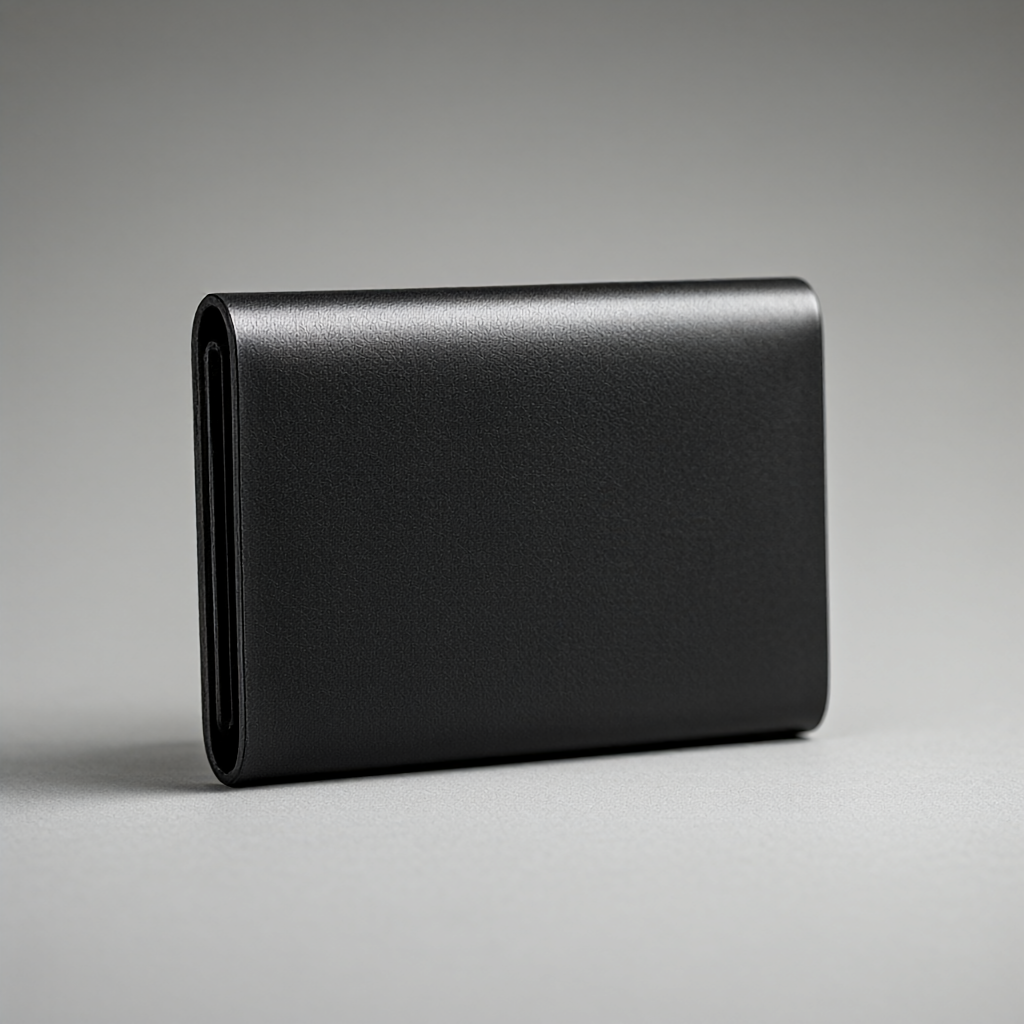
Why EDC wallets deliver better long-term value than disposable paper alternatives or traditional bulky wallets?
The economics of everyday carry accessories operate very differently from consumable paper goods. When buyers evaluate budget envelopes near me — whether for filing, cash organization, or gifting — they are typically comparing discrete unit costs against durability, perceived value, and repeat purchase cycles. EDC wallets occupy a fundamentally different category: they are durable goods engineered to replace an item the consumer already owns. This single substitution drives lifetime value far beyond the initial price point.
From a procurement standpoint, minimalist wallets command consistent demand because they solve a universal pain point — bulk and weight. Traditional leather bifold wallets often hold 15–20 cards, cash folded awkwardly, and loose change, sitting 4–6 inches thick in a front pocket. Modern EDC solutions compress that function into 3–5 millimeters using precision-machined metal frames, carbon fiber scales, and spring-loaded card retention mechanisms. The replacement cycle is measured in years, not months, which means brands selling these products benefit from higher repeat-purchase rates driven by accessory expansion — extra card holders, strap upgrades, replacement springs — rather than full-product churn.
This durability translates directly into margin advantage for bulk buyers. A $28 retail EDC wallet retails at approximately 8× the landed factory cost, compared to disposable alternatives where retail markup rarely exceeds 3×. For private-label brands entering the space, the margin profile makes custom wallet manufacturing one of the more resilient product categories in the EDC sector.
What types of EDC wallets offer the best value for bulk purchasing?
Value in bulk EDC procurement depends on three variables: material cost stability, manufacturing complexity, and retail price elasticity. Not every configuration delivers equal returns at volume.
Aluminum RFID-blocking wallets represent the strongest value proposition for most buyers. 6000-series aluminum is inexpensive relative to other metals, responds well to CNC machining and anodizing, and carries built-in functional differentiation when paired with RFID-blocking inserts. Retail prices for these units typically range $25–$55, providing healthy margins even after private labeling, packaging, and shipping. They are the workhorse SKU of the EDC wallet market — high velocity, broad appeal, low return rate.
Carbon fiber card holders sit in a slightly higher tier. Raw carbon fiber prepreg material carries a premium over aluminum billet, but the manufacturing process is simpler: laser-cut layups bonded to an aluminum or steel frame require fewer CNC operations. The aesthetic upside is substantial — the woven texture communicates premium quality instantly at point of sale. These products resonate strongly with outdoor enthusiasts and urban professionals who view their carry items as personal accessories rather than purely utilitarian objects.
Titanium money clips occupy the upper segment. Titanium stock is significantly more expensive per kilogram, and CNC machining times run longer due to the material’s hardness. However, titanium carries strong brand equity within the EDC community — it is lightweight, corrosion-proof, and signals a purpose-built product. Retail prices frequently exceed $80, making these high-margin items despite higher COGS. Buyers targeting premium channels (outdoor retailers, specialized EDC shops, gift boutiques) should allocate a portion of their initial SKUs to titanium variants.
Hybrid designs — combining aluminum frames with carbon fiber backplates, or adding integrated bottle openers and multi-tools to a slim wallet chassis — tend to achieve the strongest performance in crowded marketplaces. They offer clear visual differentiation on Amazon and retail shelves without requiring buyers to move up to a completely different material tier.
For buyers evaluating how to source business card holders locally versus importing custom versions, the local route typically only makes sense for very small runs under 200 units where fast turnaround outweighs per-unit cost. Beyond that threshold, direct factory sourcing produces materially better landed costs.
How much does it cost to get custom EDC wallets manufactured?
Factory pricing for custom EDC wallets breaks into distinct tiers based on material, complexity, and order volume:
| Product Type | Material | Unit Cost Range (FOB) | Typical MOQ |
|---|---|---|---|
| Minimalist wallet | 6061 aluminum | $2.80 – $4.50 | 300 pcs |
| Card holder | Carbon fiber + aluminum | $4.20 – $7.50 | 300 pcs |
| Money clip | Grade 5 titanium | $9.00 – $16.00 | 300 pcs |
| Hybrid tactical organizer | Multi-material | $6.00 – $11.00 | 200 pcs |
These ranges reflect FOB factory pricing for standard configurations. Several variables shift the numbers meaningfully:
Laser engraving and surface treatment add $0.15–$0.60 per unit depending on complexity. A simple logo etch costs less than a full-coverage geometric pattern. Anodized coloring — particularly custom Pantone-matched hues — adds another $0.20–$0.45 per unit over standard natural or black finishes. UV printing on flat surfaces sits between these two price points.
Custom packaging introduces a second cost layer. Simple polybagging adds roughly $0.08 per unit. Custom retail boxes with insert trays and printed logos range from $0.45 to $1.80 per unit depending on box style, material weight, and print color count. Buyers ordering for Amazon FBA should confirm whether the supplier includes FNSKU label placement and polybag compliance — services some factories bundle and others charge separately.
Tooling and setup fees apply to first-time orders. CNC program creation, fixture design, and initial die setup typically run $150–$500 per SKU, waived once cumulative order volume reaches a predetermined threshold. Re-ordering the same design after tooling has been established incurs no new setup charges.
For buyers seeking competitive rates comparable to wholesale and bulk sourcing of billfolds, the key lever is order concentration. Splitting 2,000 units across five different suppliers produces worse per-unit pricing and slower sampling than directing that volume to one or two capable manufacturers who can amortize setup costs and optimize production scheduling.
What is a typical minimum order quantity for OEM metal wallets?
Industry-standard MOQs for minimalist wallet manufacturing cluster around 300 pieces per SKU per material variant. This threshold exists because the fixed costs of CNC programming, anodizing batch preparation, and quality inspection setup must be distributed across enough units to keep per-piece costs reasonable.
Some suppliers set MOQs at 500 or 1,000 units, which creates a barrier for startups and emerging brands entering the EDC space. Lower-MOQ factories typically compensate by charging a modest setup premium on initial orders — a fair trade-off that allows brands to validate designs and retail response before scaling to larger runs.
When evaluating potential suppliers, buyers should distinguish between design-level MOQs (the factory’s stated floor) and pricing-tier MOQs (the volume points where unit price drops). A factory may accept 300 units at its standard rate but offer a 12% discount at 500 units and another 8% drop at 2,000. Understanding these breakpoints helps buyers plan phased rollouts — launching with a conservative initial order and scaling confidently once sales velocity confirms demand.
Buyers looking for sourcing men’s wallets near you should note that “near you” offers speed advantages but usually at a significant cost premium. Domestic or regional assembly operations cannot match the per-unit economics of factories with integrated CNC, anodizing, and finishing workflows concentrated in manufacturing hubs. For orders above 500 units, the landed cost differential typically overwhelms any logistics or communication advantage gained from geographic proximity.
OEM/ODM customization capabilities — what buyers can realistically expect
Customization in the EDC wallet space operates across several layers, each affecting the final product differently:
Logo application methods are the most requested customization. Laser engraving produces permanent, precise marks suitable for metal surfaces — ideal for brand identity on aluminum and titanium. Pad printing works better for irregular surfaces or multi-color logos. UV direct-to-part printing allows full-color graphics but carries different durability characteristics than mechanical engraving. Buyers should specify which method aligns with their brand’s visual identity and expected wear environment.
Anodizing and surface finishes define both appearance and corrosion resistance. Standard offerings include natural (bare aluminum appearance), black, and silver anodized finishes. Custom colors through the Pantone system are available at most facilities but require additional batch time and minimum quantities per color. Matte, brushed, bead-blasted, and mirror-polished textures add further differentiation without significantly increasing cost.
Private-label packaging represents the highest-impact customization for retail-bound orders. Buyers should communicate whether their products will sell through Amazon FBA, brick-and-mortar retail, or direct-to-consumer channels — each demands different packaging specifications. Amazon requires specific label placement, polybag perforation, and suffocation warning language. Retail shelf display often calls for window-packed boxes that showcase the product without removal. DTC shipments benefit from unboxing experience design that reinforces brand perception.
For detailed guidance on related product categories, buyers exploring complementary accessories may also want to review the wallet chain sourcing guide for coordination strategies that pair chains with minimalist wallet designs.
What standards and certifications should B2B buyers verify when sourcing EDC wallets?
Quality assurance in EDC wallet manufacturing spans material safety, workplace compliance, and product consistency. Three certification categories deserve attention:
ISO 9001 remains the baseline expectation for any manufacturing partner. This quality management standard verifies that the facility maintains documented processes for incoming material inspection, in-process quality checks, and finished-goods verification. Factories operating without ISO 9001 can still produce acceptable products, but buyers lose a structural guarantee that quality variations won’t emerge between production batches.
BSCI (Business Social Compliance Initiative) audits address ethical sourcing concerns increasingly important to Western retailers and distributors. The audit covers working hours, wages, child labor prohibition, health and safety conditions, and environmental practices. Major European retailers frequently require BSCI certification as a condition of supplier onboarding. North American buyers should verify BSCI status if they plan to distribute through large retail chains that mandate social compliance documentation.
Material safety certifications — REACH (European chemical regulation) and RoHS (Restriction of Hazardous Substances) — govern the substances permitted in finished products and their component materials. These certifications matter most when exporting to EU markets, where non-compliant products face customs detention and potential recall obligations. Buyers should request current test reports from SGS or equivalent accredited laboratories verifying that anodizing solutions, adhesive compounds, and coating materials meet regulatory thresholds for heavy metals and restricted chemicals.
Beyond formal certifications, buyers should establish clear material specification agreements before production begins. The spec should define aluminum alloy grade (6061-T6 is industry standard), carbon fiber ply orientation and resin type, titanium grade (Grade 2 commercially pure or Grade 5 Ti-6Al-4V), and finish tolerances. Vague specifications produce inconsistent results; detailed ones protect both parties.
How long does sample production and bulk lead time typically take?
Sample timelines vary by complexity. A straightforward aluminum minimalist wallet prototype — using existing CNC programs and standard anodizing — can ship within 5–7 business days from artwork approval. More complex configurations involving custom dies, unique anodizing colors, or multi-material construction may require 10–14 days. Digital renderings and photo documentation are typically provided before physical samples ship, allowing buyers to evaluate dimensions, finish quality, and mechanism function remotely.
Bulk production lead times depend primarily on order quantity and current factory capacity:
| Order Size | Estimated Lead Time |
|---|---|
| 300 – 500 pcs | 15 – 25 days |
| 501 – 2,000 pcs | 20 – 35 days |
| 2,001 – 5,000 pcs | 30 – 45 days |
| 5,001+ pcs | 45 – 60 days (phased delivery available) |
These estimates assume confirmed artwork and approved samples. Modifications requested after sample approval reset portions of the timeline. Expediting is generally available for an additional fee, compressing production by 30–50% depending on current scheduling.
For international freight, buyers should factor in shipping method differences. Air freight (DHL, FedEx, UPS) moves sample and small-bulk orders in 5–10 business days door-to-door but costs 4–6× sea freight per kilogram. Sea freight (FCL or LCL) provides the lowest per-unit shipping cost for orders exceeding 1,000 kg but requires 25–40 transit days depending on origin port and destination.
Buyers referencing the sourcing wallets from nearby manufacturers article should note that proximity reduces shipping lead time but not production lead time — the factory still needs to machine, finish, and inspect each unit regardless of location. Geographic closeness mainly affects freight cost and replenishment agility, not first-production timing.
Who are the typical buyers of custom EDC wallets and pocket gear?
Understanding buyer profiles helps manufacturers tailor their outreach and service models appropriately:
EDC brand owners build their entire product line around the everyday carry lifestyle. They commission custom wallets as signature items within a broader ecosystem of multi-tools, flashlights, and carry accessories. These buyers prioritize design originality and brand storytelling over pure cost minimization. They expect close collaboration during the design phase and often place recurring quarterly orders as they refresh colorways and limited editions.
Amazon FBA sellers compete primarily on price, review velocity, and listing optimization. They source OEM white-label or lightly branded products that fit proven market niches — RFID-blocking aluminum wallets in popular color combinations, carbon fiber card holders with integrated bottle openers, titanium money clips marketed toward military and outdoor demographics. Speed to market and inventory reliability matter more than bespoke design. These buyers typically order larger volumes with tighter margin targets.
Promotional product distributors incorporate EDC wallets into corporate gift catalogs and branded merchandise programs. Their requirements differ sharply from retail-focused buyers: they need fast turnaround on moderate-volume orders (200–2,000 units), consistent custom branding across multiple clients, and flexible scheduling aligned with trade show seasons and corporate gifting cycles. Cost per unit is critical because promotional products compete on price with pens, USB drives, and apparel.
Corporate gift buyers — whether internal procurement teams or external gifting agencies — target EDC wallets as premium thank-you gifts for employees, clients, or event attendees. They prioritize perceived value and packaging presentation over individual unit cost. A $12 factory-cost wallet in elegant custom packaging retails as a $45–$60 corporate gift, delivering strong perceived value at modest expense.
Retail chain buyers evaluate EDC wallets as addition-to-assortment SKUs for outdoor, hardware, or general merchandise retailers. They require compliance documentation (material test reports, product liability insurance, UL or CE markings where applicable), sustained supply consistency, and competitive dealer pricing structures. Private-label exclusivity agreements sometimes accompany large chain orders.
For buyers interested in complementary product categories, reviewing the sourcing money clips for B2B buyers guide provides useful parallels — money clip procurement follows nearly identical pathways regarding material selection, certification requirements, and customization options.
Key Specifications
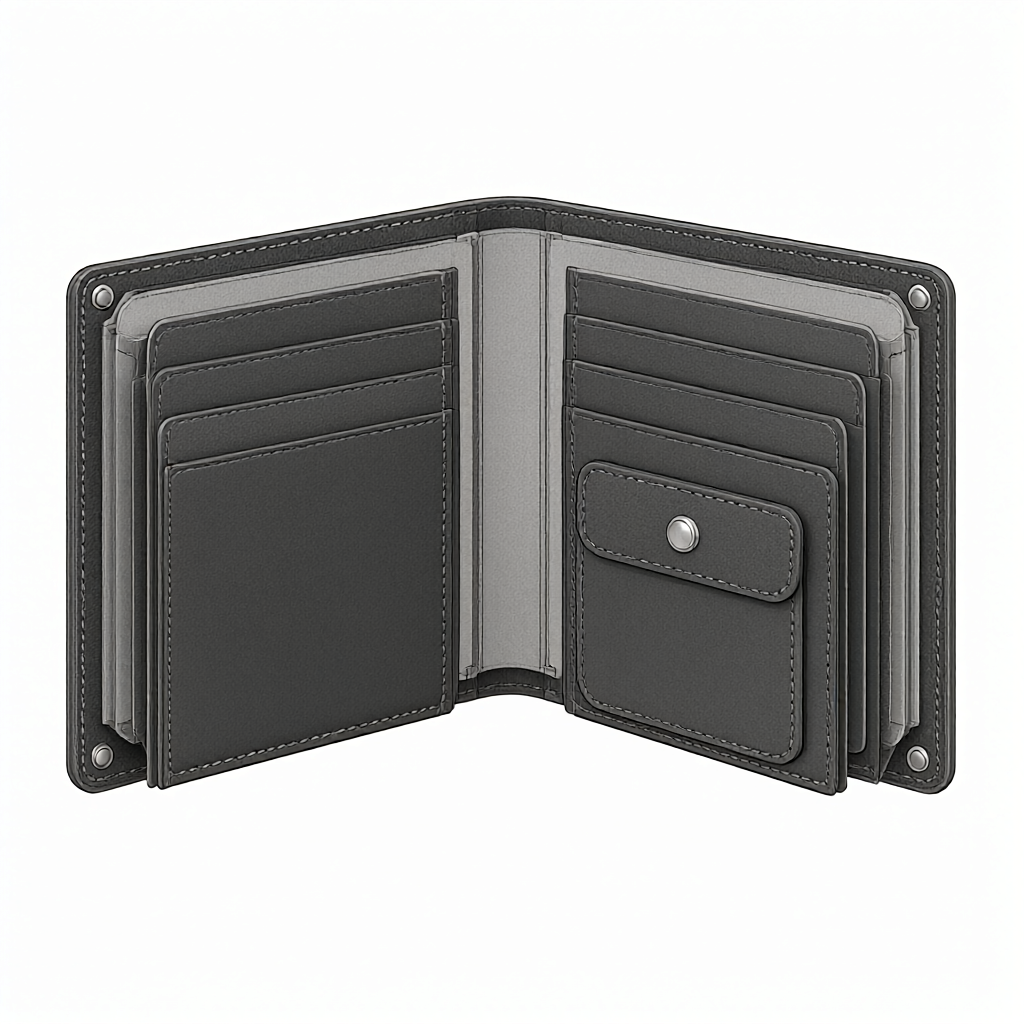
What are the key specs for budget-friendly minimalist EDC wallets?
Specifications differentiate viable sourcing candidates from problematic ones. The following parameters should appear in every RFQ and be verified before placing production orders:
Dimensional specs: Slim-profile minimalist wallets typically measure 70–85mm in width, 300–115mm in height, and 5–8mm in thickness when loaded. Card holder variants run narrower (60–75mm wide) and slightly shorter. Money clips are the thinnest category, often under 5mm loaded. These measurements directly affect pocket compatibility — wallets exceeding 8mm thickness begin competing with traditional bi-fold wallets on bulk, negating the core value proposition.
Material specifications: Aluminum wallets should use 6061-T6 alloy for optimal machinability and surface finish acceptance. Titanium money clips should specify Grade 5 (Ti-6Al-4V) for strength-to-weight ratio, or Grade 2 (commercially pure) where lower cost and excellent corrosion resistance are prioritized. Carbon fiber card holders should confirm epoxy or cyanate ester resin systems, with surface gloss level specified (high-gloss vs. matte textured) as this affects both aesthetics and fingerprint visibility.
RFID blocking performance: If the product claims RFID protection, verify the shielding frequency range. Consumer credit cards and passports operate at 13.56 MHz; vehicle key fobs use 315 MHz or 433 MHz. Effective shielding requires continuous conductive material — slots and gaps in the wallet design reduce attenuation. Buyers should request test reports showing decibel reduction at target frequencies.
Mechanism durability: Spring-loaded card ejectors, magnetic closures, and friction-fit retention systems should survive 5,000+ open-close cycles without degradation. Buyers evaluating affordable promotional products should request cycle-test data from the supplier rather than relying on verbal guarantees.
Finish specifications: Anodized layer thickness should meet or exceed 10 micrometers for standard use and 20+ micrometers for products marketed as heavy-duty or tactical. Coating adhesion should pass cross-hatch tape tests per ASTM D3359. Surface hardness for anodized aluminum should reach 300–500 HV (Vickers).
Weight benchmarks: A properly engineered aluminum minimalist wallet with 8 cards loaded should weigh 50–75 grams. Titanium versions increase to 70–100 grams for similar capacity. Carbon fiber constructions typically land in the 40–65 gram range. Weight outside these norms may indicate over-engineered materials or unnecessary structural mass that undermines the slim-carry positioning.
For comparison against conventional carrying solutions, buyers researching sale wallets women — bulk sourcing will note that women’s wallet segments follow different size and feature conventions — longer form factors, additional compartments, and aesthetic finishes oriented toward fashion retail rather than technical utility.
Standards & Requirements
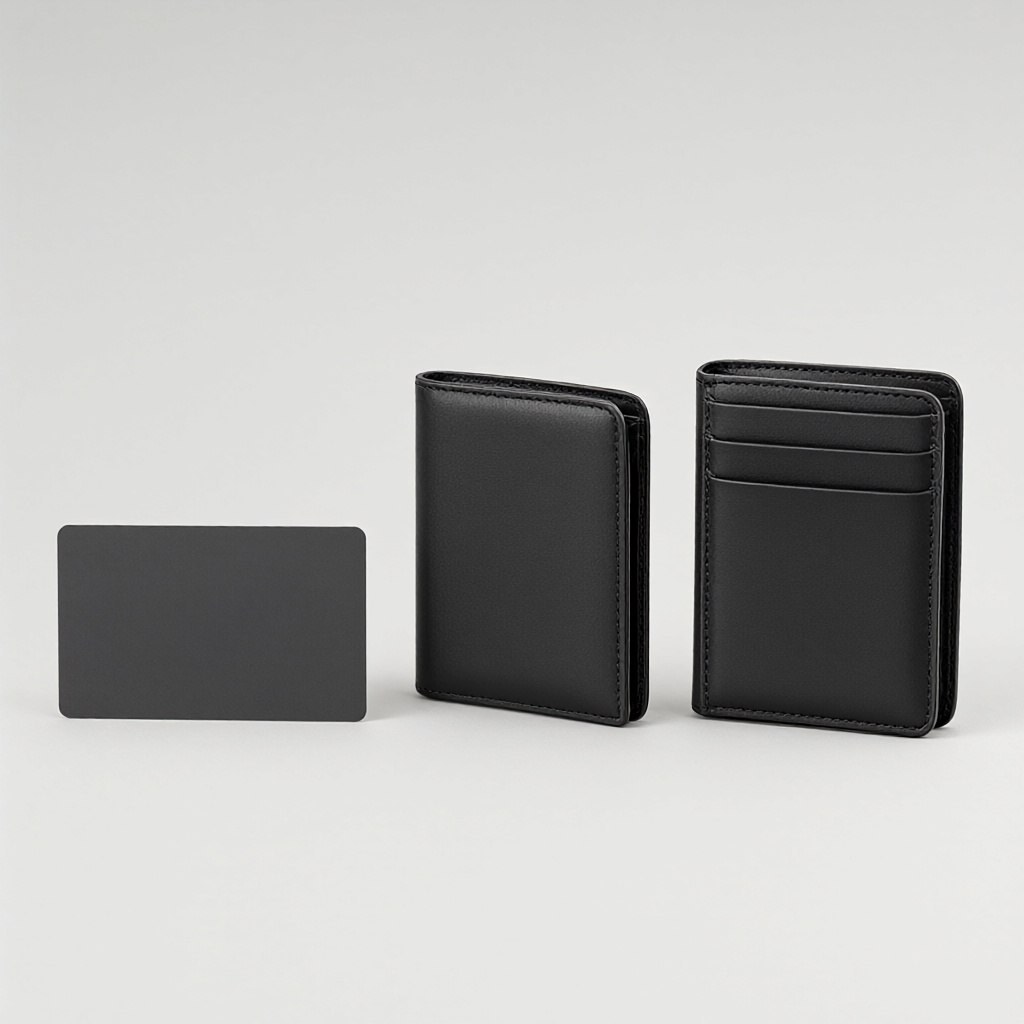
What standards govern EDC wallet manufacturing and what compliance documents should buyers request?
Compliance documentation falls into three buckets: material safety, quality management, and product-specific testing. Buyers should request current certificates (not expired) and verify certificate numbers against issuing body databases where possible.
REACH (EC) No 1907/2006 — European chemical regulation governing substances in imported products. Anodizing baths, adhesives, and surface coatings must comply with restricted substance lists. Test reports from accredited labs (SGS, Intertek, TÜV) covering SVHC (Substances of Very High Concern) screening provide evidence of compliance. Importers into the EU bear legal responsibility for REACH compliance regardless of supplier assurances.
RoHS Directive 2011/65/EU — Restricts lead, mercury, cadmium, hexavalent chromium, and certain flame retardants in electronic and metal products. While EDC wallets contain no electronics, metal finishes and any integrated components fall under RoHS scope when sold in EU markets. Certificates of conformity from material suppliers should trace back through the supply chain.
ISO 9001:2015 — Quality management system certification. Buyers should confirm the certificate covers the exact manufacturing site and product category being ordered. Expired certificates or certificates limited to “trading” scope (rather than manufacturing) indicate a distributor rather than a factory — a distinction that affects quality control capabilities and pricing.
BSCI — Social compliance audit issued by Sedex. Valid audits cover the previous 24 months. Buyers should request the latest audit report summary and verify corrective action completion for any identified non-conformities.
Product-specific testing: Depending on target market and claims made, buyers may need additional testing — nickel release per EU Directive 94/27/EC for skin-contact metals, flammability ratings if marketing the product for fire-service or tactical use, and drop-test validation for ruggedized designs.
Related Considerations
What factors should buyers weigh before committing to a custom EDC wallet manufacturing partnership?
Several decision factors separate successful sourcing outcomes from costly mismatches:
Design maturity level. Buyers with fully defined CAD files and engineering drawings can move directly to quoting and sampling. Those entering the conversation with rough sketches or inspiration references should budget additional time and cost for design development. Factories offering both CNC machining and in-house industrial design support provide flexibility for early-stage brands. Understanding where your design sits on this spectrum affects timeline expectations and total project cost.
Order volume commitment. Factory pricing improves substantially at volume, but demand forecasting accuracy matters. Overordering leads to warehouse carrying costs and potential obsolescence if market tastes shift. Underordering misses the per-unit cost breakpoints that make custom manufacturing profitable. A realistic 12-month demand forecast helps negotiate favorable pricing tiers and secures production slot reservations.
Intellectual property protection. Proprietary designs — especially those involving novel closure mechanisms, unique material laminations, or distinctive aesthetic treatments — warrant NDAs and design-non-compete clauses before sharing detailed specifications. Reputable manufacturing partners understand IP protection as standard practice and should welcome contractual safeguards. Buyers in industries handling [ Designer wallets on sale for Men — B2B sourcing guide ] concepts similarly benefit from upfront IP frameworks.
Communication infrastructure. Time zone overlap, English proficiency, and response-time expectations materially affect sourcing experience.factories serving global buyers typically maintain dedicated account management rather than routing inquiries through general inboxes. Verify communication protocols during the evaluation phase — slow responses during sampling predict slower issue resolution during production.
Scalability assessment. A factory comfortable producing 500-unit initial orders should demonstrate the operational capacity to scale to 5,000 or 50,000 units without proportional quality deterioration. Ask about peak production capacity, equipment redundancy, and whether subcontracting occurs for any production stages. Transparent answers signal mature operations; vague responses warrant closer scrutiny.
How does the manufacturer approach quality control across the production workflow?
A disciplined quality management system touches every stage of wallet production:
Incoming materials receive inspection against specification sheets — alloy mill certificates for aluminum, resin lot numbers for carbon fiber, grade certifications for titanium. In-process checks monitor CNC tolerance adherence, anodizing bath chemistry, and assembly torque on fasteners. Final inspection verifies dimensional correctness, finish quality, mechanism function, and cosmetic appearance against approved sample standards. Defective units are quarantined and root-caused before production resumes at normal levels.
Where can buyers proceed next to evaluate manufacturing capability?
Contact Our Team to discuss your specific product requirements, receive a detailed quotation, and evaluate how our factory’s specifications align with your sourcing needs.
As a manufacturer specializing in minimalist EDC wallets and pocket gear, we approach every project through the lens of what we’ve learned across 13+ years of export experience serving brands, Amazon FBA sellers, and distributors worldwide. Our 50,000 sq ft facility houses integrated CNC machining, laser engraving, anodizing, and final inspection under one roof — eliminating the quality gaps that emerge when these processes are fragmented across multiple vendors. We work with 6061 aluminum, Grade 5 titanium, and pre-impregnated carbon fiber layups, applying surface finishes that meet both aesthetic and durability requirements for daily carry use. Our Quality Management System is certified to ISO 9001, our facility holds BSCI audit compliance, and all materials carry REACH and RoHS conformance documentation. We begin most engagements with a 7-day sample turnaround so buyers can evaluate build quality, mechanism function, and finish acceptance before committing to production volume. Our standard OEM/ODM model accepts orders starts at 300 pcs per SKU for full OEM customization (100 pcs trial order available for stock finishes) per SKU, with scalable production capacity supporting everything from startup launches to established brand replenishment cycles.
Leather materials and how they compare to metal and carbon fiber options
While metal and synthetic materials dominate the minimalist wallet segment, leather remains a significant option — particularly for buyers targeting heritage-style EDC brands and corporate gifting channels. Full-grain and top-grain leathers are most commonly specified because they develop a patina over time and resist wear better than corrected grain or bonded leather variants.
The primary trade-off between leather and metal/carbon fiber wallets centers on durability versus thickness. Leather wallets typically hold fewer cards than their metal counterparts and compress less over time, meaning they retain more bulk in a pocket. However, they offer a warmer aesthetic and lighter weight than titanium options. Leather also requires a break-in period — new wallets often feel stiff and may need 1–2 weeks of regular use before the retention mechanism settles into optimal tension.
From a cost perspective, mid-tier leather wallets (using full-grain hide with stitched or riveted construction) land in the $3.50–$6.00/unit FOB range at moderate volumes, positioning them between basic aluminum models and premium carbon fiber configurations. The material adds a natural-texture visual appeal that resonates with buyers targeting outdoor, rustic, or vintage-style product lines — a demographic underserved by the dominant brushed-metal aesthetic.
Leather also introduces distinct quality-control considerations. Buyers should request hide origin documentation and specify whether the material is vegetable-tanned (more environmentally compliant, harder finish, develops richer patina) or chrome-tanned (softer hand-feel, faster production cycle, but subject to tighter chemical restrictions under REACH). Chrome-tanned leathers must comply with REACH Annex XVII restrictions on chromium VI and other regulated substances — factories with proper documentation will provide test reports confirming compliance thresholds.
For buyers comparing designer wallets on sale for men in retail channels, leather-variant SKUs typically command a 15–25% price premium over equivalent aluminum constructions, which translates into margin opportunity for private-label purchasers willing to accommodate the longer lead times associated with material conditioning and stitching operations.
Who buys minimalist EDC wallets — use cases and target buyer profiles?
Understanding who purchases minimalist wallets helps buyers select the right product configurations, pricing tiers, and supplier capabilities for their channel. The market breaks into five primary buyer segments, each with distinct requirements:
EDC brand owners and lifestyle labels represent the largest private-label customer base. These buyers build around a cohesive carry system — wallets, key organizers, pocket tools, and edc accessories marketed as a unified aesthetic. They prioritize design consistency across SKUs, custom packaging that reinforces brand identity, and flexible MOQs that allow seasonal rotation. Typical order sizes run 500–2,000 units per SKU per quarter, with strong emphasis on material finish matching (anodized colors coordinated across product lines).
Amazon FBA sellers and DTC retailers focus on conversion-rate optimization and listing performance. These buyers compete primarily on price-to-feature ratios and need products that photograph well and perform consistently under review scrutiny. RFID-blocking functionality has become table-stakes expectation for this segment — products without verified blocking performance face increasing return rates on electronics-focused marketplaces. MOQ comfort ranges from 200–1,000 units per launch SKU, with rapid re-order cycles once sales velocity validates demand.
Promotional product distributors source EDC wallets as branded gift items for corporate events, trade shows, and client appreciation programs. Their requirements differ sharply from retail buyers: logo placement takes priority over aesthetic refinement, turnaround speed matters more than unit cost optimization, and order sizes vary wildly from 50 units (single-event orders) to 5,000+ (annual corporate gifting contracts). Simple laser engraving on pre-existing designs is the preferred customization method due to fast setup and minimal art-approval friction.
Outdoor and adventure retail chains stock minimalist wallets alongside knives, multi-tools, and camp accessories. These buyers evaluate products through a utility lens — scratch resistance, water exposure tolerance, and grip reliability under wet conditions factor heavily into purchasing decisions. They tend to favor titanium and carbon fiber constructions for their corrosion resistance and prefer products with integrated tool features (bottle openers, seatbelt cutters, screwdriver bits). Order quantities are typically larger but governed by seasonal buying windows and regional distribution requirements.
Corporate gift and executive swag buyers place high-value, low-volume orders focused on perceived prestige. Brushed titanium finishes, custom engraving with recipient names, and luxury presentation packaging drive purchasing decisions in this segment. Unit costs are secondary to perceived value — a $12 wallet with premium unboxing experience outsells a $20 generic alternative in corporate gift catalogs. This buyer class often sources through promotional product distributors rather than direct factory relationships.
Each profile requires different supplier capabilities. Brand owners need ODM co-development support; Amazon sellers need FBA-ready prep and labeling; promotional buyers need rapid sample-to-production throughput; and corporate gift buyers need premium finishing and custom packaging precision. Matching buyer profile to supplier strength prevents costly mismatches during the sourcing process.
How Top EDC Wallet Supports Your Procurement Needs?
Understanding industry standards, material specifications, and procurement workflows gives buyers the framework to evaluate any manufacturing partner effectively. Here is how a purpose-built EDC wallet manufacturer meets these benchmarks.
TOP EDC Wallet operates as a specialist OEM/ODM manufacturer for minimalist EDC wallets and pocket gear, serving brand owners, Amazon FBA sellers, and distributors since 2014. Our facility spans 50,000 sq ft and maintains ISO 9001 certification with BSCI-audited workplace practices, ensuring both product quality and supply-chain compliance for international buyers.
Our production capabilities cover the full range of minimalist wallet types — from entry-level 6061 aluminum RFID-blocking wallets and carbon fiber card holders to grade-5 titanium money clips and hybrid tactical organizers. In-house CNC machining, laser engraving, UV printing, and aluminum anodizing allow us to control every stage of the manufacturing process, reducing variance and protecting lead-time commitments. REACH and RoHS compliance govern our material selections, and SGS-tested inputs verify regulatory readiness for EU-bound shipments.
For buyers evaluating sourcing options comparable to sourcing money clips for B2B buyers, our model supports low-MOQ entry points starts at 300 pcs per SKU per SKU — allowing emerging brands to validate designs before scaling. Sample production runs on a 7-day turnaround from artwork approval, and bulk orders ship within the lead-time windows outlined above depending on configuration and quantity.
Our service model accommodates the full spectrum of buyer profiles: private-label branding for EDC labels, FBA-compliant packaging and labeling for marketplace sellers, rapid-turnaround engraving for promotional channels, and premium finishing with custom packaging for corporate gifting clients. We currently serve 200+ brands across America, Europe, Australia, and Southeast Asia, with monthly production capacity exceeding 500,000 units.
Sources & References
- wholesale and bulk sourcing of billfolds — topedcwallet.com
- sourcing men’s wallets near you — topedcwallet.com
- wallet chain sourcing guide — topedcwallet.com
- sourcing wallets from nearby manufacturers — topedcwallet.com
- sourcing money clips for B2B buyers — topedcwallet.com
- sale wallets women — bulk sourcing — topedcwallet.com
- Contact Our Team — topedcwallet.com
From article to product
Turning this into a product?
Most of what is written here is the difference between a sample that works and one that does not. We can build either — the useful one costs the same.
Keep reading
More on buying guides
wallet with trigger
How Does a Trigger Wallet Work? What Is the Pop-Up Mechanism? The core of…
Readbest bifold wallet for women
What Is a Bifold Wallet? The term “bifold” refers to the fold: the wallet…
ReadMen’s trifold wallets with zipper compartments vs. bifold
At a Glance The three dominant men’s wallet formats differ in panel count, depth,…
Read
About the author
TOPWALLET Editorial Team
TOPWALLET's editorial and engineering desk writes from bench testing at the Shenzhen (Longgang) facility: pull-force and cycle testing, 13.56 MHz shielding measurements, finish trials and factory audits, rather than supplier spec sheets. Every specification in these guides is one we write on a purchase order.
Written on the floor
This article was written by our production and QC team — the people who spec tolerances, run the finishing line and inspect every batch. Where it states a capacity, a pull force or a lead time, it comes from a measurement we made, not a supplier’s catalogue. If a number here disagrees with what your own supplier told you, tell us; several of these articles started as a correction from a buyer.
See how the factory works · Inspection process · Sourcing FAQ
Turning this into a product?
Most of what is written here is the difference between a sample that works and one that does not. We can build either — the useful one costs the same.