

Quick Answer — What Is a Wallet Chain and How Do You Source One?
A wallet chain is a functional EDC accessory — a metal or cord lanyard that anchors a wallet to a belt loop, pocket, or key ring. It serves two purposes simultaneously: preventing your wallet from falling out during movement, and signaling personal style. For B2B buyers, this means sourcing isn’t just about finding a supplier; it’s about selecting a manufacturer that can meet material, customization, and compliance requirements at scale.
If you’re searching for a wallet chain near me, you’ll find retail options at outdoor stores, gift shops, and general electronics retailers. But for private label programs, Amazon FBA listings, or promotional merchandise procurement, the most effective path is working directly with a contract manufacturer who can produce your specifications — including metal grades, attachment hardware, laser engraving, and branded packaging — rather than picking pre-made units off a shelf.
Detailed Explanation — How Wallet Chains Work and Why They Matter for EDC Brands
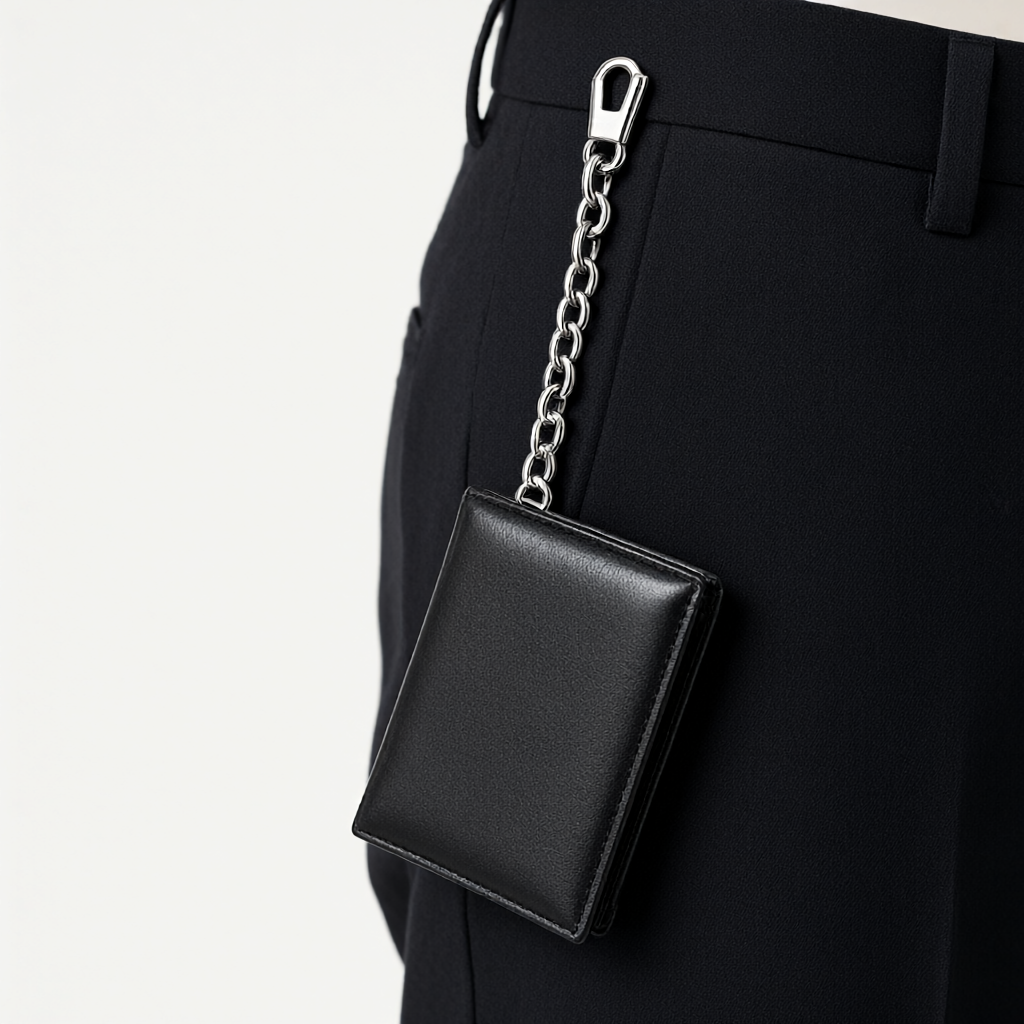
What function does a wallet chain serve?
At its core, a wallet chain is a retention system. A minimalist wallet or cardholder weighs very little, but during activities like cycling, hiking, or simply reaching into a deep pocket, it can slide out unnoticed. The chain creates a physical tether between the wallet and the wearer’s belt or bag. For the end user, this translates into peace of mind. For the brand, it adds perceived value and a tactile differentiator that retail packaging alone cannot provide.
Materials and their trade-offs
The material you choose determines weight, corrosion resistance, finish options, and cost per unit. The most common options in the industry are:
- Stainless steel — The default choice for durability. Grades 304 and 316 resist rust and tarnish under normal conditions. 316 is preferred for salt-exposure environments. Stainless chains typically feature a brushed or polished finish, though they can also be bead-blasted or PVD-coated for color.
- Aluminum — Lightweight and cost-effective. Must be anodized to prevent oxidation and scratching. Anodizing allows full custom color matching, which matters significantly for brands that need cohesive product lines. Aluminum chains pair naturally with aluminum wallets sold under the same label.
- Titanium — Highest strength-to-weight ratio. Resists corrosion without plating and develops a natural patina over time. More expensive and harder to machine, titanium is positioned at the premium tier of EDC chain accessories.
- Braided cord or paracord — Softer alternative that reduces metal-on-pocket noise and feels less rigid against the body. Often combined with metal hardware at the attachment point. Suitable for outdoor-focused branding.
- Leather — Used primarily as an accent sleeve over metal hardware. Adds warmth to the aesthetic but requires careful sourcing to avoid cracking or premature wear.
Customization possibilities
This is where contract manufacturing diverges sharply from retail purchasing. Manufacturers with in-house CNC and laser engraving capabilities can produce:
- Logo integration — Laser engraving on steel or titanium, or UV printing on aluminum. Engraving depth typically ranges from 0.05 to 0.2 mm, affecting both visibility and long-term durability.
- Attachment hardware — Jump rings, lobster clasps, spring rings, and D-rings are available in matching or contrasting metals. The clasp rating (pull force) is a critical specification — inexpensive clasps fail well before the chain does.
- Finishing — Bead blasting, mirror polishing, PVD coating, anodizing, and powder coating each produce distinct surface qualities. Finish selection should align with the target market: outdoor enthusiasts tend to prefer matte or bead-blasted surfaces, while fashion-oriented buyers may want high-polish or colored PVD finishes.
- Integrated features — Some money clip chain designs combine a functional clip element with the anchor chain, allowing the user to carry cards and cash together while maintaining the tether. Others offer RFID-blocking inserts within the chain connector.
For additional context on complementary products, buyers often source money clips and card holders alongside wallet chains as part of a unified EDC collection. See our sourcing money clips for B2B buyers guide for related specification and standards coverage.
Key Specifications — What Are the Key Specs for Wallet Chains?
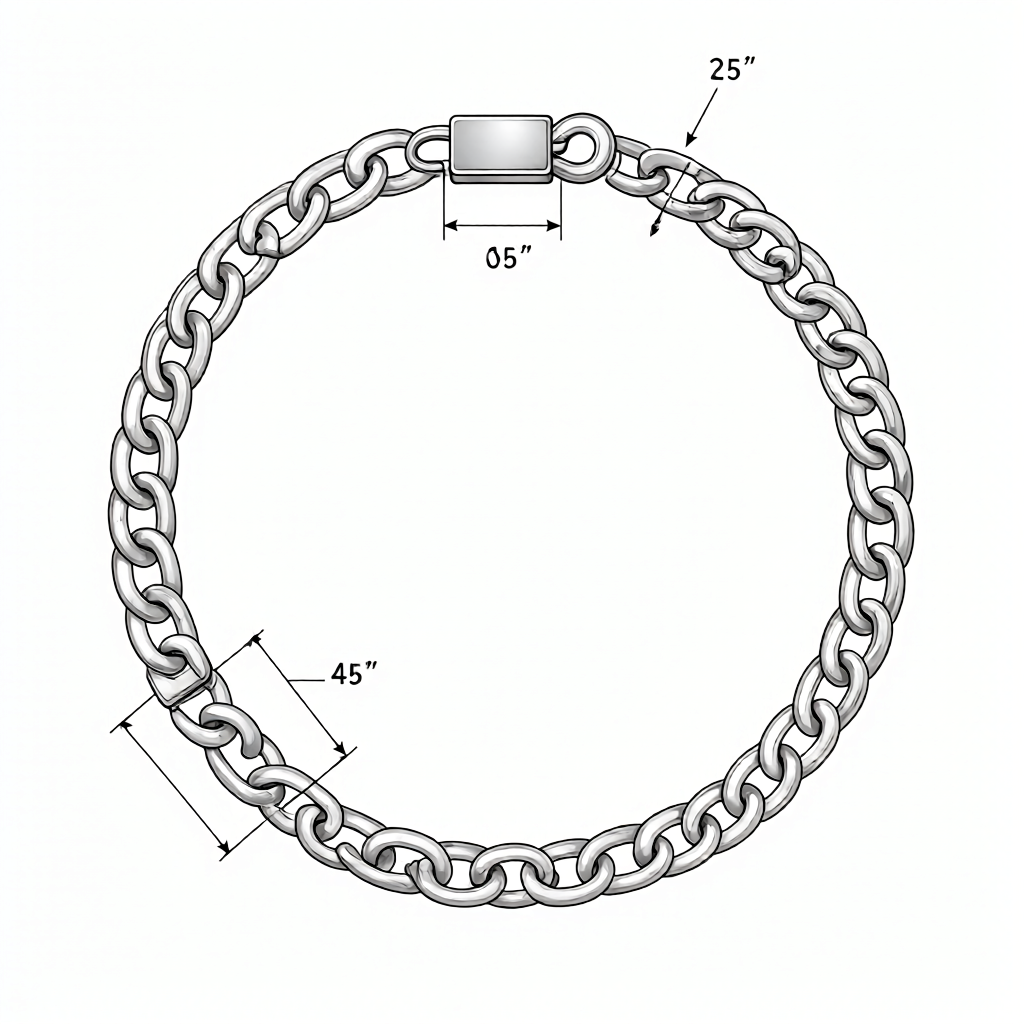
When evaluating a potential supplier or comparing products, the following specifications define the meaningful differentiators:
| Specification | Typical Range | Why It Matters |
|---|---|---|
| Chain link thickness | 1.5 mm – 3.0 mm | Thicker links resist deformation under repeated stress |
| Chain length | 10 cm – 20 cm (4″ – 8″) | Must accommodate the user’s belt loop to pocket distance |
| Clasp pull rating | 5 lbs – 20 lbs | Determines failure point; clasp should exceed chain strength |
| Metal grade (steel) | 304 or 316 stainless | 316 offers superior corrosion resistance for active users |
| Plating/coating thickness (PVD) | 3 µm – 10 µm | Thicker PVD = longer color retention under abrasion |
| Weight per unit | 8 g – 35 g | Impacts perceived value and comfort during carry |
| Nickel content | < 0.05% (nickel-free options available) | Critical for users with skin sensitivity; REACH compliance governs this |
A frequent sourcing error is selecting a chain based on appearance alone. Two chains that look identical can differ dramatically in clasp construction — one may use a stamped zinc alloy ring that snaps open under moderate force, while the other uses a forged stainless steel spring clasp rated for repeated loading. Always request a pull-force test report or evaluate a physical sample before committing to volume.
The phrase “wallet chain near me” often surfaces when buyers are looking for immediate, local access. In practice, the most reliable local options are either domestic distributors carrying established brands or direct engagement with overseas manufacturers who maintain domestic warehousing or FBA logistics partners. Understanding this distinction helps set realistic expectations around lead time, customization depth, and minimum order commitment.
Standards & Requirements — What Standards Apply to Wallet Chain Manufacturing?
Quality standards in wallet chain production fall into three categories: material standards, coating and finish standards, and compliance certifications.
Material standards. Stainless steel grades are defined by ASTM International specifications. ASTM A240 covers chromium and chromium-nickel stainless steel plate, sheet, and strip — the standard against which grade 304 and 316 are verified. When a manufacturer specifies “stainless steel,” confirming the ASTM grade prevents substitutions with lower-grade alloys that may contain insufficient chromium for corrosion resistance.
For metallic coating performance, the thickness and adhesion of PVD or electroplated layers can be evaluated against standards such as ASTM E2092, which addresses testing methods for coated metal substrates. Coating thickness directly correlates with how long a colored finish resists wear — a chain that loses its coating within months will damage brand perception regardless of how attractive the initial color is.
Compliance certifications. For markets in North America and Europe, REACH (EC 1907/2006) and RoHS (2011/65/EU) compliance are baseline expectations. These regulations restrict certain heavy metals and chemical substances in products sold to consumers. A responsible manufacturer will provide test reports from SGS or an equivalent lab confirming compliance, particularly for nickel release, which is a known contact allergen.
Quality management. ISO 9001 certification indicates that a manufacturer operates under a documented quality management system covering incoming material inspection, in-process control, and finished goods verification. For buyers managing multiple SKUs and custom specifications, this reduces variability between production batches. ISO standards provide the framework, but the real value comes from whether the manufacturer consistently applies them — something best verified through facility audits and sample evaluation.
BSCI (Business Social Compliance Initiative) audit reports are increasingly requested by European buyers and large retail chains as evidence of ethical manufacturing practices. While not a product quality standard, BSCI certification signals that the facility meets recognized social responsibility criteria.
Related Considerations — What Should You Consider When Sourcing Wallet Chains?
Evaluating manufacturer capability
Not all manufacturers have the same capabilities. The critical differentiators for wallet chain production are:
- In-house CNC machining — Chains with custom link profiles, engraved surfaces, or integrated hardware require precision machining. Manufacturers who outsource this step have less control over tolerances and lead time.
- Surface finishing capacity — Anodizing, PVD coating, and bead blasting are separate processes. A manufacturer that controls all three in-house can match colors more accurately and reduce handling damage.
- Sample turnaround — A qualified manufacturer should produce and ship samples within 5–10 business days. Longer sample times often indicate that the facility relies on external partners for core processes.
- MOQ alignment — For emerging brands and Amazon FBA sellers, MOQ flexibility is essential. Some manufacturers require 500–1,000 pieces for custom work; others accept runs starting at 300 pieces. Lower MOQs allow market testing before committing to large inventory.
- Packaging and FBA readiness — If you’re selling through Amazon or retail channels, the manufacturer should support custom retail packaging and FBA prep (polybagging, labeling, bundling).
When evaluating competitors or alternative suppliers, consider the same criteria you’d apply to other EDC components. The principles of material verification, finishing quality, and supplier communication are consistent across product categories — whether you’re sourcing a minimalist wallet or a belt loop wallet tether.
Matching chain style to wallet type
A pocket wallet anchor needs to be sized and configured differently depending on the wallet it attaches to:
- Minimalist card holders — Typically paired with shorter chains (10–12 cm) and lighter clasps. The low profile of the wallet calls for a discreet chain that doesn’t create bulk.
- Bifold wallets — Heavier and wider; require longer chains (15–20 cm) and higher-rated clasps to support the additional weight and swing dynamics.
- Tactical pocket organizers — Often integrate the chain as a structural component rather than an add-on. Custom fabrication is usually required.
This same logic applies when evaluating any EDC chain product — the attachment point, chain length, and clasp rating must be matched to the host product’s weight and form factor.
Cost drivers and pricing variables
Several factors determine the unit cost of a custom wallet chain:
- Material — Titanium costs 3–5× more than stainless steel per kilogram. Aluminum sits between the two.
- Complexity of profile — Standard round or flat links are efficient to machine. Custom link shapes,刻字 surfaces, or integrated features increase machining time.
- Finish type — Mirror polishing is labor-intensive. PVD coating requires specialized equipment. Simple bead blasting is the most cost-effective finish.
- Order volume — Per-unit cost decreases significantly between 100, 500, and 1,000+ pieces as setup costs are amortized.
- Custom packaging — Retail boxes, hang tags, and polybags add to the per-unit cost but are often necessary for market entry.
Practical steps for first-time buyers
If you’re new to sourcing wallet chains, follow this sequence:
- Define your target material, dimensions, and finish based on your wallet product line.
- Request physical samples from at least three manufacturers to evaluate clasp quality, finish consistency, and engraving depth.
- Confirm material certifications and test reports (SGS for REACH/RoHS, ASTM grade verification for steel).
- Review the manufacturer’s sample lead time and MOQ before placing a trial order.
- Place a small production run (100–300 units) to validate quality before scaling.
- For Amazon sellers, confirm FBA compliance and packaging requirements upfront to avoid fulfillment delays.
As a manufacturer, our approach to this process is straightforward: we start by understanding your wallet product and target market, then recommend the optimal material and specification combination. Our in-house CNC machining and laser engraving capabilities allow us to produce samples within 7 days, with minimum orders starting at 300 pieces. We hold ISO 9001 certification and operate a BSCI-audited facility, and all materials are SGS-tested for REACH and RoHS compliance. For buyers seeking a wallet strap or money clip chain that integrates cleanly with their existing product line, this end-to-end capability — from material selection through packaging — reduces the coordination burden that often slows sourcing projects.
Wallet Chain: Where Can You Verify the Data and Sources?
- ASTM E2092 — www.astm.org
- ISO standards — www.iso.org
- sourcing money clips for B2B buyers — topedcwallet.com
- minimalist wallet — topedcwallet.com
- Get a Free Quote → — topedcwallet.com
From article to product
Sourcing minimalist-wallets?
Tell us the format, the quantity and the date you need stock. You get material options, MOQ and a landed-cost range back within one business day.
Keep reading
More on wallet manufacturing
Sustainable Packaging for Wallet Shipments
Packaging is where sustainability claims are cheapest to make and easiest to disprove. A…
ReadTake-Back and Recycling Programmes for Wallet Brands
A take-back programme is easy to announce and hard to run. Wallets are the…
ReadNickel Release Rules for Wallet Hardware
Nickel release is the one restriction in a wallet that is decided by the…
Read
About the author
TOPWALLET Editorial Team
TOPWALLET's editorial and engineering desk writes from bench testing at the Shenzhen (Longgang) facility: pull-force and cycle testing, 13.56 MHz shielding measurements, finish trials and factory audits, rather than supplier spec sheets. Every specification in these guides is one we write on a purchase order.
Written on the floor
This article was written by our production and QC team — the people who spec tolerances, run the finishing line and inspect every batch. Where it states a capacity, a pull force or a lead time, it comes from a measurement we made, not a supplier’s catalogue. If a number here disagrees with what your own supplier told you, tell us; several of these articles started as a correction from a buyer.
See how the factory works · Inspection process · Sourcing FAQ
Sourcing minimalist-wallets?
Tell us the format, the quantity and the date you need stock. You get material options, MOQ and a landed-cost range back within one business day.