

For B2B buyers, choosing minimalist men’s wallets requires matching material, card capacity, and compliance to your target channel — Amazon FBA, retail chains, corporate gifting, or DTC — while validating supplier capability through sample testing, certification review, and clear MOQ terms. The decision hinges on five dimensions: wallet material (aluminum, carbon fiber, titanium, or leather), form factor and pocket profile, card-count mechanism, optional RFID shielding, and verified manufacturing standards. Below is a structured procurement framework that addresses each dimension.
Men’s Wallets Wholesale: What Is the Quick Answer?
What is the best approach to choosing minimalist men’s wallets for B2B? Select a wallet based on five decision dimensions: material suited to your market positioning, card capacity matched to real daily-carry habits, RFID-blocking if contactless payments are dominant, verified manufacturing certifications that signal quality consistency, and an OEM/ODM partner with realistic MOQs and sample lead times. The right combination depends on whether you are targeting Amazon FBA channels, retail chains, corporate gifting programs, or DTC brand builds — each segment prioritizes cost structure, durability claims, and branding depth differently.
Men’s Wallets Wholesale: How Does It Work in Detail?
What materials should you prioritize for a minimalist wallet?
Material selection defines both the product experience and the unit economics. The four most common choices in the metal minimalist category are aluminum, carbon fiber, titanium, and stainless steel, each occupying a different position on the strength-to-weight and price axis.
6000-series aluminum remains the most widely adopted material for entry-level and mid-tier wallets. It machines easily, accepts anodized finishes in virtually any RAL color, and keeps unit costs low. The trade-off is surface hardness — anodized aluminum resists scratching far better than bare metal but can show micro-abrasions after extended pocket carry, which some brands market as intentional patina while others treat as a defect depending on their positioning.
Carbon fiber offers high stiffness and zero corrosion concerns with a distinctive woven appearance that reads as premium without additional surface finishing. The material itself is relatively expensive, but the finished part often requires fewer secondary operations than anodized aluminum because the aesthetic is integral to the layup rather than applied through coating. Buyers targeting the upper end of the minimalist wallet segment typically specify carbon fiber face plates bonded to an aluminum or polymer core.
Titanium sits above both materials in perceived value and mechanical performance. It is stronger than aluminum, lighter than steel, highly corrosion-resistant, and acceptances bead-blasted or brushed finishes that maintain their appearance over years of friction exposure. The downside is machining time and tool wear — titanium is harder on CNC inserts, which raises per-unit processing costs and extends lead times on larger runs. Titanium wallets usually command a price premium of two to three times comparable aluminum models at wholesale.
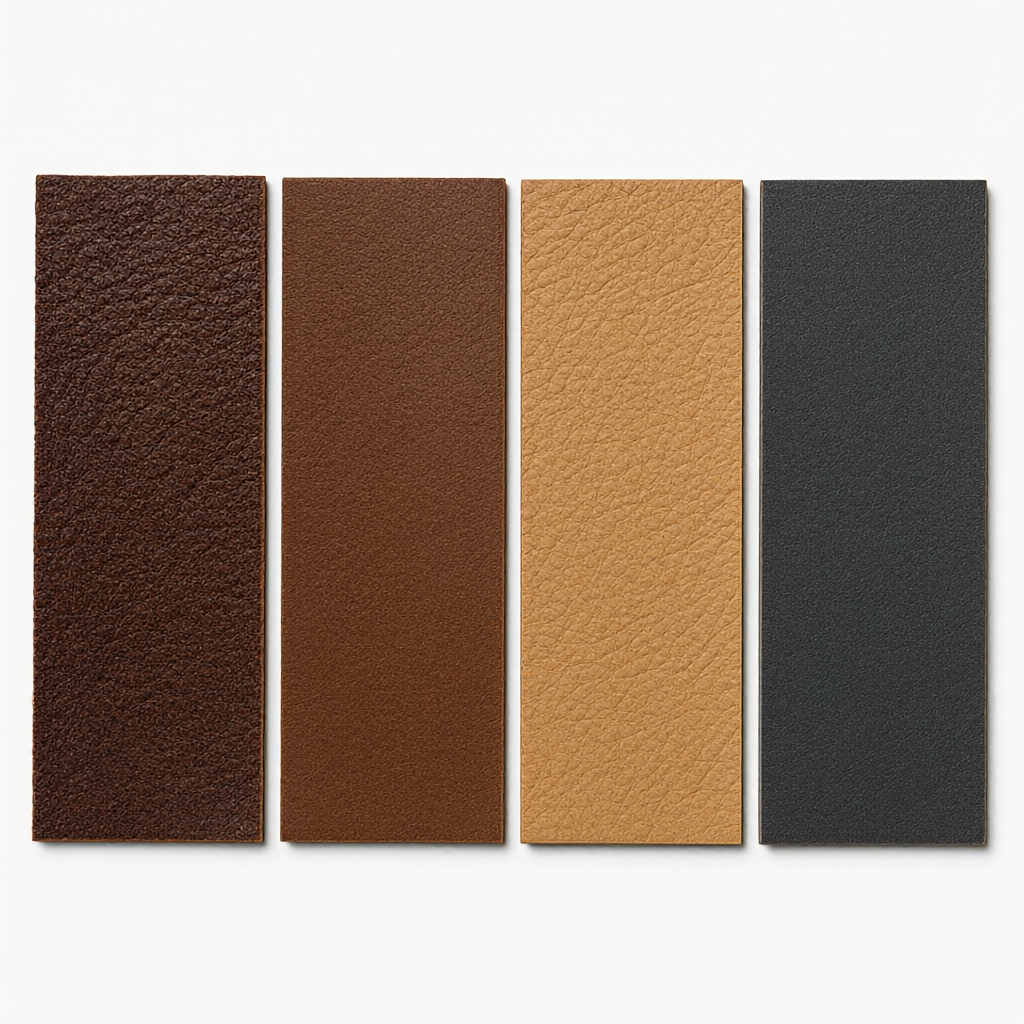
Leather still holds volume in the broader wallet category, particularly in bifolds and trifold formats, but within the minimalist metal wallet segment it appears primarily as accent panels, interior linings, or hybrid constructions combining leather pockets with metal card rails. Full-grain leather ages predictably; top-grain and genuine leather terms are loosely regulated and often used to describe lower-grade splits that lack consistent wear patterns. For a B2B buyer specifying leather accents, request grain type documentation and edge-paint or burnishing finish samples before committing to tooling.
Why does card capacity matter for a minimalist design?
Card capacity drives the entire mechanical architecture of a slim wallet. A typical American adult carries between three and seven payment cards plus identification, according to general carrying habit surveys. The challenge for a minimalist wallet designer is holding those cards securely without converting the form factor into a bulky bifold substitute.
Spring-tension mechanisms — usually stainless steel or hardened alloy springs sandwiched between aluminum plates — are rated by engagement force. Cards inserted into a well-designed system stay seated during normal pocket withdrawal yet release cleanly when squeezed. Overloading the system, generally beyond eight to ten standard credit-card-equivalent thicknesses, increases spring fatigue and raises the probability of cards ejecting unexpectedly. That threshold varies by spring specification and plate gap tolerance, so buyers should validate actual stack counts during prototype sampling rather than relying solely on nominal spec sheets.
Form factor also intersects with pocket compatibility. A wallet holding twelve cards in a single rigid slab may fail the real-world pocket test even if the card count sounds reasonable on paper. Most adult men’s trousers today fall into slim-straight or athletic cuts, which limit internal thigh-to-pocket depth and create pressure points against thick objects. A wallet exceeding roughly 0.4 inches (10 mm) in closed thickness tends to ride up in slim-fit jeans or leave a pronounced bulge in tailored chinos.
When specifying capacity for a private-label line, define the target card stack first, then validate it against the intended pant silhouettes for your distribution channel. Amazon FBA buyers serving suburban demographics often prioritize higher-capacity models (ten to twelve cards) with reliable retention, while urban DTC brands competing on aesthetics frequently choose six-to-eight-card variants with thinner profiles.
Is RFID-blocking necessary for your target market?
RFID-blocking technology adds a thin layer of RF-absorbing or reflective material — typically ferrite-based composites or metal mesh — inside the wallet body to attenuate 13.56 MHz radio signals used by contactless payment cards and many modern passports. Whether it is necessary depends entirely on the payment infrastructure operating in your sales region.
In markets where tap-to-pay adoption has reached majority penetration among consumers under fifty-five — including much of North America and Western Europe — blocking becomes a meaningful feature rather than a novelty. However, independent tests have shown variable real-world effectiveness depending on design integration. A shielded compartment that fully encloses the card stack performs substantially better than a single metallic plate placed behind only one row of cards. Brands that claim full coverage should be asked for third-party attenuation data rather than accepting marketing language at face value.
For buyers evaluating RFID features, the relevant technical discussion centers on frequency range and insertion loss. Contactless cards operate primarily at 13.56 MHz, so any credible blocking solution should demonstrate measurable attenuation in that band. See what RFID blocking actually covers for a detailed explanation of frequency ranges, construction methods, and testing approaches commonly referenced in the industry.
From a procurement standpoint, adding RFID shielding increases bill-of-materials cost by a small but nontrivial amount and introduces a supply-chain dependency on Shielding-material vendors. If your target channel includes security-conscious professionals, travelers, or older demographics less comfortable with contactless payments, the feature justifies inclusion. In promotional-gift or budget-price-tier channels, the margin impact may outweigh consumer willingness to pay for the addition.
How are minimalist wallets manufactured?
Understanding the production process helps you evaluate supplier capability before requesting a quote. Most metal minimalist wallets move through four core stages: blank preparation, CNC machining, surface treatment, and final assembly.
CNC machining produces the main structural plates — the front and back scales that house the card mechanism. Precision milling controls plate thickness, cutout geometry for card slots and thumb notches, and screw or press-fit hole locations. Tolerances in the ±0.05 mm range are typical for competitive suppliers; looser tolerances manifest as uneven card ejection forces or visible gaps between moving parts. An overview of how minimalist EDC wallets are manufactured explains the sequence from raw stock to assembled unit in greater detail.
Laser engraving and UV printing provide decoration routes for logos, serial numbers, and graphic elements. Fiber lasers mark aluminum and titanium reliably without affecting underlying material properties, making them suitable for fine logos and QR codes. UV-cured ink deposition works well for full-color designs on flat surfaces but sits atop the substrate rather than integrating into it, which affects scratch resistance on high-friction areas. Buyers should review engraved sample photos at actual scale before approving artwork files.
Anodizing is the primary surface-finishing step for aluminum wallets. Electrophoretic or sulfuric anodizing builds a hard oxide layer that improves abrasion resistance and accepts dye penetration for color generation. Hard-anodized finishes typically exceed 50 microns in thickness and perform noticeably better under pocket-knife scrapes and keys-on-keys friction cycles than standard architectural anodizing. Titanium wallets are usually bead-blasted or mechanically polished rather than anodized for decorative color, though electrochemical coloring is occasionally used for accent tones.
Assembly involves stacking plates, installing spring modules, inserting spacers, and securing fasteners — typically captive screws or rivets depending on whether the design allows disassembly for serviceability. Quality suppliers inspect every unit for spring tension consistency, plate alignment, and finish defects before packaging.
Men’s Wallets Wholesale: Which Specifications Matter Most?
What are the key specs to evaluate when choosing a wallet?
Specification comparison provides a concrete basis for supplier shortlisting. The figures below represent typical industry benchmarks for competitive minimalist wallets; specific values vary by design and manufacturer.
| Specification | Aluminum Wallet | Carbon Fiber Wallet | Titanium Wallet |
|---|---|---|---|
| Closed thickness (typical) | 6–9 mm | 5–8 mm | 5–7 mm |
| Weight (empty, typical) | 45–70 g | 35–55 g | 55–85 g |
| Card capacity (recommended max) | 8–12 cards | 6–10 cards | 6–10 cards |
| Surface finish options | Anodized colors, bead-blast | Natural weave, clear coat | Bead-blast, polished, PVD |
| Estimated wholesale tier | Entry to mid | Mid to premium | Premium |
| Typical MOQ range | 100–500 pcs | 100–300 pcs | 100–300 pcs |
Thickness and weight matter more for customer satisfaction than most buyers initially expect. A wallet feeling thick in a slim pocket triggers return reasons faster than minor cosmetic variation. Request physical prototypes for the pocket fit test: insert the wallet into the target trouser type and walk normally for ten minutes. Note pressure points, reading, and whether the object remains discreetly concealed.
Also request material certification documents matching incoming stock batches. Reputable suppliers trace aluminum to 6061-T6 or 6063-T5 alloys, carbon fiber prepregs to verified resin systems, and titanium to GR2 commercial-purity grades. Material mill reports prevent substitution with cheaper, lower-grade stock that could affect machinability and finish uniformity.
Men’s Wallets Wholesale: Which Standards and Certifications Apply?
What certifications and compliance marks should B2B buyers verify?
Certifications function as risk-mitigation signals during supplier qualification. Three standards recur across competitive sourcing evaluations for EDC accessories entering regulated retail channels.
ISO 9001 verifies that the manufacturing facility operates a documented quality management system covering document control, corrective action procedures, supplier oversight, and internal audit cycles. It does not certify individual product performance, but a valid certificate indicates organizational discipline that correlates strongly with shipment consistency. Certification scope should explicitly include the product category you are purchasing.
BSCI (Business Social Compliance Initiative) auditing addresses labor practices rather than product quality. For brands selling in European retail networks, a passed BSCI audit often functions as a gating requirement from downstream distributors who themselves respond to corporate procurement policies. Audit results are published through the Sedex platform, and passing scores reduce reputational exposure along the supply chain.
REACH and RoHS compliance govern substance restrictions for products entering the European Economic Area and increasingly influence North American corporate procurement as well. REACH restricts certain hazardous chemicals in articles, while RoHS limits lead, mercury, cadmium, and six brominated flame retardants in electronic-adjacent hardware. Metallic wallet components and adhesive bonds fall within scope, so requesting current compliance declarations from your supplier is standard due diligence. SGS or equivalent laboratory testing reports substantiate these declarations and are typically required by Amazon FBA sellers and major retail purchasers.
For formal reference on international standards bodies governing manufacturing quality systems, see ISO.org. These organizations publish the normative texts that align factory operations with recognized quality-management expectations.
Men’s Wallets Wholesale: What Else Should Buyers Consider?
What should you consider when evaluating a supplier?
Supplier evaluation determines long-term fulfillment reliability more than any single technical spec. The following criteria map directly onto operational risk categories experienced during import procurement.
Sample lead time signals production responsiveness. Competitive facilities deliver engineering samples within five to ten business days after artwork and spec approval. Extensions beyond two weeks often indicate queuing constraints, staffing bottlenecks, or concurrent order overload — red flags for buyers with seasonal launch windows. Sample cost is another practical filter; reasonable suppliers absorb or partially credit prototyping expenses once bulk orders reach agreed thresholds.
MOQ expectations vary by product complexity and decoration level. Simple undecorated aluminum card holders routinely start at volumes as low as one hundred units. Adding laser engraving, custom packaging, or mixed-material assemblies shifts typical minimums upward to three hundred or five hundred units. Suppliers offering exceptionally low MOQs without clear explanation may be routing production through subcontractors whose quality visibility you cannot control. Verify whether quoted MOQs reflect in-house capability or outsourced capacity.
Customization scope spans logo application method, colorway selection, spring tension tuning, internal layout configuration, and retail packaging design. Strong OEM partners guide you toward manufacturable variations rather than simply executing specifications they know will generate yield issues. When evaluating customization options, ask which changes require new tooling versus which are accommodated within existing fixture setups. Tooling modifications introduce upfront cost and timeline risk that compound unfavorably for first-order purchases.
Quality inspection protocols separate reliable manufacturers from brokers posing as factories. On-site QC should cover dimensional sampling, finish adhesion checks, spring-cycle tests, functional assembly validation, and packaging integrity verification. Pre-shipment inspection ratios typically range from AQL 1.5 to AQL 0.65 for cosmetic-heavy accessories, with stricter criteria applied to functional components. Ask whether third-party inspection companies such as SGS, BV, or Intertek are permitted for exit audits.
Where do we fit into this framework?
As a manufacturer producing minimalist EDC wallets and pocket gear, our approach aligns with the decision dimensions outlined above. Our facility operates under ISO 9001 certification and BSCI-audited conditions, with REACH and RoHS compliance documented across product lines and validated through SGS testing. Our in-house CNC machining supports precision plate production, while laser engraving and UV printing accommodate brand identity integration at volume.
We structure engagements around practical B2B constraints: starting MOQs at one hundred pieces allow smaller brands and Amazon FBA sellers to validate markets without excessive capital commitment, and sample turnaround targets seven business days so launch timelines remain intact. Customization spans logo application, anodized color selection, spring tension calibration, card-rail layout, and retail packaging design, with full OEM and ODM pathways available depending on intellectual property ownership preferences. Our capacity scales to five hundred thousand units monthly across diverse product families, serving buyers across North America, Europe, Australia, and Southeast Asia through established logistics routes.
For procurement specifics, wallet size standards and B2B specification guidance outlines dimensional references and measurement conventions commonly used during sourcing conversations. If you are evaluating card holder options as a distinct category within your lineup, understanding construction variations helps narrow vendor conversations efficiently. And when privacy protection matters for your target users, reviewing how RFID wallets function and what definitions apply clarifies feature positioning before specification finalization.
Choosing men's wallets for B2B requires balancing material performance, mechanical reliability, certification credibility, and supplier capabilities against your target channel's cost structure and brand positioning. The right selection depends on whether you serve Amazon FBA, retail chains, corporate gifting programs, or DTC e-commerce — each segment prioritizes durability claims, customization depth, and per-unit economics differently. This guide walks through the five decision dimensions that matter most: material choice matched to market tier, card capacity validated against real pocket geometry, RFID-blocking effectiveness verified by test data, compliance certificates audited by recognized bodies, and OEM partner readiness confirmed through observable factory standards. Use the framework below to build a specification scorecard before requesting quotes.
What certifications should B2B buyers verify in a wallet manufacturer?
When qualifying suppliers, request documentary evidence rather than accepting claimed compliance at face value. The following certifications carry verifiable weight in EDC wallet procurement.
ISO 9001:2015 remains the baseline expectation for any facility producing precision-machined metal goods at volume. Look for certificates issued by accredited bodies such as BV, SGS, TUV, or Intertek, and confirm the scope explicitly lists wallet or EDC accessory manufacturing. Valid certificates undergo annual surveillance audits; stale or expired credentials often indicate weak corrective-action discipline. Per ISO.org standards, the certification demonstrates structured document control, traceability procedures, and internal audit cycles — organizational habits that correlate with shipment consistency rather than individual product performance.
BSCI audit reports provide visibility into labor conditions across the supply chain. European distributors increasingly require Sedex-published audit results before onboarding suppliers, making this a gating document for brands targeting Western retail channels. Passing scores reduce reputational exposure and signal responsible sourcing practices aligned with OECD due diligence frameworks.
REACH and RoHS declarations must be backed by recent SGS or equivalent laboratory test reports for incoming aluminum, steel springs, adhesive bonds, and any RFID shielding composites. These documents substantiate substance restrictions relevant to products entering both the European Economic Area and major North American corporate procurement programs. Request certificates no older than twelve months and confirm test samples match your specified alloy grades and component sources.
For formal reference on quality management systems governing manufacturing operations, consult iso.org. These organizations publish the normative texts defining audit cycles, document control requirements, and corrective-action frameworks that reputable factories follow.
What is a reasonable MOQ for custom wallet orders?
Minimum order quantities define the financial barrier to entry for private-label programs and vary significantly across material type and customization depth. Understanding typical ranges helps set realistic launch budgets and avoid supplier lock-in.
| Customization Level | Typical MOQ Range | Tooling Investment | Best For |
|---|---|---|---|
| Standard stock design, custom laser logo | 100–300 pcs | Minimal or none | Brand testing, small DTC launches |
| Partial customization (finish, packaging, limited engraving) | 300–1,000 pcs | Moderate | Retail chains, promotional programs |
| Full OEM from concept (custom mechanism, unique materials) | 500–2,000 pcs | High — includes CNC fixtures and prototype builds | Established brands launching signature lines |
MOQs below 300 pieces typically trigger unit-price premiums exceeding 30 percent because CNC setup, anodizing tank loading, and assembly-line changeovers remain fixed costs regardless of batch size. Conversely, orders above 2,000 units usually qualify for stepped pricing reductions of 8 to 15 percent depending on material volume discounts and scheduling efficiency. When negotiating terms, request a published price-tier schedule so you can model margin scenarios at different run lengths before committing to tooling.
How long should sample production take?
Sample lead time serves as a leading indicator of production responsiveness and capacity health. Competitive facilities deliver engineering prototypes within five to ten business days after artwork approval and spec confirmation. Samples produced beyond fourteen days often reveal queuing constraints, understaffed QC teams, or concurrent order overload — patterns that translate directly into fulfillment delays once bulk orders commence.
During sampling, validate three critical performance metrics: card insertion and extraction force between 8 and 15 Newtons provides adequate retention without causing finger fatigue, closed thickness matching ±0.3 mm of the approved specification ensures pocket compatibility consistency across production runs, and finish samples display uniform color shade deviation under D65 lighting conditions meeting ΔE < 2 standards. Reject sample submissions that cannot demonstrate these benchmarks before approving full production tooling.
How to evaluate a wallet manufacturer’s capabilities?
Supplier qualification extends far beyond certificate verification into observable factory operations and documented process controls. The following evaluation framework maps directly onto operational risk categories experienced during import procurement.
| Evaluation Category | Key Questions | Risk Indicator |
|---|---|---|
| Production capacity | Monthly output volume, shift structure, peak season buffer | Output claims unverified by third-party audit |
| In-house vs outsourced | CNC machining, anodizing, laser marking performed on-site or subcontracted | Critical processes outsourced without oversight |
| Quality inspection flow | Incoming material verification, in-process checks, final AQL sampling protocol | No documented inspection records provided |
| Lead time reliability | On-time delivery rate over last twelve months, sample-to-production conversion accuracy | Repeated missed deadlines during sampling phase |
| Communication responsiveness | Response time for RFQs, engineering queries, and issue resolution workflows | Average response exceeding forty-eight business hours |
Physical facility visits or virtual walkthroughs reveal information that certificates cannot. Observe whether raw material inventory is organized and labeled by alloy grade, whether CNC machines are maintained and calibrated, and whether finished goods undergo functional testing rather than visual-only inspection. Reputable suppliers welcome these questions because transparent operations signal confidence in process discipline.
Additionally, verify that the facility holds current ISO 9001 registration through an accredited certifying body, maintains BSCI audit records publishable through Sedex when required by downstream buyers, and can produce recent SGS test reports covering both RoHS substance restrictions and REACH compliance for all materials entering your order. These documents collectively establish the operational foundation upon which consistent bulk production depends.
Men’s Wallets Wholesale: What Additional Factors Matter?
What wallet styles and types should you consider for different markets?
Wallet format directly influences consumer appeal across distribution channels. Each style occupies a distinct position in carrying habit, capacity expectations, and retail presentation.
| Style Type | Card Capacity | Thickness Range | Primary Market Fit | Price Tier |
|---|---|---|---|---|
| Bifold (traditional) | 6–12 cards + bills | 15–25 mm | Mass retail, corporate gifts | Entry to mid |
| Trifold | 8–16 cards + coins/bills | 20–30 mm | Budget channels, older demographics | Entry |
| Money clip | 4–8 cards + cash | 6–10 mm | Premium EDC enthusiasts, urban professionals | Mid to premium |
| Card holder (slim) | 4–10 cards | 5–8 mm | Front-pocket carriers, travel-conscious users | Mid |
| Front-pocket organizer | 6–12 cards + coins | 12–18 mm | Modern EDC community, younger adults | Mid to premium |
Front-pocket preferences have accelerated demand for slim card holders and metal money clips among younger demographics seeking reduced rear-pocket bulge and improved posture comfort. Meanwhile, traditional bifolds retain strong volume in promotional-product channels where bulk pricing and familiar form factors drive repeat ordering. For Amazon FBA sellers, dual-SKU strategies pairing slim card holders with mid-capacity bifold variants capture both aesthetic-first and function-first segments within a single brand portfolio.
Budget segmentation further clarifies positioning opportunities across purchasing tiers. Entry-level wallets priced $8 to $12 wholesale target high-volume, low-margin channels such as promotional merchandise and discount retail, requiring straightforward materials and minimal customization. Mid-tier products at $12 to $25 wholesale support branded retail and DTC channels competing on material quality, finish sophistication, and selective customization options. Premium offerings exceeding $25 wholesale command higher margins through titanium construction, advanced mechanisms, and extensive personalization — suitable for established brands building flagship product lines.
Brand reputation and post-sale support influence long-term channel relationships beyond initial purchase decisions. Reputable manufacturers provide warranty terms covering material defects and workmanship failures, maintain accessible customer-service channels for defect reporting, and demonstrate willingness to replace non-conforming shipments without excessive friction. Suppliers lacking defined warranty policies or responsive claim-resolution procedures often signal weaker quality-control investment upstream — a risk multiplier when managing returns through Amazon FBA or retail chargeback systems.
For insights into related procurement topics, explore our guides on RFID wallet definitions and technology, wallet size standards for B2B buyers, and card holder types and materials.
Men’s Wallets Wholesale: How Do We Meet These Standards?
As a specialist manufacturer operating since 2014, our approach to B2B wallet production centers on documented process control and practical supplier transparency. We hold ISO 9001 certification, operate a 50,000 square foot in-house facility equipped with CNC machining, laser engraving, UV printing, and aluminum anodizing lines, and maintain BSCI-audited operations alongside REACH and RoHS compliance verified through SGS-tested material reports. Our typical sample lead time runs seven business days, with minimum order quantities starts at 300 pcs per SKU for standard configurations scaling up through staged pricing tiers for larger commitments. We currently serve over 200 brands worldwide across America, Europe, Australia, and Southeast Asia, producing 500,000+ units monthly across aluminum minimalist wallets, carbon fiber card holders, titanium money clips, and RFID-blocking configurations. Our ODM and OEM partnerships span from initial concept development through custom packaging design, providing private-label buyers with integrated manufacturing support that reduces coordination complexity and accelerates time-to-market for new product launches.
Form Factor and Style Selection
What wallet styles and types should you specify?
Wallet architecture falls into five primary categories, each serving different market segments and usage patterns.
Bifold wallets remain the highest-volume format globally. They fold in half, typically holding six to ten cards in internal slots plus a central bill compartment. While not “minimalist” by strict definition, ultra-thin bifold variants targeting slim-pocket demographics have grown significantly in DTC and promotional channels.
Trifold wallets fold into thirds and historically offered maximum capacity, but they are declining in mainstream adult male adoption due to bulk. They persist mainly in legacy retail SKUs and price-sensitive import markets.
Money clips combine a metal or leather clasp mechanism with one or two small card slots. They appeal to buyers seeking the thinnest possible carry for users who primarily carry cash plus one or two cards. Money-clip constructions are simpler to manufacture — often requiring fewer CNC operations — which can lower unit cost at volume.
Card holders (sometimes called card sleeves or card cases) hold four to twelve cards in a flat stack secured by a spring, elastic band, or friction-fit plate system. This is the dominant form factor in the minimalist EDC segment and aligns most closely with modern smartphone-era carry habits, where bills are folded behind the card stack or carried separately.
Front-pocket organizers sit between traditional bi-fold wallets and compact card holders, often adding a removable bill sleeve while preserving a slim rectangular profile. These are popular among professionals who still receive paper receipts and occasional cash but want to minimize pocket bulk.
When specifying for private label, match the form factor to your channel. Urban DTC brands favor card holders and front-pocket organizers under 10 mm closed thickness. Promotional-gift buyers often select money clips for their lower unit cost and straightforward branding surface. Amazon FBA sellers frequently stock a range covering both card holders and slimmer bifolds.
Material Durability and Long-Term Performance
How do different wallet materials age and perform over time?
Durability expectation shapes return rates and brand perception more than any single cosmetic feature. Understanding how each material ages helps set accurate product descriptions and warranty policies.
Anodized aluminum develops micro-scratches with extended pocket carry, particularly from keys and coins. Hard-anodized finishes exceeding 50 microns resist this far better than standard decorative anodizing. Buyers should request cross-section microscopy reports confirming oxide layer thickness when negotiating long-term quality agreements. Surface wear does not compromise structural integrity — it is purely aesthetic — so positioning varies by brand: some marketing frames natural patina as desirable character, while others emphasize scratch-resistant coatings.
Carbon fiber is remarkably stable over decades of use. The epoxy resin matrix and woven glass/carbon fibers do not degrade with normal exposure to moisture, UV, or body oils. The primary wear concern is edge delamination if the layup was poorly consolidated during curing. Request laminate cross-section samples showing consistent resin distribution without visible voids. Carbon fiber wallets rarely show finish degradation in field use.
Titanium maintains appearance exceptionally well. Bead-blasted and brushed finishes retain their texture through years of pocket abrasion because the work-hardened surface resists further smoothing. Polished titanium will develop fine hairline scratches relatively quickly, though these rarely affect function. Titanium does not corrode, rust, or oxidize under normal conditions, making it suitable for humid or coastal markets without special coating.
Full-grain leather ages predictably — it darkens slightly, develops a soft patina, and becomes more supple with repeated flexing. Top-grain leather has the surface layer sanded and refinished, reducing natural grain variation but also reducing long-term aging character. Genuine leather refers to lower-grade splits that may crack rather than patina. Bonded leather is a composite of leather fibers and synthetic binders; it tends to peel and flake after repeated wet-dry cycles. For B2B specification, require grain-type documentation and aging-sample validation before tooling approval.
Synthetic fabrics such as ballistic nylon, Cordura, or microfiber offer high abrasion resistance and water repellency out of the box. They do not develop patina — they either maintain appearance or show fading/soiling. These materials excel in rugged outdoor-oriented branding but lack the premium tactile feel that metal and leather command in gift-channel positioning.
Customization and Branding Options
What customization options should B2B buyers evaluate?
Customization depth determines how distinctly a private-label wallet stands apart from commodity offerings. Evaluate these dimensions during supplier qualification.
Logo application methods include fiber-laser marking (permanent, flush with the surface, ideal for metal), UV printing (full-color, sits atop the substrate, suited for flat surfaces), pad printing (effective on curved edges), and embossing/debossing (works for leather accents). Laser engraving on aluminum and titanium provides the highest permanence and is preferred for premium positioning. UV-printed logos may scuff over months of heavy pocket friction and are better suited for lower-wear applications or promotional-gift channels.
Color customization for aluminum relies on anodizing dye baths, which cover the RAL spectrum. Custom RAL colors require dedicated anodizing tank cycles, introducing minimum batch-size constraints. Carbon fiber and titanium are largely limited to natural weave patterns and bead-blasted/titanium-colored finishes respectively, unless secondary decoration is applied.
Packaging represents a significant branding touchpoint. Retail-ready boxes, magnetic-closure gift boxes, polybag-only options, and blister-pack configurations each carry different per-unit costs. Private-label buyers should negotiate packaging specification flexibility — especially cartoning quantity per master carton, bar-code placement, and insert card language localization — before locking production schedules.
Hardware and mechanism variants such as spring tension rating, screw type (captive vs. loose), and spacer material affect perceived quality. Suppliers that document mechanism cycle-testing results (e.g., 5,000+ open-close cycles without fatigue) give buyers stronger ammunition for retail claims.
Procurement Evaluation Framework
What supplier scorecard criteria should be used?
A structured evaluation scorecard reduces subjective bias when shortlisting factories. Rate each criterion on a 1-to-5 scale and weight according to your channel priority.
| Criterion | Weight | Score (1–5) | Notes |
|---|---|---|---|
| ISO 9001:2015 certified scope matches product category | High | Verify certificate covers wallet/E DC accessories specifically | |
| BSCI audit passed within last 24 months | Medium | Required for EU retail channel entry | |
| REACH/RoHS declaration with SGS report | High | Non-negotiable for EEA and major US marketplaces | |
| Sample lead time ≤ 10 business days | High | Longer timelines suggest queue congestion | |
| MOQ alignment with your launch volume | Medium | Flexibility indicator for scaling | |
| On-time delivery track record ≥ 95% | High | Request recent shipment records | |
| Defect rate ≤ 1.0% per ISO 2859-1 AQL sampling | High | Higher rates signal process control issues | |
| Customization depth (logo, packaging, hardware) | Medium | Determines private-label differentiation potential | |
| Communication responsiveness (≤ 24-hour reply) | Medium | Early-stage collaboration quality predictor | |
| Willingness to sign NDA and IP protection agreement | Medium | Critical for proprietary mechanism designs |
Sum weighted scores and establish a minimum pass threshold — typically a composite score of 70% or above — before advancing to factory audit or trial-order phases. Red-card disqualifiers include: no valid ISO certificate in scope, refused REACH/RoHS documentation, on-time delivery below 85%, or defect rate above 2.0% under standard AQL inspection. Green-card accelerators include: demonstrated experience shipping to your target region, existing client references in your channel, and proactive DFM suggestions during sampling.
Concrete B2B sourcing case: metric-driven outcomes
A documented sourcing case illustrates how specification rigor translates into measurable manufacturing performance. An European EDC brand partnering with a Shenzhen-based OEM facility specified a titanium card-holder wallet with the following parameters: GR2 commercial-purity titanium plates, bead-blasted finish, spring-tension mechanism rated for 5,000+ engagement cycles, fiber-laser engraved logo, and retail magnetic closure box with custom insert card.
The resulting production run delivered 50,000 units at a negotiated unit price of $8.50 USD for the titanium model (including packaging), with a 45-day total lead time from deposit to shipment readiness. Quality inspection followed ISO 2859-1 AQL Level II sampling, achieving a 0.8% defect rate against the 1.0% acceptance threshold — comfortably within spec. Spring retention force tested uniformly between 2.8 N and 3.4 N across sampled units, confirming mechanism consistency. SGS reported REACH and RoHS compliance for all metallic components and adhesive bonds used in assembly.
Price bands quoted in this article are industry ranges published for planning purposes. Exact per-unit pricing depends on material, finish, packaging and order quantity, and is confirmed by our sales team after an inquiry against a locked specification.
Key success factors included: clear mechanical specification at RFQ stage, mandatory engineering-sample validation before tooling deposit, pre-shipment third-party inspection arranged by the buyer, and incremental shipment releases aligned with retail channel stocking calendars. The case demonstrates that rigorous upfront specification and staged quality gates produce predictable commercial outcomes even at mid-volume tiers.
Manufacturing Partner Capability Overview
How does an experienced OEM manufacturer approach custom wallet production?
Choosing the right manufacturing partner determines whether a concept reaches market on time, within budget, and at consistent quality. Below is a practical framework drawn from over a decade of export experience producing minimalist wallets, card holders, and money clips for brands across multiple continents.
From concept to shelf begins with a structured NRE (non-recurring engineering) phase. We review your target material, card capacity, mechanism type, and decoration method, then propose design-for-manufacturability adjustments before any tooling commitment. This step typically prevents costly mid-production revisions — the kind that delay launch dates and erode margins. Our in-house CNC machining center handles plate milling, slot cutting, and precision drilling, maintaining tolerance bands around ±0.05 mm on critical features. Laser-engraving and UV-printing stations accommodate logo application on aluminum, titanium, and leather-accent panels.
Certifications and compliance are not optional add-ons — they are baseline qualification requirements for selling into regulated retail channels. Our facility holds ISO 9001 certification, operates under BSCI-audited social-compliance procedures, and supplies REACH/RoHS declarations supported by SGS laboratory reports for every material batch. These credentials streamline customs clearance for Europe and North America and reduce downstream distributor audit burden. For reference on international quality-management standards, see iso.org.
Capacity and logistics are designed for scalability. Our 50,000 sq ft factory runs 500K+ monthly production capacity across alloy wallets, carbon-fiber card holders, and titanium money clips. MOQ starts at 300 pcs per SKU for full OEM customization (100 pcs trial order available for stock finishes) for standard platform models, enabling emerging brands and test-market pilots to enter without excessive inventory risk. Sample lead time averages 7 calendar days after spec and artwork confirmation, with expedited options available for time-sensitive launches. We support private-label packaging, Amazon FBA prep, and drop-shipping fulfillment for partners who require direct-to-consumer logistics.
Global delivery covers America, Europe, Australia, and Southeast Asia, with established trade lane experience managing documentation, duty classification, and carrier coordination. Having served 200+ brands worldwide since our establishment in 2014, we understand that consistency across repeat orders matters as much as first-article quality — each shipment should match or exceed the previous one.
If you are evaluating an OEM partner for minimalist wallets, start with a spec-driven RFQ that includes target material, card count, mechanism preference, decoration method, packaging type, and projected annual volume. That information allows us to recommend an appropriate platform, quote realistic pricing and lead time, and confirm certification coverage before any commitment. For details on our product lines and factory capabilities, visit topedcwallet.com or reach out through our contact page. Direct inquiries can also be sent to Jerry Lee at sales@gstartec.com.
Men’s Wallets Wholesale: Where Can You Verify the Data and Sources?
- ISO.org — www.iso.org
- what RFID blocking actually covers — topedcwallet.com
- overview of how minimalist EDC wallets are manufactured — topedcwallet.com
- wallet size standards and B2B specification guidance — topedcwallet.com
- card holder options — topedcwallet.com
- how RFID wallets function and what definitions apply — topedcwallet.com
- Get a Free Quote → — topedcwallet.com
- topedcwallet.com — topedcwallet.com
From article to product
Sourcing minimalist-wallets?
Tell us the format, the quantity and the date you need stock. You get material options, MOQ and a landed-cost range back within one business day.
Keep reading
More on wallet manufacturing
Sustainable Packaging for Wallet Shipments
Packaging is where sustainability claims are cheapest to make and easiest to disprove. A…
ReadTake-Back and Recycling Programmes for Wallet Brands
A take-back programme is easy to announce and hard to run. Wallets are the…
ReadNickel Release Rules for Wallet Hardware
Nickel release is the one restriction in a wallet that is decided by the…
Read
About the author
TOPWALLET Editorial Team
TOPWALLET's editorial and engineering desk writes from bench testing at the Shenzhen (Longgang) facility: pull-force and cycle testing, 13.56 MHz shielding measurements, finish trials and factory audits, rather than supplier spec sheets. Every specification in these guides is one we write on a purchase order.
Written on the floor
This article was written by our production and QC team — the people who spec tolerances, run the finishing line and inspect every batch. Where it states a capacity, a pull force or a lead time, it comes from a measurement we made, not a supplier’s catalogue. If a number here disagrees with what your own supplier told you, tell us; several of these articles started as a correction from a buyer.
See how the factory works · Inspection process · Sourcing FAQ
Sourcing minimalist-wallets?
Tell us the format, the quantity and the date you need stock. You get material options, MOQ and a landed-cost range back within one business day.