

What is a Money Bag?
A money bag in the modern EDC (Everyday Carry) context refers to a compact, minimalist pouch or carrier designed specifically for holding cash, bills, and sometimes cards. Unlike traditional bulky wallets, money bags prioritize slim profiles, quick access, and secure retention of paper currency. The term is sometimes used interchangeably with money clip wallets or cash carriers, particularly in B2B sourcing and private-label markets.
At its core, a money bag solves one practical problem: carrying the essentials — bills, a few cards, maybe coins — without the bulk of a full-size bifold. For buyers, this means a product that fits in front or back pockets, resists wear, and can be branded or customized for retail or promotional use.
How Does a Money Bag Work?
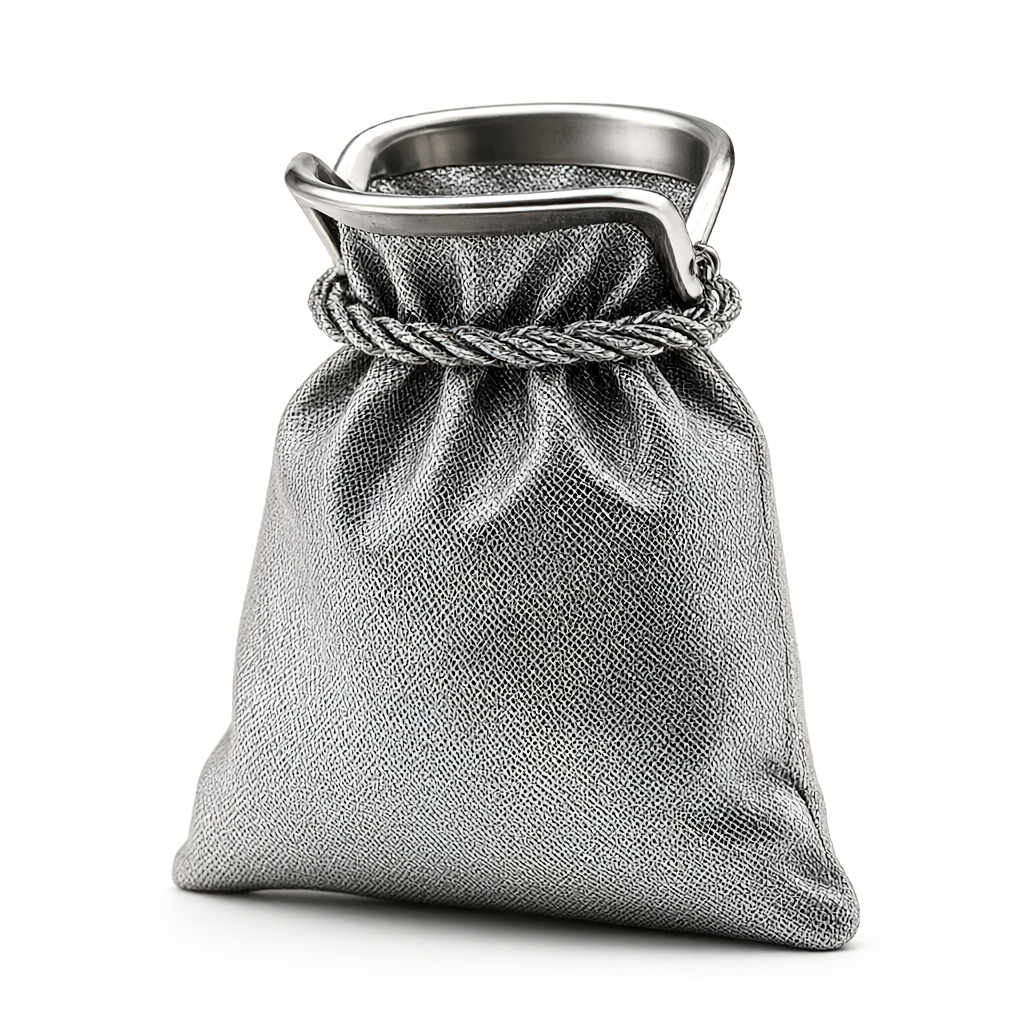
Money bags rely on mechanical retention rather than folding or zipping. The most common mechanisms include:
- Spring-loaded clips — A metal or polymer clip applies consistent pressure to hold bills together. The tension must balance between grip security and the ability to fan out bills for counting.
- Magnetic closures — Rare-earth magnets embedded in the body provide a snap-close action while maintaining a low profile. This is more common in hybrid money-bag designs that also accommodate cards.
- Strap-and-loop systems — Elastic or leather straps wrap around a stack of bills. These are less common in metal EDC products but appear in fabric or canvas money pouches.
- Slotted inserts — Some designs feature dedicated bill slots inside a slim aluminum or carbon fiber body, similar to card holders but oriented for cash storage.
The mechanism choice directly affects user experience. A buyer evaluating money bags should consider whether the target end-user prioritizes speed of access (clip or magnetic), security (strap or enclosed slot), or capacity flexibility (adjustable clip that accommodates varying bill counts).
For brands evaluating money-clip-style products alongside other EDC categories, understanding retention mechanisms is essential — it influences both product performance and manufacturing complexity. More details on these considerations are covered in our sourcing money clips guide.
What Are the Key Specifications for a Money Bag?
When specifying a money bag for B2B procurement, several dimensions and parameters define the product:
| Specification | Typical Range | Notes |
|---|---|---|
| Dimensions | 110–120 mm × 70–80 mm × 8–15 mm | Varies by material and mechanism |
| Weight | 30–80 g | Heavier for solid aluminum; lighter for titanium or carbon fiber |
| Capacity | 1–12 bills + 0–6 cards | Depends on internal layout |
| Material options | Aluminum alloy, titanium, carbon fiber, stainless steel, leather, fabric | Material selection drives cost and finish options |
| Retention mechanism | Spring clip, magnet, strap, slot | Determines functional class |
| Surface finish | Anodized, brushed, polished, bead-blasted, laser-engraved | Affects perceived quality and branding capability |
| MOQ | 300–500 pcs | Lower MOQ possible for standard designs; custom tooling raises minimum |
Material selection is the single biggest cost driver. Aluminum alloy wallets offer the best balance of weight, durability, and price point for most B2B programs. Titanium provides a premium alternative at a higher unit cost. Carbon fiber is lightweight and visually distinctive but requires specific lamination processes that not all manufacturers handle in-house.
For buyers comparing money bags against other minimalist EDC products, the best minimal wallets for B2B sourcing guide covers overlapping specification frameworks.
What Standards Apply to Money Bags?
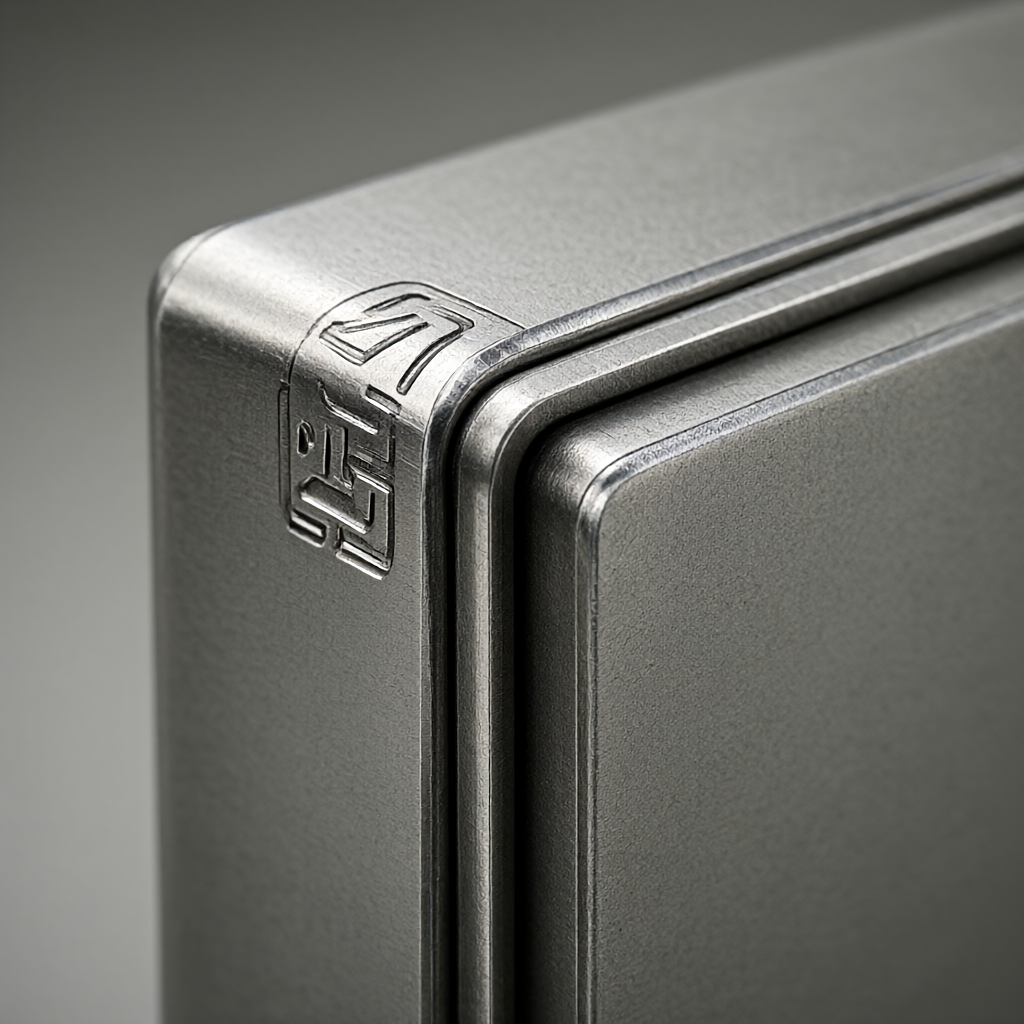
Money bags and cash carriers are subject to several regulatory and quality frameworks, depending on the target market:
- RFID-blocking compliance — If the product includes RFID-shielding layers, it should meet recognized interference standards. Buyers should request test reports from the manufacturer rather than accepting claims at face value.
- RoHS / REACH compliance — Required for products sold in the EU and increasingly expected by North American retailers. This governs restricted substances in metals, coatings, and any polymer components.
- ISO 9001 — Quality management certification for the manufacturing facility. Indicates systematic processes for design control, incoming inspection, and finished-goods verification.
- BSCI — Social compliance audit for manufacturing facilities. Relevant for buyers in Europe and large North American retailers with supplier-code-of-conduct requirements.
- SGS testing — Third-party material verification for heavy metals, nickel release, and coating adhesion. Particularly important for products with skin-contact exposure.
When evaluating suppliers, buyers should confirm which certifications are facility-level versus product-level. ISO 9001 and BSCI apply to the factory; RoHS/REACH and SGS reports apply to specific materials and finishes used in production.
The business card holder near me sourcing guide discusses overlapping quality-assurance expectations that apply across EDC product categories.
What Should You Consider When Sourcing Money Bags?
Several decision factors separate a well-sourced money bag program from a problematic one:
1. Retention mechanism durability
Spring clips lose tension over repeated use. Magnets can degrade or dislodge. Ask manufacturers for cycle-test data — a typical benchmark is 5,000+ open/close cycles without performance degradation. For products evaluated alongside card holders, the best card holder selection guide covers durability evaluation methods that apply across minimalist carry products.
2. Bill-count flexibility
A money bag that only holds a thin stack of bills frustrates users who carry larger denominations or mix bills with cards. Verify that the design accommodates the intended capacity range through prototype testing with actual currency.
3. Surface finish longevity
Anodized aluminum finishes can scratch; polished surfaces show wear faster than bead-blasted or brushed textures. For promotional or corporate-gift applications where the product may see varied handling, recommend more durable finish options and request abrasion-test documentation.
4. Branding method compatibility
Laser engraving works on metal and carbon fiber surfaces with high precision. UV printing suits certain polymer substrates. Silk-screening requires flat, accessible areas. The chosen branding method affects both aesthetic result and per-unit cost — especially at lower volumes.
5. Packaging and retail readiness
Money bags for retail distribution require hang-tabs, window packaging, or insert cards. Confirm that the manufacturer can produce or source compliant packaging and that the product survives standard drop-test protocols without damage. Our procurement guide to evaluating men’s minimalist EDC wallets includes packaging considerations relevant to this category.
6. Lead time and tooling
Standard designs with no custom tooling can move from sample approval to production in days. Custom mechanisms, engravings, or packaging designs introduce tooling lead time. Establish realistic timelines early, particularly when aligning with retail seasonal windows or promotional event deadlines.
7. Compliance documentation
Request material test reports, RoHS/REACH declarations, and any relevant certification copies before placing bulk orders. A manufacturer that cannot produce these documents quickly is a procurement risk, regardless of sample quality.
How We Approach Money Bag Manufacturing?
As a manufacturer working with EDC brands, Amazon sellers, and distributors, our approach to money bags centers on practical specification, reliable retention mechanisms, and scalable customization. We evaluate each program by understanding the target use case — whether it’s a promotional corporate gift, a private-label retail product, or an Amazon FBA SKU — and then align material, mechanism, and finish choices to that context.
Our facility handles in-house CNC machining for metal bodies, laser engraving for branding, and anodizing for surface finishing, which keeps quality control tight across the production chain. We work with aluminum alloys, titanium, and carbon fiber substrates, and we verify material compliance against RoHS and REACH requirements before production begins.
For buyers evaluating whether a money bag fits their product line, we recommend starting with a clear specification brief: target dimensions, capacity requirements, mechanism preference, material, finish, branding method, and annual volume range. With that information, the sourcing conversation becomes specific rather than exploratory.
Money Bag: Where Can You Verify the Data and Sources?
- sourcing money clips guide — topedcwallet.com
- best minimal wallets for B2B sourcing guide — topedcwallet.com
- business card holder near me sourcing guide — topedcwallet.com
- best card holder selection guide — topedcwallet.com
- procurement guide to evaluating men’s minimalist EDC wallets — topedcwallet.com
- Get a Free Quote → — topedcwallet.com
From article to product
Turning this into a product?
Most of what is written here is the difference between a sample that works and one that does not. We can build either — the useful one costs the same.
Keep reading
More on buying guides
wallet with trigger
How Does a Trigger Wallet Work? What Is the Pop-Up Mechanism? The core of…
Readbest bifold wallet for women
What Is a Bifold Wallet? The term “bifold” refers to the fold: the wallet…
ReadMen’s trifold wallets with zipper compartments vs. bifold
At a Glance The three dominant men’s wallet formats differ in panel count, depth,…
Read
About the author
TOPWALLET Editorial Team
TOPWALLET's editorial and engineering desk writes from bench testing at the Shenzhen (Longgang) facility: pull-force and cycle testing, 13.56 MHz shielding measurements, finish trials and factory audits, rather than supplier spec sheets. Every specification in these guides is one we write on a purchase order.
Written on the floor
This article was written by our production and QC team — the people who spec tolerances, run the finishing line and inspect every batch. Where it states a capacity, a pull force or a lead time, it comes from a measurement we made, not a supplier’s catalogue. If a number here disagrees with what your own supplier told you, tell us; several of these articles started as a correction from a buyer.
See how the factory works · Inspection process · Sourcing FAQ
Turning this into a product?
Most of what is written here is the difference between a sample that works and one that does not. We can build either — the useful one costs the same.