

What Is Wallet Size?
Wallet size refers to the physical dimensions — width, height, and thickness — along with the overall form factor category (bifold, trifold, cardholder, slim wallet, or pocket organizer) that defines how much a wallet can hold and how it sits in a pocket. In the EDC and private-label marketplace, wallet size is measured in inches or millimeters and is determined by three interrelated variables: the material used, the construction method, and the intended card or cash capacity.
For B2B buyers, understanding wallet size is not a cosmetic detail — it is a core specification that affects packaging, retail display requirements, fulfillment logistics, end-user comfort, and product positioning. A wallet that fits an Amazon FBA prep box differently because of a two-millimeter dimension shift can change shipping costs and shelf appeal. That is why procurement teams treat wallet dimensions as a sourcing decision equal in importance to material selection or finish.
Detailed Explanation
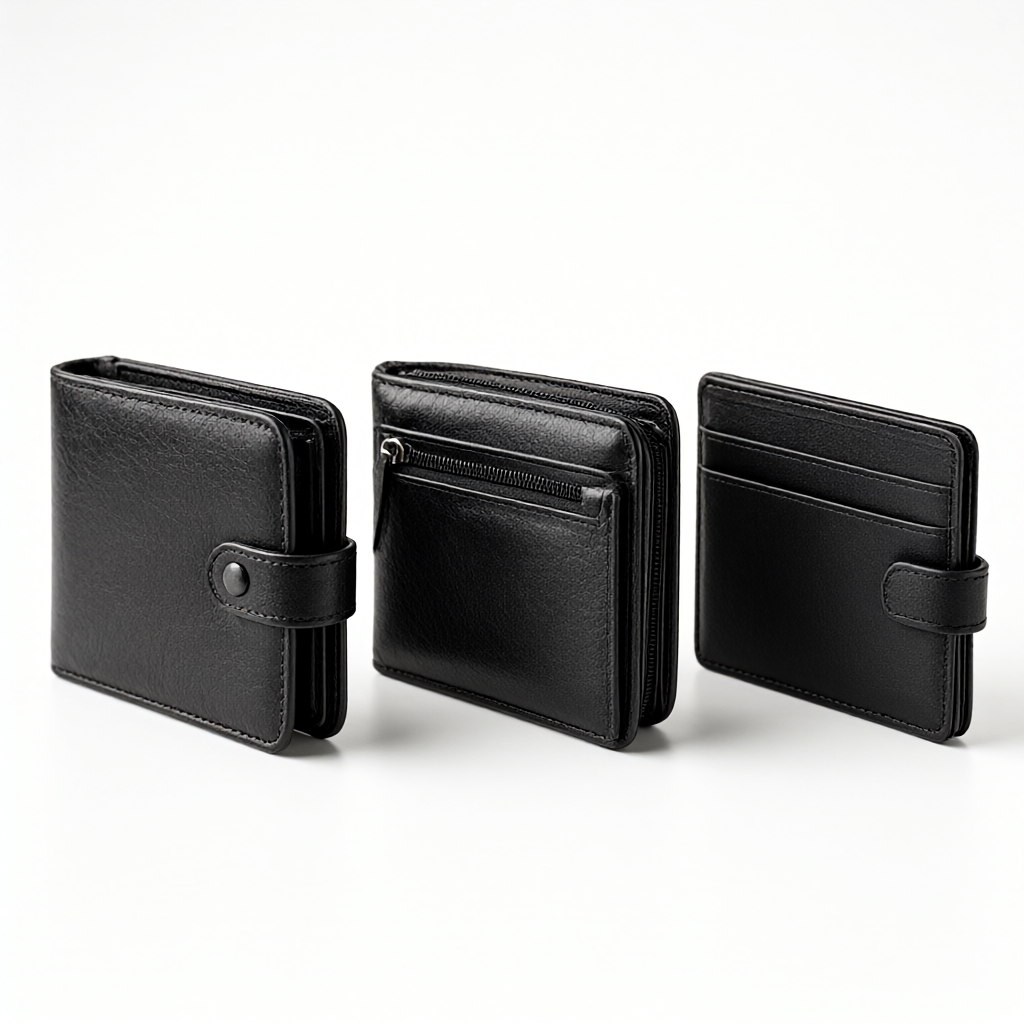
How are wallet dimensions measured?
Wallet size follows a standardized measurement convention: height × width × thickness, presented in either inches or millimeters depending on regional market norms. Height is the longer vertical edge when the wallet is closed; width is the shorter horizontal dimension; and thickness is the depth — often the most variable metric because it depends directly on internal components, material gauge, and card capacity.
In practice, buyers should expect some variance between suppliers even for identically named products. One manufacturer’s “standard bifold” might measure 4.5 × 3.5 inches while another lists 4.3 × 3.4 inches. This variation reflects differences in die-cut tooling, material stretch during forming, and whether edge curling or folding allowances are included in the published number. The key is not expecting universal precision but asking for documented measurements from your supplier before committing to volume orders.
What determines the main wallet form factors and their dimensions?
The four dominant wallet categories in the EDC space each carry recognizable dimensional ranges:
| Form Factor | Typical Height | Typical Width | Typical Thickness Range |
|---|---|---|---|
| Standard Bifold | 4.0 – 4.5 in | 3.2 – 3.8 in | 0.4 – 0.8 in |
| Trifold | 4.0 – 5.0 in | 3.5 – 4.5 in | 0.6 – 1.0 in |
| Cardholder / Slim Wallet | 3.5 – 4.5 in | 2.5 – 3.5 in | 0.2 – 0.5 in |
| Minimalist Metal Wallet | 3.5 – 4.2 in | 2.4 – 3.2 in | 0.25 – 0.6 in |
| Money Clip | 3.0 – 4.0 in | 2.0 – 3.0 in | 0.15 – 0.35 in |
| Pocket Organizer | 4.0 – 5.5 in | 3.0 – 4.5 in | 0.5 – 1.2 in |
A bifold remains the largest common category. It folds in half and traditionally holds bills in a central sleeve plus cards along the interior edges. A trifold doubles the internal capacity with an extra fold, which adds both width and thickness. A cardholder — sometimes called a slim wallet or money clip-style card carrier — strips away the bill compartment entirely in favor of a flat profile optimized for card-only carry. Minimalist metal wallets occupy a middle ground: they look and feel like a traditional cardholder but add structural rigidity and modular expansion features through CNC-milled aluminum, carbon fiber laminates, or titanium frames.
These distinctions matter because they map directly to different buyer audiences. An Amazon FBA private label seller targeting everyday users typically gravitates toward cardholders or minimalist designs due to lower return rates tied to bulkiness. A promotional product distributor supplying corporate gift programs may prefer slightly larger formats because they accommodate more visible branding surface area.
How does wallet thickness vary by material?
Thickness is the single most misunderstood dimension in wallet sourcing. Two wallets of identical outer footprint can have dramatically different thicknesses depending on what lies inside them.
Aluminum wallets are typically machined from 6061-T6 billet stock at gauges between 1.5 mm and 3.0 mm. A solid aluminum plate wallet without internal card slots may measure only 0.25 to 0.4 inches thick even when holding eight to twelve cards, because the material itself provides rigidity without bulk. However, adding an integrated spring mechanism or expandable card tray increases total thickness by 0.1 to 0.3 inches.
Carbon fiber card holders use layered epoxy-resin composite sheets. A standard four-layer carbon fiber panel produces a rigid wallet roughly 0.2 to 0.35 inches thick. Because carbon fiber is strong relative to its thickness, designers can keep the profile extremely low while maintaining structural integrity — making this one of the thinnest options available for capacity-driven designs.
Titanium money clips balance strength and lightness differently than aluminum. Titanium has a higher yield strength, so designers can use thinner gauge stock — often 0.8 mm to 1.5 mm — yet still achieve the load-bearing capacity needed for secure card retention and money clip tension. The resulting wallet sits somewhere between aluminum and carbon fiber in terms of total thickness.
Leather wallets, though less common in the modern EDC metal segment, run noticeably thicker — often 0.5 to 1.0 inch depending on leather lay and stitching. They also compress over time, which narrows the gap between initial and break-in thickness.
For the buyer, the takeaway is straightforward: thickness is driven by internal architecture more than by exterior material alone. Ask your OEM partner for thickness specifications per material type and per card capacity tier, rather than relying on a single “product thickness” number that may represent only the base model.
If you want more detail on how these wallets are built, see our guide on how minimalist EDC wallets are manufactured — it covers CNC machining, material stacking, and assembly tolerances that directly influence final thickness.
What affects how many cards a wallet can hold?
Card capacity is not determined solely by wallet width. Three factors control how many cards fit inside any given form factor:
- Internal slot geometry — Vertical slots versus horizontal slots trade width for stack depth. Horizontal configurations allow more cards within the same footprint but push thickness outward. Vertical layouts preserve a slimmer profile but limit total count.
- Card thickness tolerance — Standard credit cards measure approximately 0.03 inches thick. Premium titanium or aluminum card accessories, however, add material bulk that reduces effective capacity by two to four cards compared to a plastic-card-only estimate.
- Retention mechanism design — Elastic bands, spring-loaded retainers, and friction-fit plates each apply different compressive forces. A tight spring retainer may hold twelve cards comfortably at 0.45 inches total thickness; a looser elastic band might only secure eight before the cards begin to splay.
Buyers should always request actual card-count tests from their supplier rather than theoretical maximums printed on spec sheets. Real-world testing accounts for variations in card edge tolerances, rubber band degradation over shipping cycles, and user expectations around “comfortable removal” versus “maximum compression.”
Do RFID-blocking wallets change the size of a wallet?
Yes — and the effect is measurable. An RFID-blocking layer is typically a thin sheet of ferromagnetic material, such as mu-metal or a woven stainless steel mesh laminate, positioned between inner walls or bonded to the interior panel. This additive layer adds approximately 0.02 to 0.06 inches to overall thickness and, in some cases, introduces a slight width increase if the blocking material extends past the main body panels to ensure full coverage.
For minimalist metal wallets that already operate near minimum thickness thresholds, even a 0.02-inch addition is significant because it shifts the product from a true ultrathin category into a mid-range slim category. That distinction matters for packaging and retail messaging — “ultrathin” and “RFID-safe ultrathin” target different buyer segments.
The trade-off is worth understanding because not every market demands RFID protection at the cost of added bulk. See our detailed breakdown of RFID-blocking technology and its application in EDC wallets for a deeper look at material choices and performance expectations, or review the broader RFID wallet definition and buyer’s guide if your audience includes risk-aware consumers who prioritize signal isolation.
If you do choose RFID integration, verify with your manufacturer exactly how much additional thickness and weight the selected blocking material contributes — a mu-metal laminated insert behaves differently than a standalone mesh sheet.
Key Specifications
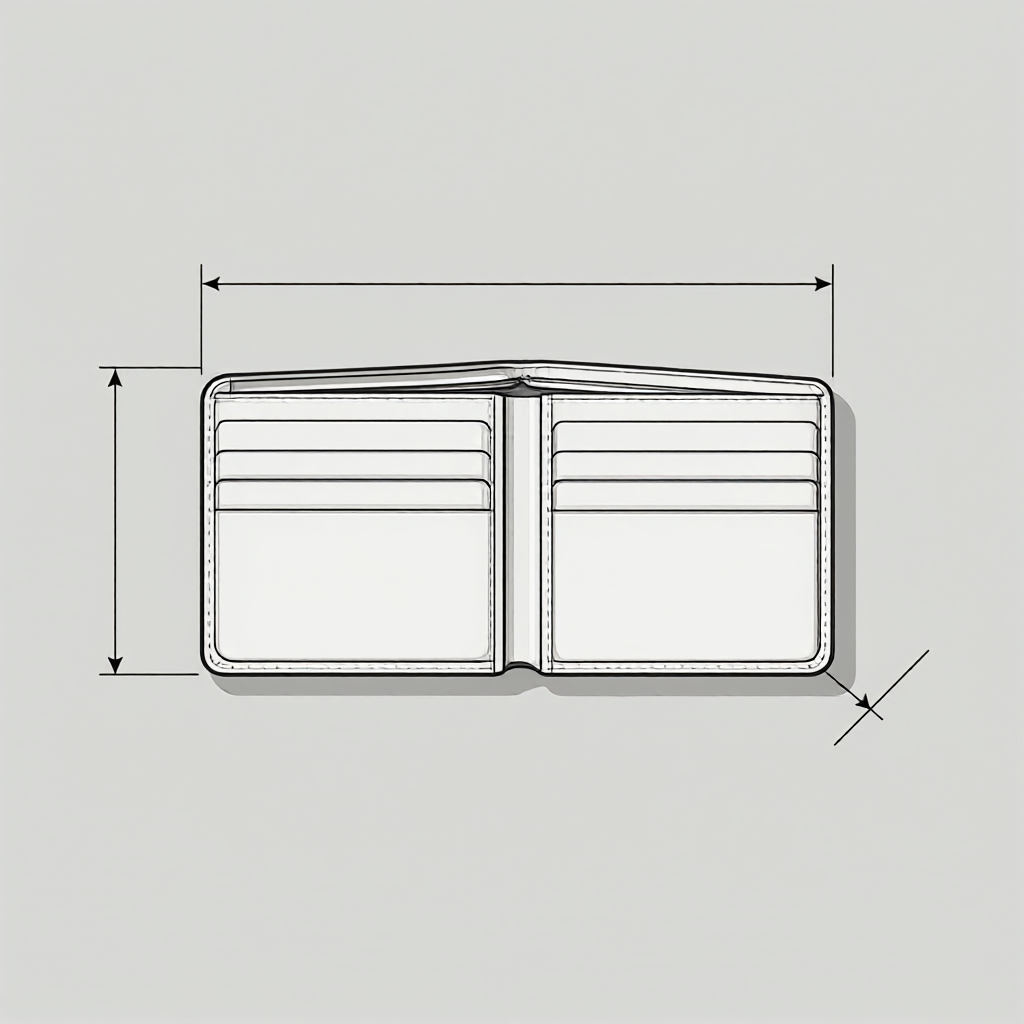
What are the key specs for wallet sourcing?
When evaluating a potential wallet size specification — whether from a catalog or a custom OEM quote — focus on these priority dimensions:
- Outer height and width — The primary footprint identifier; determine retail box dimensions and shelf presentation.
- Closed thickness — The closed-state depth including any retained cards or accessories; this governs pocket compatibility.
- Open width (for bifolds) — The full extended footprint when opened flat; relevant for cash compartment sizing.
- Weight — Listed in grams; correlates with material density and perceived quality. A typical aluminum minimalist wallet weighs between 35 g and 65 g depending on gauge and feature set.
- Card capacity rating — Published maximum; confirm with a physical sample under real loading conditions.
- Dimensional tolerance — Acceptable manufacturing variance; standard industry tolerance for CNC-milled wallets is ±0.25 mm on critical mating surfaces and ±0.5 mm on non-critical outer edges.
Thickness remains the dimension where most sourcing disputes arise. Always ask for thickness measurements with zero cards loaded and with a standard twelve-card load applied. Those two numbers tell you more about product behavior than a single average value ever will.
For buyers comparing specific style categories, reviewing targeted sourcing guides — such as the best minimalist wallets for B2B sourcing or the best card holder selection guide — helps narrow which size brackets align with your target customer’s carrying habits.
Standards & Requirements
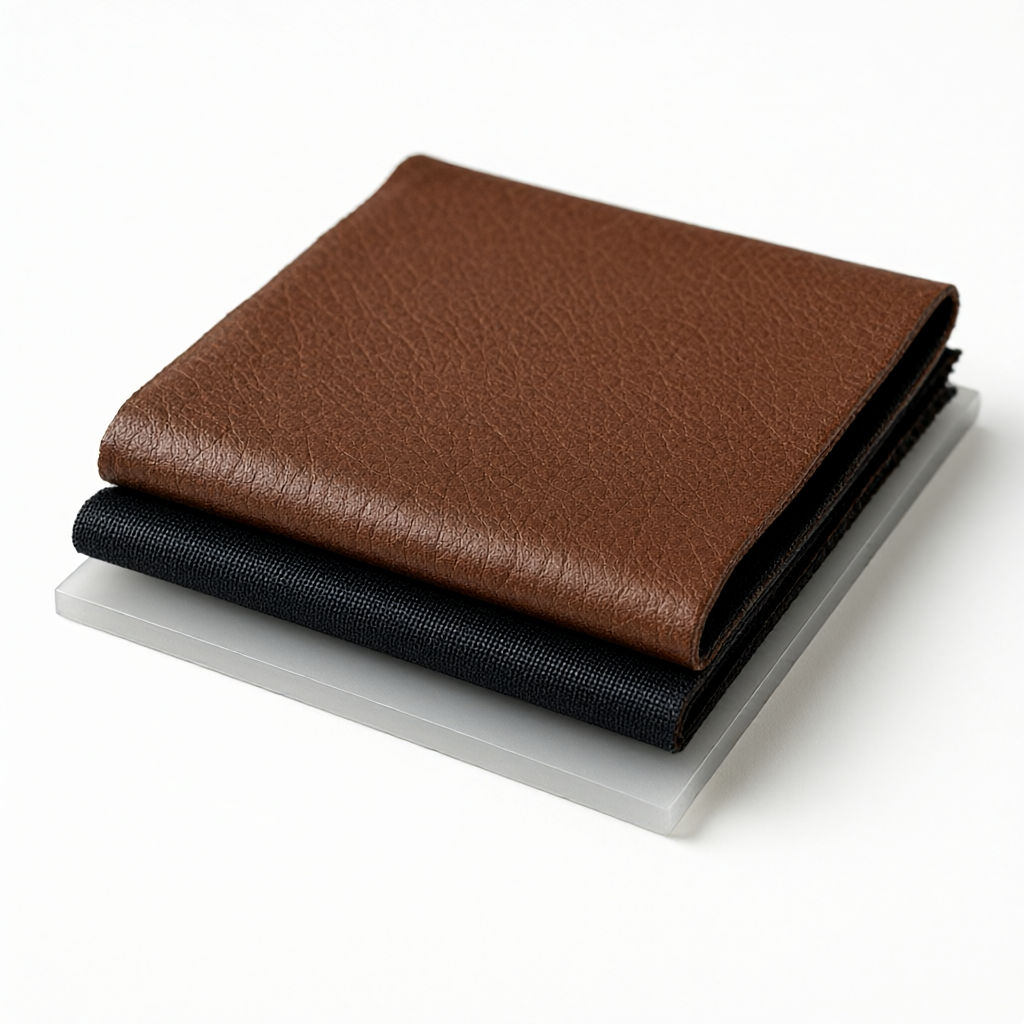
What standards apply to wallet sizing and manufacturing consistency?
There is no single global regulatory body that mandates uniform wallet dimensions across the consumer goods sector. Unlike electronics or children’s products, wallets do not fall under mandatory international sizing regulations enforced by agencies such as the FTC for dimensional labeling. That absence is precisely why B2B buyers must establish clear dimensional requirements within purchase agreements and technical packs — the industry relies on contractual consistency rather than legal standardization.
What does exist are widely accepted reference points:
- ISO 9001 quality management systems, which require manufacturers to maintain controlled processes and consistent output dimensions across production batches. An ISO-certified facility like the one operated by TOP EDC Wallet ensures that part-to-part dimensional variance stays within defined tolerances.
- ASTM International publishes voluntary consensus standards for materials testing and product performance. While no ASTM standard specifically dictates wallet outer dimensions, related material test methods — particularly those governing metal alloy composition, coating adhesion, and corrosion resistance — directly affect whether a specified wallet dimension holds stable over time.
- Regional consumer protection frameworks, such as those overseen by the FTC, require truthful product descriptions and prohibit misleading dimensional claims on packaging or e-commerce listings. If a product states a specific size, the shipped unit should match that stated dimension within acceptable commercial tolerances.
For B2B procurement, these standards translate into practical requirements: include exact drawn dimensions in your tech pack, define acceptable tolerance bands, and specify inspection acceptance criteria before production begins. A supplier working to ISO 9001 procedures will already have statistical process control mechanisms in place; the buyer’s job is to communicate the required band clearly.
Related Considerations
What should B2B buyers consider when sourcing wallets?
Several factors extend beyond raw dimensions and enter the realm of strategic sourcing decisions:
Pocket compatibility and carry scenario — A wallet sized 4.5 × 3.5 inches with 0.6-inch thickness fits comfortably in a rear jeans pocket for most adults but may feel oversized for forward pants pockets or dress trousers with tighter cuts. Design-driven EDC brands often engineer around the “two-pocket test”: can the wallet sit flush in both front and back pockets without excessive bulge? Buyers serving outdoor enthusiasts should lean toward the smaller end of the minimalist range.
Packaging constraints — Your retail box or polybag dimensions are locked to the product’s outer footprint plus a small allowance for cushioning and insertion. A 0.1-inch difference in wallet height can cascade into an entire secondary packaging redesign, especially if you are already optimizing box counts per shipping master carton. Source your packaging specs early and align them with the wallet dimensions before confirming order quantities.
Branding surface area — Laser engraving and UV printing require sufficient flat plane real estate. A compact cardholder measuring 3.2 × 2.5 inches offers far less usable branding area than a 4.0 × 3.5-inch bifold, which influences logo design, visual hierarchy, and perceived premium positioning. Review the sourcing guide for money clips if your program emphasizes engraved surface area alongside minimal bulk.
Minimum order quantity alignment — Smaller form factors generally absorb lower MOQ commitments more easily because fewer raw material blocks and fewer machining passes are involved. Higher-capacity designs with complex internal assemblies tend to carry higher MOQ thresholds due to setup complexity. Match your expected demand volume to the right size bracket rather than forcing a large SKU into a low-volume channel.
Lead time impact — Simple cardholder geometries move faster through CNC machining and finishing lines than multi-component bifold assemblies with springs, hinges, and removable trays. If your market requires rapid replenishment cycles, prioritize simpler size configurations and reserve complex dimensional variants for planned seasonal drops.
Can wallet dimensions be customized for private-label orders?
Yes — customization of wallet size is one of the most common requests in OEM and ODM workflows. Whether you are building a private-label line for retail distribution or developing a new product for an EDC brand line extension, most contract manufacturers support modifications to height, width, thickness, and internal layout geometry.
Common customization pathways include:
- Adjusting outer envelope dimensions — Increasing or decreasing height and width to fill a specific retail fixture gap or to differentiate from competitor SKUs in the same price tier.
- Reconfiguring internal slot placement — Moving card slots inward for a slimmer perimeter or widening them for easier card ejection, which indirectly changes external footprint.
- Modifying thickness through material gauge or component count — Selecting thinner or thicker baseplate stock, removing or adding spring mechanisms, or choosing alternative retention systems all shift final thickness.
- Creating entirely new form factors — Some buyers start with a competitor’s popular size profile and commission a variant with adjusted proportions — slightly taller, narrower, and lighter — to capture a specific niche.
When pursuing size customization, provide a target dimension range rather than a single fixed number if possible. Manufacturers can often achieve your goal through multiple design approaches, and presenting a range gives engineering the flexibility to select the most cost-effective path without sacrificing form factor intent.
Request a prototype sample with your exact dimensional targets before approving mass production. Even minor deviations in prototype phase compound significantly at scale.
Here Is How We Approach Wallet Size Standards
As a manufacturer, our approach to wallet sizing starts with the premise that consistent dimensions protect your brand promise at scale. Every order begins with a fully detailed technical drawing that specifies height, width, thickness at zero-load and full-load, tolerance bands, and material gauge — all agreed upon and signed off before CNC tooling is committed.
Our facility runs in-house CNC machining alongside laser engraving and UV printing, which means dimensional adjustments flow directly from your design file into production without intermediary handoffs that introduce measurement drift. We work with aluminum, carbon fiber, and titanium substrates, and we document the thickness contribution of each material choice so you can predict the final stacked profile before ordering samples.
Because we hold ISO 9001 certification since 2014 and operate under BSCI-audited facility protocols, dimensional consistency is not an afterthought — it is embedded in our quality management system. Incoming material verification, in-process inspection at critical machining stages, and final dimensional audit before packing all feed into a controlled process that keeps variation within declared tolerance limits batch after batch.
With a 50,000 sq ft factory producing over 500,000 units monthly and serving clients in America, Europe, Australia, and Southeast Asia, we have observed firsthand how wallet size decisions ripple across packaging, fulfillment, retail display, and end-user satisfaction. Our team reviews size specifications against real pocket-fit benchmarks and package optimization scenarios before recommending final dimensions — because the right size on paper is only valuable when it performs correctly in the field.
We offer low MOQ starts at 300 pcs per SKU and fast 7-day sample lead times so you can validate claimed dimensions against physical prototypes before scaling. All materials meet REACH / RoHS compliance standards and undergo SGS testing, ensuring that your size specifications align with both functional intent and regulatory requirements in your destination markets.
…ocket compatibility is only one variable. Also critical are material-gauge trade-offs, card retention force requirements, edge radius preferences (sharp milled edges versus rounded rolled edges affect both comfort and pocket drag), and finish durability expectations. A matte anodized aluminum finish may scratch faster than a hard-coat anodized layer, and that degradation timeline can vary significantly between suppliers even when the starting thickness is identical.
Procurement Decision Framework for Wallet Sizing
Buyers should evaluate wallet sizing through three intersecting lenses: use case alignment, budget tier feasibility, and MOQ-driven optionality. The following framework applies across common sourcing scenarios:
| Use Case | Recommended Form Factor | Target Thickness Range | Estimated MOQ Tier | Budget Category |
|---|---|---|---|---|
| Everyday corporate gift | Slim cardholder or minimalist wallet | 0.25 – 0.4 in | 500+ pcs | Mid-tier |
| Outdoor / adventure EDC brand | Minimalist metal wallet with expandable tray | 0.35 – 0.55 in | 300+ pcs | Premium tier |
| Amazon FBA private label | Ultra-slim cardholder | 0.2 – 0.35 in | 300+ pcs | Value tier |
| Promotional product distributor | Standard bifold or trifold | 0.5 – 0.8 in | 1000+ pcs | Economy tier |
| Luxury retail chain | Titanium money clip or high-end minimalist wallet | 0.2 – 0.4 in | 200+ pcs | Premium tier |
Budget tier notes: Entry-level aluminum wallets typically range from $2.50 to $5.00 per unit at volume, while carbon fiber builds fall in the $6.00 to $14.00 range, and titanium constructions sit at $12.00 to $28.00+. Thicker wallets with more complex mechanisms carry proportionally higher per-unit costs due to increased material usage and machining time.
MOQ drivers: Lower MOQs (100–300 pcs) are feasible for standard cardholder geometries because tooling is minimal. Complex custom dimensions — such as non-standard aspect ratios or integrated hinge mechanisms — require dedicated CNC fixtures and can push minimums to 500+ units before per-piece pricing becomes competitive. Suppliers operating under ISO 9001:2015 quality management systems maintain documented procedures that support both low-MOQ prototyping and high-volume consistency within the same facility.
US vs. International Wallet Sizing Conventions
Wallet sizing conventions differ meaningfully between regional markets, and mismatched assumptions are a frequent source of post-order disputes.
United States convention favors slightly wider formats. The dominant American bifold measures approximately 4.5 × 3.5 inches, reflecting the larger bill size used in USD currency. American consumers also tend toward thicker profiles (up to 0.8 inch for bifolds) because the domestic market historically accepted bulkier leather carry.
European convention skews narrower and thinner. European credit cards share the same ISO/IEC 7810 ID-1 standard (85.60 × 53.98 mm) as US cards, but consumer preference trends toward slimmer cardholders and minimalist wallets under 0.4 inch thick. German and Scandinavian buyers, in particular, favor compact designs that prioritize pocket invisibility over capacity.
Asian market conventions — especially Japan and South Korea — represent the strongest adopters of ultra-slim metal wallets. Japanese consumers routinely select cardholders measuring under 0.3 inch thick with capacities of six to eight cards. This segment drives much of the global demand for CNC-milled aluminum and carbon fiber formats.
For B2B buyers serving multiple regions, the practical implication is clear: do not assume one dimensional spec fits all target markets. If your product line launches simultaneously in North America and Europe, consider maintaining two SKUs with region-appropriate thickness profiles rather than forcing a single dimension across both audiences.
How to Choose the Right Wallet Size for Your Product Line?
Selecting the correct wallet size begins with answering four diagnostic questions before any specification sheet is drafted:
- What is the primary carrying scenario? Front pocket dress-wear buyers need under-0.35-inch thickness; rear-pocket casual wear accommodates up to 0.6 inch comfortably.
- How many cards does the target user carry daily? Average adult EDC users carry six to ten cards. Design for that baseline plus a 20% buffer, not maximum theoretical capacity.
- Does the wallet need RFID protection? If yes, account for an additional 0.02–0.06 inch of thickness from the shielding layer per FCC Part 15 performance validation guidelines for electromagnetic shielding claims.
- What packaging format will you use? Bulk-shipped poly bags tolerate looser dimensional tolerances; rigid retail boxes require tighter specification control to ensure clean shelf presentation.
A practical workflow is to prototype with three thickness variants — thin (under 0.3 in), medium (0.3–0.5 in), and thick (above 0.5 in) — then conduct blind pocket-fit tests with your target demographic before locking final dimensions into production.
For ongoing security concerns related to wallet design, also review our guide on preventing and recovering lost wallets for EDC professionals which covers design features that reduce loss risk.
Customization Options for Size and Dimension on OEM Orders
One of the greatest advantages of OEM and ODM contract manufacturing is the ability to tailor wallet dimensions to your exact requirements. Unlike off-the-shelf distributors who stock fixed sizes, manufacturers working from technical packs can adjust nearly every dimensional parameter:
- Height and width — Fully customizable within material constraints. Aluminum wallets can be milled to non-standard aspect ratios without tooling changes beyond CNC program rewrites. Carbon fiber laminates allow custom widths cut from larger parent sheets with minimal waste.
- Thickness — Adjustable by selecting different material gauges, altering internal slot spacing, or adding/removing mechanical components. Spring-loaded expansion mechanisms add 0.1–0.3 inch compared to static-frame designs.
- Edge treatment — Milled sharp edges, bead-blasted radiused edges, or polished rounded corners each change the effective footprint by fractions of a millimeter but significantly alter hand-feel and pocket presentation.
- Opening style — Top-loading card slots, side-slotted access, and hinged flip-open mechanisms each impose different minimum dimension requirements. Side-slot designs generally permit the thinnest overall profile.
Custom dimension changes do not always carry proportional cost increases. Minor tweaks — adjusting height by 2–3 mm or thickness by 0.05 inch — typically involve only CNC program edits with no new tooling. Major redesigns that change the fundamental architecture, such as switching from a side-load to a top-load mechanism, require fixture investment and may increase per-unit cost by 15–30%.
All dimensional changes are governed by manufacturability boundaries. ASTM D4169 standard practice for performance testing of shipping containers and systems provides the reference framework that responsible manufacturers use to validate whether a proposed dimension can survive real-world distribution cycles without deformation or failure.
When placing a custom OEM order, always provide: (a) drawn dimensions with tolerance bands, (b) preferred measurement standard (inches or millimeters), (c) card-type reference (ISO standard credit card versus oversized travel cards), and (d) load condition for thickness specification (empty versus loaded). This documentation eliminates ambiguity and ensures your samples match production expectations.
Manufacturer Perspective: Meeting Sizing Standards at Scale
Here is how the industry works and how we meet these standards at our facility.
At TOP EDC Wallet, every dimensional specification begins with a reviewed technical pack. Our in-house CNC machining center allows us to hold tight tolerances — typically ±0.25 mm on critical mating surfaces and ±0.5 mm on outer edges — across batches ranging from our minimum order quantity of 300 pcs per SKU up to our monthly capacity of 500,000+ units. Our ISO 9001 certified quality management system requires documented process controls at every stage, from raw billet inspection through final dimensional verification.
When you request a custom size or dimension change, our engineering team evaluates manufacturability against material constraints and provides revised quotes transparently — including any tooling implications. We have supported 200+ brands across America, Europe, Australia, and Southeast Asia with everything from subtle thickness adjustments to fully bespoke form factors, all produced from our 50,000 sq ft facility with a 7-day sample lead time.
Pocket compatibility and carry scenario — A wallet sized 4.5 × 3.5 inches with 0.6-inch thickness fits comfortably in a rear jeans pocket for most adults but may feel oversized for forward pants pockets or dress trousers with tighter cuts. Design-driven EDC brands often engineer around the “two-pocket test”: can the wallet sit flush in both front and back pockets without excessive bulge? Buyers serving outdoor enthusiasts should lean toward the smaller end of the minimalist range, while corporate gift buyers may prioritize slightly larger formats for better branding visibility.
Retail packaging constraints — Wallet dimensions directly dictate inner-box and master-case sizing. A 2 mm difference in width can mean the difference between one wallet fitting snugly in a blister pack or requiring an aftermarket insert. For Amazon FBA sellers, this matters because non-compliant packaging triggers receiving delays and potential SKU suspension. Always validate your chosen wallet dimensions against your packaging supplier’s tolerances before finalizing the design.
Carry position of target users — Consider whether your end user carries their wallet in a front pocket, back pocket, coat interior, or bag. Front-pocket carriers naturally gravitate toward the smallest form factors; this is why minimalist cardholders dominate online review segments among younger demographics. Bifold and trifold buyers tend to skew toward professional and over-40 segments who still use cash and value organized storage.
Sizing Conventions: US vs. International Markets
How do wallet size labels differ across regions?
The United States traditionally uses inches for wallet dimensions, while European and many Asian markets default to millimeters. This creates confusion when sourcing from global suppliers because the same product may be listed as “115 × 90 mm” on one spec sheet and “4.5 × 3.5 in” on another — even though they describe identical outer footprints.
Standard credit and ID cards provide a useful universal reference point. An ISO/IEC 7810 ID-1 card measures exactly 85.60 × 53.98 mm (3.370 × 2.125 in). Any wallet designed to hold standard cards must accommodate this footprint internally, plus a small clearance margin for insertion and removal. Knowing this baseline allows buyers to independently verify whether a supplier’s published dimensions are plausible or artificially constrained.
US-based retail buyers typically specify wallets in the 4.0–4.5 inch height range for bifolds and the 3.5–4.0 inch range for slim/cardholder formats. European private-label programs often request dimensions rounded to the nearest millimeter, which can shift an advertised “100 mm” wallet to an actual 98–102 mm produced unit. Clear communication of acceptable tolerance bands in the purchase agreement eliminates post-order disputes.
For additional context on form-factor selection by buyer segment, see the best minimal wallets for B2B sourcing and private label guide, which breaks down size preferences by target customer profile.
Material Impact on Wallet Thickness and Capacity
How does wallet material affect overall thickness and usable capacity?
Material selection is the primary lever for controlling wallet thickness independent of external dimensions. Different materials respond differently to compression, bending, and stacking, which directly shapes the carrier’s functional volume.
Aluminum (6061-T6) — The dominant choice for minimalist metal wallets. Aluminum’s inherent rigidity allows designers to use thin gauge stock (1.5–3.0 mm) while maintaining structural integrity. A CNC-milled aluminum frame wallet can hold ten to twelve standard cards at a closed thickness of approximately 0.3–0.45 inches. Add an expandable card tray mechanism and thickness increases by roughly 0.1–0.15 inches. Surface anodizing adds negligible thickness (typically under 0.001 inches) but provides color and corrosion resistance.
Carbon fiber (epoxy-resin composite) — Carbon fiber laminates achieve high strength-to-thickness ratios unmatched by metals. Four-ply woven carbon fiber produces a rigid panel approximately 0.2 inches thick capable of holding eight to ten cards without flex. This makes carbon fiber card holders among the thinnest options in the minimalist category, appealing to buyers targeting ultrathin-profile messaging. However, carbon fiber is brittle under impact compared to aluminum, so drop-test considerations apply for rugged-use positioning.
Titanium (grade 2 / Gr2) — Titanium offers higher yield strength than aluminum, permitting thinner gauge usage (0.8–1.5 mm) without sacrificing durability. A titanium money clip or hybrid card holder typically sits between aluminum and carbon fiber in total thickness — usually 0.25–0.4 inches loaded. Titanium’s natural biocompatibility and corrosion resistance also support premium brand positioning without additional coating steps.
RFID-blocking integration — Adding a mu-metal or stainless steel mesh barrier introduces approximately 0.02–0.06 inches of thickness per layer. For thin-aluminum wallets already near their minimum profile, this can push the finished product out of the “ultrathin” subcategory entirely. Buyers should model RFID integration during the design phase rather than retrofitting it, because the blocking layer must align precisely with card-slot boundaries to avoid creating dead zones whereRFID signals leak through. Testing per ASTM D4236 (standard practice for labeling outdoor apparel for radio frequency identification compatibility) and verifying signal attenuation levels help confirm RFID performance claims before committing to production. While ASTM D4236 originates in textile labeling, its test methodology for RF shielding effectiveness is commonly adapted by wallet manufacturers evaluating blocking-layer performance. Facilities operating under ISO 9001:2015 quality management procedures maintain documented control over such material additions, ensuring each batch meets specified attenuation thresholds consistently.
See our detailed RFID wallet definition and buyer’s guide for an in-depth comparison of blocking materials, signal testing methods, and the trade-offs between full-panel coverage versus slot-by-slot shielding designs.
How to Choose the Right Wallet Size: A Decision Framework?
What questions should buyers answer before specifying wallet size?
Selecting the correct wallet size requires answering four foundational questions about the target market, use case, and supply chain:
| Question | Key Considerations |
|---|---|
| Who is the end user? | Age cohort, occupational setting, preferred carry position (front/back pocket), style preference |
| What is the target capacity? | Number of cards, cash type (folded vs. rolled), coins or accessories needed |
| What form factor fits the brand story? | Minimalist/ultrathin vs. traditional bifold/trifold vs. tactical organizer |
| What are packaging and logistics constraints? | Retail box fit, Amazon FBA prep dimensions, master-case stackability, shipping cost per unit |
A practical scoring matrix helps compare multiple size candidates objectively. Assign a weight (1–5) to each criterion based on brand priority, score each candidate wallet from 1–10 against that criterion, and multiply to generate a weighted total. This prevents over-indexing on any single dimension — such as choosing the thinnest possible wallet while ignoring packaging compatibility or end-user comfort.
For buyers comparing specific styles against real-world carrying habits, the best card holder selection guide for B2B sourcing provides size-to-audience correlation data that can feed directly into this scoring process.
Procurement Checklist: Evaluating Wallet Suppliers by Dimensional and Material Specs
What documents and checkpoints should B2B buyers require from suppliers?
Before placing a production order, buyers should request and verify the following from each potential supplier:
Technical documentation checklist:
- [ ] Published dimensional spec sheet showing height × width × thickness with zero-load and max-card-load measurements
- [ ] Dimensional tolerance statement (target: ±0.25 mm on critical surfaces, ±0.5 mm on outer edges)
- [ ] Material certification or mill test report for metals; COC (Certificate of Compliance) for composites
- [ ] Card-count test results under real loading conditions, not theoretical maximums
- [ ] RFID-blocking performance data (if applicable) — signal attenuation measurement in dB at 13.56 MHz
- [ ] Approved sample sign-off with measured dimensions matching the quoted spec within tolerance
- [ ] Packaging dimension confirmation aligned with retailer or marketplace requirements
- [ ] ISO 9001 quality management system documentation demonstrating controlled dimensional inspection processes
Minimum Order Quantity (MOQ) evaluation:
- [ ] MOQ tier pricing structure (e.g, 300 pcs, 500 pcs, 1,000 pcs breakpoints)
- [ ] Sample lead time and cost (industry benchmark: 5–10 business days for physical samples)
- [ ] Production lead time after sample approval (benchmark: 15–25 business days for custom runs)
- [ ] Tooling or setup fees for custom dies, CNC fixtures, or engraving masks
Verification protocol:
- [ ] Request a pre-production sample before authorizing bulk manufacturing
- [ ] Measure received samples against the agreed spec sheet using calipers
- [ ] Load test with actual cards — confirm retention force is comfortable, not excessive
- [ ] Drop-test a representative sample if ruggedness is part of the brand promise
- [ ] Confirm material traceability: lot numbers, alloy grades, and source origin documented
Suppliers unable or unwilling to provide this level of documentation should be treated as high-risk, particularly for custom or private-label programs where product differentiation depends on exact dimensional execution.
Red Flags: Warning Signs When Sourcing Wallets by Size Specifications
What supplier behaviors indicate potential quality or dimension-control problems?
Experienced B2B buyers learn to recognize these warning indicators early in the vetting process:
Inconsistent dimension reporting across factories or quotes — If Supplier A lists a bifold as 4.5 × 3.5 inches and Supplier B, claiming an identical product category, lists 4.1 × 3.2 inches without explaining the design difference, this inconsistency suggests either sloppy documentation or fundamentally different tooling and tolerances. Request clarification and compare physical samples side by side before proceeding.
Lack of sample-before-production verification — Any supplier that refuses to produce a physical sample prior to bulk order commitment is operating at elevated risk. Samples are the only reliable way to verify that quoted dimensions match actual manufactured parts. No sample = no verification = potential costly rework or rejected inventory upon arrival.
Absent material traceability — Reputable manufacturers maintain records linking each production batch to its raw-material source, alloy grade, and treatment process. If a supplier cannot provide material certificates or explain the origin of their aluminum, titanium, or carbon fiber stock, this signals inadequate quality system controls and raises the probability of downstream dimensional drift or finish inconsistencies.
Unusually low MOQ combined with vague dimension guarantees — A supplier advertising “300-piece MOQ with guaranteed exact dimensions” often lacks the inspection infrastructure to deliver consistent quality at that volume. Low MOQ is achievable, but dimension consistency at scale requires statistical process control and dedicated inspection stations — capabilities that correlate with operational maturity, not just sales promises.
Refusal to share tolerance specifications — Every machining and forming process has inherent variance. A responsible supplier will openly state their tolerance bands; one that avoids the question may be hiding significant dimensional variation that could cause packaging incompatibility or consumer complaints.
Recognizing these red flags early prevents costly misalignments between what was ordered and what arrives at the warehouse.
Choosing the Right Wallet Size: Summary and Buying Recommendations
What size wallet best fits common B2B buyer profiles?
The optimal wallet size depends on who the end consumer is and where they carry the product:
- Amazon FBA private-label sellers — Typically target 3.5–4.0 inch minimalist cardholders or slim aluminum wallets in the 0.25–0.4 inch thickness range. These sizes minimize return rates related to bulkiness and perform well in the ultrathin and slim browsing categories.
- EDC brand owners — Often seek slightly more versatile formats: 3.8–4.2 inch height with modular expansion capability, balancing slim carry with enough capacity for daily essentials including a few spare cards and folded bills.
- Corporate gift and promotional distributors — Prefer larger formats (4.0–4.5 inch bifolds or trifolds) because broader surface area accommodates logos and branding more effectively, and recipients associate larger products with perceived value.
- Outdoor and adventure-focused brands — Prioritize durability and moderate capacity. A 4.0–4.3 inch minimalist wallet with reinforced corners and secure card retention ranks highly, even if thickness increases slightly to 0.4–0.55 inches for added robustness.
Across all segments, the common thread is clarity of specification: define the target dimensions, required tolerances, material grade, and card capacity upfront, then verify those specs against physical samples before committing to volume production.
How We Approach Wallet Sizing and Custom Specification?
As a manufacturer specializing in minimalist EDC wallets and pocket gear, our approach to sizing begins with understanding the end-user carry profile before selecting materials and architecture. Here is how we meet the industry standards outlined above in our daily production:
Our facility holds ISO 9001 certification and operates a 50,000 sq ft in-house factory equipped with precision CNC machining, laser engraving, UV printing, and aluminum anodizing lines. We evaluate each wallet specification against dimensional tolerance benchmarks of ±0.25 mm on critical mating surfaces and ±0.5 mm on non-critical outer edges, consistent with industry-standard machined-tolerance expectations for metal EDC products.
Our OEM and ODM capabilities allow us to produce custom-dimension wallets starting from an MOQ starts at 300 pcs per SKU for full OEM customization (100 pcs trial order available for stock finishes), with a 7-day sample lead time for approved designs. This enables brands to validate physical dimensions, material feel, and card-retention performance before scaling to full production runs. Our monthly output capacity exceeds 500,000 units, supporting both small private-label launches and large-scale distributor orders without compromising dimensional consistency.
We manufacture across a range of materials — 6061-T6 aluminum, carbon fiber laminates, and Grade 2 titanium — and integrate RFID-blocking layers where specified, carefully documenting the thickness and weight impact of each material combination so buyers can make informed capacity-to-profile decisions. All materials are tested against relevant compliance standards, and we maintain full material traceability from incoming stock through finished goods.
Our export experience spans 200+ brands across North America, Europe, Australia, and Southeast Asia, giving us practical familiarity with regional sizing expectations, packaging norms, and labeling requirements. Whether you need a compact cardholder for an ultrathin-profile line or a slightly larger bifold for a corporate-gift program, we work from your technical pack or co-develop dimensions tailored to your audience.
Sources & References
- ASTM International — www.astm.org
- FTC — www.ftc.gov
- ISO 9001 certified — www.iso.org
- how minimalist EDC wallets are manufactured — topedcwallet.com
- RFID-blocking technology and its application in EDC wallets — topedcwallet.com
- RFID wallet definition and buyer’s guide — topedcwallet.com
- best minimalist wallets for B2B sourcing — topedcwallet.com
- best card holder selection guide — topedcwallet.com
- sourcing guide for money clips — topedcwallet.com
- EDC brand line extension — topedcwallet.com
Dimensional Tolerances: What to Specify, What to Accept
A nominal dimension on its own is not a specification. “92 mm wide” tells a factory nothing about what will still pass inspection, and that gap is where most first orders fail: the samples look right, the production run sits 0.8 mm wider, and the card retention force changes with it. Every dimension you intend to buy needs a tolerance band, a reference datum and a measurement method agreed before tooling.
Nominal size vs tolerance band
| Parameter | Typical nominal | Recommended band | How it is checked |
|---|---|---|---|
| Width (metal card holder) | 90–95 mm | ±0.5 mm | Vernier or digital caliper, three positions |
| Height (metal card holder) | 110–125 mm | ±0.5 mm | Caliper, top and bottom edge |
| Thickness, empty (aluminium) | 6–10 mm | ±0.3 mm | Caliper across the seam, empty |
| Thickness, loaded to rated capacity | 12–20 mm | ±1.0 mm | Loaded with the rated card count |
| Card cavity width (ISO/IEC 7810 ID-1 card) | 85.60 × 53.98 mm card | ±0.2 mm on cavity clearance | Go / no-go gauge with a reference card |
| Edge radius | 1–3 mm | ±0.3 mm | Radius gauge or profile projector |
| Leather panel thickness (per side) | 0.6–1.2 mm | ±0.1 mm | Micrometer on a cut sample |
How to measure a wallet on the bench
Three habits decide whether a measurement means anything. Zero the caliper at the same temperature the parts are stored at, because a 10 °C swing across an aluminium shell moves the reading by roughly 0.02–0.04 mm. Measure empty and loaded separately — a wallet that meets thickness in the empty state can fail by 1.5 mm once twelve cards are in it. And record the reading against the batch number, not the model name, so a drift shows up as a trend instead of a single rejected shipment.
Tolerance stack: when finish and inlay change the final dimension
Finish is part of the stack, not a coat of paint on top of it. Anodising grows an oxide layer in the 5–25 µm range depending on the class specified; PVD adds roughly 1–4 µm; a leather wrap contributes 0.6–1.2 mm per side and dominates everything else. That is why the substrate drawing must carry the final dimension, and the finish specification must carry its own increment — otherwise a 0.3 mm thickness band is consumed by the coating alone before a single part is machined.
How Finish and Colour Change Final Dimensions
Colour choice and dimensional control are the same conversation on a green wallet: a heavier oxide layer for a deeper green also moves the wall thickness, and a dyed leather wrap changes the perceived size by more than most tolerance bands allow. The colour side of that specification — Pantone matching, ΔE limits, lab dip approval and batch test methods — is covered in our green wallet colour matching and tolerance standards.
For the size side, the practical sequence is: fix the form factor against the card stack, set the nominal from the pocket or pouch it must fit, then allocate the band between machining, finish and assembly rather than giving it all to the machine shop. Buyers comparing suppliers on thickness alone are usually comparing marketing numbers, not the same measurement; filled-thickness benchmarks and the men’s leather wallet sizing guide show how much of the quoted figure is load, and leather wallet types compared by size and construction covers how panel construction shifts the envelope.
Related in this cluster: High-End Wallets for Men: Materials, Specs & Procurement, Badge Holder Wallets 2026: ID Window, Card Compatibility and Custom Options.
From article to product
Turning this into a product?
Most of what is written here is the difference between a sample that works and one that does not. We can build either — the useful one costs the same.
Keep reading
More on buying guides
wallet with trigger
How Does a Trigger Wallet Work? What Is the Pop-Up Mechanism? The core of…
Readbest bifold wallet for women
What Is a Bifold Wallet? The term “bifold” refers to the fold: the wallet…
ReadMen’s trifold wallets with zipper compartments vs. bifold
At a Glance The three dominant men’s wallet formats differ in panel count, depth,…
Read
About the author
TOPWALLET Editorial Team
TOPWALLET's editorial and engineering desk writes from bench testing at the Shenzhen (Longgang) facility: pull-force and cycle testing, 13.56 MHz shielding measurements, finish trials and factory audits, rather than supplier spec sheets. Every specification in these guides is one we write on a purchase order.
Written on the floor
This article was written by our production and QC team — the people who spec tolerances, run the finishing line and inspect every batch. Where it states a capacity, a pull force or a lead time, it comes from a measurement we made, not a supplier’s catalogue. If a number here disagrees with what your own supplier told you, tell us; several of these articles started as a correction from a buyer.
See how the factory works · Inspection process · Sourcing FAQ
Turning this into a product?
Most of what is written here is the difference between a sample that works and one that does not. We can build either — the useful one costs the same.