
Buying Guides · 18 min read
Green Wallets for OEM Programmes: Colour Matching, Sizes & Standards (2026)

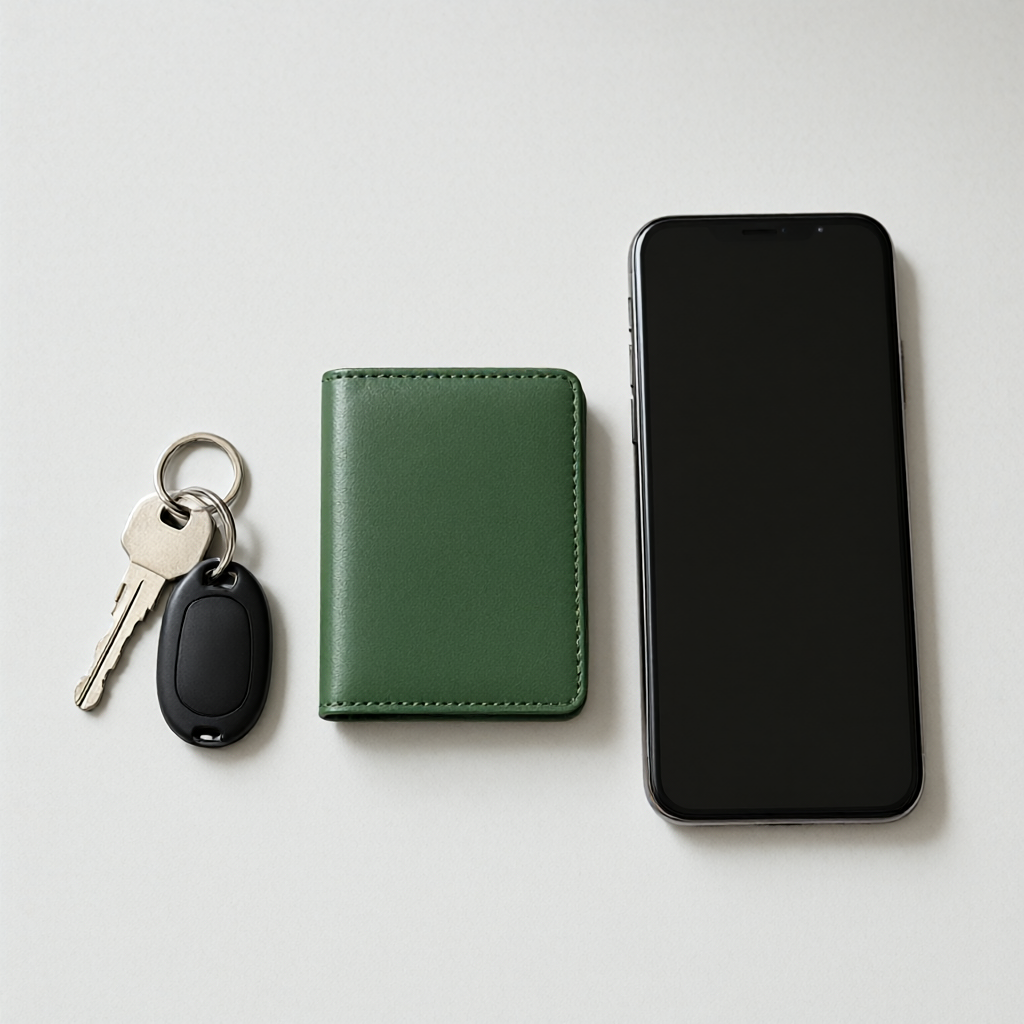
A green wallet is not a product category — it is a colour specification applied to an existing wallet programme. When a brand asks for green, three questions are actually being asked at once: which exact shade, which finishing route can reproduce it on aluminium, titanium or leather, and which dimensional and quality standards the finished unit has to hold. This guide answers all three in manufacturing terms — colour tolerance and batch approval, anodized versus PVD versus coated finishes, sizing standards, material grades, MOQ and landed cost.
Quick Answer
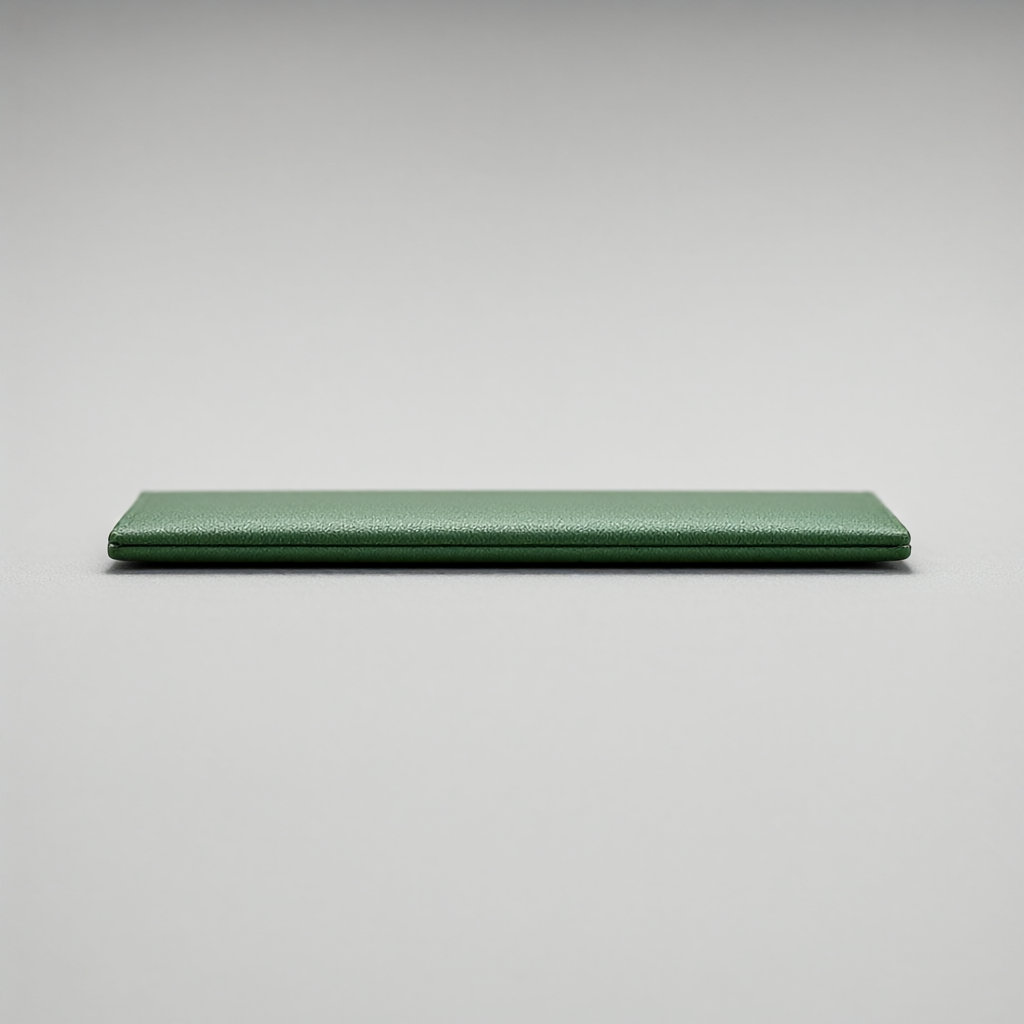
What does “green” mean in a wallet order?
It means a measured target, not a colour name. A production-ready brief carries a physical swatch (or a Pantone reference converted to a swatch on the real substrate), a finishing route, a colour tolerance in ΔE, a measurement geometry and illuminant, and the unit that tolerance applies to — bare metal, anodized part or finished assembly. Without those five items, the factory can only guess, and every reorder will drift.
Which route gives the most durable green?
For metal, PVD (vacuum-deposited, 1–3 µm) is harder and more colour-stable than dyed anodizing, which traps organic dye in a 10–25 µm oxide layer. Anodizing wins on cost and can reach brighter, more saturated greens; PVD wins on abrasion resistance and UV stability. For leather, pigment-finished hides hold colour far better than aniline drum-dyed ones, at the cost of a less natural hand feel.
What colour tolerance belongs in the contract?
State it in CIEDE2000: ΔE00 ≤ 1.5–2.0 is a normal commercial match that the eye reads as the same colour, ≤ 1.0 is a tight lab agreement, and ≥ 3.0 is visibly different on a flat panel. Also fix the illuminant (D65, 10° observer) and specify that measurement happens on the finished part, compared against the retained golden sample rather than the original Pantone chip.
Colour Is a Specification, Not a Style Option
Brand greens fail in production for three reasons that have nothing to do with the dye recipe. First, substrate show-through: the same dye concentration reads lighter on polished 6061 aluminium and darker on a matte-blasted 5052 surface, because the anodic layer interacts with the metal underneath. Second, metamerism: two samples that match under office lighting can split apart under daylight or under the warm LEDs of a retail shelf. Third, the reference itself — a Pantone number is formulated for print inks on paper, so it has to be re-rendered as a lab dip on the actual material before anyone can approve it.
That is why a colour brief for a wallet programme is written like a drawing, not like a mood: substrate and alloy grade, surface preparation (polished, brushed, sand-blasted), finishing route, target shade with physical reference, tolerance, measurement condition, and the test list the finish has to survive. Get those seven lines right and a second-tier factory can hit the colour; leave them out and even a good factory will ship three shades in one carton.
- Substrate: 6061-T6 and 5052 anodize to different apparent depths — never approve a shade on one alloy and run it on another.
- Surface prep: brushed or blasted surfaces scatter light and shift perceived lightness by up to one ΔE step.
- Reference: physical swatch or approved colour card, retained in the factory and at the brand.
- Tolerance: ΔE00 value plus geometry and illuminant, applied to the finished part.
- Durability: the tests the shade must pass — adhesion, salt spray, abrasion, light and rub fastness.
Four Finishing Routes for a Green Wallet
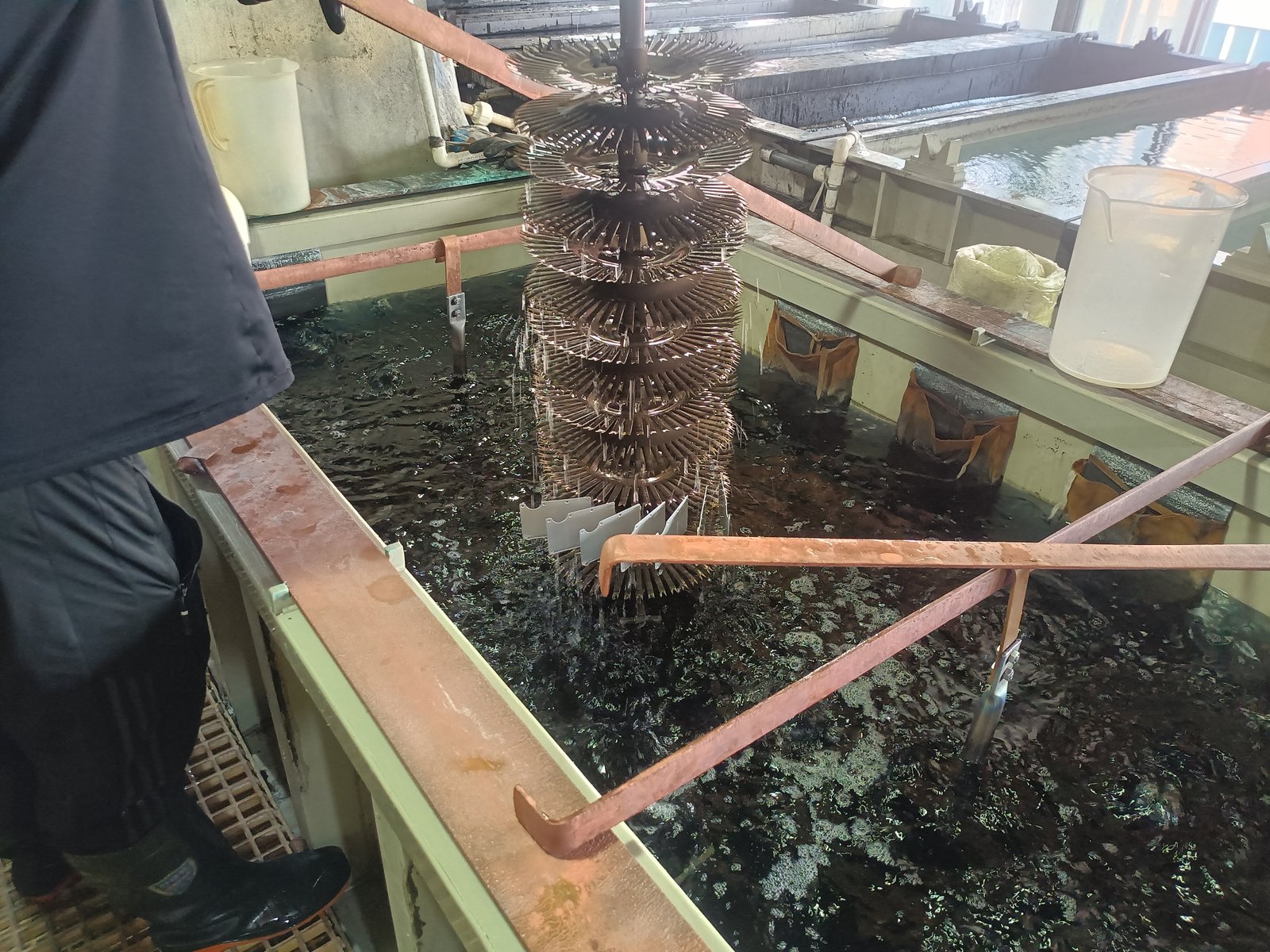
Every green wallet on the market is produced by one of four routes. They differ in substrate compatibility, layer thickness, colour precision and cost — and the choice usually decides whether a reorder can be matched at all.
| Route | Substrate | Layer / film | Colour control | Practical limits |
|---|---|---|---|---|
| Type II anodizing + dye + seal | Aluminium only | 10–25 µm oxide | Dye concentration, immersion time, seal quality | Cheapest saturated green; deep scratches expose bare metal; organic dye can shift under long UV |
| PVD (vacuum deposition) | Titanium, stainless steel, aluminium | 1–3 µm multi-layer film | Chamber recipe and layer stack (interference colour) | Hardest, most UV-stable; higher unit cost; shade tied to chamber load and target condition |
| Powder coating | Aluminium, steel | 60–100 µm | Powder lot, cure temperature | Hides machining marks, thick build-up at edges, coarser colour precision, measurable thickness gain |
| Leather dye / pigment finish | Cowhide, veg-tan or chrome-tan | Impregnated or coated surface | Drum recipe, finish coat, hide absorption | Hide-to-hide variance; needs light and rub fastness data; aniline shades age with oils |
In practice, 6061-T6 aluminium with sealed Type II anodizing is where most brands start: the cost sits in the same band as natural anodizing, and a mid-saturation green can be held within ΔE00 ≤ 2.0 batch to batch. Titanium and stainless programmes move to PVD because the substrate can take a harder film without the dye-fade complaint that drives returns. Leather is a separate discipline — colour is judged on the finished hide, and fastness results (not photographs) are the only reliable evidence. For a deeper technical walk-through of the anodizing process itself, see our anodizing explained reference.
Colour Tolerance, Batch Control and Test Methods
How is colour signed off before mass production?
A lab dip first, a physical unit second, a retained golden sample third. The lab dip proves the recipe on the real substrate; the sample unit proves the shade survives assembly, laser marking and packaging; the golden sample is what every production batch is measured against. Each stage gets a written ΔE reading and a signed colour card — a photograph is never accepted as evidence because cameras white-balance the shade away.
Which tests actually protect the finish?
Four cover the common failure modes on metal: coating adhesion (ASTM D3359 cross-cut, target 4B or better), neutral salt spray (ASTM B117, with a re-measured ΔE after exposure to catch fade rather than only corrosion), abrasion (Taber cycles to the bare-metal point), and a re-check of colour after each test rather than only a pass/fail on corrosion. On leather, add light fastness (ISO 105-B02) and rub fastness (ISO 11640), and ask for the blue-wool grade or grey-scale rating instead of a verbal assurance. RFID attenuation belongs in the same test report if the wallet carries a shielding layer — see our RFID wallet OEM testing and compliance guide.
What goes wrong in production?
- Dye bath depletion: shade drifts lighter through the shift unless concentration is titrated and replenished — ask for per-lot dye records.
- Seal temperature: an under-sealed anodic layer loses dye in sweat and hand contact within months.
- Chamber drift on PVD: target erosion changes the film stoichiometry, so the same recipe yields a different green near end-of-life targets.
- Substrate mixing: one carton built from two alloy lots is the most common cause of a “two shades” complaint.
- Leather hide variance: colour approved on one hide does not guarantee the next; grade hides by absorption class before dyeing.
From Lab Dip to Golden Sample: The Approval Flow
Colour approval is a five-step gate, and each step has a document that protects both sides:
- Colour brief (day 0): substrate, surface prep, route, physical reference, ΔE tolerance, test list, and the packaging colour code. One page, signed.
- Lab dip (3–5 working days): two or three candidate recipes on the real alloy or hide, measured under D65, presented as physical swatches.
- Sample unit (about 7 working days): the chosen recipe built into a full wallet so the brand sees the shade next to laser marking, edges and stitching.
- Golden sample and first-article report (3–5 days after receipt): dimensions, shade reading, adhesion and salt-spray results, and a signed retained sample held by both parties.
- Production and per-batch cards (about 25 days for runs up to 5,000 pieces): every batch ships with its colour card and ΔE reading against the golden sample, plus retained swatches for the next reorder.
Budget three to four weeks between colour brief and production release. Where leather is involved, add one to two weeks if light-fastness testing is required, because the test runs in real exposure cycles rather than in a chamber.
Size System
What are the standard sizes for green wallets?
Green wallets appear across four broad form factors, each with a typical dimensional range:
| Form Factor | Approximate Width × Height | Card Capacity | Typical Thickness |
|---|---|---|---|
| Slim card holder | 3.3 – 3.7 in × 2.3 – 2.7 in | 4 – 6 cards + cash slot | 6 – 10 mm |
| Minimalist metal wallet | 3.5 – 3.8 in × 2.4 – 2.7 in | 6 – 10 cards | 8 – 12 mm |
| Bi-fold wallet | 4.0 – 4.5 in × 2.8 – 3.2 in | 6 – 12 cards + ID window | 14 – 20 mm |
| Money clip / hybrid | 3.4 – 3.7 in × 2.4 – 2.6 in | 4 – 8 cards under clip | 8 – 14 mm |
A “green” colorway does not change dimensions — it is a surface finish applied over aluminum anodizing, carbon fiber layup, or dyed leather. The core sizing rules above apply regardless of color.
Which form factor fits my daily routine?
Everyday carry users who grab their phone and wallet from the same pocket usually prefer the slim card holder or minimalist metal wallet. These sit flush against the body, avoid creating a bulge, and reduce the risk of posture strain from a thick back-pocket load. Buyers who travel frequently and carry receipts, boarding passes, and temporary notes may want the slightly larger bi-fold despite the extra bulk.
Outdoor and tactical users often gravitate toward aluminum or titanium builds because they resist water exposure and abrasion better than untreated leather. For those contexts, a green anodized finish also offers scratch concealment compared to polished metals.
Size Chart
Green wallet dimension reference table
Use this table as a starting point, then cross-check with the specific product’s loaded measurements:
| Category | Width (in) | Height (in) | Thickness (mm) | Card Slots | Cash Section | Weight (oz) |
|---|---|---|---|---|---|---|
| Ultra-slim card holder | 3.3 – 3.5 | 2.3 – 2.5 | 6 – 8 | 4 – 6 | Small slot | 1.0 – 1.4 |
| Slim metal wallet | 3.5 – 3.7 | 2.4 – 2.6 | 8 – 11 | 6 – 8 | Folding slot | 1.6 – 2.2 |
| Mid-capacity holder | 3.7 – 3.9 | 2.6 – 2.8 | 11 – 14 | 8 – 10 | Medium slot | 2.2 – 2.8 |
| Bi-fold wallet | 4.0 – 4.4 | 2.8 – 3.2 | 14 – 20 | 6 – 12 | Full compartment | 3.0 – 4.5 |
| Money clip hybrid | 3.4 – 3.7 | 2.4 – 2.6 | 8 – 12 | 4 – 8 | Under clip | 1.4 – 2.0 |
Remember that actual loaded size grows with card count and bill folds. An empty 3.5 × 2.5-inch aluminum wallet may swell to nearly 14 mm thick once you insert eight cards and a folded stack of bills. Always verify the seller’s “max capacity” figure against the number of cards you actually carry day to day.
For more detail on general wallet sizing systems, see our wallet size and dimension guide, which breaks down width, height, and gusset calculations across common styles. For B2B specification sheets, see our wallet size standards guide for B2B buyers.
How to Measure
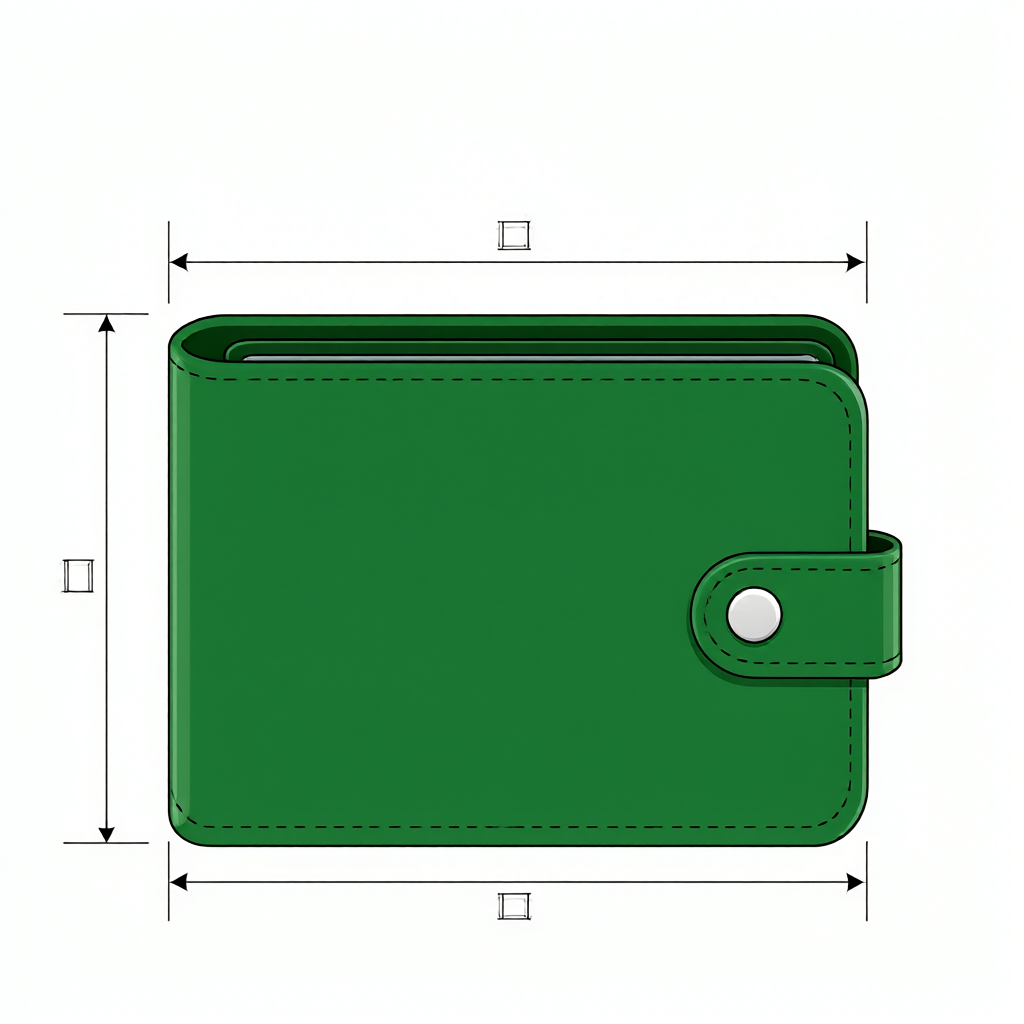
How do I measure my hand and pocket for the right fit?
Start with your pockets — they are the real constraint. Use a flexible tape measure or a ruler to record the pocket opening width and the pocket depth from seam to rim. Most jeans front pockets open about 4.25 to 4.75 inches wide; back pockets tend to be narrower at 3.75 to 4.25 inches. If your opening is below 4 inches, aim for a wallet no wider than 3.5 inches to avoid stretching the fabric.
Next, measure your hand span from thumb base to little finger knuckle. A relaxed grip should close comfortably around the wallet without forcing your fingers apart. If you need to spread your hand significantly to hold the wallet, it is too wide for comfortable one-handed operation.
Finally, weigh the loaded wallet on a kitchen scale. Anything over 3 ounces (85 g) becomes noticeable in a front pocket during long walks. Slim metal wallets with six cards typically land between 1.5 and 2.2 ounces — a comfortable daily range.
What measurement mistakes should I avoid?
Don’t assume the product listing’s millimeter numbers equal comfort. A wallet advertised as 89 mm wide may compress to 86 mm when packed full, which can still feel tight in a narrow pocket. Always check whether the manufacturer lists loaded dimensions versus empty outer shell measurements, and prefer sellers who provide both.
Also don’t measure only the wallet width. Height matters for bill folding. A wallet that is 64 mm tall accommodates a standard US bill folded once (approximately 67 mm after crease). Bills folded twice drop to about 44 mm, which fits almost any card holder but creates a thicker cash block. Know how you fold before you buy.
Fit & Compatibility
Will a slim green wallet fit my front pocket comfortably?
Front-pocket ergonomics hinge on three variables: pocket opening width, wallet unloaded thickness, and how your seat rests when sitting. If your jeans’ front pocket opening measures 4.5 inches or less, a 3.5-inch-wide wallet leaves approximately half an inch of clearance on each side — enough to slide in and out without catching the seam. Wallets wider than 4 inches will stretch the pocket over time and create discomfort when you sit.
Thickness is equally important. A wallet under 10 mm when packed generally sits flat without folding awkwardly. Between 10 and 14 mm, expect a slight ridge when seated. Above 14 mm, the wallet tends to wedge itself under your thigh, which causes the seat-to-pocket pressure gradient that leads to lower-back strain over prolonged use.
What is the best alternative to a wallet worn in the back pocket?
Back-pocket carry is linked tositting-related nerve compression and uneven pelvic alignment in ergonomic studies. The simplest swap is a front-pocket minimalist wallet combined with a separate, small key organizer mounted on your belt loop or zipped into a bag pocket. This distributes weight forward and keeps the spine neutral.
If you prefer keeping a wallet behind you for security reasons, consider a belt pouch or concealed cargo pocket instead — these positions load the torso rather than the ischial tuberosity (the bone you sit on). Another option is a carry strap wallet that clips inside a jacket lining, completely removing the pocket burden. These strategies matter most for commuters, drivers, and office workers who spend more than four hours seated daily.
Standards & Codes
What standards apply to metal and leather wallets?
Wallet construction touches several voluntary and regulatory frameworks depending on the materials used:
- RFID-blocking performance: No single global standard mandates consumer wallet testing, but articles like our RFID Wallets Guide detail the common ISO/IEC 14443 frequency band (13.56 MHz) that shields cards. Look for independent attenuation figures — useful products show 20 dB or more reduction at that frequency, which translates to roughly a tenfold signal decrease.
- Material safety: The European Union enforces REACH restrictions on certain azo dyes and heavy metals in leather and textile components, while RoHS covers restricted hazardous substances in metal alloys and electronics housings. Products targeting EU markets typically comply with these unless otherwise stated.
- Quality management: Manufacturing processes backed by ISO 9001 certification indicate a documented quality management system, though the certificate applies to the factory, not any single product batch.
- Leather certifications: When sustainability matters, look for third-party verifications such as OEKO-TEX for chemical safety in tanning, or FSC for wood-derived packaging components. These are voluntary but signal supply-chain accountability.
For authoritative reference on material testing methods, consult bodies like ASTM International, which publishes standards for metal hardness, coating adhesion, and abrasion resistance commonly used in wallet evaluation.
What should I watch for in marketing claims?
Beware of absolute language such as “completely RFID-proof” or “indestructible.” Real wallets attenuate signals and resist wear within limits — they do not eliminate them. Legitimate sellers publish ranges (for example, weight tolerance ±5%, card capacity 6–8 depending on card thickness) rather than fixed guarantees. Similarly, “waterproof” claims should distinguish between splash resistance and submersion survival; an anodized aluminum wallet handles rain, but deliberate soaking will still compromise stitching and any organic interior lining.
Materials & Construction Quality
Metal wallet alloys and specifications
Aluminum wallets commonly use 6061-T6 alloy, which provides a good balance of strength, weight, and machinability at roughly 2.7 g/cm³ density. For heavier-duty applications, 5052-H32 aluminum offers superior corrosion resistance but runs slightly softer. Titanium wallets employ Ti-6Al-4V (Grade 5) as the standard, delivering approximately twice the yield strength of 6061-T6 aluminum at 4.43 g/cm³ — meaning a titanium wallet can be thinner while maintaining structural rigidity under compression loads from pocket stacking.
| Alloy | Density (g/cm³) | Yield Strength (MPa) | Corrosion Resistance | Typical Use Case |
|---|---|---|---|---|
| 6061-T6 Aluminum | 2.70 | 276 | Good | Everyday slim wallet |
| 5052-H32 Aluminum | 2.68 | 207 | Excellent | Marine/coastal environments |
| Ti-6Al-4V (Grade 5) | 4.43 | 880 | Excellent | Premium EDC, heavy load |
| 304 Stainless Steel | 7.93 | 205 | Excellent | Rugged outdoor use |
Look for manufacturer disclosures specifying alloy grade. Vague terms like “aircraft-grade aluminum” without a numbered spec indicate either generic stock material or marketing language designed to obscure the actual specification. Reputable OEM manufacturers list the exact alloy on their specification sheets or product data documents.
Leather wallet construction standards
Full-grain leather remains the premium choice for wallet longevity, sourced from the outermost hide layer and retaining natural grain patterns. Vegetable-tanned leather cures over 30–60 days using natural tannins from bark, oak, or chestnut, producing firm leather that develops patina over years of use but carries higher cost and longer lead time. Chrome-tanned leather cures in hours using chromium salts, yielding softer, more water-resistant leather suitable for mass production at lower price points but raising environmental concerns in regions with strict REACH compliance requirements.
When evaluating leather wallet quality, check three concrete indicators:
- Edge finish: Burnished edges (painted or waxed) hide rough cuts; raw or rolled edges show craftsmanship and usually indicate thicker, higher-density leather.
- Stitching density: Minimum 8 stitches per inch along stress points (corner anchors, strap attachment zones) prevents seam failure under repeated flexing cycles.
- Lining material: Full-grain leather lining outlasts synthetic microfiber liners by two to three times in daily use; bonded leather linings delaminate within months under heat and humidity exposure common in tropical climates.
Carbon fiber specifications
Carbon fiber wallets use woven epoxy-resin prepreg sheets laminated under heat and pressure. The visible weave pattern — plain weave versus twill weave — affects both aesthetics and stiffness. Plain weave produces a checkerboard appearance with slightly higher in-plane shear resistance; twill weave creates diagonal lines with marginally better conformability around curved edges. For structural purposes, typical layup schedules specify 8 to 16 layers of 3K (1,000 filament count per tow) or 12K carbon fiber, with total thickness ranging from 0.8 mm to 1.5 mm depending on layer count and resin content. Higher ply counts increase impact resistance but reduce flexibility during insertion and removal cycles.
Choosing a Manufacturer for Custom Green Wallets
For buyers sourcing private-label or branded production runs, the evaluation shifts from retail features to supply-chain capability. Established manufacturers typically offer tiered metal-finishing options — aluminum anodizing in standard and custom colors, carbon fiber laminates with varying weave densities, and titanium options for premium tiers — alongside low-volume MOQ flexibility. Quality assurance hinges on documented traceability: certified material incoming inspection, in-process CNC tolerances held to ±0.05 mm on critical interfaces, and finished-goods audit sampling aligned with ISO 9001 procedures. Lead-time visibility matters equally — prototyping cycles under ten business days and sample fulfillment within a week signal mature tooling workflows. Packaging consistency, laser-engraving registration accuracy, and drop-ship readiness complete the operational picture for Amazon FBA and retail channel placements. Here is how we meet these standards across our production lines: we maintain in-house CNC machining for tight dimensional control, complete surface finishing under one roof to avoid subcontractor variability, and structure sample queues so design revisions reach proof stage within seven calendar days. Our facility operates under an ISO 9001-certified quality system, and we conduct BSCI social-compliance audits to align with retailer requirements. Programme minimums start at 300 pieces per SKU, brands can request custom color matches, logo placement, and retail packaging before committing to full production runs.
Pricing & Value Comparison
Wallet pricing reflects material costs, manufacturing complexity, and order volume tier. Understanding the cost structure helps buyers evaluate whether a quoted price represents fair market value or inflated margins disguised as premium branding.
| Tier | Order Volume | Unit Price Range (USD) | Lead Time | Sample Cost |
|---|---|---|---|---|
| Retail / dropship | 1 – 50 pcs | $18 – $45 | 3 – 7 days | Free – $25 |
| Small batch OEM | 300 – 500 pcs | $8 – $18 | 15 – 25 days | $50 – $150 |
| Mid-volume contract | 500 – 5,000 pcs | $4 – $9 | 30 – 45 days | $100 – $300 |
| Large-scale manufacturing | 5,000+ pcs | $2.50 – $5 | 45 – 60 days | Custom quote |
Price drivers include:
- Alloy selection: 6061-T6 aluminum costs approximately $4.50/kg; Grade 5 titanium runs $35–$50/kg, explaining the 5–8× unit cost difference between comparable aluminum and titanium wallets.
- Surface finishing: Anodizing adds $0.80–$1.50 per unit for color consistency across batches; PVD coating for titanium adds $2–$4 per unit due to vacuum chamber cycle time.
- Packaging complexity: Custom retail boxes with foam inserts cost $0.30–$0.80 per unit versus simple poly bags at $0.05; magnet-closure windows add another $0.15.
- MOQ leverage: Orders above 1,000 units typically unlock 15–25% price reductions versus 300-unit minimums because setup costs amortize across larger quantities.
DDP (Delivered Duty Paid) shipping from Chinese OEM factories to US or EU destinations currently averages $1.50–$3.50 per unit for air freight (7–12 day transit) or $0.40–$0.90 per unit for sea freight (35–50 day transit), depending on total shipment weight and destination port. Request freight quotes alongside product quotations to avoid unexpected landed-cost surprises.
Procurement Decision Framework
Buyers evaluating multiple supplier quotes should score each vendor against five weighted criteria to convert subjective impressions into comparable numerical ratings:
| Criterion | Weight | Scoring Rubric (1–10) | Evidence Required |
|---|---|---|---|
| Dimensional accuracy | 25% | 10 = ±0.5 mm tolerance; 5 = ±1.5 mm; 1 = >±3 mm | CAD drawings with GD&T callouts; sample measurement report |
| Material traceability | 20% | 10 = mill certs + RoHS/REACH declarations; 5 = supplier declaration only; 1 = no documentation | Alloy test reports; chemical composition certificates |
| Production lead time reliability | 20% | 10 = ships ahead of committed date; 5 = within ±3 days; 1 = >+7 days delay | On-time delivery history; production schedule transparency |
| Sample-to-production consistency | 15% | 10 = PPAP approval with signed-off samples; 5 = minor cosmetic deviations acceptable; 1 = functionally different | First-article inspection report; signed golden sample |
| After-sales support responsiveness | 20% | 10 = <24 hr reply, replacement warranty documented; 5 = 48–72 hr response; 1 = no clear policy | Warranty terms in writing; defect resolution case log |
Apply this scoring system when comparing at least three qualified suppliers. A weighted total below 60 indicates insufficient differentiation to justify switching from an existing vendor; scores above 75 on two or more criteria signal a compelling reason to transition production. Always request physical samples before signing contracts exceeding $10,000 in committed purchase value — digital photos cannot reveal surface texture, edge sharpness, or spring-force characteristics critical to end-user satisfaction.
How We Meet These Standards
As a manufacturer specializing in minimalist EDC wallets since 2014, we approach dimensional accuracy by holding ±0.3 mm tolerances on critical stack-up dimensions using in-house CNC machining centers calibrated quarterly against NIST-traceable gauge blocks. Our 6061-T6 aluminum billets arrive with mill test reports verifyingchemical composition within ASTM B221 specifications, and every anodized batch undergoes salt-spray testing per ASTM B117 to confirm finish durability exceeds 500 hours before release.
Material traceability extends through our full bill-of-materials documentation — customers receive alloy certificates, RoHS compliance statements, and REACH SVHC declarations with every shipment above 500 units. Lead-time reliability stems from scheduled production buffers: we maintain 7-day sample fulfillment and 25-day mass-production turnaround for orders up to 5,000 pieces, with written commitments documented in purchase order acknowledgments before tooling begins.
Our post-delivery support includes a 12-month functional warranty covering mechanism failures (ejector springs, hinge fatigue, clip tension loss) and a defect-rate guarantee holding total field returns below 2% on average. Customers receive direct engineering contact through our sales team for rapid root-cause analysis and replacement authorization within 48 hours of reported nonconformance.
Related Sourcing Considerations
How does colour affect tooling and MOQ?
Colour is a variable inside a programme, not a separate product: the same frame, same tooling, different dye bath or chamber run. Programme minimums start at 300 pieces per SKU, and additional shades are quoted per run because every change consumes a bath or a vacuum cycle. Confirm two things in writing before approving artwork — the per-colour minimum, and whether a new shade is treated as a new SKU for sampling and inspection purposes.
What documentation should ship with a colour-matched order?
A colour card per batch, the ΔE reading against the retained golden sample, alloy mill certificates, RoHS and REACH SVHC declarations where the destination requires them, the salt-spray and adhesion results for the finish, and one retained swatch. If the wallet includes an RFID layer, add its attenuation figures. That pack is what lets a brand answer a customer complaint without re-testing the whole batch.
How do I keep the same green across reorders?
Retain a physical standard at both ends and treat it as the master, not the Pantone chip. Reorder from the same dye lot where volume allows; when a lot changes, require a fresh lab dip and a ΔE comparison to the retained standard before the run starts. Re-approve rather than assume whenever the alloy supplier, surface prep or PVD target changes — those three variables move shade more than the recipe does.
FAQ: Colour Matching and Green Wallet Sourcing
Can you match a Pantone green exactly on an aluminium wallet?
Matching is done against a physical target, not a Pantone number alone, because Pantone references are built for print inks and the metal substrate changes how the shade reads. The workable process is to convert the reference into a lab dip on the actual alloy and finishing route, measure it with a spectrophotometer under D65/10 degrees, and sign a colour card. On sealed Type II anodizing, holding ΔE00 within 1.5 to 2.0 of that approved card is realistic; tighter than that usually means moving to PVD or accepting a shade shift between batches.
Is anodized or PVD green more durable?
PVD is harder and more colour-stable: a 1 to 3 micrometre vacuum-deposited film behaves like a thin ceramic layer, resists abrasion and does not fade in UV the way organic anodize dyes can. Anodizing is a grown oxide layer, typically 10 to 25 micrometres on decorative Type II, with dye trapped in the pore structure and sealed afterwards; it is cheaper and can reach brighter, more saturated greens, but a deep scratch exposes bare metal and long UV exposure can shift the shade. For a mid-price aluminium programme anodizing is the usual choice; for titanium premium tiers PVD is standard.
What colour tolerance is realistic for production runs?
Quote it in CIEDE2000. ΔE00 of 1.0 or less is a tight lab-level agreement, 1.5 to 2.0 is a normal commercial match that the eye reads as the same colour, and 3.0 or more is visibly different on a flat panel. Also state the measurement geometry, the illuminant (D65 with a 10 degree observer) and that readings are taken on the finished part. Batch comparison should always be against the retained golden sample, never the original Pantone chip.
Does the green finish change wallet dimensions or weight?
Anodizing and PVD add microns, not millimetres: a 10 to 25 micrometre oxide and a 1 to 3 micrometre PVD film sit inside the tolerance band a wallet drawing already carries, so dimensions and weight are effectively unchanged. Powder coating is the exception, because 60 to 100 micrometres per coated face adds noticeable edge build-up and roughly one to two grams on a 60 gram wallet. Specify whether the inspection drawing is measured before or after coating.
What is the minimum order for a custom green wallet?
Programme minimums start at 300 pieces per SKU. Colour is a variable inside that programme, and each additional shade is quoted as its own run because a dye bath or vacuum cycle is consumed per colour. Ask for the per-colour minimum in writing before approving artwork, and confirm whether a new shade counts as a new SKU for sampling, inspection and packaging.
How long does colour sample approval take?
Lab dips on metal or leather take about 3 to 5 working days, a physical sample unit in the approved shade about 7 working days on standard programmes, and first-article inspection plus golden sample sign-off a further 3 to 5 days after the sample arrives. Plan for three to four weeks from colour brief to production release, and add one to two weeks if light-fastness testing on leather is required.
Will the green fade in sunlight or from hand perspiration?
Anodized dyes are the weak point: outdoor UV exposure and repeated sweat contact can shift the shade over 12 to 24 months, so specify a properly sealed Type II layer and ask for light-fastness data if the product is a summer or outdoor item. PVD greens are effectively UV-stable. On leather, drum-dyed aniline shades change with oils and UV while pigment-coated finishes hold colour better but feel less natural, which is why ISO 105-B02 and ISO 11640 results are worth requesting.
Sources & References
- ASTM International — B117 salt spray, D3359 adhesion, B221 aluminium billet
- ISO — 105-B02 light fastness, 11640 rub fastness, 9001 quality management
- Anodizing explained — topedcwallet.com
- Wallet size standards for B2B buyers — topedcwallet.com
- RFID wallet OEM testing and compliance — topedcwallet.com
- Types of leather wallets — topedcwallet.com
- Metal wallet manufacturing — topedcwallet.com
Related in this cluster: Anodizing vs PVD on aluminium wallets · Laser engraving on anodised aluminium
Related in this cluster: Type II vs Type III Anodizing for Wallet Shells, Powder Coating vs Anodizing for Metal Wallets, Pantone Colour Matching on Anodised Aluminium, Brushed, Matte or Mirror: Metal Wallet Finishes, High-End Wallets for Men: Materials, Specs & Procurement.
From article to product
Turning this into a product?
Most of what is written here is the difference between a sample that works and one that does not. We can build either — the useful one costs the same.
Keep reading
More on buying guides
wallet with trigger
How Does a Trigger Wallet Work? What Is the Pop-Up Mechanism? The core of…
Readbest bifold wallet for women
What Is a Bifold Wallet? The term “bifold” refers to the fold: the wallet…
ReadMen’s trifold wallets with zipper compartments vs. bifold
At a Glance The three dominant men’s wallet formats differ in panel count, depth,…
Read
About the author
TOPWALLET Editorial Team
TOPWALLET's editorial and engineering desk writes from bench testing at the Shenzhen (Longgang) facility: pull-force and cycle testing, 13.56 MHz shielding measurements, finish trials and factory audits, rather than supplier spec sheets. Every specification in these guides is one we write on a purchase order.
Written on the floor
This article was written by our production and QC team — the people who spec tolerances, run the finishing line and inspect every batch. Where it states a capacity, a pull force or a lead time, it comes from a measurement we made, not a supplier’s catalogue. If a number here disagrees with what your own supplier told you, tell us; several of these articles started as a correction from a buyer.
See how the factory works · Inspection process · Sourcing FAQ
Turning this into a product?
Most of what is written here is the difference between a sample that works and one that does not. We can build either — the useful one costs the same.