

What Is a Phone Wallet Keys Organizer?
A phone wallet keys organizer is a compact everyday-carry device that consolidates three functions — phone storage, card wallet capacity, and a key-holding mechanism — into a single pocket-friendly unit. Rather than carrying a bulky traditional wallet alongside a phone and a separate keychain, buyers in the EDC space are increasingly sourcing products that merge these into one streamlined piece.
For B2B buyers, this translates into a specific product category: slim aluminum, carbon fiber, or titanium organizers designed for minimalist carry, often featuring an integrated phone cradle or back-sleeve, a spring-loaded or friction-fit card slot, and a small key loop or clip. These devices sit at the intersection of the tactical wallet market and the minimalist EDC wallet segment, appealing to consumers who prioritize function over bulk.
The core value proposition for end-users is simplicity: fewer items in the pocket, a unified aesthetic, and the durability that comes from metal or composite construction. For buyers and brand owners, the opportunity lies in customization — selecting materials, adding RFID protection, engraving logos, and designing retail packaging that fits the brand’s positioning. For the full picture on material selection and procurement, see our men’s minimalist wallets — materials, specs & sourcing guide.
How Do These Organizers Work and What Are They Made Of?
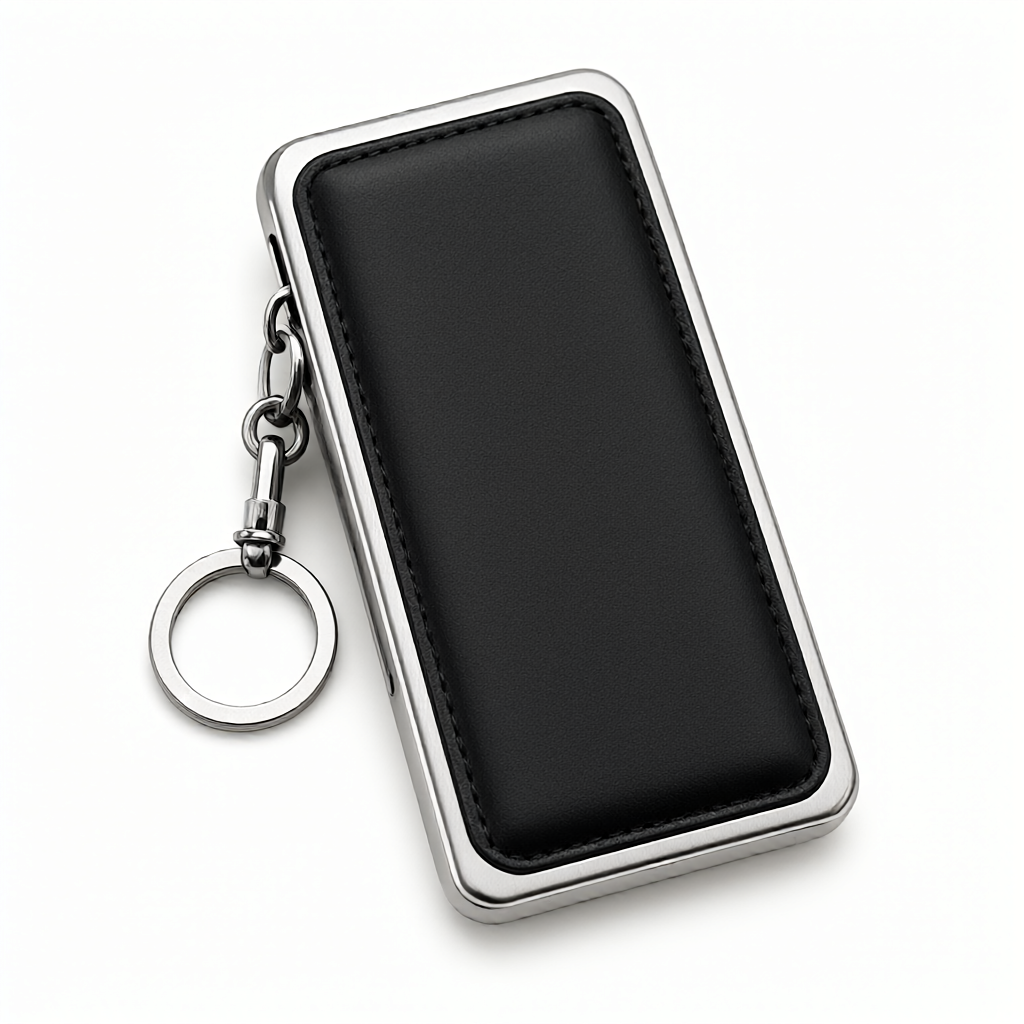
Understanding the mechanics and material science behind these organizers is essential before committing to a supplier. A well-engineered unit balances structural integrity with thinness — a tension that separates a durable product from one that warps or fails under daily stress.
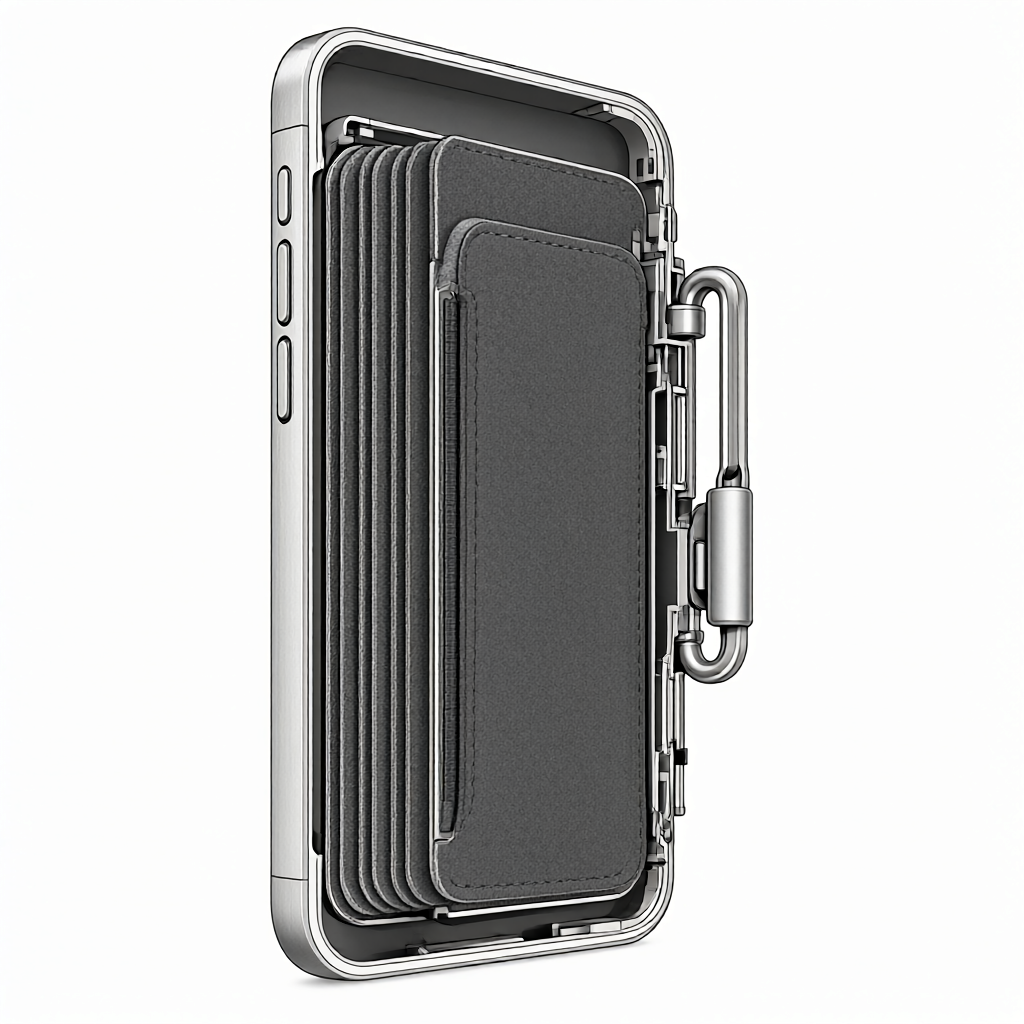
Phone integration typically takes one of two forms. Some organizers feature a dedicated sleeve or cradle on the rear face that accepts smartphones up to approximately 6.7 inches diagonally. The phone slides in and is held by friction or a gentle elasticized grip. Others rely on adhesive mounting, where the wallet unit bonds directly to the back of the phone case. The friction-mount approach is generally preferred for B2B because it avoids residue issues and allows the phone to be removed easily.
Card storage is usually achieved through a spring-loaded ejection mechanism or a passive friction slot. Spring-loaded systems allow single-handed card dispensing — a feature end consumers consistently reward in reviews. Passive slots are simpler to manufacture and often more reliable over time, since there are fewer moving parts to fail.
Key retention is commonly handled via a small titanium or aluminum loop, a clip-on strap, or an integrated carabiner-style attachment point. Some designs incorporate a dedicated key pocket within the main body, though this adds thickness and is less common in ultra-slim variants.
Materials define both the product’s performance and its price tier.
Aluminum alloy is the most widely used material in the mid-tier market. It offers an excellent strength-to-weight ratio, can be anodized in virtually any color, and machines cleanly with CNC processes. Aluminum wallets also lend themselves well to laser engraving, making them ideal for custom branding. This is the workhorse material for most private-label runs, as detailed in our EDC wallets and minimalist wallet manufacturing for B2B buyers resource.
Carbon fiber occupies the upper tier. It is lighter than aluminum, highly scratch-resistant, and has a distinctive visual texture that appeals to outdoor and tactical-oriented buyers. The trade-off is higher material cost and more complex handling during machining.
Titanium sits at the premium end. It offers superior corrosion resistance and a refined matte finish, particularly when bead-blasted or anodized. Titanium is heavier than carbon fiber per unit volume but remains lighter than many stainless steel alternatives. It commands the highest unit cost but also supports the highest retail margin.
For context on how card-holder designs differ across materials, the what is a card holder B2B sourcing guide provides useful comparison points that apply equally to phone-integrated units.
What Are the Typical Specs and Materials?
When specifying a phone wallet keys organizer for your brand, the following parameters are the ones that matter most to production feasibility and end-user satisfaction.
Dimensions and capacity. A typical unit measures between 75 mm and 95 mm in width, 50 mm and 65 mm in height, and 8 mm to 18 mm in thickness depending on whether it includes a phone sleeve. Card capacity generally ranges from 4 to 12 cards, with 6 to 8 being the sweet spot for most consumer use cases. Cash capacity varies — some designs include a bill compartment behind the card slots, while others rely on a flat cash slot that accommodates folded bills only.
Key capacity. Key loops typically hold one to three standard house or car keys. Designers should account for key weight when selecting materials; a heavy key load on an aluminum frame can cause flexing over time.
RFID-blocking capability. This is increasingly a standard expectation rather than a luxury add-on. RFID-blocking sheets or integrated metallic mesh layers prevent unauthorized scanning of contactless card data. For brands targeting the general consumer market, this feature should be treated as table-stakes, not optional.
Weight. Aluminum variants typically weigh between 40 g and 70 g for a single-card version, scaling up with added phone sleeves and key clips. Carbon fiber versions run 15 to 30 percent lighter than comparable aluminum units. Titanium falls somewhere in between depending on gauge thickness.
Surface finishes. Anodized aluminum is the dominant finish for mid-tier products, available in black, silver, blue, red, and custom colors. Bead-blasted titanium delivers a matte, fingerprint-resistant surface. Carbon fiber units are typically left raw or coated with a clear protective layer to prevent delamination.
When evaluating potential suppliers, always request physical samples before committing to a production run. Visual specifications on a spec sheet rarely convey the tactile feel and fit tolerances that determine whether a product will perform reliably in real-world conditions. See our what is a minimalist wallet buyer’s guide for deeper material comparison insights.
What Certifications and Quality Standards Apply?
B2B buyers should verify that their manufacturer operates under recognized quality management and environmental compliance frameworks. These certifications are not merely decorative — they signal that a factory has documented processes for consistency, traceability, and responsible material sourcing.
ISO 9001 is the baseline quality management standard. It ensures that the manufacturer has systematic procedures for design control, incoming material inspection, in-process quality checks, and final product verification. For any buyer sourcing from a new facility, ISO 9001 certification should be a minimum requirement.
BSCI (Business Social Compliance Initiative) audits address labor practices and working conditions in the supply chain. Many European and North American retailers require BSCI compliance as part of their vendor qualification process. It is a meaningful differentiator when presenting to corporate buyers or retail chains with sustainability mandates.
REACH and RoHS compliance are critical for products entering the European market. REACH regulates chemical substances in manufactured goods, while RoHS restricts hazardous materials like lead and cadmium in electronics-adjacent products. Since these wallets often sit near smartphones and contactless payment cards, compliance with both standards is a practical necessity rather than a nice-to-have.
SGS testing on raw materials provides an additional layer of verification. Reputable manufacturers will test incoming aluminum ingots, carbon fiber sheets, and titanium stock for composition and impurities before production begins.
When assessing a supplier’s certification claims, ask to see current audit reports rather than accepting certificates at face value. Expiration dates and audit scope matter — a certificate that expired two years ago or covers only a single production line does not guarantee the quality of the units you will receive. For broader context on how certification impacts wallet procurement, refer to our leather wallet guide covering grades and procurement specs.
What Should B2B Buyers Evaluate When Sourcing?
Selecting a manufacturer for phone wallet keys organizers requires looking beyond unit price. The following factors have a direct impact on margin, time-to-market, and brand reputation.
MOQ and tooling investment. Low minimum order quantities — starting around 300 pieces — are increasingly common in the EDC wallet sector and lower the barrier for smaller brands and Amazon FBA sellers testing new product lines. However, very low MOQs often come with higher per-unit costs. Buyers should evaluate the total landed cost, including tooling, sample fees, and shipping, rather than comparing sticker prices alone. For promotional product distributors and corporate gift buyers, MOQ flexibility is often the deciding factor.
Sample lead time. A fast sample turnaround — one to two weeks — allows buyers to evaluate fit, finish, and mechanism functionality before committing to a production run. Extended sample times delay product launches and increase the risk of missing seasonal demand windows.
Customization depth. True customization goes beyond logo placement. Buyers should assess whether the manufacturer can accommodate changes to card capacity, key clip design, phone sleeve dimensions, and packaging. A factory that only offers laser engraving on a fixed template provides limited value compared to one that can adapt the entire product architecture to a buyer’s specifications. Our wallets for women B2B sourcing guide and money bag sourcing guide cover related customization considerations that apply across pocket gear categories.
Manufacturing capabilities. In-house CNC machining is a significant advantage. It allows tighter tolerances, faster iteration on design changes, and better quality control than outsourcing machining to a third party. Similarly, in-house laser engraving and UV printing mean that branding can be applied without relying on external vendors, reducing lead times and coordination risk.
Packaging and retail readiness. Private-label buyers need packaging that meets retail shelf standards and protects the product during transit. Amazon FBA sellers require prep that complies with FBA labeling and poly-bagging requirements. Confirm that the manufacturer can handle box design, inserts, andFBA compliance as part of the service package rather than requiring buyers to source packaging separately.
Drop shipping and fulfillment. Some manufacturers offer direct-to-consumer fulfillment or drop-shipping services. This is particularly relevant for Amazon FBA sellers and smaller brands that lack warehousing infrastructure. Understanding the logistics options early prevents costly rearrangements later in the sourcing process.
How Do Leading Producers Meet These Standards?
The gap between a commodity phone wallet keys organizer and a brand-worthy product comes down to manufacturing discipline, material selection rigor, and the willingness to accommodate buyer-specific requirements without inflating costs.
As a manufacturer, our approach to this product category centers on three principles: design flexibility, quality consistency, and supply-chain transparency.
We hold ISO 9001 certification and operate within a BSCI-audited facility, which provides the procedural backbone for consistent production. Our in-house CNC machining allows us to produce tight-tolerance components for aluminum, carbon fiber, and titanium variants without outsourcing critical steps. Laser engraving and UV printing capabilities mean that branding — from subtle logos to full-color retail packaging — is completed internally, reducing lead times and coordination risk.
For buyers entering this category, the typical engagement path looks like this: initial concept or reference product discussion, sample development within approximately seven days, tooling and fixture setup if required, then production at volumes starting from 300 pieces. This model supports everyone from independent EDC brands testing a new SKU to established retailers scaling a private-label line.
With over 13 years of export experience and production capacity exceeding 500,000 units per month, we have refined our processes to handle diverse requirements — from simple laser-engraved aluminum cards to complex multi-material assemblies with integrated RFID shielding and titanium key clips. Our 50,000-square-foot factory serves 200+ brands across North America, Europe, Australia, and Southeast Asia, which means we understand the regulatory and quality expectations across multiple markets.
The decision to partner with a manufacturer ultimately comes down to whether they can meet your specification, hit your timeline, and scale with you. A factory that can move from concept to shipped container in a single engagement removes significant friction from the sourcing process.
Wallet Keys Organizer: Where Can You Verify the Data and Sources?
- men’s minimalist wallets — materials, specs & sourcing guide — topedcwallet.com
- EDC wallets and minimalist wallet manufacturing for B2B buyers — topedcwallet.com
- what is a card holder B2B sourcing guide — topedcwallet.com
- what is a minimalist wallet buyer’s guide — topedcwallet.com
- leather wallet guide — topedcwallet.com
- wallets for women B2B sourcing guide — topedcwallet.com
- money bag sourcing guide — topedcwallet.com
- Get a Free Quote → — topedcwallet.com
From article to product
Sourcing minimalist-wallets?
Tell us the format, the quantity and the date you need stock. You get material options, MOQ and a landed-cost range back within one business day.
Keep reading
More on wallet types
Thin Male Wallets: Buying Guide for Slim Minimalist Picks
How to choose a slim wallet for men — thickness thresholds, material trade-offs, capacity…
ReadStashed Wallet: A Minimalist Everyday-Carry Solution
Understand what a stashed wallet is, how minimalist slim wallets work, and what to…
ReadFolding Wallets: Types, Materials & Buying Guide
Learn what makes a folding wallet worth buying, from materials and card capacity to…
Read
About the author
TOPWALLET Editorial Team
TOPWALLET's editorial and engineering desk writes from bench testing at the Shenzhen (Longgang) facility: pull-force and cycle testing, 13.56 MHz shielding measurements, finish trials and factory audits, rather than supplier spec sheets. Every specification in these guides is one we write on a purchase order.
Written on the floor
This article was written by our production and QC team — the people who spec tolerances, run the finishing line and inspect every batch. Where it states a capacity, a pull force or a lead time, it comes from a measurement we made, not a supplier’s catalogue. If a number here disagrees with what your own supplier told you, tell us; several of these articles started as a correction from a buyer.
See how the factory works · Inspection process · Sourcing FAQ
Sourcing minimalist-wallets?
Tell us the format, the quantity and the date you need stock. You get material options, MOQ and a landed-cost range back within one business day.