

Leather Wallet Guide: What Is the Quick Answer?
A leather wallet is a compact carrying accessory constructed primarily from animal hide that has been treated through a tanning process to resist decomposition and become flexible enough for daily use. Buyers typically select between minimalist card-carry designs, bi-fold formats with bill compartments, and trifold layouts depending on how much cash versus cards their target users carry.
The material itself — leather — is what separates this category from synthetic alternatives. Real leather develops a patina over time, offers varying degrees of water resistance, and generally outlasts polyurethane or nylon wallets when properly maintained. For B2B sourcing, the critical variables are the hide grade (full grain versus top grain versus genuine), the tanning chemistry (vegetable versus chrome), and the construction details that determine how the wallet handles pocket stress, edge wear, and long-term flexibility.
Leather Wallet Guide: How Does It Work in Detail?
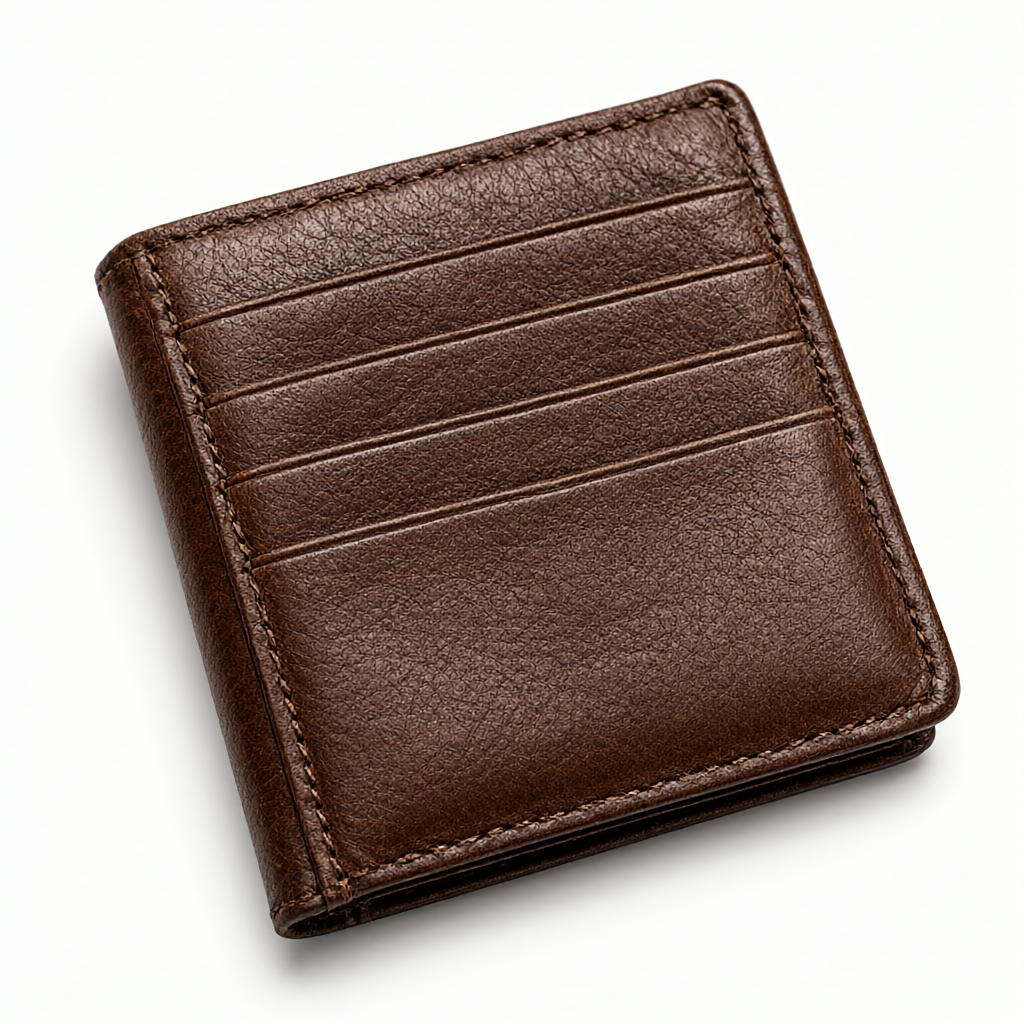
What is a leather wallet?
A leather wallet is more than a pocket container for cards and cash. From a procurement perspective, it is a product where material selection, construction method, and hardware integration determine both the unit economics and the end-user satisfaction over a multi-year ownership period.
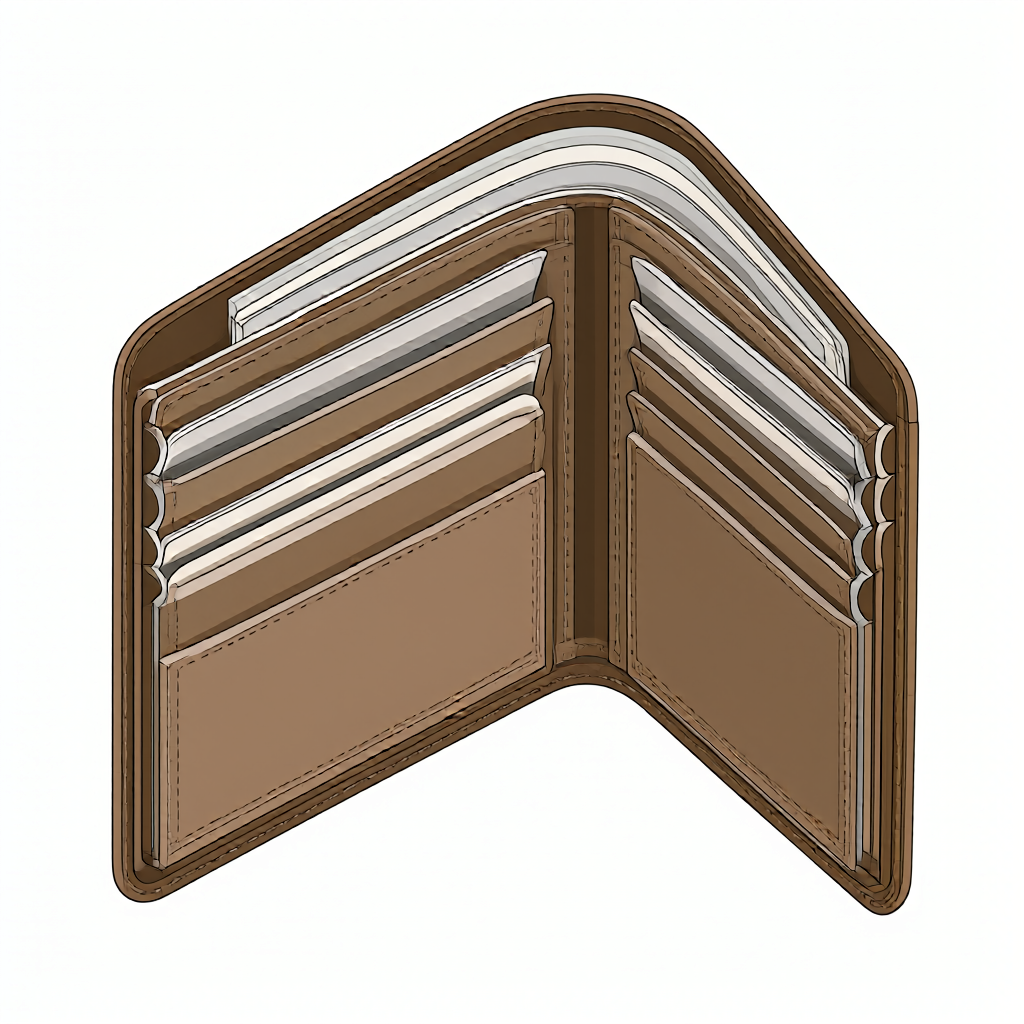
The core components break down into three areas: the face material (the leather itself), the structural layers (liners, gussets, card pockets, and bill sections), and any integrated features such as RFID-blocking inserts, money clips, or expansion mechanisms. When evaluating a leather wallet for a private-label or OEM program, the material specification drives the largest share of cost variation and quality differentiation.
How do you choose a leather wallet?
Selection starts with understanding how the end user carries. A minimalist carry habit — ten cards, no cash, slim profile preference — points toward a different wallet architecture than a user who routinely carries twenty-plus cards, multiple bills, and occasionally coins.
The decision framework involves five checkpoints:
Leather grade determines durability and appearance aging. Full grain leather retains the outermost layer of the hide, including natural grain patterns and density. It develops a patina rather than cracking. Top grain leather has been sanded or buffed to remove imperfections, offering a more uniform appearance but slightly reduced longevity. Genuine leather is a broad marketing term that can encompass anything from low-grade split leather to moderately durable hides; it rarely indicates a specific quality tier in manufacturing documentation.
Tanning method affects environmental compliance, scent, and tactile feel. Vegetable-tanned leather uses natural tannins from bark, leaves, or fruits. It ages with a rich darkening patina and is preferred for hand-stitched or artisan positioning. Chrome-tanned leather uses chromium salts, processes faster, produces softer and more water-resistant hides, and is the industry standard for high-volume production. Both methods are widely used; the choice depends on brand positioning and target market expectations.
Construction method influences structural integrity. Stitched seams generally outlast adhesive-bonded joints under repeated flexing. Corner reinforcement, edge painting or edge staining, and bartacking at high-stress points are indicator details that separate durable wallets from disposable ones.
Feature integration must be evaluated against wear patterns. A money clip welded to a leather body creates a rigid stress point that can split the hide over time. An RFID-blocking layer adds bulk but may be required by corporate buyers. Expansion bands that accommodate more cards than the nominal capacity can distort the wallet shape if overfilled.
Supply chain transparency matters for compliance-heavy markets. Buyers importing into the EU should verify REACH compliance for chromium residue limits. The US FTC requires country-of-origin labeling on leather goods. Understanding these requirements before finalizing specifications prevents costly rework.
What’s the difference between full grain and genuine leather?
This distinction is where procurement documents often become ambiguous. The terms are not uniformly regulated across all jurisdictions, which means a single leather specification sheet can describe very different materials depending on the supplier’s origin and marketing conventions.
Full grain leather is the outermost layer of the hide. It contains the tightest fiber structure and the natural grain pattern, including any scars, pores, or wrinkles that formed while the animal was alive. Because the fiber matrix is intact and undisturbed, full grain leather is the most durable grade available. It resists water absorption longer than lower grades and develops a patina — a soft, glossy surface change — rather than peeling or flaking. For a wallet that sees daily pocket use, full grain is the benchmark specification.
Genuine leather, as a technical term, simply means the material is real leather rather than synthetic. In retail marketing, however, “genuine leather” has become associated with lower-tier hides that have been heavily processed, coated, or embossed. Many products labeled genuine leather are split layers — the inner portions of the hide separated from the outer grain layer — which are bonded with polyurethane coatings to simulate a smooth surface. These wallets are functional and affordable but will not develop patina and typically crack within one to two years of regular use.
The practical implication for buyers is to request a specific grade designation from the supplier rather than accepting a generic “genuine leather” label. Ask for the tanner’s grade certificate, the hide numbering system classification, and sample swatches that can be flexed and water-tested before committing to a production run.
Is vegetable-tanned or chrome-tanned leather better for wallets?
Neither is universally superior. The answer depends on what the wallet is designed to do and which market it serves.
Vegetable-tanned leather is stiffer when new and requires a break-in period. It absorbs oils and water more readily, which means it needs conditioning to maintain flexibility. On the positive side, it produces a distinctive patina that many users consider aesthetically valuable, and it is perceived as a premium material in markets that prioritize craftsmanship storytelling. The tanning cycle takes weeks rather than hours, which increases unit cost. Vegetable-tanned leather is also compatible with tooling and stamping techniques, making it a better choice for brands that want embossed logos or hand-finished edges.
Chrome-tanned leather is softer out of the package, more resistant to water spotting, and significantly cheaper to produce at volume. It maintains flexibility across a wider temperature range, which matters for products shipped to cold climates. The trade-off is that it does not develop the same depth of patina, and some buyers associate chrome tanning with environmental concerns due to chromium compound usage. Modern chrome tanning facilities operate under strict effluent controls, and the chromium residue in finished leather is typically well below regulatory thresholds, but brand narratives around sustainability may favor vegetable-tanned positioning.
For a B2B buyer evaluating a production run of five thousand or more units, chrome-tanned leather is the default choice for cost predictability and consistency. For a boutique or heritage brand running smaller batches at higher price points, vegetable-tanned leather provides material that supports a stronger product story.
Leather Wallet Guide: Which Specifications Matter Most?
What are the key specs for a leather wallet?
When specifying a leather wallet for manufacturing or private label, the following parameters define the product baseline:
| Specification | Typical Range | Impact |
|---|---|---|
| Leather thickness | 0.8 – 1.5 mm | Thicker hides resist abrasion but reduce pocket slimness |
| Leather width | 100 – 120 mm (folded) | Determines card capacity and bill compartment size |
| Stitch type | Single or double needle | Double needle offers higher seam strength |
| Edge finish | Painted, stained, or raw | Painted edges resist fraying; raw edges show craft aesthetic |
| Hardware material | Brass, aluminum, or stainless steel | Affects weight, corrosion resistance, and cost |
| RFID blocking | Optional insert or integrated layer | Required for corporate gift programs in some regions |
| MOQ per design | 300 – 500 pcs | Lower MOQ allows style testing before full commitment |
| Sample lead time | 5 – 14 days | Determines prototyping speed and iteration cycles |
| Production lead time | 20 – 35 days after sample approval | Varies with leather availability and decoration complexity |
Leather weight and density are often expressed in ounces per square foot in North American sourcing documents or grams per square meter internationally. A wallet-grade hide typically falls between 3 and 5 ounces. Heavier hides are used for bifold construction where structural rigidity matters. Lighter hides are preferred for slim card holders where pocket profile is the primary constraint.
Edge finishing is a specification that buyers frequently overlook until quality comparisons reveal the difference. Properly burnished or painted edges prevent delamination of the leather layers and give the wallet a finished appearance that justifies the retail price. Raw or unstained edges may be acceptable for rustic or handcrafted positioning but can fray if the wallet is carried in a loose pocket with keys or coins.
Leather Wallet Guide: Which Standards and Certifications Apply?
What standards apply to leather wallets?
Leather wallet specifications are governed by a combination of material standards, trade compliance requirements, and brand-specific quality benchmarks.
Material and chemical compliance is the primary regulatory concern. The EU REACH regulation restricts certain chromium VI compounds in leather products sold within member states. Leather imported into Europe must demonstrate that chromium VI levels do not exceed 3 milligrams per kilogram of leather, according to testing standards referenced by the European Chemicals Agency. While this agency URL is not in the provided source list, the requirement itself is a well-established compliance threshold for leather goods entering the EU market.
Country-of-origin labeling is mandated by the US Federal Trade Commission for textile and leather products. The FTC requires that imported goods clearly indicate the country where the leather was tanned and the product was assembled, according to FTC country-of-origin guidance. Buyers should verify that suppliers provide accurate origin documentation, as mislabeling can result in customs delays or consumer complaints.
Quality management systems at the manufacturing level provide additional assurance. An ISO 9001 certification indicates that the factory operates under a documented quality management system covering material inspection, process control, and outgoing quality checks. This certification is common among established wallet manufacturers and signals that production consistency is managed rather than left to informal practice.
Social compliance audits such as BSCI (Business Social Compliance Initiative) are increasingly required by European retail buyers and corporate gift programs. These audits verify working conditions, hours, wages, and safety standards at the manufacturing facility. A BSCI-audited facility reduces supply chain risk for buyers who must demonstrate ethical sourcing to their own stakeholders.
For buyers in the Americas, checking that suppliers comply with CPSIA requirements is relevant when products target younger demographics, though standard adult wallets rarely fall under children’s product regulations.
Leather Wallet Guide: What Else Should Buyers Consider?
What should you consider beyond the material?
A leather wallet specification is only one element of the procurement decision. The following factors determine whether the final product meets both quality expectations and business objectives.
Leather origin and supply chain transparency has become a significant differentiator. Buyers should request information about where the hides are sourced, which tannery processes them, and whether the supplier can provide traceability documentation. Hides from South America and Europe generally carry established reputation for consistent grading, while some Asian and African tanneries have improved quality substantially in recent years but may lack the documentation infrastructure that Western retailers expect. Ask for tanner certificates and test reports rather than accepting generic origin claims.
Leather grading and numbering systems vary by region and tannery. North American grading typically uses a numerical system where Grade 1 denotes the highest quality full grain hides and Grade 4 represents heavily corrected surfaces. European systems may use A, B, C classifications with subgrades. Understanding which system a supplier references prevents specification mismatches. A hide described as “Grade A” by one tannery may not equal “Grade A” by another. Request physical samples and perform your own flex and water tests before finalizing the grade.
Durability comparison across leather types provides a practical framework for setting customer expectations. Full grain vegetable-tanned leather, when properly maintained, can last five to ten years of daily carry with gradual patina development. Chrome-tanned full grain leather in the same usage pattern typically lasts three to seven years before noticeable surface wear. Top grain leather with polyurethane coating may last two to four years before the coating begins to flake. Split leather bonded with synthetic materials often shows failure within one to two years under regular use. These ranges assume normal pocket carry conditions and do not account for extreme exposure to water, heat, or abrasion.
Stage-based care routines should be communicated to end users or included as care inserts with the product. A new leather wallet benefits from a light conditioning application after the first month of use to allow the fibers to acclimate. At the six-month mark, a second conditioning prevents the leather from drying out in the stress points where cards are inserted and removed most frequently. At the one-year point, inspect stitching tension and edge wear; reapply conditioner if the leather feels stiff. Beyond two years, minor scuffs can be addressed with leather balm, but structural issues such as separating seams or broken hardware indicate that the wallet has reached the end of its service life.
Style matching to carry habits is the dimension most often missed in procurement specifications. A user who carries ten to twelve cards and occasionally folds a few bills does not need the same wallet architecture as someone who carries twenty cards, multiple IDs, and rolls of cash. Matching the wallet form factor to the carry profile prevents over-engineering and under-specification. Slim card holders with two to four card slots suit minimal carriers. Bi-fold wallets with six to eight card slots and a central bill compartment suit the average professional. Trifold or extended capacity designs serve users who treat their wallet as a primary organization tool.
Budget versus premium segmentation in the leather wallet market is wide. Entry-level wallets using corrected or split leather with printed grain patterns can be sourced at low unit costs but carry higher return rates due to premature wear. Mid-range wallets using top grain or decent full grain leather offer the best balance of durability and price for most consumer and corporate gift applications. Premium wallets using premium full grain or exotic leathers command higher margins but require more sophisticated marketing and a customer base that values material provenance.
Water resistance expectations should be managed carefully. Leather is naturally hygroscopic and will absorb moisture if exposed. No standard leather wallet is waterproof without additional treatment. Some suppliers offer waxed or oil-tanned leathers that resist water spotting better than untreated hides, but even these require reconditioning after wet exposure. Claims about water resistance should be qualified with realistic usage scenarios.
For buyers evaluating complete EDC sourcing strategies, understanding how leather wallets fit alongside other carry categories such as card holder selection criteria and minimal wallet procurement standards provides context for portfolio decisions. The same evaluation discipline applied to leather should be applied to metal, carbon fiber, and polymer alternatives.
Leather Wallet Guide: What Is the Manufacturer Perspective?
The leather wallet category sits alongside metal and composite wallet options in the broader EDC sourcing landscape. Buyers who start by evaluating leather specifications often find that material choice depends as much on brand positioning and user lifestyle as on durability numbers alone.
As a manufacturer that has worked with aluminum, carbon fiber, and titanium wallet programs for over a decade, our approach to material evaluation starts with the same questions any serious buyer should ask: What grade of material is this, where does it come from, how will it perform under the intended use pattern, and what does the total cost of ownership look like over three to five years?
Whether the final specification lands on full grain leather, chrome-tanned hide, or a machined aluminum body, the procurement logic is identical. Verify the material documentation. Request samples and test them. Confirm that the factory holds relevant quality and compliance certifications. Build specifications that match the end user’s actual carry habits rather than the catalog photo.
If you are evaluating leather wallet options alongside metal wallet alternatives, or if you need help building specifications that cover multiple material types for a single private-label program, contact our team to discuss your requirements.
Leather Wallet Guide: Where Can You Verify the Data and Sources?
- FTC country-of-origin guidance — www.ftc.gov
- ISO 9001 — www.iso.org
- testing standards referenced by the European Chemicals Agency — www.echa.europa.eu
- card holder selection criteria — topedcwallet.com
- minimal wallet procurement standards — topedcwallet.com
- contact our team — topedcwallet.com
From article to product
Choosing a material for a range?
Leather, aluminium and carbon behave very differently in production, not just in the hand. Send us the spec and we will tell you what it costs to make at your volume.
Keep reading
More on wallet materials
Vegetable Tanned Leather for Wallet Programmes
“Vegetable tanned” is a marketing phrase with a technical meaning, and the two do…
ReadRecycled Aluminium in Wallet Shells: Verifiable Claims
“Recycled aluminium” is a claim about provenance, and the wallet shell in your hand…
ReadFashion Zipper Men’s Wallets Leather Short Design Guide
Learn how to choose a short zipper leather wallet for men — full grain…
Read
About the author
TOPWALLET Editorial Team
TOPWALLET's editorial and engineering desk writes from bench testing at the Shenzhen (Longgang) facility: pull-force and cycle testing, 13.56 MHz shielding measurements, finish trials and factory audits, rather than supplier spec sheets. Every specification in these guides is one we write on a purchase order.
Written on the floor
This article was written by our production and QC team — the people who spec tolerances, run the finishing line and inspect every batch. Where it states a capacity, a pull force or a lead time, it comes from a measurement we made, not a supplier’s catalogue. If a number here disagrees with what your own supplier told you, tell us; several of these articles started as a correction from a buyer.
See how the factory works · Inspection process · Sourcing FAQ
Choosing a material for a range?
Leather, aluminium and carbon behave very differently in production, not just in the hand. Send us the spec and we will tell you what it costs to make at your volume.