

Leather Wallets For Men: What Is the Quick Answer?
What is leather wallets for men?
Leather wallets for men are carry accessories crafted primarily from animal hide — typically full-grain, top-grain, or genuine leather — designed to hold cards, cash, and identification in a slim profile. In the B2B sourcing context, this category covers everything from classic bifold wallets to modern minimalist card holders and money clips, often produced as OEM or private-label products for brands, Amazon FBA sellers, and retail distributors.
The core differentiator for buyers is not just the material but the construction method, leather grade, and compliance with trade standards. A well-sourced leather wallet balances aesthetics, durability, and regulatory fit for the target market — whether that is North America, Europe, or Australia.
Leather Wallets For Men: How Does It Work in Detail?
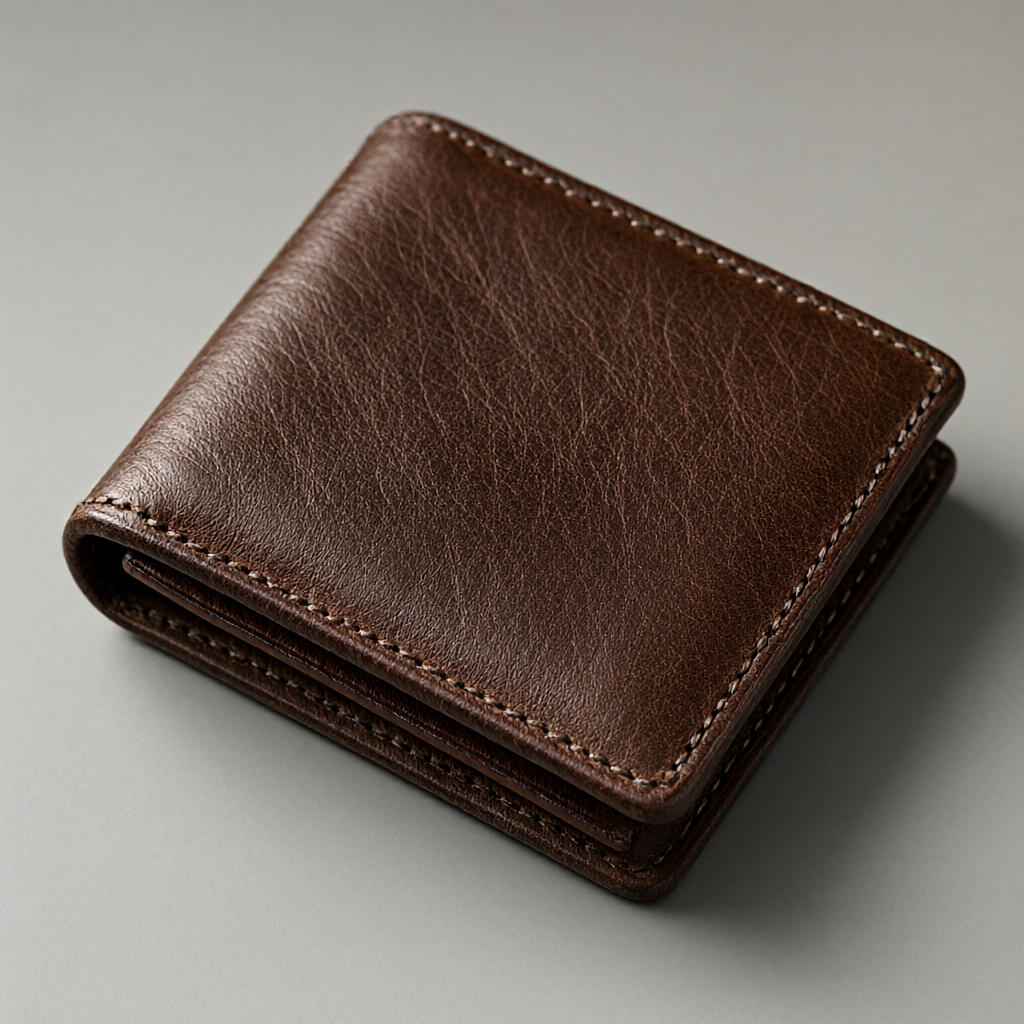
How does a leather wallet work as a product category?
At a functional level, a leather wallet serves as a pocket-organized carrier for flat items: banknotes, payment cards, and sometimes coins or IDs. However, the category has shifted significantly in recent years. While traditional bi-fold and tri-fold designs still occupy shelf space, the faster-growing segment is the minimalist leather wallet — a thinner, card-centric profile that appeals to buyers seeking a modern aesthetic without sacrificing the tactile qualities of leather.
From a sourcing perspective, “leather wallet” is a material classification, not a single product. The same term can cover:
- Full-grain leather bi-folds with multiple card slots
- Top-grain leather minimalist card holders
- Genuine leather money clips with RFID-blocking layers
- Hybrid designs combining leather with aluminum or carbon fiber frames
This variability is precisely why B2B buyers need a clear specification framework before engaging manufacturers.
Why does leather matter in the wallet category?
Leather remains a dominant material in the men’s wallet segment for three reasons:
Aging and aesthetics. Genuine leather develops a patina over time, which consumers associate with quality and character. This is a key selling point in retail and e-commerce environments where product imagery drives purchase decisions.
Tactile experience. Leather provides a familiar, premium feel that synthetic materials struggle to replicate at equivalent price points. For brands positioning themselves in the mid-tier range, leather offers a perceptible upgrade over polymer or fabric wallets.
Material versatility. Leather can be dyed, embossed, laser-engraved, and stitched in ways that support customization — a critical factor for private-label buyers who need unique branding elements on their products.
What are the main leather grades found in wallets?
Not all leather is equal. The grade determines durability, appearance, and cost. Buyers should understand the hierarchy:
Full-grain leather is the highest grade. It retains the natural grain surface and is the most durable. It ages well and shows minimal wear. Products using full-grain leather command a price premium and are suited for brands positioning at the upper end of the mid-tier market.
Top-grain leather has been sanded or buffed to remove imperfections, giving it a more uniform appearance. It is slightly less durable than full-grain but still offers good longevity and a cleaner look. This is the most common grade for commercial wallet production.
Genuine leather is a broader classification that includes lower-grade splits and bonded leather. While it carries the “leather” label, it lacks the durability and aging characteristics of full or top-grain options. Products in this tier are cost-driven and compete on price rather than quality perception.
For B2B procurement, understanding these distinctions is essential when evaluating supplier quotations and product samples.
Leather Wallets For Men: Which Specifications Matter Most?
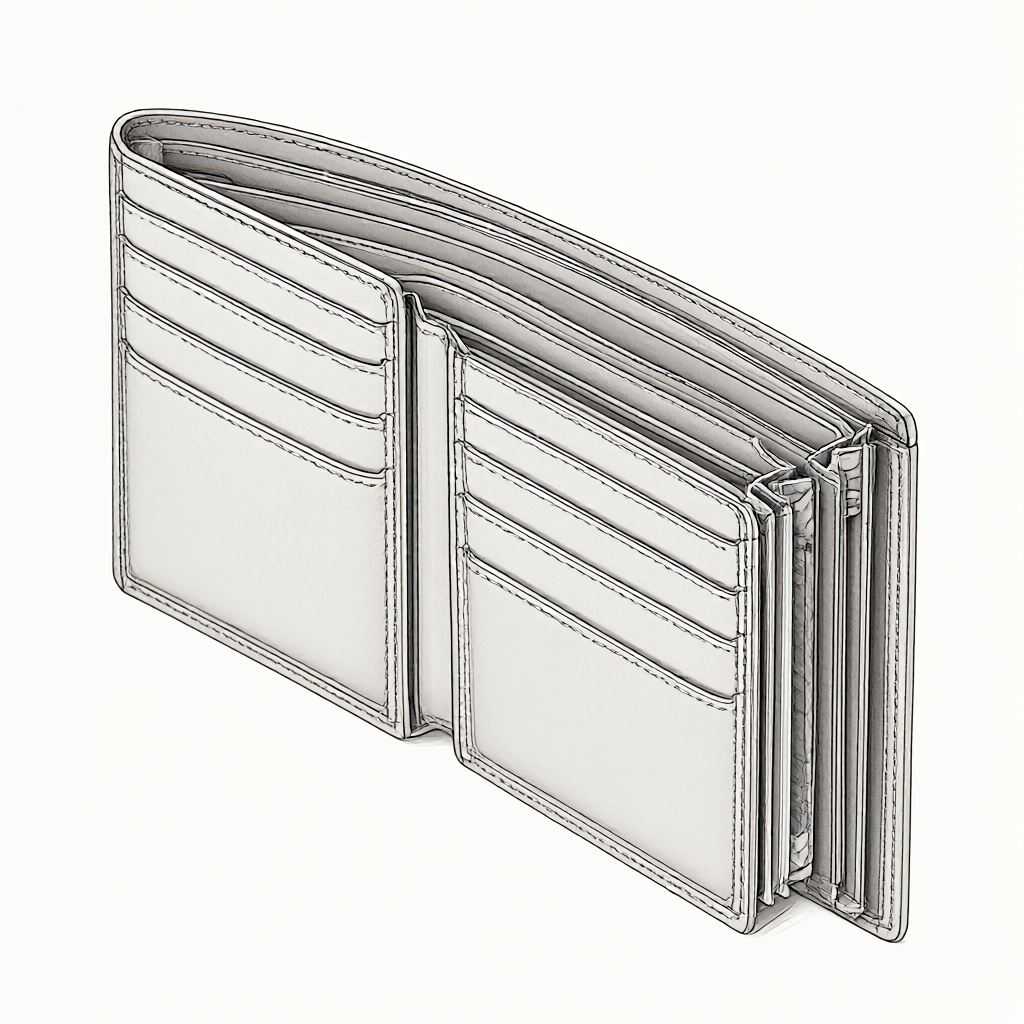
What are the key specs for leather wallets for men?
When defining a leather wallet product for sourcing, the following specifications are the primary decision variables:
Leather type and grade. This is the foundational specification. Full-grain and top-grain are the standard choices for mid-to-premium wallets. The leather source (cowhide, buffalo, suede) also affects texture and cost.
Thickness and weight. Typical leather wallet thickness ranges from 0.8 mm to 1.5 mm, depending on the number of layers and intended profile. Weight usually falls between 30 g and 80 g for minimalist designs, with traditional bi-folds reaching 100 g or more.
Card capacity. Modern minimalist leather wallets commonly hold 4 to 12 cards, with some designs incorporating expandable sleeves or elastic loops for additional storage.
RFID blocking. Many leather wallets now incorporate RFID-blocking liners or materials. This is a standard feature in the European and North American markets and is often a contractual requirement for retail distribution.
Stitching and construction. Double-stitching or reinforced edge stitching is standard for durability. Glued-only constructions are less reliable and should be flagged during sample evaluation.
Dimensions. Common minimalist wallet sizes range from 70 mm to 95 mm in width and 100 mm to 115 mm in height. Traditional bi-folds tend to be larger, approximately 110 mm by 90 mm when folded.
Hardware. Metal components such as money clips, card bars, or hinges should be specified by material — stainless steel, aluminum, or titanium — and finish (brushed, polished, PVD-coated).
Packaging. Retail-ready packaging typically includes a branded box, dust bag, and product insert. Bulk shipping packaging is usually individual poly bags or kraft boxes.
For a more detailed breakdown of material and specification considerations across wallet types, see our men’s minimalist wallets materials and sourcing guide.
Leather Wallets For Men: Which Standards and Certifications Apply?
What standards apply to leather wallets for men?
Leather wallet procurement is governed by a mix of material safety standards, trade compliance requirements, and quality management systems. Buyers should be familiar with the following:
REACH and RoHS compliance. For products entering the European Union, REACH (Registration, Evaluation, Authorization and Restriction of Chemicals) governs the use of certain hazardous substances in leather tanning and finishing. RoHS restrictions also apply to any metallic hardware or RFID-blocking components. Compliance with these regulations is typically verified through third-party testing reports.
ISO 9001. While not a product standard, ISO 9001 certification indicates that a manufacturer operates a documented quality management system. For B2B buyers, this is a baseline expectation when evaluating suppliers for recurring orders.
BSCI audit. The Business Social Compliance Initiative audit assesses factory working conditions and labor practices. Many Western retailers and distributors require BSCI certification as part of their vendor qualification process.
Material testing. SGS and similar testing bodies provide verification for leather composition, heavy metal content (such as chromium VI in tanned leather), and flammability where applicable. These test reports should be requested during the supplier evaluation phase.
According to ASTM International, material performance testing for consumer goods follows established protocols that manufacturers should reference when developing product specifications and quality control checkpoints.
FTC labeling guidelines. In the United States, the Federal Trade Commission requires accurate fiber and material disclosure on product labeling. The term “genuine leather” must reflect the actual leather content — mislabeling can result in consumer complaints and regulatory action.
For further context on how EDC wallet manufacturing processes align with these standards, refer to our EDC wallets and minimalist wallet manufacturing guide.
Leather Wallets For Men: What Else Should Buyers Consider?
What should you consider when choosing leather wallets for men?
Selecting the right leather wallet supplier involves more than comparing unit prices. The following factors will determine whether your product launch succeeds in the target market.
Leather grade alignment with brand positioning. If your brand targets the mid-tier segment, full-grain or high-quality top-grain leather is appropriate. A budget-focused brand may acceptable work with genuine leather, but this should be transparently communicated to avoid returns and negative reviews driven by material expectations.
MOQ and customization flexibility. Some manufacturers require high minimum orders for custom leather work, particularly when tooling or special tanning processes are involved. Lower MOQ thresholds allow smaller brands and Amazon sellers to test the market with reduced capital risk.
Sample lead time. The ability to receive a physical sample within a reasonable timeframe — ideally one to two weeks — is critical for evaluating leather quality, stitching, and hardware before committing to a production order. Samples should reflect the final product as closely as possible, not just a visual mockup.
Certification documentation. Request test reports and certificates before placing an order. Verifiable documentation for REACH, RoHS, and material composition protects your brand in the event of a customs inspection or retailer audit.
Design versatility. The modern wallet market favors hybrid approaches — combining leather with metal frames, carbon fiber accents, or RFID-blocking inserts. Suppliers capable of OEM and ODM work can help you differentiate your product line beyond standard off-the-shelf designs.
For buyers exploring alternative wallet formats alongside leather, our what is a card holder guide covers the specifications and sourcing considerations for card-centric designs that complement or replace traditional leather wallets.
The minimalist wallet category continues to evolve, and leather remains a relevant material when specified and sourced correctly. Understanding the grade, compliance requirements, and manufacturing capabilities behind a leather wallet enables buyers to make informed sourcing decisions that align with their brand positioning and market demands.
As a manufacturer, our approach to leather wallet production combines established craftsmanship with modern specification standards. We source full-grain and top-grain leather options, partner with certified tanneries for REACH-compliant materials, and offer full customization from leather selection to packaging — including laser engraving, embossing, and private-label branding. Our facility operates under ISO 9001 and BSCI standards, with an in-house CNC and finishing workflow that supports low MOQ orders starts at 300 pcs per SKU for full OEM customization (100 pcs trial order available for stock finishes) and sample lead times of seven days.
Leather Wallets For Men: Where Can You Verify the Data and Sources?
- ASTM International — www.astm.org
- men’s minimalist wallets materials and sourcing guide — topedcwallet.com
- EDC wallets and minimalist wallet manufacturing guide — topedcwallet.com
- what is a card holder — topedcwallet.com
- Get a Free Quote → — topedcwallet.com
From article to product
Choosing a material for a range?
Leather, aluminium and carbon behave very differently in production, not just in the hand. Send us the spec and we will tell you what it costs to make at your volume.
Keep reading
More on wallet materials
Vegetable Tanned Leather for Wallet Programmes
“Vegetable tanned” is a marketing phrase with a technical meaning, and the two do…
ReadRecycled Aluminium in Wallet Shells: Verifiable Claims
“Recycled aluminium” is a claim about provenance, and the wallet shell in your hand…
ReadFashion Zipper Men’s Wallets Leather Short Design Guide
Learn how to choose a short zipper leather wallet for men — full grain…
Read
About the author
TOPWALLET Editorial Team
TOPWALLET's editorial and engineering desk writes from bench testing at the Shenzhen (Longgang) facility: pull-force and cycle testing, 13.56 MHz shielding measurements, finish trials and factory audits, rather than supplier spec sheets. Every specification in these guides is one we write on a purchase order.
Written on the floor
This article was written by our production and QC team — the people who spec tolerances, run the finishing line and inspect every batch. Where it states a capacity, a pull force or a lead time, it comes from a measurement we made, not a supplier’s catalogue. If a number here disagrees with what your own supplier told you, tell us; several of these articles started as a correction from a buyer.
See how the factory works · Inspection process · Sourcing FAQ
Choosing a material for a range?
Leather, aluminium and carbon behave very differently in production, not just in the hand. Send us the spec and we will tell you what it costs to make at your volume.