

Branded Wallets: What Is the Quick Answer?
“Branded wallets on sale” for B2B buyers usually means private-label or white-label wallets produced by an OEM/ODM manufacturer at volume-discounted unit pricing — not consumer retail markdowns on established luxury names. A distributor buying 500 aluminum minimalist wallets through an OEM factory will often pay 40–70% less per unit than the same design retails for under a known brand, because the cost savings come from cutting out the brand premium and middlemen, not from seasonal clearance.
The real question isn’t whether branded wallets exist at discount — it’s whether the discount comes from legitimate manufacturing efficiency or from compromised materials, gray-market sourcing, or inflated reference prices designed to make a “sale” look deeper than it actually is. For buyers evaluating this channel, the answer lives in understanding how OEM production economics work, what specifications guarantee quality at low unit cost, and which certifications separate serious manufacturers from brokers reselling someone else’s product.
How Discounted Branded Wallets Work in B2B?
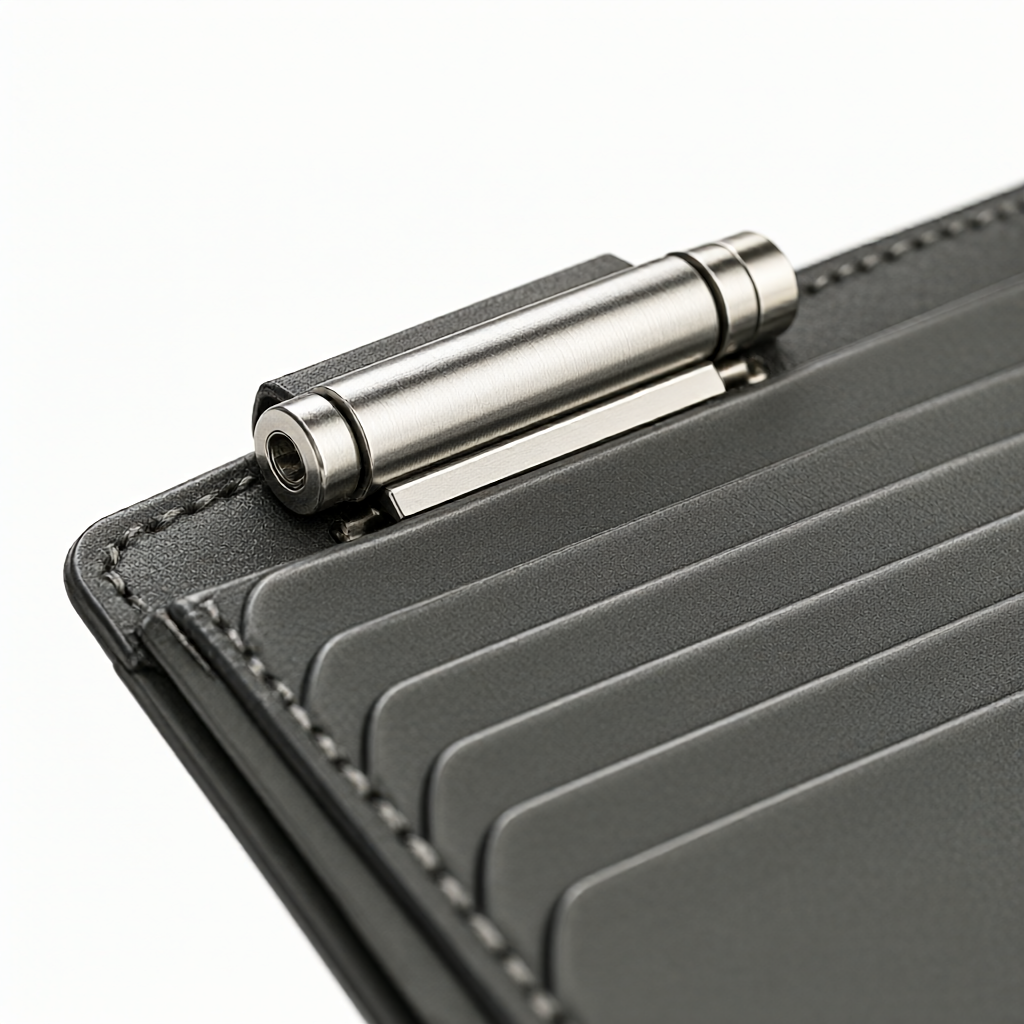
When a buyer searches for brand name wallets on sale, they may have two very different scenarios in mind: finding reduced pricing on an already-established consumer brand (like Tumi, Bellroy, or Ridge), or producing their own branded wallet at wholesale cost through an OEM factory. Both exist, but they operate on completely different economic models.
The second scenario — OEM wallet manufacturer production — is where the deepest structural discounts live. Here’s why:
A consumer brand’s retail price includes multiple layers beyond manufacturing cost: brand marketing spend, distributor margins, retail rent, and the brand equity premium that customers pay simply because a logo is stamped on the product. An OEM factory bypasses every one of those layers. The same CNC-machined aluminum wallet that retails for $45 under a premium name can be produced for $3–$8 per unit at factory gate, depending on material grade, finish complexity, and order volume. When a buyer places a bulk order of 1,000+ units, the per-unit cost drops further through machine-time amortization, material bulk purchasing, and streamlined QA throughput.
This is how wholesale minimalist wallets achieve the price points that make private label wallets viable for Amazon FBA sellers, promotional product distributors, and retail chains. The design belongs to the buyer. The manufacturing belongs to the factory. The brand exists only where the buyer chooses to place it.
But the model has trade-offs. Not every buyer wants their own brand — some want an established name they can move quickly. Authorized distributors of existing brands do occasionally run branded card holder supplier programs with volume discounts, but those discounts typically cap at 20–35%, far below what OEM production delivers. And gray-market discount sites — the kind that list “70% off Coach” or “wholesale Tumi” without authorization — carry authenticity risk that undercuts any apparent savings. The Federal Trade Commission monitors deceptive discount practices, including inflated reference prices used to manufacture false sale comparisons, so legitimate buyers should treat unusually deep discounts on named-brand wallets as a verification exercise first and a purchase decision second FTC – Consumer Protection.
For buyers whose end goal is their own brand at competitive landed cost, OEM sourcing is almost always the superior path. The following sections cover the specifications, standards, and decision factors that determine whether a given wholesale wallet deal is structurally sound or cosmetically appealing.
What ‘Brand Name’ Means in the Wholesale EDC Wallet Market?
In the EDC wallet category, “brand name” operates on three distinct levels that buyers need to distinguish before committing to a supplier.
Level 1: Established consumer brands. These are names like Ridge, Bellroy, Herschel, or Tumi. Buying these at wholesale requires either an authorized distributor relationship or a secondary-market渠道. Discounts exist but are limited by brand margin protection policies. Authenticity verification is essential, particularly on third-party marketplaces.
Level 2: Private-label / own-brand production. This is where most B2B buyers land. The buyer commissions an OEM wallet manufacturer to produce a wallet designed to their specifications, with their logo and packaging. The resulting product carries the buyer’s brand name, not the factory’s. Unit costs are lowest at this level because there is no brand premium embedded in the pricing.
Level 3: White-label catalog products. Some factories maintain pre-designed catalog offerings — standard aluminum wallets, carbon fiber card holders, titanium money clips — that buyers can purchase with minimal customization (logo placement, color selection, packaging tweak). These sit between Level 1 and Level 2 in both price and flexibility. They’re useful for buyers who need speed over full customization, such as promotional product distributors launching time-sensitive campaigns.
Understanding which level matches your buying context determines everything about pricing, lead time, quality control expectations, and certification requirements. Custom wallets bulk orders almost always target Level 2. Quicker-turn budget EDC wallet supplier engagements often sit at Level 3. The distinction matters because the specification evaluation framework differs between them.
How Manufacturers Achieve Lower Per-Unit Costs?
Volume pricing in EDC wallet manufacturing is driven by four mechanical levers, each of which affects the final FOB quote differently.
Machine-time amortization. CNC milling, laser engraving, and anodizing lines have fixed setup costs regardless of order size. A 300-piece run and a 10,000-piece run share the same tooling preparation and calibration time. Spreading that fixed cost across more units is the single largest driver of per-unit price reduction. This is why MOQ from 300 pcs programs still deliver meaningful savings compared to retail — even at the floor quantity, the factory has already absorbed its setup overhead.
Material optimization. Aluminum 6061-T6 vs. 5052-H32, standard carbon fiber weave vs. twill, different anodizing thicknesses — each material choice shifts the raw cost curve. Factories that stock common alloys in bulk and machine them across multiple product families achieve lower input costs than those that source specialty grades per order. Buyers should ask which material grades a manufacturer uses as standard versus special-order, because that distinction reveals their pricing baseline.
Process integration. In-house CNC machining combined with in-house anodizing and laser engraving eliminates subcontractor margins at every step. A factory that outsources any part of its finishing chain passes those markups to the buyer. The difference between a fully integrated operation and a trading-company model can be 15–30% on the same design.
Logistics consolidation. Drop shipping & Amazon FBA prep services, consolidated container loading, and direct freight negotiation reduce the landed-cost delta between factory gate and warehouse shelf. Buyers who order irregularly or in small batches absorb disproportionate logistics costs per unit. Regular ordering cadence and volume density change this equation significantly.
These four levers explain why two suppliers quoting the same aluminum wallet design can arrive at noticeably different FOB prices. The cheaper quote isn’t necessarily better — it may reflect thinner anodizing, looser tolerances, or outsourced finishing. The more expensive quote isn’t automatically inferior — it may include tighter QC gates, thicker surface treatment, and integrated logistics that reduce downstream costs.
Key Specifications for Branded Wholesale Wallets
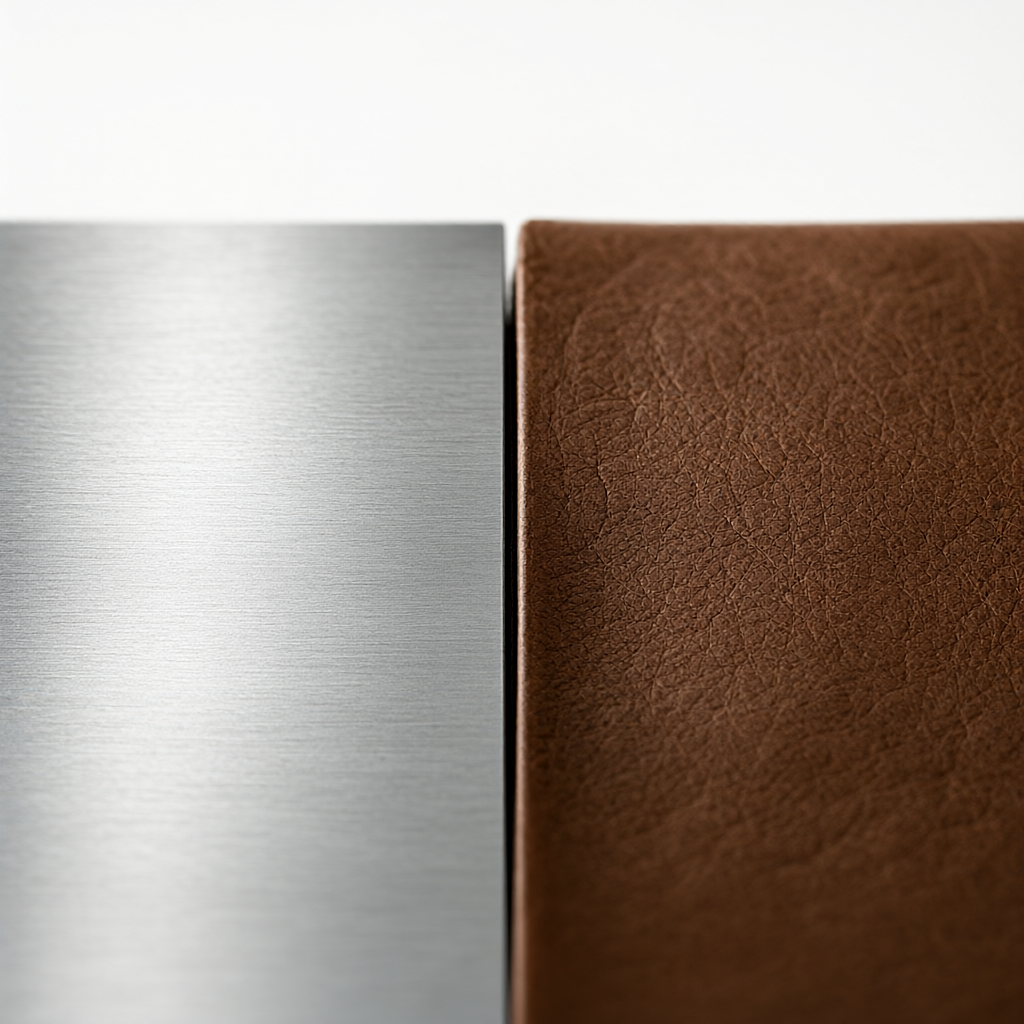
When evaluating wholesale minimalist wallets from an OEM supplier, the specifications that matter fall into five categories. Each one has a direct impact on perceived quality, durability, and regulatory compliance.
| Specification | Industry Typical Range | Impact on Cost & Quality |
|---|---|---|
| Material grade (aluminum) | 6061-T6, 5052-H32, 7075-T6 | 6061 offers best balance of machinability and strength; 7075 is harder but increases CNC tool wear |
| Carbon fiber layer count | 2K, 3K, 12K weave | Higher K-count = finer visual texture; doesn’t materially affect structural performance |
| Anodizing thickness | 10–25 microns standard; 25–40 for tactical | Thicker anodizing improves scratch resistance but adds process time and chemical consumption |
| RFID-blocking layer | Mu-metal foil, steel mesh, or ferrite | Mu-metal provides superior shielding; steel mesh is cost-effective at comparable attenuation |
| Tolerance range | ±0.05mm (standard), ±0.02mm (precision) | Tighter tolerance increases machining cycles and raises unit cost disproportionately at low volumes |
| Logo method | Laser engraving, UV printing, embossing | Laser engraving is permanent and most cost-effective at scale; UV printing allows full-color graphics at higher per-unit cost |
| Packaging | Raw polybag, retail blister, custom box | Custom printed boxes add $0.15–$0.60 per unit depending on complexity and order quantity |
RFID-blocking construction deserves specific attention because it intersects with both consumer expectation and regulatory reality. Many buyers assume all “RFID wallets” provide equivalent protection. In practice, the shielding effectiveness depends on material choice, coverage area, and ground-plane design. Mu-metal constructions tested against common frequencies (13.56 MHz for NFC, 850–950 MHz for RFID) typically achieve 20–40 dB attenuation when properly engineered. Buyers requiring verified performance should request test reports from an accredited lab rather than accepting manufacturer claims at face value. Standards bodies like ASTM International develop test methodologies for electromagnetic shielding effectiveness, though specific wallet-grade protocols vary by application ASTM.
Material certification is the second intersection point between specification and compliance. Aluminum alloy mill certificates confirm chemical composition and mechanical properties. Carbon fiber sheets should come with vendor traceability documenting resin system and cure cycle. For buyers of business card holders locally or through domestic channels, material documentation travels with the shipment and forms part of the receiving inspection packet. For international B2B transactions, certificates are typically provided pre-shipment or included in the commercial invoice package.
Cost Drivers That Change Your FOB Quote
Beyond specifications, several operational variables shift the quoted price independently of design choices:
Order volume tiering. Most OEM factories publish or communicate volume breakpoints where unit pricing changes. A jump from 300 to 500 pieces often produces a larger percentage drop than 500 to 1,000, because the initial threshold covers setup amortization while subsequent increments mainly benefit from throughput optimization. Understanding where your order sits on the volume curve helps you negotiate smarter — sometimes adding 300–200 pieces to reach the next tier costs less in total than staying below it.
Design complexity. A single-plane aluminum wallet with one engraved logo represents minimal machining time. Adding multiple planes, dovetail joints, spring mechanisms, or mixed-material laminations increases both processing steps and assembly labor. Complexity compounds cost non-linearly — a wallet with three additional sub-assemblies may cost 40–60% more per unit, not 30%.
Finish selection. Standard silver anodizing is the baseline. Black anodizing, dual-tone color blocking, or bead-blasted finishes each add process steps. Matte vs. glossy clarity coatings on carbon fiber overlays also vary in application time. These seem minor individually but accumulate across the order quantity.
Packaging and labeling. Retail-ready packaging with custom inserts, hang tags, and barcode labels requires additional line staffing and quality checks. For Amazon FBA sourcing, compliance with FNSKU labeling, polybag requirements, and suffocation warning labels adds steps that affect both lead time and per-unit cost.
Testing and documentation. Pre-shipment inspection, material certification, and test reports (RFID attenuation, anodizing thickness verification, RoHS screening) each carry administrative and lab costs. Some buyers absorb these; others negotiate them into the base price. Clarifying early prevents surprise add-ons during production.
Standards and Certifications for Branded Wallet Procurement
Quality assurance in EDC wallet manufacturing isn’t optional for B2B buyers — it’s a procurement requirement that protects against defective shipments, regulatory non-compliance, and brand-damaging returns. The standards that apply depend on your market and customer profile.
ISO 9001 remains the foundational quality management benchmark. An ISO-certified facility operates under documented procedures for incoming material inspection, in-process quality control, and final出货 verification. The standard doesn’t prescribe specific product tolerances — it ensures the manufacturer has systematic processes to catch deviations consistently. For sourcing men’s wallets from nearby manufacturers and suppliers, ISO certification is the easiest filter to apply when comparing potential partners.
BSCI (Business Social Compliance Initiative) audits address labor standards rather than product specs. While product quality is the immediate concern for most wallet buyers, BSCI certification matters significantly for retailers and distributors selling in European markets, where social compliance due diligence is increasingly required by procurement departments and market regulators.
REACH and RoHS compliance are regulatory necessities for wallets entering the European Union and many other jurisdictions. These frameworks restrict specific hazardous substances — lead, cadmium, certain phthalates, hexavalent chromium — in materials and surface treatments. Anodizing processes, adhesive systems used in carbon fiber lamination, and plating solutions are all potential vectors for restricted substance exposure. Reputable manufacturers screen incoming materials against current REACH candidate lists and RoHS Annex II restrictions before production begins. SGS-tested materials reports provide verifiable evidence of compliance that buyers can present to their own customers or distributors.
ISO 14001 (environmental management) and ISO 45001 (occupational health and safety) are additional certifications some forward-looking factories maintain, though they’re less commonly required in wallet procurement unless the buyer’s end market specifies them.
Verification Checklist for Branded Wallet Suppliers
Before placing an order, buyers should request and verify:
- Current ISO 9001 certificate (check issue date and scope coverage)
- BSCI audit report if selling into EU retail channels
- REACH/RoHS test reports for all materials in contact with skin (anodizing bath chemicals, carbon fiber resin, adhesive systems, RFID shield metal)
- Material mill certificates for aluminum alloys
- RFID attenuation test data if the product claims shielding
- Sample approval protocol — written confirmation that production matches the approved sample before full run begins
Each of these documents takes minutes to review and can prevent thousands in downstream costs. Missing documentation from a supplier who refuses to provide it is itself a signal worth acting on.
Related Considerations for B2B Wallet Buyers
The economics of brand name wallets on sale extend beyond unit price into several operational considerations that often determine whether a sourcing decision succeeds or fails.
Lead time versus inventory risk. Faster production turns reduce working capital tied up in stock but increase per-unit cost through smaller batch optimization. Slower turns improve margin but require demand forecasting accuracy. Buyers serving seasonal markets — back-to-school, holiday gift windows, corporate end-of-year campaigns — must align their order timing with production calendars well in advance. A 7-day sample lead time followed by a 25–35 day production window is typical for custom runs at mid-volume quantities. These timelines compress or expand based on finish complexity and order density.
Quality consistency across runs. A perfect first article doesn’t guarantee identical output on run two. Consistent material lot tracking, controlled environmental conditions for anodizing baths, and calibrated CNC tool compensation are the operational disciplines that maintain spec integrity across production batches. Buyers should clarify whether their contract includes a first-article inspection report and whether in-line QC checkpoints are documented.
Intellectual property and exclusivity. If a buyer commissions a unique design, IP protection depends on jurisdiction and contractual terms. Chinese manufacturers operating under OEM agreements typically don’t claim ownership of buyer-originated designs, but legal enforcement across borders varies. Non-disclosure agreements and clear IP clauses in manufacturing contracts provide baseline protection, especially for buyers planning to protect their brand positioning against replica products.
Sustainability and material traceability. Increasingly, retailers and corporate buyers require supply chain transparency. Knowing where aluminum ingots originated, whether carbon fiber resin systems meet green chemistry standards, and whether anodizing wastewater is processed through certified facilities matters for ESG reporting. Factories with mature quality systems already track material origins as part of their ISO 9001 documentation — buyers should leverage that existing traceability rather than treating it as an add-on requirement.
How We Approach Compliant Branded Wallet Production?
Here’s how the industry works when a manufacturer translates these standards into actual production. At our facility, every order — whether it’s a 300-piece custom wallets bulk run for an Amazon seller or a 5,000-piece private-label program for a European distributor — follows the same specification-first workflow. We begin with material certificates, confirm REACH/RoHS compliance for every substrate and finishing chemical, and document RF attenuation measurements for any shielded design before the first unit leaves the line. Our buyers receive full traceability packets with every shipment because we know that documentation is what separates a compliant procurement from a costly mistake downstream.
Whether you’re evaluating designer wallets on sale for men through traditional retail channels or exploring OEM production for your own brand, the same principles apply: understand the specification baseline, verify the certification stack, and choose a manufacturing partner whose process discipline matches your compliance requirements. If you’d like to discuss your project specifications, lead time targets, and volume tiers, Contact Us and we’ll outline the options that fit your market position.
Procurement Decision Framework: OEM vs Authorized Distributor vs Gray-Market
Buyers evaluating discounted branded wallets must choose between three distinct sourcing paths, each carrying different risk profiles, pricing structures, and authenticity guarantees.
Path A: Direct OEM/ODM Manufacturer. The buyer commissions production from a factory holding ISO 9001 certification, BSCI audit reports, and REACH/RoHS compliance documentation. Unit pricing sits at the low end of the spectrum ($3–$12 FOB depending on volume and specification). Lead times range from 7-day sample approval through 25–45 days for production. The buyer assumes full responsibility for quality inspection, logistics, and market compliance. This path delivers maximum margin but requires active supply-chain management.
Path B: Authorized Distributor or Tier-1 Reseller. The buyer purchases established brand-name wallets (Ridge, Bellroy, Herschel, Tumi) through channels holding formal distribution agreements. Discounts typically range from 20–35% off MSRP for volume commitments. Authenticity is guaranteed through chain-of-custody documentation and authorized dealer credentials. Lead times are shorter — often ready-to-ship inventory — but margins are compressed by the brand’s protected pricing structure. Suitable for buyers needing speed and established brand recognition without capital investment in tooling.
Path C: Gray-Market or Unauthorized Discount Retailers. Online marketplaces and liquidation sites frequently list branded wallets at 50–70% purported discounts. These channels source through parallel imports, overstock acquisition, or counterfeit reproduction. Authenticity cannot be verified through official brand channels. Regulatory exposure is real — the FTC has taken enforcement action against sellers using fabricated reference prices to create false appearance of savings FTC – Deceptive Pricing. This path carries the highest risk and should only be considered after rigorous authentication due diligence.
Decision matrix by buyer profile:
| Buyer Profile | Recommended Path | Rationale |
|---|---|---|
| Amazon FBA seller building private label | Path A (OEM) | Full control over branding, specifications, and margin; builds own asset |
| Promotional product distributor | Path A or C (selective) | OEM ensures consistent quality for corporate clients; gray-market acceptable for one-time giveaways with authentication verification |
| Retail chain seeking established brands | Path B (Authorized Distributor) | Brand equity drives customer trust; authenticity documentation required for shelf placement |
| Drop-shipper with limited capital | Path B (Authorized Distributor) | No MOQ commitment; inventory held by distributor; faster time-to-market |
| Budget-conscious reseller | Path C with verification | Only viable with serial number authentication, holographic tag inspection, and authorized dealer cross-reference before purchase |
Identifying Counterfeit and Gray-Market Wallets
Discounted branded wallets attract counterfeit reproduction at significant scale. Recognizing authentication markers before purchase protects against brand-damaging returns and potential regulatory violations.
Serial number verification. Most premium wallet brands assign unique serial numbers or batch codes etched into the metal frame or embedded in packaging. Verify these against the brand’s official registry or contact authorized service centers. Fake serial numbers often repeat across multiple listings, use non-standard fonts, or fail to resolve in brand databases.
Holographic security tags and labels. Brands like Ridge and Bellroy employ tamper-evident holographic stickers on packaging and product components. These display micro-text, color-shifting properties, and brand logos visible only at specific angles. Reproduced holograms typically appear flat, lack color shift, or show printing defects under magnification.
Authorized dealer lookup. Every legitimate brand maintains a public dealer directory. Cross-reference any supplier claiming to be an authorized retailer against this directory. If the supplier does not appear, request written authorization documentation including the agreement period and territory coverage.
Packaging and presentation discrepancies. Counterfeit wallets frequently ship in generic or poorly reproduced retail boxes. Check for print registration quality, correct typography, barcode scanning functionality, and inclusion of mandated warning labels (suffocation warnings for polybagged products). Authentic manufacturers invest in packaging consistency as a brand protection measure.
Price anomaly signals. Discounts exceeding 50% on current-season flagship models, particularly from sellers lacking authorized status, represent the strongest single indicator of counterfeit or gray-market origin. When a deal appears structurally implausible relative to known wholesale economics, treat it as presumptively suspect until authenticated.
For deeper guidance on identifying supplier reliability during wallet sourcing, review the Sourcing Wallets Near Me procurement guide.
Current Market Pricing: Branded Wallets on Sale (2026)
Understanding realistic discount ranges prevents overpayment and identifies genuinely competitive offers versus marketing-driven price inflation.
Estimated Consumer Retail vs Wholesale Land Cost
| Brand / Segment | Typical MSRP (Single Unit) | Authorized Distributor Volume Price | OEM Equivalent (FOB, 500 pcs) | Potential Savings vs MSRP |
|---|---|---|---|---|
| Ridge Wallet (Titanium) | $95–$125 | $70–$85 (20–30% off) | N/A (brand-protected) | — |
| Bellroy Slim Sleeve | $65–$85 | $48–$60 (25–35% off) | N/A (brand-protected) | — |
| Premium Aluminum OWD | $35–$55 retail | $22–$32 (authorized) | $4–$8 FOB | 70–85% |
| Carbon Fiber Card Holder | $40–$60 retail | $28–$40 (authorized) | $3–$6 FOB | 75–90% |
| Tactical Titanium Money Clip | $50–$75 retail | $35–$50 (authorized) | $5–$10 FOB | 70–85% |
Note: OEM-equivalent pricing reflects generic minimalist EDC wallet production with comparable material grades and finishing. Private-label branding, custom packaging, and targeted specifications adjust final unit cost.
Legitimate Channels for Branded Wallet Deals
Brand-authorized outlet programs. Many established EDC brands operate seasonal outlet events or certified refurbished programs. Ridge, for example, periodically lists previous-generation models at reduced pricing through their official website. These represent the only zero-authenticity-risk channel for name-brand wallets.
Authorized distributor closeout events. Tier-1 distributors sometimes clear prior-year colorways or discontinued configurations. Timing these purchases around fiscal year-end or product refresh cycles yields 30–40% savings on authentic inventory with full warranty support.
OEM direct sourcing for unbranded equivalents. For buyers prioritizing functional equivalence over brand recognition, commissioning identical-specification production through a certified OEM factory delivers the deepest structural discount. The resulting product carries the buyer’s brand rather than a third-party name but matches material, dimensional, and performance criteria.
Trade shows and direct factory engagement. Events like ISPO, Outdoor Retailer, and Canton Fair connect buyers directly with manufacturers holding ISO 9001 and BSCI certifications. Face-to-face specification discussion reduces communication error and accelerates sampling timelines compared to online intermediaries.
For insights into wholesale and bulk sourcing strategies at competitive pricing, consult the Billfolds on Sale B2B sourcing guide.
How We Meet These Standards at the Factory Level?
As a specialist manufacturer producing minimalist EDC wallets and pocket gear, our approach to meeting procurement-grade standards runs through integrated process control and verifiable documentation. We hold ISO 9001 certification since 2014, operate under BSCI-audited facility conditions, and ensure every shipment carries REACH and RoHS compliance declarations backed by SGS-tested materials. Our 50,000 sq ft in-house factory houses complete CNC machining, laser engraving, UV printing, and aluminum anodizing lines — eliminating subcontractor margin and maintaining traceability from raw alloy stock to finished package.
Aluminum wallets are produced to ASTM B221 material specifications with mill certificates provided per batch. Anodizing thickness is verified against MIL-A-8625 Type II requirements, with standard finishes at 15–20 microns and tactical-grade options at 25–40 microns. RFID-blocking constructions are evaluated for attenuation performance against common NFC and RFID frequencies, with test documentation available on request.
Our 13+ years of export experience serving 200+ brands worldwide across America, Europe, Australia, and Southeast Asia informs every quotation we prepare. We offer MOQ from 300 pcs, maintain a 7-day sample lead time, and provide drop shipping and Amazon FBA prep services to streamline your go-to-market timeline. Whether you require fully custom private-label production or white-label catalog items with your branding applied, our engineering team works from concept through shelf-ready delivery.
Trade-offs Between Premium Branding, Quality, and Cost in Wallet Sourcing
Understanding the economics of branded wallet sourcing requires acknowledging three competing priorities: brand equity, build quality, and unit cost. No single supplier optimizes all three simultaneously.
When a buyer purchases from an established consumer brand at a discount, they typically sacrifice unit cost for brand recognition and turnkey packaging. When they commission OEM production, they optimize cost but must invest time and capital into building brand perception from scratch. White-label catalog products offer a middle path — recognizable aesthetics at moderate cost with minimal customization required.
The optimal strategy depends on the buyer’s channel:
| Buyer Profile | Priority | Recommended Approach | Expected Margin Range |
|---|---|---|---|
| Amazon FBA seller | Speed + cost efficiency | Private-label OEM, Level 2 production | 50–70% |
| Promotional products distributor | Brand familiarity + low MOQ | White-label catalog, Level 3 | 30–50% |
| Retail chain buyer | Brand equity + consistency | Authorized distributor or private label | 40–60% |
| Corporate gifting buyer | Customization + perceived value | Full OEM with custom engraving/packaging | 35–55% |
A higher per-unit cost on a white-label or branded product is often justified by shorter go-to-market time and existing customer trust. A lower per-unit cost on OEM production pays dividends at scale but requires investment in branding, photography, listing optimization, and potentially longer sales cycles. The total landed cost — including marketing spend and inventory carrying cost — determines which model generates superior returns.
Where to Find Legitimate Deals on Branded EDC Wallets?
Legitimate discounted sourcing lives in three distinct channels, each with its own risk profile and price floor:
Authorized distributor programs. Established brands like Ridge, Bellroy, and Kepler run B2B wholesale programs offering 40–50% off MSRP to verified resellers. Requirements typically include business licensing, minimum annual purchase commitments, and geographic territory agreements. Discounts are real but bounded — brands protect margin structure aggressively.
Factory-direct OEM procurement. Commissioning production directly eliminates the brand premium entirely. The resulting product carries your brand name rather than a consumer-facing one, but the per-unit cost reflects true manufacturing economics. This channel dominates the 40–70% savings tier for volume buyers. See our guide on Sourcing Men’s Wallets Near You for additional context on direct factory engagement.
Seasonal trade show and bulk liquidation events. Industry exhibitions and end-of-quarter factory overstock releases occasionally surface surplus inventory from recognized brands at 30–60% below typical wholesale rates. These opportunities require speed and authentication expertise — counterfeit infiltration increases during high-demand liquidation periods.
Price comparison across retailers for the same brand reveals significant variation. An authorized distributor may quote $28/unit for a given minimalist aluminum wallet while a secondary marketplace lists the identical product at $42. Cross-referencing quotes across at least three sourcing channels before committing protects against inflated reference prices designed to simulate larger discounts.
Seasonal Sale Cycles and Best Times to Buy
EDC wallet procurement follows predictable seasonal patterns that savvy buyers exploit:
- January–February: Post-holiday inventory clearance. Consumer brands reset lines; distributors move remaining stock. Best window for authorized-brand discounts.
- April–May: Pre-summer promotional season. Brands prepare Q3 campaigns; factories increase capacity. Good timing for OEM bookings with faster lead times.
- July–August: Mid-year review period. Some factories offer early-booking incentives for Q4 production slots.
- October–November: Peak manufacturing quarter begins. Lead times lengthen; pricing stabilizes upward. Avoid placing large orders unless committed well in advance.
- December: Year-end capacity release. Factories with unfilled production slots may accept smaller orders at competitive rates. Risk of reduced QC throughput during holiday-shortened weeks.
For private-label OEM orders, the sweet spot is March–May, when factories have cleared winter backlog and haven’t yet locked into peak Q4 scheduling. For authorized brand purchasing, January offers the deepest structural discounts as brands clear prior-year SKUs.
What Factors Influence the Final Landed Cost of Branded Wallets?
The FOB unit price represents only the first layer of total acquisition cost. Five additional factors determine what actually lands at your warehouse door:
Freight and duties. Air freight adds $2–$8 per unit depending on weight and destination. Sea freight reduces this to $0.30–$1.50 per unit for full container loads. Import tariffs on aluminum wallets vary by origin country and trade agreement — US-origin goods face zero duty under most scenarios; Chinese-sourced goods currently carry Section 301 tariffs ranging from 7.5% to 25% depending on classification. Always calculate landed cost before comparing supplier quotes.
Custom packaging and inserts. Retail-ready boxes, tissue wraps, warranty cards, and barcode labels add $0.15–$0.80 per unit. Complexity scales with design intricacy — a simple polybag costs fractions of a cent; a rigid magnetic-closure box with foil-stamped logo runs $0.50–$0.80 at 500-piece quantities.
Quality inspection costs. Third-party pre-shipment inspections average $300–$600 per site visit. Buyers ordering from overseas factories should budget this line item; it typically prevents catastrophic losses from defective batches that would otherwise reach end customers.
Sample and tooling charges. Initial sampling fees ($50–$200 per design) and custom mold/tooling investments ($500–$3,000+) are one-time upfront costs amortized across the order. High-volume buyers absorb these quickly; low-MOQ purchasers should negotiate sample fee credits against production orders.
Compliance documentation. Material test reports, RoHS screening certificates, and customs paperwork add minimal per-unit cost but represent essential overhead for regulated markets. Budget $0.05–$0.20 per unit for documentation preparation and verification.
For a deeper breakdown on specification selection and cost trade-offs, see our Billfolds on Sale — B2B Bulk Sourcing & Competitive Pricing guide.
Manufacturer Integration: How TOP EDC Wallet Meets These Standards
Understanding specifications, certifications, and cost dynamics is one thing — finding a manufacturer that consistently delivers across all dimensions is another. Here is how the industry works, and here is how we meet these standards.
At TOP EDC Wallet, we operate a 50,000 sq ft in-house factory equipped with CNC machining, laser engraving, UV printing, aluminum anodizing, and full assembly lines — all under one roof. This vertical integration is what enables us to maintain tight tolerances (±0.05mm standard, ±0.02mm on precision builds) while keeping unit costs competitive at volumes starting from just 300 pcs. We’ve been doing this since 2014, exporting to 200+ brands across America, Europe, Australia, and Southeast Asia.
Our quality framework is built around ISO 9001 certification (held since our founding), BSCI audit compliance, and full REACH/RoHS compliance with SGS-tested materials on every batch. We don’t rely on subcontractors for anodizing or finishing — those processes happen in-house, which eliminates the 15–30% margin leakage that trading-company models pass on to buyers. When you receive a quote from us, the number reflects our actual production cost, not a broker’s markup layered on top of someone else’s factory rate.
We support the full spectrum from white-label catalog products to fully custom OEM/ODM designs — carbon fiber card holders, titanium money clips, RFID-blocking aluminum wallets, tactical pocket organizers, and custom laser-engraved accessories. Our 7-day sample lead time lets you evaluate material, finish, and mechanism before committing to production. And because we handle drop shipping and Amazon FBA prep in-house, your landed-cost calculation stays clean from factory gate to fulfillment center.
If you’re evaluating suppliers right now, request a detailed quotation with material certificates, anodizing class specification, and test reports included — any manufacturer who hesitates on documentation transparency is worth reconsidering.
Buyer Checklist: Scored Decision Criteria for Branded Wallet Procurement
Use this scored framework to objectively compare suppliers before issuing POs:
| Criterion | Weight | Rating (1–5) | Notes |
|---|---|---|---|
| Material grade verification (mill certs provided) | 20% | ___ | Must see 6061-T6 or equivalent grade certificate |
| ISO 9001 certification status | 15% | ___ | Verify current certification via iso.org registry |
| In-house vs. outsourced production | 15% | ___ | Full vertical integration scores highest; 3rd-party finishing = risk |
| Sample lead time | 10% | ___ | ≤7 days = strong; 14+ days = concern for fast-moving SKUs |
| MOQ flexibility | 10% | ___ | ≤200 pcs ideal for testing; ≤300 pcs best for trial orders |
| RFQ response completeness | 10% | ___ | Respondent should address material, tolerance, anodizing class, testing |
| BSCI / social compliance | 5% | ___ | Required for EU-bound shipments; optional for domestic |
| REACH/RoHS documentation | 5% | ___ | Non-negotiable for EU; strongly recommended elsewhere |
| Reference price transparency | 5% | ___ | Supplier should explain cost components, not just quote a number |
| Packaging and logistics capability | 5% | ___ | FBA prep, drop ship, retail box options available? |
Minimum viable score: 30/50. Any supplier scoring below this threshold should be treated as high-risk regardless of quoted price attractiveness.
RFQ Template Questions to Send Suppliers
Copy and paste these into every supplier inquiry to standardize evaluation:
- What aluminum alloy grade do you use as standard? Can you provide a mill test certificate?
- Is anodizing performed in-house? What Class (per MIL-A-8625) and micron thickness do you apply as standard?
- Do you hold current ISO 9001 and BSCI certifications? Please provide certificate numbers for verification.
- What is your sample lead time and sample cost for a custom aluminum wallet with logo engraving?
- What is your MOQ, and does the per-unit price decrease at 500/1,000/5,000 pc tiers? Provide a volume breakdown.
- Are RFID-blocking versions available? What attenuation performance can you document?
- Do you offer Amazon FBA prep and drop-shipping services? What are the associated fees?
- What is your current lead time for a 1,000-piece production run, and what is your on-time delivery rate over the past 12 months?
For additional sourcing guidance, explore our resources on Sourcing Money Clips for B2B Buyers and our Business Card Holder Near Me Sourcing Guide.
Branded Wallets: Where Can You Verify the Data and Sources?
- FTC – Consumer Protection — www.ftc.gov
- ASTM — www.astm.org
- Request a Bulk Quote → — topedcwallet.com
- Sourcing Wallets Near Me — topedcwallet.com
- Billfolds on Sale — topedcwallet.com
- Sourcing Men’s Wallets Near You — topedcwallet.com
- Sourcing Money Clips for B2B Buyers — topedcwallet.com
- Business Card Holder Near Me Sourcing Guide — topedcwallet.com
From article to product
Sourcing minimalist-wallets?
Tell us the format, the quantity and the date you need stock. You get material options, MOQ and a landed-cost range back within one business day.
Keep reading
More on brand playbook
What Is a Good Wallet Brand — A B2B Buyer’s Guide
Understand what makes a wallet brand reliable for sourcing — material specs, standards, manufacturing…
ReadDaddysWalletX Explained: Modern EDC Wallet Market Guide
Understand what DaddysWalletX means in the EDC space—materials, specs, sourcing considerations, and OEM pathways…
ReadGents Wallet Branded: B2B Sourcing Guide for Buyers
Understand what gents wallet branded means, key specifications, leather grades, and sourcing standards. Compare…
Read
About the author
TOPWALLET Editorial Team
TOPWALLET's editorial and engineering desk writes from bench testing at the Shenzhen (Longgang) facility: pull-force and cycle testing, 13.56 MHz shielding measurements, finish trials and factory audits, rather than supplier spec sheets. Every specification in these guides is one we write on a purchase order.
Written on the floor
This article was written by our production and QC team — the people who spec tolerances, run the finishing line and inspect every batch. Where it states a capacity, a pull force or a lead time, it comes from a measurement we made, not a supplier’s catalogue. If a number here disagrees with what your own supplier told you, tell us; several of these articles started as a correction from a buyer.
See how the factory works · Inspection process · Sourcing FAQ
Sourcing minimalist-wallets?
Tell us the format, the quantity and the date you need stock. You get material options, MOQ and a landed-cost range back within one business day.