

Good Wallet Brand: What Is the Quick Answer?
What is a good wallet brand? A good wallet brand is one that consistently produces durable, functionally sound pocket gear using verified materials, holds recognized quality and compliance certifications, offers meaningful customization for private-label buyers, and maintains transparent lead times and order flexibility. For B2B purchasers — whether you run an EDC brand, source for Amazon FBA, or supply retail chains — the difference between a reliable supplier and a risky one usually comes down to three things: material and build quality, certification coverage, and operational track record.
Good Wallet Brand: How Does It Work in Detail?
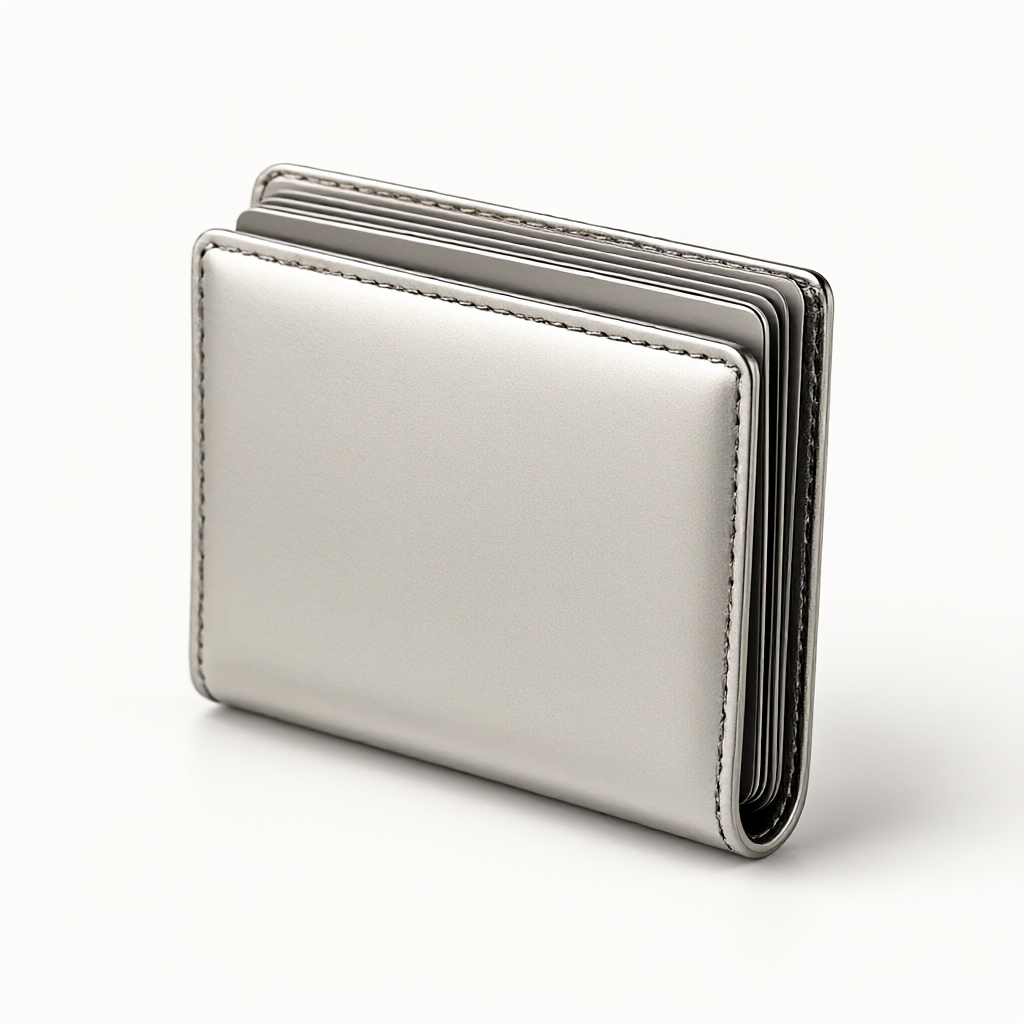
How does a good wallet brand demonstrate its credibility?
Credibility in this category isn’t built on marketing claims alone; it’s demonstrated through verifiable manufacturing practices. A reputable wallet manufacturer operates facilities equipped for precision metalworking, surface finishing, and quality inspection — not just assembly or outsourcing. In-house CNC machining, laser engraving capability, and controlled anodizing lines are strong indicators of vertical integration. When a factory controls more steps internally, it reduces supply-chain fragility and improves consistency across production runs.
Material selection is equally important. Aluminum alloys such as 6061-T6 are standard for minimalist wallets because they balance machinability, corrosion resistance, and strength-to-weight ratio. Carbon fiber laminates provide lightweight rigidity with a distinctive aesthetic. Titanium options exist for higher-end positioning but come with significantly higher per-unit cost. A trustworthy brand will specify these materials clearly rather than using vague terms like “premium alloy” or “aerospace-grade” without supporting data.
Quality systems underpin repeatable output. Facilities audited against ISO 9001 have documented procedures for incoming material inspection, in-process checks, and final product verification. Compliance with REACH and RoHS standards ensures that plating solutions, coatings, and adhesives do not contain restricted substances — a requirement increasingly enforced by retailers and marketplaces in Europe and North America. BSCI audits further verify responsible labor practices, which many large distributors now require before onboarding new suppliers.
When evaluating a potential supplier, request documentation for these certifications rather than relying on assertions. Verification protects against downstream disruptions caused by compliance failures, product recalls, or inability to pass buyer audits.
Why do manufacturing capabilities matter for brand quality?
Vertical integration separates manufacturers who merely assemble components from those who engineer finished products. A facility capable of CNC milling, precision stamping, laser marking, anodizing, and final packaging — all under one roof — can respond to design revisions faster, maintain tighter tolerances, and reduce dependency on external vendors whose schedules may conflict with yours.
Sample responsiveness is a practical test of manufacturing maturity. Suppliers offering rapid prototyping (often within one week) typically possess in-house tooling and finishing capacity. Longer sample cycles frequently indicate reliance on third-party shops or limited resource allocation to new inquiries. Lead-time predictability during full production also reflects process discipline; inconsistent output dates often signal weak scheduling systems.
Customization depth varies widely. Some manufacturers offer only logo placement via laser engraving. Others support full product development cycles — from engineering drawings and 3D modeling through material selection, mechanism testing, and retail-ready packaging design. The breadth of OEM/ODM services available should align with your business model. Amazon sellers may prioritize low MOQ and fast turnaround; established brands may need co-development partnerships with deeper NDA protections.
What role does product diversity play?
A well-rounded portfolio signals understanding of different use cases. Minimalist card holders target users who carry few items daily. Tactical organizers accommodate tools and multiple cards. Money clips appeal to formal wear contexts. RFID-blocking variants address a growing security concern among contactless payment adopters. A credible brand will explain why certain features exist — for example, how layered construction affects capacity, how spring tension impacts card retention, or how different RFID frequencies are mitigated through Faraday-cage-style metal layering.
Understanding product architecture helps buyers avoid mismatches between specification and actual performance. For instance, a wallet rated for 12 credit cards may compress them unevenly if the internal frame lacks structural ribs, leading to bent edges over time. This type of detail becomes visible only when the manufacturer understands the mechanics of its own designs.
For buyers exploring RFID protection specifically, technical nuance matters beyond general claims — see our guide on RFID Blocking Technology and Its Application in EDC Wallets for deeper context on frequency shielding and real-world effectiveness. Similarly, understanding the distinction between passive RFID blocking and active skimming prevention clarifies which product categories truly deliver value.
Good Wallet Brand: Which Specifications Matter Most?
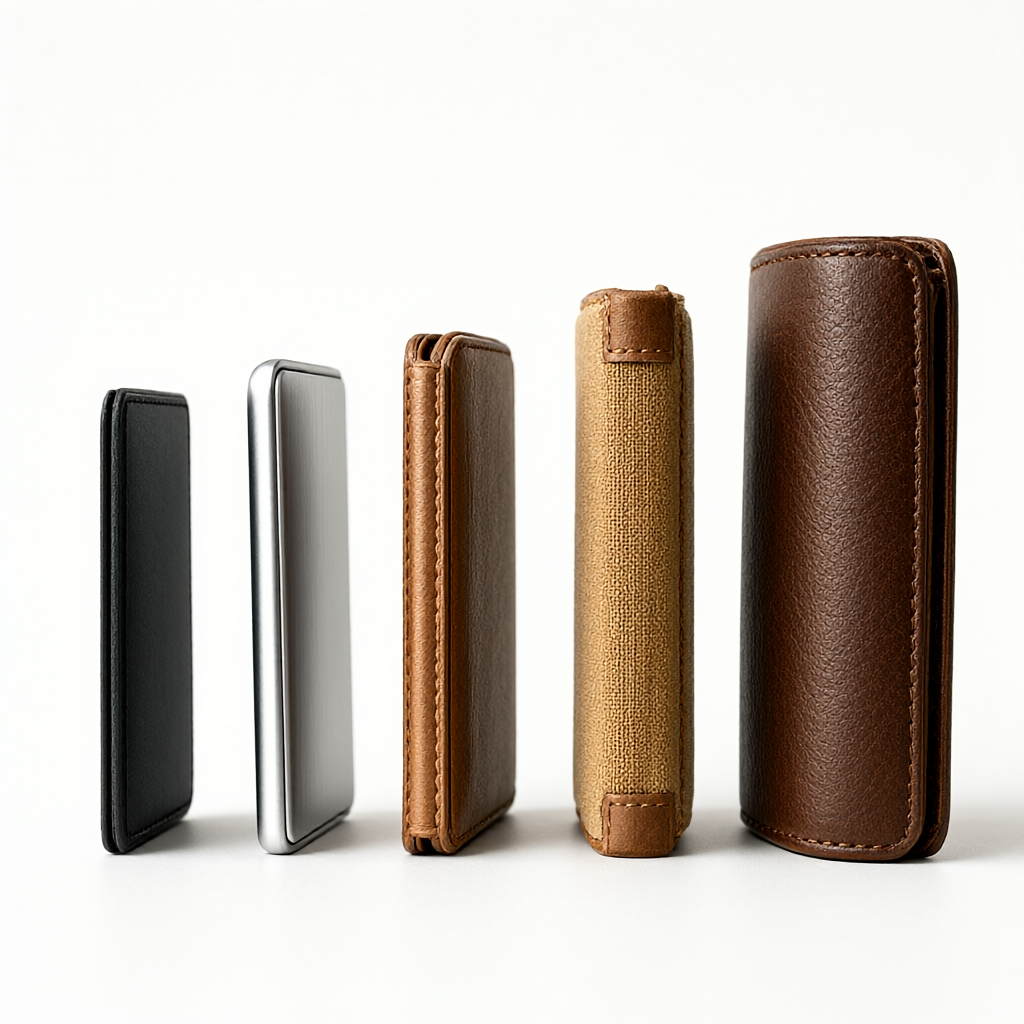
What are the key specifications to evaluate?
Several measurable attributes differentiate mid-range products from high-quality ones:
- Material gauge / thickness: Aluminum wallet bodies typically range from 1.5 mm to 3.0 mm depending on load expectations. Thinner gauges improve slimness but reduce impact resistance. Acceptable tolerance is usually ±0.1 mm across a production batch.
- Finish durability: Anodized surfaces should withstand scratch testing and salt-spray exposure without significant degradation. Powder-coated finishes require adequate curing temperatures for proper adhesion. Surface hardness ratings are sometimes specified for competitive differentiation.
- Weight range: Standard aluminum minimalist wallets fall between 35 g and 85 g. Carbon fiber versions tend toward the lighter end. Titanium models exceed both but offer superior corrosion resistance. Weight consistency between units indicates stable forming processes.
- Card capacity and retention force: A typical configuration holds 6–12 cards plus folded cash. Spring mechanisms generating approximately 15–25 N of clamping force provide secure retention without excessive removal effort. Over-tight springs cause card damage; under-tight springs allow accidental ejection.
- Dimensional stability: After repeated insertion cycles (often tested at 500+ cycles in internal labs), acceptable deflection remains below 0.5 mm. This parameter is critical for tactical and daily-carry applications where dimensions affect pocket fit.
- RFID shielding performance: Effective frequency attenuation ranges from 85 MHz (legacy magstripe) to 13.56 MHz (contactless card) and up to 2.4 GHz (NFC). Proper grounding of conductive layers is required; incomplete shielding creates signal leakage points.
These figures serve as reference benchmarks. Actual values depend on design intent, material choice, and target price tier.
For broader context on how these specifications translate into procurement decisions, refer to our How to Choose Men’s Wallets for B2B Sourcing guide, which outlines buyer-focused evaluation frameworks.
Good Wallet Brand: Which Standards and Certifications Apply?
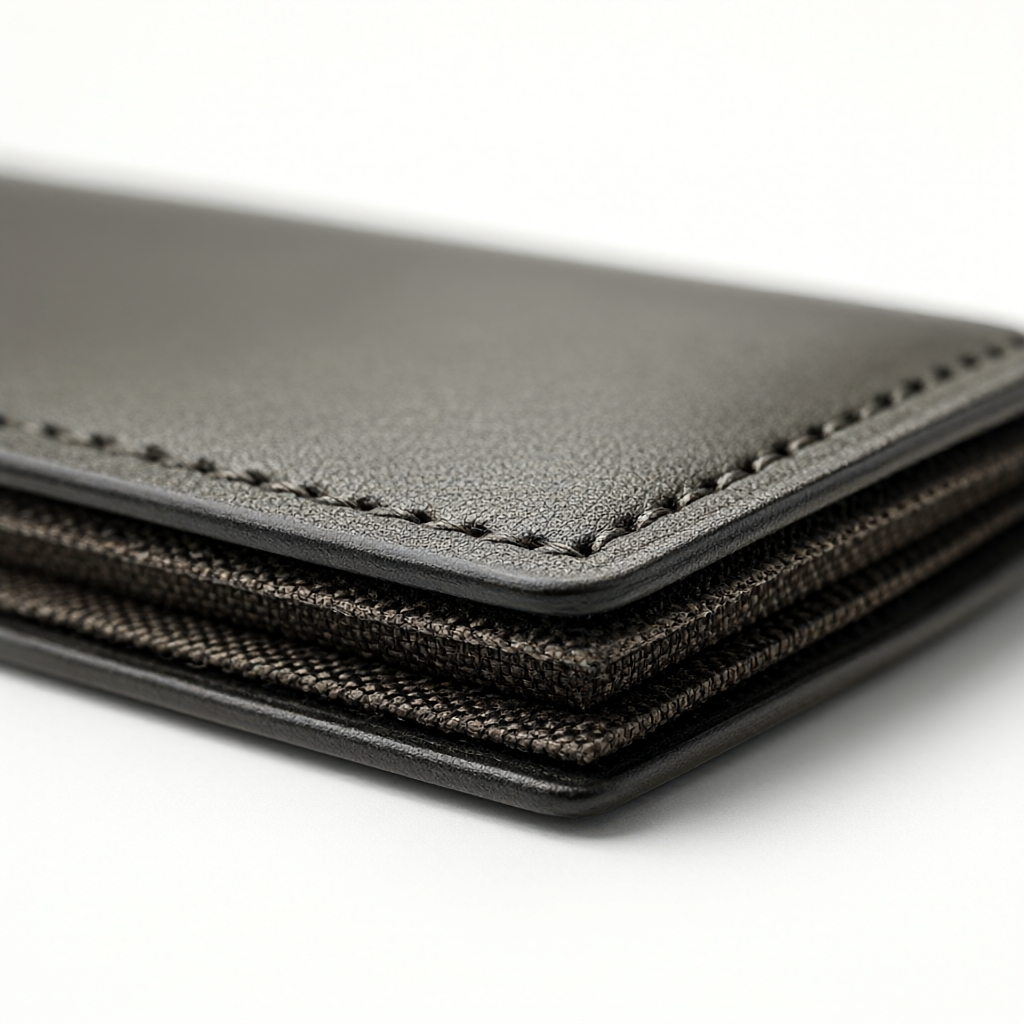
What standards apply to wallet manufacturing and import?
Compliance requirements vary by destination market but share common themes around material safety, labeling accuracy, and workplace ethics:
Material Safety Regulations:
- REACH (European Union): Restricts hazardous substances including certain heavy metals, phthalates, and azo dyes used in leather alternatives and coatings. Manufacturers must provide Declaration of Conformity documents.
- RoHS (Restriction of Hazardous Substances): Applies primarily to electronic components but influences solder and plating choices in RFID-integrated products.
- California Proposition 65: Requires warning labels if products contain chemicals above specified thresholds, including certain nickel alloys used in construction.
Quality Management Systems:
- ISO 9001 establishes baseline quality management requirements. Certification demonstrates that a facility maintains documented processes for design control, supplier management, corrective actions, and customer feedback handling.
- BSCI (Business Social Compliance Initiative) audits evaluate working conditions, wages, hours, and health and safety provisions. Many European retailers mandate BSCI compliance for vendor approval.
Product-Specific Testing:
- Drop-test and cycle-test results are commonly shared upon request. Independent lab reports (SGS, Intertek, TUV) carry more weight than self-reported data.
- RFID attenuation testing follows principles outlined in standards developed by ASTM International for electromagnetic shielding effectiveness measurement.
Regulatory landscapes shift periodically, so requesting current-year compliance documentation — rather than archived certificates — prevents surprises during customs clearance or retailer onboarding.
Good Wallet Brand: What Else Should Buyers Consider?
What should you consider when selecting a wallet supplier?
Beyond specifications and certifications, several practical factors influence long-term sourcing success:
MOQ vs. Flexibility Trade-off: Lower minimum order quantities (commonly 300–500 pieces) reduce upfront capital risk for new product launches but increase per-unit cost. Higher volumes unlock better pricing tiers but require demand forecasting confidence. Clarify tiered pricing structures early to plan margins accurately.
Sampling Process: Evaluate whether the supplier provides functional samples before bulk commitment. Reputable manufacturers produce working prototypes reflecting final materials and mechanisms. Paid sample fees are industry standard and often credited against subsequent orders.
Lead Time Realism: Production timelines depend on material availability, customization complexity, and finishing requirements. Typical ranges span 15–30 days after sample approval for moderate-order volumes. Promised “fast turnaround” claims below 7 days usually apply only to unbranded stock items.
Packaging Options: Retail-ready packaging adds cost but eliminates secondary fulfillment labor. Supplier capabilities range from simple polybags to customprinted boxes with inserts and instruction cards. Sustainability preferences increasingly drive demand for recyclable or biodegradable packaging materials.
Communication Responsiveness: Prompt, technically informed replies to RFQs signal operational health. Delayed responses or vague answers to specification questions often predict similar patterns post-contract signing. Establish communication protocols — response SLAs, designated account managers, escalation paths — before committing volume orders.
Scalability: Confirm whether the facility can scale from prototype runs to mass production without compromising quality or lead times. Capacity constraints become problematic during seasonal demand spikes or unexpected bestseller scaling.
When evaluating wallet manufacturers for private label or distribution, focus on verifiable attributes rather than promotional language. Material specifications, third-party test reports, certified quality systems, and realistic production commitments form the foundation of a reliable sourcing relationship. Understanding these factors empowers buyers at every stage — from initial qualification through long-term partnership development.
At TOP EDC Wallet, we apply these same principles across our manufacturing operations. Our facility has held ISO 9001 certification since 2014, operates within a 50,000 sq ft in-house factory, and maintains BSCI audit compliance. We run in-house CNC machining, laser engraving, and aluminum anodizing lines, which allows us to control tolerances from raw material intake through final packaging. Samples ship within 7 days of design approval, and MOQ begins at 300 pieces for most configurations. Materials comply with REACH and RoHS requirements, and products undergo SGS testing prior to shipment. If you’re evaluating suppliers against the criteria discussed here, reach out to review how our capabilities align with your specification and timeline requirements.
Weight, finish, and durability test results you should request
General claims about durability are insufficient for B2B procurement. Request specific, measured test results from your supplier and cross-reference them against recognized standards:
- Salt-spray corrosion testing: Anodized aluminum surfaces should withstand 48 hours minimum per ASTM B117 with no red rust or white corrosion products. Higher-tier finishes (Class II hard anodize) are tested at 72–96 hours.
- Cycle fatigue testing: Spring-loaded card mechanisms should endure 5,000+ insertion/removal cycles with clamping force variation under ±15%. Internal lab reports typically test at 500+ cycles as a baseline tolerance check.
- Drop impact testing: Wallets subjected to drops from 1.2 m onto hardwood should show no deformation exceeding 0.3 mm and no damage to engraved surfaces. Referenced per ISTA 3A parcel-test principles adapted for small-format goods.
- Scratch hardness: Anodized layers rated ≥ 200 HV (Vickers hardness) resist key-scuff marks in daily carry. This threshold is measurable and specifiable in your PO.
Ask your supplier to share recent lab reports (SGS, Intertek, TUV) rather than accepting verbal assurance. Independent third-party verification carries significantly more weight during buyer-audit reviews.
Supplier evaluation checklist — qualification tiers
Use the following framework to score potential manufacturers across three tiers:
| Evaluation Criteria | 🥇 Gold Tier | 🥈 Silver Tier | 🥉 Bronze Tier |
|---|---|---|---|
| Certifications | ISO 9001 + BSCI + REACH/RoHS compliant, all certificates current year | ISO 9001 only, REACH declaration available | No published certifications |
| In-house capacity | CNC, laser engraving, anodizing, assembly, packaging — all internally controlled | CNC + laser; outsources anodizing or packaging | Fully outsourced manufacturing |
| Sample lead time | ≤ 7 days with functional prototype | 7–14 days, basic functional sample | 14–30 days, mock-up only |
| MOQ | 300 pcs per SKU, tiered pricing available | 300–500 pcs minimum | 1,000+ pcs required |
| Test reporting | Full SGS/Intertek reports (salt-spray, cycle, drop) included proactively | Reports shared upon request | Self-reported claims only |
| RFID frequency coverage | Full-band: 13.56 MHz (NFC), 125 kHz (proximity), ≥ 85 MHz (legacy magstripe); aluminum shield ≥ 0.8 mm thickness specified | Partial band coverage (e.g., NFC only) | No RF shielding data provided |
| Packaging capability | Custom retail box design, FBA-compliant prep, sustainable-material options | Standard polybag + simple box | Plain polybag only |
| Communication SLA | Dedicated account manager, ≤ 24 h response time, progress tracking | General sales team, ≤ 48 h response | Reactive, no defined SLA |
| Reference clients | 200+ brands globally, verifiable export records | Fewer than 50 known accounts | No client references available |
A supplier meeting ≥ 7 gold-tier criteria is a strong candidate for long-term partnership. Silver-tier suppliers may suit lower-volume launches. Bronze-tier signals should raise caution flags for high-volume commitments.
Concrete buyer case: avoiding a recall through pre-order compliance review
An Amazon FBA seller in the United States was preparing a Q4 launch of a custom aluminum wallet line, ordering 2,000 units at an initial price point. During the vetting stage, the buyer requested RoHS and REACH compliance reports from three shortlisted factories. One supplier could only provide generic, outdated certificates and declined to share material test reports. The second supplier delivered current SGSTest documentation confirming heavy-metal limits met, including nickel-leach testing beneath the anodized layer. The seller awarded the order to the second supplier and subsequently avoided a regulatory hold that disrupted two competing listings — their SKU remained in stock while competitors faced removal notices from marketplace compliance audits.
This outcome underscores why requesting documented test reports before placing bulk orders is non-negotiable for import-facing buyers. The incremental time investment pays directly in reduced customs and marketplace-risk exposure.
How much does wallet testing matter for B2B buyers?
Test results separate spec-sheet marketing from verifiable product quality. When evaluating manufacturers, request documented test reports that reference recognized industry standards — self-reported assertions without measurement data carry little procurement weight. Key tests include salt-spray corrosion resistance (ASTM B117), cycle fatigue endurance, drop impact survival (ISTA 3A–adapted), and surface scratch hardness (Vickers ≥ 200 HV). Ask suppliers to share lab-generated certificates from third parties such as SGS, Intertek, or TUV, rather than accepting in-house summaries alone. Understanding what independent testing reveals helps buyers avoid costly post-launch failures and compliance rejections. For broader context on how wallet specifications influence sourcing decisions, see the FTC’s consumer product guidelines for reference on labeling and material disclosure expectations.
Supplier Evaluation Checklist by Qualification Tier
| Criteria | Gold Tier | Silver Tier | Bronze Tier |
|---|---|---|---|
| Certifications | ISO 9001 + BSCI + REACH/RoHS full documentation | ISO 9001; limited compliance docs available | No formal certifications |
| Testing Reports | Third-party SGS/TUV/Intertek reports with measured values per ASTM B117, ISTA 3A | Self-reported test results; some third-party validation | No test data provided |
| MOQ Flexibility | MOQ from 300 pcs per SKU; tiered pricing clearly disclosed | MOQ 300–500 pcs; pricing negotiable | MOQ 1,000+ pcs only |
| Sample Lead Time | ≤ 7 days; functional prototype reflecting final materials | 10–14 days; basic prototype only | 21+ days; no working samples |
| Production Capacity | 500K+ monthly; in-house CNC, engraving, anodizing lines | 100K–300K monthly; partial vertical integration | < 100K; heavy outsourcing dependency |
| RFID Performance Spec | Frequency-specific attenuation data: 13.56 MHz (NFC) and 125 kHz (proximity); conductive layer ≥ 0.3 mm equivalent aluminum thickness per ASTM A252 principles | General RFID-blocking claim; no frequency band data | No RFID specification |
| Communication SLA | Response within 24 hours; dedicated account manager | 24–48 hour response window; reactive support | Slow/unresponsive pre-contract |
| Scalability Evidence | Demonstrated capacity scaling during peak seasons; references available | Moderate scalability; limited recent volume history | No evidence of scaling beyond small runs |
This framework helps procurement teams qualify suppliers against measurable benchmarks before committing to trial orders. Buyers should score prospective vendors across each tier category and use weighted scoring aligned with their priority market requirements.
Buyer Case: Avoiding Recalls Through Pre-Order RoHS Verification
An Amazon FBA seller sourcing 2,000 aluminum minimalist wallets from an unvetted overseas manufacturer received shipments that passed initial cosmetic inspection but failed marketplace compliance checks due to restricted nickel content exceeding California Proposition 65 thresholds. Because the order lacked pre-shipment RoHS and REACH certification documents, the shipment was held at customs and later subject to a voluntary recall initiative, costing approximately $18,000 in logistics reversal, storage fees, and inventory write-downs. Subsequent orders placed through a BSCI-audited facility that provided SGS-certified material reports and full Declaration of Conformity documentation avoided this outcome entirely. The incident underscores why verifying supplier test documentation before bulk commitment protects margin and marketplace standing.
Good Wallet Brand: Where Can You Verify the Data and Sources?
- ASTM International — www.astm.org
- FTC’s consumer product guidelines — www.ftc.gov
- RFID Blocking Technology and Its Application in EDC Wallets — topedcwallet.com
- How to Choose Men’s Wallets for B2B Sourcing — topedcwallet.com
- reach out — topedcwallet.com
From article to product
Sourcing minimalist-wallets?
Tell us the format, the quantity and the date you need stock. You get material options, MOQ and a landed-cost range back within one business day.
Keep reading
More on brand playbook
DaddysWalletX Explained: Modern EDC Wallet Market Guide
Understand what DaddysWalletX means in the EDC space—materials, specs, sourcing considerations, and OEM pathways…
ReadBranded Wallets on Sale — Wholesale Sourcing Guide 2026
Learn how B2B buyers source branded EDC wallets at volume discount. Covers OEM pricing,…
ReadGents Wallet Branded: B2B Sourcing Guide for Buyers
Understand what gents wallet branded means, key specifications, leather grades, and sourcing standards. Compare…
Read
About the author
TOPWALLET Editorial Team
TOPWALLET's editorial and engineering desk writes from bench testing at the Shenzhen (Longgang) facility: pull-force and cycle testing, 13.56 MHz shielding measurements, finish trials and factory audits, rather than supplier spec sheets. Every specification in these guides is one we write on a purchase order.
Written on the floor
This article was written by our production and QC team — the people who spec tolerances, run the finishing line and inspect every batch. Where it states a capacity, a pull force or a lead time, it comes from a measurement we made, not a supplier’s catalogue. If a number here disagrees with what your own supplier told you, tell us; several of these articles started as a correction from a buyer.
See how the factory works · Inspection process · Sourcing FAQ
Sourcing minimalist-wallets?
Tell us the format, the quantity and the date you need stock. You get material options, MOQ and a landed-cost range back within one business day.