


Here’s the short version: a nurse’s wallet earns its keep between a 12-hour shift, a badge lanyard, and scrub pockets designed for a pen, not a bifold. The best options for 2026 are slim front-pocket wallets and compact cardholders that hold 6–8 cards, open with one hand, sit flat in a scrub pocket, and wipe clean when a shift goes sideways. Aluminum and titanium shells — or minimal leather builds without bulky coin pockets — win on durability and hygiene. Skip anything thick enough to sit on, anything with a heavy coin section, and any wallet that forces two-hand fumbling at a cafeteria reader. Below is the breakdown by wallet type, material, and the checks that matter on a hospital floor.

Nurses buy wallets differently because the wallet gets worn more than carried: it shares pockets with a phone, rides under a scrub top, gets dropped on break-room counters, and occasionally meets whatever the unit uses for cleaning. Small pockets, one-handed access, and frequent sanitizing narrow the field fast.
What a Nurse Actually Needs in a Wallet?
Start with the job, not the fashion. A nurse’s day involves repeated card moments: badge swipes at locked units, cafeteria purchases, pharmacy pickups. Each moment is fast, and often one-handed.
- One-handed access — a card has to come out and go back in with the thumb only.
- A flat, shallow profile — scrub pants pockets are small and shallow; a bulging wallet digs into a thigh for 12 hours.
- 6–8 card capacity — license, insurance, employee badge, one or two bank cards, and a backup is the common floor.
- Easy cleaning — surfaces that wipe down beat porous canvas.
- No bulk — back-pocket carry is out; front-pocket and belt carry win.
Those needs map cleanly onto wallet categories. Before you pick a style, check how many cards fit in a wallet — “holds 8 cards” on a spec sheet rarely means 8 usable slots.
The Four Checks That Decide a Nurse’s Wallet
Check 1: One-handed card access. Test it with a coffee cup in one hand. An open thumb slot, a pop-up mechanism, or a money clip on the edge wins; a tight bifold that needs both hands does not.
Check 2: Thickness and placement. Anything over about 12 mm loaded is too much for a scrub pocket. Front-pocket carry means the wallet lives horizontal in a shallow pocket, so a short, narrow cardholder is more comfortable than a long bifold.
Check 3: Sanitizing tolerance. Wipes and alcohol sprays degrade some materials faster than others. Smooth metal, coated surfaces, and treated leather handle it; raw canvas and suede do not.
Check 4: The badge reality. Most nurses carry an ID badge on a lanyard, so the badge is NOT in the wallet. But some hospitals issue prox or RFID cards kept in a pocket — if that’s you, the card needs its own slot, and rfid blocking wallets explained explains what shielding does and does not do.
Best Wallet Types for Nurses: The Comparison
| Wallet type | One-handed access | Scrub-pocket fit | Cleaning | Best for |
|---|---|---|---|---|
| Slim cardholder | Excellent | Excellent | Excellent | Most nurses — the default pick |
| Pop-up cardholder | Excellent | Good | Excellent | Nurses who swipe one card all day |
| Front-pocket bifold | Good | Good | Good | Nurses who want cash plus 6–8 cards |
| Money clip wallet | Good | Excellent | Excellent | Minimalists carrying 3–4 cards |
| Vertical cardholder | Good | Good | Good | Nurses who prefer an upright layout |
| Heavy bifold / trifold | Poor | Poor | Fair | Not recommended for shift work |
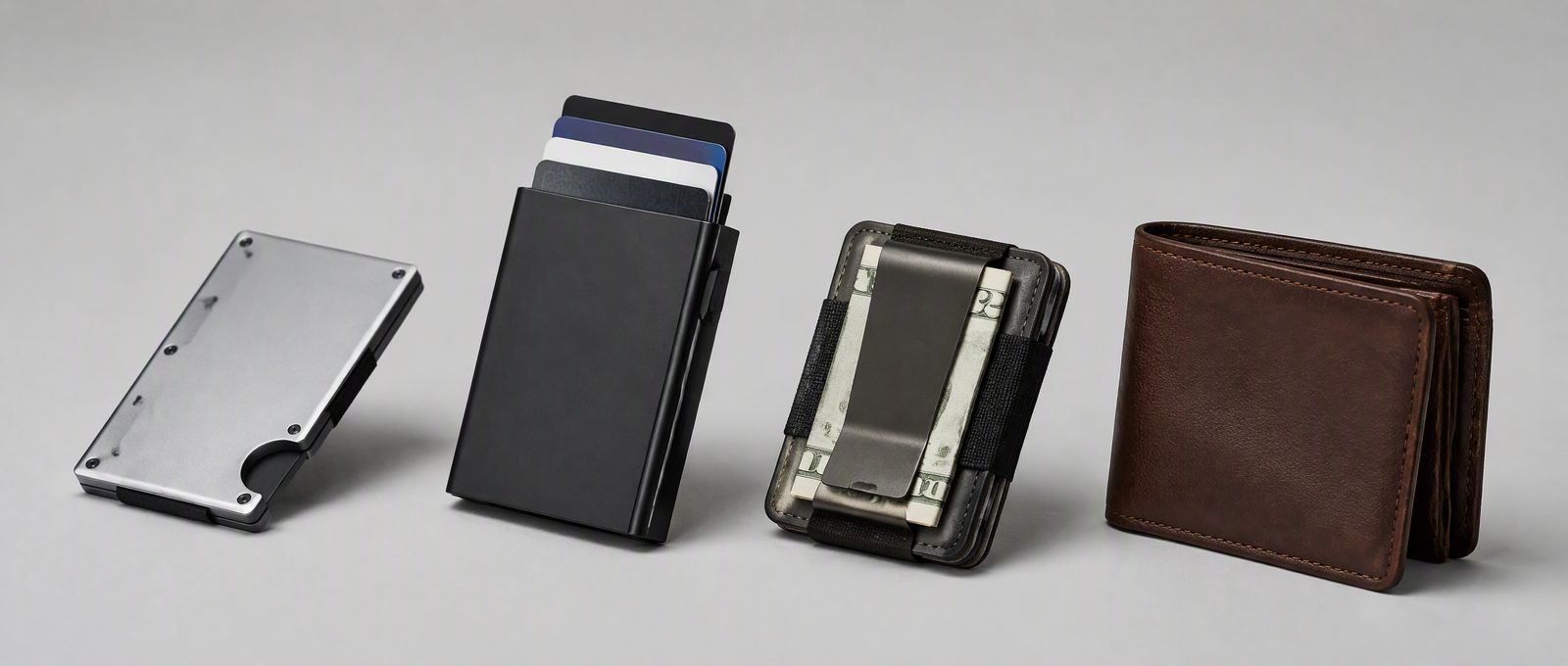
The trend line is clear: the slimmer and more thumb-friendly the build, the better it survives a nursing schedule. types of wallets explained covers how each construction targets different carry styles.
Material Reality on a Hospital Floor
Material choice matters more here than in any other buying guide, because hospital environments are uniquely hard on goods: repeated sanitizing, counter drops, and constant abrasion.
| Material | Weight feel | Resists sanitizer wipes | Scratch resistance | Real-world call |
|---|---|---|---|---|
| Aluminum (anodized) | Light | Excellent | Good | Best overall for nurses |
| Titanium | Light | Excellent | Excellent | Premium, near-indestructible |
| Full-grain leather | Moderate | Fair–Good (treated) | Fair | Classic look, needs upkeep |
| Carbon fiber | Light | Excellent | Very good | Lightest option, pricier |
| Canvas / nylon | Light | Poor | Good | Cheap only; stains and soaks |
For wear patterns side by side, metal wallet materials compared shows how each ages after real carry. For a nurse, anodized aluminum hits the sweet spot of light, cleanable, and affordable.
Card Capacity and the Badge Question
Plan capacity around the badge and the “safety card,” not around cash. A working layout for most nurses:
| Card | Slot priority |
|---|---|
| Employee / prox badge | Dedicated outer or middle slot |
| Driver’s license | Middle slot, first-out position |
| Insurance card | Middle slot |
| Bank card A (tap) | Outer slot for fast tap |
| Bank card B | Backup slot |
| Cash (small bills) | Inner flap or clip, not a coin pocket |
If the layout needs more than two cash points, the wallet is too thin for the job. The how to organize your wallet cards routine applies directly here — only the priority changes from “most-used” to “badge first, tap card second.”
What to Avoid in a Nurse Wallet?
- Heavy bifolds and trifolds — they pull scrub pockets down and tempt back-pocket carry, a sitting hazard on a 12-hour shift.
- Bulky coin sections — coins rattle and add thickness you will feel by hour six.
- Magnetic closures on card slots — a closure magnet next to a stripe card is a slow demagnetization source over months of carry.
- Anything you cannot wipe — canvas, suede, and open-pore leather soak up disinfectant; a real hygiene downgrade on busy floors.
- Wallets marketed on “capacity” alone — 10-slot builds are thicker than the material promises.
How to Choose: A 30-Second Buying Test?
Run these checks in the store or on the listing:
- Open it one-handed with the thumb — if it takes two hands, move on.
- Load your actual 6–8 cards and confirm it stays under about 12 mm without bulging.
- Drop it on a hard floor and wipe the face with a damp cloth — watch how the surface reacts.
- Confirm the badge/prox card has a dedicated slot in the position you need.
- Compare the same style in aluminum vs leather and pick by cleaning tolerance.
That test takes under a minute and eliminates most wrong picks. how to choose wallet size gives the measurement-matching method so the loaded wallet actually fits the pocket.
For a B2B angle: this category is also a strong institutional market. Hospital gift shops, healthcare-branded merch programs, and nurse-appreciation programs buy compact cardholders in volume, and a factory partner with QC discipline makes that repeatable. On our production line — ISO 9001:2015 certified, with 4-stage inspection and AQL 0.65 sampling — we run roughly 50,000 units a month across 200+ partner brands, including hospital-merch programs, and the two spec points that matter for this audience are slot tolerance (measured against loaded card counts) and surface finish (tested against sanitizer exposure) before the 7-day sampling and 30-day production cycle closes. If you are sourcing for a program, the how to choose rfid wallet manufacturer checklist covers the factory-verification side.
FAQ
What is the best wallet for a nurse?
A slim aluminum or titanium cardholder that holds 6–8 cards, opens one-handed, and wipes clean. Leather front-pocket bifolds are the second pick when cash is the primary carry.
Do nurses actually use wallets?
Most do, but many switch to phone-holder or badge-reel setups because their wallets were too bulky. The fix is usually a slimmer wallet, not no wallet.
Why is a pop-up cardholder good for nurses?
It exposes the top card with one thumb press, so the card you swipe all day — badge, cafeteria, or tap card — is out and back in under two seconds.
Is leather OK for a hospital environment?
Treated full-grain leather holds up to normal wear and occasional wipes; untreated or suede does not. With aggressive disinfectant sprays, a metal wallet is the safer long-term pick.
How many cards should a nurse carry?
Six to eight is the practical ceiling: badge or prox card, license, insurance, one or two bank cards, and a backup. Beyond that, capacity costs thickness, and thickness costs comfort.
Does a metal wallet damage hospital badges or phones?
No — an aluminum or titanium shell is harmless to badges, phones, and door-access cards. The only magnetic element to watch is a closure magnet; prox cards are RFID, not stripe, so they are immune.
What about RFID-blocking wallets for nurses?
Useful if your hospital issues contactless IDs or you tap bank cards — shielding stops radio-wave skimming. It does not replace slot discipline; rfid wallet vs regular wallet lays out when the extra layer is worth it.
Is a wallet-on-a-lanyard a good nurse option?
For badge-adjacent carry, yes — some nurses wear a small cardholder on the same lanyard as the ID. It keeps cards accessible without touching scrub pockets, but it adds neck weight and swings during patient handling.
Best Wallets For Nurses: What Is the Bottom Line?
A nurse’s wallet is a shift tool, not a fashion statement. Pick slim, pick one-handed, pick cleanable, and plan capacity around the badge and the tap card — 6–8 cards max, dedicated slots, under 12 mm loaded. The aluminum cardholder wins the 2026 default, with pop-up mechanisms for single-card repeat users and treated leather as the cash-friendly alternative.
If you are buying one for yourself, the 30-second test settles it. If you are sourcing for a hospital program, a nurse-appreciation kit, or a retail line, Request a Quote on compact cardholder builds with loaded-slot QC, or Ask Our Factory Team about sanitizer-tested finishes and customization. For volume programs and private-label runs, Get OEM Pricing on our hospital-merch production line.
From article to product
Turning this into a product?
Most of what is written here is the difference between a sample that works and one that does not. We can build either — the useful one costs the same.
Keep reading
More on buying guides
wallet with trigger
How Does a Trigger Wallet Work? What Is the Pop-Up Mechanism? The core of…
Readbest bifold wallet for women
What Is a Bifold Wallet? The term “bifold” refers to the fold: the wallet…
ReadMen’s trifold wallets with zipper compartments vs. bifold
At a Glance The three dominant men’s wallet formats differ in panel count, depth,…
Read
About the author
TOPWALLET Editorial Team
TOPWALLET's editorial and engineering desk writes from bench testing at the Shenzhen (Longgang) facility: pull-force and cycle testing, 13.56 MHz shielding measurements, finish trials and factory audits, rather than supplier spec sheets. Every specification in these guides is one we write on a purchase order.
Written on the floor
This article was written by our production and QC team — the people who spec tolerances, run the finishing line and inspect every batch. Where it states a capacity, a pull force or a lead time, it comes from a measurement we made, not a supplier’s catalogue. If a number here disagrees with what your own supplier told you, tell us; several of these articles started as a correction from a buyer.
See how the factory works · Inspection process · Sourcing FAQ
Turning this into a product?
Most of what is written here is the difference between a sample that works and one that does not. We can build either — the useful one costs the same.