

A brown wallet is a compact everyday-carry accessory crafted from full-grain leather, anodized aluminum, titanium, or carbon fiber — valued for its classic warm tone, durable construction, and streamlined ability to hold cards, cash, and keys without bulk. It remains one of the most popular wallet choices because brown tones pair effortlessly with any wardrobe, leather develops a character-rich patina over time, and modern minimalist formats (cardholders, slim bi-folds, money clips) make daily carry lighter and more secure than traditional bifold designs ever did.
At a Glance
The fastest answer: For most people, a slim brown leather bifold or a minimalist aluminum/cardholder format is the best brown wallet for everyday carry — it holds 6–10 cards plus folded cash, fits front pockets without printing, and ages into a patina that looks better with time. If you prioritize security and low maintenance, go with a metal wallet featuring RFID-blocking; if you want classic style and a warm look, stick with full-grain leather.
What actually matters when picking one is material, capacity, and pocket compatibility, not just color. The brown tone itself — tan, saddle, chocolate, or espresso — is mainly a style call, while how the wallet carries, protects your cards, and fits your daily routine determines whether you’ll keep using it six months from now.
Key things to check before buying: number of card slots you actually need, whether your phone is bulky enough to change wallet dimensions, and whether you want RFID protection or not. This guide walks through every common option so you can match the type to your lifestyle and budget without overbuying.
Types & Categories
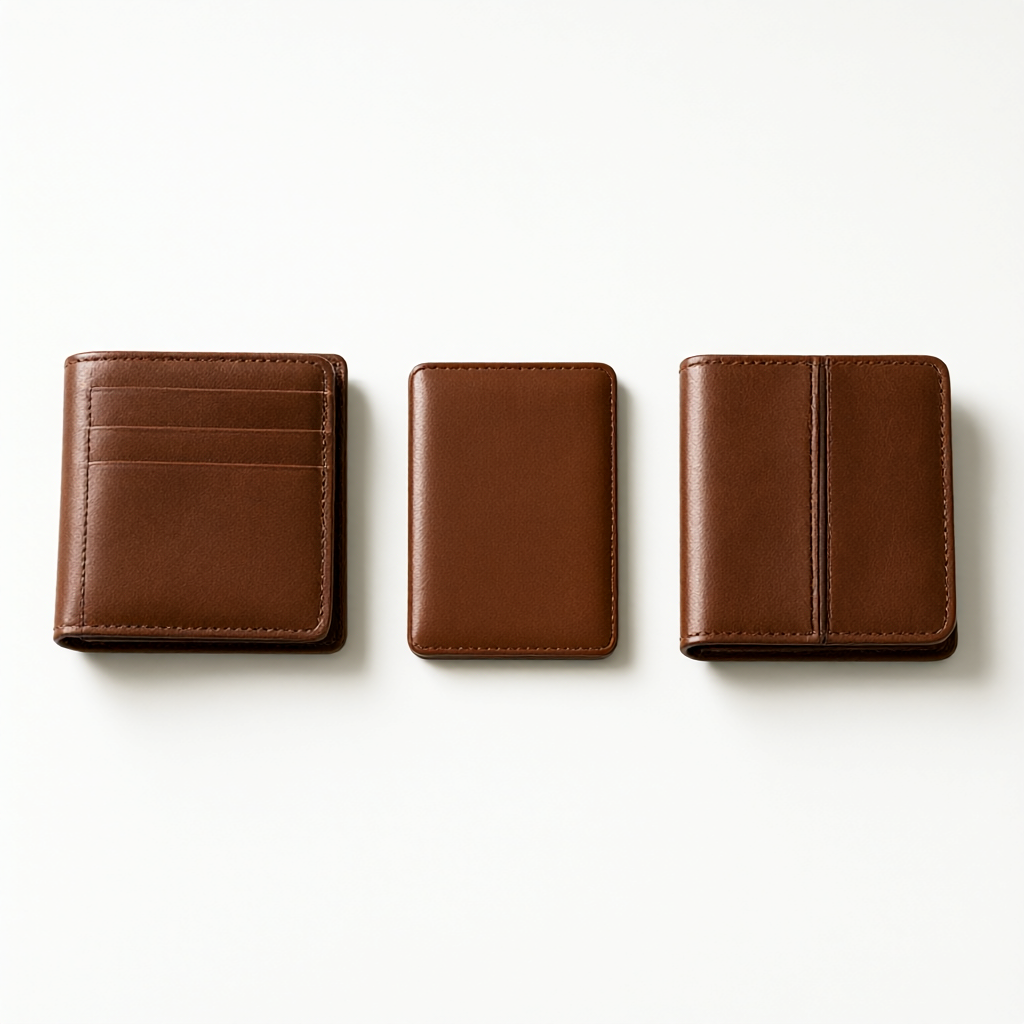
A “brown wallet” isn’t one product — it covers several form factors that do different jobs. Getting the category right first prevents the #1 regret buyers report: carrying something too big or too flimsy for their actual habits.
What type of brown wallet is best for everyday carry?
For most professionals and commuters, a slim bifold or a cardholder-style minimalist wallet is the sweet spot. These hold 4–8 cards, a few bills, maybe a USB drive or key, and slide cleanly into front pants pockets. They’re also easier to label and manage because you see exactly what you own at a glance.
Carry styles break down like this:
- Bifold — traditional fold, widest capacity, works for people who carry more than ten cards or prefer a structured feel. Downsides include bulk in back pockets and higher wear on creases.
- Slim / minimalist wallet — designed to hold fewer items but sit flatter. Best for front-pocket users and travelers minimizing gear. Often paired with an EDC wallet philosophy.
- Cardholder — flat plate or sleeve holding cards without cash storage, sometimes with a money clip added separately. Ideal for digital-pay-heavy lifestyles.
- Money clip wallet — combines a rigid frame with a spring steel clip for bills. Slim profile and fast access; weaker for coin or loose bill carriers. Read our detailed guide on money clip selection for fit criteria.
- Zipper wallet — enclosed pouch style, sometimes used as a travel or coin purse hybrid. More secure against loss but heavier and less convenient for quick cash access.
Each type has a distinct footprint. A bifold typically measures around 110–120 mm wide when closed; a slim cardholder drops below 90 mm and weighs under 60 grams. Those numbers matter when you pair the wallet with a specific jacket or coat pocket.
Men’s long wallet versus women’s small wallet
These are really two sides of the same question: how much do you carry? Men’s long wallets — often called bi-fold long or tri-fold formats — tend toward more card slots (8–12), a full-length coin pocket, and dimensions closer to 120–145 mm. Women’s small wallets frequently target 3–6 card slots, a compact zip or snap closure, and narrower widths suited to smaller bags or clutch-style carries. The difference is capacity, not category.
If you prefer a feminine silhouette but still need utility, many brands offer female card wallets shaped as slim horizontal holders with hidden coin compartments, which bridge the gap between fashion and function. For shoppers searching for a women’s small wallet, looking at overall interior volume rather than exterior dimensions gives a clearer picture of real-world usability.
Where crypto and Bitcoin storage fit
Some buyers ask about a bitcoin cold wallet or crypto cold wallets as part of the wallet conversation. Those are separate hardware devices — Tiny Ledger-style tools you keep secure — not features inside a conventional wallet. That said, many EDC wallet carriers choose a minimalist format specifically because it leaves room for a small USB-shaped hardware wallet alongside cards and cash. If you hold significant crypto value, treat the physical wallet as a convenience carrier, not a security solution; store seed phrases and hardware devices in dedicated protective cases instead. For deeper background on card-safe designs that protect both physical cards and small electronics, see wallets that protect cards.
Comparison Table
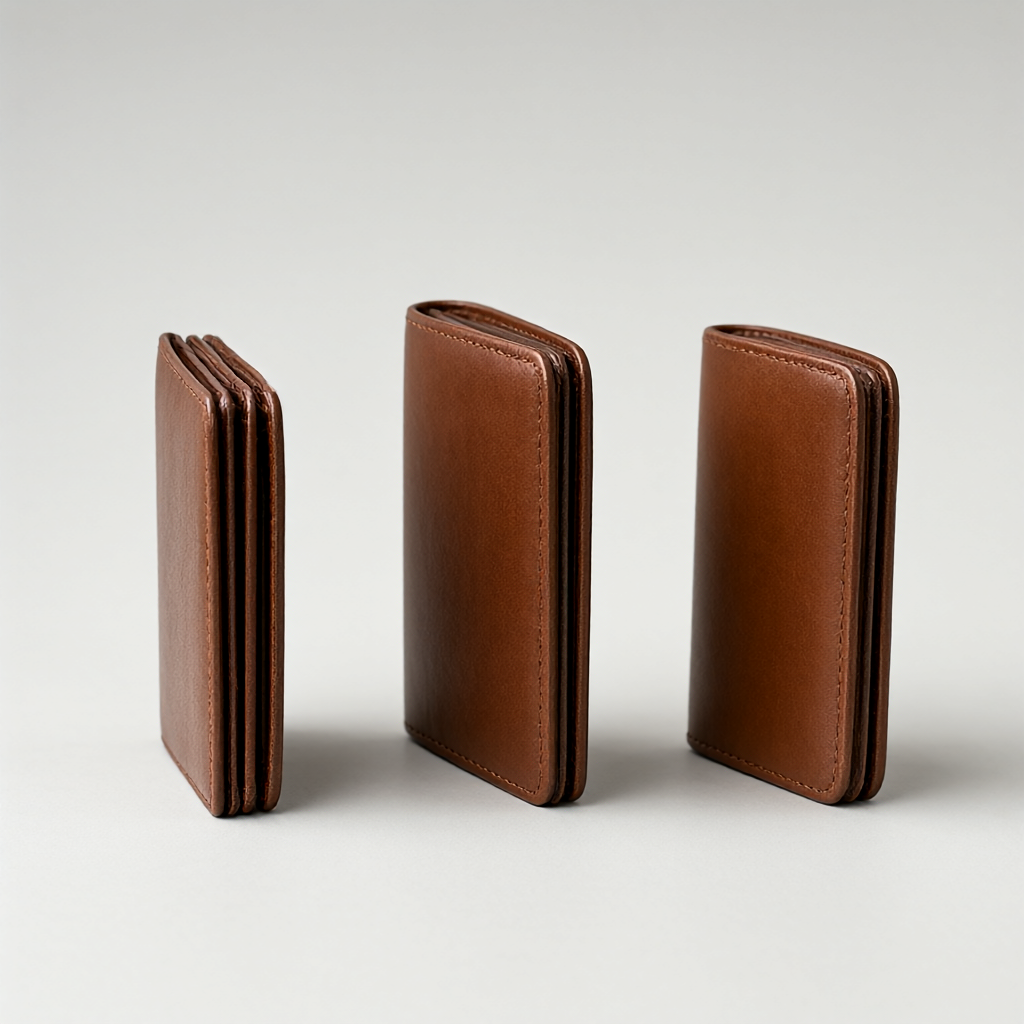
Use this matrix to compare the most common brown wallet formats and materials head-to-head.
| Type | Typical Capacity | Common Materials | Avg. Weight (g) | Best For | Approx. Price Range (USD) |
|---|---|---|---|---|---|
| Slim bifold leather | 6–10 cards + cash | Full-grain, top-grain, bonded leather | 55–90 | Everyday office carry | $25–$80 |
| Minimalist metal wallet | 4–8 cards + folded cash | Aluminum, stainless steel, titanium | 40–75 | Front-pocket urban carry | $30–$150 |
| Cardholder + money clip | 4–6 cards, no coin pocket | Leather, carbon fiber, aluminum | 25–55 | Digital-payment lifestyles | $20–$70 |
| Zipper travel wallet | 6–12 cards, coins, receipts | Leather, nylon, synthetic blends | 80–140 | Travel and outdoor use | $30–$100 |
| RFID-blocking metal | 4–10 cards, shielded compartments | Anodized aluminum, titanium | 50–90 | Security-conscious buyers | $40–$180 |
| Luxury leather bifold | 8–12 cards, embossed branding | Premium full-grain, exotic leathers | 90–150 | Formal/business settings | $80–$300+ |
Note: prices are typical retail ranges, not fixed quotes; costs shift by region, leather grade, and finish. If you’re evaluating wholesale or private-label production runs, quantities and tooling fees alter unit pricing significantly.
Buying Factors
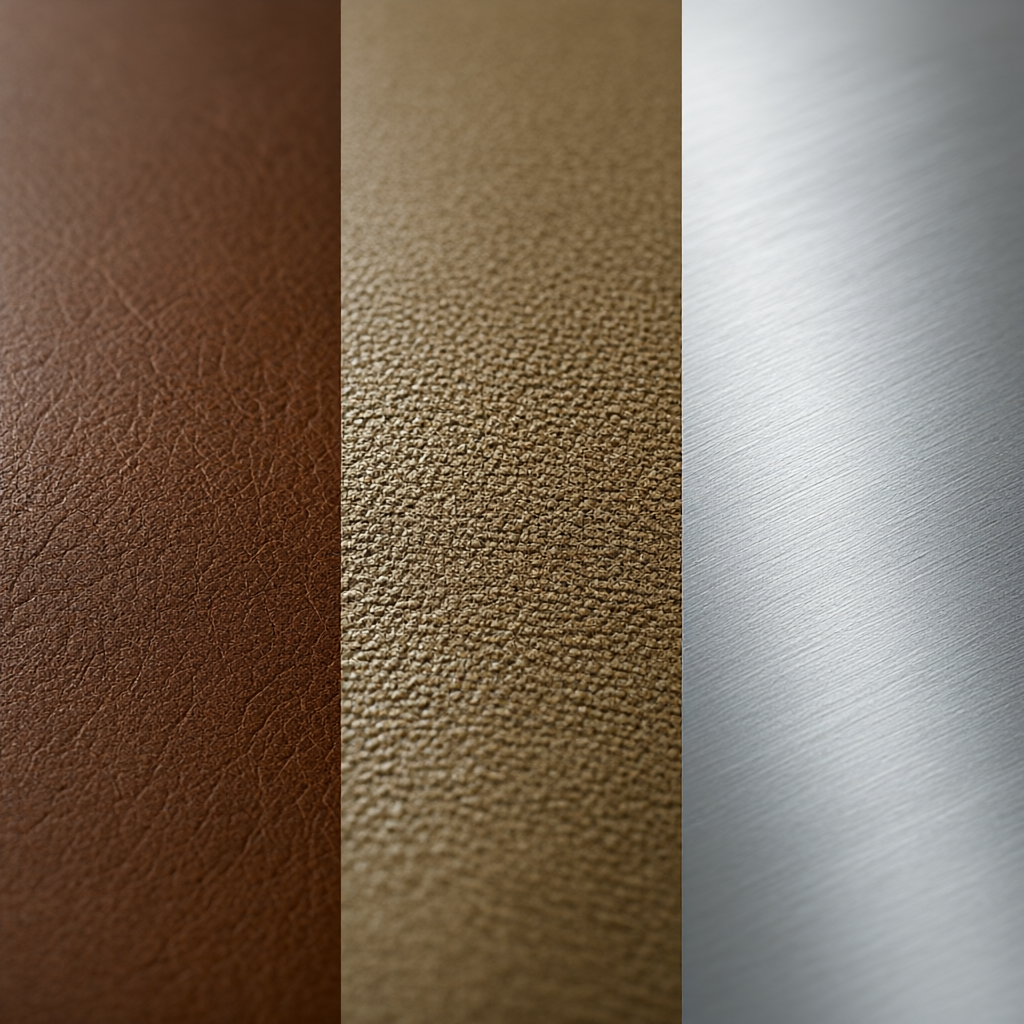
Choosing the right model comes down to four axes: material, capacity, security features, and aesthetic fit with your wardrobe. Here’s what actually moves the needle.
Should I buy a leather or metal brown wallet?
This is the main fork in the road. Both work well; they just optimize for different priorities.
Leather wallets — pros: soft hand feel, develops a unique patina over time, forgiving on teeth and zippers, easy to repair with conditioning. Cons: susceptible to water rings, requires periodic maintenance, and lower-grade “genuine leather” can crack after a year or two of heavy folding. For longevity, look for full-grain or top-grain hides; avoid bonded or reconstructed leathers if you plan to keep the wallet three-plus years. See different types of leather wallets for grading details.
Metal wallets — pros: rugged, water-resistant, inherently slim profiles, excellent for high-frequency open/close cycles since there’s no leather fatigue. Cons: colder touch in winter, can dent, and some cheaper alloys may cause minor skin reactions (look for 316L surgical-grade stainless or properly anodized aluminum to minimize risk). Titanium offers the lightest weight with strong corrosion resistance, but it sits at a premium price point.
If you carry a lot of folded bills, leather generally handles repeated folding better than rigid metal frames. If you drop your wallet in rain or wash your hands frequently, metal wins on durability.
How to choose the right size and capacity for daily needs?
Many buyers overestimate what they’ll actually carry. Start by counting the cards you use daily — including one spare for emergencies — then add space for the cash thickness you normally maintain. A realistic everyday setup is 5–7 cards plus a folded stack of bills under 4 mm thick.
Width matters as much as thickness. Use a standard credit card as a ruler: most modern phones sit 75–80 mm wide, so a wallet wider than ~90 mm will bulge noticeably in front pockets. For reference on exact measurements, consult wallet size width and height dimensions charts. Back-pocket carriers benefit from slimmer widths and flexible edges; front-pocket users have more latitude for height but still need a flat profile to avoid printer marks.
Coin pockets are another hidden trap. True coin slots add bulk fast. If you rarely use coins, skip them and use a separate keychain or small pouch instead.
Do I need RFID-blocking in a brown wallet?
RFID-blocking layers attenuate radio-frequency signals from contactless card readers. Whether you need them depends on your risk tolerance and local payment infrastructure. In regions where tap-to-pay is ubiquitous and card-skimming crimes are documented, adding an RFID layer is reasonable insurance — especially for RFID wallet products sold specifically for that purpose. In places where contactless limits are low and chip-and-PIN remains common, the practical upside shrinks.
From a technical standpoint, effective shielding uses conductive metals or specialized woven meshes laminated inside the wallet body. Cheap implementations can create dead zones that partially block legitimate taps anyway. If you go this route, verify the product lists a published attenuation spec (typically measured in decibels across 13.56 MHz for NFC / RFID frequencies). For a complete rundown on what to verify, read our RFID wallets guide for men and women.
Style considerations for men and women
Brown tone pairing matters more than most buyers expect. Tan and honey browns read casual and pair well with denim, canvas, and summery palettes. Saddle and cognac sit in the middle, working for business-casual environments. Dark chocolate and espresso lean formal and blend with navy, charcoal, and black suits.
For a men’s luxury wallet aesthetic, look for clean stitching, minimal branding, and refined edge painting — those cues signal craftsmanship even at mid-tier price points. For a luxury wallet aimed at women, consider silhouette choices: horizontal cardholders suit smaller clutches, while vertical formats complement tote interiors and larger bags. If you’re hunting a wallet luxury piece as a gift, presentation packaging and engraving options often tip the scale more than incremental material upgrades.
Maintaining a leather brown wallet
Leather care is straightforward but inconsistent. Condition every three to six months depending on climate and usage — hotter, drier environments accelerate drying. Avoid direct heat sources like car dashboards in summer, which bake oils out of hides. Store with a breathability insert or tissue paper to preserve shape during off-weeks. For restoration steps beyond basic conditioning, see leather wallet care and restoration guide.
Smart wallets and apps exist, but most add batteries, subscription fees, or tracking vulnerabilities that outweigh benefits for simple carry. A wallet app for Android might help inventory your cards or track warranties digitally, but don’t confuse a software tracker with a hardware tracking solution — the latter introduces attack surfaces. Physical minimalism usually beats digital complexity for a device you pocket daily.
Price & Cost
Brown wallet pricing spans roughly $20 to $300+ at retail, driven mainly by material grade, construction method, and brand positioning.
- Budget tier ($20–$50): Bonded leather, thin aluminum, basic stitching. Fine for短期 backup carry or gifting; expect 1–2 years of moderate use.
- Mid tier ($50–$120): Full-grain or top-grain leather, CNC-machined aluminum/titanium accents, solid RFID shielding options, reliable hardware. This is the highest-value band for daily drivers.
- Premium tier ($120–$300+): Exotic leathers, hand-stitched details, branded collaborations, intricate engraving, proprietary locking mechanisms. You’re paying for design story and finishing, not just function.
Cost drivers to watch:
- Leather origin and tannage method (vegetable-tanned tends to age better but costs more upfront)
- Metal alloy and finishing process (anodizing, PVD coating, brushed vs polished)
- Hardware quality (zippers, clips, magnetic closures — cheap springs fail early)
- Brand markup and distribution channel
When comparing expensive brown wallets worth it? — the answer hinges on expected ownership length. A $90 well-made leather wallet used daily for five years often outperforms three $30 replacements.
Pros & Cons
Leather brown wallet
- Pros: classic appearance, comfortable break-in, repairable, wide shade range
- Cons: needs conditioning, vulnerable to prolonged moisture, lower-grade versions crack
Aluminum / titanium metal brown wallet
- Pros: waterproof-friendly, slim rigid structure, no crease fatigue, modern aesthetic
- Cons: cold feel, dents under impact, limited cushioning for cards, higher price for titanium
Carbon fiber cardholder
- Pros: extremely lightweight, stiff and dimensionally stable, attractive weave pattern
- Cons: fragile edges if dropped on concrete, harder to repair, limited cash capacity
Zipper travel wallet
- Pros: secure enclosure, good for chaotic trips, extra pockets for boarding passes and receipts
- Cons: heavy, slower access, zipper pullers can catch clothing
Money clip minimalist format
- Pros: thinnest profile, instant bill access, pairs well with suit pockets
- Cons: weak for coin storage, clips can loosen over time, less forgiving with thick bills
Additional Considerations
Beyond the core decision factors, a handful of secondary topics shape long-term satisfaction.
Related accessories: A slim keychain, a discreet luggage tag, or a small silicone card sleeve can extend a wallet’s utility without adding bulk. Many buyers pair their primary brown wallet with a separate coin pouch only for travel days, keeping everyday carry sleek.
Color matching tips: Match brown undertones to your shoe and belt palette for formal looks; contrast tan with navy and white for casual outfits. Avoid mixing warm oranges (tan) with cool grays unless intentionally going for a styled contrast.
Crypto and hardware notes: If you store a hardware wallet or bitcoin cold wallet on your person, protect it with a padded sleeve inside a larger bag rather than loose in a wallet slot — metal contacts and seeds degrade faster under flex stress than you might expect.
Gift-giving timing: Brown wallets perform consistently well as gifts across seasons because brown pairs with nearly any outfit. Engraving a name or initials elevates a mid-range piece into memorable territory without pushing price into luxury territory.
Sustainability angle: Vegetable-tanned leathers and recycled aluminum options reduce environmental impact compared to chrome-tanned hides or virgin polymers. Look for transparent sourcing notes rather than vague eco-claims.
Working with manufacturers — what actually matters for long-term value
The distinction between a cheap impulse buy and a durable, serviceable wallet usually shows up in manufacturing controls: consistent stitch density, proper edge burning or painting, honest leather grading, and functional hardware ratings. Reputable producers will publish material specs, show real samples before bulk runs, and stand behind warranties that match their price tier.
As a manufacturer in the EDC wallet space, our approach centers on practical durability and adaptable design rather than chasing trends. We’ve spent over a decade refining processes for slim metal wallets, carbon fiber card holders, and genuine leather formats — focusing on tight tolerances, reliable hardware, and finishes that survive everyday abrasion. Our facility runs ISO 9001-certified quality management and BSCI-audited operations, and we support OEM/ODM runs starts at 300 pcs per SKU for full OEM customization (100 pcs trial order available for stock finishes) with seven-day sample lead times. Whether you’re developing a private-label line, testing a new finish like an anodized bronze aluminum, or comparing how different brown tones photograph under natural light, we’d be glad to walk through options with you. Contact Our Team to discuss your project scope and timeline.
What Is a Brown Wallet and Why It Stays Popular
The “brown wallet” category exists because brown sits between neutral black and casual tan on the visual spectrum — it reads professional enough for boardrooms yet warm enough for weekend wear. That versatility explains decades of consistent demand across demographics.
Brown remains popular for three practical reasons:
- Wardrobe compatibility: Brown pairs naturally with navy, charcoal, olive, tan, and white — garments that dominate both business-casual and outdoor-style wardrobes.
- Patina development: Full-grain leather in brown shades darkens and softens with use rather than fading, giving each wallet a personalized look over time. Vegetable-tanned leathers, in particular, show this effect within months.
- Material evolution: Modern alternatives like CNC-machined aluminum with brown PVD coating or carbon fiber with brown resin infusion replicate the aesthetic while offering water resistance and structural rigidity that leather cannot match.
At the industry level, the global minimal-wallet segment has grown alongside smartphone integration — thicker phones forced thinner wallets, and the brown finish provided continuity for buyers transitioning away from bulky bi-folds. According to FTC guidance on product labeling, material disclosure transparency has improved consumer confidence in leather-grade claims over the past decade.
Leather Quality and Grading Standards
Leather quality varies dramatically by grade, and the difference shows up in years of service life — not just appearance. Understanding grading prevents buyer disappointment when “genuine leather” turns out to be bonded scrap.
Leather grades explained
- Full-grain leather — The top layer of hide with the grain intact. Most durable, develops patina naturally. Tear strength per ASTM D412 standard testing typically exceeds 20 N/mm² for quality vegetable-tanned stock. Expected lifespan: 5–10+ years with proper care.
- Top-grain leather — Sanded or buffed surface to remove imperfections. Slightly less durable than full-grain but more uniform in appearance. Good for structured wallets requiring a consistent finish.
- Genuine leather — A marketing term often applied to lower-grade split leather layers or reconstituted hides. Durability varies widely; many products in this tier crack within 12–18 months under daily folding stress.
- Bonded / reconstructed leather — Leather fibers bonded with polyurethane or latex adhesives. Least expensive option; poor longevity and cannot develop a true patina.
Tannage methods and their impact
- Vegetable tanning — Uses natural tannins from bark, leaves, and wood. Produces firmer leather that molds to contents and develops rich patina. Environmentally preferred process; common in premium craftsmanship. Curing time: several weeks to months.
- Chrome tanning — Faster, produces softer and more water-resistant leather. More common in mass production. Some eco-conscious buyers avoid chrome-tanned goods due to chemical waste concerns.
- Hybrid approaches — Combining chrome and vegetable processes yields leather that balances softness with structure, increasingly popular in mid-tier wallet manufacturing.
For detailed breakdowns of each classification, see different types of leather wallets.
Material Deep Comparison: Leather vs. Metal vs. Carbon Fiber
This table shows objective performance differences between the three dominant brown wallet materials.
| Specification | Full-Grain Leather | Anodized Aluminum | Titanium | Carbon Fiber |
|---|---|---|---|---|
| Weight (typical 6-card format) | 55–90 g | 40–55 g | 30–45 g | 25–40 g |
| Water resistance | Low (requires treatment) | High | Very high | Very high |
| Scratch resistance | Moderate | High (anodized layer 10–25 µm) | High | Moderate (surface resin scratches) |
| Card protection | Soft cushioning | Rigid (no cushioning) | Rigid | Rigid |
| RFID blocking potential | Requires embedded mesh | Can integrate shield layer | Can integrate shield layer | Limited natural shielding |
| Patina / aging | Develops unique tone | Color-stable | Color-stable | Weave pattern stable |
| Typical price range (USD) | $25–$150 | $30–$120 | $80–$250 | $40–$150 |
| Service life (daily carry) | 5–10+ years | 7–15+ years | 10–20+ years | 5–10 years |
| Repairability | High (conditioning, stitching) | Low | Low | Very low |
| Cold-touch feel | Neutral | Noticeably cold below 15°C | Minimal cold transfer | Neutral |
Manufacturing notes:
- Anodized aluminum wallets typically feature an anodic oxide layer of 10–25 microns for color durability and scratch resistance. Hard-anodizing can exceed 50 µm but adds cost.
- Titanium wallets use grade 2 (pure titanium) or grade 5 (Ti-6Al-4V) for strength-to-weight balance. Grade 2 offers better corrosion resistance; Grade 5 provides higher yield strength (~880 MPa).
- Carbon fiber panels are created via autoclave curing at approximately 120–180°C under pressure, producing laminates with tensile strengths exceeding 500 MPa along the fiber axis.
RFID Security and Technical Specifications
Effective RFID shielding requires understanding frequency bands and attenuation metrics before purchasing.
How RFID blocking works
Contactless payment cards and e-passports operate primarily at 13.56 MHz (NFC) and some transit cards at 125 kHz (LF). An RFID-blocking wallet creates a Faraday cage around these frequencies using conductive materials such as:
- Stainless steel mesh laminated inside the wallet body
- Conductive fabric woven into leather composites
- Metal plates integrated between card slots
Measuring effectiveness
Legitimate manufacturers publish attenuation values in decibels (dB):
- ≥40 dB attenuation at 13.56 MHz = effective blocking (reduces signal to ~1% of original)
- ≥50 dB attenuation = strong shielding suitable for high-risk environments
- Below 30 dB = marginal; cards may still be partially readable at close range
When evaluating products, request test reports referencing ISO/IEC 14443 or ISO/IEC 15693 compliance for contactless card testing methodology. Without published dB ratings, claims of “RFID protection” are unverifiable.
See our RFID wallets guide for men and women for deeper selection criteria.
Brand Reputation and Market Positioning
The brown wallet market spans from fast-fashion accessories to artisan craft goods, making brand research essential. Several tiers exist:
- Mass-market brands ($20–$50): Wide distribution, moderate quality control, limited customization. Brand premiums are low but so is material consistency.
- Mid-tier EDC-focused brands ($50–$150): Design-driven, focused on slim profiles and modern materials. Often produce their own tooling or work closely with contract manufacturers. Quality control tends toward ISO 9001 standards.
- Luxury heritage brands ($150–$500+): Premium leathers, hand-finishing, brand storytelling. Value derives significantly from brand equity and retail experience rather than material superiority alone.
- Direct-from-manufacturer / ODM brands: Bypass retail markup by selling wholesale or DTC. Offer customization at competitive unit prices with MOQs typically starting at 300–500 pieces depending on complexity.
Brand reputation correlates loosely with independent review volume and certified manufacturing practices. When evaluating long-term value, examine warranty terms, return policies, and whether the brand discloses material sourcing and factory certifications.
Sourcing, OEM/ODM and Production Benchmarks
Buyers evaluating brown wallets at commercial scale should understand typical OEM/ODM benchmarks before engaging manufacturers.
Typical procurement parameters
| Parameter | Benchmark Range |
|---|---|
| Minimum Order Quantity (MOQ) | 300–500 pcs (leather); 200–1,000 pcs (metal/carbon fiber) |
| Sample lead time | 5–10 business days |
| Mass production lead time | 15–30 business days after sample approval |
| Tooling/mold cost | $500–$3,000 (one-time, for custom metal stamping or injection) |
| Unit cost at 500 pcs | $4–$12 (leather); $6–$18 (aluminum); $15–$40 (titanium) |
| Unit cost at 1,000+ pcs | $3–$8 (leather); $4–$10 (aluminum); $10–$25 (titanium) |
| Surface finishing options | Anodizing (10–25 µm), PVD coating, brushed/polished, laser engraving |
| Quality standards | ISO 9001:2015, REACH/RoHS compliance, BSCI audit readiness |
| Shipping prep | Amazon FBA labeling, polybagging, retail box packaging available |
Material qualification checklist for buyers
Before committing to a production run, verify:
- Leather source documentation — origin country, tannage method, grain type
- Metal alloy certificates — 6061-T6 for aluminum, Grade 2 or 5 for titanium
- RFID test reports — published attenuation values at 13.56 MHz
- Finish adhesion tests — cross-hatch or tape-peel results per ASTM D3359
- Drop-test compliance — ISTA 3A or equivalent for shipping protection
- Chemical compliance — REACH SVHC list screening, RoHS directive adherence
Manufacturer Perspective: How Quality Production Differs
Here is how the industry approach to brown wallet manufacturing breaks down — and where choices actually affect end-user experience.
Material selection drives nearly every downstream decision. Full-grain leather requires consistent hides with minimal scar tissue — rejected batches can reach 15–20% in lower-grade sourcing pools. Metal wallets demand tight tolerances; a 0.1 mm deviation in slot width affects card ejection smoothness visibly. Carbon fiber needs precise layup orientation to maintain stiffness without delamination during daily flex cycles.
Surface finishing is where perceived quality separates from cost. Anodized aluminum at 20+ µm thickness resists scratching far better than thin decorative coatings at 5 µm. Laser engraving depth of 0.05–0.15 mm ensures logos survive years of pocket friction without filling with lint. PVD coating on titanium provides color stability that anodizing alone cannot achieve on harder alloys.
Quality assurance at reputable factories includes incoming material inspection, in-process dimensional checks, and final function testing — magnetic closure retention, RFID shield continuity across the full panel, and card-slot insertion/extraction force measurement. Facilities operating under ISO 9001:2015 certification systems typically document these checkpoints, providing traceability that small workshop operations often cannot.
Our facility operates against those same benchmarks — ISO 9001 certified since 2014, BSCI audited, with 50,000 sq ft of in-house CNC machining and finishing capacity. Our approach focuses on delivering consistent dimensions, reliable surface treatments, and verifiable material specifications so brands can stand behind what they ship. If you’re evaluating production partners or want to discuss a custom specification, contact us to review your requirements.
Leather quality and types explained
The single biggest determinant of a brown wallet’s longevity is leather grade. Industry grading follows a clear hierarchy:
- Full-grain leather — The top tier. Retains the natural grain surface and fibers, vegetable-tanned or chrome-tanned. Expected lifespan: 5–10 years with proper conditioning. Tensile strength typically exceeds 25 MPa. Standards such as ISO 17075 (leather — physical and mechanical tests) govern how durability claims are measured.
- Top-grain leather — Sanded and finished for uniform appearance. Good balance of aesthetics and durability; expected lifespan 3–7 years. Commonly used in mid-tier retail wallets.
- Genuine leather — A marketing term rather than a grade. Often refers to split leather with a polyurethane coating. Lifespan typically 1–3 years before cracking becomes visible.
- Bonded / reconstructed leather — Leather fibers bonded with synthetic adhesives. Lowest cost, lowest durability. Not recommended for daily carry.
Vegetable tanning produces firmer, richer patina development compared to chrome tanning, which yields softer, more water-resistant hides. For a deeper look at grading terminology, see different types of leather wallets.
Color shades and wardrobe pairing
Not all brown wallets look the same — shade selection signals formality level and pairs differently with clothing palettes:
| Shade | Formality Level | Best Paired With |
|---|---|---|
| Tan / honey | Casual | Denim, khaki, summer linens |
| Saddle / cognac | Business casual | Olive, navy blazers, earth-tone outfits |
| Chocolate / dark brown | Smart casual | Charcoal suits, black footwear |
| Espresso / near-black | Formal | Navy, charcoal, all-dark ensembles |
For men’s luxury wallets, deeper espresso tones convey authority in boardroom settings. For women’s small wallets, lighter tan or saddle hues complement both daytime casual and evening looks. If you want one wallet for multiple occasions, a medium saddle brown offers the widest pairing flexibility.
Technical specs: RFID shielding and smart wallet apps
RFID-blocking performance is measured in decibel (dB) attenuation at 13.56 MHz (the NFC / contactless payment frequency). Quality implementations achieve ≥ 30 dB attenuation, which reduces signal strength to less than 1% of its original value — effectively preventing unauthorized scanner reads. Reputable manufacturers publish this spec; products listing only vague “RFID protection” without a dB figure should be treated with caution. See our RFID wallets guide for men and women for detailed testing methodology.
Smart wallet apps and Bluetooth trackers (Tile, Apple AirTag-compatible holders) offer location tracking but introduce attack surfaces. FTC guidance (ftc.gov) cautions that connectivity features can expose users to proximity-based spoofing if not properly secured. For most buyers, a well-designed passive RFID shield provides sufficient protection without adding battery dependency or subscription fees. A wallet app for Android may help catalog card details digitally, but it does not replace physical security features.
Maintenance and care routine
| Task | Frequency | Notes |
|---|---|---|
| Surface dusting | Weekly | Use a soft, dry microfiber cloth |
| Leather conditioning | Every 3–6 months | Apply a beeswax or lanolin-based conditioner; test on a small area first |
| Moisture exposure | Immediate drying | Blot — never rub — if the wallet gets wet; stuff with paper to retain shape while air-drying away from heat |
| Edge painting touch-up | As needed | Prevents delamination on leather-edge finishes |
| Metal component polishing | Quarterly | Use a non-abrasive metal polish for aluminum/titanium surfaces |
See leather wallet care and restoration guide for advanced stain removal and crack repair techniques. Avoid car dashboards in direct sunlight — temperatures exceeding 65 °C (149 °F) permanently damage leather oils and cause warping.
Practical industry case studies
Case study 1 — European fashion retailer: A luxury fashion house in Italy partnered with a certified Chinese EDC wallet manufacturer to source full-grain leather bifold wallets for their 2024 autumn line. Specifications called for vegetable-tanned hide (≥ 1.2 mm thickness), hand-stitched edges using nylon thread, and REACH-compliant dyes. The factory maintained ISO 9001:2015 quality management, resulting in a defect rate below 1.2% across a 5,000-piece order — significantly lower than the industry average of 3–5% for comparable orders. Lead time was 28 days for production plus 7 days for sampling.
Case study 2 — North American Amazon FBA seller: An Amazon private-label seller launched a line of minimalist aluminum RFID wallets targeting outdoor enthusiasts. The OEM partner provided CNC-machined 6061-Aluminum bodies with Class III anodizing (color-fastness rated per ASTM D2244), integrated 30+ dB RFID shielding, and FBA-compliant polybag packaging. MOQ was set at 300 units per SKU, with a 7-day sample turnaround. The product achieved a 4.6-star average rating within six months, driven by consistent wall-thickness tolerances (±0.05 mm) and rejection of under-spec alloy batches during incoming inspection.
How We Meet These Standards
At TOP EDC Wallet, we approach brown wallet manufacturing the way professional buyers expect: documented process controls, published compliance certificates, and realistic lead-time commitments. Since establishing our facility in 2014, we’ve built a 50,000 sq ft production environment equipped with in-house CNC machining, laser engraving, UV printing, and aluminum anodizing lines — all operating under an ISO 9001:2015-certified quality management system. Our BSCI-audited facility ensures labor and environmental standards meet international expectations, and every material lot is SGS-tested against REACH and RoHS requirements before entering production.
We serve 200+ brands worldwide across America, Europe, Australia, and Southeast Asia, producing 500,000+ units monthly with an MOQ starting at just 300 pieces. Our standard sample lead time is 7 days, and we support full OEM/ODM customization — from logo placement and material selection to custom retail box design and Amazon FBA prep. Whether you’re sourcing a minimalist aluminum wallet for your DTC brand or a full-grain leather cardholder for a promotional program, we handle everything from initial concept through shelf-ready delivery.
Sources & References
- FTC guidance on product labeling — www.ftc.gov
- ASTM D412 — www.astm.org
- ISO/IEC 14443 — www.iso.org
- Read our detailed guide on money clip selection — topedcwallet.com
- wallets that protect cards — topedcwallet.com
- different types of leather wallets — topedcwallet.com
- wallet size width and height — topedcwallet.com
- RFID wallets guide for men and women — topedcwallet.com
- leather wallet care and restoration guide — topedcwallet.com
- Contact Our Team — topedcwallet.com
From article to product
Sourcing minimalist-wallets?
Tell us the format, the quantity and the date you need stock. You get material options, MOQ and a landed-cost range back within one business day.
Keep reading
More on wallet types
Thin Male Wallets: Buying Guide for Slim Minimalist Picks
How to choose a slim wallet for men — thickness thresholds, material trade-offs, capacity…
ReadStashed Wallet: A Minimalist Everyday-Carry Solution
Understand what a stashed wallet is, how minimalist slim wallets work, and what to…
ReadFolding Wallets: Types, Materials & Buying Guide
Learn what makes a folding wallet worth buying, from materials and card capacity to…
Read
About the author
TOPWALLET Editorial Team
TOPWALLET's editorial and engineering desk writes from bench testing at the Shenzhen (Longgang) facility: pull-force and cycle testing, 13.56 MHz shielding measurements, finish trials and factory audits, rather than supplier spec sheets. Every specification in these guides is one we write on a purchase order.
Written on the floor
This article was written by our production and QC team — the people who spec tolerances, run the finishing line and inspect every batch. Where it states a capacity, a pull force or a lead time, it comes from a measurement we made, not a supplier’s catalogue. If a number here disagrees with what your own supplier told you, tell us; several of these articles started as a correction from a buyer.
See how the factory works · Inspection process · Sourcing FAQ
Sourcing minimalist-wallets?
Tell us the format, the quantity and the date you need stock. You get material options, MOQ and a landed-cost range back within one business day.