

Gents Wallet: What Is the Quick Answer?
What is gents wallet branded?
A branded gents wallet is a men’s wallet produced under a recognized brand label rather than as a generic unbranded product. In B2B terms, it refers to wallets that carry trademarked branding — whether that’s a heritage luxury house, a contemporary lifestyle label, or a private-label brand owned by a distributor or retailer. The term covers multiple formats: bifold wallets, cardholders, money clips, and slim minimalist designs, all manufactured to meet the brand’s specifications for materials, dimensions, finishing, and packaging.
For procurement buyers, “branded” signals a product that has been intentionally designed, quality-controlled, and marketed under a specific name. It is distinct from unbranded wholesale wallets, which are typically sourced purely on price and basic specification without the brand equity, consistency requirements, or aftercare obligations that come with a branded product line.
Gents Wallet: How Does It Work in Detail?
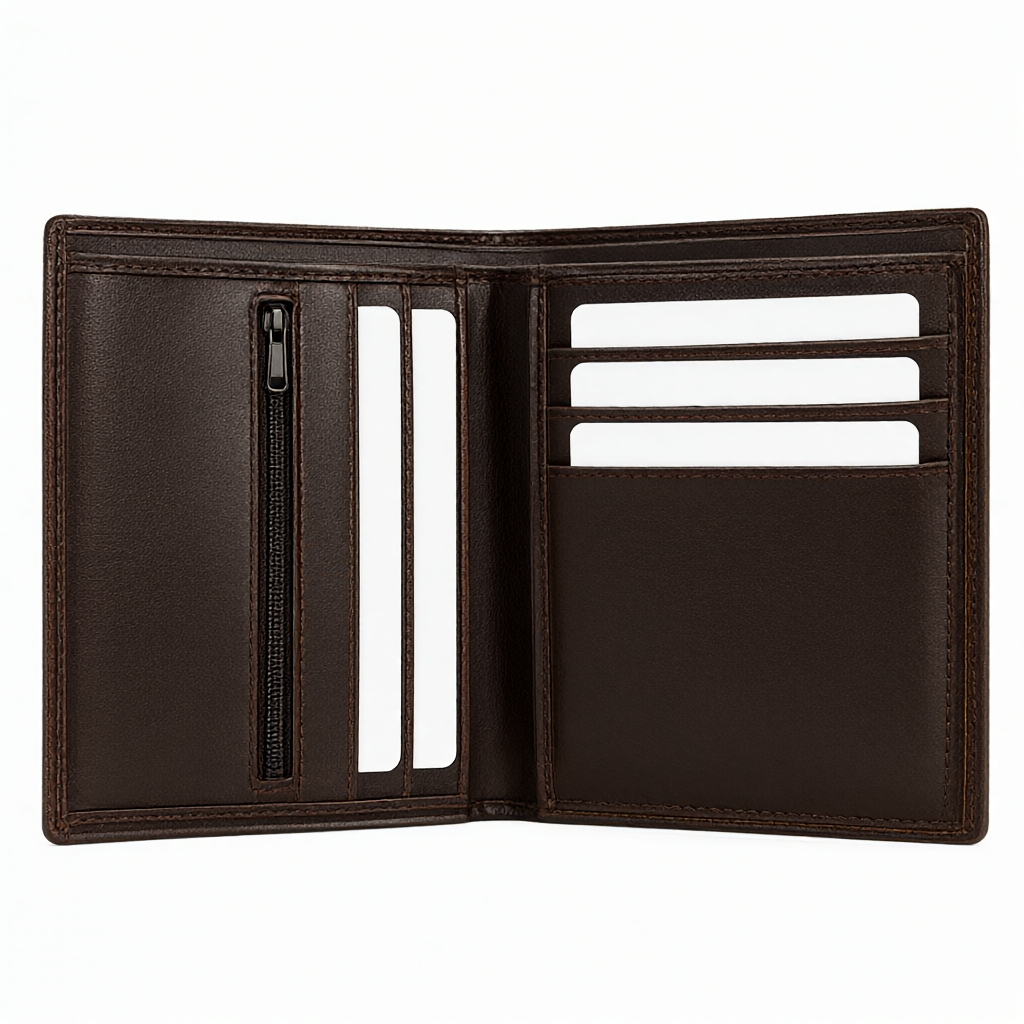
How do branded gents wallets differ from unbranded ones?
The difference runs deeper than a logo stamp. Branded wallets carry expectations around material consistency, dimensional accuracy, finish quality, and packaging presentation that unbranded alternatives do not. A heritage brand such as Bellroy or Oak & Son invests in tooling, leather selection, and quality checkpoints because the brand promise depends on repeatable performance. A private-label brand owned by an Amazon seller or retail chain同样 requires consistent output because every unit represents their name in the customer’s hand.
This is why sourcing branded wallets involves more than finding a supplier who can attach a logo. It requires evaluating whether the manufacturer has the capability to reproduce a design consistently, maintain tolerances across production runs, and meet compliance requirements for the target market. For example, wallets destined for the European Union must comply with REACH restrictions on certain chemicals in leather and metals, while products sold in the United States may need to meet FTC labeling requirements regarding material composition.
Why does material grade matter for branded wallets?
Material selection is the single biggest factor separating a premium branded wallet from a mid-tier one. The leather industry uses specific grading terminology, but these terms are not always applied consistently — which is why buyers must understand the actual specifications rather than relying on marketing language alone.
Full-grain leather retains the natural grain surface and is the most durable grade. It develops a patina over time and is commonly used by higher-end brands such as Fjällräven and Ridge. Top-grain leather has been sanded or buffed to remove imperfections, making it more uniform in appearance but slightly less durable than full-grain. Genuine leather is a broad category that can include bonded or reconstituted leather; it is functional but does not carry the same longevity as full-grain or top-grain options.
Synthetic and alternative materials also play a role in the branded wallet space. Carbon fiber, titanium, and anodized aluminum are increasingly common in the minimalist and tactical wallet segments. These materials offer different trade-offs: they are lightweight and scratch-resistant but can feel colder and less traditional than leather. Brands like Ridge and Coin Clip have built entire product lines around metal construction, while carbon fiber cardholders from manufacturers like TOP EDC Wallet cater to buyers who want a technical aesthetic at a competitive price point.
How does the manufacturing process affect final quality?
Branded wallets are typically produced using a combination of CNC machining, laser engraving, and manual assembly. Precision in each step matters. For metal wallets, CNC machining ensures that cut edges are clean, holes are precisely located, and the overall dimensions match the design file. For leather wallets, cutting accuracy affects how well the layers stack and whether the finished product sits flat in a pocket.
Surface finishing is another critical step. Anodizing on aluminum wallets provides both color consistency and scratch resistance. Laser engraving must be deep enough to remain legible after months of use but not so deep that it compromises the structural integrity of thin metal sheets. These details are what separate a well-made branded wallet from one that looks good on day one but degrades quickly.
Buyers evaluating potential suppliers should ask about in-house versus outsourced processes. Manufacturers that control CNC machining, engraving, and finishing in-house typically deliver more consistent results because they can adjust parameters between steps without relying on external vendors.
Gents Wallet: Which Specifications Matter Most?
What are the key specs for branded gents wallets?
When evaluating or specifying a branded gents wallet, the following parameters define the product:
| Specification | Typical Range | Notes |
|---|---|---|
| Width | 90–115 mm | Fits standard bill dimensions in most markets |
| Height | 70–100 mm | Depends on bifold, cardholder, or slim format |
| Thickness | 8–25 mm | Minimalist designs run thinner; bifold with cash pocket runs thicker |
| Card Capacity | 4–12 cards | Varies significantly by design and material |
| Cash Capacity | 0–2 compartments | Slim wallets may omit a cash pocket entirely |
| Weight | 30–120 g | Metal wallets are lighter but denser; leather adds bulk |
| Material Options | Full-grain leather, top-grain leather, aluminum, titanium, carbon fiber, hybrid combinations | Choice drives price, feel, and durability profile |
| Fastening | Magnetic closure, elastic band, snap button, none (slip-on) | Magnetic closures are common in minimalist designs |
| RFID Blocking | Optional add-on | Requires embedded metal mesh or laminate layer |
For private-label buyers, the most important spec to define upfront is the target thickness. A wallet that exceeds 15 mm in a front pocket will feel bulky to most users, which is why the minimalist segment has grown so rapidly. Understanding the trade-off between capacity and profile is essential when specifying a product.
What distinguishes a minimalist branded wallet from a traditional bifold?
Minimalist wallets prioritize low profile and organized card storage over bulk cash carrying. They typically hold 6–10 cards and a small amount of folded cash, fitting comfortably in a front or back pocket. Traditional bifolds accommodate more cards, multiple compartments, and larger cash reserves but add significant bulk. The choice depends on the target user: urban commuters and everyday carry enthusiasts tend toward minimalist designs, while users who carry receipts, coins, and large bills may prefer a conventional bifold.
Gents Wallet: Which Standards and Certifications Apply?
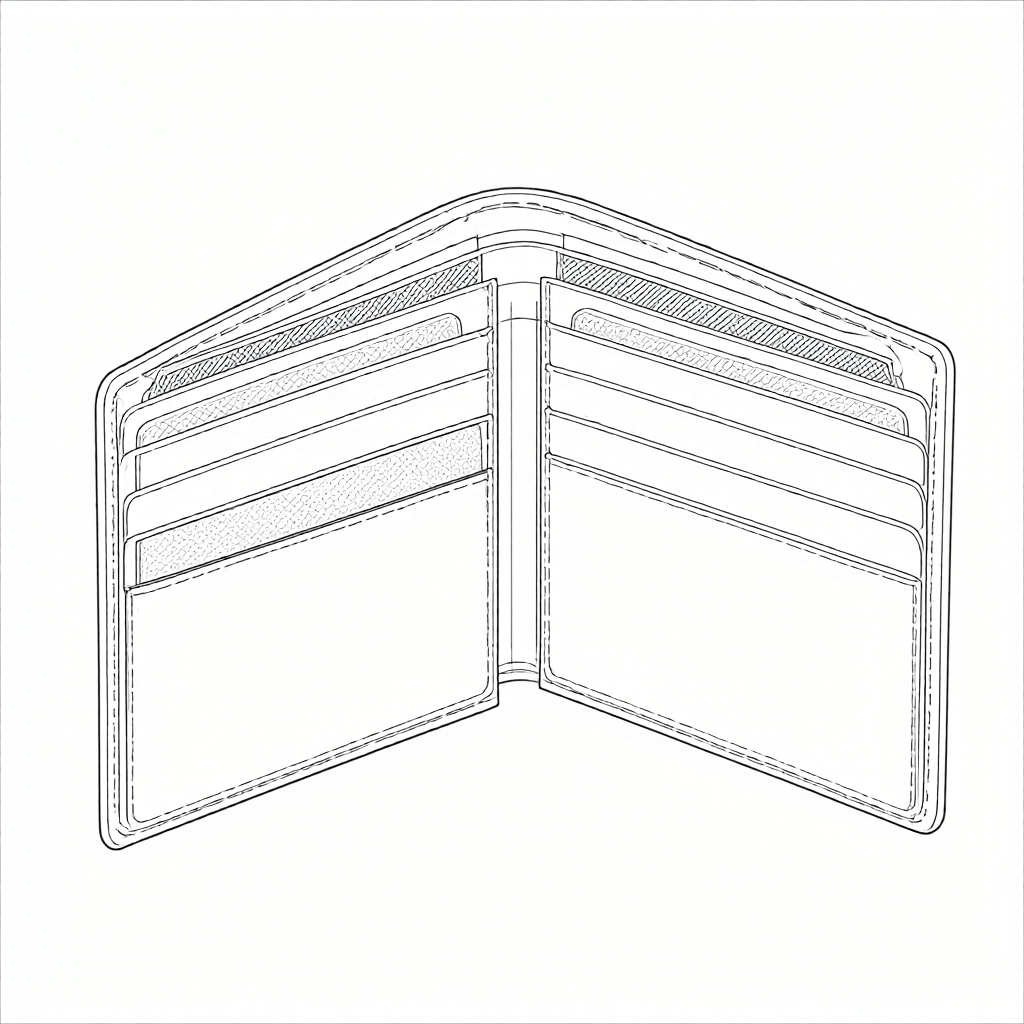
What standards and certifications apply to branded wallets?
Several standards and regulatory frameworks govern the production and sale of branded wallets, depending on the materials used and the destination market:
- REACH (EU): Restricts certain chemicals in leather treatment and metal components. Buyers exporting to Europe must ensure suppliers comply with REACH Annex XVII restrictions on substances like chromium VI in leather.
- RoHS: Applies to electronic components in wallets with integrated features (e.g., RFID blocking layers, digital tracking). Not typically relevant for standard leather or metal wallets.
- FTC Care Labeling Rule: In the United States, the Federal Trade Commission requires accurate fiber content and country-of-origin labeling on textile and leather products. Mislabeling leather as “genuine” when it is actually bonded can trigger enforcement action.
- ISO 9001: While not a product standard, ISO 9001 certification indicates that a manufacturer has a documented quality management system covering incoming inspection, in-process control, and outgoing inspection. This is relevant when evaluating suppliers for private-label production.
- BSCI: The Business Social Compliance Initiative audit covers labor practices and working conditions in manufacturing facilities. Some retail chains require BSCI compliance from their suppliers as part of their sourcing policy.
For specific material testing standards, ASTM International develops test methods for leather physical and chemical properties. Referencing ASTM standards can help buyers define measurable quality thresholds rather than relying on subjective assessment. Similarly, ISO standards provide frameworks for quality management systems that manufacturing facilities may adopt.
How do you verify material claims?
Brand marketing language around leather is often vague. “Genuine leather” on a product page may mean anything from full-grain to bonded leather. Buyers can request material test reports from suppliers, including:
- Leather composition certificates confirming the grade
- Chemical safety test reports for dyes and finishes (especially for REACH compliance)
- Material safety data sheets (MSDS) for any synthetic components
Reputable manufacturers will provide these documents without hesitation. If a supplier cannot substantiate material claims, it is a red flag regardless of price advantage.
Gents Wallet: What Else Should Buyers Consider?
What should you consider when choosing a branded gents wallet?
Several factors influence the decision beyond material and price:
Brand positioning and target price tier. Heritage brands such as Montblanc, Coach, and Fossil occupy different price and style positions. A brand like Bellroy positions itself in the premium mid-tier with emphasis on sustainability and functional design. A private-label brand may compete on value and customization rather than heritage. Understanding where the brand sits in the market helps determine whether the product matches your customer base.
Durability expectations versus price. Higher-priced branded wallets generally use better leather and more rigorous construction, but the relationship is not linear. A $80 wallet from a reputable private-label brand may outlast a $200 wallet from a fashion house that prioritizes aesthetics over longevity. Evaluate based on construction details — stitching density, edge painting, hardware quality — rather than brand name alone.
Capacity creep over time. Wallets rated for 8 cards often hold 6 comfortably. As users add cards over months of use, the wallet expands and becomes less pocket-friendly. This is a well-documented issue in the minimalist wallet segment. Consider whether the design allows for elastic tension retention or expandable architecture that accommodates gradual card addition.
Aftercare and warranty policies. Some brands offer lifetime warranties or repair services; others provide limited coverage. This affects total cost of ownership for the end user and can be a differentiator in competitive markets. Check current warranty terms directly with the brand or manufacturer, as these change frequently.
Sustainability credentials. Ethical sourcing and environmental impact are increasingly important to buyers. Leathers tanned using chromium-free processes, recycled packaging, and transparent supply chains are differentiators that resonate with certain customer segments. The FTC’s Green Guides provide guidance on making valid environmental marketing claims, so brands should be cautious about overstating sustainability credentials.
For buyers exploring specific wallet formats, resources such as our men’s minimalist wallets sourcing guide and EDC wallet manufacturing overview provide deeper technical detail on materials, specifications, and production considerations.
How do you verify authenticity when purchasing branded wallets?
Authenticity verification matters most for high-value branded products where counterfeiting is common. Key indicators include:
- Consistent, high-quality stitching with no loose threads
- Precise, deeply impressed (not surface-printed) logos
- Quality hardware that feels substantial, not lightweight or flimsy
- Proper packaging with brand-specific design elements
- Serial numbers or holographic tags where applicable
For B2B buyers sourcing through authorized distributors or direct from manufacturers, authenticity risk is minimal. The primary concern arises when purchasing through unauthorized resellers or third-party marketplaces at prices significantly below MSRP.
What is the typical lead time and MOQ for branded wallet production?
For private-label and OEM production, MOQs typically starts at 300 pcs per SKU for full OEM customization (100 pcs trial order available for stock finishes) for standard designs and may increase for custom tooling or specialized materials. Sample lead times range from 5 to 15 business days depending on complexity, with full production runs typically completed within 25 to 40 days after sample approval and deposit receipt.
Custom branding additions such as laser engraving, UV printing, or custom packaging can add 3 to 7 days to the timeline. Buyers should plan inventory accordingly, especially for seasonal products or holiday-focused launches.
How We Approach Branded Gents Wallet Manufacturing?
As a manufacturer, our approach to branded gents wallets centers on giving brands and sellers the ability to produce wallets that meet their exact specifications while maintaining consistent quality across production runs. With over a decade of export experience and an ISO 9001 certified facility, we work with EDC brands, Amazon FBA sellers, and retail distributors to develop products from initial concept through final delivery.
Our process begins with understanding your target market and price point. From there, we select appropriate materials — whether that is full-grain leather, anodized aluminum, carbon fiber, or titanium — and engineer the wallet to balance capacity, profile, and durability. In-house CNC machining and laser engraving allow us to maintain tight tolerances and produce precise branding on every unit. For buyers who need smaller initial runs to test the market, we support orders starts at 300 pcs per SKU, and we prepare all products for direct shipment including Amazon FBA labeling and packaging.
Our facility is BSCI audited and all materials used are REACH and RoHS compliant, which supports export to North American, European, and Australian markets. We also offer custom packaging design and retail box configuration so the unboxing experience aligns with your brand identity.
If you are evaluating sourcing options for branded gents wallets, contact our team to discuss your specifications and receive a quote tailored to your order volume and timeline.
Gents Wallet: Where Can You Verify the Data and Sources?
- ASTM standards — www.astm.org
- ISO standards — www.iso.org
- Green Guides — www.ftc.gov
- men’s minimalist wallets sourcing guide — topedcwallet.com
- EDC wallet manufacturing overview — topedcwallet.com
- contact our team — topedcwallet.com
From article to product
Sourcing minimalist-wallets?
Tell us the format, the quantity and the date you need stock. You get material options, MOQ and a landed-cost range back within one business day.
Keep reading
More on brand playbook
What Is a Good Wallet Brand — A B2B Buyer’s Guide
Understand what makes a wallet brand reliable for sourcing — material specs, standards, manufacturing…
ReadDaddysWalletX Explained: Modern EDC Wallet Market Guide
Understand what DaddysWalletX means in the EDC space—materials, specs, sourcing considerations, and OEM pathways…
ReadBranded Wallets on Sale — Wholesale Sourcing Guide 2026
Learn how B2B buyers source branded EDC wallets at volume discount. Covers OEM pricing,…
Read
About the author
TOPWALLET Editorial Team
TOPWALLET's editorial and engineering desk writes from bench testing at the Shenzhen (Longgang) facility: pull-force and cycle testing, 13.56 MHz shielding measurements, finish trials and factory audits, rather than supplier spec sheets. Every specification in these guides is one we write on a purchase order.
Written on the floor
This article was written by our production and QC team — the people who spec tolerances, run the finishing line and inspect every batch. Where it states a capacity, a pull force or a lead time, it comes from a measurement we made, not a supplier’s catalogue. If a number here disagrees with what your own supplier told you, tell us; several of these articles started as a correction from a buyer.
See how the factory works · Inspection process · Sourcing FAQ
Sourcing minimalist-wallets?
Tell us the format, the quantity and the date you need stock. You get material options, MOQ and a landed-cost range back within one business day.