

Quick Answer — What to Know About Sourcing Billfolds at Competitive Prices
When sourcing billfolds in bulk, unit price is determined by material selection, manufacturing method, customization complexity, order volume, and compliance requirements. A minimalist aluminum billfold ordered at 500 pieces with no engraving will cost significantly less than a titanium version with laser-branded logos, custom anodized colors, and retail packaging. Buyers should expect competitive FOB pricing when they specify clear material, hardware, and branding requirements upfront — and they should request a bulk quotation early in the evaluation process to understand true landed costs before committing to production.
The phrase “billfolds on sale” typically reflects promotional pricing, seasonal discounts, or high-volume tier pricing. In the B2B context, those savings come from scale ordering, standard (non-custom) designs, and off-peak production scheduling. For private-label and OEM programs, the equivalent of a “sale price” is achieved through negotiated MOQ breakpoints and material substitution rather than short-term promotions.
Detailed Explanation — How Wholesale Billfold Pricing Works
What Factors Determine the Price of Billfolds When Buying in Bulk?
Billfold unit pricing breaks down into five main cost categories. Understanding each one lets buyers evaluate whether a quoted price is realistic or inflated.
Material cost is usually the largest variable. Aluminum (6061-T6) sits at the lower end of the price spectrum while titanium (Grade 1 or Grade 2) commands a premium. Carbon fiber layers add both material expense and processing time. Buyers who want competitive pricing often start with aluminum and upgrade selectively to titanium on higher-margin SKUs.
Manufacturing method determines how much labor and machine time goes into each piece. CNC-machined billfolds carry higher per-unit costs than stamped or folded designs, but they offer tighter tolerances and more consistent finish quality. Laser engraving and anodizing are additive processes that increase unit price proportionally to the complexity and coverage of the branding work.
Order volume creates non-linear cost drops. Going from 100 to 500 pieces often yields the steepest per-unit reduction because setup costs — tooling, programming, jig fabrication — are spread across more units. Beyond 2,000 pieces, diminishing returns set in unless material or process changes are introduced.
Customization scope directly affects pricing. A standard black-anodized design with no branding is cheaper than a multi-color anodized run with full perimeter laser engraving and custom packaging. Every additional variable — color, logo depth, packaging type — adds incremental cost.
Compliance and certifications also factor into the base price. Orders requiring REACH/RoHS testing, SGS material reports, or BSCI audit compliance carry documentation and testing fees that standard orders do not.
How Long Does the Sampling and Customization Process Typically Take?
Sample lead time is one of the most frequently underestimated variables in billfold sourcing. A simple, unengraved sample from an existing design can typically be delivered within 5 to 7 days. Adding laser engraving, custom anodized colors, or bespoke structural changes extends that timeline to 10 to 14 days from confirmed artwork.
The sampling sequence generally follows this pattern:
- Design confirmation and artwork approval
- Material sourcing and procurement
- CNC programming and fixture setup
- First-article sample production
- Finishing, engraving, and quality inspection
- Shipment to the buyer
Buyers who provide vector artwork files and clear specifications in step one often compress the entire timeline. Ambiguous or incomplete briefs — particularly around color PMS references, engraving depth, and packaging dimensions — are the most common cause of sampling delays.
What MOQ Can B2B Buyers Expect from Billfold Manufacturers?
MOQ expectations vary significantly by product type and customization level. For standard minimalist billfold designs, many manufacturers set the entry point at 100 pieces for private-label runs and 300 to 500 pieces for fully custom structural modifications. This range exists because lower volumes require the manufacturer to absorb higher setup costs per unit.
Buyers sourcing EDC wallets or minimalist wallets for Amazon FBA typically begin at the 300-piece MOQ tier, while buyers developing new pocket organizers or tactical variants with custom springs and mechanisms often start at 300 to 500 pieces. For money clips and simpler card holders, MOQs tend to be on the lower end of the range due to reduced part count and simpler assembly.
Key Specifications — Materials, Build Options, and Cost Drivers
What Materials Are Commonly Used in Billfold Manufacturing and How Do They Affect Cost?
Material choice is the single biggest determinant of billfold unit cost and perceived quality. Here is how the three primary materials compare:
| Material | Typical Cost Position | Weight (per unit) | Durability | Best Use Case |
|---|---|---|---|---|
| 6061-T6 Aluminum | Low to mid | ~30–45g | High | Entry-level EDC, promotional programs |
| Carbon Fiber (epoxy resin) | Mid to high | ~25–40g | Very high | Premium minimalist wallets, design-forward brands |
| Titanium (Grade 1/2) | High | ~35–55g | Exceptional | Luxury EDC, corporate gifting, specialty retail |
Aluminum is the most cost-effective option for buyers prioritizing margin over premium positioning. It accepts anodizing well, allowing broad color customization without additional processing complexity. Carbon fiber offers excellent strength-to-weight ratio and a distinctive visual texture that resonates with outdoor and EDC audiences. Titanium commands the highest material cost but delivers the strongest brand differentiation and durability profile.
For tactical pocket organizers and multi-function designs, material selection also affects internal mechanism cost. Springs, friction plates, and sliding components add part count and assembly time regardless of the outer shell material.
What Customization Options Are Available for Private-Label Billfold Orders?
Private-label billfold customization falls into four categories, each with distinct cost implications:
Laser engraving is the most common branding method. It works on aluminum, titanium, and carbon fiber surfaces. Depth control (typically 0.05 to 0.3 mm) allows subtle monochrome marks or bold high-contrast logos. Engraving cost scales with logo size, line density, and whether multiple pieces require different artwork.
Anodizing provides color customization for aluminum billfolds. Standard colors — black, silver, blue, red, green — are typically available without surcharge. Custom PMS-matched anodizing incurs a setup fee and may require minimum run lengths to maintain color consistency across batches.
UV printing is increasingly used for full-color graphics on flat billfold surfaces, particularly on aluminum panels. It supports photographic detail and multicolor designs but is generally limited to single-surface application and may not match the durability of laser engraving under heavy daily friction.
Custom packaging and retail boxes represent the final customization layer. Buyers can specify box dimensions, material grade, print method (spot UV, foil stamping, matte lamination), and insert design. Packaging cost is typically calculated per thousand units and adds a fixed overhead that becomes more favorable at higher volumes.
For buyers evaluating business card holders or promotional product programs, packaging and branding together often represent 15 to 30 percent of total unit cost at lower volumes. At 5,000+ pieces, this proportion drops as the fixed packaging setup is amortized.
Standards & Requirements — Certifications and Compliance for Bulk Orders
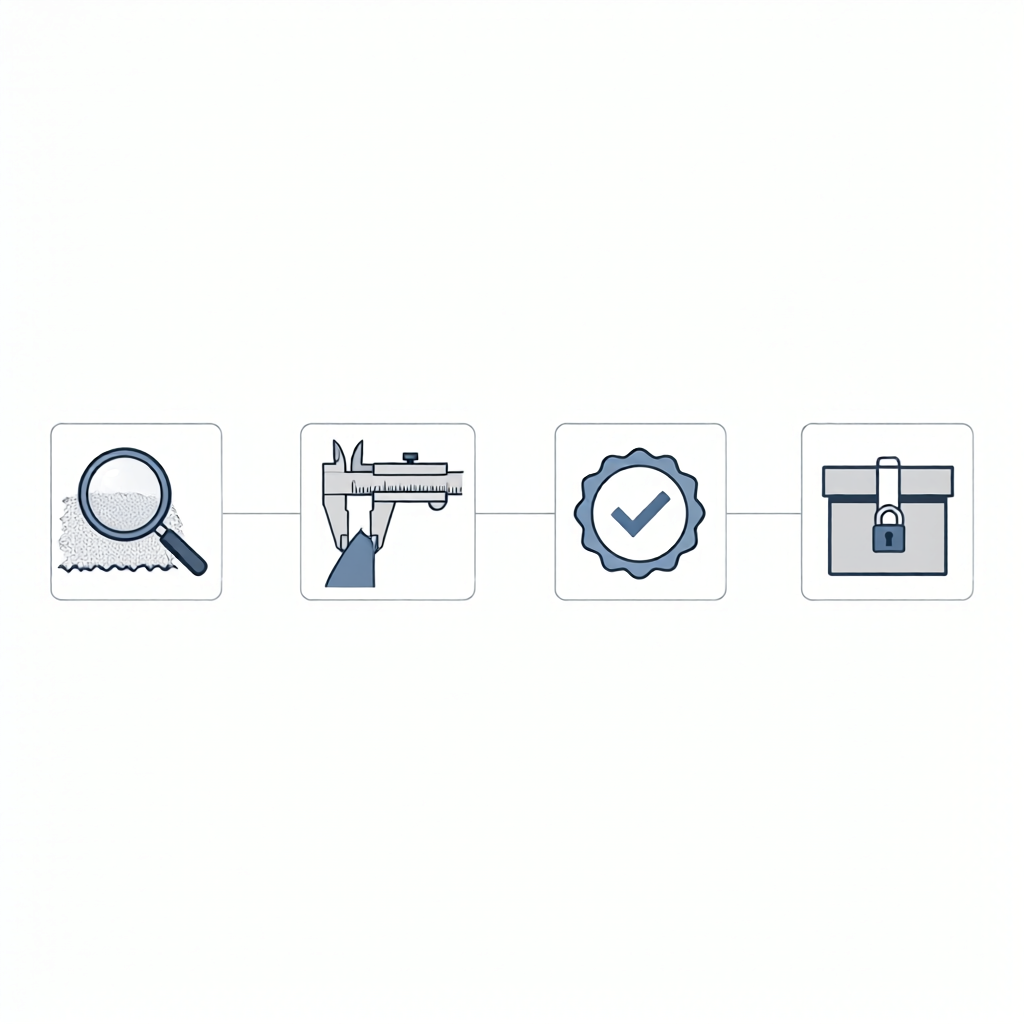
What Quality Certifications Should Buyers Look for When Sourcing Billfolds?
Three certification categories matter most for B2B billfold procurement:
ISO 9001 validates that the manufacturer operates a documented quality management system covering production control, traceability, and corrective action processes. For buyers managing multiple suppliers or sourcing through procurement platforms, ISO 9001 is the baseline expectation — not a differentiator, but a hygiene factor.
BSCI (Business Social Compliance Initiative) audits address labor practices, working conditions, and ethical sourcing. Some retail chains and corporate procurement programs require BSCI compliance as a condition of vendor onboarding. Buyers serving European or North American retail distributors should confirm this requirement before selecting a manufacturer.
REACH and RoHS compliance govern restricted substances in materials. Billfolds containing metal components, adhesives, and coatings must comply with EU REACH regulations for heavy metals and chemical restrictions, and with RoHS directives for electronic-adjacent products. SGS-tested material reports provide third-party verification that raw inputs meet these thresholds.
For detailed guidance on material compliance and specification frameworks, buyers may also review our Sourcing Money Clips for B2B: Specs & Standards resource, which covers the same certification principles applied to complementary EDC accessories.
Related Considerations — What You Should Evaluate Before Placing a Bulk Order
How Do Buyers Evaluate a Manufacturer’s Capability for Bulk Billfold Production?
Manufacturer evaluation should go beyond quoted price. The most reliable assessment framework covers five dimensions:
Production capacity determines whether the supplier can meet delivery timelines at scale. A facility with 500,000+ monthly output capability can absorb large orders without competing with smaller clients for machine time. Verify this through facility walkthroughs or third-party audit reports.
In-house machining is a significant advantage. Manufacturers who perform CNC milling, laser engraving, and anodizing under one roof reduce lead time, improve quality control, and eliminate handoff delays between specialized vendors. Buyers should ask specifically whether finishing and branding steps occur in-house or are outsourced.
Sample turnaround reflects operational efficiency. A quoted 7-day sample lead time should be achievable consistently, not just as an ideal scenario. Ask for current sample completion records from recent orders.
Certification portfolio should match the buyer’s market requirements. An ISO 9001 and BSCI audited facility covers most Western procurement programs. Additional testing capabilities — SGS material analysis, drop-test documentation, anodize thickness verification — indicate a manufacturer that proactively manages quality risk.
Logistics and fulfillment options determine landed cost and time-to-market. Manufacturers offering Amazon FBA prep, shrink-wrapping, labeling, and drop shipping reduce the buyer’s operational burden. For Amazon FBA sourcing specifically, confirm that the manufacturer understands FBA box size restrictions, barcode placement requirements, and shipment quantity limits.
What Logistics Considerations Apply to Billfold Bulk Orders?
Shipping method selection depends on order size, urgency, and destination. Air freight is cost-effective for samples and small batches up to approximately 200 kg. Sea freight becomes the default for orders exceeding 500 kg, with transit times of 25 to 40 days depending on origin and destination port.
For promotional product programs with fixed event deadlines, buyers should build a 14-day buffer between production completion and the event date to account for customs clearance and last-mile delivery variability.
What Should You Consider When Comparing Suppliers for Billfold Sourcing?
The decision between suppliers often comes down to three trade-offs: price versus lead time, customization flexibility versus standardization efficiency, and single-source convenience versus multi-supplier risk diversification.
Buyers should request quotes from at least two manufacturers using identical specifications to enable an apples-to-apples comparison. When comparing proposals, look beyond unit price and evaluate sample responsiveness, communication clarity, and willingness to provide material test reports.
For buyers also sourcing minimalist wallets alongside billfolds, consolidating orders with a single manufacturer can simplify quality control and reduce administrative overhead. Our Best Minimal Wallets for B2B Sourcing and Private Label guide covers the specification overlap between wallet and billfold product lines.
How the Industry Works — Sourcing Billfolds with TOP EDC Wallet?
When buyers move from evaluation to sourcing, the practical question becomes how a manufacturer translates these industry standards into production. Here is how the process works at the factory level.
At TOP EDC Wallet, we approach bulk billfold sourcing the same way we approach every OEM and ODM project: starting from the buyer’s end-use specification and working backward through material selection, machining strategy, and finish requirements. Our facility houses in-house CNC machining, laser engraving, and aluminum anodizing, which means a billfold moves from raw material to finished, branded product without leaving the factory floor. This vertical integration is what keeps sample lead times at 7 days and production lead times predictable across order sizes.
For buyers evaluating this approach, the key question is not whether a manufacturer can produce billfolds — any machine shop can cut metal. The question is whether they can produce them consistently at the buyer’s target specification, with the right balance of cost, speed, and quality control. Our model addresses this by keeping material procurement, machining, finishing, and inspection under one management structure, reducing the variance that typically creeps in when multiple vendors handle separate production stages.
Buyers sourcing EDC wallets, carbon fiber card holders, or titanium money clips for private-label programs often find that the most efficient path starts with a clear specification brief and a sample request rather than a volume commitment. That is the entry point we recommend for new buying relationships.
If you are evaluating billfold suppliers or ready to move from specification to sample, you can submit your requirements through our contact page.
Billfolds On Sale: Where Can You Verify the Data and Sources?
- Sourcing Money Clips for B2B: Specs & Standards — topedcwallet.com
- Best Minimal Wallets for B2B Sourcing and Private Label — topedcwallet.com
- Get a Free Quote → — topedcwallet.com
From article to product
Turning this into a product?
Most of what is written here is the difference between a sample that works and one that does not. We can build either — the useful one costs the same.
Keep reading
More on buying guides
wallet with trigger
How Does a Trigger Wallet Work? What Is the Pop-Up Mechanism? The core of…
Readbest bifold wallet for women
What Is a Bifold Wallet? The term “bifold” refers to the fold: the wallet…
ReadMen’s trifold wallets with zipper compartments vs. bifold
At a Glance The three dominant men’s wallet formats differ in panel count, depth,…
Read
About the author
TOPWALLET Editorial Team
TOPWALLET's editorial and engineering desk writes from bench testing at the Shenzhen (Longgang) facility: pull-force and cycle testing, 13.56 MHz shielding measurements, finish trials and factory audits, rather than supplier spec sheets. Every specification in these guides is one we write on a purchase order.
Written on the floor
This article was written by our production and QC team — the people who spec tolerances, run the finishing line and inspect every batch. Where it states a capacity, a pull force or a lead time, it comes from a measurement we made, not a supplier’s catalogue. If a number here disagrees with what your own supplier told you, tell us; several of these articles started as a correction from a buyer.
See how the factory works · Inspection process · Sourcing FAQ
Turning this into a product?
Most of what is written here is the difference between a sample that works and one that does not. We can build either — the useful one costs the same.