

A leather trifold wallet men buyers source most often combines three folding panels of genuine hide to maximize card, cash, and coin storage while maintaining a pocket-friendly silhouette. For B2B purchasers and private-label brands, selecting the right leather grade, RFID protection level, and supplier certification is essential to delivering durable, compliant products at scale. Below is a practical sourcing framework covering materials, specifications, customization options, and key manufacturing considerations. Read our EDC wallets and minimalist wallet manufacturing guide for more on how trifold designs fit into contemporary EDC categories.
What Is a Leather Trifold Wallet for Men?
A leather trifold wallet for men is a three-panel folding pocket wallet constructed primarily from leather. It consists of two outer panels that fold inward toward a central panel, creating multiple compartments for cards, bills, and sometimes coins. Unlike a standard bifold—which has a single fold line and fewer organizational slots—a trifold design offers significantly higher storage capacity by splitting the interior across three distinct zones.
Trifold wallets remain popular among buyers who serve consumers wanting traditional high-capacity carry solutions. While minimalist and slim wallets have gained traction, the trifold variant continues to hold meaningful demand, particularly in segments focused on practical everyday organization over streamlined profiles. For an overview of how trifold designs fit within the broader EDC wallet landscape, see our EDC wallets and minimalist wallet manufacturing guide.
How Do Leather Material Grades Affect Quality and Price?
Not all leather is equal, and the terminology used in supplier catalogs can be misleading. Understanding the hierarchy of leather grades is essential for making informed sourcing decisions.
Full-Grain Leather
Full-grain leather retains the complete grain layer—the strongest and most durable part of the hide. It develops a rich patina over time, resists moisture better than lower grades, and generally commands the highest price. For brands targeting premium positioning, full-grain leather is the preferred material. It is also the grade most associated with long-term durability and natural aging characteristics that discerning end users value.
Top-Grain Leather
Top-grain leather has been lightly sanded or corrected to remove surface imperfections. It is still genuine leather with good durability, but it lacks some of the structural integrity of full-grain. This grade offers a balance between quality and cost-effectiveness, making it a common choice for mid-tier private-label products. Many corporate gift and promotional merchandise distributors source top-grain leather for branded wallet programs because it delivers a professional appearance at a reasonable FOB price point.
Genuine Leather
“Genuine leather” is the broadest and often the least specific term in the industry. It typically refers to split leather or layered leather that has been processed and coated. While it is technically real leather, it lacks the density and longevity of full-grain or top-grain options. Buyers should treat “genuine leather” as an entry-level specification and verify exact composition with their supplier before committing to volume orders.
Bonded Leather
Bonded leather is composed of recycled leather fibers bonded with polyurethane or latex adhesives onto a fabric backing. It is the lowest-cost option and often used in promotional product lines where budget constraints dominate. However, bonded leather does not age well, tends to delaminate over time, and may not meet the expectations of brand owners building long-term product reputations.
| Leather Grade | Durability | Break-In Time | Cost Tier | Best For |
|---|---|---|---|---|
| Full-Grain | Very High | 2–4 weeks | Premium | Premium private-label brands |
| Top-Grain | High | 1–3 weeks | Mid-range | Mid-tier retail and corporate gifts |
| Genuine | Moderate | Minimal | Budget | Promotional merchandise |
| Bonded | Low | None | Lowest | One-time promotional runs |
What Card Capacity and Organization Can You Expect?
Card capacity varies depending on the manufacturer’s design intent, but a typical leather trifold wallet designed for men holds between 8 and 16 card slots across its three panels, along with 1 to 3 bill compartments. Some models include a dedicated coin pocket with a zipper or snap closure, though this adds thickness and weight.
For reference, a standard U.S. credit card measures approximately 85.6 mm × 53.98 mm. When stacked with other cards—especially larger ones like driver’s licenses or loyalty cards—the total bulk increases measurably. Buyers should specify maximum card counts and request physical samples to verify that slot tension remains functional after repeated insertion and removal cycles.
If your target market includes minimalists, consider offering slimmer trifold configurations with reduced card capacity, alongside what is a minimalist wallet options for buyers seeking lower-profile alternatives.
Does RFID Blocking Matter and What Standards Apply?
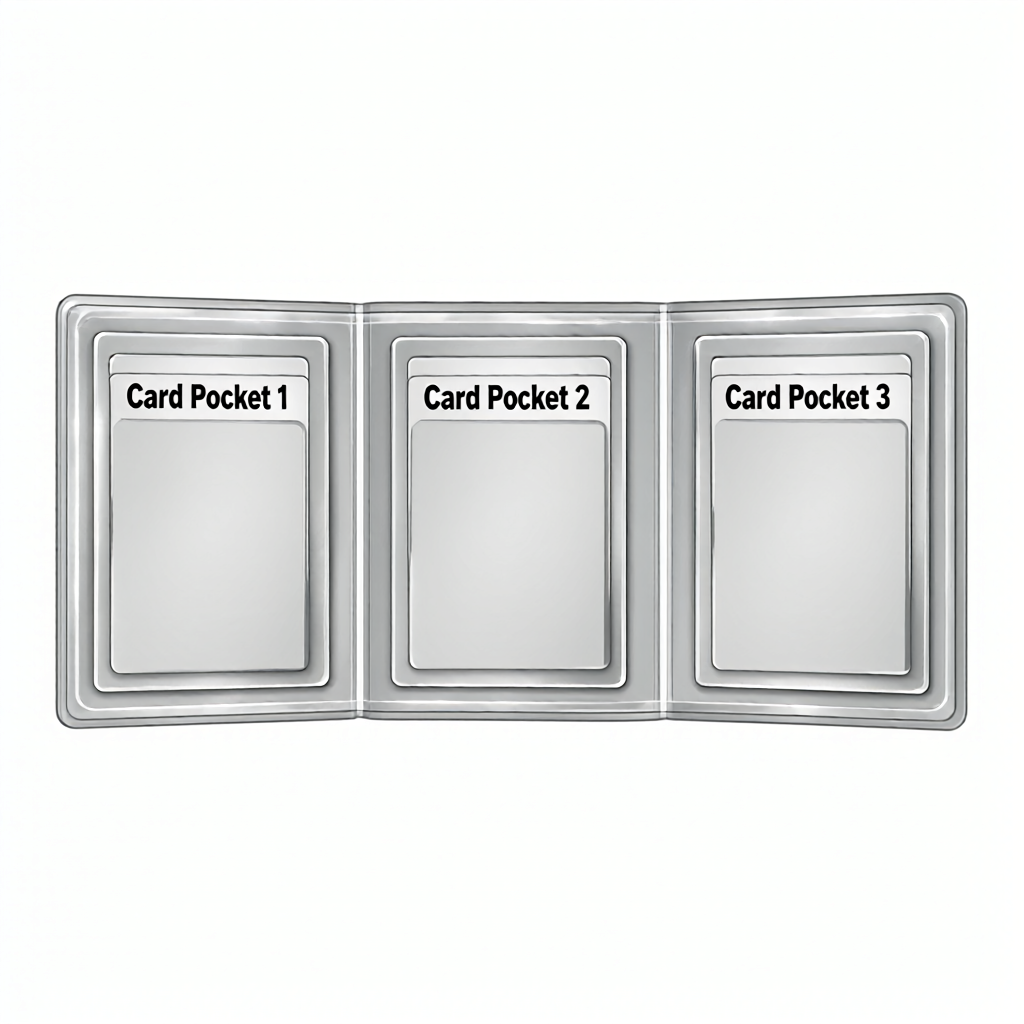
RFID-blocking technology uses conductive materials—typically thin layers of metal mesh or ferrite sheets—embedded within the wallet’s interior lining to create a signal-shielding barrier. The goal is to prevent unauthorized scanning of credit cards and identification documents equipped with RFID chips.
Whether RFID blocking matters depends on your target market. In regions with widespread contactless payment adoption—particularly North America and parts of Europe—end consumers increasingly expect this feature as a standard inclusion. From a B2B sourcing perspective, including RFID protection can differentiate a product in crowded Amazon FBA listings and retail shelf environments.
The relevant industry standard for evaluating RFID-blocking performance is ASTM F592, which specifies test methods for assessing the shielding effectiveness of radio-frequency identification devices. Reputable suppliers will provide test reports or third-party verification documenting signal attenuation levels, typically expressed in decibels (dB). Buyers should request this documentation during supplier qualification and avoid accepting unverifiable claims alone.
For additional detail on RFID wallet specifications and manufacturing considerations, refer to our guide on what is an RFID wallet and how to source them.
What Are the Key Specifications for Leather Trifold Wallets?
Below are the typical specifications that B2B buyers should define when issuing RFQs for leather trifold wallets:
- Dimensions: Common sizes range from approximately 110–120 mm in width, 90–100 mm in height, and 15–25 mm in thickness when closed. Slimmer designs target ~12 mm; higher-capacity versions may reach 25 mm or more.
- Weight: Typically 70–130 grams depending on leather type, card capacity, and whether RFID lining is included.
- Card Capacity: 8–16 slots across all panels.
- Bill Compartments: 1–3 full-width slots; some designs add a gusseted center compartment.
- Coin Pocket: Optional; usually zippered with a capacity of 15–20 coins.
- Leather Thickness: Generally 0.8–1.2 mm for the primary leather panels.
- Stitching: Double-stitched edges are preferred for durability; thread type (nylon vs. polyester) affects longevity.
- Hardware: Rivets, snaps, and zippers should be corrosion-resistant; common finishes include matte black, silver, and gunmetal.
- Closure Type: Fold-over flap with magnetic snap, button, or no external closure for slip-in designs.
Understanding these parameters helps ensure that RFQs are precise and that supplier quotes are directly comparable. If you’re also evaluating card holders as a complementary product line, see our card holder sourcing guide for additional specification benchmarks.
What Customization Options Are Available for Private-Label Buyers?
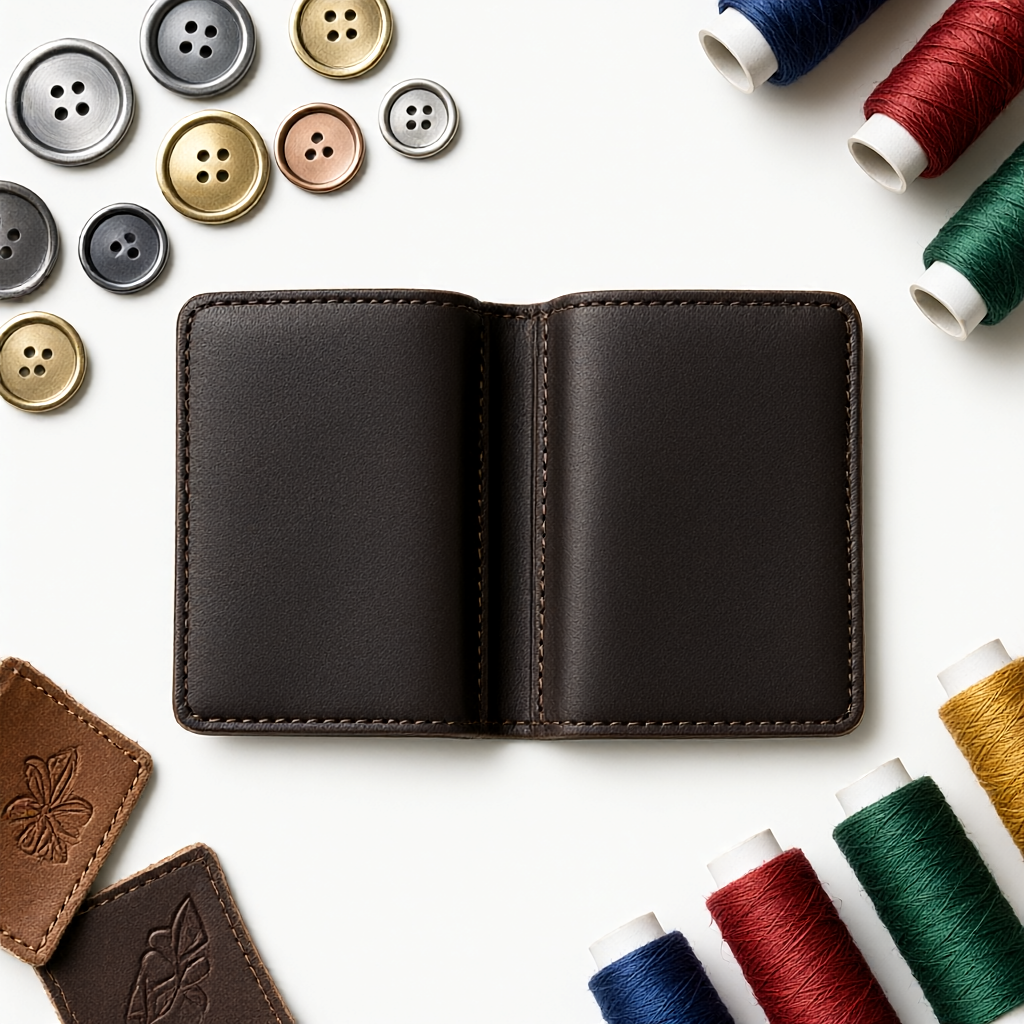
B2B buyers sourcing leather trifold wallets typically require customization across several dimensions:
Logo and Branding. Options include embossing, debossing, laser engraving, foil stamping, and printed patches. Embossing and debossing work best on full-grain and top-grain leathers, while laser engraving provides sharp detail on darker leather tones. Foil stamping adds a metallic accent suitable for premium packaging contexts.
Material Selection. Buyers can choose between full-grain, top-grain, genuine, or bonded leather—and often specify color, finish (matte, semi-gloss, waxed), and tanning method (vegetable-tanned vs. chrome-tanned). Vegetable-tanned leather is favored for its natural feel and eco-friendly processing profile, though it requires longer break-in periods. Chrome-tanned leather offers greater water resistance and consistency at lower production cost.
Packaging. Custom retail boxes, individual poly bags, hang tags, and presentation sleeves are standard offerings. Packaging design directly impacts unboxing experience for Amazon FBA sellers and retail chain buyers.
Specifications. Interior layout adjustments—such as adding a transparent ID window, modifying slot count, or including a money clip attachment—are commonly requested.
Sizing and Form Factor. Buyers may request non-standard dimensions to match existing product lines or to differentiate in competitive markets.
These customization capabilities align with the broader principles discussed in our men’s minimalist wallets sourcing guide, which covers material selection frameworks applicable across wallet categories.
What Certifications Should a Reputable Supplier Hold?
When qualifying leather trifold wallet manufacturers, look for the following certifications and compliance markers:
- ISO 9001: Confirms the supplier operates under a documented quality management system, which is fundamental for consistent production quality across repeat orders.
- BSCI (Business Social Compliance Initiative): Indicates the facility meets social responsibility standards related to labor practices, working conditions, and ethical sourcing—important for brands selling in European and North American retail channels.
- REACH Compliance: Ensures that chemicals used in leather tanning, dyeing, and finishing comply with EU regulatory requirements for restricted substances.
- RoHS Compliance: Relevant when metal hardware, RFID shields, or electronic components are integrated into the wallet.
- SGS Testing Reports: Independent lab verification of material composition, colorfastness, abrasion resistance, and RFID blocking performance.
- Leather Working Group (LWG) Certification: Recognized for responsible leather sourcing and environmentally conscious tanning processes. While not mandatory, LWG certification signals strong environmental and ethical commitments that resonate with premium brand buyers.
These certifications reduce risk during supplier audits and help ensure that imported goods clear customs without compliance-related delays. Under ISO standards for quality management systems, suppliers maintain documented procedures for material inspection, in-process quality checks, and final product verification—critical factors when managing production runs exceeding 5,000 units.
What MOQs and Lead Times Are Typical?
Industry-typical minimum order quantities for leather trifold wallets range from 100 to 500 pieces per style per colorway. Suppliers with flexible tooling and smaller batch capabilities often accept MOQs starts at 300 pcs per SKU for full OEM customization (100 pcs trial order available for stock finishes), while larger factories may require 300–500 pcs to achieve favorable unit pricing.
Sample lead times generally fall between 5 and 10 business days for standard prototypes and 15–25 business days for custom samples incorporating logo imprinting or specialized materials. Bulk production lead times typically range from 30 to 45 days after sample approval and deposit receipt, depending on order volume and complexity.
Buyers planning Amazon FBA inventory rollouts should account for ocean freight transit times (approximately 30–40 days from China to U.S. West Coast ports) when scheduling production timelines. Drop-shipping arrangements and direct-to-consumer fulfillment models may have different lead time expectations and should be confirmed upfront with the supplier.
What Should You Consider When Sourcing Leather Trifold Wallets?
Several practical factors influence sourcing outcomes beyond specifications and pricing:
Supplier Communication. Ensure your supplier responds promptly and demonstrates technical understanding of leather grading, stitching methods, and RFID integration. Poor communication during the RFQ stage often predicts issues during production.
Sample Evaluation. Always request and physically evaluate samples before placing bulk orders. Check stitch density, slot tension, edge painting quality, hardware operation, and overall hand feel. A sample that feels cheap or poorly assembled will reproduce at scale.
Tanning Method Ethics. If your brand emphasizes sustainability or eco-conscious positioning, prioritize vegetable-tanned leather suppliers and verify LWG certification status. Chrome-tanned leather is more common and cost-effective but raises environmental concerns in certain market segments.
Seasonality and Inventory Planning. Leather wallet demand peaks during holiday gifting seasons (October–December) and back-to-school periods. Plan production schedules accordingly to avoid bottlenecks and expedited shipping costs.
Quality Inspection Protocols. Establish incoming quality inspection criteria aligned with your brand’s standards. Consider third-party pre-shipment inspections for orders exceeding $10,000 USD to catch defects before goods leave the factory.
How Does TOP EDC Wallet Approach Leather Trifold Wallet Manufacturing?
As a manufacturer with extensive experience in the EDC wallet space, our approach to leather trifold wallets centers on balancing material quality, functional design, and production efficiency. We work with full-grain, top-grain, and genuine leather sourcing partners to supply materials that meet defined hardness, flexibility, and colorfastness criteria. Our in-house CNC machining and laser engraving capabilities allow us to produce precision die-cut patterns and apply logos with tight tolerances, while our surface finishing—including anodizing for metal accents and edge painting for leather—ensures consistent aesthetic results across production runs.
For buyers evaluating manufacturers, what matters is not just the ability to produce but the discipline to maintain consistency batch after batch. Our ISO 9001-certified quality management system governs material incoming inspection, in-process checks at cutting and stitching stages, and final product verification before packing. We hold BSCI audit certification and ensure all materials comply with REACH and RoHS standards, which simplifies customs clearance for shipments destined to North American and European markets.
Whether you’re developing a private-label line for retail distribution, sourcing promotional wallets for corporate gifting, or building an Amazon FBA product portfolio, we support low MOQs starts at 300 pcs per SKU with sample turnaround in approximately 7 days. Request a quote to discuss your project requirements and receive a customized proposal.
Leather Trifold Wallet Manufacturing & Sourcing Considerations
- Tanning Method: Chrome-tanned leather offers consistent color and water resistance at lower cost, while vegetable-tanned leather provides a natural patina and aligns with sustainability claims. Look for LWG-certified tanneries when eco-positioning is important.
- Edge Painting/Painting: Edge paint thickness typically ranges from 0.1–0.3 mm per coat, applied in multiple layers and polished for a smooth finish. Thicker edge buildup can increase durability but may affect fold flexibility.
- Stitching Type: Double-needle saddle stitching or high-density lockstitch with waxed nylon thread is preferred for load-bearing seams. Stitch density of 6–8 stitches per inch reduces fraying and extends wallet lifespan.
- Embossing/Debossing: Logo depth usually measures 0.3–0.8 mm depending on leather grain and tooling pressure. Softer top-grain leathers accept deeper impressions without cracking, whereas full-grain hides benefit from moderate depth to preserve surface integrity.
- Quality Control Benchmarks: Industry-standard AQL (Acceptable Quality Level) thresholds are typically set at 2.5 for major defects and 4.0 for minor defects. Suppliers should perform incoming leather inspection, in-process dimension checks, and final function tests—including card retention force and snap magnet strength—before shipment.
For further reading on procurement compliance, see FTC guidelines on leather labeling and ISO quality management standards.
Leather Trifold Wallets: Where Can You Verify the Data and Sources?
- ASTM F592 — www.astm.org
- ISO standards — www.iso.org
- FTC guidelines on leather labeling — www.ftc.gov
- EDC wallets and minimalist wallet manufacturing guide — topedcwallet.com
- what is a minimalist wallet — topedcwallet.com
- what is an RFID wallet and how to source them — topedcwallet.com
- card holder sourcing guide — topedcwallet.com
- men’s minimalist wallets sourcing guide — topedcwallet.com
- Request a quote — topedcwallet.com
From article to product
Sourcing minimalist-wallets?
Tell us the format, the quantity and the date you need stock. You get material options, MOQ and a landed-cost range back within one business day.
Keep reading
More on wallet types
Thin Male Wallets: Buying Guide for Slim Minimalist Picks
How to choose a slim wallet for men — thickness thresholds, material trade-offs, capacity…
ReadStashed Wallet: A Minimalist Everyday-Carry Solution
Understand what a stashed wallet is, how minimalist slim wallets work, and what to…
ReadFolding Wallets: Types, Materials & Buying Guide
Learn what makes a folding wallet worth buying, from materials and card capacity to…
Read
About the author
TOPWALLET Editorial Team
TOPWALLET's editorial and engineering desk writes from bench testing at the Shenzhen (Longgang) facility: pull-force and cycle testing, 13.56 MHz shielding measurements, finish trials and factory audits, rather than supplier spec sheets. Every specification in these guides is one we write on a purchase order.
Written on the floor
This article was written by our production and QC team — the people who spec tolerances, run the finishing line and inspect every batch. Where it states a capacity, a pull force or a lead time, it comes from a measurement we made, not a supplier’s catalogue. If a number here disagrees with what your own supplier told you, tell us; several of these articles started as a correction from a buyer.
See how the factory works · Inspection process · Sourcing FAQ
Sourcing minimalist-wallets?
Tell us the format, the quantity and the date you need stock. You get material options, MOQ and a landed-cost range back within one business day.