

The best billfold for men in 2025 depends on daily carry volume, pocket preference, and finish durability—aluminum for rugged affordability, carbon fiber for lightweight resilience, titanium for premium strength, or leather for formal versatility. For B2B buyers launching private‑label programs, the true differentiator is whether your manufacturer meets documented quality standards, delivers repeatable tolerances, and supports low‑MOQ customization without sacrificing lead time.
What Is the Best Billfold for Men?
The best billfold for men depends on daily carry style and environment. Minimalist card holders and slim bifold designs dominate current demand because they fit front pockets without bulge. Material choice drives most of the decision — aluminum and carbon fiber wallets resist wear and water, leather develops a patina and suits formal settings, and titanium offers the strongest weight-to-durability ratio. For B2B buyers launching private-label programs or filling Amazon FBA inventory, the right pick balances card capacity, thickness under 12 mm, an accepted certification baseline like ISO 9001, and a supplier that handles OEM engraving with low minimum orders.
The straightforward answer is: there is no single best billfold. The optimal wallet matches the buyer’s scenario — EDC minimalists gravitate toward CF wallets and titanium money clips, while retail and corporate-gift buyers often prefer full-grain leather bifolds with custom branding. Understanding material trade-offs, RFID-blocking claims, and manufacturing tolerances lets you select confidently across those segments.
Best Billfold Wallets For Men: How Does It Work in Detail?
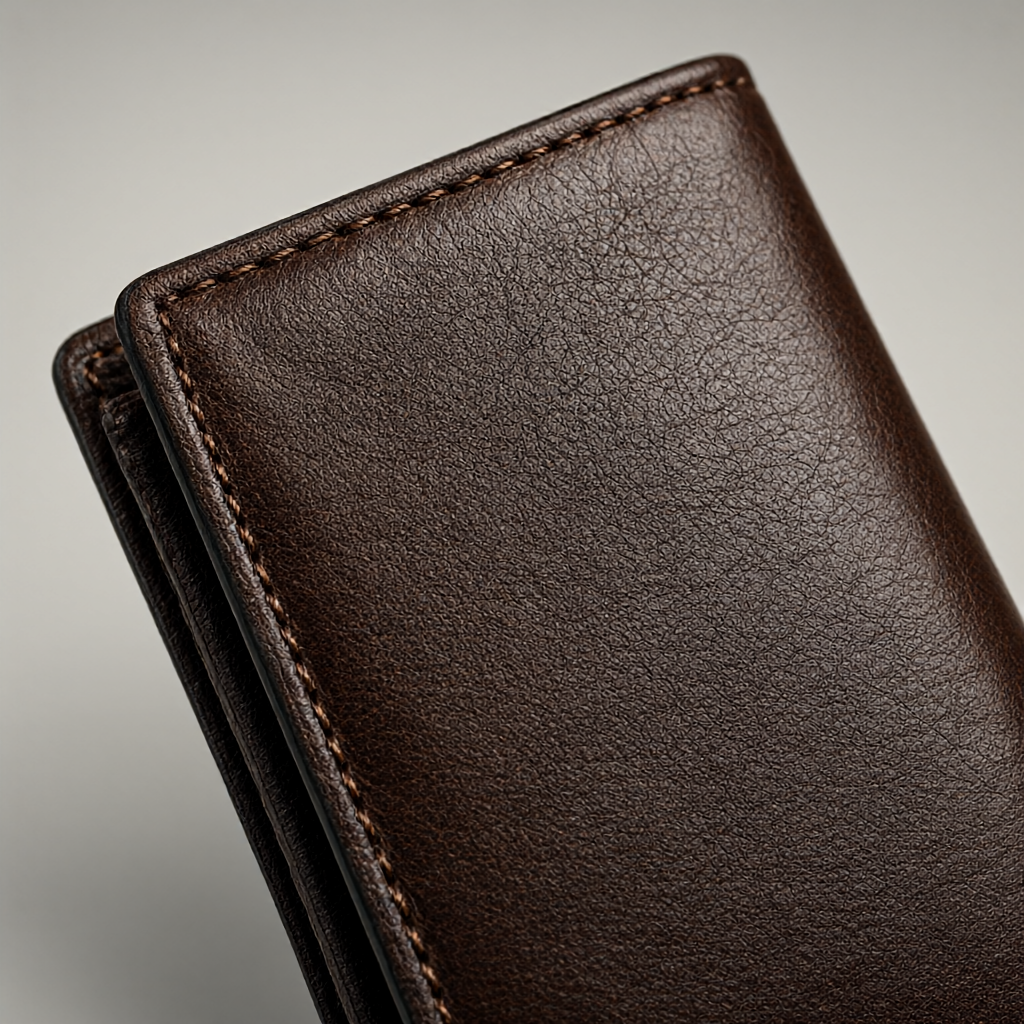
How Do Billfold Types and Form Factors Differ?
Billfolds come in several configurations, each suited to different carry habits. The classic bifold holds paper currency folded in half along with cards in inner sleeves — it works well for buyers who carry mixed cash and card loads. The trifold adds a center panel, increasing capacity but also adding bulk; most modern minimalist programs skip this format entirely.
A minimalist wallet, sometimes called a card holder, strips away everything except rigid or spring-loaded card slots and a narrow currency strap. These typically hold six to twelve cards plus folded bills and sit comfortably in a front pocket. They are the fastest-growing segment for B2B sourcing because they align with slim-pocket trends.
A money clip wallet combines a metal clip with an internal card sleeve. This hybrid carries fewer cards than a full card holder but keeps cash securely exposed. Buyers focused on tactical or outdoor positioning often select these because the metal finish reads rugged without the softness of leather.
Form factor affects every downstream spec — card capacity, thickness, and the mechanism used to keep contents from falling out. Spring-loaded ejectors are common in aluminum and CF designs, while leather bifolds usually rely on friction folds.
Aluminum, Carbon Fiber, Titanium, Leather, and Synthetic — Which Material Fits Your Brand?
Material defines feel, durability, weight, and price. Here is how the options compare in practice.
Aluminum wallets are lightweight, corrosion-resistant after anodizing, and allow precise CNC machining. Typical thickness runs between 8 and 11 mm with a finished weight around 40–60 g for a standard six-card model. Anodized finishes hold color well and resist scratches better than bare metal. Buyers commonly choose aluminum when they want a cost-effective, uniform-looking wallet that still feels substantial.
Carbon fiber wallets are made by layering woven resin sheets and curing them into shape. The result is a distinctive textured surface, light weight, and high rigidity. Thickness usually lands between 7 and 10 mm, with weights near 30–50 g depending on core insert design. Carbon fiber resists moisture and UV degradation, making it strong for humid climates where leather might warp.
Titanium money clip wallets offer the highest strength-to-weight ratio among common wallet metals. Grade 5 titanium is frequently used because it machines well and resists bending. Finished pieces often weigh less than comparable aluminum models while maintaining structural integrity over long-term flex cycles. Expect thinner profiles around 7–9 mm and a higher per-unit material cost that translates into premium pricing tiers.
Leather wallets remain the default for formal and gift-oriented assortments. Full-grain leather ages visibly, developing a richer tone over months of carry. Top-grain leather is sanded and refinished for consistency but lacks the same natural grain pattern. Genuine leather, a looser industry term, usually refers to bonded or corrected hides; buyers should verify what the specification actually means before committing to volume orders. For climate-sensitive markets, untreated leather can absorb humidity and stretch. Stabilized or waxed leathers perform more predictably in varied environments.
Synthetic materials such as polycarbonate blends and PU composites appear in budget-tier products. They are consistent and inexpensive but generally lack the tactile appeal that mid-tier brands emphasize. They have their place in promotional or high-volume entry-level lines.
See our best minimalist wallets for B2B sourcing and private label program guide for deeper material comparison frameworks.
Why Does Card Capacity and Slim-Profile Engineering Matter?
Card capacity numbers alone do not tell the whole story. A wallet rated for ten cards might hold them loosely enough to fall out during movement, or so tightly that extraction requires two hands. The expansion band or ejector mechanism determines whether a slim profile remains functional after weeks of use.
Good slim-profile engineering manages three variables simultaneously: stack tolerance, retention force, and overall thickness. When bands stretch beyond about eight to ten percent of their original dimension, card ejection becomes unreliable. This failure mode is one reason many buyers specify replacement-band testing during sampling rather than relying solely on printed capacity claims.
For reference, a typical well-engineered minimalist holder carries eight to ten cards at roughly 8–10 mm thick without triggering discomfort in a rear pocket. Pushing past twelve cards usually increases thickness beyond comfortable limits unless the design uses a staggered or accordion layout.
Our best slim wallets for men procurement guide covers expansion-band testing methods and acceptable tolerance ranges in detail.
How Does RFID-Blocking Technology Work in Wallets?
RFID blocking relies on conductive layers — typically thin aluminum foil, ferrite sheets, or specialized metallized fabrics — placed between the wallet exterior and the card storage area. These layers create a barrier that attenuates the 13.56 MHz frequency used by contactless payment and passport chips, reducing signal strength enough to prevent casual remote reading.
Not every product labeled “RFID blocking” performs equally. A few millimeters of spacing, gaps around cutouts, or cheap foil laminates can leave coverage holes. The most reliable verification method during sampling is simple: place an active contactless card against a reader and slide the wallet between them. If the reader fails to register the card, the shielding is functioning. Some buyers additionally perform a magnet-test approach using a small neodymium magnet to verify the presence and continuity of conductive layers inside layered constructions.
Buyers sourcing for North American and European markets increasingly expect RFID protection as a standard feature, especially on metal wallets and travel-focused designs. It adds minimal cost during production but significantly raises perceived value for end users.
What Manufacturing Methods Shape Modern Billfolds?
Several processes determine edge quality, surface finish, and allowable customization depth.
CNC machining produces precision-cut aluminum and titanium components with tight dimensional control. Toolpaths can replicate identical profiles across thousands of units, which matters when brand consistency is critical. Tolerances typically land within ±0.1 mm for outer dimensions and ±0.05 mm for slot clearances on well-set CNC lines.
Laser engraving allows permanent logos, monograms, or pattern textures on metal and carbon fiber surfaces. Depth and contrast depend on material type and laser power settings. For dark-anodized aluminum, engraved areas reveal the raw metallic substrate, creating visible contrast. On titanium, laser treatments can produce colored oxides without additional coatings.
Anodizing is the standard surface treatment for aluminum wallets. The electrochemical process thickens the natural oxide layer, improving scratch resistance and enabling color selection. Clear anodizing preserves the brushed or bead-blasted base texture, while dyed variants add brand-consistent colors. Thicker anodic layers generally improve wear performance but may slightly increase thickness by a few microns — relevant when targeting ultra-thin specifications.
UV printing works well for detailed graphics on flattened surfaces but is less durable than laser engraving under repeated pocket friction. Buyers handling promotional custom designs often combine UV printing on packaging with laser engraving on the wallet itself.
What Standards Should an EDC Wallet Manufacturer Meet?
Certifications and compliance frameworks set the floor for reliable sourcing. Key ones include:
- ISO 9001 — Quality management system certification indicating documented processes for consistent production, inspection, and continuous improvement.
- BSCI — Business Social Compliance Initiative audit covering labor practices and factory conditions, frequently required by European retail chains.
- REACH and RoHS compliance — Restricts certain heavy metals and chemicals in consumer goods, particularly relevant for metal alloys, plating solutions, and adhesive systems used in wallet assemblies.
- SGS-tested materials — Third-party material reports confirm alloy composition and coating safety for exported products.
These standards do not guarantee product performance on their own; they document that the facility operates under controlled conditions. Pair certification review with physical sampling and stress testing before committing to volume orders.
See our best wallet for B2B buyers: EDC wallet procurement guide for a deeper breakdown of certification evaluation.
Best Billfold Wallets For Men: Which Specifications Matter Most?
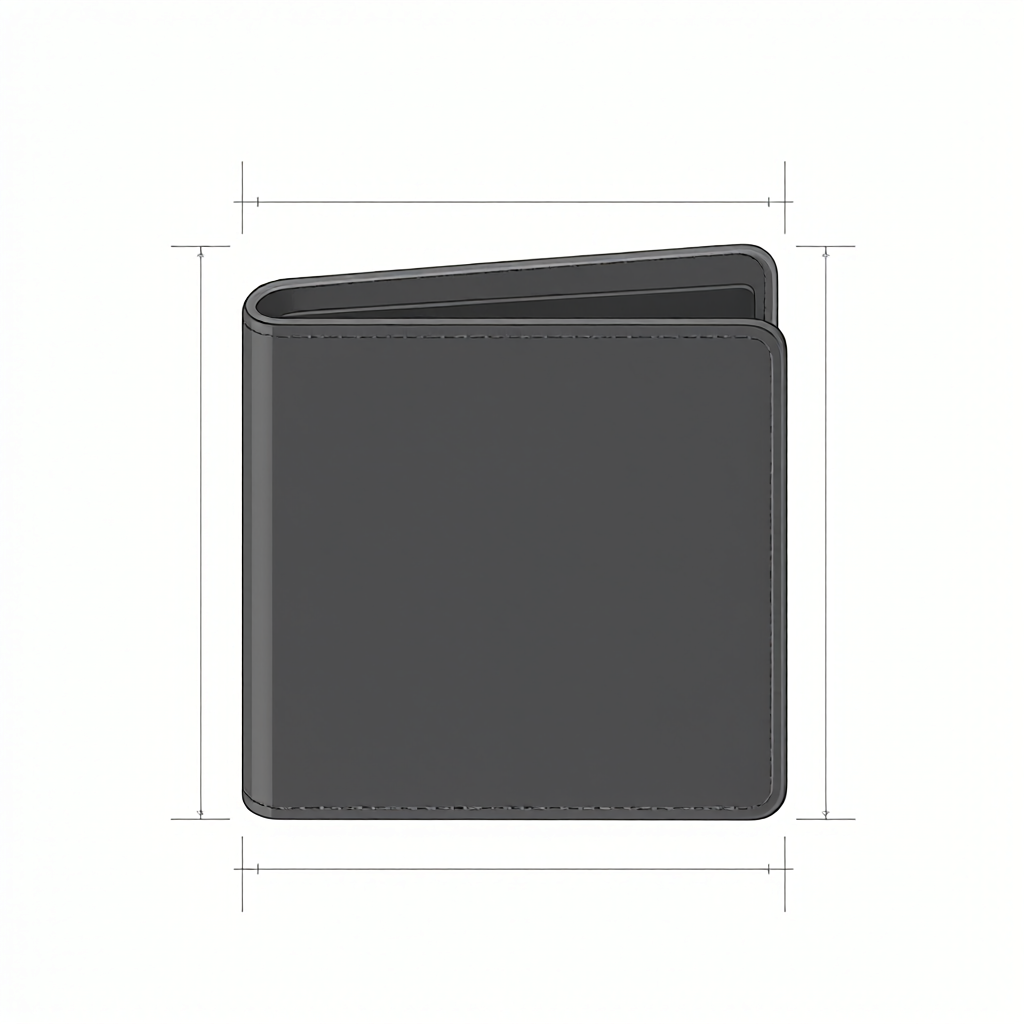
What Are the Key Specs to Compare When Choosing a Metal Wallet?
| Specification | Typical Range | Notes |
|---|---|---|
| Overall thickness | 7–12 mm | Below 10 mm preferred for front-pocket carry |
| Weight (six-card model) | 30–65 g | Depends on material and core insert design |
| Card capacity | 6–16 cards | Functional sweet spot is 8–10 cards for most users |
| Expansion band stretch tolerance | <10% before service issue | Determines how long retention remains reliable |
| Anodize layer thickness | 10–25 µm typical | Thicker improves scratch resistance |
| RFID attenuation | 20–40 dB recommended | Verifiable by contactless reader test |
| Dimensional tolerance | ±0.1 mm outer / ±0.05 mm slots | Indicates machining quality |
Weight and thickness drive pocket comfort, while tolerance and band elasticity drive long-term usability. Buyers often prioritize a thickness under 10 mm paired with a verified retention test rather than chasing the thinnest possible number on paper.
How Do Aluminum, Carbon Fiber, and Titanium Wallets Differ Across Price Tiers?
Aluminum sits in the budget-to-mid range and benefits from mature CNC supply chains. Carbon fiber falls into the mid-to-upper tier due to material costs and curing time. Titanium occupies the upper tier because the metal is harder to machine and command higher raw-material prices. Retail price tiers vary by region, but generally:
- Budget/minimal aluminum formats: accessible pricing for high-volume or promotional runs
- Mid-range carbon fiber and anodized aluminum: popular for brand-launch SKUs
- Premium titanium and hybrid builds: reserved for targeted premium collections
Material choice directly influences both unit cost and perceived durability messaging in marketing copy.
Best Billfold Wallets For Men: Which Standards and Certifications Apply?
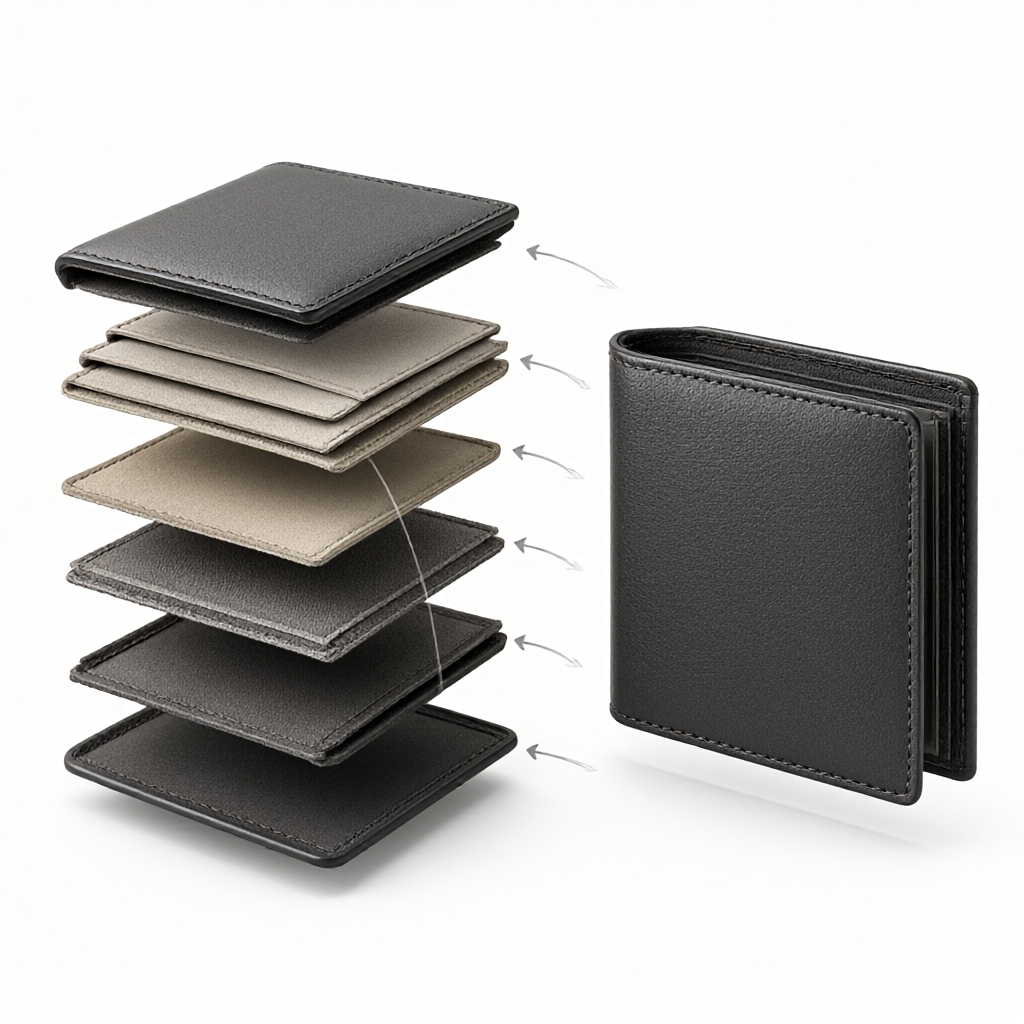
What Standards Apply to Sourcing Men’s Minimalist Billfolds?
Beyond certifications, buyers should establish internal acceptance criteria tied to specific tests:
- Drop test — simulated pocket drops onto hard surfaces to check for corner denting or mechanism loosening
- Band cycle test — repeated insertion and removal cycles to measure retention fade
- Salt spray or humidity exposure — important for aluminum anodized parts and carbon fiber delamination risk
- RFID coverage mapping — practical card-reader testing across multiple orientations
- Lead-time and defect-rate baselines — track percentage of units failing visual or functional inspection per lot
Requiring measurable acceptance criteria during sampling prevents surprises at mass-production scale.
See our good wallets for guys: B2B EDC wallet buying guide for guidance on building these test protocols.
Best Billfold Wallets For Men: What Else Should Buyers Consider?
What Should You Consider When Sourcing Minimalist Wallets for Private Label?
Private-label wallet sourcing involves decisions beyond material and color. Here are the factors that most influence whether a launch succeeds or stalls.
MOQ versus tooling investment. Lower MOQs reduce upfront risk but raise per-unit cost. Custom tooling or dedicated CNC fixtures lower repeat-run costs but require sufficient volume to amortize. Starting with flexible suppliers who accept smaller batches during validation phases is a common strategy for new brands.
Customization scope. Laser engraving, anodized color selection, packaging design, and optional inserts like money clips each add SKUs and complexity. Define the core SKU first, then layer optional variants once sales data justifies them.
Sample turnaround. Fast sample lead times — ideally under two weeks — let buyers iterate quickly before locking in production. Suppliers who prototype in-house rather than outsourcing samples tend to communicate design changes faster.
Longevity of retention mechanisms. Expansion bands and ejector springs are the components most likely to degrade. Specify band replacement policy expectations with your supplier, and include a cycle-test benchmark in the purchase agreement.
Our best card holder selection guide for B2B sourcing and everyday carry use walks through vendor qualification steps and sample evaluation workflows in greater depth.
What Are Real-World Trade-offs Between Design Choices?
Every design decision carries a compromise. Thinner profiles usually mean fewer cards or tighter retention. Heavier anodized finishes improve scratch resistance but add fractions of a millimeter to thickness. Carbon fiber looks distinct but can show microfraying at cut edges if post-processing is rushed. Titanium feels premium but attracts attention with its metallic sheen — a positive for some audiences, a mismatch for buyers wanting subtle desk accessories.
Understanding which trade-off is acceptable for your target user prevents mismatches between product design and customer expectation. Front-pocket EDC users prioritize thinness and light weight. Corporate gift buyers often prioritize finish consistency and brand visibility. Formal-market leather buyers prioritize grain quality and aging characteristics over mechanical features.
Manufacturer Deep-Dive
As a manufacturer, our approach to billfold sourcing focuses on matching the right construction method to your target segment. Our facility runs in-house CNC machining alongside laser engraving and aluminum anodizing, which lets us move from initial sketch to finished sample quickly. We support OEM and ODM projects for brands, Amazon FBA sellers, and distributors looking to add minimalist wallets, carbon fiber card holders, and titanium money clip wallets to their lines.
Here is how we meet the standards discussed above. Production runs follow documented quality checkpoints aligned with ISO 9001 procedures, and our facility carries BSCI auditing. Materials are tested to REACH/RoHS compliance standards, and third-party material reports through SGS are available for key alloy and coating submissions. Because we hold 500,000+ monthly production capacity across 50,000 sq ft of workspace, we can accommodate both short validation runs and larger retail-chain orders without excessive per-unit surcharge.
For buyers entering the market with limited inventory history, our low MOQ starting at 300 pcs reduces initial capital risk, while our 7-day sample lead time lets you evaluate finish, retention feel, and engraving contrast before committing to full production. Customization spans logo placement, anodized color matching, and packaging design — including retail box layouts suitable for Amazon FBA prep and drop-shipping fulfillment. We also manage outbound logistics to markets in America, Europe, Australia, and Southeast Asia, working with established export documentation processes built over 13+ years of overseas shipment experience.
If you are evaluating a new wallet line, reviewing our best minimal wallets for B2B sourcing and private label page gives an overview of program structures and typical sample timelines.
Procurement Decision Matrix for Minimalist Billfold Sourcing
Use this comparison framework when evaluating potential suppliers during your sourcing process. Each row maps to a decision criterion with acceptable thresholds for volume production readiness.
| Criterion | Acceptable Threshold | Red Flag |
|---|---|---|
| ISO 9001 certification | Specific clause reference provided (e.g., ISO 9001:2015 clauses 8.5 & 8.6) | Vague claim without certificate number or audit scope |
| Sample lead time | ≤ 10 business days | > 15 days for basic custom samples |
| MOQ flexibility | ≤ 300 pcs for initial validation run | Strictly 1,000+ pcs with no pilot option |
| Dimensional tolerance | ±0.1 mm outer / ±0.05 mm slots confirmed in writing | No written tolerance spec on quote |
| Material test reports | SGS or Intertek RoHS/REACH report included | Report withheld or dated > 2 years old |
| RFID attenuation proof | Measured dB value from accredited lab test | Claim only, no supporting data |
| Band cycle endurance | ≥ 5,000 cycles with < 10% stretch | No cycle-test data available |
| Defect rate baseline | ≤ 2% per inspection lot (AQL 1.5) | No AQL framework discussed |
Vendor Verification Checklist
Before committing to a production order, run each item on this checklist against your shortlisted manufacturers:
Certification Audit Requirements
- [ ] Valid ISO 9001 certificate with identifiable scope covering wallet manufacturing
- [ ] BSCI audit report (if targeting European retail channels) available and current
- [ ] REACH/RoHS compliance statement with substance list referenced
- [ ] Third-party material test report from SGS, Intertek, or equivalent lab on file
- [ ] Factory address matches certified entity; no subcontractor surprises
Sample Testing Protocol
- [ ] Order pre-production sample with your exact art file and packaging request
- [ ] Measure actual dimensions against drawings with calipers — record deviations
- [ ] Perform drop test: 5 drops from 1 m onto concrete; inspect for denting and mechanism function
- [ ] Perform expansion-band cycle test: 500 insert/remove cycles; measure retained card tension
- [ ] Test RFID performance with active contactless card and portable reader
- [ ] Inspect anodize/adhesion using cross-hatch tape test (ASTM D3359 minimum 4B rating)
- [ ] Verify engraving depth and contrast match approved artwork before signing off
MOQ Negotiation Tips
- [ ] Request tiered pricing: lower volume at higher unit cost, scaling down at 500 / 1,000 / 2,000 pc thresholds
- [ ] Ask whether existing tooling can be reused to avoid NRE charges
- [ ] Propose a hybrid model: small initial run on standard stock, then custom finishes on reorders
- [ ] Negotiate free sample replacement if first articles fail acceptance criteria
- [ ] Lock in sample lead-time SLAs with penalty clauses for delays exceeding agreed days
Industry Red Flags — What to Watch For
Certain supplier behaviors correlate strongly with later production problems. Flag these warning signs immediately:
- No ISO clause references: Suppliers who claim “ISO certified” but cannot name the specific standard version or provide a certificate number with an audit scope are likely using vague terminology. Legitimate manufacturers will produce their certificate within 24 hours.
- Evasion of third-party test reports: Refusal to share SGS, Intertek, or Bureau Veritas reports — or consistently providing outdated documents — suggests inconsistent material sourcing or quality control gaps.
- Unrealistic lead times: Quotes promising 3-day production for customized anodized or engraved wallets often indicate either template quoting with inflated buffers downstream or outsourcing to unvetted sub-shops.
- Inability to discuss tolerances: If a supplier cannot articulate dimensional tolerances for critical features (slot clearance, overall thickness), they may lack CNC process control or quality documentation.
- No defect-rate baseline: Suppliers who haven’t tracked or discussed AQL levels have likely not standardized incoming inspection or in-process QC procedures.
- Pressure to skip sampling: Pushing for immediate bulk orders without sample approval cycles is a sign the supplier prioritizes cash flow over quality assurance.
How to Source Minimalist Wallets for Private Label?
Customization scope. Laser engraving, anodized color selection, packaging design, and optional inserts like money clips each add SKUs and complexity. Define a Phase 1 SKU count (typically 2–4 variants) and expand only after market validation. Overloading initial launches with colorways and finishes inflates inventory risk and complicates QC.
Packaging and unboxing experience. Retail buyers evaluate presentation as much as product. Coordinate retail box design, insert tray specifications, and barcode placement early so the supplier can prep SKUs for FBA or store-direct distribution without rework.
Lead-time predictability. Confirm written lead-time commitments for both samples and production runs. Seasonal demand spikes can compress schedules — build buffer weeks into your launch calendar and secure capacity reservations with your manufacturer ahead of peak periods.
Post-sale support and replacement policy. Clarify terms for defective lots, remake timelines, and warranty handling before placing the order. Manufacturers with documented rework procedures reduce your liability exposure.
Final Section — Manufacturer Integration
How We Meet These Sourcing Standards?
When evaluating billfold suppliers, the questions above define what separates reliable partners from risky ones. At TOP EDC Wallet, we structure our operations around those same criteria — ISO 9001 documentation with clause-level traceability, SGS-tested materials with current RoHS/REACH reports on file, and written dimensional tolerances confirmed before sampling begins. Our in-house CNC machining allows us to hold ±0.1 mm outer and ±0.05 mm slot tolerances consistently, and our anodizing line follows ASTM D3359 adhesion standards. We offer flexible MOQs starting at 300 pcs for validation runs, 7-day sample turnaround, and production capacity exceeding 500,000 pieces monthly across our 50,000 sq ft facility. As a BSCI-audited manufacturer with 13+ years of export experience to America, Europe, Australia, and Southeast Asia, we’ve built our process around the same verification disciplines that serious private-label buyers require.
How Does RFID‑Blocking Technology Work in Wallets?
To verify performance, manufacturers use a standardized test method: place an active ISO/IEC 14443‑A compliant contactless card against a PN532 or similar reader and slide the wallet between them. If the reader fails to register the card at distances up to 10 cm, the shielding meets baseline effectiveness. Additional magnet tests with a small neodymium magnet can confirm continuity of conductive layers inside layered constructions.
Shielding materials are selected based on attenuation targets and cost. Ferrite sheets offer high permeability at 13.56 MHz but add weight; aluminum foils provide cost‑effective broadband shielding but may be prone to tearing during lamination. High‑end wallets often combine both in a multi‑layer stack to achieve 20–40 dB attenuation across the NFC band.
What Specific Industry Standards Apply to Billfold Manufacturing?
Beyond general certifications, several ASTM and MIL‑STD references guide material and performance expectations:
- ASTM D642 – Standard test method for compression properties of rigid and semirigid cellular plastics. Relevant for evaluating foam inserts used in protective packaging.
- ASTM B117 – Standard practice for salt spray (fog) testing of coated metals. Used to verify corrosion resistance of anodized aluminum and stainless steel components.
- MIL‑STD‑810G – Military environmental engineering considerations and laboratory tests. Common test methods include drop (Method 516.8), shock (Method 514.8), and vibration (Method 901.8) that mimic rough handling during logistics.
- ISO 10993‑5 – Biological evaluation of medical devices—Part 5: Tests for in vitro cytotoxicity. While not directly applicable to wallets, some manufacturers adopt this standard to ensure skin‑contact safety of materials.
These numbered standards give buyers objective benchmarks for sampling. Request third‑party test reports aligned with ASTM B117 (1000‑hour salt spray) and MIL‑STD‑810G drop tests from 1 meter onto hardwood. A supplier that provides such documentation demonstrates process discipline beyond basic certifications.
Material Selection and Performance Trade‑offs
Material choice influences cost, durability, and target market positioning. Aluminum offers CNC‑machined precision at competitive prices, carbon fiber delivers high rigidity with unique aesthetics, and titanium commands premium pricing due to raw‑material costs and machining difficulty. Leather remains the default for formal assortments but requires humidity‑control processes. Synthetic composites suit entry‑level promotional lines. Define performance thresholds—such as abrasion resistance (ASTM D4295 Taber test), flex endurance (>10,000 cycles), and colorfastness (ASTM D2244)—before committing to bulk orders.
Quality Control and Acceptance Criteria
Establish clear acceptance criteria tied to physical tests. Require suppliers to perform:
- Band cycle test: Insert/remove cards 5,000 times; retention force must remain >80% of initial value.
- Drop test: 1‑meter drops onto concrete; no cracking, delamination, or mechanism failure.
- RFID coverage mapping: Test at least three orientations with an active card and reader.
- Visual inspection: Zero scratches, misaligned edges, or adhesive overflow per AQL 0.65.
Document these criteria in a signed purchase order and reference them during sample approval.
Customization and Brand Integration
Customization depth varies by manufacturing capability. Laser engraving can apply logos at depths of 0.05–0.1 mm on anodized aluminum, producing permanent contrast. UV printing allows full‑color graphics on flat surfaces but may degrade under friction. Consider integrating custom packaging, hang tags, and retail box designs that reinforce brand identity. Ensure the supplier’s tooling inventory can accommodate your specifications without long‑lead‑time penalties.
Logistics and Compliance
Verify that the factory holds ISO 9001, BSCI audit, and REACH/RoHS compliance certificates. Request SGS‑tested material reports for each batch. Confirm export experience to your target region—North America, Europe, Australia, or Southeast Asia—to ensure familiarity with local labeling and safety requirements. Drop‑shipping and Amazon FBA prep services simplify fulfillment but require careful coordination on labeling accuracy and polybagging standards.
Selecting a Manufacturer That Meets Your Standards
Understanding these technical and operational factors helps you evaluate potential partners objectively. As a manufacturer, our approach aligns with the frameworks above: we hold ISO 9001 certification since 2014, operate a 50,000 sq ft facility audited under BSCI, and maintain REACH/RoHS compliance for all alloys and coatings. Our in‑house CNC machining and laser engraving capabilities support tight tolerances (±0.1 mm outer, ±0.05 mm slots) and low‑MOQ runs starts at 300 pcs per SKU for full OEM customization (100 pcs trial order available for stock finishes), with sample delivery within seven days. We routinely provide SGS material reports and can arrange third‑party tests per ASTM B117 or MIL‑STD‑810G upon request.
For brands seeking a reliable OEM/ODM partner for minimalist aluminum wallets, carbon fiber card holders, titanium money clips, or RFID‑blocking metal wallets, our 13+ years of export experience covering 200+ brands worldwide offers a proven track record. We manage everything from concept development and prototyping to private‑label packaging and drop‑shipping preparation.
Best Billfold Wallets For Men: Where Can You Verify the Data and Sources?
- best minimalist wallets for B2B sourcing and private label — topedcwallet.com
- best slim wallets for men — topedcwallet.com
- best wallet for B2B buyers: EDC wallet procurement guide — topedcwallet.com
- good wallets for guys: B2B EDC wallet buying guide — topedcwallet.com
- best card holder selection guide for B2B sourcing and everyday carry use — topedcwallet.com
- Get a Free Quote → — topedcwallet.com
From article to product
Sourcing minimalist-wallets?
Tell us the format, the quantity and the date you need stock. You get material options, MOQ and a landed-cost range back within one business day.
Keep reading
More on wallet types
Thin Male Wallets: Buying Guide for Slim Minimalist Picks
How to choose a slim wallet for men — thickness thresholds, material trade-offs, capacity…
ReadStashed Wallet: A Minimalist Everyday-Carry Solution
Understand what a stashed wallet is, how minimalist slim wallets work, and what to…
ReadFolding Wallets: Types, Materials & Buying Guide
Learn what makes a folding wallet worth buying, from materials and card capacity to…
Read
About the author
TOPWALLET Editorial Team
TOPWALLET's editorial and engineering desk writes from bench testing at the Shenzhen (Longgang) facility: pull-force and cycle testing, 13.56 MHz shielding measurements, finish trials and factory audits, rather than supplier spec sheets. Every specification in these guides is one we write on a purchase order.
Written on the floor
This article was written by our production and QC team — the people who spec tolerances, run the finishing line and inspect every batch. Where it states a capacity, a pull force or a lead time, it comes from a measurement we made, not a supplier’s catalogue. If a number here disagrees with what your own supplier told you, tell us; several of these articles started as a correction from a buyer.
See how the factory works · Inspection process · Sourcing FAQ
Sourcing minimalist-wallets?
Tell us the format, the quantity and the date you need stock. You get material options, MOQ and a landed-cost range back within one business day.