

What Is a Bifold Wallet?
A bifold wallet is a two-panel folding wallet design where a single piece of material folds in half, creating an interior compartment for cards and cash. It is one of the most common wallet form factors in the EDC and promotional merchandise markets, valued for its compact profile, low manufacturing complexity, and broad customization potential across metals, carbon fiber, and composite materials.
Unlike trifold wallets—which fold into three panels and typically contain more slots and a larger bill compartment—the bifold’s simpler construction makes it faster to produce, lighter in weight, and easier to customize. For B2B buyers sourcing minimalist wallets in bulk, the bifold style is often the default starting point because it balances capacity with slimness and works well across aluminum, carbon fiber, titanium, and leather constructions.
How Does a Bifold Wallet Design Work?
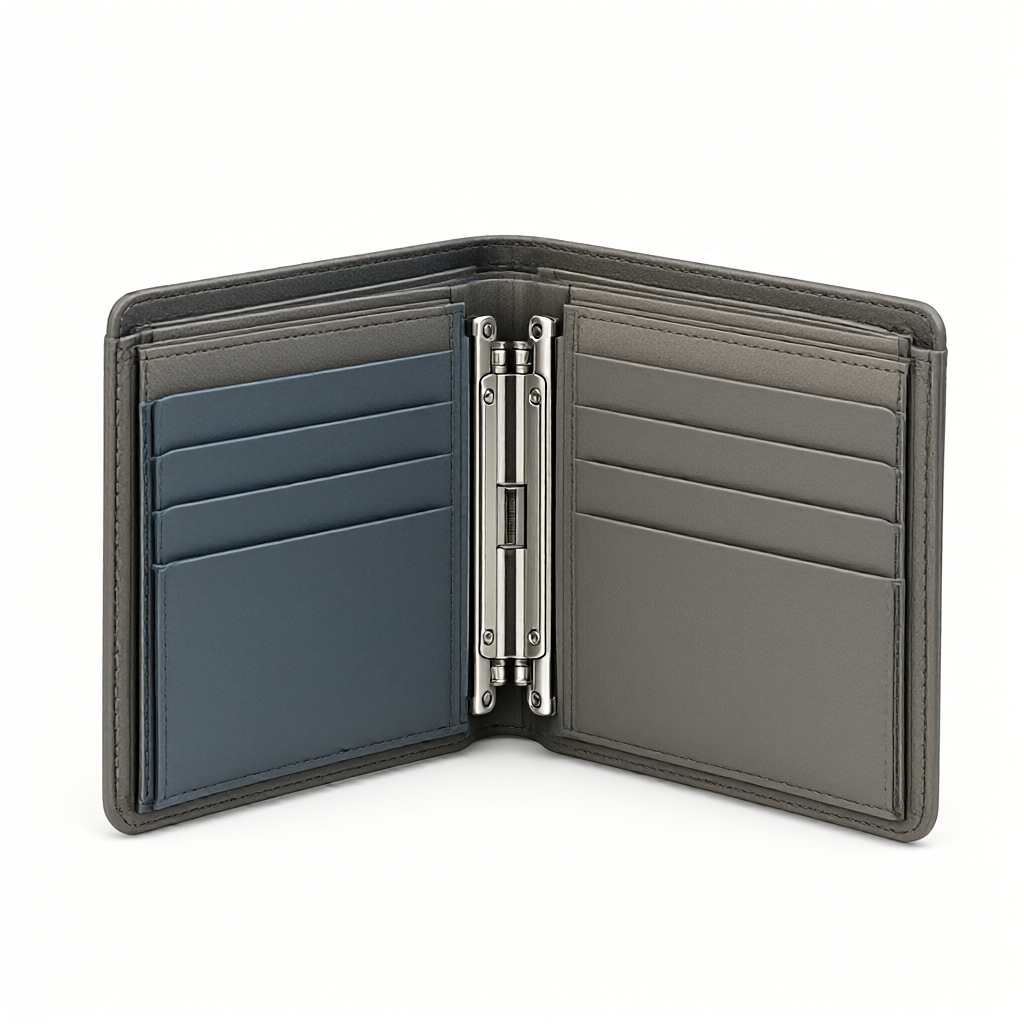
The bifold design relies on a single hinge or fold line running along the width of the wallet. When folded, the two panels nest against each other. Most modern bifold wallets used in the EDC space are constructed as a single solid piece—rather than stitched or bonded from multiple layers—which creates a rigid, low-profile card holder wallet that fits comfortably in a front or back pocket.
Inside the folded wallet, card slots are typically created by precision-cut apertures or layered channels. Some designs use a central strap or band to secure a stack of cards, while others rely on friction fit between the panels. Bill compartments are either a full-width slot behind the card section or an open-ended rear pocket, depending on the intended capacity.
The structural simplicity of a folding wallet is one reason it dominates bulk order volumes. There are fewer moving parts, fewer assembly steps, and more room for automation in machining and finishing. This also means customization—such as logo placement, surface texture, and edge treatment—can be applied consistently across large runs without adding significant production complexity.
For buyers comparing form factors, the bifold sits between the ultra-minimalist card holder and the higher-capacity bi-fold plus money clip combination. See our EDC wallets and minimalist wallet manufacturing for B2B buyers guide for a broader overview of how bifold wallets fit within the full product range.
What Are the Key Specifications for a Bifold Wallet?
When evaluating a bifold wallet for sourcing, several specifications directly affect usability, manufacturing feasibility, and end-user experience.
Dimensions
- Standard closed width: 85–95 mm
- Standard closed height: 105–115 mm
- Closed thickness: 5–12 mm depending on material and card capacity
- Open width: approximately double the closed width
Thickness is the most variable dimension. A thin aluminum or carbon fiber bifold wallet may close at 5–7 mm and hold six to ten cards. A heavier titanium or multi-layer design can reach 10–12 mm when loaded. Buyers should confirm the loaded thickness with the manufacturer, as this determines whether the wallet fits comfortably in standard pockets.
Weight
- Aluminum bifold: approximately 40–70 g
- Carbon fiber bifold: approximately 25–50 g
- Titanium bifold: approximately 50–80 g
Weight varies with material density, wall thickness, and the inclusion of additional features such as RFID-blocking layers or money clips. For promotional product buyers who ship large quantities internationally, even a 10-gram difference per unit impacts total freight cost.
Card Capacity
Most bifold wallets in the EDC space are designed to hold six to twelve cards. The actual capacity depends on card thickness (standard credit card is approximately 0.76 mm), the spacing between slots, and whether a front or rear bill compartment is included. Oversized cards, such as those used in certain regional payment systems, may reduce usable capacity by one or two slots.
Material Thickness
Sheet metal wallets typically use material ranging from 1.0 mm to 2.0 mm. Thinner gauges are more flexible and easier to bend but may feel less rigid. Thicker gauges provide a more substantial feel but require more machining time and tool wear. Carbon fiber panels are usually 0.8–1.5 mm, depending on the layup and resin content.
For a deeper dive into material selection and specs, refer to our men’s minimalist wallets materials, specs, and sourcing guide.
What Standards Apply to Bifold Wallet Manufacturing?
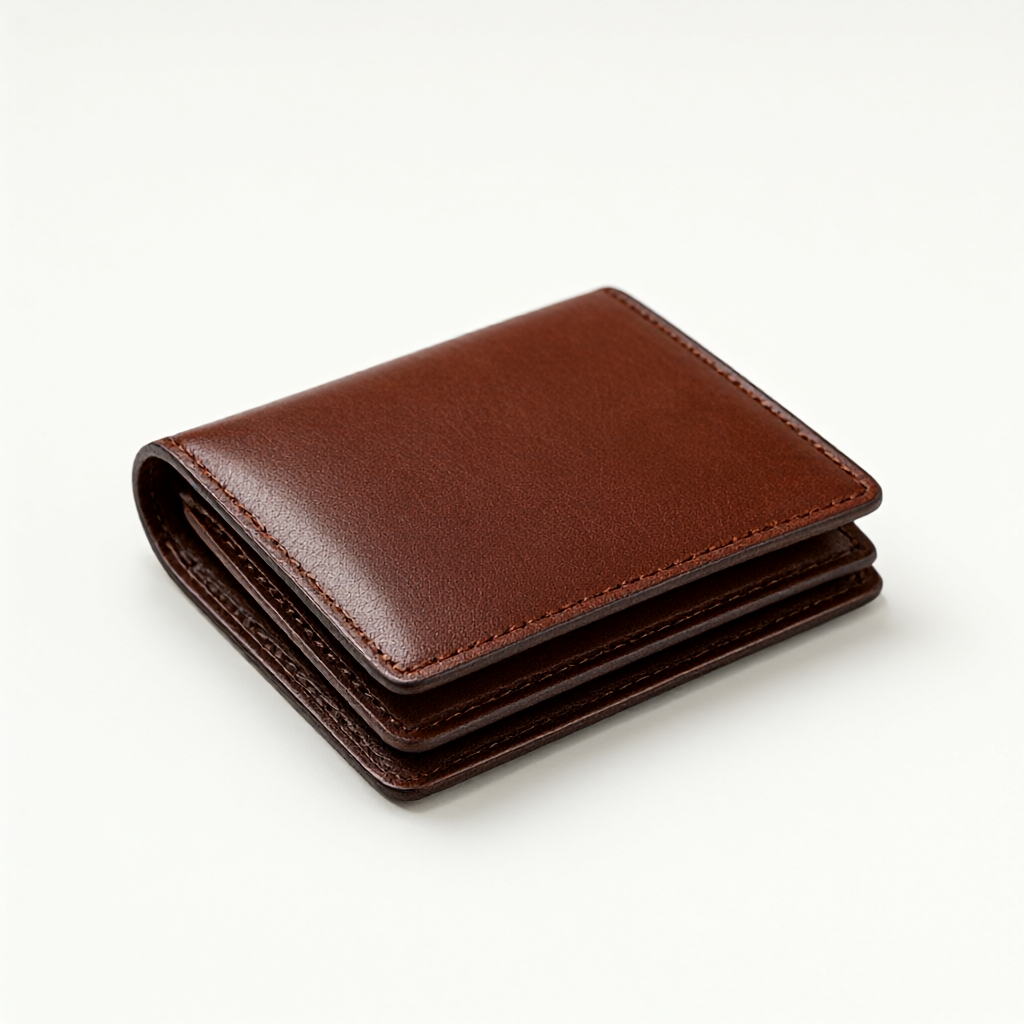
B2B buyers sourcing bifold wallets should consider both product-level and facility-level standards, as these affect market access, compliance, and brand reputation.
RFID Blocking
Many modern bifold wallets include RFID-blocking technology to protect contactless payment cards from unauthorized scanning. RFID-blocking performance is evaluated against standards such as ISO/IEC 14442 and FIPS 201, which define the fields and frequencies relevant to contactless card security. Buyers should request test reports or compliance statements from the manufacturer rather than accepting claims at face value. A properly engineered RFID-blocking layer uses conductive metal mesh or ferromagnetic material integrated into the wallet’s structure without adding significant thickness.
Material Compliance
For wallets sold in the European Union, materials must comply with REACH (Registration, Evaluation, Authorisation and Restriction of Chemicals) and RoHS (Restriction of Hazardous Substances) regulations. These standards govern the use of certain heavy metals, phthalates, and other chemicals in products. Aluminum, carbon fiber, and titanium are generally compliant by nature, but surface treatments, adhesives, and coatings used during manufacturing must also meet these requirements. Reputable manufacturers will have SGS-tested material documentation available.
Quality Management
Manufacturing facilities that hold ISO 9001 certification operate under a documented quality management system that covers process control, traceability, and continuous improvement. For buyers placing repeat orders, ISO 9001 certification provides a baseline assurance that the factory maintains consistent quality across production batches.
Social Compliance
BSCI (Business Social Compliance Initiative) audit certification indicates that the manufacturing facility meets recognized standards for workplace conditions, labor practices, and ethical operations. This is increasingly important for brands selling through major retail channels in Europe and North America, where supply chain transparency is under greater scrutiny.
What Should You Consider When Sourcing Bifold Wallets?
Sourcing a bifold wallet for private label, Amazon FBA, or corporate promotional programs requires evaluation across several dimensions beyond price per unit.
Customization Options
Customization is where most differentiation happens in the EDC wallet space. Common options include:
- Laser engraving for logos, monograms, or decorative patterns on metal surfaces
- UV printing for full-color graphics on flat or slightly curved surfaces
- Anodizing for aluminum wallets, which provides color options and surface hardness
- Surface finishing such as bead blasting, polishing, or brushed textures
- Custom packaging including retail boxes, blister packs, or minimal mailer boxes
The level of customization affects both tooling cost and per-unit price. Laser engraving typically requires minimal setup and can be applied to small runs. Anodizing colors require dedicated tanks and batching, so color-specific runs may have higher minimums. UV printing is flexible across color changes but performs best on flat surfaces.
MOQ and Lead Time
Minimum order quantities vary by manufacturer and customization level. Basic unbranded bifold wallets may have MOQs starting at 300 to 500 pieces, while fully custom designs with proprietary tooling or specialized finishes may require 500 to 1,000 pieces or more. Sample lead times for approved designs typically range from 5 to 10 business days. Production lead times depend on order volume, customization complexity, and current factory capacity.
Quality Control
Quality control practices separate professional manufacturers from trading companies. Key areas to evaluate include incoming material inspection, in-process dimensional checks, surface finish verification, and final packing inspection. Request information about the factory’s QC process before placing an order, and consider requesting pre-shipment samples or third-party inspection reports for large orders.
Supplier Capability
Not all manufacturers have the same capabilities. Factories with in-house CNC machining can produce metal wallets with tighter tolerances and faster iteration than those that outsource machining. Facilities that offer both OEM and ODM services can support buyers who need either fully custom designs or adaptations of existing models. Look for suppliers who can handle the full workflow—from design and prototyping through mass production, surface finishing, and packaging.
Sourcing a Bifold Wallet: Partnering with a Manufacturer
As you move from evaluation to sourcing, the manufacturer you choose will shape your product quality, timeline, and total landed cost. Here is how the industry works—and how we meet these standards at TOP EDC Wallet.
TOP EDC Wallet is a specialist manufacturer of minimalist EDC wallets and pocket gear, operating from a 50,000 sq ft in-house facility since 2014. We hold ISO 9001 certification and our facility is BSCI audited, with REACH and RoHS compliance across our material supply chain. We serve EDC brand owners, Amazon FBA sellers, promotional product distributors, and retail chains across America, Europe, Australia, and Southeast Asia.
Our approach to bifold wallet manufacturing covers the full spectrum from blank OEM production to fully customized private-label runs. We offer in-house CNC machining for aluminum, carbon fiber, and titanium wallets, laser engraving and UV printing for branding, and anodizing and surface finishing for color and texture options. Custom packaging and retail box design are available, along with Amazon FBA prep and drop shipping support.
For buyers testing new product lines, we offer low MOQs starts at 300 pcs per SKU for full OEM customization (100 pcs trial order available for stock finishes) with a 7-day sample lead time. This allows brands and sellers to validate design and quality before committing to larger production runs. We currently produce over 500,000 units per month and work with 200+ brands worldwide.
If you are evaluating bifold wallet manufacturers for your next order, the right partner should be able to walk you through material options, customization capabilities, compliance documentation, and realistic timelines—not just provide a price quote.
Bifold Wallet Manufacturing: Where Can You Verify the Data and Sources?
- EDC wallets and minimalist wallet manufacturing for B2B buyers — topedcwallet.com
- men’s minimalist wallets materials, specs, and sourcing guide — topedcwallet.com
- Get a Free Quote → — topedcwallet.com
From article to product
Turning this into a product?
Most of what is written here is the difference between a sample that works and one that does not. We can build either — the useful one costs the same.
Keep reading
More on buying guides
wallet with trigger
How Does a Trigger Wallet Work? What Is the Pop-Up Mechanism? The core of…
Readbest bifold wallet for women
What Is a Bifold Wallet? The term “bifold” refers to the fold: the wallet…
ReadMen’s trifold wallets with zipper compartments vs. bifold
At a Glance The three dominant men’s wallet formats differ in panel count, depth,…
Read
About the author
TOPWALLET Editorial Team
TOPWALLET's editorial and engineering desk writes from bench testing at the Shenzhen (Longgang) facility: pull-force and cycle testing, 13.56 MHz shielding measurements, finish trials and factory audits, rather than supplier spec sheets. Every specification in these guides is one we write on a purchase order.
Written on the floor
This article was written by our production and QC team — the people who spec tolerances, run the finishing line and inspect every batch. Where it states a capacity, a pull force or a lead time, it comes from a measurement we made, not a supplier’s catalogue. If a number here disagrees with what your own supplier told you, tell us; several of these articles started as a correction from a buyer.
See how the factory works · Inspection process · Sourcing FAQ
Turning this into a product?
Most of what is written here is the difference between a sample that works and one that does not. We can build either — the useful one costs the same.