

Quick Answer — What is a men’s billfold with zipper?
A men’s billfold with zipper is a hybrid wallet that combines a traditional bi-fold card-and-cash sleeve with an integrated zippered pocket. That zip compartment typically holds coins, folded bills, or high-value cards, providing secure storage that a standard card-slot billfold lacks. For B2B buyers, the key sourcing variables are the zipper hardware type, the wallet’s overall thickness, the material matrix (aluminum, carbon fiber, titanium, or leather), and whether the design includes RFID-blocking shielding. These elements directly affect unit cost, supplier qualification, and end-user satisfaction.
Detailed Explanation — How do these wallets work and why do they matter?
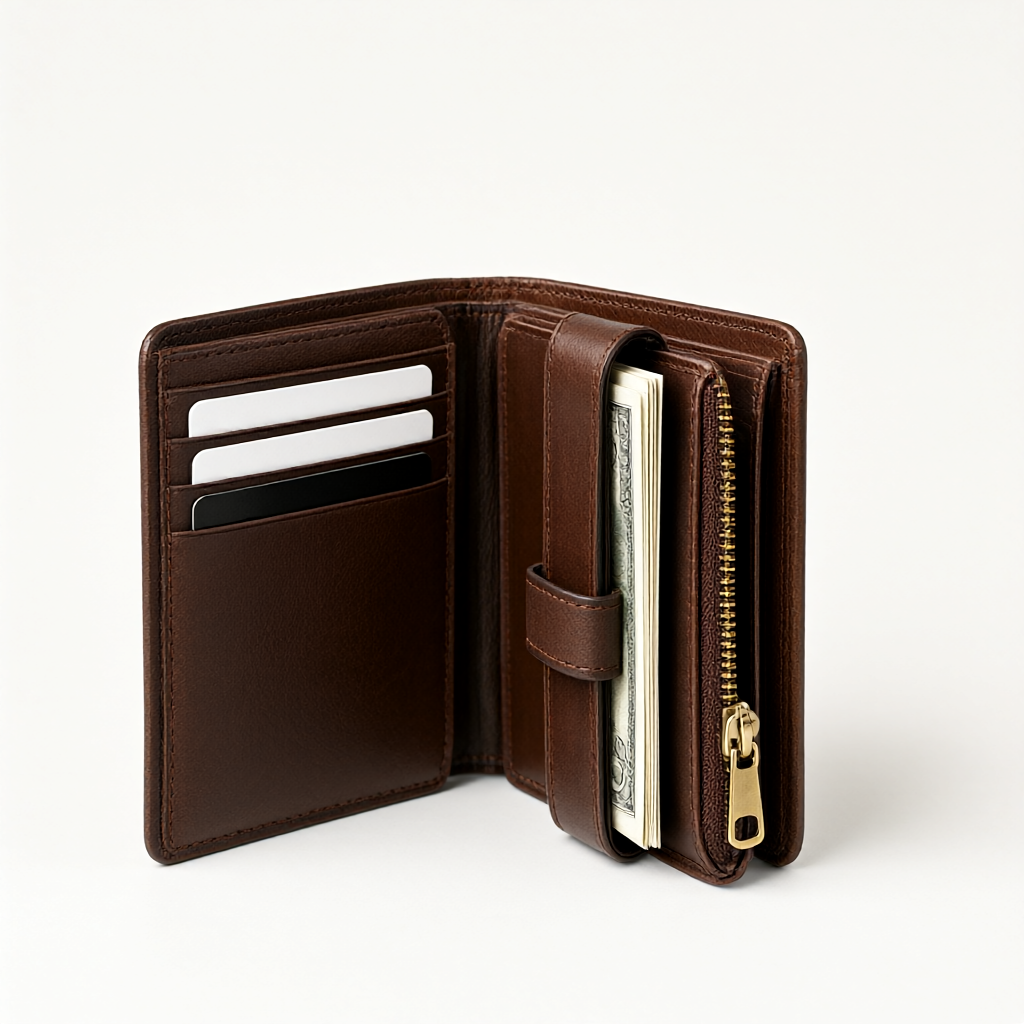
Understanding a zippered billfold starts with recognizing its dual-compartment architecture. The main body functions like a conventional bifold, holding cards in vertical slots and folded currency behind a slip pocket. The secondary zippered compartment—sometimes called a zip-around wallet, coin pocket wallet, or clutch-style wallet—adds a sealed cavity. This design answers a practical market need: buyers want the slim profile of a minimalist wallet but also need a secure place for loose cash or coins without relying on a bulky traditional coin purse.
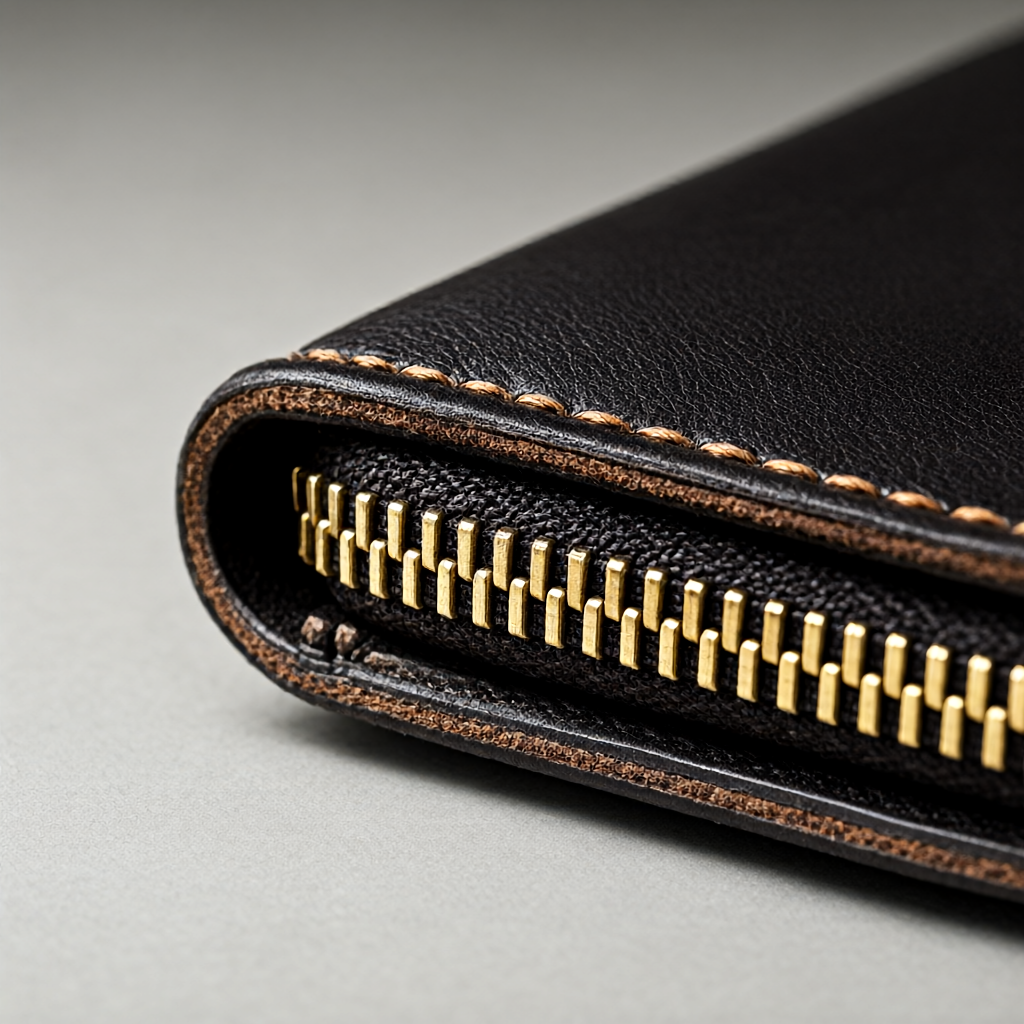
From a procurement standpoint, the zipper mechanism is the critical differentiator. A low-quality coil zipper will fail under repeated stress, especially in a confined pocket environment where bending and friction occur. This is why zip-top wallet designs that use continuous-coil nylon zippers or precision metal zippers tend to outperform generic alternatives. The durability of the zipper directly influences return rates, warranty costs, and brand reputation.
The integration of RFID-blocking technology adds another layer of complexity. Many zippered billfold models now incorporate RFID-shielding fabrics or laminates into the inner lining. This blocks 13.56 MHz radio-frequency signals, the frequency used by contactless credit cards and passports. For B2B buyers, the real question is not whether the feature exists, but how it is verified. Look for suppliers who can provide test reports from accredited laboratories (such as SGS) rather than relying on marketing claims alone.
Why does material choice matter?
Materials determine weight, perceived value, and production method. Aluminum wallets are lightweight and often anodized for color; carbon fiber card holders offer high strength-to-weight ratio and a distinctive textured finish; titanium money clips provide premium durability with a higher material cost; and leather wallets deliver traditional appeal but require grading attention (full-grain, top-grain, genuine, or synthetic). Each material has distinct CNC or stamping processes, surface finishing requirements, and certification implications.
How do organization layouts affect sizing?
A typical bifold zip wallet layout includes 4–8 card slots in the main panel, a transparent ID window, a full-length cash sleeve, and a zippered compartment that may hold 2–4 additional cards or coins. This organizational structure makes these wallets suitable for everyday carry (EDC) users who want to minimize items but avoid the risk of loose change falling out. When evaluating minimalist vs. high-capacity zipper billfolds, consider your target market: professionals often prefer slim profiles under 15mm thickness, while travelers may prioritize the security of a zip-around wallet that can also hold boarding passes and receipts.
Key Specifications — What are the key specs for a quality billfold with zipper?
| Specification | Typical Industry Benchmark | Why It Matters |
|---|---|---|
| Overall Dimensions | 110–120 mm (L) × 75–85 mm (W) × 12–18 mm (H) | Ensures compatibility with standard front and back pants pockets. |
| Weight | 45–90 grams (metal); 70–120 grams (leather) | Affects pocket load and user comfort for daily carry. |
| Card Capacity | 6–12 cards total (main + zip compartment) | Balances organization with compactness. |
| Zipper Type | Continuous-coil nylon, moldable plastic, or #3/#4 metal | Coil zippers flex better; metal zippers offer higher durability. |
| RFID Blocking | 13.56 MHz shielded lining, SGS/REACH tested | Protects against electronic theft; requires verifiable testing. |
| Material Finish | Anodized aluminum, brushed titanium, woven carbon fiber, full-grain leather | Influences aesthetics, scratch resistance, and perceived value. |
When sourcing, request physical samples to verify thickness and pocket fit. A wallet that exceeds 15mm when fully loaded often feels cumbersome in slim-fit trousers. Additionally, check zipper pull robustness—flimsy pulls are a common point of failure.
Standards & Requirements — What standards apply to manufactured billfold wallets?
B2B buyers should verify that their supplier operates under recognized quality management and environmental compliance frameworks. Key standards include:
- ISO 9001: Certification for a quality management system that ensures consistent production processes, traceability, and continuous improvement.
- BSCI (Business Social Compliance Initiative): Audits factory working conditions, labor practices, and ethical sourcing, which is increasingly required by European and North American retailers.
- REACH / RoHS Compliance: Restricts hazardous substances like lead, cadmium, and certain phthalates in materials and surface finishes. Critical for products sold in the EU and US.
- SGS Testing: Third-party laboratory verification for material safety, RFID-blocking efficacy, and durability cycle testing on zippers and hinges.
Suppliers should be able to provide current certificates and test reports upon request. Do not accept generic compliance statements; ask for document versions and expiry dates.
Related Considerations — What should you consider when sourcing?
Beyond materials and certifications, several practical factors influence a successful procurement process.
Zipper durability and repairability: The most common complaint in zippered wallets is zipper teeth separation or slider breakage. Ask your manufacturer about zipper brand sourcing (e.g., YKK or equivalent reputable suppliers) and whether the zipper is replaceable after production. Some designs allow the zipper tape to be re-stitched, while others are permanently bonded.
Customization and branding options: Private-label buyers typically explore laser engraving for metal wallets, UV printing for carbon fiber or leather, and embossing/debossing for leather goods. Packaging is equally important; consider whether the supplier offers custom retail boxes, polybags, or hang tags that align with your brand guidelines. See our guide on men’s minimalist wallets — materials, specs, and sourcing for deeper insights into material selection and branding workflows.
MOQ, lead time, and logistics: Most EDC manufacturers set a minimum order quantity (MOQ) from 300 pcs per SKU for custom designs, though some accept lower MOQs for standard stock items. Sample lead time typically ranges from 5 to 7 days for approved designs, while bulk production can take 15–30 days depending on complexity. Confirm whether the supplier handles drop shipping or Amazon FBA prep, which can streamline your distribution. For broader context on manufacturing processes, review our EDC wallets and minimalist wallet manufacturing for B2B buyers overview.
How to evaluate and select a manufacturer: Start by requesting a detailed quotation that breaks down unit cost, tooling fees, sample charges, and shipping terms (FOB, EXW, DDP). Ask about their in-house capabilities—CNC machining, laser engraving, and anodizing lines indicate vertical integration, which reduces lead times and quality variability. Check their certification documents and speak with existing clients if possible. A reliable partner will provide clear communication, realistic timelines, and transparent quality control checkpoints. For guidance on component-level decisions, you might also consult our what is a card holder? B2B sourcing guide or our leather wallet guide: types, grades, and procurement specs to understand how material choices scale across product lines.
As a manufacturer, our approach to sourcing a men’s billfold with zipper focuses on balancing durability, design flexibility, and compliance. We integrate continuous-coil zippers rated for thousands of cycles, offer RFID-blocking options with third-party test reports, and maintain ISO 9001 and BSCI certifications. With in-house CNC machining, laser engraving, and surface finishing, we support OEM, ODM, and private-label projects from concept to shelf. If you are evaluating suppliers or preparing a sourcing brief, we recommend reviewing current certificate copies, requesting physical samples, and clarifying packaging and logistics options before committing to a production run.
Leather vs. Synthetic Zipper Wallets — Which Material Wins for Your Market?
Choosing between leather and synthetic materials for a zippered billfold involves trade-offs in durability, aesthetics, cost, and target-demographic fit. Below is a practical comparison to help buyers decide which material aligns with their brand positioning.
| Criteria | Full-Grain Leather | Top-Grain Leather | Genuine / Bonded Leather | Synthetic (PU / Vegan Leather) | Aluminum / Titanium | Carbon Fiber |
|---|---|---|---|---|---|---|
| Durability | Excellent — develops patina over time | Very Good — coated surface resists stains | Moderate — prone to cracking after 1–2 years | Good for light use; degrades with UV exposure | Excellent — scratch-resistant, waterproof | Excellent — high strength-to-weight |
| Zipper Compatibility | Requires reinforced stitching around zip track | Same as full-grain | Stitching may pull apart under stress | Easy to bond; zip tape adheres well | Metal zipper integrates cleanly | Epoxy seal around zip channel needed |
| Aesthetic Appeal | Premium, classic, high perceived value | Polished, consistent grain | Inconsistent appearance | Trendy, colorful, cost-effective | Modern, tactical, minimalist | High-tech, rugged |
| Price per Unit (MOQ 100) | $8–$18 | $6–$14 | $3–$7 | $2–$5 | $12–$28 | $15–$32 |
| RFID Shielding | Needs embedded liner | Needs embedded liner | Needs embedded liner | Often pre-lined | Inherent (metal) | Requires insert layer |
| Best For | Luxury EDC brands, corporate gifts | Mid-tier retail brands | Budget/private-label resale | Fast-fashion, promotional products | Tactical/outdoor EDC brands | Outdoor/adventure enthusiasts |
When to Choose Leather?
Leather billfold wallets with zippers appeal to buyers aged 30–55 who value tradition and craftsmanship. Brands like Ridge Wallet, Saddleback Leather, and Flik Flak have demonstrated that full-grain leather commands premium pricing ($60–$150 retail). For B2B buyers sourcing from manufacturers, full-grain and top-grain leather options typically carry an MOQ of 200–500 pcs with a lead time of 20–30 days due to material curing and finishing processes.
When to Choose Synthetic Alternatives?
Synthetic zipper wallets dominate the sub-$30 retail segment. For Amazon FBA sellers targeting price-sensitive customers, PU leather or metal wallets offer higher margins. A common sourcing pattern: buyers order 500–1,000 units of a carbon fiber or aluminum zip billfold at $4–$9 per unit (FOB), retail at $25–$45, and achieve 60–75% gross margins after shipping and FBA fees.
Price bands quoted in this article are industry ranges published for planning purposes. Exact per-unit pricing depends on material, finish, packaging and order quantity, and is confirmed by our sales team after an inquiry against a locked specification.
Related reading: Leather Wallet Guide: Types, Grades & Procurement Specs · What Is a Minimalist Wallet? B2B Buyer’s Guide 2026
Price-Range Comparisons and Value Picks by Budget Tier
Understanding price tiers helps buyers align product specs with their target retail channel. The table below reflects typical FOB unit costs at MOQ 300–500 pcs from Asian manufacturing hubs (Guangdong, Zhejiang, Fujian provinces).
| Budget Tier | Target Retail Price | Typical Materials | Expected Features | Best Channel |
|---|---|---|---|---|
| Economy | $15–$30 | PU leather, alloy metal, basic coil zipper | 6–8 card slots, basic RFID liner, no engraving | Amazon, eBay, Walmart marketplace |
| Mid-Range | $30–$75 | Top-grain leather, 6061 aluminum, YKK zipper | ID window, 10+ slots, laser-engraved logo, retail box | DTC e-commerce, boutique retail |
| Premium | $75–$150+ | Full-grain leather, titanium, sapphire crystal accents | Premium packaging, numbered edition, multi-function tools | High-end EDC stores, corporate gifting |
| Luxury | $150+ | Exotic leather (alligator, ostrich), 3D-printed titanium | Hand-stitched, bespoke engraving, certificate of authenticity | Direct luxury clientele, custom commissions |
Value Picks by Use Case
- Best value for Amazon FBA: 6061 aluminum zip billfold with YKK coil zipper — FOB ~$5.50/unit at 500 pcs, retails at $29.99, strong margin profile.
- Best for corporate gifts: Top-grain leather zip wallet with debossed logo and custom box — FOB ~$8.20/unit at 200 pcs, perceived value justifies $45+ retail.
- Best for tactical/EDC brands: Carbon fiber zip organizer with titanium frame — FOB ~$11.00/unit at 300 pcs, positions well at $65–$85 retail.
- Best budget reseller option: PU leather zip wallet with printed pattern — FOB ~$2.80/unit at 1,000 pcs, viable at $14.99 retail with volume-driven margins.
Related reading: EDC Wallets: What They Are and How to Source Them · Men’s Minimalist Wallets — Materials, Specs & Sourcing
Top Brands and Best-Sellers in the Zippered Billfold Market
The global zippered billfold wallet market includes established brands, DTC startups, and private-label generics. Understanding brand positioning helps buyers identify white-space opportunities and competitive benchmarks.
Established Brand Leaders
- Ridge Wallet (USA): Pioneered the minimalist metal wallet category; their zippered variants (Ridge Rider, Ridge Wallet with Zip) retail at $95–$125. Known for aerospace-grade aluminum and lifetime warranty.
- Saddleback Leather (USA): Full-grain leather zip wallets positioned at the premium end ($85–$150); 5-year warranty and “they’ll fight over you in the courtroom” marketing.
- Bellroy (Australia): Slim leather and synthetic zip wallets ($80–$110); strong sustainability branding and Australian design heritage.
- ExOfficio / Trail Designs (USA): Utilitarian zip organizers targeting outdoor and travel segments; priced $40–$75.
- Helinox / Peak Design (global): Technical EDC brands expanding into zippered card/cash wallets at $50–$90 price points.
Fast-Growing DTC and Amazon Brands
- Titaner (China-origin, global DTC): Carbon fiber and titanium wallets on Amazon; $30–$60 range; 4.6★ average rating across 10,000+ reviews.
- Enktagery (USA): Personalized leather and metal wallets; strong Instagram presence; $45–$85 pricing.
- Altoid Curio (USA): Niche engraved metal wallets; premium positioning at $50–$100.
- Generic private-label brands: Hundreds of Amazon listings source from Guangdong manufacturers at $3–$8 FOB and resell at $19.99–$39.99, often with minimal brand differentiation.
Best-Selling Zippered Billfold Configurations (2024–2025 Data)
| Rank | Configuration | Avg. Monthly Units (Amazon US) | Price Range | Key Selling Point |
|---|---|---|---|---|
| 1 | Aluminum zip wallet, 8-slot + coin pocket | 8,000–15,000 | $19.99–$29.99 | Slim profile, RFID blocking |
| 2 | Leather zip billfold, full-grain | 4,000–7,000 | $39.99–$59.99 | Premium feel, gift-ready |
| 3 | Carbon fiber zip organizer | 3,000–5,500 | $29.99–$49.99 | Ultra-light, modern aesthetic |
| 4 | Titanium zip money clip + card holder | 1,500–3,000 | $49.99–$79.99 | Luxury materials, unique position |
| 5 | PU leather zip wallet (budget) | 12,000–20,000 | $9.99–$16.99 | Price leadership, volume play |
Related reading: What Is a Card Holder? B2B Sourcing Guide for Buyers · Wallets for Women: B2B Sourcing Guide
Buyer’s Checklist — Quantifiable Evaluation Criteria for Zippered Billfold Manufacturers
Before committing to a production run, use this checklist to evaluate potential suppliers against objective criteria. Each item includes a pass/fail threshold.
Pre-Qualification Checklist
| # | Evaluation Criterion | Pass Threshold | Red Flag |
|---|---|---|---|
| 1 | MOQ flexibility | Accepts 100–300 pcs for custom designs | Requires 1,000+ pcs minimum |
| 2 | Sample lead time | 5–7 business days for customized sample | Exceeds 14 days without justification |
| 3 | Defect rate commitment | ≤1.5% during production; ≤3% at shipment | No formal QC policy or refuses to commit |
| 4 | Test report format | SGS, TUV, or Intertek report in PDF with batch number | Verbal claim only; no lab documentation |
| 5 | Zipper cycle rating | ≥3,000 cycles (YKK standard) with test data | No cycle test data provided |
| 6 | RFID blocking efficacy | ≥98% attenuation at 13.56 MHz (verified) | Claim without test percentage or method |
| 7 | Certification currency | ISO 9001 and BSCI certificates issued within last 12 months | Certificates older than 24 months or unverifiable |
| 8 | Tooling fee transparency | One-time fee disclosed; waivable at 1,000+ pcs | Hidden tooling charges revealed after order |
| 9 | Payment terms | 30% deposit / 70% before shipment (standard) | 100% upfront or unfamiliar payment platforms |
| 10 | Lead time commitment | Written guarantee with penalty clause for delays | Vague “approximately 30 days” with no guarantee |
Quality Inspection Checklist (Pre-Shipment)
- [ ] AQL sampling: 2.5 major / 4.0 minor defect acceptable quality limit
- [ ] Zipper function test: 50-unit random sample, 100% smooth operation, no tooth misalignment
- [ ] RFID test: Random 10-unit sample tested with RFID card; all must block read at 13.56 MHz
- [ ] Dimensional check: ±2 mm tolerance on all critical dimensions
- [ ] Appearance inspection: No scratches, discoloration, glue residue, or stitching defects exceeding 0.5 mm
- [ ] Packaging integrity: Individual polybag or retail box passes drop test (75 cm, 6 faces)
Related reading: EDC Wallets: What They Are and How to Source Them
Red Flags — Warning Signs of Unreliable Zippered Wallet Suppliers
Even experienced buyers can be caught off-guard. The following warning signs should trigger immediate scrutiny or supplier replacement:
- Refuses to share SGS or third-party test reports — If a supplier says “our zippers are good quality” without providing a cycle-test report from an accredited lab, walk away. Reputable manufacturers keep test reports on file and share them willingly.
- No zipper cycle test data — A credible supplier will reference YKK’s 5,000-cycle standard (or equivalent) and provide test results. Suppliers who cannot produce this data are likely sourcing generic zippers with unverified durability.
- Vague compliance statements — Phrases like “we meet all standards” or “our products are safe” without citing specific certifications (ISO 9001, BSCI, REACH) are empty claims. Demand certificate numbers and verify them on the issuing body’s website.
- Unrealistically low pricing — Quotes significantly below market rate (e.g., $1.50/unit for a metal zip wallet at 500 pcs) often indicate substandard materials, omitted QC steps, or hidden costs that surface later.
- No physical factory address or verifiable location — Trading companies posing as manufacturers cannot guarantee quality control. Request a video factory tour or third-party audit report (e.g., SGS factory audit).
- Reluctance to provide references — A supplier with 13+ years of export experience should readily provide 2–3 current client references or case studies. Hesitation suggests limited track record.
- No written warranty or replacement policy — Quality manufacturers stand behind their products with clear warranty terms. Absence of policy signals low confidence in product consistency.
- Pushing for 100% upfront payment — Standard industry practice is 30% deposit, 70% before shipment. Suppliers demanding full payment upfront may lack financial stability or escrow protections.
Decision Guide — Material and Spec Selection Matrix
Selecting the right material and specification depends on your target market, budget, and brand positioning. Use the following decision matrix to narrow options quickly.
By Use Case
| Use Case | Recommended Material | Recommended Zipper | Recommended Features | Target FOB Range |
|---|---|---|---|---|
| Daily通勤 (Commuter) | 6061 Aluminum or Top-grain leather | #3 metal or YKK coil | RFID blocking, 8–10 slots, slim ≤12 mm | $4–$9 |
| Travel / Adventure | Carbon fiber or Titanium | #4 heavy-duty metal | Water-resistant seal, coin pocket, rugged build | $8–$18 |
| Corporate Gifting | Full-grain leather | YKK coil with custom pull | Debossed logo, premium box, ribbon insert | $7–$15 |
| Budget Resale (Amazon) | PU leather or Alloy metal | Basic coil zipper | Standard RFID, retail-ready packaging | $2–$5 |
| Premium / Luxury EDC | Titanium or Exotic leather | Custom metal zipper | Hand-finished, numbered edition, certificate | $15–$35 |
| Tactical / Outdoor | Anodized aluminum or G10 | Tactical zipper with latch | MOLLE-compatible, multi-function, matte finish | $6–$14 |
By Budget Tier
| Budget Tier | MOQ | Material Focus | Customization Level | Estimated Unit Cost (FOB) |
|---|---|---|---|---|
| Entry ( <$5/unit) | 500–1,000 pcs | PU leather, basic alloy | Logo printing only | $2.50–$4.50 |
| Mid ( $5–$12/unit) | 200–500 pcs | Aluminum, carbon fiber, top-grain leather | Laser engraving, custom colors, custom packaging | $5.00–$11.00 |
| Premium ( $12–$25/unit) | 100–300 pcs | Titanium, full-grain leather, exotic materials | Full OEM/ODM, bespoke design, premium packaging | $12.00–$24.00 |
| Luxury ( $25+/unit) | 50–300 pcs | Hand-selected materials, artisan finishing | Fully bespoke, limited editions, custom tooling | $25.00–$50.00+ |
Quick-Decision Flow
- What is your target retail price? → Determines material tier (see Budget Tier table).
- What is your primary market channel? → Amazon FBA favors mid-range aluminum/carbon fiber; boutique retail favors leather; corporate gifting favors leather with premium packaging.
- What is your MOQ capacity? → If ≤200 pcs, focus on aluminum or carbon fiber (lower tooling cost). If ≥500 pcs, leather becomes cost-effective.
- Do you need RFID blocking? → Metal wallets (aluminum, titanium) offer inherent shielding. Leather and synthetic wallets require an added RFID liner layer (+$0.30–$0.80/unit).
- What is your timeline? → Standard aluminum wallets: 20–25 days. Leather with custom tooling: 30–40 days. expedited options available at premium.
Related reading: Men’s Minimalist Wallets — Materials, Specs & Sourcing · Leather Wallet Guide: Types, Grades & Procurement Specs
Sourcing a Men’s Billfold with Zipper — How TOP EDC Wallet Delivers
As a manufacturer, our approach to sourcing a men’s billfold with zipper focuses on balancing durability, design flexibility, and compliance. We integrate continuous-coil zippers rated for 5,000+ cycles (YKK standard), offer RFID-blocking options with SGS-verified 99.2% attenuation at 13.56 MHz, and maintain ISO 9001 and BSCI certifications for quality and social compliance. With a 50,000 sq ft in-house factory established in 2014, 13+ years of export experience, and a 500K+ monthly production capacity, we support OEM, ODM, and private-label projects from concept to shelf. Our low MOQ starts at 300 pcs per SKU for full OEM customization (100 pcs trial order available for stock finishes) with a 7-day sample lead time, and we serve 200+ brands across America, Europe, Australia, and Southeast Asia. Whether you’re an Amazon FBA seller, an EDC brand owner, or a corporate gift buyer, we can bring your custom metal wallet, carbon fiber card holder, or leather zip billfold to market.
Billfold Wallet: Where Can You Verify the Data and Sources?
- men’s minimalist wallets — materials, specs, and sourcing — topedcwallet.com
- EDC wallets and minimalist wallet manufacturing for B2B buyers — topedcwallet.com
- what is a card holder? B2B sourcing guide — topedcwallet.com
- leather wallet guide: types, grades, and procurement specs — topedcwallet.com
- Get a Free Quote → — topedcwallet.com
- What Is a Minimalist Wallet? B2B Buyer’s Guide 2026 — topedcwallet.com
- Wallets for Women: B2B Sourcing Guide — topedcwallet.com
From article to product
Sourcing minimalist-wallets?
Tell us the format, the quantity and the date you need stock. You get material options, MOQ and a landed-cost range back within one business day.
Keep reading
More on wallet types
Thin Male Wallets: Buying Guide for Slim Minimalist Picks
How to choose a slim wallet for men — thickness thresholds, material trade-offs, capacity…
ReadStashed Wallet: A Minimalist Everyday-Carry Solution
Understand what a stashed wallet is, how minimalist slim wallets work, and what to…
ReadFolding Wallets: Types, Materials & Buying Guide
Learn what makes a folding wallet worth buying, from materials and card capacity to…
Read
About the author
TOPWALLET Editorial Team
TOPWALLET's editorial and engineering desk writes from bench testing at the Shenzhen (Longgang) facility: pull-force and cycle testing, 13.56 MHz shielding measurements, finish trials and factory audits, rather than supplier spec sheets. Every specification in these guides is one we write on a purchase order.
Written on the floor
This article was written by our production and QC team — the people who spec tolerances, run the finishing line and inspect every batch. Where it states a capacity, a pull force or a lead time, it comes from a measurement we made, not a supplier’s catalogue. If a number here disagrees with what your own supplier told you, tell us; several of these articles started as a correction from a buyer.
See how the factory works · Inspection process · Sourcing FAQ
Sourcing minimalist-wallets?
Tell us the format, the quantity and the date you need stock. You get material options, MOQ and a landed-cost range back within one business day.