

What Is Wallets for Women?
Wallets for women are compact carry items designed to hold payment cards, cash, and personal essentials in a form factor suited to women’s daily habits and pocket/bag dimensions. Unlike unisex or men’s wallets, which typically favor larger bi-fold or tri-fold structures, women’s wallets range from slim cardholders and money clips to minimalist folios that balance capacity with portability. For B2B buyers—brand owners, Amazon FBA sellers, and distributors—this category represents a high-velocity segment where material choice, organizational design, and protection features drive purchase decisions more than brand prestige alone.
The category has shifted significantly in recent years. Minimalist designs now dominate, driven by consumer preference for lighter pockets and bag interiors. Buyers in this space evaluate wallets not just on aesthetics but on practical parameters: card retention, RFID protection, material durability, and compliance with regional material regulations. Understanding these factors upfront reduces sourcing risk and improves sell-through rates.
Wallets For Women Sourcing: How Does It Work in Detail?
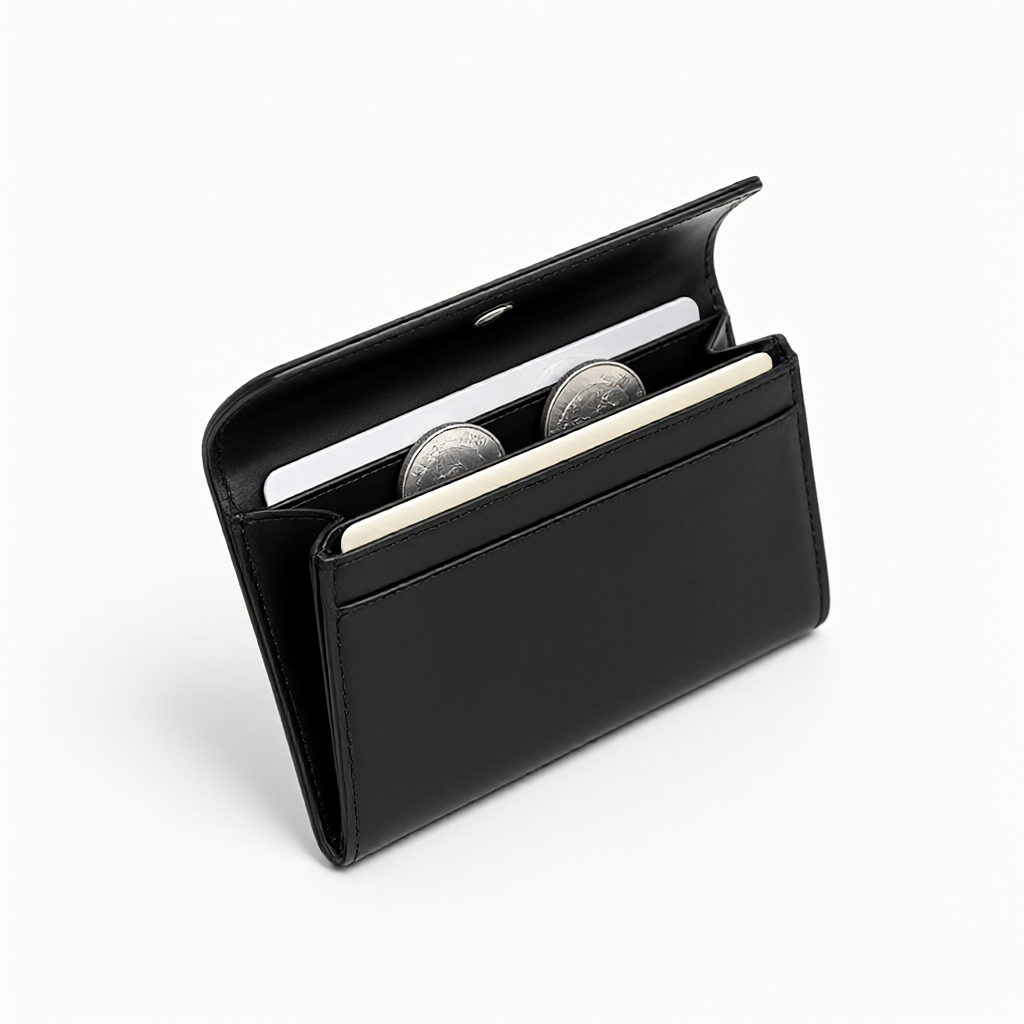
What Types of Wallets for Women Are Most Common?
The market breaks into several distinct form factors, each serving different use cases:
Cardholder wallets are the smallest category. They typically hold 4–12 cards in a vertical or horizontal slot configuration with no or minimal cash storage. These appeal to minimalists and travelers who carry only essentials. Cardholders are the fastest-moving SKU in many private-label programs because of their low unit cost and high perceived value.
Minimalist bifold wallets collapse a traditional bifold into a thinner profile, often using elastic bands, spring mechanisms, or layered card slots instead of a full fold. They usually hold 6–12 cards plus folded bills. This format occupies the middle ground between capacity and compactness.
Money clip wallets combine a metal clip for cash with card slots integrated into the same body. They are popular in the EDC (Everyday Carry) segment and perform well as promotional products because the metal construction feels premium at a moderate cost.
Trifold and full-size wallets retain the traditional multi-compartment layout with coin pockets, ID windows, and multiple bill sections. These are declining in mainstream retail but remain relevant for consumers who prefer maximum organization or who carry larger denominations.
Crossbody and clutch wallets are fashion-oriented categories that emphasize style over minimalism. They function as both a wallet and a small bag. For B2B sourcing, these carry higher unit costs and longer lead times due to more complex assembly and material sourcing.
Why Do Material Choices Matter for Women’s Wallets?
Material selection determines durability, perceived quality, regulatory compliance, and cost structure—three critical variables for any sourcing decision.
Genuine leather remains the most recognized material in the women’s wallet segment. Full-grain and top-grain leathers age well and develop patina over time, which many consumers associate with longevity. However, leather sourcing carries ethical and environmental scrutiny. According to Federal Trade Commission (FTC) guidelines on textile and leather labeling, manufacturers must accurately disclose material composition, making false claims like “100% leather” when bonded or synthetic layers are present a compliance risk. Buyers should verify supplier documentation and request material test reports before placing bulk orders.
Synthetic and vegan leather have gained significant market share. Modern polyurethane (PU) and polyester-based synthetics can closely mimic the feel of genuine leather while offering water resistance and consistent color. The trade-off is reduced long-term durability—synthetic materials tend to crack or peel after 18–24 months of daily use. For brands targeting younger demographics or sustainability-positioned lines, vegan leather is a strong option, but buyers should communicate realistic lifecycle expectations.
Aluminum and metal alloys represent the fastest-growing segment in the minimalist wallet space. Anodized aluminum cardholders and wallets offer scratch resistance, lightweight construction, and a modern aesthetic that appeals to both women and men. These materials also lend themselves well to laser engraving for custom branding, which is a key differentiator for private-label programs.
Carbon fiber is a premium material choice that commands higher price points. It is extremely light, rigid, and resistant to warping. Carbon fiber wallets appeal to consumers seeking a technical, outdoor-oriented aesthetic.
Silicone and TPU are used primarily as accent materials or in hybrid constructions. They provide grip and flexibility but are rarely used as the primary wallet body due to aesthetic limitations.
How Does RFID Protection Work in Women’s Wallets?
RFID-blocking wallets incorporate a layer of metal alloy or ferromagnetic material—typically embedded in the lining or constructed as a separate pocket—that creates a Faraday cage effect. This blocks radio-frequency identification signals in the 13.56 MHz range used by most contactless payment cards and passports.
The effectiveness depends on material coverage and construction quality. A wallet with an RFID-blocking layer that covers only the back panel may leave card slots exposed on the sides. Buyers should evaluate the blocking coverage percentage and request third-party test reports. Not all RFID-blocking products on the market meet functional thresholds, and unsubstantiated claims are common. The relevant testing standard falls under ASTM protocols for electromagnetic shielding, though specific pass/fail criteria depend on the product category and target market.
How Do Organization Features Influence Buying Decisions?
Women’s wallets are evaluated heavily on how well they organize daily essentials without bulk. Key features include:
- Card slot orientation: Vertical slots hold cards more securely during removal than horizontal slots, which can cause cards to slide out.
- Cash compartment design: A full-length bill sleeve is preferable to a partial sleeve, which may leave cash protruding.
- Coin pockets: Zippered or snap-closure coin compartments add functionality but increase thickness. Many minimalist buyers sacrifice this feature entirely.
- ID window placement: Windows placed on the interior face preserve the wallet’s slim profile, while exterior windows add vulnerability to wear.
- Separation of cash and cards: Dedicated compartments prevent cards from bending when cash is pressed against them.
For a deeper look at how organizational design affects sourcing decisions, see our best card holder selection guide for B2B sourcing.
Wallets For Women Sourcing: Which Specifications Matter Most?
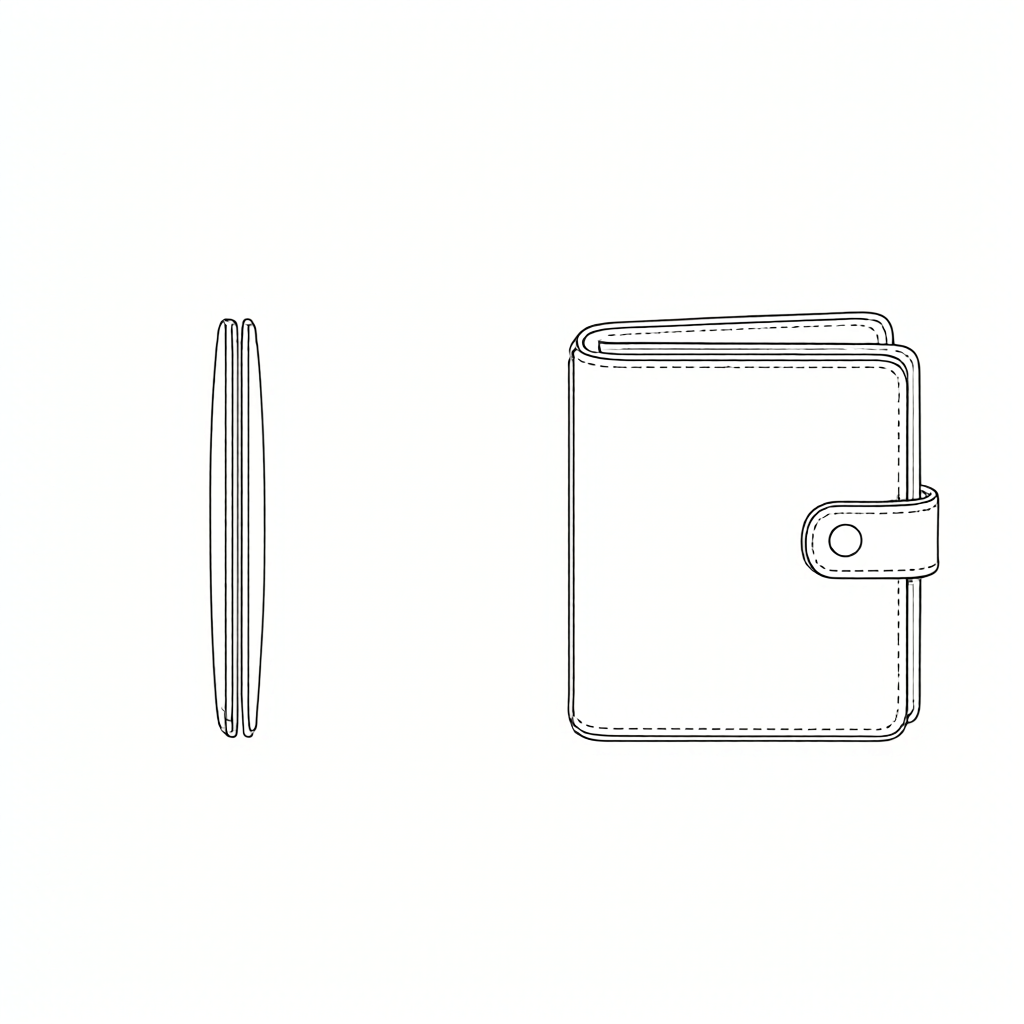
What Are the Key Specs for Wallets for Women?
| Specification | Typical Range | Notes |
|---|---|---|
| Cardholder width | 90–100 mm | Fits standard credit cards (85.6 × 53.98 mm ISO/IEC 7810 ID-1) |
| Cardholder height | 55–75 mm | Varies by slot configuration |
| Cardholder thickness | 8–20 mm | Minimalist designs target 8–12 mm |
| Weight | 30–120 g | Aluminum and carbon fiber sit at the lower end |
| Card capacity | 4–16 slots | Higher capacity increases bulk |
| Cash capacity | 0–2 compartments | Full-length sleeves hold folded bills |
| RFID blocking | 13.56 MHz range | Coverage varies by design |
| Leather thickness | 0.8–1.5 mm | Full-grain typically 1.0–1.5 mm |
These specifications serve as starting benchmarks. Actual requirements shift based on target market, price tier, and distribution channel. Amazon FBA sellers often prioritize lightweight, compact products to reduce fulfillment fees, while retail chains may favor slightly larger wallets with more features to justify shelf placement.
For additional guidance on slim wallet specifications, review our best slim wallets for men sourcing guide, which covers overlapping dimensional and material criteria applicable to women’s minimal wallets as well.
Wallets For Women Sourcing: Which Standards and Certifications Apply?
What Standards Apply to Wallets for Women?
Several regulatory and quality frameworks govern wallet manufacturing and sourcing:
Material composition labeling falls under FTC enforcement in the United States. Products labeled as “leather” must meet specific criteria for genuine leather content. Bonded leather, reconstituted leather, and leather-coated synthetics have distinct labeling requirements. Mislabeling can result in consumer complaints, platform delisting, and regulatory action. Buyers should require suppliers to provide material certificates and ensure all product listings accurately reflect composition.
Chemical compliance is critical for products sold in multiple jurisdictions. The European Union’s REACH regulation restricts certain azo dyes, phthalates, and heavy metals in leather and synthetic materials. RoHS compliance matters for wallets containing metal components or RFID-blocking layers. Suppliers should provide SGS test reports or equivalent third-party certification confirming that restricted substances are below threshold levels.
Quality management systems such as ISO 9001 indicate that a manufacturer follows documented processes for design control, incoming material inspection, in-process quality checks, and final product verification. While ISO certification does not guarantee product quality on its own, it signals organizational maturity and reduces the risk of inconsistent batch output.
Social compliance audits like BSCI (Business Social Compliance Initiative) assess working conditions, labor practices, and factory governance. Retail buyers and platforms increasingly require BSCI or equivalent audit reports before onboarding new suppliers, particularly for private-label programs in European and North American markets.
For a detailed look at how specifications and standards translate into sourcing decisions, our best wallet for B2B buyers procurement guide covers the full evaluation framework.
Wallets For Women Sourcing: What Else Should Buyers Consider?
What Should You Consider When Sourcing Wallets for Women?
Target demographic alignment is the first filter. A wallet designed for a 25-year-old professional commuter has different requirements than one targeting an outdoor-oriented demographic. Material preferences, color palettes, and feature priorities shift significantly across segments. Buyer personas should inform every sourcing decision, from leather versus metal to coin pocket inclusion.
Price tier and margin structure determine which materials and feature sets are viable. Entry-level wallets under $15 USD typically use synthetic leather or basic aluminum with minimal branding. Mid-tier products at $20–$40 USD can incorporate full-grain leather, carbon fiber accents, and reliable RFID protection. Premium tiers above $40 USD justify higher costs through designer collaborations, exotic materials, or advanced engineering. Understanding your target margin early prevents misalignment between product specs and retail pricing.
Customization complexity directly affects lead time and MOQ. Simple laser engraving of a logo on an aluminum wallet is straightforward and can be executed at low volumes. Full custom packaging, unique hardware, or proprietary mechanisms increase setup costs and require higher minimum orders to amortize tooling expenses. Buyers should map customization requests against their projected volume before committing to tooling.
Sample evaluation is non-negotiable. Before placing a production order, request physical samples to assess build quality, material feel, card retention, and packaging. Samples reveal issues that specifications alone cannot—such as cards slipping out under motion, stitching fraying after repeated use, or RFID coverage gaps. Evaluate samples under realistic conditions: drop tests, pocket insertion, and repeated card extraction.
Packaging and retail readiness matter for omnichannel sellers. Products destined for Amazon FBA require compliant labeling, polybag or box packaging that meets fulfillment center standards, and barcode placement that scans reliably. Retail buyers often specify hanging packages, window boxes, or branded gift boxes. Confirm packaging requirements early to avoid costly rework.
Sustainability credentials are increasingly influential. Buyers and end consumers alike scrutinize material sourcing, manufacturing ethics, and end-of-life recyclability. Genuine leather from certified tanneries, recycled aluminum, and bio-based synthetics are differentiators that command attention. However, sustainability claims must be substantiated with verifiable documentation to avoid greenwashing allegations.
Long-term supplier reliability is as important as initial cost. A supplier with stable lead times, consistent quality, and responsive communication reduces operational risk more than a marginal price difference. Evaluate suppliers on their track record, communication responsiveness during sampling, and willingness to accommodate revisions.
As a manufacturer with over a decade of experience in this space, our approach centers on matching the right material and construction to each buyer’s market position. We work with EDC brands, Amazon sellers, and distributors to develop wallets that meet their specific capacity, material, and branding requirements—whether that means a compact aluminum cardholder with laser-engraved branding or a full-grain leather folio with integrated RFID protection. We maintain in-house CNC machining and finishing capabilities, which allows us to control quality from raw material through final inspection.
Wallets For Women Sourcing: Where Can You Verify the Data and Sources?
- Federal Trade Commission (FTC) guidelines — www.ftc.gov
- best card holder selection guide for B2B sourcing — topedcwallet.com
- best slim wallets for men — topedcwallet.com
- best wallet for B2B buyers procurement guide — topedcwallet.com
- Get a Free Quote — topedcwallet.com
From article to product
Turning this into a product?
Most of what is written here is the difference between a sample that works and one that does not. We can build either — the useful one costs the same.
Keep reading
More on buying guides
wallet with trigger
How Does a Trigger Wallet Work? What Is the Pop-Up Mechanism? The core of…
Readbest bifold wallet for women
What Is a Bifold Wallet? The term “bifold” refers to the fold: the wallet…
ReadMen’s trifold wallets with zipper compartments vs. bifold
At a Glance The three dominant men’s wallet formats differ in panel count, depth,…
Read
About the author
TOPWALLET Editorial Team
TOPWALLET's editorial and engineering desk writes from bench testing at the Shenzhen (Longgang) facility: pull-force and cycle testing, 13.56 MHz shielding measurements, finish trials and factory audits, rather than supplier spec sheets. Every specification in these guides is one we write on a purchase order.
Written on the floor
This article was written by our production and QC team — the people who spec tolerances, run the finishing line and inspect every batch. Where it states a capacity, a pull force or a lead time, it comes from a measurement we made, not a supplier’s catalogue. If a number here disagrees with what your own supplier told you, tell us; several of these articles started as a correction from a buyer.
See how the factory works · Inspection process · Sourcing FAQ
Turning this into a product?
Most of what is written here is the difference between a sample that works and one that does not. We can build either — the useful one costs the same.