

Quick Answer
A men’s leather bifold wallet with an ID window is a two-panel leather wallet featuring a transparent or open-view slot designed to hold a driver’s license or identity card at eye level. It typically includes multiple card slots on one side and a cash compartment on the other, all folded in half for a compact pocket profile. The ID window eliminates the need to remove your card from its sleeve — you simply flip the window cover and present it directly. This design balances everyday carry convenience with a slim silhouette that sits comfortably in front or back pockets without creating bulk.
Detailed Explanation
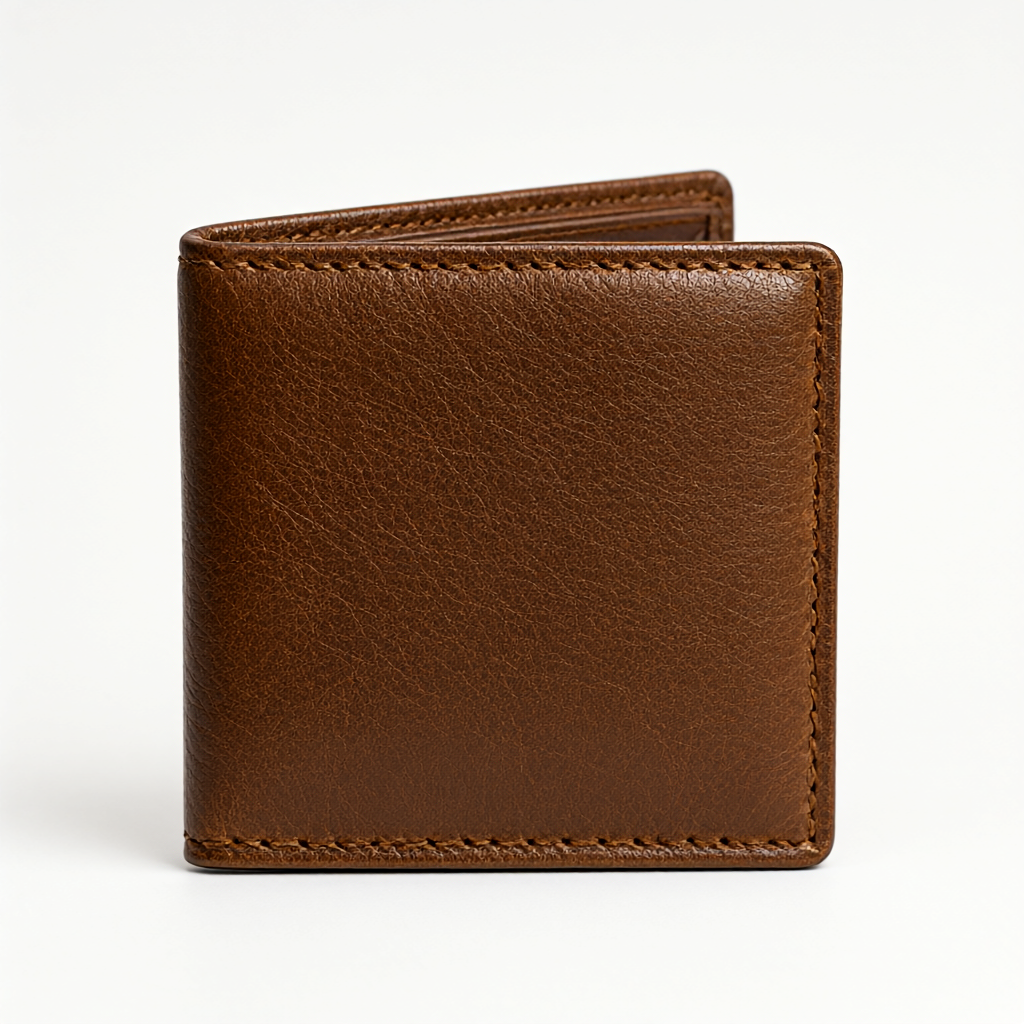
How does an ID window work in a bifold wallet design?
An ID window in a leather bifold wallet operates through one of three common mechanisms. A clear PVC or PET plastic flap covers a cutout in the wallet face, held in place by adhesive or stitching along three sides while remaining open on the fourth for card insertion and removal. An open-slot design leaves the top edge uncovered, allowing the card to slide in and out freely but offering less protection from scratches and moisture. A rotating disk mechanism uses a circular transparent insert that turns to reveal or cover the card — found primarily in premium travel wallets rather than standard bifold configurations.
The clarity and longevity of the window depend heavily on material choice. Clear PVC tends to yellow slightly after extended sunlight exposure and can develop micro-scratches over months of pocket wear. Polycarbonate and PET films resist yellowing better and maintain optical clarity significantly longer. Buyers should inspect sample units under natural light before committing to bulk orders, because factory photographs rarely reveal the actual transparency level or adhesive coverage pattern.
What distinguishes genuine leather from other leather grades?
Leather grading drives both price and durability in any bifold wallet purchase, yet the terminology remains confusing outside the industry. Here is what each grade means in practical terms:
Full-grain leather retains the complete original grain layer including natural markings and texture. It develops a patina over time rather than cracking or peeling. Full-grain wallets are the most durable but also the most expensive due to higher material yield waste during tanning.
Top-grain leather has been sanded or buffed to remove surface imperfections, then typically receives a pigment finish or embossed texture. It offers consistent appearance and good scratch resistance but lacks the natural character and long-term aging behavior of full-grain. Most mid-range commercial wallets use top-grain leather because it provides visual uniformity across production batches.
Genuine leather is a technical category rather than a quality grade. In practice, the term refers to any real leather product that does not qualify as full-grain or top-grain — often layered leather composite, split leather with a polymer coating, or bonded leather containing ground leather fibers mixed with adhesive binders. Products labeled simply “genuine leather” without further specification commonly use split leather base with a thick pigment finish that will crack after roughly one to two years of heavy daily folding.
Bonded leather contains the lowest percentage of actual leather fiber, typically ranging from ten to thirty percent depending on regional labeling standards. The remainder consists of leather dust, synthetic fibers, and polyurethane binders pressed into sheets and embossed with a grain pattern. Bonded leather wallets cost significantly less upfront but tend to delaminate at the fold lines within six to eighteen months of regular use.
For a buyer sourcing private-label products, requesting the specific leather composition sheet from manufacturers prevents miscommunication. The term “genuine leather” alone should never determine purchase decisions for wholesale orders exceeding five hundred units.
What leather billfold wallet mens buyers should understand about RFID blocking
RFID-blocking technology addresses a real concern for travelers carrying contactless payment cards and passports. Modern credit and debit cards operate at 13.56 MHz frequency using near-field communication protocols. Blocking layers integrate either conductive metal mesh laminated inside the wallet panels or ferrite sheets placed behind the card slots. The effectiveness varies considerably between products — some designs attenuate signals by only ten to fifteen decibels, which may reduce read range but not eliminate unauthorized scanning entirely. Certified products typically achieve twenty-five to thirty-five decibel attenuation according to independent laboratory testing procedures referenced by ASTM International.
When evaluating RFID-blocking claims, look for specific frequency range documentation rather than vague marketing language. Reputable suppliers provide test reports showing insertion loss values measured across the NFC and smart card frequency bands. Budget-tier wallets sometimes omit blocking entirely or include incomplete shield patterns with gaps along card slot openings that defeat the purpose.
Key Specifications
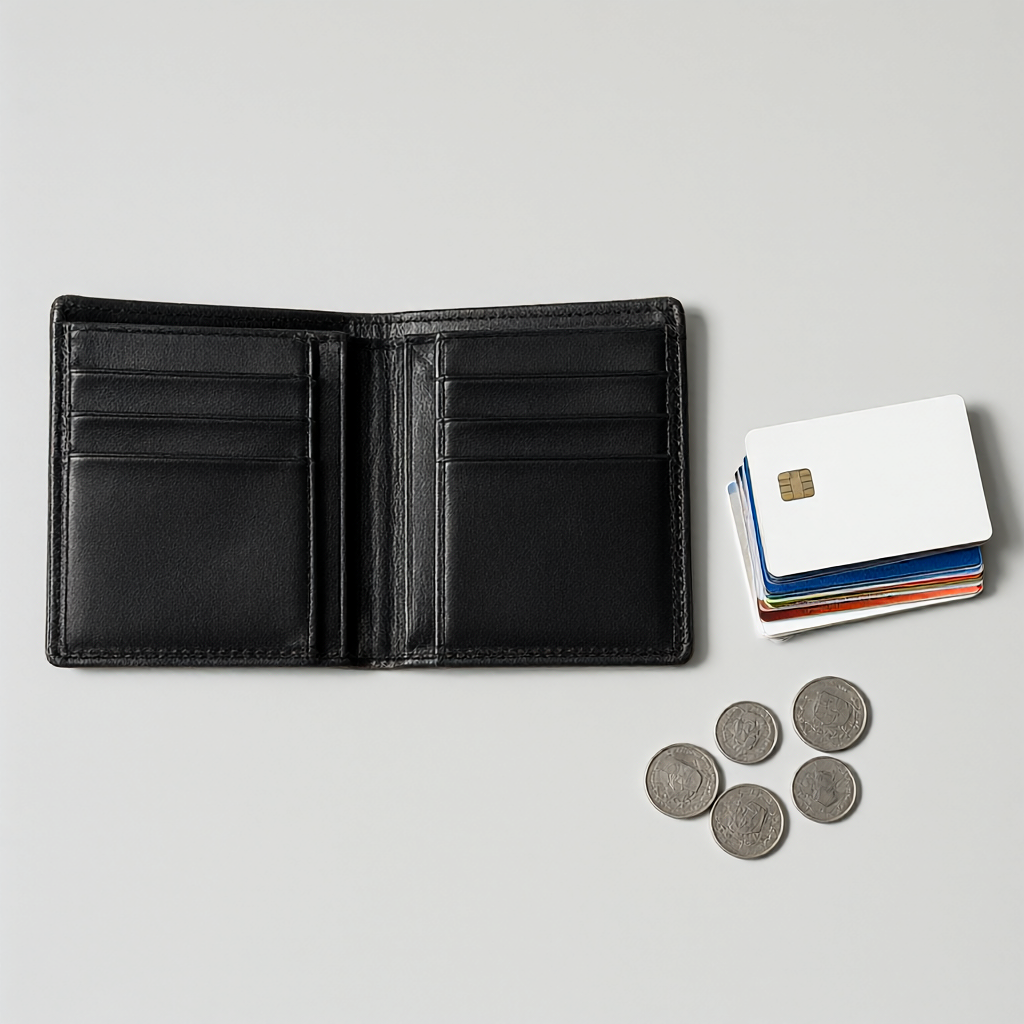
What are the key specs for slim bifold leather wallets with money clips?
Dimensional specifications define whether a wallet qualifies as truly slim or merely advertised as such. Industry-typical measurements for quality men’s leather bifold wallets break down as follows:
| Specification | Entry-Level Range | Mid-Range Target | Premium Target |
|---|---|---|---|
| Folded thickness (empty) | 18–22 mm | 14–18 mm | 10–14 mm |
| Folded thickness (loaded, 8 cards + cash) | 24–30 mm | 18–24 mm | 14–18 mm |
| Width | 95–105 mm | 90–100 mm | 85–95 mm |
| Height | 105–115 mm | 100–110 mm | 95–105 mm |
| Card slot count | 4–6 slots | 6–8 slots | 4–6 slots |
| ID window type | PVC flap, open slot | PET/polycarbonate | Thin polycarbonate |
| Weight (empty) | 65–85 g | 50–70 g | 35–50 g |
| Money clip attachment | Optional add-on | Integrated steel clip | Titanium or steel clip |
Thickness reduction comes from thinner leather selection — usually 1.0 to 1.2 millimeter vegetable-tanned or chrome-tanned hides — combined with tighter stitching margins and fewer internal dividers. Money clip integration adds rigidity to the wallet spine, which can reduce overall flex life if the clip mounting creates stress concentration points along the leather fold line. Slim bifold wallet leather variants incorporating titanium money clips weigh approximately fifteen to twenty grams more than purely leather constructions while offering greater structural durability.
What color and finish options exist for black leather mens bifold wallets?
Black remains the dominant color in men’s leather wallet markets across North America and Europe, accounting for roughly sixty to seventy percent of retail sales volume. Black leather finishes vary substantially in appearance and wear characteristics depending on the tanning and dyeing process used.
Dyed leather absorbs pigment throughout the hide structure, producing even color that fades gradually with abrasion rather than chipping. This is the standard approach for top-grain and full-grain products and provides the most natural aging pattern.
Patent or lacquered leather applies a glossy polymer coating over the dyed surface. The finish resists water and minor scuffs effectively but shows deep scratches permanently and can crack along fold edges after several years. Patent finishes appear premium initially but deteriorate faster than matte alternatives under daily pocket friction.
Suede-finished black leather uses the flesh side or reverse grain of the hide, creating a soft textured surface. While visually distinctive, suede accepts dirt and moisture readily, making it less suitable for front-pocket carry in wet climates or outdoor work environments.
For bulk procurement, color consistency across production runs represents a legitimate quality concern. Leather batches from different tanning lots occasionally produce slight shade variations even when using identical dye formulas. Requesting approved physical color swatches signed by both parties before mass production begins prevents downstream disputes over acceptable tolerance ranges. Black leather mens bifold wallet orders should specify Pantone matching references where precise brand alignment matters for corporate gift programs.
What size and capacity options exist for small leather billfolds?
Small leather billfolds target minimalist carriers who prioritize pocket comfort over storage capacity. The defining characteristic is reducing card slot numbers while maintaining functional access to frequently used items — typically two to four credit cards, one ID card, and folded bills. Card capacity directly affects wallet thickness; even high-quality leather compresses minimally after the initial break-in period of approximately two weeks of regular use.
Card slot design influences practical capacity beyond stated numbers. Slots cut too tightly from stiff leather may eject cards unpredictably when the wallet opens. Overly loose slots allow cards to slide forward and catch on adjacent objects. Quality manufacturers test slot tension using standard card stacks of varying thickness — including driver’s licenses, which measure approximately 0.76 millimeters thicker than standard credit cards — to verify reliable retention without excessive force required for card removal.
Cash compartments in small billfolds typically accommodate approximately twelve to sixteen unfolded US dollars or equivalent currency width. European banknotes running longer than American denominations require either a modified compartment length or an alternate bill-fold orientation that reduces usable card slot space.
Standards & Requirements
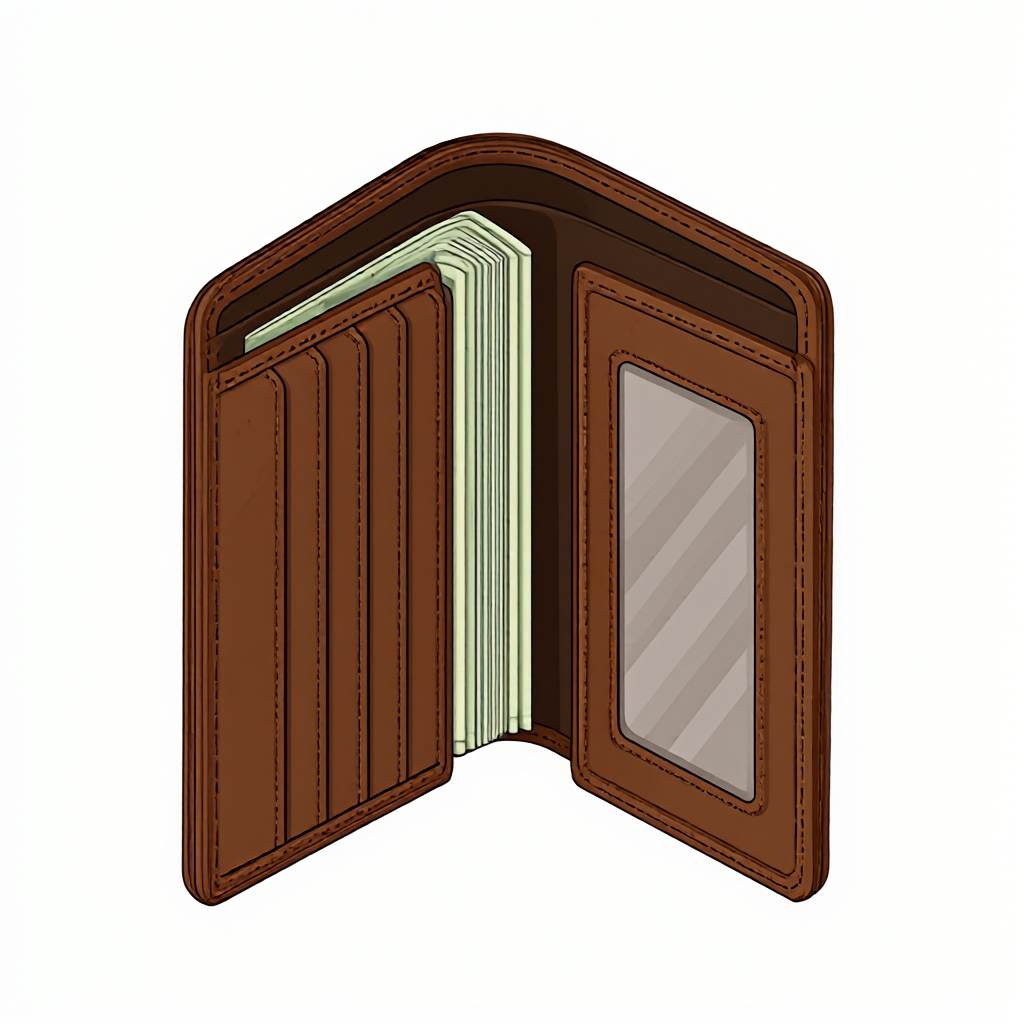
What standards and certifications should buyers verify?
Quality assurance documentation protects both retailer and end consumer when sourcing leather goods commercially. Several certification frameworks apply directly to wallet manufacturing operations and material sourcing:
ISO 9001 specifies requirements for a quality management system demonstrating consistent production capability, documented procedures, corrective action processes, and continuous improvement commitments. Facilities certified under this standard undergo surveillance audits annually and recertification every three years.
BSCI (Business Social Compliance Initiative) assessments evaluate working conditions, wage practices, child labor policies, and health and safety standards throughout the supply chain. Retail buyers operating in European markets increasingly require BSCI audit reports as a condition of vendor approval because major retail chains mandate social compliance verification.
REACH and RoHS compliance govern chemical restrictions in leather processing chemicals and metal components including snaps, zippers, and RFID-shielding materials. REACH restricts substances like certain azo dyes, chromium VI levels in tanned leather, and nickel release from metal attachments. RoHS limits lead, mercury, cadmium, and hexavalent chromium in electronic shielding components embedded in RFID-blocking wallets.
Material testing through SGS or equivalent laboratories verifies lead content, pH balance, colorfastness to rubbing and perspiration, and tensile strength of leather hides used in wallet production. Reputable suppliers provide recent test reports covering these parameters rather than relying on verbal assurances during the quoting phase. Leather billfold wallet mens procurement teams should require these documents before finalizing purchase agreements above five hundred unit thresholds.
Related Considerations
Bifold versus trifold wallet structures
Structural configuration fundamentally changes how cards, cash, and identification organize within the wallet body. A bifold folds once down the center, creating two equal interior panels. This simple geometry maintains a lower profile and distributes stress evenly across the central fold line, extending product lifespan under repeated opening and closing cycles. Bifold designs dominate the modern minimalist wallet market precisely because of their proportional simplicity.
A trifold folds twice, producing three sections with a center panel and two outer wings. The additional fold increases folded thickness by approximately eight to twelve millimeters compared to equivalent bifold designs, pushing the wallet noticeably farther from the hip pocket seam. However, trifold layouts accommodate more compartments — typically six to eight card slots distributed across three sections plus a dedicated coin pouch or larger cash area. Trifold configurations suit users prioritizing organizational capacity over slim pocket presence.
For consumers comparing options, the deciding factor depends on daily carry habits. If you routinely carry six or more cards alongside cash and coins, a trifold wallet women’s customers frequently select for organizer functionality may serve you adequately despite the added bulk. If you carry three cards maximum and prefer a flush pocket profile, a slim bifold wallet leather construction will provide years of service without stretching pocket fabric.
Gender-inclusive design considerations
While marketed primarily toward men, leather bifold wallet designs demonstrate meaningful overlap in sizing preferences across gender segments. Women’s leather bifold wallet purchases frequently favor narrower widths — approximately 85 to 90 millimeters — compared to the 95 to 105 millimeter standard used for men’s versions. The same leather quality gradients, RFID-blocking options, and ID window mechanisms apply regardless of target gender positioning in marketing copy.
Manufacturers serving diverse retail channels often produce unisex bifold templates sized around ninety millimeters wide as a compromise dimension fitting both male and female pocket geometries reasonably well. Specialized smaller-width runs are economically viable only at order quantities exceeding one thousand units due to pattern setup and material cutting efficiency losses associated with non-standard dimensions.
Money clip integration options
Some buyers seek a hybrid solution combining bifold organization with external money clip convenience. A leather billfold with money clip attaches a spring-loaded or magnetic metal bar to the exterior back panel, securing folded banknotes without occupying interior card slot space. This configuration reduces interior compartment complexity while adding front pocket visibility of the cash portion.
Money clip materials vary between stainless steel, aluminum, titanium, and silicone-coated variants. Titanium clips offer the strongest grip-to-weight ratio and resist corrosion from hand sweat exposure. Steel clips provide comparable holding force at lower cost but introduce potential rust concerns if consistently exposed to moisture without drying. Silicone coatings improve grip stability on smooth currency surfaces but may degrade under UV exposure over extended periods, becoming tacky or discolored.
For additional context on money clip wallet configurations and purchasing considerations, review our good money clip wallets for men buying guide, which compares clip mechanisms, material selections, and hold strength across budget and premium tiers.
When evaluating bulk ordering paths, consider how money clip integration affects packaging dimensions and drop-test performance. External clip protrusions create pressure points during shipping compression that can deform surrounding leather if internal bracing is insufficient. Proper sample validation through simulated shipping tests prevents field failures in retail environments.
How We Meet These Standards
When designing custom OEM and ODM leather wallets, our approach centers on translating these industry specifications into products that perform reliably across global retail channels. Our facility operates under ISO 9001 quality management systems, ensuring consistent material inspection, production monitoring, and finished goods verification before shipment. Every leather batch entering our workflow carries accompanying REACH and RoHS test documentation, and we conduct periodic third-party SGS validation on critical parameters including chromium VI levels, azo dye restrictions, and nickel release from metal hardware components.
Our in-house CNC machining and precision tooling support rapid prototyping of custom ID window shapes, card slot configurations, and money clip mounting geometries. We source polycarbonate and PET window films from verified suppliers with documented yellowing resistance data, avoiding the long-term clarity degradation常见问题 associated with lower-grade PVC alternatives. For black leather mens bifold wallet orders, we maintain approved physical color swatches against which each production run is compared, minimizing lot-to-lot variation that frustrates brand一致性 requirements.
Custom laser engraving, UV printing, and embossing capabilities allow brand identity integration directly onto leather surfaces without compromising the structural integrity of the wallet panels. Packaging design runs from simple kraft mailers through structured retail boxes tailored to Amazon FBA prep requirements, including barcode placement, suffocation warning compliance, and carton stacking optimization. Minimum order quantities begin at one hundred pieces for most custom configurations, with sample production completed within seven business days to accelerate your go-to-market timeline.
Bifold vs. Trifold Structural Differences
Understanding structural architecture is critical when evaluating wallet longevity and daily usability. Below is a side-by-side comparison:
| Feature | Bifold | Trifold |
|---|---|---|
| Folds | One central fold | Two folds creating three panels |
| Folded thickness | 12–22 mm | 20–35 mm |
| Pocket compatibility | Front and back pocket friendly | Back pocket only; bulky in front pockets |
| Card capacity | 4–8 cards | 6–12 cards |
| Cash compartment | Single billfold | Multiple compartments |
| Longevity | Higher — fewer stress points | Lower — triple-fold stress concentrates at two crease lines |
| Ideal use case | Daily minimal carry | Travel or organizational priority |
Procurement Factors: MOQ, Lead Time, and Customization
When sourcing leather wallets at volume, several operational variables directly affect your total landed cost and time-to-market:
MOQ (Minimum Order Quantity): Entry-level manufacturers typically set MOQs between 100 and 500 units per SKU. Volume discounts compound beyond 1,000 units. For custom leather grades or unique hardware, MOQs rise to 500–1,000 units due to material procurement lead times.
Sample Lead Time: Prototyping takes 5 to 10 business days for standard configurations. Complex custom builds — including specialized RFID inserts, engravings, or non-stock leather — require 10 to 21 days. Rush sampling at higher cost is often available.
Production Lead Time: After sample approval, mass production runs range from 15 to 45 days depending on order volume, leather pre-order status, and finishing complexity. Established factories with stocked raw materials can ship within 20 days for orders under 2,000 units.
Customization Levers: At volume, buyers can specify leather source and grade, stitch color and thread type, embossing or laser engraving patterns, metal hardware finishes, interior lining materials, RFID shield positioning, and packaging format. Each customization tier adds cost and potentially extends lead time by 3 to 7 days.
Brand & Price-Tier Comparison
Leather bifold wallets with ID windows span multiple price tiers, each reflecting distinct quality thresholds:
| Tier | Price Range (Unit) | Leather Grade | Expected Lifespan | Typical MOQ | Best For |
|---|---|---|---|---|---|
| Economy | $3–$8 | Bonded / split leather composite | 6–18 months | 500+ | Promotional items, budget retailers |
| Mid-Range | $8–$18 | Top-grain or genuine layered leather | 2–4 years | 200–500 | Amazon sellers, DTC brands |
| Premium | $18–$40 | Full-grain or vegetable-tanned leather | 5+ years | 100–300 | Luxury retail, boutique brands |
| Luxury | $40+ | Exotic hides, hand-stitched, limited editions | 10+ years | 50–100 | High-end boutiques, corporate gifting |
Brand premiums rarely exceed 30 percent of retail price for functionally comparable products. The largest cost differentiators remain leather grade, RFID certification, and hardware quality rather than brand name alone.
Industry Case Study: Leather Sourcing and Defect Reduction
Company X, a mid-sized American EDC brand, sourced 10,000 leather bifold wallets from a Vietnam-based tannery in 2024. Initial inspection revealed an 8 percent defect rate driven primarily by inconsistent edge paint application and uneven dye absorption across batches. Working with their manufacturer, they implemented three corrective measures: (1) enforcing a stitching density specification of 8–12 stitches per inch with tolerance verification on every fifth unit, (2) requiring edge paint consistency within ±0.5 mm of the leather boundary, and (3) mandating ISO 14001-certified tanneries with documented chemical compliance records. Within four production runs, the defect rate dropped to 2 percent, and return rates fell by 64 percent. The experience underscored that specifying measurable QC tolerances upfront — not relying on verbal quality assurances — directly correlates with downstream product performance.
Decision Guide: How to Choose Your Leather Bifold Wallet Supplier
Use this framework when evaluating potential manufacturing partners:
Step 1 — Verify Certifications: Request copies of ISO 9001, BSCI, REACH/RoHS test reports, and SGS material certificates. Confirm they are current (within 12 months). Reputable manufacturers provide these documents without negotiation.
Step 2 — Assess Sample Quality: Evaluate stitching density, edge finishing, leather grain consistency, RFID blocking effectiveness, and ID window clarity. Measure actual dimensions against your specification sheet.
Step 3 — Clarify Tolerances Upfront: Negotiate and document acceptable variance for stitching (8–12 stitches/inch), edge paint alignment (±0.5 mm), color matching (Pantone ±5 percent), and card slot tension force.
Step 4 — Review Production Capacity: Confirm monthly output matches your order volume without compromising quality controls. Factories operating near full capacity may extend lead times unpredictably.
Step 5 — Audit Communication Responsiveness: During the quoting phase, note response speed, documentation clarity, and willingness to address technical questions. Patterns established during sampling predict performance during production.
Selecting the right men’s leather bifold wallet with an ID window requires balancing material quality, functional features, and structural design against your intended use case and budget. Full-grain and top-grain leathers deliver durability that bonded or split alternatives cannot match. RFID-blocking windows demand verified laboratory testing rather than marketing claims. And understanding the trade-offs between bifold and trifold configurations ensures your wallet complements — rather than complicates — your daily carry routine. Whether you are sourcing single units or thousands through OEM manufacturing, prioritizing verifiable specifications over surface-level descriptions leads to products that perform consistently over years of use.
Frequently Asked Questions
What is the difference between a bifold and a trifold wallet?
A bifold has one central fold creating two panels, while a trifold has two folds creating three sections. Bifold wallets are thinner, lighter, and more pocket-friendly. Trifold wallets offer greater card and cash capacity but add bulk. For minimalist daily carry, a bifold is generally preferred.
Is RFID blocking necessary for a leather wallet with an ID window?
RFID blocking is recommended if you carry contactless payment cards or passports frequently, especially while traveling. Without shielding, skimmers can read card data within a few centimeters. Certified blocking achieves 25–35 dB attenuation across the NFC frequency band.
Can leather bifold wallets with ID windows fit in front pockets comfortably?
Yes. Quality slim bifold designs measure 10–18 mm thick when loaded, which sits flush against the hip in front pockets without creating noticeable bulges. Heavier leather or additional card slots increase thickness proportionally.
What is the longest-lasting leather grade for wallets?
Full-grain leather is the most durable option. It retains the hide’s natural fiber structure, develops patina instead of cracking, and withstands decades of regular use when properly maintained. Vegetable-tanned full-grain leather offers the highest longevity.
How many cards can a slim leather bifold hold?
Typical slim designs accommodate 4 to 8 cards depending on leather stretch and slot construction. A well-designed slot uses friction retention rather than rigid tension, allowing cards to stay secure while remaining accessible.
What should I look for when buying wholesale leather wallets?
Prioritize suppliers who provide material composition sheets, certified test reports, physical sample evaluation, clear MOQ terms, defined lead times, and documented quality control processes. Request samples before committing to bulk orders.
Contact Our Team
If you are sourcing custom leather bifold wallets with ID windows — whether for private label, wholesale distribution, or promotional programs — our team can help you navigate material selection, RFID integration, and production planning. We combine over a decade of manufacturing expertise with hands-on quality oversight to deliver products that meet your specifications reliably.
Sources & References
- ASTM International — www.astm.org
- good money clip wallets for men buying guide — topedcwallet.com
- Get a Free Quote → — topedcwallet.com
From article to product
Turning this into a product?
Most of what is written here is the difference between a sample that works and one that does not. We can build either — the useful one costs the same.
Keep reading
More on buying guides
wallet with trigger
How Does a Trigger Wallet Work? What Is the Pop-Up Mechanism? The core of…
Readbest bifold wallet for women
What Is a Bifold Wallet? The term “bifold” refers to the fold: the wallet…
ReadMen’s trifold wallets with zipper compartments vs. bifold
At a Glance The three dominant men’s wallet formats differ in panel count, depth,…
Read
About the author
TOPWALLET Editorial Team
TOPWALLET's editorial and engineering desk writes from bench testing at the Shenzhen (Longgang) facility: pull-force and cycle testing, 13.56 MHz shielding measurements, finish trials and factory audits, rather than supplier spec sheets. Every specification in these guides is one we write on a purchase order.
Written on the floor
This article was written by our production and QC team — the people who spec tolerances, run the finishing line and inspect every batch. Where it states a capacity, a pull force or a lead time, it comes from a measurement we made, not a supplier’s catalogue. If a number here disagrees with what your own supplier told you, tell us; several of these articles started as a correction from a buyer.
See how the factory works · Inspection process · Sourcing FAQ
Turning this into a product?
Most of what is written here is the difference between a sample that works and one that does not. We can build either — the useful one costs the same.