

Leather Bifold Wallet: What Is the Quick Answer?
What is a leather bifold wallet? A leather bifold wallet is a two-panel folding wallet constructed from genuine or synthetic leather, designed with a central crease that allows the wallet to fold in half. It typically features a bill compartment flanked by card slots on one or both interior panels. For B2B buyers — whether you operate a private label brand, source for Amazon FBA, or fulfill corporate gift orders — the leather bifold wallet represents a mature product category where material grade, construction method, and customization scope are the primary differentiators. Understanding the difference between full-grain, top-grain, and bonded leather, along with typical dimensional ranges and certification requirements, is essential before engaging manufacturers.
Leather Bifold Wallet: How Does It Work in Detail?
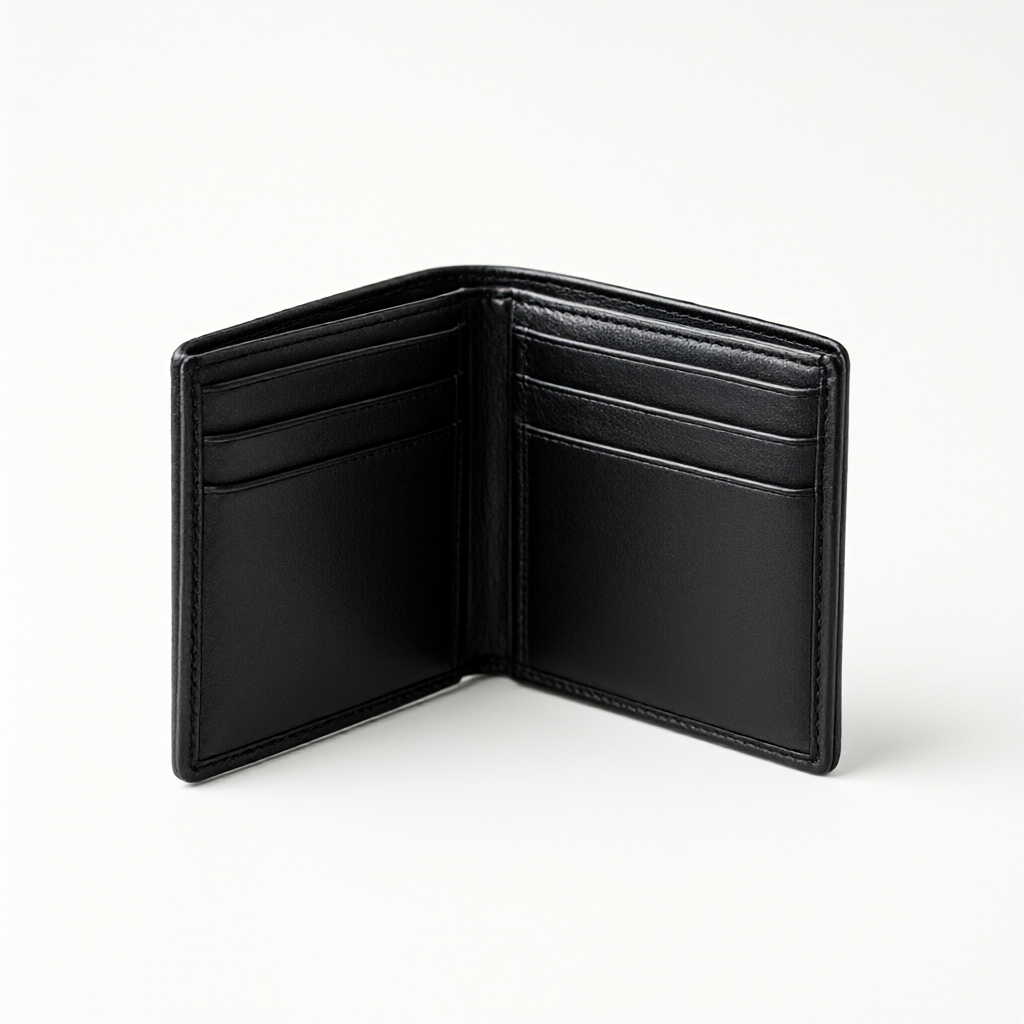
What types of leather are used in bifold wallets?
The leather market is divided into several grades, and the terminology is loosely regulated, which creates confusion for buyers who are not familiar with industry labeling. Here is how the categories break down:
Full-grain leather is the highest available grade for wallet manufacturing. It is made from the top layer of the hide and retains the natural grain pattern, including any minor imperfections. Full-grain leather develops a patina over time, becomes more supple with use, and generally outlasts lower grades. For a classic bifold, this is the preferred material when the brand positioning targets the premium segment.
Top-grain leather has been sanded or buffed to remove surface imperfections, then often treated with a finish or pigment. It is more uniform in appearance than full-grain and is slightly more forgiving in terms of consistency across large production runs. Many mid-tier private label wallets use top-grain leather, which offers a balance between cost and longevity.
Genuine leather is a broad term that refers to real leather but does not indicate a specific grade. In practice, “genuine leather” products often use split leather or lower-grade remnants that have been coated or embossed. For B2B buyers, genuine leather is acceptable for entry-level or promotional products but should not be marketed as a premium feature.
Bonded leather is composed of leather fibers bonded together with polyurethane or latex binders. It is the lowest-cost option and lacks the durability and aging characteristics of solid leather. Bonded leather wallets tend to crack or peel within months of regular use.
Synthetic leather (PU, vegan leather) is a polymer-based material that mimics the look and feel of leather. It is consistent in texture, resistant to water and stains, and suitable for buyers who need a cruelty-free or lower-cost alternative. Synthetic leather does not develop a patina and may degrade differently over time.
The Federal Trade Commission maintains guidelines on leather product labeling to prevent deceptive claims, which is particularly relevant when marketing to consumers who rely on terms like “genuine leather” or “real leather” on product packaging. For more detail on material grading and procurement specs, see our leather wallet guide.
What is the best leather for a bifold wallet?
The answer depends on the target price tier and brand positioning. For a wallet intended to last five or more years with visible aging, full-grain leather is the industry standard. For a mid-range consumer product or a promotional item where cost control is critical, top-grain or even high-quality synthetic leather is more appropriate. Bonded leather should generally be avoided for any product that will carry a brand reputation.
How do you break in a leather bifold wallet?
Leather, particularly full-grain and vegetable-tanned variants, stiffens when new and softens with repeated flexing. A typical break-in period ranges from two to six weeks of daily carry, during which the leather conforms to the user’s pockets and cards settle into their slots. Buyers should note that this process varies by tanning method — chrome-tanned leather is softer out of the box, while vegetable-tanned leather requires more time to mellow.
Are RFID-blocking wallets worth it?
RFID-blocking features incorporate a thin metallic mesh or film into the wallet’s lining to create a Faraday cage effect that prevents unauthorized scanning of contactless payment cards. From a procurement standpoint, the feature is easy to add at the manufacturing stage and carries minimal cost impact. However, the effectiveness of RFID blocking in consumer wallets remains debated — some studies suggest that the shielding is insufficient in real-world conditions, and certain jurisdictions have expressed skepticism toward RFID-blocking marketing claims. B2B buyers should present the feature as a value-add for risk-averse consumers rather than a scientifically proven security guarantee.
What are the key specifications of a leather bifold wallet?
When evaluating a bifold wallet for sourcing, the following measurements and features are the ones that matter most:
- Dimensions: Typical closed size ranges from 4.0 to 4.5 inches in width and 3.0 to 3.5 inches in height, with thickness between 0.4 and 0.8 inches depending on card load.
- Weight: Empty weight usually falls between 50 and 90 grams for leather models, with full-grain leather running slightly heavier than synthetic alternatives.
- Card capacity: Most bifold wallets accommodate 4 to 12 cards, depending on slot configuration and leather thickness.
- Bill compartment: Single or dual gusseted compartments are standard; the ideal design accommodates folded USD bills without excessive bulge.
- Stitching: Double-stitched seams using nylon or polyester thread are preferred for durability. Single-stitched seams are common in lower-tier products.
- Lining: Interior lining may be leather, microfiber, or fabric. Lining affects card slide performance and interior abrasion resistance.
A wallet that feels too thick when loaded with eight to ten cards will create pocket bulge and discourage repeat purchase, so dimensional tolerance is a critical quality signal during sampling.
Leather Bifold Wallet: Which Specifications Matter Most?
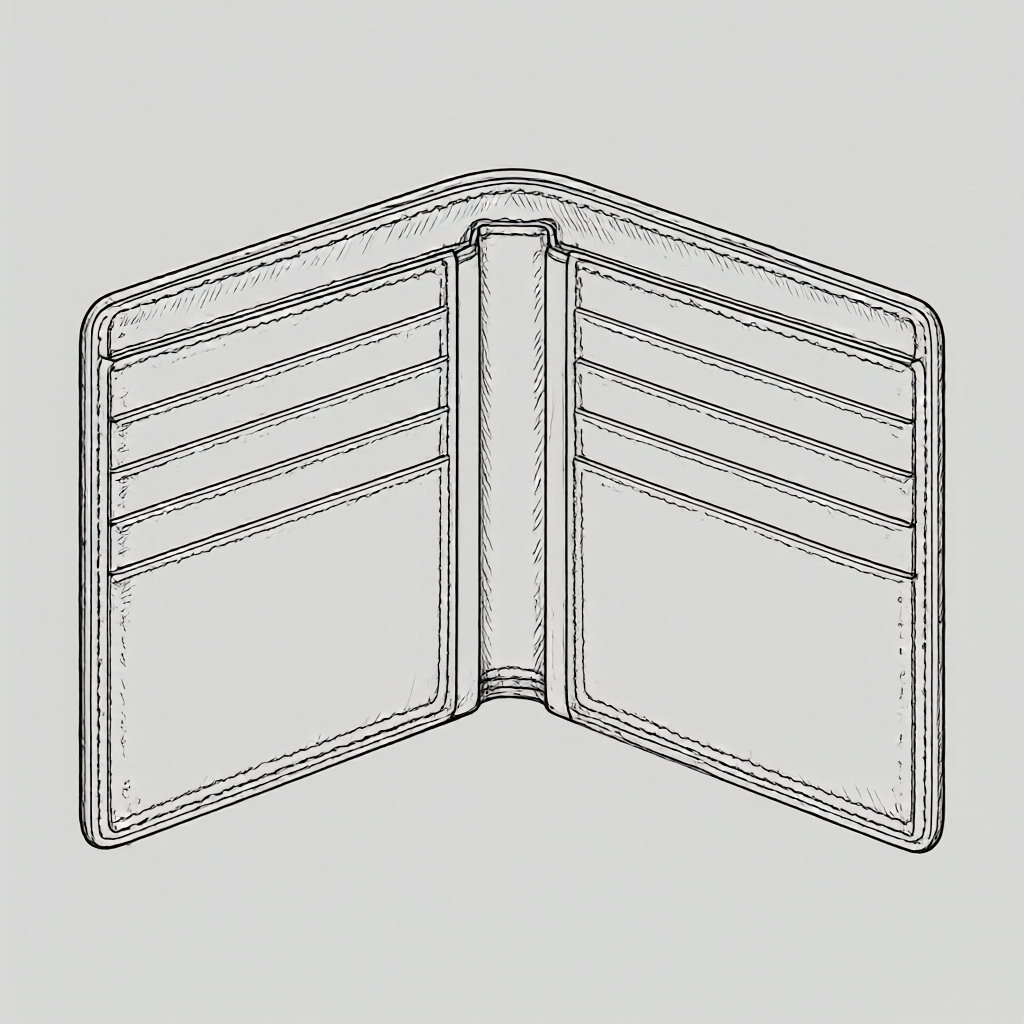
What are the key specs buyers evaluate?
The table below summarizes typical specification ranges for leather bifold wallets across different material tiers. These are industry reference values — actual specs will vary by manufacturer and design choice.
| Specification | Entry-Level (Synthetic / Bonded) | Mid-Tier (Top-Grain / Genuine) | Premium (Full-Grain) |
|---|---|---|---|
| Width (closed) | 4.0–4.25″ | 4.25–4.5″ | 4.25–4.5″ |
| Height (closed) | 3.0–3.25″ | 3.25–3.5″ | 3.25–3.5″ |
| Thickness (empty) | 0.4–0.5″ | 0.5–0.6″ | 0.5–0.7″ |
| Weight | 45–65 g | 60–80 g | 75–95 g |
| Card capacity | 4–6 | 6–10 | 6–10 |
| Stitching | Single | Double | Double |
| Lining | Fabric / PU | Microfiber / Leather | Leather |
| RFID-blocking | Optional add-on | Optional add-on | Often included |
| Estimated lifespan | 1–2 years | 3–5 years | 5+ years |
For more on how these specifications compare across wallet categories, including minimalist designs and card holders, refer to our EDC wallets and minimalist wallet manufacturing guide.
Leather Bifold Wallet: Which Standards and Certifications Apply?
What quality standards apply to leather bifold wallets?
There is no single global certification that covers leather wallet manufacturing, but several frameworks and standards are commonly referenced during B2B sourcing:
FTC Leather Labeling Rules — In the United States, the Federal Trade Commission enforces guidelines that require accurate disclosure of leather composition on product labels and packaging. Terms such as “genuine leather” and “real leather” must reflect the actual material content, and misleading claims can result in enforcement action. Buyers should ensure their suppliers comply with FTC labeling requirements when targeting the U.S. market.
ISO 9001 — While not specific to leather goods, ISO 9001 certification indicates that a manufacturer operates under a documented quality management system covering processes such as incoming material inspection, in-process quality checks, and finished goods verification. This is a useful benchmark when evaluating factory capability.
REACH and RoHS Compliance — These European Union regulations govern the use of hazardous substances in manufactured goods. Leather tanning processes can involve chromium salts and other chemicals, so compliance with REACH ensures that restricted substances are not present above permitted thresholds. RoHS compliance is more relevant to wallets that include metal components such as snaps, RFID-blocking films, or magnetic closures.
BSCI (Business Social Compliance Initiative) — A BSCI audit verifies that a factory meets baseline standards for labor practices, workplace safety, and ethical sourcing. For brands that prioritize supply chain transparency, BSCI certification is often a prerequisite in supplier evaluation.
When sourcing from manufacturers outside the EU or US, additional customs and import requirements may apply, including country-of-origin labeling and material composition documentation.
Leather Bifold Wallet: What Else Should Buyers Consider?
What customization and private-label options are available?
A leather bifold wallet is one of the most customizable wallet formats available for B2B buyers. Common customization touchpoints include:
- Leather type and color: Buyers can specify full-grain, top-grain, or synthetic leather in any color available from the supplier’s material library. Custom dye matching is often possible for established brands.
- Logo application: Leather wallets support several branding methods, including embossing (debossing), laser engraving, foil stamping, and metal plate attachment. The method chosen affects both cost and visual prominence.
- Stitching color: Contrasting thread colors can be specified to match brand aesthetics.
- Interior layout: Card slot count, money clip inclusion, ID window placement, and coin pocket integration are all configurable during the design phase.
- Packaging: Custom retail boxes, hang tags, and poly bags can be designed to meet retail or e-commerce requirements.
Buyers who are launching a new product line should request a physical sample before committing to a production run. A sample allows verification of leather feel, stitch quality, slot fit, and overall proportions. For context on how specification decisions differ across wallet categories, our men’s minimalist wallets sourcing guide covers how material and construction choices shift between bifold, card holder, and tracker formats.
What should B2B buyers consider when sourcing leather bifold wallets?
Several factors deserve attention before placing a bulk order:
MOQ and tooling costs. Many manufacturers set a minimum order quantity between 100 and 500 units for standard designs. Custom tooling for embossing dies or specialized packaging may carry a one-time setup fee. Buyers with lower volume needs should confirm whether the manufacturer accepts low MOQ orders and whether setup costs can be amortized across repeated orders.
Sample lead time. A reliable manufacturer typically delivers a physical sample within five to ten business days. Rush sampling is available at additional cost. Sampling is the most effective way to catch issues such as leather thickness variation, slot sizing errors, or color mismatch before production begins.
Production lead time. Once the sample is approved, standard production lead times for leather wallets range from 25 to 45 days depending on order volume and customization complexity. Air freight is an option for urgent orders but increases per-unit cost.
Material sourcing transparency. Ask the manufacturer to specify the origin of the leather and the tanning method used. Vegetable-tanned leather commands a higher price but appeals to buyers seeking a natural aging profile. Chrome-tanned leather is more water-resistant and consistent but may carry regulatory documentation requirements.
Quality inspection protocol. Define what constitutes an acceptable defect rate before production starts. Common rejection criteria include misaligned stitching, uneven coloring, loose threads, and card slots that are too tight or too loose. Some buyers commission a third-party inspection before shipment.
How do we meet these standards as a manufacturer?
We have spent over a decade refining the processes that go into a leather bifold wallet, from material selection through final packing. Our facility is ISO 9001 certified and BSCI audited, and all materials we use meet REACH and RoHS requirements. We work with full-grain, top-grain, and high-grade synthetic leathers, and we can source specific hides to match your spec sheet. Customization covers leather type, color, logo method, interior layout, and packaging — and we start production samples from as few as 300 units. If you are evaluating a manufacturer for a private-label bifold wallet, we can walk you through our material library, share sample timelines, and provide a detailed quote for your target order volume.
Leather Bifold Wallet: Where Can You Verify the Data and Sources?
- leather wallet guide — topedcwallet.com
- EDC wallets and minimalist wallet manufacturing guide — topedcwallet.com
- men’s minimalist wallets sourcing guide — topedcwallet.com
- Get a Free Quote → — topedcwallet.com
From article to product
Sourcing minimalist-wallets?
Tell us the format, the quantity and the date you need stock. You get material options, MOQ and a landed-cost range back within one business day.
Keep reading
More on wallet manufacturing
Sustainable Packaging for Wallet Shipments
Packaging is where sustainability claims are cheapest to make and easiest to disprove. A…
ReadTake-Back and Recycling Programmes for Wallet Brands
A take-back programme is easy to announce and hard to run. Wallets are the…
ReadNickel Release Rules for Wallet Hardware
Nickel release is the one restriction in a wallet that is decided by the…
Read
About the author
TOPWALLET Editorial Team
TOPWALLET's editorial and engineering desk writes from bench testing at the Shenzhen (Longgang) facility: pull-force and cycle testing, 13.56 MHz shielding measurements, finish trials and factory audits, rather than supplier spec sheets. Every specification in these guides is one we write on a purchase order.
Written on the floor
This article was written by our production and QC team — the people who spec tolerances, run the finishing line and inspect every batch. Where it states a capacity, a pull force or a lead time, it comes from a measurement we made, not a supplier’s catalogue. If a number here disagrees with what your own supplier told you, tell us; several of these articles started as a correction from a buyer.
See how the factory works · Inspection process · Sourcing FAQ
Sourcing minimalist-wallets?
Tell us the format, the quantity and the date you need stock. You get material options, MOQ and a landed-cost range back within one business day.