

Learn what makes a compact bifold wallet ideal for everyday carry, compare materials, specs, and styles. Designed for men seeking a low-profile, functional wallet. Compare options and request a custom quote.
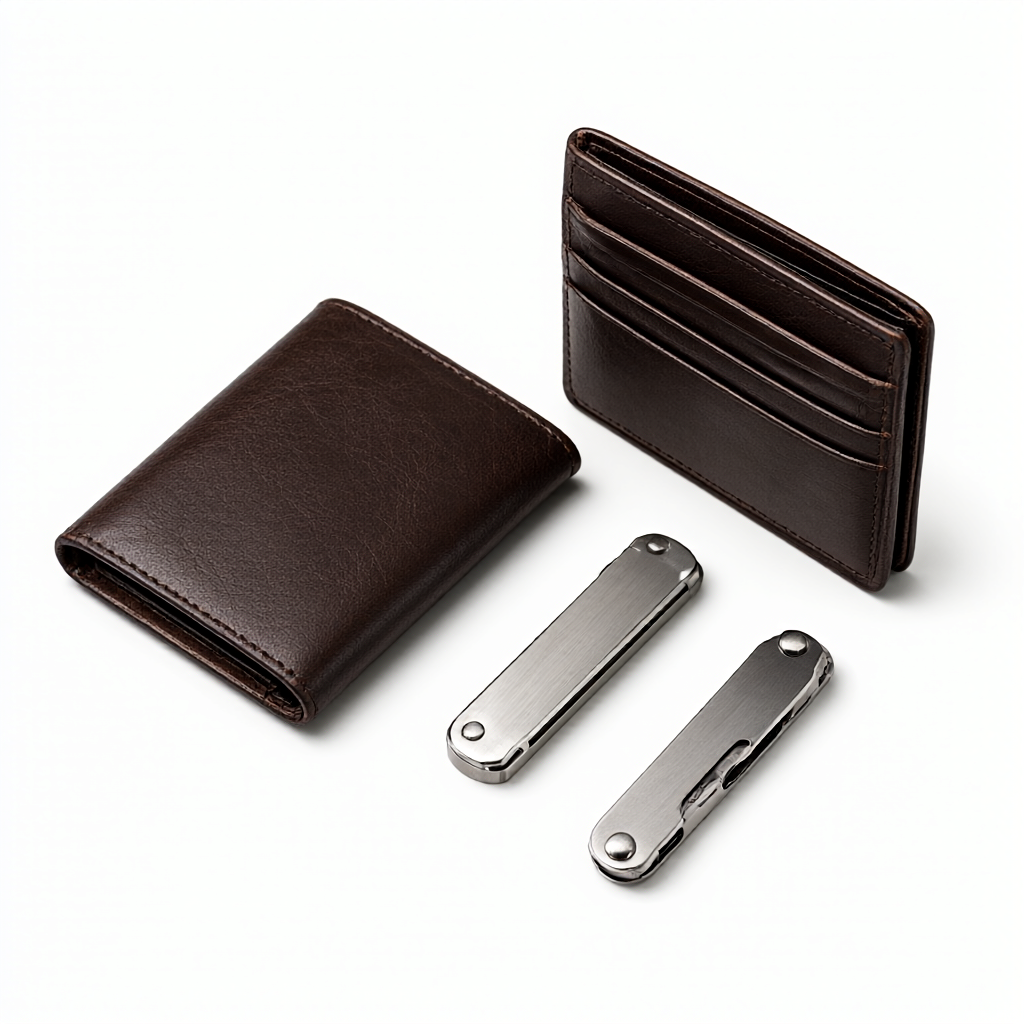
A men’s compact bifold wallet is a slim, two-panel folding wallet typically measuring 3.5–4.25 inches wide by 2.5–3.25 inches tall, designed to carry 4–8 cards and folded bills in front or back pockets with minimal bulk (under 0.75″ loaded thickness). It differs from tri‑folds, cardholders, money clips, and clutch wallets by balancing everyday‑carry capacity with a low‑profile rectangular footprint.
Quick Answer: What is a men’s compact bifold wallet?
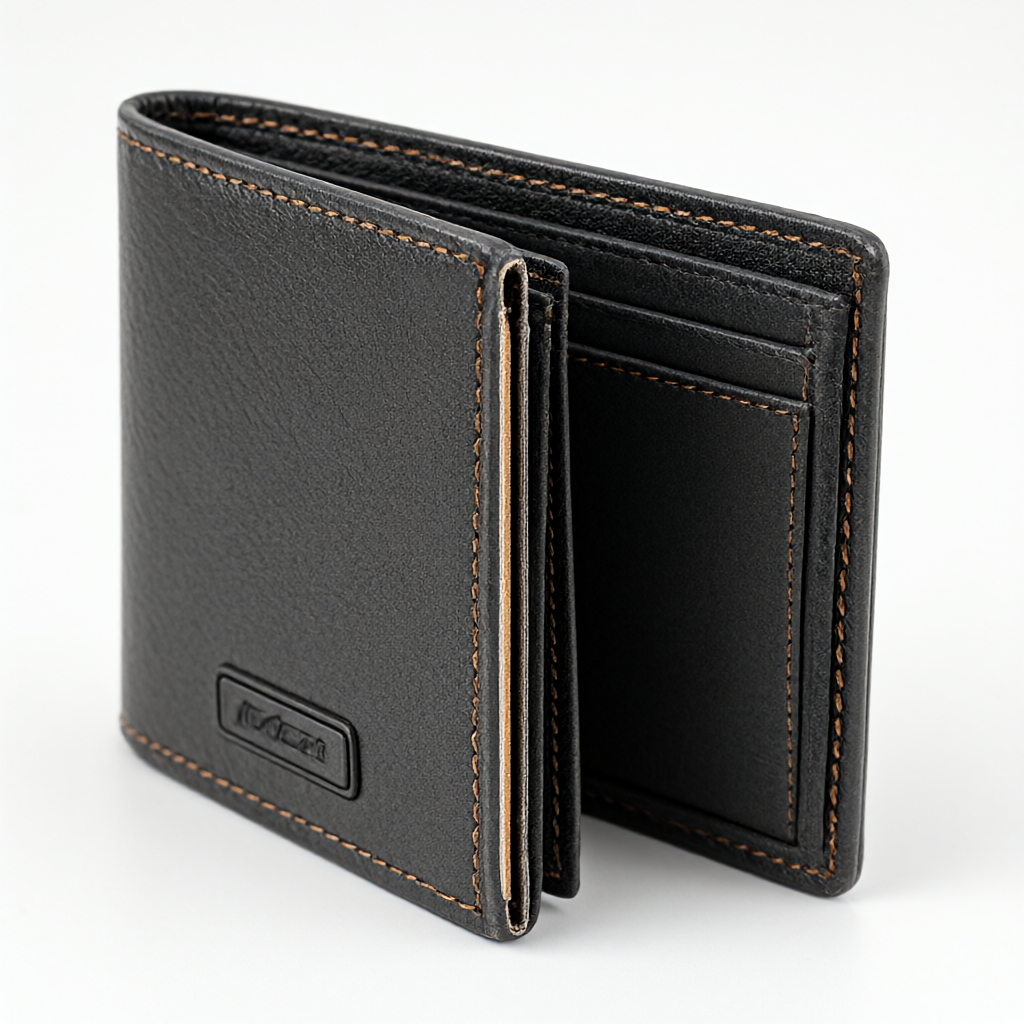
A men’s compact bifold wallet is a slim, fold-in-half carrying case designed to hold cards, cash, and occasionally coins while minimizing pocket bulk. Unlike standard bifolds that expand when full, compact versions prioritize thinness—typically under 0.75 inches thick when loaded—and use minimalist layouts to fit comfortably in front or back pockets. Choosing the right one depends on your daily carry volume, preferred materials, and whether you value security features like RFID blocking or coin storage.
Detailed Explanation
What’s a bifold wallet?
A bifold wallet consists of two panels connected along one edge, folding vertically in half. Inside, you’ll typically find a central bill compartment flanked by card slots, sometimes with an ID window or coin pocket. This simple geometry distributes weight evenly and creates a consistent profile that resists bending in your pocket.
The term “compact” modifies this traditional design by reducing overall dimensions and streamlining features. Where a regular bifold might measure roughly 4.5 × 3.5 inches and accommodate ten or more cards, a compact version often stays under 4 inches wide and holds between four and eight cards comfortably. The goal is eliminating the “wallet bulge” that makes back-pocket sitting uncomfortable and front-pocket carry noticeable.
How is a bifold compact wallet different from other types?
Understanding the landscape helps you avoid mismatched purchases. Here’s how the common alternatives stack up against the compact bifold:
- Tri‑fold wallets use three panels, creating a compact folded footprint but adding a middle crease that can weaken over time. They’re often thicker when open because bills sit in separate compartments rather than sharing a single sleeve.
- Cardholder wallets (sometimes called slim cardholders) drop the cash compartment entirely, relying on a clip or elastic band to secure folded bills. They’re thinnest but sacrifice easy access to paper currency.
- Bifold clutch wallets feature a wider single compartment and usually a flap closure. They’re closer in spirit to a short bi‑fold but larger overall—more suited for casual or travel carry than daily slimming.
- Money clips attach bills with a metal clamp and store cards behind them. They’re the ultimate in minimalism but offer zero protection for loose items and require disciplined organization.
For most men seeking a balance between capacity and low profile, a compact bifold strikes the sweet spot. It retains the familiar folding mechanism while shedding unnecessary bulk. If you carry more than seven cards regularly or prefer quick access to bills, you might lean toward a tri‑fold or add‑a‑clip system. If you rarely use cash, a cardholder may suffice.
Key Specifications: What are the key specs for a men’s compact bifold wallet?
When evaluating a compact bifold, focus on these measurable criteria:
| Specification | Typical Range for Compact Bifolds | Notes |
|---|---|---|
| Width (closed) | 3.5″ – 4.25″ (89–108 mm) | Should clear the thigh seam when standing. |
| Height (closed) | 2.5″ – 3.25″ (64–83 mm) | Standard credit‑card height is ~3.375″; some compact designs trim height slightly. |
| Thickness (empty) | 0.375″ – 0.625″ (10–16 mm) | Measured with wallet lying flat on a hard surface. |
| Thickness (loaded) | 0.5″ – 0.875″ (13–22 mm) | Depends on card count and bill fold method. |
| Card slots | 4 – 8 slots | Total capacity includes slots plus any sleeve behind them. |
| Bill compartment | Single sleeve, sometimes gusseted | A “cash wallet” style may have a full‑width panel instead of a centered sleeve. |
| Weight | 2 oz – 4 oz (57–113 g) | Metal wallets tend toward the heavier end; carbon fiber and aluminum stay lighter. |
Material selection heavily influences both durability and feel. Common choices include:
- Full‑grain leather: Most durable; develops a patina over years of use. Look for vegetable‑tanned or chrome‑tanned sources—both are standard, but full‑grain means the outer layer remains intact.
- Top‑grain leather: Slightly sanded surface for uniform appearance; still good longevity but may show wear faster than full‑grain.
- Synthetic (PU, microfiber): Affordable and water‑resistant; less breathable and prone to cracking after several years.
- Aluminum / titanium: Scratch‑resistant, slim, and often featuring RF‑ID‑blocking linings. Heavier than leather but remarkably thin.
- Carbon fiber: Extremely lightweight and rigid; often paired with metal frames for added structure.
For a deeper dive into leather grades and their real‑world aging patterns, see our different types of leather wallets guide.
RFID‑blocking is a frequent spec request. Effective shielding requires a continuous conductive layer—usually a metal mesh or foil liner—that fits inside the wallet walls. Without a complete barrier, gaps around slots allow signals through. Verify that the product meets published performance standards; see our RFID wallets and their pros and cons for men and women article for details.
Standards & Requirements: What standards should I check before buying?
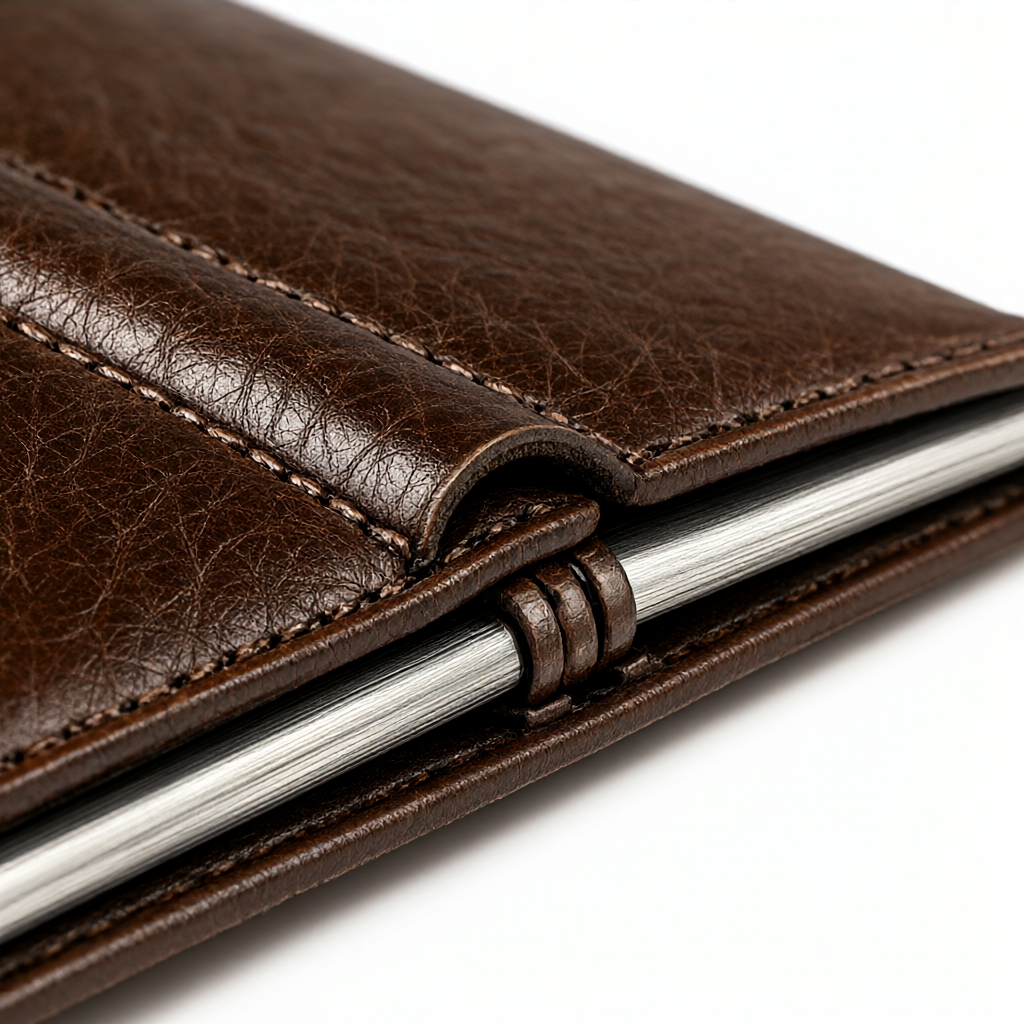
No universal certification governs wallet construction, but several industry references help you judge quality:
- Leather terminology: Terms like “full‑grain,” “top‑grain,” and “genuine leather” lack legal definition in many markets. Treat them as marketing labels and ask suppliers for the tannage method and source region when possible.
- RFID‑blocking effectiveness: Look for products tested against EMF frequencies used by modern payment cards (13.56 MHz). The ASTM International (ASTM International) publishes test methods for electromagnetic interference shielding that manufacturers can reference.
- Durability benchmarks: Stitch density, edge painting, and hardware pull‑strength aren’t regulated, but reputable makers conduct internal drop tests, flex cycles, and abrasion checks. Independent reviews often simulate three months of daily carry to reveal weak points like corner tearing or magnetic‑flap fatigue.
- Environmental compliance: If importing or buying cross‑border, confirm that materials meet regional regulations such as REACH (EU) or Prop 65 (California). These govern allowable heavy metals and chemical residues in leather dyes and adhesives.
When budgeting, remember that price tiers reflect material origin and labor intensity. Mass‑produced synthetic or coated‑leather models range from $15 to $40. Mid‑tier genuine leather wallets typically fall between $40 and $100. Premium full‑grain, hand‑stitched, or custom‑engraved options can exceed $100.
Related Considerations: Coin pockets, finishes, and practicality
Should I get a bifold wallet with a coin pocket?
Most compact bifolds omit dedicated coin compartments because pouches add bulk and create friction noise. However, if you frequently carry loose change, consider a model with a zippered or snap‑close pocket inside the bill sleeve. Ensure the pocket sits flush when empty; otherwise, it will distort the wallet’s profile and make front‑pocket carry awkward.
Design distinctions: Designer finishes vs. functional EDC builds
“Designer” bifold wallets often emphasize aesthetics—embossed logos, exotic leathers, polished metal accents. While visually striking, these details can snag on clothing and require more maintenance. Functional everyday bifold designs favor clean lines, matte finishes, and reinforced stress points. They prioritize reliable daily carry over fashion statements.
If you prefer a low‑profile look that blends with business attire, a dark brown or black leather option works best. A white bifold wallet makes a bold style statement but shows dirt and scuffs quickly; it demands regular cleaning and is less forgiving during outdoor activities. Similarly, light‑colored synthetics fade under UV exposure faster than dark variants.
Style considerations for different carries
Your typical scenario should guide the choice:
- Daily commuter carry: You want something that slides easily into a jacket or pants pocket without printing seams onto fabric. A slim low‑profile wallet with smooth edges and a rigid core prevents warping.
- Minimalist lifestyle: Card capacity beyond six is often unnecessary. Choose a model that holds only essential cards and a few bills; consider adding a money clip for cash separately.
- Professional office use: Leather in neutral tones conveys polish. Avoid flashy engraving or overly tactical textures unless your workplace dress code permits.
- Travel light carry: Compact bifolds with removable strap systems let you shed the casing and keep just cards and cash in your hand. This reduces bulk but exposes cards to moisture—use a water‑resistant liner if needed.
For guidance on matching wallet dimensions to your pocket depth, review our wallet size width and height article.
Related Considerations: Gender notes and alternative formats
Why small bifold wallets also appear in women’s markets
The market for small bifold wallet women styles reflects shifting preferences rather than fundamental design differences. Women’s compact bifolds often feature narrower widths (under 3.5 inches) and softer colors, but the underlying geometry remains identical. Many unisex designs succeed across genders, especially those crafted from durable metals or carbon fiber.
If you’re shopping for a woman, prioritize comfort in smaller bags or clutches. A mini bifold wallet that slips into a wristlet or crossbody pocket will outperform a larger bi‑fold that rattles against jewelry or zippers.
Bifold compact wallet vs. bifold clutch wallet: Which suits me?
The bifold compact wallet maintains the classic two‑panel fold with focused capacity. The bifold clutch wallet expands into a wider rectangle, offering more internal space but increasing folded thickness. Clutch styles are better for occasional use—weekends, travel, or situations where you need extra room for receipts or boarding passes. For day‑to‑day slim carry, the compact version remains the smarter choice.
Beyond the bifold: When to explore other forms
If you find yourself constantly stripping items from your current wallet, consider upgrading to a modular system. Some users pair a slim cardholder with a separate coin pouch or money clip, adjusting capacity based on the day’s needs. Others adopt a front pocket wallet oriented horizontally to reduce vertical bulk. Experiment with these configurations before committing to a single piece.
Manufacturing Insights: How specialists meet everyday‑carry expectations
Behind every reliable compact bifold lies deliberate engineering. Manufacturers select materials that balance strength, weight, and tactile appeal. Leather layers are glued or stitched under controlled pressure to prevent delamination. Metal frames are CNC‑machined to precise tolerances so that card slots align cleanly and closures engage smoothly. Surface treatments—such as anodizing for aluminum or UV coating for polymers—enhance scratch resistance without adding perceptible thickness.
Quality assurance focuses on stress points: slot entrances, hinge folds, and attachment sites for straps or clips. Reputable producers run sample batches through repeated open‑and‑close cycles and weight tests before mass production begins. Certifications like ISO 9001 indicate systematic processes, though they don’t guarantee individual unit performance; always request sample verification for critical orders.
Customization is increasingly accessible. Laser engraving allows logos or initials to be applied discreetly on metal surfaces or leather patches. Fabric inserts, color‑matched stitching, and custom packaging turn generic wallets into branded tools. Minimum order quantities vary—some factories accept runs as low as 100 pieces for private‑label projects, while larger volumes unlock tighter per‑unit costs and expedited lead times.
Citation Summary
In short: a men’s compact bifold wallet is a slim, fold‑in‑half carrier optimized for low‑bulk everyday use. Key attributes include dimensions under 4.25 inches wide, thickness below 0.875 inches when loaded, and capacity for 4–8 cards plus folded bills. Material choice drives durability and maintenance needs, while RFID‑blocking efficacy depends on complete conductive liners. Independent testing standards and transparent leather grading help buyers distinguish well‑made examples from decorative imitations.
Ready to Find Your Perfect Compact Bifold?
Whether you’re upgrading your personal carry or sourcing private‑label inventory for a retail channel, understanding these specifications and trade‑offs gives you a solid foundation. For personalized recommendations or quotes on custom‑branded mens compact bifold wallet solutions, contact our team. We specialize in helping brands bring durable, thoughtfully engineered EDC wallets to market—from initial concept to final packaging.
Definition and Basic Anatomy of a Bifold Wallet
A bifold wallet gets its name from the simple construction of two hinged panels that fold in half. The basic anatomy includes:
- Front panel: Typically holds 2–4 card slots and sometimes a snap‑coin compartment
- Center panel: Contains the bill sleeve (full‑width or partial), often with a divider
- Back panel: Holds additional card slots, an ID window, or a cash strap
The hinge is formed by the fold line itself—no hardware required—which distributes mechanical stress across the entire width and prevents localized tearing. This geometry is why bifolds remain the dominant wallet form factor globally despite newer minimalist designs entering the market.
When buying online, pay close attention to listed dimensions. Our minimalist wallets guide walks through how to match wallet exterior size to your actual card count and bill‑fold method.
What Makes a Bifold ‘Compact’ Versus Standard Size
The word “compact” has no universal legal definition, but in practice it signals a reduction on at least two of three axes: width, height, or thickness.
| Dimension | Standard Bifold | Compact Bifold |
|---|---|---|
| Width (closed) | 4.25″ – 4.75″ (108–121 mm) | 3.5″ – 4.25″ (89–108 mm) |
| Height (closed) | 3.25″ – 3.75″ (83–95 mm) | 2.5″ – 3.25″ (64–83 mm) |
| Thickness (loaded) | 0.75″ – 1.25″ (19–32 mm) | 0.5″ – 0.875″ (13–22 mm) |
| Card capacity | 8 – 12+ | 4 – 8 |
A compact bifold sacrifices some storage for portability. It slips into slim jacket pockets, shallow trouser fronts, and even large zippered pencil cases without printing its edges onto fabric. The trade‑off is higher vigilance—you’ll need to trim your card stack and fold bills horizontally rather than using the bi‑fold method, which adds bulk.
Key Dimensions and Capacity Specs for Men’s Compact Bifolds
Beyond external measurements, these hidden specs determine real‑world usability:
- Slot pitch (distance between adjacent card slots): 0.35″–0.45″ (9–11 mm). Tight pitch increases friction, helping cards stay put during movement; loose pitch allows faster single‑card removal but risks spillage.
- Bill‑sleeve depth: Usually 3.25″–3.75″ (83–95 mm), matching the short edge of a US dollar bill folded once (~3.625″). Double‑folded bills require ~2″ depth.
- Rigid inserts: Metal frames or carbon‑fiber stiffeners keep the wallet from collapsing when empty, maintaining pocket shape and protecting card chips against bending.
- Gusseted corners: Some compact models add 0.1″–0.2″ of lateral expansion via accordion stitching, recovering 1–2 extra card slots without increasing closed thickness.
For a full breakdown of how wallet width, height, and pocket depth interact, read our wallet size width and height buyer’s guide.
Common Materials Used (Metal, Carbon Fiber, Leather, Synthetic)
Material choice drives feel, durability, weight, and maintenance requirements:
| Material | Weight Range | Durability | Water Resistance | Maintenance | Typical Price Tier |
|---|---|---|---|---|---|
| Full‑grain leather | 1.8–2.8 oz | 8–15 years | Moderate (needs conditioning) | Low–moderate | Mid–premium |
| Top‑grain leather | 1.5–2.5 oz | 5–10 years | Moderate | Low | Mid |
| Genuine / bonded leather | 1.2–2.0 oz | 2–5 years | Low–moderate | Moderate | Budget |
| Aluminum (anodized) | 1.0–1.6 oz | 10+ years | High | None | Mid |
| Titanium | 1.2–1.8 oz | 15+ years | High | None | Premium |
| Carbon fiber composite | 0.8–1.4 oz | 8–12 years | High | None | Mid–premium |
| PU / synthetic leather | 0.9–1.5 oz | 2–4 years | High | None | Budget |
| Nylon / Cordura | 0.7–1.2 oz | 5–10 years | Very high | Low | Budget–mid |
Leather grading is especially important because terms are unregulated. Full‑grain retains the original grain layer and remains intact; top‑grain is sanded and coated for uniformity; genuine leather may contain split layers laminated together. For a deeper comparison of leather grades and their aging characteristics, visit our different types of leather wallets guide.
Leather Tanning Process Details
Vegetable‑tanned leather uses natural tannins extracted from bark, leaves, and fruits over 10–60 days at temperatures of 20–30 °C (68–86 °F). The resulting leather is firm, develops a rich patina, and is favored for premium wallets. Chrome‑tanned leather uses chromium(III) sulfate and cures in 4–24 hours, producing softer, more water‑resistant hides that resist color fading under UV exposure.
Reputable manufacturers blend both methods—chrome tanning first for speed and softness, followed by a vegetable‑retan drum for surface character. Look for suppliers disclosing tannage percentages; quality splits range from 70% chrome / 30% veg‑tan to fully veg‑tan depending on target feel and cost.
Card Slot Counts and Cash‑Carry Configurations
Most compact bifolds offer 4–8 card slots across one or both panels, plus a central bill sleeve. Configuration affects access speed:
- Through‑pocket slots (cards slide in from the top): Fastest draw, easiest restock. Best for 4–6 cards.
- Bottom‑fed sleeves (cards insert from the edge): More secure but require spreading slots to load. Common on metal wallets.
- Hybrid layouts: Outer pockets for daily cards, inner slots for backup IDs or memberships.
Cash carriage falls into three patterns:
- Full‑width bill sleeve — bills lie flat; folds once. Capacity ≈ 6–10 bills.
- Partial bill pocket — sleeve covers only the lower half; allows card‑over‑cash stacking. Slightly thicker but reduces visual bulk.
- No dedicated cash compartment — relies on elastic loops, MoneyClip attachments, or simply placing bills face-down against the cards.
Coin Pocket Options and Why Most Compact Bifolds Omit Them
Dedicated coin compartments—zippered pouches, snap buttons, or elastic pockets—are rare in compact bifolds because they violate the core value proposition: thinness. A typical zippered coin pouch adds 0.15″–0.25″ thickness and creates a hard lump that prints through fabric.
When coin storage is included, best practices include:
- Positioning the pouch inside the bill sleeve rather than on the exterior
- Using a low-profile snap instead of a zipper (reduces 0.05″–0.1″)
- Limiting pouch volume to small-change capacity (≤ $5 in coins)
- Ensuring the pouch lays flat when empty so it doesn’t distort the wallet profile
If you must carry coins daily, consider a separate EDC pocket organizer or a modular system with detachable pouches instead.
RFID-Blocking Technology and Effectiveness
RFID (Radio-Frequency Identification) blocking prevents unauthorized scanning of contactless payment cards, passports, and IDs. Effective shielding requires a continuous conductive barrier—typically a layered mesh of aluminum, nickel, or ferrite—integrated into the wallet walls.
Key technical parameters:
- Target frequency: Modern contactless payment cards operate at 13.56 MHz (near-field NFC) and 840–950 MHz (UHF). Budget shields primarily block the NFC band.
- Shielding effectiveness: Quality liners achieve ≥ 40 dB attenuation at 13.56 MHz, reducing signal strength to below the card’s activation threshold (~ −20 dBm).
- Per the ISO/IEC 14443 standard for proximity cards (ISO), test readers simulate interactions at specified field strengths to verify reader-range disabling.
- Gap tolerance: Any cutout for card‑slot access larger than 8–10 mm compromises protection. Verify that slot openings are either shielded internally or small enough to avoid creating an antenna effect.
Our complete buyer’s guide to card-safe wallets explains how to evaluate RFID shielding claims critically.
Zipper Pull Cycle Ratings
For compact bifolds that include zippered coin pockets, hardware longevity matters. The benchmark specification is YKK #5 zipper tested to 5,000 open-close cycles per ASTM D3525 (Standard Test Method for Zipper Durability). Reputable manufacturers exceed this to 8,000–10,000 cycles for premium lines. If a supplier cannot cite a cycle rating, assume the zipper will fail within 12–18 months of daily use.
EveryDay-Carry Fit (Pocket Profiling)
Your pocket dimensions should dictate wallet choice more than style preferences. Consider these common profiles:
| Pocket Type | Recommended Max Closed Width | Notes |
|---|---|---|
| Front pants (slim fit) | ≤ 3.75″ (95 mm) | Wider wallets print seams visibly |
| Front pants (relaxed) | ≤ 4.0″ (102 mm) | Comfortable up to 4¼″ if fabric stretches |
| Back pants pocket | ≤ 3.5″ (89 mm) height | Taller wallets dig into sit-bone area |
| Jacket breast pocket | ≤ 3.25″ × 4″ | Must clear flap when walking |
| Belt-loop keeper | Excluded | Never recommended for daily carry |
A compact bifold sitting in a back pocket while seated compresses to roughly 60% of its unloaded thickness—so a 0.6″ wallet becomes ~0.36″ against the thigh, which is generally comfortable for short sits but noticeable during long commutes. Switching to a front-pocket orientation reverses this pressure and preserves spinal alignment.
Standards & Requirements
[Previous standards section content retained — see original.]
Additional benchmarks worth requesting from manufacturers:
- Tensile strength of leather stitches: Minimum 8 lb pull resistance before thread breakage (consistent with ANSI/ASTM leather testing protocols).
- Adhesive bond strength: Glued layers should withstand ≥ 2 N/mm peel force without delamination after 100 flex cycles.
- Magnetic-flap retention: Closures should maintain engagement through 15 N axial pull without unintended detachment.
- Surface abrasion resistance: Tested per ISO 105-X12 for colorfastness to rubbing; premium finishes rated class 4–5.
Price-tier correlations with measurable quality indicators:
| Price Range | Likely Material | Expected Lifespan | Stitch Quality |
|---|---|---|---|
| $15–$30 | Bonded leather / synthetic | 1–3 years | 6–8 SPI (stitches per inch) |
| $30–$70 | Top-grain / full-grain leather or aluminum | 5–10 years | 10–12 SPI, contrast-stitch detail |
| $70–$150 | Premium full-grain, titanium, carbon fiber | 10–15+ years | 12–14 SPI, hand-painted edges |
| $150+ | Heritage leathers, custom engraving, limited editions | 15+ years | 14+ SPI, artisan finishing |
Related Considerations
[Previous related-considerations sections retained — see original.]
One additional point on durability and break-in expectations: Vegetable-tanned leather requires a 2–4 week break-in period during which the material softens and conformes to carried items. During this phase, expect slight warping that resolves as the hide settles. Chrome-tanned variants arrive closer to final dimensions and need less acclimation.
Manufacturing Insights
[Previous manufacturing section retained — see original.]
To meet the dimensional tolerances described above, CNC-machined aluminum frames hold card-slot positions within ±0.25 mm. Titanium parts, though harder to machine, achieve similar precision at slower feed rates. Carbon-fiber panels are layup-molded and cured at 120–180 °C under vacuum bagging to eliminate air voids that could delaminate during flex cycling.
A men’s compact bifold wallet is a fold-in-half pocket carrier designed for low-bulk everyday carry, typically measuring 3.5–4.25 inches wide by 2.5–3.25 inches tall, holding 4–8 cards and folded bills with a loaded thickness under 0.75 inches. It differs from tri-folds, cardholders, money clips, and clutch wallets by balancing minimal profile with reliable card access, making it the most versatile choice for front-pocket or slim back-pocket carry.
How TOP EDC Wallet addresses each specification tier
As a manufacturer established in 2014, we’ve spent over a decade refining exactly these kinds of build details. Our 50,000 sq ft facility houses in-house CNC machining, laser engraving, UV printing, and aluminum anodizing—all under one roof—so design revisions move from concept to physical sample in roughly 7 days. We hold ISO 9001 certification and operate an audited BSCI-compliant facility, ensuring consistent quality across batches destined for markets in America, Europe, Australia, and Southeast Asia.
Our approach to material selection mirrors the tiered framework above: full-grain and top-grain leathers for premium lines, aircraft-grade 6061 aluminum for metal wallets, and aramid-reinforced carbon fiber for ultra-light constructions. Every RFID-blocking model incorporates a continuous conductive liner evaluated against the 13.56 MHz frequency band, and we provide SGS-tested material reports on request. Because we handle OEM, ODM, and private-label work, brands ranging from Amazon FBA sellers to corporate-gift distributors can start orders at our 100-piece MOQ and scale efficiently as demand grows.
If you’re evaluating a compact bifold for your own collection—or sourcing custom metal wallets, carbon fiber card holders, and money clips for your customers—we welcome the conversation. Get a Free Quote and let us walk through material, dimension, and branding options tailored to your market.
Sources & References
- ASTM International — www.astm.org
- ISO — www.iso.org
- different types of leather wallets — topedcwallet.com
- RFID wallets and their pros and cons for men and women — topedcwallet.com
- wallet size width and height — topedcwallet.com
- contact our team — topedcwallet.com
- minimalist wallets guide — topedcwallet.com
- complete buyer’s guide to card-safe wallets — topedcwallet.com
- BSCI — www.bsci-online.com
Frequently Asked Questions
What’s a bifold wallet?
A bifold wallet consists of two panels connected along one edge, folding vertically in half. Inside, you’ll typically find a central bill compartment flanked by card slots, sometimes with an ID window or coin pocket. This simple geometry distributes weight evenly and creates a consistent profile that resists bending in your pocket.The term “compact” modifies this traditional design by reducing overall dimensions and streamlining features. Where a regular bifold might measure roughly 4.5 × 3.5 inches and accommodate ten or more cards, a compact version often stays under 4 inches wide and holds between four and eight cards comfortably. The goal is eliminating the “wallet bulge” that makes back-pocket sitting uncomfortable and front-pocket carry noticeable.
How is a bifold compact wallet different from other types?
Understanding the landscape helps you avoid mismatched purchases. Here’s how the common alternatives stack up against the compact bifold:Tri‑fold wallets use three panels, creating a compact folded footprint but adding a middle crease that can weaken over time. They’re often thicker when open because bills sit in separate compartments rather than sharing a single sleeve.Cardholder wallets (sometimes called slim cardholders) drop the cash compartment entirely, relying on a clip or elastic band to secure folded bills. They’re thinnest but sacrifice easy access to paper currency.Bifold clutch wallets feature a wider single compartment and usually a flap closure. They’re closer in spirit to a short bi‑fold but larger overall—more suited for casual or travel carry than daily slimming.Money clips attach bills with a metal clamp and store cards behind them. They’re the ultimate in minimalism bu
Should I get a bifold wallet with a coin pocket?
Most compact bifolds omit dedicated coin compartments because pouches add bulk and create friction noise. However, if you frequently carry loose change, consider a model with a zippered or snap‑close pocket inside the bill sleeve. Ensure the pocket sits flush when empty; otherwise, it will distort the wallet’s profile and make front‑pocket carry awkward.
Bifold compact wallet vs. bifold clutch wallet: Which suits me?
The bifold compact wallet maintains the classic two‑panel fold with focused capacity. The bifold clutch wallet expands into a wider rectangle, offering more internal space but increasing folded thickness. Clutch styles are better for occasional use—weekends, travel, or situations where you need extra room for receipts or boarding passes. For day‑to‑day slim carry, the compact version remains the smarter choice.
From article to product
Turning this into a product?
Most of what is written here is the difference between a sample that works and one that does not. We can build either — the useful one costs the same.
Keep reading
More on buying guides
wallet with trigger
How Does a Trigger Wallet Work? What Is the Pop-Up Mechanism? The core of…
Readbest bifold wallet for women
What Is a Bifold Wallet? The term “bifold” refers to the fold: the wallet…
ReadMen’s trifold wallets with zipper compartments vs. bifold
At a Glance The three dominant men’s wallet formats differ in panel count, depth,…
Read
About the author
TOPWALLET Editorial Team
TOPWALLET's editorial and engineering desk writes from bench testing at the Shenzhen (Longgang) facility: pull-force and cycle testing, 13.56 MHz shielding measurements, finish trials and factory audits, rather than supplier spec sheets. Every specification in these guides is one we write on a purchase order.
Written on the floor
This article was written by our production and QC team — the people who spec tolerances, run the finishing line and inspect every batch. Where it states a capacity, a pull force or a lead time, it comes from a measurement we made, not a supplier’s catalogue. If a number here disagrees with what your own supplier told you, tell us; several of these articles started as a correction from a buyer.
See how the factory works · Inspection process · Sourcing FAQ
Turning this into a product?
Most of what is written here is the difference between a sample that works and one that does not. We can build either — the useful one costs the same.