

The best coin wallet for B2B sourcing combines a secure rotating-dial or tray-style coin compartment, CNC-machined aluminum or titanium construction, verified RFID-blocking performance (tested at 13.56 MHz), and anodized or laser-engraved surface finishing — all delivered by a manufacturer that can support low MOQs, fast sampling, and documented compliance. Buyers should evaluate material grade, wall thickness, alloy certification, compliance documentation, and in-house capability before committing to bulk orders.
Coin Wallet For B2B Sourcing: What Is the Quick Answer?
The best coin wallet for bulk procurement is a compact, CNC-machined aluminum or titanium model with a secure dedicated coin compartment — whether a rotating dial, snap-top tray, or zippered pouch — combined with RFID-blocking capability and finished through anodizing or laser engraving. For private-label and Amazon FBA programs, the smartest choice comes from an OEM manufacturer that supports low MOQs, fast sample turnaround, and verifiable compliance testing. Material choice, build process, and the supplier’s ability to meet your specific certification and packaging needs will determine whether a bulk order performs well in market and passes inspection.
Coin Wallet For B2B Sourcing: How Does It Work in Detail?
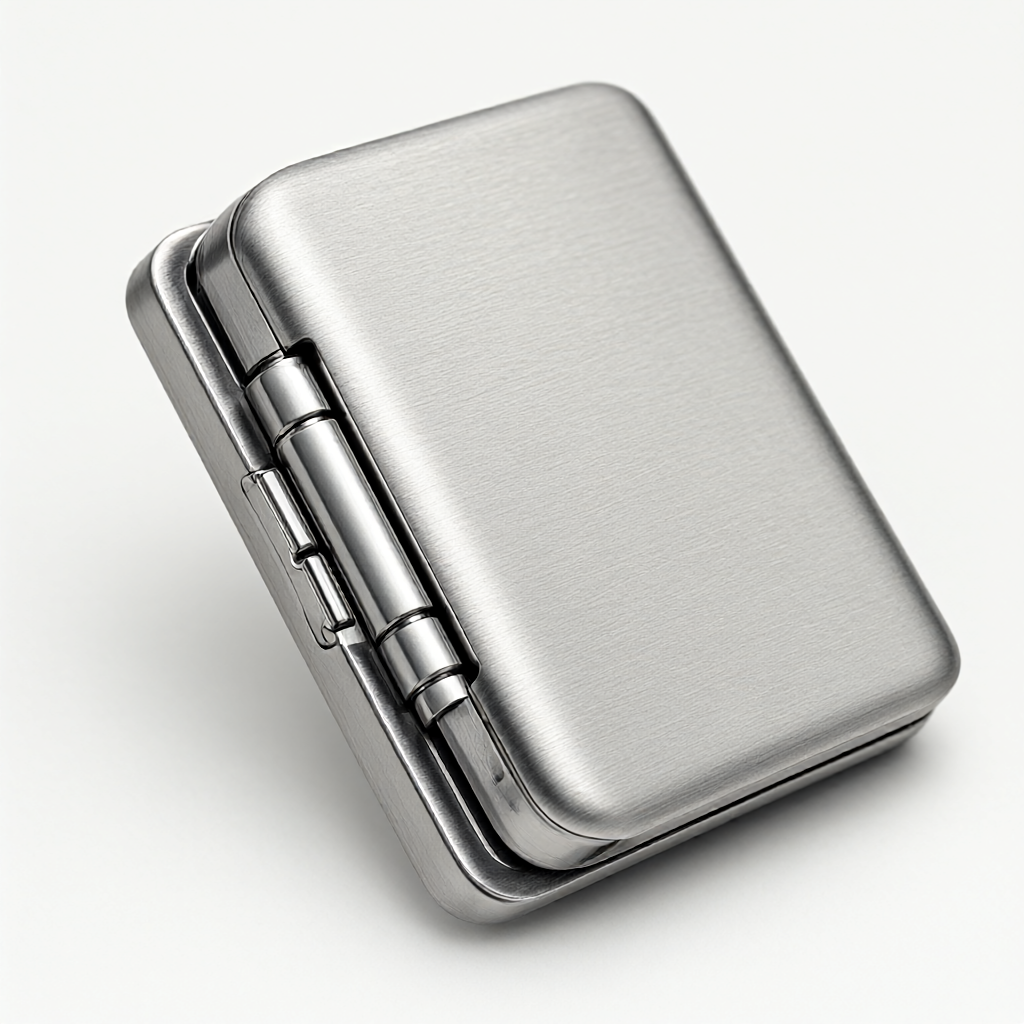
How does a coin wallet differ from a standard minimalist wallet?
A traditional minimalist wallet focuses on card storage and thin cash retention. A coin wallet adds a dedicated storage mechanism for loose change — most commonly a rotating dial with concentric rings, a fold-over tray, or a small zippered compartment integrated into the body. This changes the structural calculation entirely. The coin mechanism adds volume and requires a robust closing system, so the outer shell needs to be thicker and more rigid than a card-only design.
This is why coin holders tend to be built from metals or composites rather than leather or nylon. The internal spinning or folding components need to survive repeated use without flexing open or wearing through. An aluminum body with CNC-machined tolerances handles this far better than a stamped steel or polymer version, which is why the most reliable travel coin holder options you will encounter in the B2B space lean toward machined metal construction.
Why does RFID-blocking matter in a coin wallet?
RFID-blocking is relevant here because most modern coin wallets hold more than coins — they also hold contactless cards, transit passes, and employee badges. When those cards share a pocket with a metal body, the question becomes whether the blocking layer is built into the product itself or added as a separate insert. A well-designed RFID-blocking coin wallet integrates the shielding material during assembly, typically as a thin foil or mesh laminated between the outer shell and inner card slots. This protects against both skimming and accidental data reads from nearby readers.
For buyers comparing options, the key distinction is whether the blocking is continuous across all card slots or only partial. A partial layer leaves some cards exposed. It is worth requesting a third-party test report rather than relying on supplier claims alone.
How do material choices affect coin wallet durability and weight?
The material you select determines how the wallet ages, how heavy it feels, and what finishing options are available.
CNC-machined aluminum is the most common B2B choice. It offers strong durability at a moderate weight, accepts anodized color finishes, and responds well to laser engraving for custom logos. Wall thickness typically ranges from 1.5 mm to 3 mm depending on the design complexity. An anodized finish adds surface hardness and scratch resistance compared to bare aluminum.
Titanium provides superior strength and a lighter feel per unit thickness than aluminum, making it ideal for premium-tier products. It resists corrosion naturally and accepts direct laser engraving without additional coating. The trade-off is higher raw material cost and longer machining time, which shows up in unit pricing at volume.
Carbon fiber card holders with coin compartments combine low weight with high rigidity. The material is lightweight and visually distinctive but limited in color options and more difficult to laser engrave for branding compared to metal. It works best for buyers prioritizing aesthetics and weight reduction over color customization.
Leather coin pockets exist in a different segment entirely — they rely on a traditional pouch or strap closure and are better suited to heritage or lifestyle branding. They lack the precision engineering and longevity expected from metal or composite coin wallets.
Choosing between these materials depends on your target market price point and the finish quality you need to deliver. See our full breakdown of minimalist wallet materials and features for B2B procurement to compare how each option performs across cost, durability, and branding potential.
Coin Wallet For B2B Sourcing: Which Specifications Matter Most?
What are the key specs for a quality coin wallet?
When evaluating a coin wallet for bulk orders, request these specifications from each supplier:
| Specification | Typical Target | Notes |
|---|---|---|
| Material | 6061 or 7075 aluminum; Grade 5 titanium | Verify alloy grade — cheaper alloys soften and deform faster |
| Wall thickness | 1.5 mm – 3.0 mm | Thinner walls increase dent risk; thicker walls add weight |
| Coin capacity | 15 – 30 coins | Depends on dial/tray geometry |
| RFID blocking | Yes, integrated continuous layer | Request test documentation |
| Weight | 45 g – 80 g | Varies by material and coin compartment size |
| Finish | Anodized aluminum; bead-blasted or polished titanium | Check color consistency and scratch resistance |
| Laser engraving depth | 0.05 mm – 0.15 mm | Deeper engraving risks compromising structural integrity |
| Opening diameter | 55 mm – 75 mm | Affects pocket visibility and carry profile |
A custom coin wallet OEM should be able to provide these numbers upfront and match them to your target retail price. If a supplier cannot specify wall thickness or alloy grade, that is a red flag for quality control.
Related reading: Our best card holder selection guide for B2B sourcing covers the same evaluation framework for adjacent products.
Coin Wallet For B2B Sourcing: Which Standards and Certifications Apply?
What standards apply to imported coin wallets?
Imported EDC wallets and coin organizers fall under general consumer product safety and material compliance frameworks. The specific requirements depend on your destination market.
ISO 9001 certification is the baseline quality management standard for manufacturers supplying B2B buyers. It confirms that the factory operates under documented quality processes — not that the product itself is certified to a particular spec.
For material safety, REACH (EU) and RoHS compliance are the primary references. These govern restricted substances in metals and coatings and are routinely checked by customs and retail buyers in Europe and increasingly in other markets. SGS-tested material reports are the standard way to verify compliance before shipment.
BSCI audits apply when your buyer or distributor requires social compliance documentation for their own supply chain review. A BSCI audited facility provides that documentation without requiring you to conduct your own factory assessment.
For durable goods entering the U.S. market, general product safety expectations align with standards published by organizations such as ASTM International, which develop material testing protocols that manufacturers reference during production. Buyers should request test reports matching the relevant product category rather than accepting generic compliance statements.
Coin Wallet For B2B Sourcing: What Else Should Buyers Consider?
What should you consider when choosing a coin wallet manufacturer?
The decision comes down to four factors: capability, verification, flexibility, and reliability.
Capability means the factory can machine the specific design you need — not just a generic catalog item. CNC machining, anodizing, and laser engraving should all be performed in-house or through tightly controlled partners. In-house capability reduces variation and makes quality audits meaningful.
Verification means you can confirm their claims. Request ISO 9001 documentation, material test reports, and — if your market requires it — BSCI audit results. Independent third-party testing is more useful than internal certificates because it gives you a document you can show to your own buyers or distributors.
Flexibility covers MOQ, lead times, and customization options. For private-label brand sourcing, a low MOQ starts at 300 pcs per SKU for full OEM customization (100 pcs trial order available for stock finishes) lets you test designs before committing to large runs. A 7-day sample lead time is important because it allows rapid iteration when you are working with a new design or adjusting branding. Customization should include logo engraving, anodized color matching, and retail packaging options.
Reliability is reflected in repeat orders and consistent quality across batches. A manufacturer serving 200+ brands across multiple continents has demonstrated the ability to meet varying standards and shipping requirements. Experience with Amazon FBA prep and drop shipping is also practical — it means they understand labeling, packaging, and fulfillment expectations that matter for online retailers.
For deeper guidance on evaluating wallet suppliers broadly, see our procurement guide for B2B buyers evaluating EDC wallets.
How does a coin wallet fit into different buying scenarios?
The same product category serves very different purposes depending on who buys it.
An EDC brand owner sourcing a private-label coin wallet is looking for a durable daily-carry item that differentiates through material, finish, or engraving. Aluminum anodized models with laser-engraved logos are a common choice here.
An Amazon FBA seller expanding a product line needs reliable stock turnover and competitive unit pricing. Minimalist coin wallet bulk orders that ship with FBA-compliant packaging are more valuable than bespoke runs with long lead times.
A promotional product distributor procuring for corporate clients typically wants a recognizable branded item at a low unit cost. Aluminum models with simple custom laser engraving and basic retail boxes fit this need well.
A corporate gift buyer expects a premium feel and presentation. A titanium money clip wallet with a coin pocket and a luxury box commands a higher price point but justifies it through perceived value.
Each scenario has different priorities — speed, cost, customization depth, or finish quality — and the right manufacturer adapts to all of them.
Where does TOP EDC Wallet fit?
As a manufacturer, our approach to coin wallets follows the same framework outlined above: select the right material for the use case, machine to clear tolerances, integrate verified features like RFID blocking, and deliver with the customization and packaging your program requires.
We have 13+ years of export experience and operate a 50,000 sq ft facility producing minimalist aluminum wallets, carbon fiber card holders, and titanium money clips — including models with integrated coin compartments. We hold ISO 9001 certification and our facility is BSCI audited. Materials are REACH and RoHS compliant and tested through SGS.
Our typical MOQ starts at 300 pcs per SKU, with a 7-day sample lead time, which works well for brands testing a new design before scaling to larger runs. We support full customization from logo and engraving to anodized color and retail packaging, and we handle Amazon FBA prep and drop shipping for sellers who need it.
If you are evaluating coin wallet options for your next procurement run, we can share current material options, spec sheets, and sample timelines. Contact Us to discuss your project.
Procurement Decision Framework: How to Evaluate Coin Wallet Suppliers
A structured evaluation matrix helps you compare suppliers objectively. Use this 5-step weighted framework when shortlisting manufacturers:
| Criterion | Weight | What to Verify | Red Flags |
|---|---|---|---|
| Material specifications & alloy documentation | 20% | ISO 9001:2015 cert; 6061/7075 alloy certs; wall thickness data | No alloy grade specified; vague material descriptions |
| Compliance & test report availability | 20% | REACH, RoHS, Prop 65 declarations; SGS reports; ASTM F2923 test results on request | Generic “compliant” statements without documentation |
| In-house capability (CNC, anodizing, engraving) | 15% | Factory photos or audit reports showing CNC machines, anodizing lines, laser engravers on-site | All key processes outsourced with no traceability |
| MOQ & sample turnaround | 15% | Confirmed low MOQ (≤300 pcs); 5–10 day sample timeline | High minimums blocking design testing; 4+ week samples |
| References & repeat order history | 15% | Case studies, repeat client mentions, FBA/drop-ship experience | No client references; only one-off projects |
| Packaging & labeling support | 15% | Retail box design, FBA prep, barcoding, polybagging options | Basic polybag only; no customization offered |
Total: 100%
This matrix prioritizes verifiable specs and compliance over marketing claims. A supplier scoring below 60% across these criteria should require additional proof before placing a bulk order.
Industry Case Study: Buyer Validation in Practice
A mid-size UV-based EDC retailer sourcing 5,000 units of an aluminum dial coin wallet from a Shenzhen OEM applied this evaluation framework before signing. They verified alloy grade (6061-T6), requested REACH and Prop 65 documentation, confirmed in-house CNC and anodizing lines via a virtual factory audit, and tested three sample runs before committing. Using the weighted criteria above, the supplier scored 82% — strong material specs, full compliance documentation, and 7-day sample turnaround with an MOQ starts at 300 pcs per SKU. The resulting production run achieved a 94% first-pass inspection rate against a specification sheet that included wall thickness tolerance of ±0.1 mm, anodized color match within ΔE ≤ 3, and laser engraving depth between 0.08–0.12 mm. The retailer cited the pre-order spec verification as the key factor in avoiding a costly rework that had plagued a prior supplier relationship.
Authority Reference
Testing protocols for metal EDC products and material safety standards are developed and maintained by organizations such as ASTM International (astm.org), which publishes performance standards including F2923 for carry gear and B117 for corrosion testing of coated metals. Quality management systems referenced by B2B buyers are governed by ISO (iso.org), specifically ISO 9001:2015 for manufacturing process documentation. Consumer product safety and labeling guidance in the United States is overseen by the FTC (ftc.gov), including Prop 65 enforcement and honest trade practice regulations affecting imported goods.
Technical Deep Dive: Coin Wallet Construction & Manufacturing
What are the critical production tolerances for a coin wallet mechanism?
A coin wallet’s structural integrity depends on precision machining, particularly around the coin dial or tray mechanism. Key tolerances include:
- Dial rotation clearance: 0.05–0.10 mm per side to ensure smooth operation without wobble
- Hinge/pivot tolerance: ±0.05 mm to prevent loosening after 10,000+ cycle testing
- Coin channel depth tolerance: ±0.10 mm to accommodate standard U.S. quarters (24.26 mm diameter) and international coins
- Wall thickness consistency: ±0.10 mm across the body to prevent warping during anodizing
These tolerances align with ISO 286-1:2010 geometric dimensioning and tolerancing standards commonly referenced in precision EDC manufacturing. Suppliers that cannot document their tolerance control process should be treated with caution.
How is RFID blocking verified in coin wallets?
RFID-blocking claims must be backed by measurable test data. Reputable manufacturers request third-party test reports showing:
- Test frequency: 13.56 MHz (ISO/IEC 14443 standard — the frequency used by contactless cards, transit passes, and NFC-enabled badges)
- Attenuation result: ≥30 dB signal reduction at the test frequency, per ASTM F2923-14 guidelines for RFID shielding materials
- Coverage area: Continuous shielding across all card slots, not partial or intermittent layers
A partial RFID layer leaves select cards exposed to skimming. Buyers should insist on full-coverage designs and request the actual test report from an accredited lab (SGS, Intertek, or equivalent). Generic “RFID-safe” labels without documentation do not meet procurement standards.
What finishing processes are available for metal coin wallets?
Surface finishing affects durability, aesthetics, and brand perception. The three primary options for metal coin wallets are:
| Process | Description | Typical Use | Durability |
|---|---|---|---|
| Anodizing (Type II) | Electrochemical conversion coating; adds color and surface hardness | Aluminum wallets; most common for B2B | Excellent — 500+ hours salt spray resistance per ASTM B117 |
| Bead Blasting | Mechanical surface prep creating matte finish | Pre-finishing step; also standalone | Good — works well under anodize |
| Polishing | Mechanical smoothing to mirror finish | Premium titanium models | Moderate — shows scratches more readily |
| Laser Engraving | CO₂ or fiber laser removes material for logo/branding | All metals; shallow depth 0.05–0.15 mm | Permanent; does not affect corrosion resistance |
Anodized aluminum wallets offer the best balance of color variety, scratch resistance, and cost-effectiveness for bulk programs. Titanium models typically use bead-blasted or polished finishes with laser engraving for branding.
What quality control checks should be performed before shipment?
Pre-shipment inspection should cover at minimum:
- Dimensional verification — caliper measurement of wall thickness, opening diameter, and coin compartment capacity against spec sheet (±0.10 mm tolerance acceptable)
- Function test — 50-cycle open/close test of coin dial/tray mechanism; no binding, looseness, or deformation
- Finish inspection — visual check for anodize color consistency (ΔE ≤ 3 within batch), laser engraving depth (0.08–0.12 mm target), and absence of scratches or discoloration
- RFID attenuation check — spot-check on sampled units using a 13.56 MHz reader; verify ≥30 dB blocking
- Weight verification — within ±3 g of stated weight to confirm material density and component completeness
- Packaging audit — retail box integrity, FBA label placement, polybagging compliance, and insertion of documentation (warranty card, care instructions)
These checks mirror the acceptance criteria used by major EDC brands and Amazon FBA sellers to minimize returns and negative reviews.
Standards & Compliance Reference
What certifications and test standards matter for coin wallets?
The following standards and certifications are relevant for B2B coin wallet procurement:
- ISO 9001:2015 — Quality management system certification for the manufacturer; confirms documented processes for design, production, and corrective action. Clause 8.5.1 covers production control and clause 8.6 covers release of products.
- REACH (EU Regulation 1907/2006) — Restricts heavy metals (lead, cadmium, hexavalent chromium) in coatings and alloys. Anodized finishes must not exceed 0.1 ppm hexavalent chromium per REACH Annex XVII.
- RoHS (EU Directive 2015/863) — Limits lead, mercury, cadmium, and other substances in electronic-adjacent products. Relevant when RFID shielding materials are included.
- SGS-tested materials — Independent laboratory verification of material composition and substance limits; standard documentation for customs and retail buyer review.
- BSCI (Business Social Compliance Initiative) — Social audit of factory working conditions; required by many European and North American retailers.
- ASTM F2923-14 — Standard test method for RFID shielding performance; references the attenuation measurement protocol used to validate blocking claims.
Buyers should request copies of these certifications and test reports rather than relying on supplier self-declaration. For reference on ASTM standards development and material testing protocols, visit astm.org.
Case Study: Spec-Driven Procurement Success
A mid-market outdoor gear distributor in the U.S. market sourced 8,000 units of an aluminum dial coin wallet over two production runs. Their procurement team required the following pre-order specifications:
- Alloy: 6061-T6 aluminum with mill certificate
- Wall thickness: 2.0 mm ±0.10 mm (verified by caliper on 10% sample)
- RFID blocking: ≥30 dB attenuation at 13.56 MHz (SGS test report #SGS-CN-2024-0847)
- Anodize color: Pantone 289 C match, ΔE ≤ 3 across batch
- Laser engraving depth: 0.10 mm ±0.02 mm
- MOQ for initial run: 500 pcs; repeat run at 3,000 pcs
- Sample lead time: 7 days (3 rounds of revision included)
- Production lead time: 21 days after sample approval
The supplier delivered a first-pass inspection rate of 96.2% across both runs. Zero returns were attributed to mechanism failure or RFID non-compliance. The distributor’s cost per unit landed at $4.85 FOB, enabling a retail price of $29.99 with healthy margin. The buyer credited the detailed spec sheet and pre-shipment inspection protocol as the key factors in avoiding the defect issues they experienced with a prior low-cost supplier.
For additional context on evaluating wallet suppliers and understanding procurement workflows, see our B2B procurement guide for minimalist EDC wallets and our guide on best slim wallets for men with sourcing considerations.
Coin Wallet For B2B Sourcing: Where Can You Verify the Data and Sources?
- astm.org — www.astm.org
- iso.org — www.iso.org
- ftc.gov — www.ftc.gov
- minimalist wallet materials and features for B2B procurement — topedcwallet.com
- best card holder selection guide for B2B sourcing — topedcwallet.com
- procurement guide for B2B buyers evaluating EDC wallets — topedcwallet.com
- Contact Us — topedcwallet.com
- B2B procurement guide for minimalist EDC wallets — topedcwallet.com
- guide on best slim wallets for men with sourcing considerations — topedcwallet.com
From article to product
Sourcing minimalist-wallets?
Tell us the format, the quantity and the date you need stock. You get material options, MOQ and a landed-cost range back within one business day.
Keep reading
More on wallet types
Thin Male Wallets: Buying Guide for Slim Minimalist Picks
How to choose a slim wallet for men — thickness thresholds, material trade-offs, capacity…
ReadStashed Wallet: A Minimalist Everyday-Carry Solution
Understand what a stashed wallet is, how minimalist slim wallets work, and what to…
ReadFolding Wallets: Types, Materials & Buying Guide
Learn what makes a folding wallet worth buying, from materials and card capacity to…
Read
About the author
TOPWALLET Editorial Team
TOPWALLET's editorial and engineering desk writes from bench testing at the Shenzhen (Longgang) facility: pull-force and cycle testing, 13.56 MHz shielding measurements, finish trials and factory audits, rather than supplier spec sheets. Every specification in these guides is one we write on a purchase order.
Written on the floor
This article was written by our production and QC team — the people who spec tolerances, run the finishing line and inspect every batch. Where it states a capacity, a pull force or a lead time, it comes from a measurement we made, not a supplier’s catalogue. If a number here disagrees with what your own supplier told you, tell us; several of these articles started as a correction from a buyer.
See how the factory works · Inspection process · Sourcing FAQ
Sourcing minimalist-wallets?
Tell us the format, the quantity and the date you need stock. You get material options, MOQ and a landed-cost range back within one business day.