

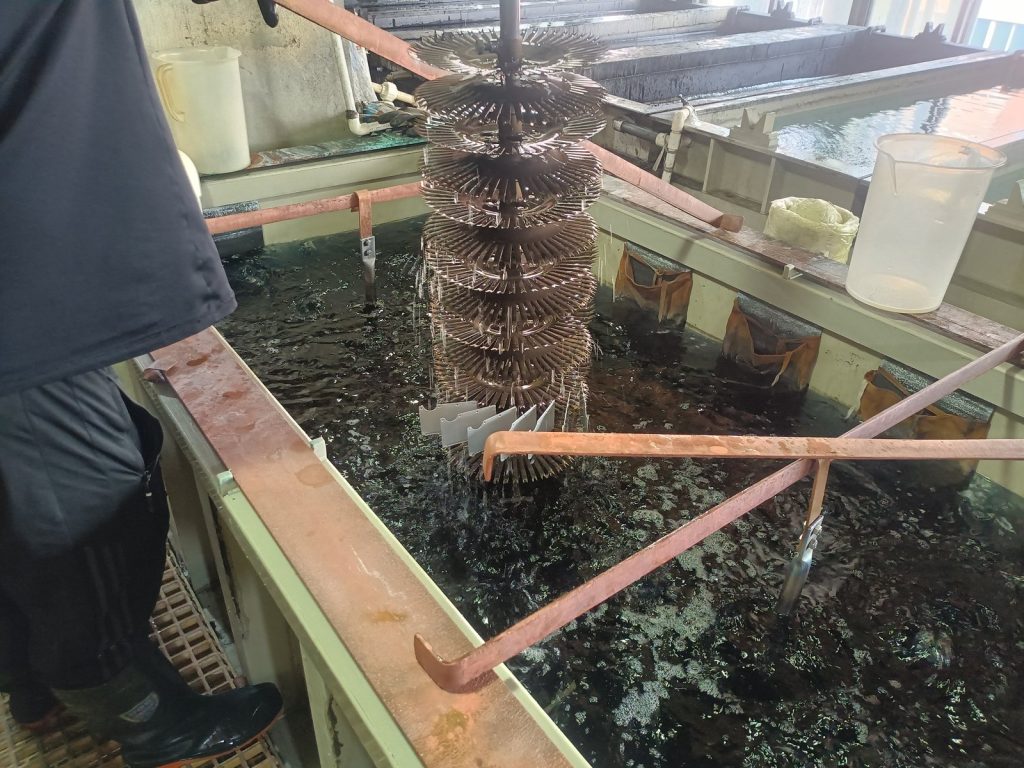
Anodizing and PVD are not competing versions of the same thing. Anodizing converts the aluminium surface itself into an oxide layer; PVD deposits a thin ceramic-like film on top of a surface that stays aluminium. That single difference explains almost every downstream consequence — colour range, how damage looks, how much the part grows, what the per-unit cost does at 1,000 pieces versus 20,000, and which one survives a key in the same pocket. This comparison is written for buyers who have to put one of the two into a specification and defend it.
Quick comparison: the two finishes side by side
| Factor | Anodizing (Type II / Type III) | PVD (vacuum deposition) |
|---|---|---|
| What it is | Electrochemical conversion of the aluminium surface into aluminium oxide | Thin film (TiN, CrN, DLC, multi-layer) deposited in a vacuum chamber |
| Typical thickness | 5–25 µm (Type II); 25–50 µm (Type III hard) | 1–4 µm |
| Relationship to substrate | Integral — the oxide grows from the metal, roughly half inward, half outward | Additive coating on a prepared surface; adhesion depends entirely on pre-treatment |
| Colour range | Wide via dyes: black, blue, red, green, gold, bronze, clear. No true metallic chrome or rainbow | Narrow but metallic: gold, black, gunmetal, bronze, rose, rainbow via multi-layer stacks |
| Damage appearance | Scratch within the film stays the same colour; a scratch through the film shows bare metal | A chip or scratch exposes the substrate colour immediately, often brighter than the coating |
| Dimensional effect | Measurable: 5–25 µm per face depending on spec | Negligible: 1–4 µm per face |
| Cost behaviour at 1,000 pcs | Lower per unit; priced per rack load plus dye changeover | Higher per unit; priced per vacuum batch, with setup dominating small runs |
| Best fit | Colour-led ranges, mid-tier and volume programmes | Premium tactile finishes, high-wear edges, metallic colour stories |
Thickness figures above are the process ranges we specify on drawings; individual suppliers run narrower windows. Treat them as specification language, not as a certificate for any particular batch [1][2].
What each process actually does to the part
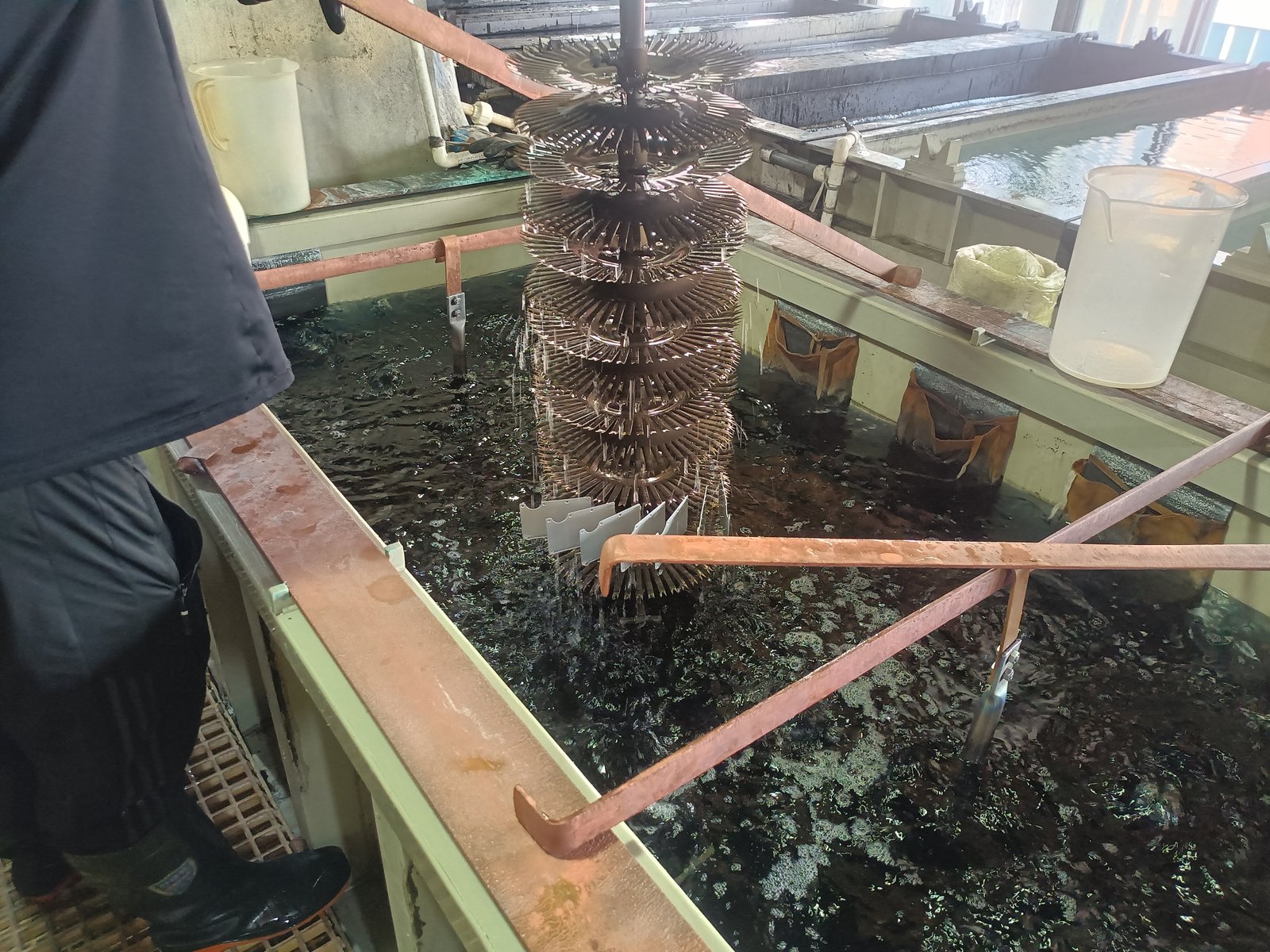
Anodizing is a conversion process. The part is made the anode in an acid electrolyte; current drives oxygen into the aluminium lattice and builds an oxide that is part of the metal, not glued to it. Because the layer is porous at the end of the anodizing step, it accepts dye before being sealed. That porosity is the reason anodizing can produce colours PVD cannot, and also the reason dyed anodizing has a light-fastness question that PVD does not.
PVD is a deposition process. Metal ions are vaporised and condensed onto the part under vacuum, typically with an ion-assisted pre-clean and an adhesion interlayer. The film is harder than the aluminium beneath it but it is still a film: the bond at the interface and the preparation of the substrate decide whether it survives edge impacts. If you want the deeper process explanation, our anodizing explainer covers the electrochemistry; this article stays on the commercial consequences.
Colour: what each process can promise, and what it cannot
Anodizing colour is a dye absorbed into a porous oxide. That means:
- You can hit a brand colour closely, but “closely” is the operative word — a ΔE of 1.5–2.5 between the approved lab dip and production is realistic on 6061, and worse on 7075 because its copper content shifts the oxide colour before dyeing even starts.
- Light fastness is a real spec item, tested to ISO 2135, not an assumption. Reds and some blues are the first to move under UV; black and bronze are the most stable.
- Sealing quality decides whether hand perspiration dulls the colour over two years. Cold seal versus hot seal is a cost line in the quotation that buyers routinely ignore.
PVD colour is a function of film chemistry and stack design. Gold, black, gunmetal and rose are achievable and repeatable; a saturated green or a bright red is not, at least not without a dye or paint layer underneath — at which point you are comparing a two-layer system, not PVD alone. For a colour-led programme the practical answer is usually anodizing, and this is the same conclusion we reached in the green wallet colour study, where anodized green outperformed PVD green on both colour consistency and per-unit cost.
Abrasion, scratches, and what happens at an edge
Hardness numbers matter less than where the damage lands. A Type II anodized film is relatively soft; Type III hard anodizing is substantially harder and is the reason hard-anodized shells survive being carried with keys. PVD films are harder still at the surface — commonly quoted in the 2,000+ HV range for TiN-type films — but hardness is not toughness: a thin hard film on a softer aluminium substrate fails at edges and corners where the film cannot follow the geometry cleanly.
Visually, the two fail differently:
- Anodized: light marks stay within the oxide and read as scuffs; a deep scratch breaks through to bright aluminium and is immediately obvious on a dark colour.
- PVD: an impact chip removes film locally and exposes substrate, which reads as a bright speck. On edges this is the most common cosmetic reject reason.
For a wallet that lives in a pocket with keys, this is not a theoretical distinction. It is the difference between a product that looks used and a product that looks damaged.
Tolerance and fit: where the finish eats your clearance
This is the section most quotations skip. An anodized film grows roughly half outward from the original surface, so a 20 µm film adds about 10 µm per face — 20 µm across a dimension. On a card cavity specified to 85.60 × 53.98 mm with ±0.2 mm, 20 µm is noise. On a plate stack where the card retention gap is 0.15–0.3 mm and the specification already sits at the tight end, 20 µm per face on two plates eats a meaningful share of the clearance and changes how the cards sit.
- Drawings must state before or after finish. A dimension with no finishing note will be argued about at first article inspection.
- Type III at 25–50 µm roughly doubles the effect versus Type II, and it is asymmetric on internal bores because film growth is not perfectly uniform on complex geometry.
- PVD at 1–4 µm is effectively free from a tolerance standpoint, which is one reason premium metal programmes default to it.
Our published wallet size standards already model finish growth in the dimensional table (anodizing 5–25 µm, PVD 1–4 µm, leather 0.6–1.2 mm per face). Use those figures when you translate a CAD model into a finished-part drawing.
Cost structure and what it does at different volumes
Anodizing is priced per rack load: many parts per cycle, one colour per bath at a time, so changeover between colours is charged to the run. The economics improve quickly with volume and stay flat thereafter. Two colours on the same order usually means two setups, not one.
PVD is priced per vacuum batch with a fixed pumping and target-conditioning overhead. Small batches are expensive per unit; large batches amortise the overhead. Masking adds labour, and multi-layer colour stacks add passes, each of which is a separate charge.
| Order profile | Lower total finishing cost | Reason |
|---|---|---|
| 1,000 pcs, one colour, mid-tier price point | Anodizing | Rack economics; no vacuum overhead |
| 1,000 pcs, three colours | Anodizing, but three setups | Colour changeovers dominate; still cheaper than three PVD batches |
| 5,000+ pcs, premium black with edge wear requirements | PVD (single colour) | Overhead amortised; edge durability justifies the premium |
| 500 pcs trial, gold metallic look | PVD, or anodized bronze as a substitute | PVD batch overhead is high but gold is not reachable by dye |
Per-unit figures are quotation-dependent and we do not publish them as facts; the pattern above is what the cost structure produces, and it is the part that survives negotiation.
Failure modes we see in production
- Rack marks and contact burns — the anodizing contact point leaves a bare or thin spot. Invisible on clear, obvious on black. Masking or a re-positioned rack solves it; accepting it as “normal” does not.
- Dye mottling on 7075 — copper and zinc content in the alloy produce uneven oxide colour. If a brand insists on a saturated colour, 6061 is the safer substrate.
- PVD adhesion failure at chamfers — insufficient edge preparation or a contaminated substrate. Cross-cut adhesion testing to ISO 2409 on a sample coupon catches it before a whole batch ships.
- Pinholes and outgassing — from poor pre-clean or porosity in the substrate, most visible on polished surfaces.
- Mask bleed on dual-finish parts — where the interior stays uncoated and the exterior is anodized; the boundary is a QC point, not a cosmetic detail.
What to write into the purchase order
A finish specification that can be inspected contains, at minimum: the standard invoked (ISO 7599 for anodizing, MIL-PRF-8625F for Type II/III classification), film thickness range with measurement method, colour target plus permitted ΔE, light-fastness test (ISO 2135) with an hour rating, salt-spray duration (ISO 9227) if corrosion resistance is claimed, adhesion test (ISO 2409) for PVD, pencil hardness (ISO 15184) where scratch resistance is a selling point, and an AQL with a defined inspection level for cosmetic defects.
Two clauses prevent most disputes: the colour is approved on a golden sample produced by the actual finishing line that will run the order, and dimensions are specified post-finish with the film thickness window stated separately. Everything else is negotiable; those two are not.
Anodizing vs PVD on Aluminium Wallets: Frequently Asked Questions
How thick is PVD compared with anodizing on a wallet shell?
PVD adds roughly 1–4 µm, anodizing 5–25 µm (Type II) or 25–50 µm (Type III). Those are process ranges to write on the drawing, not a certificate for a batch. The practical difference is that a thin PVD layer follows the substrate geometry closely, so edge build-up is smaller, while anodizing grows into the metal and softens edges.
Does a PVD finish hide surface defects?
No — it shows them. PVD is a thin deposited layer, so polishing quality, die marks and fine scratches telegraph straight through it, which is why PVD parts are usually polished to a higher grade before coating. Anodizing partially masks polishing variation because the oxide grows from the metal rather than sitting on top of it.
Can both finishes be used on the same wallet?
Yes, and often are: an anodized shell with PVD hardware, or a PVD logo plate on an anodized body. Specify each surface separately with its own thickness, colour target and seal. Otherwise the two finishes age at different rates and the mismatch reads as a defect after a few months of pocket wear.
Anodizing vs PVD: Where Can You Buy It?
If the decision is which finish to specify rather than which one to argue about, send the drawing and the colour target: REQUEST A QUOTE. Minimum order for full OEM customisation is 300 pcs per SKU, with a 100 pcs trial order available on stock finishes.
Anodizing vs PVD: Where Can You Verify the Data and Sources?
- ISO 7599 — Anodizing of aluminium and its alloys: method for specifying decorative and protective anodic oxidation coatings.
- MIL-PRF-8625F — Anodic coatings for aluminium and aluminium alloys (Type I, II, III classification).
- ISO 2135 — Accelerated test of light fastness of coloured anodic oxidation coatings using artificial light.
- ISO 9227 — Corrosion tests in artificial atmospheres: salt spray tests.
- ISO 2409 — Paints and varnishes: cross-cut test for adhesion.
- ISO 15184 — Paints and varnishes: determination of film hardness by pencil test.
- TOPWALLET — Wallet size standards and tolerances (finish growth figures used in this article).
- TOPWALLET — Green wallet colour study (four finishing routes compared).
From article to product
Sourcing minimalist-wallets?
Tell us the format, the quantity and the date you need stock. You get material options, MOQ and a landed-cost range back within one business day.
Keep reading
More on wallet manufacturing
Sustainable Packaging for Wallet Shipments
Packaging is where sustainability claims are cheapest to make and easiest to disprove. A…
ReadTake-Back and Recycling Programmes for Wallet Brands
A take-back programme is easy to announce and hard to run. Wallets are the…
ReadNickel Release Rules for Wallet Hardware
Nickel release is the one restriction in a wallet that is decided by the…
Read
About the author
TOPWALLET Editorial Team
The TOPWALLET editorial team covers sourcing, pricing and production topics for brand buyers. Every article is reviewed by the production and quality-control team before publishing.
Written on the floor
This article was written by our production and QC team — the people who spec tolerances, run the finishing line and inspect every batch. Where it states a capacity, a pull force or a lead time, it comes from a measurement we made, not a supplier’s catalogue. If a number here disagrees with what your own supplier told you, tell us; several of these articles started as a correction from a buyer.
See how the factory works · Inspection process · Sourcing FAQ
Sourcing minimalist-wallets?
Tell us the format, the quantity and the date you need stock. You get material options, MOQ and a landed-cost range back within one business day.