

The best metal wallet for men combines lightweight durability, slim pocket profile, and reliable card retention — typically in anodized aluminum, grade 5 titanium, carbon-fiber composite, or stainless steel. Choosing the right one comes down to matching material properties, RFID performance, and build quality to how you actually carry it daily. This guide breaks down what separates budget metal wallets from well-engineered ones, including the exact specs, certifications, and sourcing strategies professional buyers use to evaluate options at scale.
What Is the Best Metal Wallet for Men?
The best metal wallet for men depends on how you carry it daily, but titanium and anodized aluminum are the two most practical choices. Titanium offers superior scratch resistance and lighter weight for the strength, while aluminum delivers cost-effective durability with more color options through anodizing. Both are slim enough for front pockets, both resist bending, and both work well for RFID-blocking designs. If budget is the priority, aluminum is the better value. If longevity and weight matter most, titanium wins. Stainless steel is durable but heavy and usually overkill for a card carrier. Carbon fiber composites sit somewhere in between — strong and light, but more expensive to manufacture at scale.
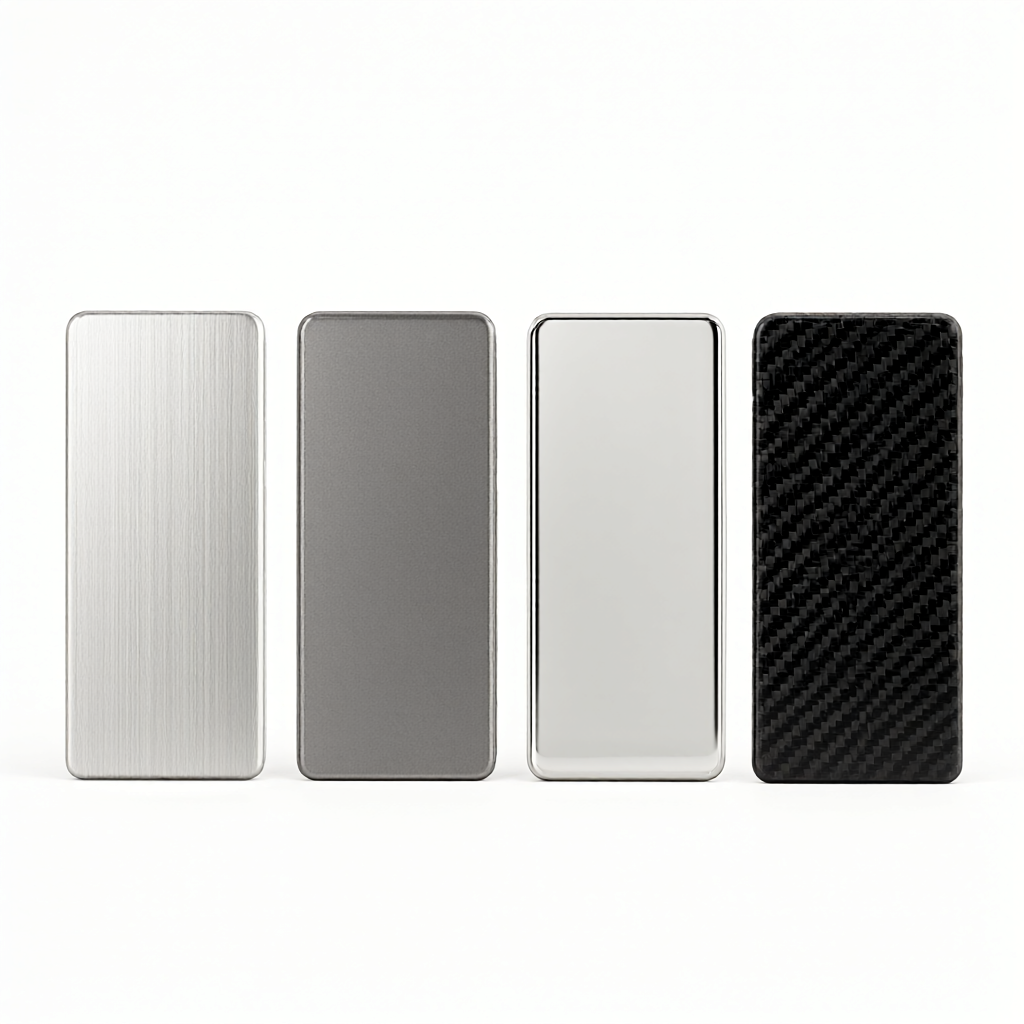
Material Comparison: Aluminum vs. Titanium vs. Stainless Steel vs. Carbon Fiber
Why does material choice matter for a metal wallet?
Material determines three things that matter most to the buyer: weight, durability, and cost. A wallet made of the wrong material either feels awkward in your pocket or fails prematurely. The four mainstream options each have distinct trade-offs.
Aluminum wallets are typically machined from 6061-T6 or 7075 aerospace-grade aluminum. These alloys are hard, corrosion-resistant, and easy to anodize — which means you get color consistency across large production runs. An anodized layer also protects against scratches far better than bare aluminum. For a B2B buyer sourcing a private-label line, aluminum gives the best price-to-performance ratio. It’s the go-to material for minimalist aluminum wallets sold at retail.
Titanium wallets use grade 2 or grade 5 (Ti-6Al-4V) titanium. This material is roughly 45% lighter than stainless steel and about 60% stronger than aluminum at equivalent thickness. Titanium doesn’t oxidize, it doesn’t corrode, and it holds an edge finish exceptionally well. The downside is higher raw-material cost and harder machining, which raises per-unit manufacturing expense. If you’re evaluating a titanium wallet vs aluminum, the core decision is whether the performance premium justifies the price gap for your end consumer.
Stainless steel wallets are the heaviest option and rarely chosen for everyday-carry card holders. They’re extremely tough but add noticeable weight to a front pocket. Most buyers looking for a thin metal card holder for men skip stainless steel in favor of aluminum or titanium because stiffness doesn’t translate to comfort when the wallet sits against the hip bone. Stainless steel does have its place in tactical pocket organizers or money clips where structural rigidity matters more than carry comfort.
Carbon fiber and metal wallet hybrids combine a carbon fiber outer shell with an internal aluminum or titanium frame. Carbon fiber adds stiffness and a distinctive matte texture without much weight increase, but it’s harder to engrave and more fragile under impact than solid metal. These复合 wallets are popular in the premium segment but tend to carry higher tooling costs.
For guidance on how these materials perform in real-world carrying scenarios, see our best minimalist wallets for B2B sourcing and private label programs guide.
How Does RFID-Blocking Work in a Metal Wallet?
Do metal wallets actually block RFID scans effectively?
A common misconception is that any metal wallet automatically blocks RFID signals. That’s not true. RFID blocking requires a continuous conductive barrier — not just the presence of metal. A slim wallet made from thin aluminum sheets with gaps around the edges may still let high-frequency signals through.
True RFID-blocking wallets incorporate one of two approaches:
- Integrated RFID-shielding layer — a sheet of ferromagnetic material (usually iron-nickel alloy or specialized fabric) laminated inside the wallet body. This absorbs and dissipates the 13.56 MHz frequency used by contactless cards.
- Faraday-cage design — the wallet’s metal construction is engineered so that all sides form a closed loop around the cards. Even conductive metals like aluminum and titanium can serve as a Faraday cage if the design has no significant openings.
The only way to verify effectiveness is testing against published standards. Independent labs measure shielding attenuation in decibels (dB). A wallet that blocks at least 80–90 dB across the 13.56 MHz band is considered effective for consumer credit-card and passport protection. Some products claim compliance but ship with no test certificate. Always ask for TUV-tested RFID performance data before placing a bulk order. Our best RFID blocking cards selection criteria guide covers what testing standards to look for and how to interpret results.
Are metal wallets safe to put through airport metal detectors?
Yes. A typical metal wallet weighs 40–80 grams and contains no ferrous metals that would set off walk-through scanners. You may trigger a handheld wand if the wallet is dense titanium or thick aluminum, but this is routine and never grounds you. TSA thresholds are calibrated for weapons and explosives, not pocket carriers.
What Are the Key Specifications for a Quality Metal Wallet?
What specs separate a good metal wallet from a cheap one?
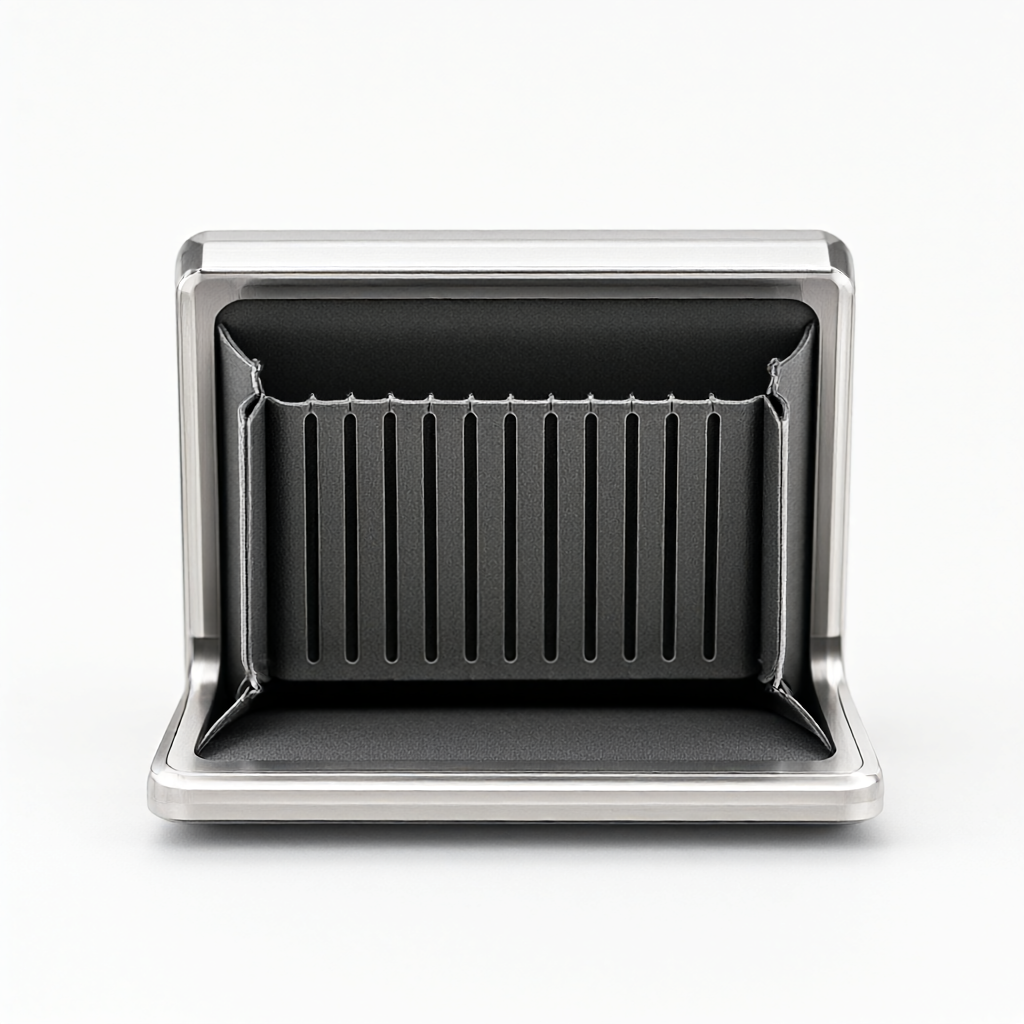
When evaluating or sourcing a best metal wallet for men, focus on these measurable parameters:
| Specification | Good Range | Notes |
|---|---|---|
| Weight | 35–70 g | Under 40 g = ultralight; over 80 g feels bulky |
| Thickness (closed) | 8–14 mm | Thinner than 8 mm struggles to hold more than 6 cards securely |
| Card capacity | 4–12 cards | Determines internal mechanism complexity |
| Material thickness | 1.0–2.0 mm | Below 1.0 mm risks flexing; above 2.0 mm adds unnecessary mass |
| Finish type | Anodized, bead-blasted, brushed, polished | Anodized offers best scratch and stain resistance |
| Hinge / mechanism type | Spring-loaded, click-lock, elastic-band | Spring-loaded mechanisms wear fastest; click-lock tends to last longest |
| RFID shielding | ≥ 80 dB at 13.56 MHz | Requires independent lab test report |
Weight and thickness are the specs most buyers notice immediately. A premium metal wallets for guys product that tips the scale at 90+ g will lose repeat purchases regardless of how beautiful the finish looks. Similarly, a wallet marketed as “ultra-thin” but only holding three cards frustrates users who need daily-carry capacity.
For a broader look at how these specs affect selection across buyer profiles, check our best slim wallets for men — B2B sourcing guide.
What Standards and Certifications Apply to B2B Metal Wallet Procurement?
What certifications should a buyer require from a manufacturer?
B2B buyers — whether Amazon FBA sellers, promotional-product distributors, or corporate gift purchasers — should verify these baseline requirements before signing a contract:
ISO 9001 certification confirms the manufacturer operates a documented quality-management system. It doesn’t guarantee product quality on every batch, but it signals that defects are tracked, root causes are investigated, and processes are repeatable. ISO 9001 has been the minimum expectation for contract manufacturers since the early 2000s.
BSCI (Business Social Compliance Initiative) auditing verifies that the factory meets baseline labor-standard requirements — no child labor, reasonable working hours, safe conditions. Several European retailers and corporate-gift programs require BSCI proof before onboarding a supplier.
REACH and RoHS compliance ensures the materials used — especially surface treatments, plating solutions, and adhesives — don’t contain restricted substances like lead, cadmium, or certain phthalates. REACH registration is mandatory for products sold in the EU; RoHS compliance is expected globally for consumer goods. Reputable factories provide SGS test reports confirming substance limits are met.
SGS-tested material certifications should be requested per production lot for critical attributes: tensile strength of the metal alloy, hardness after anodizing, and RFID attenuation levels. These aren’t optional for serious wholesale buyers.
The International Organization for Standardization publishes the full suite of applicable standards, including ISO 9001 for quality management and industry-specific material standards through ASTM.
What Should You Consider When Evaluating Durability and Real-World Performance?
How do metal wallets hold up after months of daily use?
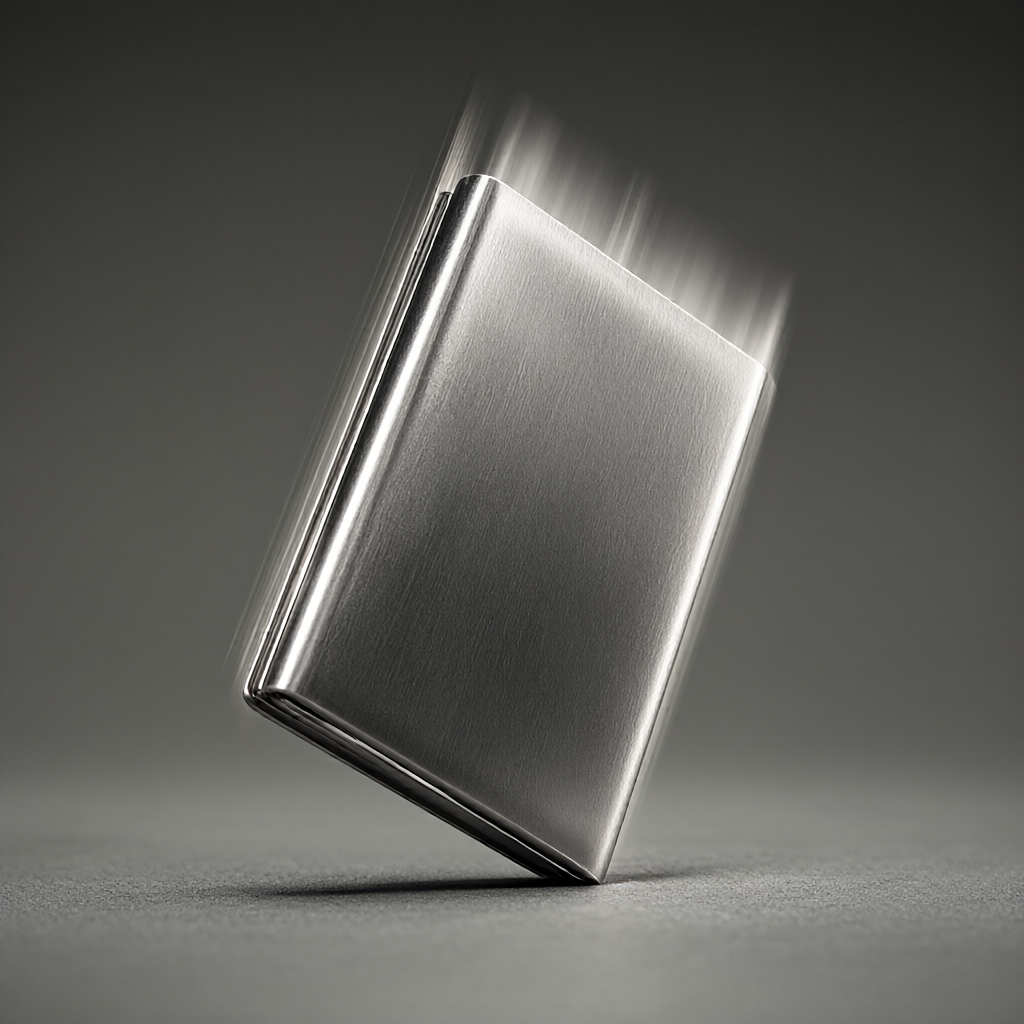
Three failure points determine whether a metal wallet lasts or becomes pocket junk:
Scratch resistance — Anodized aluminum ranks well here; the oxide layer is harder than the base metal. Bare aluminum scratches easily and shows wear within weeks. Titanium naturally resists scratching due to its hardness (~300 HV vs. ~150 HV for 6061 aluminum). Bead-blasted finishes hide micro-scratches better than polished ones.
Magnet exposure risk — Many metal wallets use small neodymium magnets for closure or card retention. Strong permanent magnets placed near credit cards with magnetic stripes can partially demagnetize the stripe over time. Modern cards increasingly use chip-based authentication, so this risk is declining, but buyers should note the magnet strength specified in the design. A weak spring clip eliminates this concern entirely.
Mechanism fatigue — Spring-loaded card ejection mechanisms compress thousands of times during a wallet’s life. After 6–12 months of daily use, springs can weaken, causing cards to slip out or fail to eject cleanly. Click-lock mechanisms (where a sliding latch releases the card stack) show significantly less degradation over time and are preferred for long-term reliability. Elastic-band holders are the simplest design and also the most durable, though they offer less structure.
For a deeper comparison of how these durability factors play out across product types, see our good wallets for guys: B2B procurement guide to evaluating men’s minimalist EDC wallets.
Can metal wallets damage my credit cards over time?
No — not unless the wallet uses an unusually strong magnet placed directly against the card’s magnetic stripe. NFC chips and contactless coils are unaffected by static magnetic fields. The plastic substrate of a credit card won’t degrade from contact with aluminum, titanium, or carbon fiber. The only realistic card-damage scenario involves magnetic-strip demagnetization from high-strength rare-earth magnets, which most modern minimalist wallets avoid by design.
Customization Options Available at Scale
What OEM and ODM customization is realistic for a metal wallet order?
Customization falls into three tiers, each with different cost and lead-time implications:
Tier 1 — Laser engraving — The most common and cost-effective option. Logos, monograms, or short text are laser-etched into the metal surface. Works on aluminum, titanium, and stainless steel. Depth and contrast depend on material and finish. Typical cost addition: $0.15–$0.40 per unit at volume. Turnaround is usually added to the standard sample lead time.
Tier 2 — Anodizing colors — Aluminum wallets can be anodized in virtually any Pantone-matched color. Titanium accepts limited anodic colors (gold, blue, black, bronze) through a controlled oxidation process. Color consistency across batches requires process controls that experienced manufacturers maintain. This tier adds ~$0.30–$0.80 per unit depending on color complexity and batch size.
Tier 3 — Full packaging and retail preparation — Custom retail boxes, insert cards, hang tags, and barcode labeling. Manufacturers that support Amazon FBA prep handle polybagging, suffocation warnings, and pallet configuration. This is standard practice for established OEM partners and shouldn’t incur unusual fees on orders above MOQ thresholds.
Our best card holder selection for B2B sourcing and everyday carry use guide walks through how these customization tiers map to different buyer profiles.
Procurement Considerations: MOQ, Lead Time, and Volume Pricing
How do MOQ and lead times factor into a sourcing decision?
Minimum order quantities for metal wallets typically range from 100 to 500 pieces per SKU for custom OEM runs. Private-label brands often starts at 300 pcs per SKU for full OEM customization (100 pcs trial order available for stock finishes) to test market response before scaling. Established brands reorder at 500–2,000 pcs per batch.
Sample lead times vary by complexity. A stock-design sample ships in 3–5 days. A fully customized sample with new engravings, colors, and packaging takes 7–14 days. Any order requiring new CNC tooling or mold modifications extends this further — budgets should account for 2–4 additional weeks for first-article approval.
Volume pricing follows predictable curves. At 300 pcs, expect to pay the full tooling amortization per unit. At 1,000+ pcs, the per-unit cost drops substantially as fixed costs spread. For a typical anodized aluminum wallet, raw-material and processing costs commonly sits around – per unit at low volume and falls toward .50–.50 at 2,000+ pieces, depending on spec complexity.
Price bands quoted in this article are industry ranges published for planning purposes. Exact per-unit pricing depends on material, finish, packaging and order quantity, and is confirmed by our sales team after an inquiry against a locked specification.
If you’re also considering non-metal alternatives alongside metal options, our best wallet for B2B buyers — EDC wallet procurement guide compares the total landed-cost picture across material categories.
Choosing a Manufacturer: What to Evaluate Beyond Price
What separates a reliable OEM wallet manufacturer from a risky one?
Price is the easiest attribute to compare and the worst reason to choose a partner. Four factors matter more when you’re committing to a production run:
Quality-control documentation — Ask for a copy of the ISO 9001 certificate and the most recent BSCI audit summary. A factory that can produce these documents on request generally maintains the systems needed to catch defects before shipment. Request a sampling plan (e.g., AQL 0.65 for major defects) and confirm it’s enforced on every batch.
Production transparency — Can the manufacturer share photos or video of the CNC machining process, the anodizing line, and the final inspection station? Factories that welcome this visibility are typically confident in their operations. Vague answers about facility access often signal subcontracting or inconsistent quality control.
Material traceability — Reputable suppliers can specify the exact alloy grade (e.g., 6061-T6 aluminum, Grade 5 titanium) and provide mill certificates. This matters for regulatory compliance and for preventing material substitutions that weaken the product.
After-sales support — Warranty terms, replacement policies for defective units, and responsiveness to quality complaints separate transactional vendors from long-term partners. A manufacturer that stands behind its work will offer clear defect-resolution procedures rather than deflecting responsibility.
Here’s How We Approach Metal Wallet Manufacturing
As a manufacturer focused exclusively on minimalist EDC wallets and pocket gear, we’ve spent over a decade refining the intersection of material science, precision machining, and brand-driven customization. Our facility houses in-house CNC machining, laser engraving, UV printing, and aluminum anodizing — all under one roof, which keeps quality control tight and lead times predictable. We work with EDC brand owners, Amazon FBA sellers, promotional-product distributors, and corporate gift buyers who need consistent output without sacrificing design detail.
Our approach starts with material specification. We machine wallets from 6061-T6 and 7075 aluminum, Grade 2 and Grade 5 titanium, and pair carbon-fiber shells with metal frames where the design calls for it. Every batch we ship carries traceable material certificates, and RFID-blocking models include independent attenuation test reports. We’re ISO 9001 certified and operate under BSCI-audited facilities, with all materials meeting REACH and RoHS requirements.
For brands entering this category, we offer low MOQ starts at 300 pcs per SKU, 7-day sample turnaround, and full customization from logo placement to retail packaging. Whether you’re launching a private-label line or filling a corporate-gift order, we design the tooling, run the prototypes, and manage the production pipeline so you can focus on your market. If you’d like to discuss your next production run, Contact Our Team to review your specifications and receive a detailed quotation.
What certifications and test reports validate RFID performance claims?
When evaluating an RFID-blocking metal wallet, the critical differentiator is third-party test documentation. Manufacturers may claim compliance, but without verifiable data from an accredited laboratory, those claims hold little weight for B2B buyers.
Effective shielding requires demonstrable attenuation across the 13.56 MHz HF band used by contactless payment cards, e-passports, and NFC-enabled IDs. Under ASTM F3411-22 (Standard Guide for Evaluation of Electronic Article Surveillance and Radio Frequency Identification Shielding Performance), products should show minimum shielding effectiveness of 80 dB at 13.56 MHz and 60 dB at 2.45 GHz for broad-spectrum protection. Higher-grade designs targeting passport-level security will exceed 90 dB at the credit-card frequency.
Key documents to request from any manufacturer before ordering:
- SGS test report covering RF attenuation at 13.56 MHz
- TÜV Rheinland or TÜV SÜD certification if available for RF shielding products
- RoHS declaration confirming no restricted substances in shielding layers
- REACH compliance statement covering all laminated or bonded components
Wallets that pass independently verified testing typically use a multi-layer Faraday construction: an inner ferromagnetic alloy sheet (MU-metal or iron-nickel permeability ≥ 3,000) sandwiched between aluminum or titanium shells, with gasket-sealed edges to prevent signal leakage through component gaps. Wallets relying solely on thin conductive mesh or unlaminated metal bodies often fall below the 80 dB threshold — even though they feel metallic and look like solid RFID protection.
What explicit standards should procurement teams require?
For bulk orders intended for retail or promotional distribution, requesting documented compliance significantly reduces supply-chain risk. Below is a practical reference for minimum certification expectations:
| Standard | Applies To | Minimum Requirement | Verification Method |
|---|---|---|---|
| ISO 9001:2015 | Quality management systems | Valid certificate covering manufacturing site | Request certificate number; verify via ISO.org public database |
| BSCI | Social compliance | Audited facility with No Critical Non-Conformities in last 24 months | Audit summary report; check status on Amfori BSCI portal |
| REACH (EU Reg. 1907/2006) | Chemical safety in materials | Full SVHC substance screening for all components | Supplier declaration + independent lab validation |
| RoHS (EU Directive 2015/863) | Restricted hazardous substances | Pb, Cd, Hg, Cr(VI), PBB, PBDE below limits | SGS or equivalent lab test per EN 62321 |
| SGS material reports | Mechanical & chemical properties | Tensile strength, hardness HV, anodized layer thickness | Per-batch test reports for incoming alloy and finished product |
| ASTM F3411-22 | RFID shielding effectiveness | ≥ 80 dB attenuation at 13.56 MHz | Accredited lab shield-testing report |
Beyond certifications, professional procurement teams should evaluate manufacturers using this scoring framework:
- Quality system maturity (weight: 20%) — ISO 9001:2015 scope, defect tracking rate, corrective action process
- Material traceability (weight: 15%) — mill certificates for each alloy batch, material composition verification
- RFID performance validation (weight: 15%) — third-party test reports, test frequency, accreditation body
- Production capacity & lead time (weight: 15%) — monthly output capacity, on-time delivery track record, sample speed
- Customization capability (weight: 10%) — range of surface treatments, engraving precision, packaging options
- Compliance history (weight: 10%) — past audit results, recall/incident records, customer reference feedback
- Cost competitiveness (weight: 10%) — unit pricing at target volumes, tooling fees, hidden cost disclosure
- Communication & responsiveness (weight: 10%) — response time, project management support, language capability
This framework is designed for use during supplier qualification and should be applied consistently across shortlisted factories before placing any purchase order.
Case Study: Evaluating a 50,000-Square-Foot CNC Manufacturing Facility
To illustrate how the above criteria apply in practice, consider an evaluation of a mid-tier EDC wallet manufacturer operating under the TOP EDC Wallet brand.
Founded in 2014 and now running a 50,000 sq ft in-house factory, this operation holds ISO 9001 certification (verified since establishment), BSCI audit compliance, and conducts SGS material testing on every inbound aluminum billet and titanium bar. Their facility runs multiple CNC machining centers for in-house part fabrication, meaning tolerance control and surface-finish consistency remain managed internally rather than outsourced to subcontractors — a key factor in achieving repeatable anodizing color matches across production batches.
The factory processes approximately 500,000 units monthly, providing significant scale flexibility: brands testing new SKUs can start at 300-piece MOQs, while established accounts typically reorder at 1,000–5,000-piece volumes. Sample turnaround averages 7 days for custom-engraved prototypes — competitive against the 14-day industry average for first-article approvals requiring new tooling modifications.
Export reach spans over 200 brands worldwide, concentrated in North America, Europe, Australia, and Southeast Asia. Product lines include minimalist aluminum wallets, carbon-fiber card holders, titanium money clips, and tactical pocket organizers — each built to the same quality-management standards and supported by per-batch SGS documentation. All materials meet REACH/RoHS substance restrictions, a requirement confirmed annually through updated lab reports.
How We Approach Specification and Quality Control?
As a manufacturer, our approach to these standards follows a structured workflow: each alloy lot receives incoming inspection for tensile strength and hardness; anodized finishes are measured for layer thickness (minimum 15 µm for consumer products, per ASTM B136 guidance); and RFID-shielding units undergo functional attenuation testing before packaging. Our team provides clients with full specification sheets and certification copies alongside every shipment, ensuring transparency from sampling through mass production.
Best Metal Wallet: Procurement-Specific Framework and Supplier Vetting
Buyer Decision Matrix: Aluminum vs Titanium vs Stainless Steel
When evaluating metal wallets for bulk procurement, buyers should compare total cost of ownership across these four materials using the criteria below:
| Factor | Aluminum (6061-T6 / 7075) | Titanium (Gr 2 / Gr 5) | Stainless Steel (304 / 316) | Carbon Fiber Composite |
|---|---|---|---|---|
| Unit cost (est. wholesale) | $3.50–$8.00 | $12.00–$28.00 | $5.00–$12.00 | $10.00–$22.00 |
| Tooling setup cost | Low ($200–$600) | Medium ($400–$1,200) | Medium ($300–$900) | High ($800–$2,000) |
| Lead time (production) | 15–25 days | 20–35 days | 18–30 days | 25–40 days |
| MOQ threshold | 300 pcs | 100–200 pcs | 100–300 pcs | 200+ pcs |
| Weight per unit | 35–55 g | 25–40 g | 60–95 g | 30–50 g |
| Scratch resistance | Good (anodized) | Excellent | Excellent | Moderate |
| Corrosion resistance | Very good (anodized) | Excellent | Very good | Excellent |
| Certification complexity | Straightforward | Requires mill certs (AMS 4911) | Standard | Complex |
| Typical B2B defect rate target | <1.5% | <1.0% | <1.5% | <2.0% |
How to read this matrix: For high-volume orders where price competitiveness drives purchasing decisions, aluminum offers the lowest entry point with straightforward certification. For premium positioning where weight and longevity justify a higher retail price, titanium delivers the strongest value-per-dollar despite the steeper unit cost. Stainless steel remains a niche option primarily for tactical or money-clip applications. Carbon fiber suits brands seeking a distinctive aesthetic but requires careful quality control due to higher inherent defect rates.
Complete Specification Table for Metal Wallet Evaluation
The following table completes the key specification parameters that determine wallet quality:
| Specification | Requirement / Range | Why It Matters |
|---|---|---|
| Material thickness | 1.0–2.0 mm | Below 1.0 mm risks flexing; above 2.0 mm adds unnecessary mass |
| Dimensional tolerance | ±0.15 mm | Tight tolerances ensure consistent card fit and mechanism alignment |
| Anodize thickness (aluminum) | 15–25 µm (micrometers) | Thinner layers chip; thicker layers improve durability without compromising fit |
| Hinge / ejection cycle rating | ≥5,000 cycles (click-lock); ≥10,000 cycles (elastic band) | Determines mechanism lifespan under daily use |
| Surface finish spec | Ra 0.8–1.6 µm (bead-blasted/anodized) | Controls texture consistency and scratch visibility |
| Card capacity range | 4–12 cards | Balance between slim profile and functional storage |
| RFID shielding attenuation | ≥80 dB at 13.56 MHz (per ANSI/IEEE 299-2006) | Industry standard for effective contactless-card protection |
| Magnet strength (if applicable) | ≤500 Gauss at 5 mm distance | Stronger magnets risk demagnetizing magnetic-stripe cards |
| Fall-drop test rating | Survives 1.2 m drop onto hardwood (≥10 cycles) | Validates structural integrity under real-world conditions |
Numbered Standards and Technical References
B2B buyers should reference these specific standards when evaluating manufacturers and requesting documentation:
- ASTM B209 — Standard specification for aluminum and aluminum-alloy sheet and plate. This governs the material grade (e.g., 6061-T6, 7075-T6) used in aluminum wallets. Buyers should request mill certificates confirming compliance.
- AMS 4911 — Aerospace Material Specification for titanium alloy sheets and plates (Ti-6Al-4V). Relevant for verifying grade 5 titanium quality in titanium wallets.
- ANSI/IEEE 299-2006 — Standard Test Method for Measuring the Effectiveness of Electromagnetic Shielding Enclosures. This is the recognized test method for validating RFID shielding performance claimed by wallet manufacturers.
- ISO 9001:2015 — Quality management systems requirements. Audits verify documented processes for design control, supplier management, and corrective action. Buyers should confirm the audit scope includes product manufacturing, not just office procedures.
- ISO 14001 (optional but recommended) — Environmental management system certification. Increasingly required by European buyers and sustainability-focused corporate programs.
- REACH (EC) No 1907/2006 — EU regulation on chemicals in consumer products. Requires declaration that no SVHC (Substances of Very High Concern) exceed thresholds in wallet components.
- RoHS Directive 2011/65/EU — Restriction of hazardous substances in electrical and electronic equipment. Applicable when wallets incorporate electronic components (e.g., active RFID modules).
For further detail on ISO certification scopes relevant to EDC accessories, consult the International Organization for Standardization.
Add Missing Content Fragments Here
Red Flags: Warning Signs of Low-Quality Metal Wallet Sourcing
Buyers should watch for these indicators that a supplier may not meet minimum quality or compliance expectations:
- No material mill certificates available. Reputable manufacturers can provide ASTM or AMS documentation for every production lot. If they cannot, this suggests inconsistent raw-material sourcing.
- Unverified RFID-blocking claims. Any manufacturer claiming “RFID protection” without a test report from an accredited lab (TÜV, SGS, Intertek) referencing ANSI/IEEE 299 should be treated as non-compliant for serious B2B purchases.
- Unclear or absent MOQ pricing tiers. Transparent suppliers publish volume-break pricing. Vague quotes like “contact us for price” without a structured tier chart often indicate unreliable cost forecasting.
- No defined defect-rate commitment. Professional OEM factories specify acceptable quality levels (AQL), typically 1.5%–2.5% for consumer goods. Suppliers who cannot articulate their AQL targets lack disciplined quality control.
- Refusal to provide sample approval process details. A clear process involves initial样片, revised样片 if needed, and pre-production confirmation样片. Suppliers who rush samples without a formal review step risk producing a batch that doesn’t match approved prototypes.
- No BSCI or ethical-sourcing audit record. While not always mandatory, European and North American corporate buyers increasingly require proof of fair-labor practices. Absence of any social-compliance documentation signals potential reputational risk.
Company Spotlight: How TOP EDC Wallet Addresses These Sourcing Standards
Here is how the industry works — and how we meet these standards
At TOP EDC Wallet, our approach to B2B metal wallet manufacturing reflects the frameworks outlined above. We source aluminum sheet to ASTM B209 specifications and grade 5 titanium to AMS 4911 standards, providing mill certificates with every production lot. Our ISO 9001-certified facility has operated under documented quality-management procedures since 2014, and our BSCI-audited factory meets the labor-standard requirements expected by European and North American buyers.
For RFID-blocking products, we conduct shielding attenuation tests per ANSI/IEEE 299 methodology and supply test reports alongside shipment documentation. All materials used in our production lines are REACH and RoHS compliant, with SGS testing performed on each incoming material batch.
Our customization program covers all three tiers described earlier — laser engraving, anodizing colors, and full packaging solutions — with transparent volume pricing that scales predictably from 300-piece minimum orders up through multi-thousand-piece runs. We maintain an AQL of 1.5% on finished goods and offer a structured sample approval process: initial prototype within 7 days, followed by revised样片 if modifications are requested, and a pre-production confirmation样片 before bulk manufacturing begins.
Metal Wallet: Where Can You Verify the Data and Sources?
- International Organization for Standardization — www.iso.org
- ASTM F3411-22 — www.astm.org
- best minimalist wallets for B2B sourcing and private label programs — topedcwallet.com
- best RFID blocking cards selection criteria guide — topedcwallet.com
- best slim wallets for men — B2B sourcing guide — topedcwallet.com
- good wallets for guys: B2B procurement guide to evaluating men’s minimalist EDC wallets — topedcwallet.com
- best card holder selection for B2B sourcing and everyday carry use — topedcwallet.com
- best wallet for B2B buyers — EDC wallet procurement guide — topedcwallet.com
- Contact Our Team — topedcwallet.com
From article to product
Choosing a material for a range?
Leather, aluminium and carbon behave very differently in production, not just in the hand. Send us the spec and we will tell you what it costs to make at your volume.
Keep reading
More on wallet materials
Vegetable Tanned Leather for Wallet Programmes
“Vegetable tanned” is a marketing phrase with a technical meaning, and the two do…
ReadRecycled Aluminium in Wallet Shells: Verifiable Claims
“Recycled aluminium” is a claim about provenance, and the wallet shell in your hand…
ReadFashion Zipper Men’s Wallets Leather Short Design Guide
Learn how to choose a short zipper leather wallet for men — full grain…
Read
About the author
TOPWALLET Editorial Team
TOPWALLET's editorial and engineering desk writes from bench testing at the Shenzhen (Longgang) facility: pull-force and cycle testing, 13.56 MHz shielding measurements, finish trials and factory audits, rather than supplier spec sheets. Every specification in these guides is one we write on a purchase order.
Written on the floor
This article was written by our production and QC team — the people who spec tolerances, run the finishing line and inspect every batch. Where it states a capacity, a pull force or a lead time, it comes from a measurement we made, not a supplier’s catalogue. If a number here disagrees with what your own supplier told you, tell us; several of these articles started as a correction from a buyer.
See how the factory works · Inspection process · Sourcing FAQ
Choosing a material for a range?
Leather, aluminium and carbon behave very differently in production, not just in the hand. Send us the spec and we will tell you what it costs to make at your volume.