

Coin Wallet: What Is the Quick Answer?
What is a coin wallet?
A coin wallet is a compact, minimalist wallet (typically aluminum, carbon fiber, or titanium) that incorporates a dedicated coin pocket or slider mechanism for holding loose change — designed for everyday carry (EDC) users who want to eliminate bulky cash wallets while retaining coin capacity. It differs from regular minimalist wallets by integrating a secondary compartment for coins without adding significant bulk.
What Is a Coin Wallet?
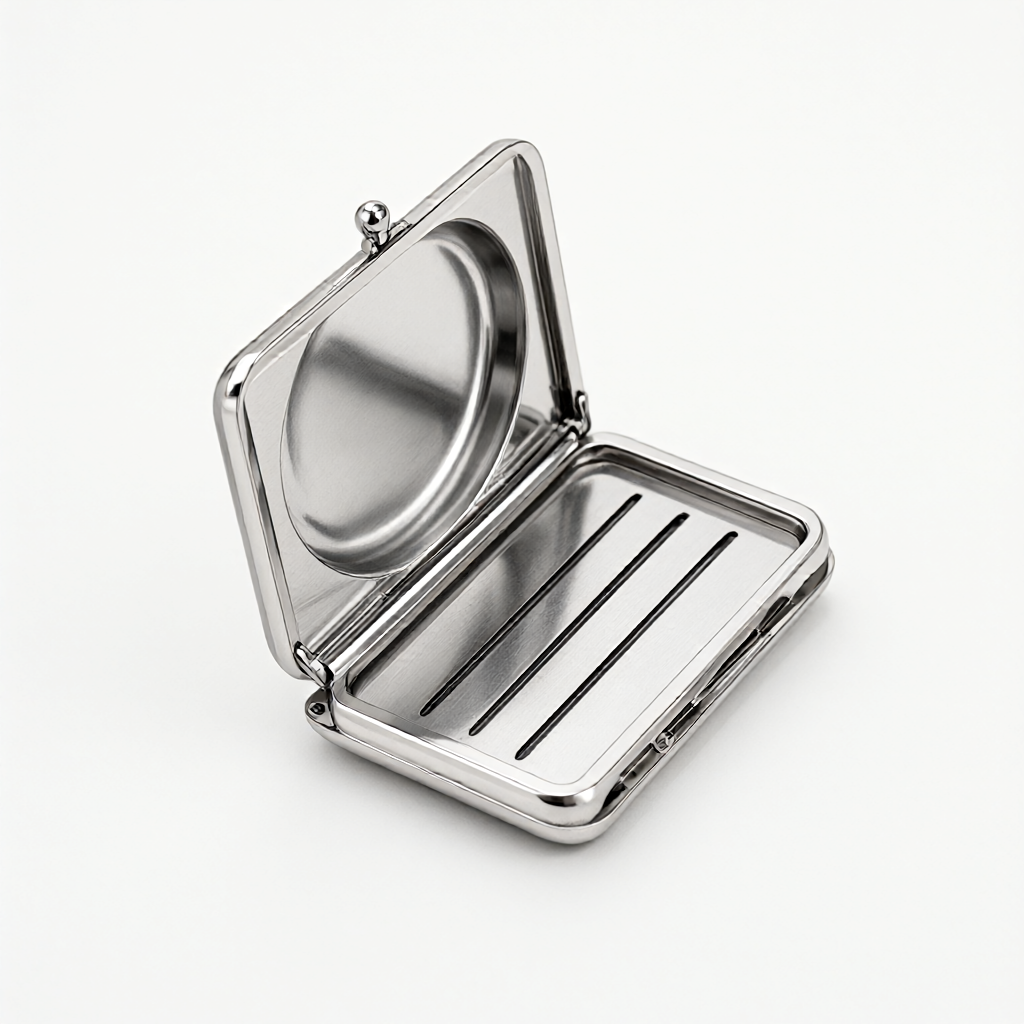
A coin wallet bridges the gap between traditional bifold wallets and ultra-slim card holders. While a standard minimalist wallet holds cards and folded bills in a single compartment, a coin wallet adds a secure pocket or sliding tray specifically for loose change. This design addresses a common pain point for EDC users: the need to carry coins without reverting to a bulky leather bi-fold.
The primary purpose is functional minimalism. Users who carry quarters, dimes, and nickels daily — whether for parking meters, tolls, or small purchases — can now do so without overloading their front pocket. The coin compartment is typically engineered to prevent coins from rattling out while remaining accessible when needed.
For B2B buyers, understanding this distinction is critical. A coin wallet serves a different market segment than a basic card holder or a traditional leather wallet. Buyers should consider whether their target audience prioritizes coin storage alongside card capacity, as this decision directly impacts design architecture, material selection, and manufacturing complexity.
The rise of this product category reflects broader trends in EDC gear, where users demand multifunctional accessories that maintain a sleek profile. According to industry research on EDC wallets and minimalist wallet manufacturing for B2B buyers, consumers increasingly prefer consolidated carry solutions that eliminate redundancy in their pockets.
How Coin Wallets Are Designed?
The design architecture of a coin wallet fundamentally determines its functionality, durability, and user experience. There are three primary design types for coin storage in minimalist wallets, each with distinct mechanical and aesthetic characteristics.
Coin Pocket Design
The coin pocket style features a dedicated mesh or fabric-lined pouch integrated into the wallet body. Coins slide into this pocket and remain secured by friction or a flap closure. This design is the most traditional approach, resembling a mini-pouch sewn into the wallet’s structure.
Coin pocket wallets offer high capacity — often holding 15-20 coins depending on size — but can add slight bulk. The pocket lining prevents coins from scratching cards stored in adjacent compartments. For buyers sourcing private label EDC brands, coin pocket designs appeal to customers who prioritize maximum coin capacity over ultra-thin profiles.
Coin Slider Mechanism
The coin slider wallet employs a mechanical sliding tray that extends from the wallet body. When pulled open, a ridged tray reveals a coin compartment; pushing it back closes and secures the compartment. This design maintains a sleek exterior profile when closed, as the slider mechanism sits flush within the wallet frame.
Coin slider wallets excel in reducing noise and preventing accidental openings. The mechanical action provides tactile feedback, which many EDC enthusiasts appreciate. However, sliders introduce additional moving parts that require precise manufacturing tolerances. Buyers should evaluate whether their target market values the slim profile enough to justify the more complex engineering.
Coin Pouch or Integrated Compartment
Some designs integrate a rigid coin compartment directly into the wallet structure, often using a hinged or spring-loaded mechanism. This approach creates a semi-enclosed space that protects coins from falling out while allowing quick access. The compartment may feature a removable insert or a flip-top design.
These hybrid designs balance capacity and protection better than pure pocket styles. They’re particularly suitable for tactical equipment retailers and outdoor gear distributors whose customers need reliable coin storage in rugged conditions.
When evaluating these design types, consider your target customer’s use case. Urban commuters might prefer coin slider wallets for their clean aesthetic, while outdoor enthusiasts may favor coin pouch designs for durability. See our men’s minimalist wallets materials, specs & sourcing guide for deeper insights into design trade-offs.
What Materials Are Used for Coin Wallets?
Material selection directly influences a coin wallet’s weight, durability, aesthetics, and cost. The three dominant materials in the EDC coin wallet market are aluminum, carbon fiber, and titanium, each offering distinct advantages and trade-offs.
Anodized Aluminum
Anodized aluminum remains the most popular choice for budget-conscious but quality-focused buyers. The anodization process creates a hard, scratch-resistant surface that comes in various colors. Aluminum wallets typically weigh between 40-70 grams, making them significantly lighter than leather alternatives.
Pros: Cost-effective, lightweight, excellent color options through anodizing, good durability for everyday use. Cons: Can dent under impact, less premium feel compared to titanium, requires careful surface finishing to prevent wear.
For Amazon FBA sellers, aluminum wallets offer the best margin potential while still delivering perceived value. The material’s versatility supports both functional and fashion-forward designs.
Carbon Fiber
Carbon fiber coin wallets appeal to buyers seeking a premium aesthetic with exceptional strength-to-weight ratio. The material is woven from carbon threads and bonded with resin, creating a distinctive pattern that never fades or scratches. Carbon fiber wallets typically range from 35-60 grams.
Pros: Extremely lightweight, scratch-resistant surface, premium visual appeal, non-conductive. Cons: Higher material cost, limited color options (typically black or patterned), can show weave imperfections if manufacturing quality is low.
Tactical equipment retailers and corporate promotional gift buyers often select carbon fiber for its modern, sophisticated appearance. The material’s durability makes it suitable for corporate gifts that need to maintain appearance over years of use.
Titanium Alloy
Titanium represents the premium tier of coin wallet materials. Titanium alloy wallets are stronger than aluminum, lighter than steel, and highly corrosion-resistant. They typically weigh 50-80 grams depending on design complexity. Titanium’s natural gray color can be anodized for additional color options, though the process requires specialized equipment.
Pros: Superior strength and durability, biocompatible (hypoallergenic), premium tactile feel, excellent long-term corrosion resistance. Cons: Highest material and machining cost, more difficult to manufacture precisely, heavier than aluminum or carbon fiber options.
Outdoor gear distributors and high-end EDC brands often choose titanium for customers willing to pay a premium for longevity. The material’s reputation for durability aligns well with rugged outdoor use cases.
When selecting materials for your brand, consider your price point positioning and target customer expectations. Aluminum wallets suit entry-level to mid-range products, carbon fiber targets the mid-to-premium segment, and titanium commands the luxury EDC market. Review our comprehensive analysis of wallet materials and specifications to understand material performance in real-world conditions.
What Are the Key Specifications to Consider?
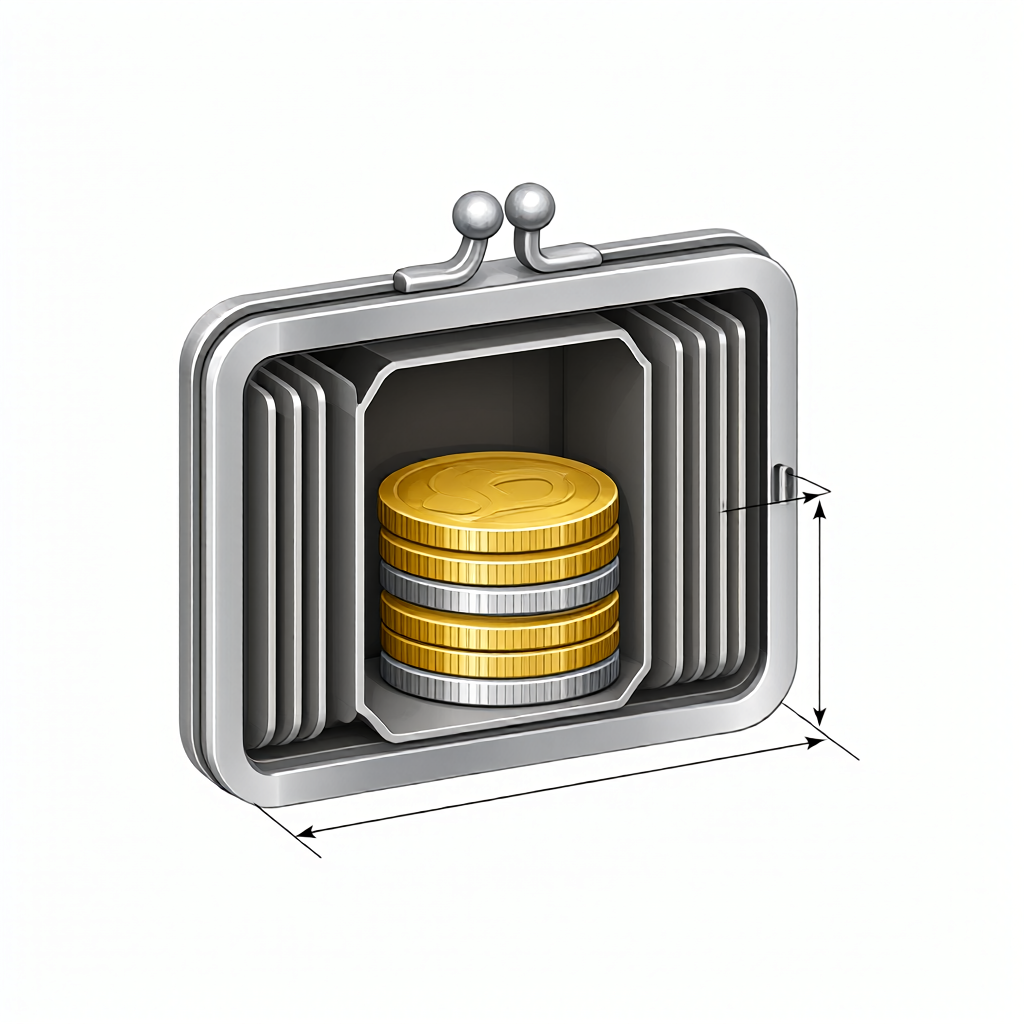
Understanding key specifications helps B2B buyers evaluate coin wallets systematically. These specifications determine functionality, manufacturing feasibility, and end-user satisfaction.
Capacity and Sizing
A typical coin wallet holds 5-10 cards, 2-4 bills, and 10-20 coins depending on design and material. The card compartment usually accommodates standard credit card dimensions (85.60 × 53.98 mm). Bill capacity varies: some designs fold bills once, others allow multiple bills stacked flat.
Coin capacity depends on the storage mechanism. Coin pocket designs typically hold 15-20 US quarters, while slider mechanisms may accommodate 10-15 coins due to tray depth constraints. Buyers should verify these capacities with manufacturers, as marketing claims sometimes overstate actual storage.
Thickness and Weight
Thickness is a critical differentiator in the minimalist wallet market. Quality coin wallets typically range from 12-18 mm thick when fully loaded. Thinner profiles (under 12 mm) are possible with clever engineering but may sacrifice coin capacity or durability.
Weight ranges from 35-80 grams depending on material and design complexity. Aluminum wallets tend toward the lighter end, titanium toward the heavier end. For drop shipping and FBA operations, lighter weights reduce shipping costs and improve customer satisfaction.
Manufacturing Tolerances
Precision matters significantly in coin wallet production. Slider mechanisms require tolerances within ±0.1 mm to ensure smooth operation without excessive play. Card slot dimensions must accommodate standard cards while providing adequate friction for retention.
Laser engraving depth typically ranges from 0.05-0.15 mm for logos and designs. Deeper engraving risks compromising structural integrity, especially in thinner materials. Surface finish quality affects both aesthetics and durability — anodized surfaces should be uniform without discoloration or uneven coating.
RFID Blocking Capability
Many coin wallets incorporate RFID-blocking technology to protect contactless cards from unauthorized scanning. This feature typically involves embedding a thin metallic mesh or foil layer within the wallet structure. Buyers should verify that RFID-blocking layers don’t interfere with coin mechanism operation or add unacceptable bulk.
According to ASTM International standards for material testing, RFID-blocking efficacy should be evaluated through standardized frequency testing to ensure reliable protection across common contactless payment frequencies.
What Standards and Certifications Matter?
Quality standards and certifications provide assurance for B2B buyers sourcing coin wallets. These verify that manufacturers meet recognized requirements for material safety, environmental compliance, and quality management.
ISO 9001 Quality Management
ISO 9001 certification indicates that a manufacturer has implemented a quality management system covering design, production, and delivery processes. For coin wallets, this translates to consistent product quality, documented procedures for defect prevention, and continuous improvement practices. Buyers should request ISO certificates from potential manufacturers and verify their validity.
BSCI Social Compliance
The Business Social Compliance Initiative (BSCI) audit assesses manufacturing facilities against social responsibility standards, including labor practices, working conditions, and environmental management. Many European and North American retailers require BSCI compliance from their suppliers. Buyers planning to sell in these markets should prioritize BSCI-audited manufacturers.
REACH and RoHS Compliance
REACH (Registration, Evaluation, Authorization and Restriction of Chemicals) and RoHS (Restriction of Hazardous Substances) regulations govern material safety in the European Union. These standards restrict certain chemicals and heavy metals in manufactured goods. For coin wallets, compliance ensures that anodizing processes, adhesives, and coatings meet safety requirements. Manufacturers should provide test reports confirming compliance.
SGS Material Testing
SGS and similar testing organizations provide material verification services. For EDC coin wallets, SGS testing typically covers:
- Heavy metal content in metals and coatings
- Phthalate content in any plastic components
- Nickel release (relevant for skin contact)
- Mechanical durability and wear resistance
While not always mandatory, SGS test reports demonstrate a manufacturer’s commitment to quality and transparency. Buyers should request these reports during supplier evaluation.
Understanding these standards helps buyers make informed sourcing decisions and avoid compliance issues in target markets. For additional context on wallet certifications and standards, consult manufacturer documentation and third-party audit reports.
What Should You Consider When Sourcing Coin Wallets?
Sourcing coin wallets for your brand requires evaluating multiple factors beyond product design. These considerations directly impact profitability, time-to-market, and product quality.
Minimum Order Quantity (MOQ)
MOQ requirements vary significantly by manufacturer and customization level. Standard designs typically have MOQs ranging from 300-500 pieces per SKU. Custom designs with unique mechanisms or materials may require higher MOQs of 500-1,000 pieces to justify tooling and setup costs.
Buyers should clarify MOQ before committing to orders. Some manufacturers offer flexible MOQs for repeat orders or for buyers willing to share production runs. Understanding MOQ policies helps smaller brands and startups enter the market without excessive inventory investment.
Lead Time and Sampling
Sample production lead time typically ranges from 5-15 days, depending on design complexity and customization requirements. Sample costs usually range from $50-200 per design, often credited toward bulk orders. Production lead time for bulk orders generally spans 20-35 days after sample approval, though this varies by order volume and manufacturing workload.
Buyers planning product launches should account for sampling and iteration time. Rush samples may be available at additional cost. Coordinate with manufacturers early in your product development process to align timelines with your go-to-market strategy.
Customization Options
Customization drives brand differentiation in the competitive EDC market. Key customization options include:
Laser Engraving: Logos, patterns, or text engraved onto wallet surfaces. Depth and detail depend on material and equipment capability. Typical minimum engraving line weight is 0.25 pt for legibility.
UV Printing: Full-color graphics printed directly onto wallet surfaces. Ideal for complex designs and photographs. UV printing works well on aluminum and certain carbon fiber finishes.
Anodizing Colors: Aluminum wallets can be anodized in various colors. Custom color matching is possible but may require additional setup fees.
Packaging Design: Custom retail boxes, inserts, and branding materials enhance shelf presence and unboxing experience. Packaging design should complement the wallet’s aesthetic and protect the product during shipping.
Logo Placement: Consider where and how your branding appears. Subtle laser engraving on the back offers discreet branding, while larger prints on the front provide maximum visibility.
Evaluate customization options against your brand identity and target customer preferences. Over-customization can increase costs and complicate production; under-customization may fail to differentiate your product.
Manufacturer Evaluation Criteria
Selecting the right manufacturer involves assessing several criteria:
- Production Capacity: Verify the manufacturer can handle your order volume without quality compromises. Facilities with 50,000+ square feet and monthly capacities of 500,000+ pieces typically serve diverse buyer needs.
- Quality Control Processes: In-house CNC machining and laser engraving capabilities indicate vertical integration, which often correlates with better quality control.
- Communication and Support: Responsive communication throughout the sourcing process predicts smoother production and problem resolution.
- Certifications and Compliance: Verified certifications (ISO 9001, BSCI, REACH/RoHS) reduce compliance risk.
- Portfolio and Experience: Review previous work and client testimonials to assess capability and reliability.
For detailed guidance on evaluating wallet manufacturers, consider your specific requirements for volume, customization, and timeline.
How Does the Industry Work?
The coin wallet manufacturing industry operates through established supply chains and production processes that translate designs into finished products. Understanding this workflow helps buyers set realistic expectations and communicate effectively with manufacturers.
Production Workflow
Coin wallet production typically follows these stages:
- Design and Engineering: CAD modeling and prototyping validate form, fit, and function. Slider mechanisms require extensive iteration to achieve smooth operation.
- Tooling and Setup: Molds, dies, and jigs are created for production. CNC programming establishes machining parameters for each component.
- Material Preparation: Raw aluminum sheets, carbon fiber panels, or titanium stock are cut to approximate sizes. Surface treatments begin for anodizing or coating.
- Component Manufacturing: CNC machining shapes wallet bodies, sliders, and clips. Laser cutting creates precise openings and features. Stamping forms metal components where appropriate.
- Assembly: Components are assembled, often involving adhesive bonding, mechanical fastening, or snap-fit connections. Quality inspection occurs at multiple points.
- Finishing: Anodizing, polishing, or coating provides final surface treatment. Laser engraving adds branding and design elements.
- Final Inspection and Packaging: Each wallet undergoes functional testing (slider operation, card retention, coin capacity verification). Units are packaged according to specifications.
Quality Assurance Practices
Reputable manufacturers implement quality control at multiple stages:
- Incoming material inspection verifies raw material specifications
- In-process checks monitor dimensional accuracy and assembly quality
- Final inspection tests functionality, appearance, and packaging
- Sampling plans ensure statistical quality representation
Buyers should request quality control documentation and understand rejection criteria before placing orders. Clear quality expectations prevent disputes and ensure product consistency.
Market Trends and Buyer Preferences
Current market trends influence coin wallet demand and design direction:
Sustainability: Eco-conscious consumers prefer recyclable materials and minimal packaging. Aluminum and titanium are fully recyclable; carbon fiber recycling is improving but less established.
Multifunctionality: Buyers increasingly expect wallets to serve multiple purposes. Some coin wallets incorporate phone stand features, Bluetooth tracking tile slots, or integrated tools.
Premium Materials: Titanium and carbon fiber continue gaining market share as consumers associate these materials with quality and durability.
Customization: Private label brands demand greater customization options to differentiate their products in saturated markets.
RFID Protection: Growing security awareness drives demand for RFID-blocking features across all wallet categories.
Urban Minimalism: City dwellers prefer sleek, low-profile wallets that fit comfortably in slim pockets while maximizing capacity.
These trends inform product development and marketing strategies. Manufacturers who stay attuned to market shifts can advise buyers on design directions that align with consumer demand.
As a manufacturer with over a decade of experience in EDC wallet production, we approach coin wallet development through a lens of practical engineering and market awareness. Our process begins with understanding your brand’s positioning and target customer profile. From there, we evaluate design options, material selections, and manufacturing methods that balance functionality, aesthetics, and cost.
Our in-house CNC machining capabilities allow us to produce precise components for slider mechanisms and coin compartments. We manage the entire production workflow, from raw material sourcing through finishing and quality inspection, ensuring consistency at every stage. For buyers seeking reliable production partners, we offer flexible MOQs starts at 300 pcs per SKU for full OEM customization (100 pcs trial order available for stock finishes) and expedited sample turnaround to accelerate your product development timeline.
FAQs for Bulk Buyers
What is the typical MOQ for custom coin wallets?
MOQ typically ranges from 300-500 pieces for standard designs, with higher volumes required for complex customizations. Some manufacturers offer lower MOQs for repeat orders or shared production runs.
How long does sample production take?
Sample lead time usually spans 5-15 days depending on design complexity. Sample costs range from $50-200 and are often credited toward bulk orders. Rush samples may be available at additional cost.
What customization options are available?
Common options include laser engraving, UV printing, custom anodizing colors, personalized packaging, and logo placement. Each customization adds to lead time and cost; discuss specifics with your manufacturer early in the process.
Are coin wallets compatible with RFID-blocking technology?
Yes, many coin wallets incorporate RFID-blocking layers. Ensure the blocking material doesn’t interfere with coin mechanism operation or add excessive bulk. Request test reports to verify effectiveness.
How do I evaluate a coin wallet manufacturer?
Assess production capacity, quality control processes, certifications (ISO 9001, BSCI, REACH/RoHS), communication responsiveness, and portfolio relevance. Request samples and quality documentation before committing to large orders.
Coin Wallet: Where Can You Verify the Data and Sources?
- ASTM International standards — www.astm.org
- EDC wallets and minimalist wallet manufacturing for B2B buyers — topedcwallet.com
- men’s minimalist wallets materials, specs & sourcing guide — topedcwallet.com
- Amazon FBA sellers — topedcwallet.com
- corporate gifts — topedcwallet.com
- Get a Free Quote — topedcwallet.com
From article to product
Sourcing minimalist-wallets?
Tell us the format, the quantity and the date you need stock. You get material options, MOQ and a landed-cost range back within one business day.
Keep reading
More on wallet types
Thin Male Wallets: Buying Guide for Slim Minimalist Picks
How to choose a slim wallet for men — thickness thresholds, material trade-offs, capacity…
ReadStashed Wallet: A Minimalist Everyday-Carry Solution
Understand what a stashed wallet is, how minimalist slim wallets work, and what to…
ReadFolding Wallets: Types, Materials & Buying Guide
Learn what makes a folding wallet worth buying, from materials and card capacity to…
Read
About the author
TOPWALLET Editorial Team
TOPWALLET's editorial and engineering desk writes from bench testing at the Shenzhen (Longgang) facility: pull-force and cycle testing, 13.56 MHz shielding measurements, finish trials and factory audits, rather than supplier spec sheets. Every specification in these guides is one we write on a purchase order.
Written on the floor
This article was written by our production and QC team — the people who spec tolerances, run the finishing line and inspect every batch. Where it states a capacity, a pull force or a lead time, it comes from a measurement we made, not a supplier’s catalogue. If a number here disagrees with what your own supplier told you, tell us; several of these articles started as a correction from a buyer.
See how the factory works · Inspection process · Sourcing FAQ
Sourcing minimalist-wallets?
Tell us the format, the quantity and the date you need stock. You get material options, MOQ and a landed-cost range back within one business day.