
Wallet Manufacturing · 10 min read
What a $79 Metal Wallet Really Costs: A Factory Cost Breakdown for 2026

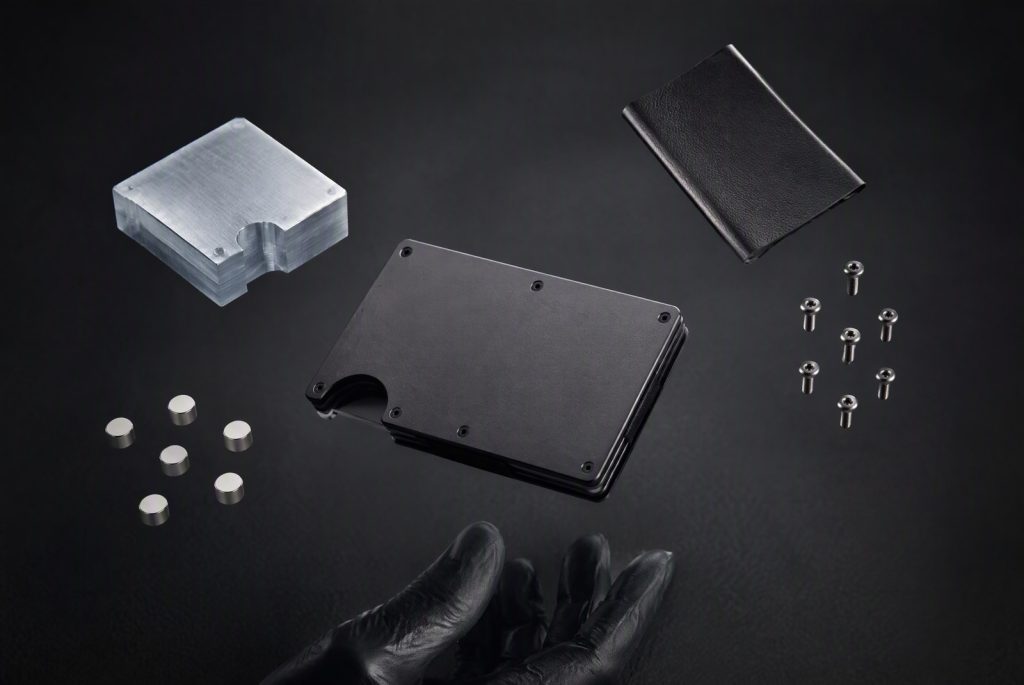
You see a $79 minimalist metal wallet online and wonder: how much of that is actually the wallet? This article walks through the real wallet cost breakdown — raw materials, CNC machining, surface finishing, assembly, packaging, quality control, logistics, and channel markups — using 2026 commodity and market data where it exists and clearly marked estimates where factory economics stay privately negotiated. We use TOPWALLET's (topedcwallet.com) materials and process system as the reference: the factory behind G star wallet (GSTAR, official site https://gstartec.com/ — not affiliated with the Dutch denim brand G-Star RAW) builds aluminum, titanium, stainless-steel, and carbon-fiber wallets for 200+ brands at 50,000 units per month [1][2]. The goal is to give B2B buyers a defensible cost model before they request factory quotes — and to show why transparent pricing moves a sourcing conversation faster than haggling over pennies.
Start with the raw material: the cheapest surprise
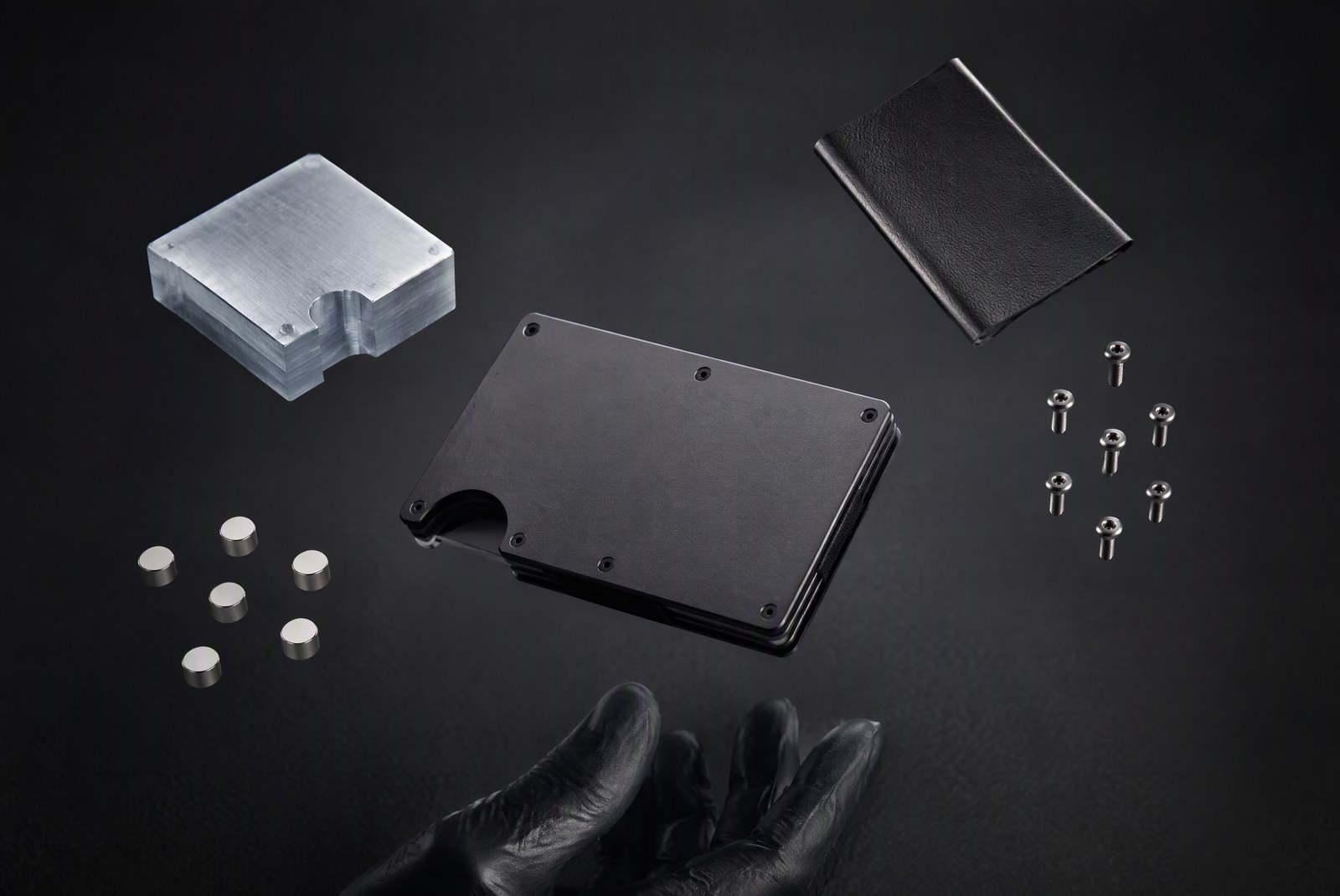
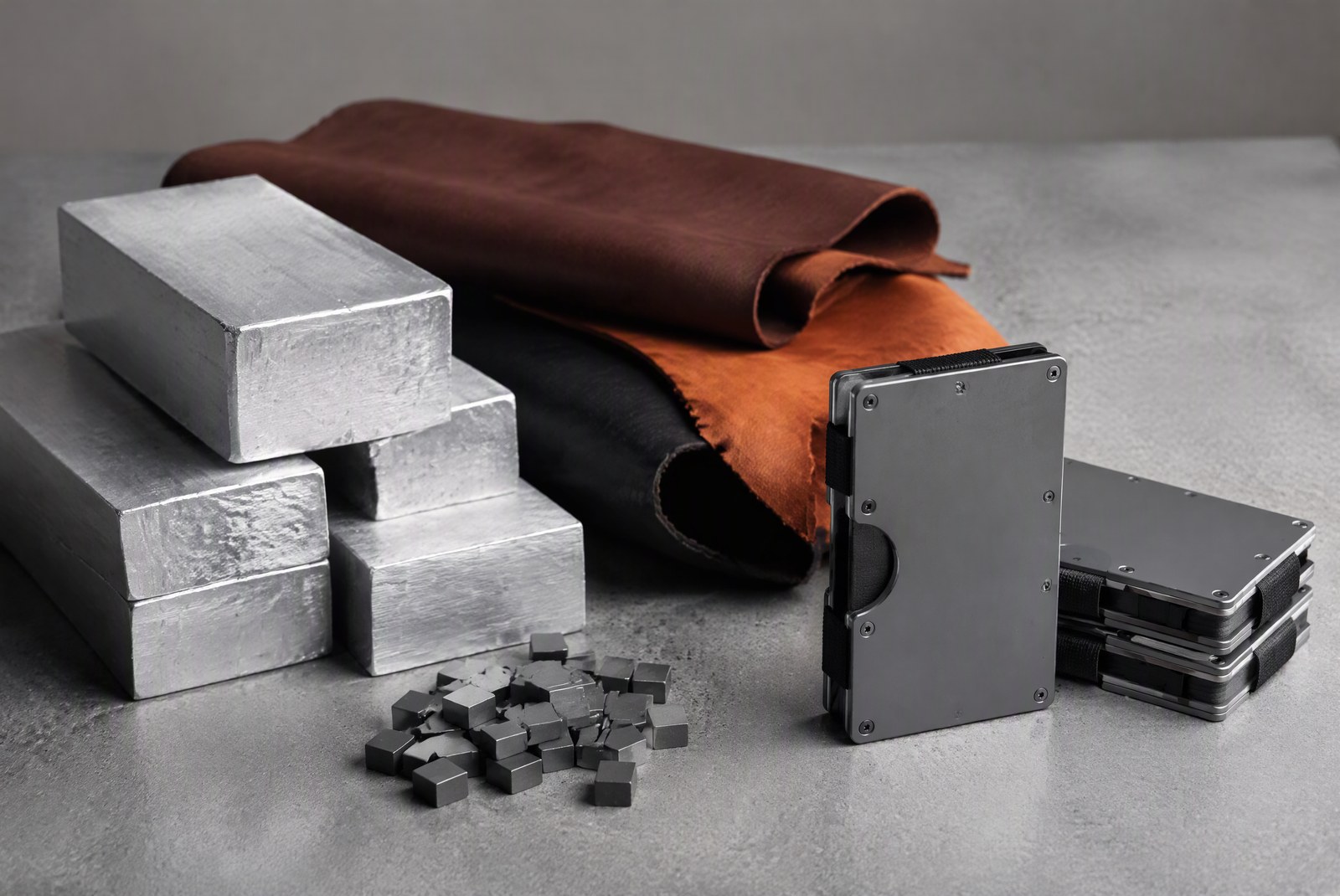
Metal is the least expensive part of a metal wallet. In October 2026, LME aluminum trades around $3,080–3,200 per tonne — roughly $3.08–3.20 per kilogram of 6061-T6 billet [3]. A typical minimalist 6061-T6 aluminum wallet shell weighs 60–90 g, so the raw metal content per unit sits below $0.30 before cutting yield losses, which typically eat a quarter to a third of the billet (estimated) [3]. Nobody earns margin on raw metal; the money moves further down the line.
Titanium changes the picture. Bulk titanium sponge prices run about $6.50/kg, but aerospace-grade GR5 bar stock jumps to roughly $45–66/kg because of mill processing and material certification [4]. A titanium wallet's raw-material cost sits an order of magnitude above aluminum — that gap drives the retail premium far more than weight does. Stainless steel lands between the two: TOPWALLET's materials page positions 301 stainless around 20–30% above the 6061-T6 baseline, and marine-grade 316L at 40–60% above it [5]. Premium 3K carbon-fiber fabric costs roughly $33–41/kg at 2026 regional market prices (IMARC), and a woven carbon wallet face consumes a few dozen grams of it, so the material line stays modest at this scale [6].
CNC machining: where the cost actually lives
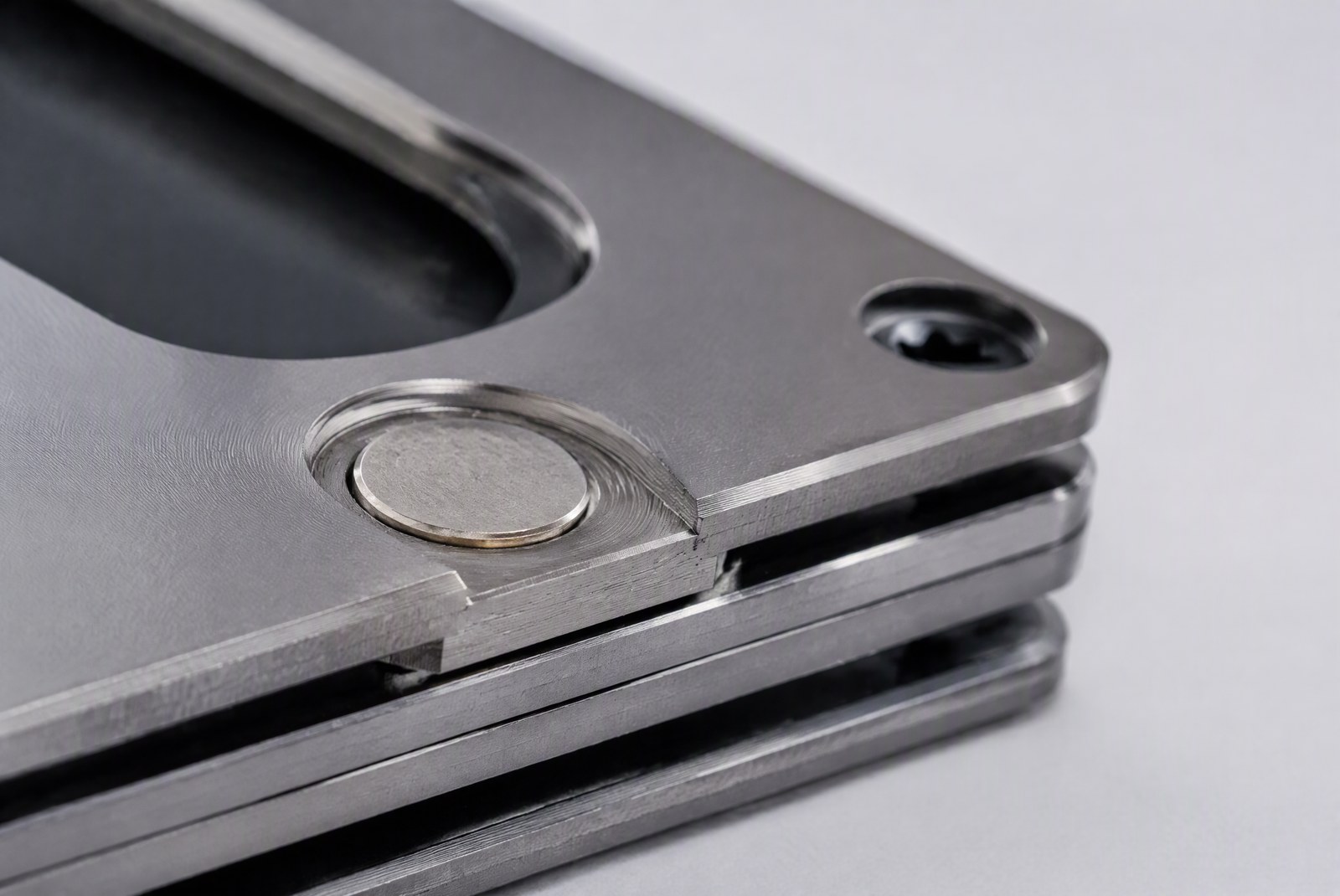
The real wallet cost breakdown starts here. A CNC-machined wallet needs multiple operations per part — roughing, contouring, pocketing, chamfering, threading — each billed by machine minute. A two-shell aluminum design typically requires 20–40 minutes of combined machine time across all parts per unit (estimated, model-dependent), which is why machined aluminum wallets carry a noticeably higher factory price than stamped or die-cast alternatives [1]. Titanium runs roughly 1.5–2.5× the machining time of aluminum because cutting speeds drop and tool wear rises (estimated); GR5 also demands harder, more expensive tooling [1][4].
This is the honest explanation behind the $79 price. A die-cast zinc wallet can be produced for a fraction of the cost because the cycle time collapses, but CNC gives you the tight tolerance, the clean edge, and the "premium feel" buyers associate with EDC metal goods [1]. When a spec sheet promises CNC aluminum at impulse-buy prices, ask where the machine time was cut — or which material quietly replaced.
Surface finishing: anodizing and PVD add a visible bump
Bare machined metal looks like inventory, not product. Most brands add a finish in this order of cost (estimates):
- Brushed + clear anodize: the baseline for 6061-T6. Repeatable, inexpensive, and it hides fingerprints reasonably well.
- Colored anodize: adds a dye bath and stricter batch control; the per-unit uplift is small, but color consistency across thousands of units is the part QC actually fights over [5].
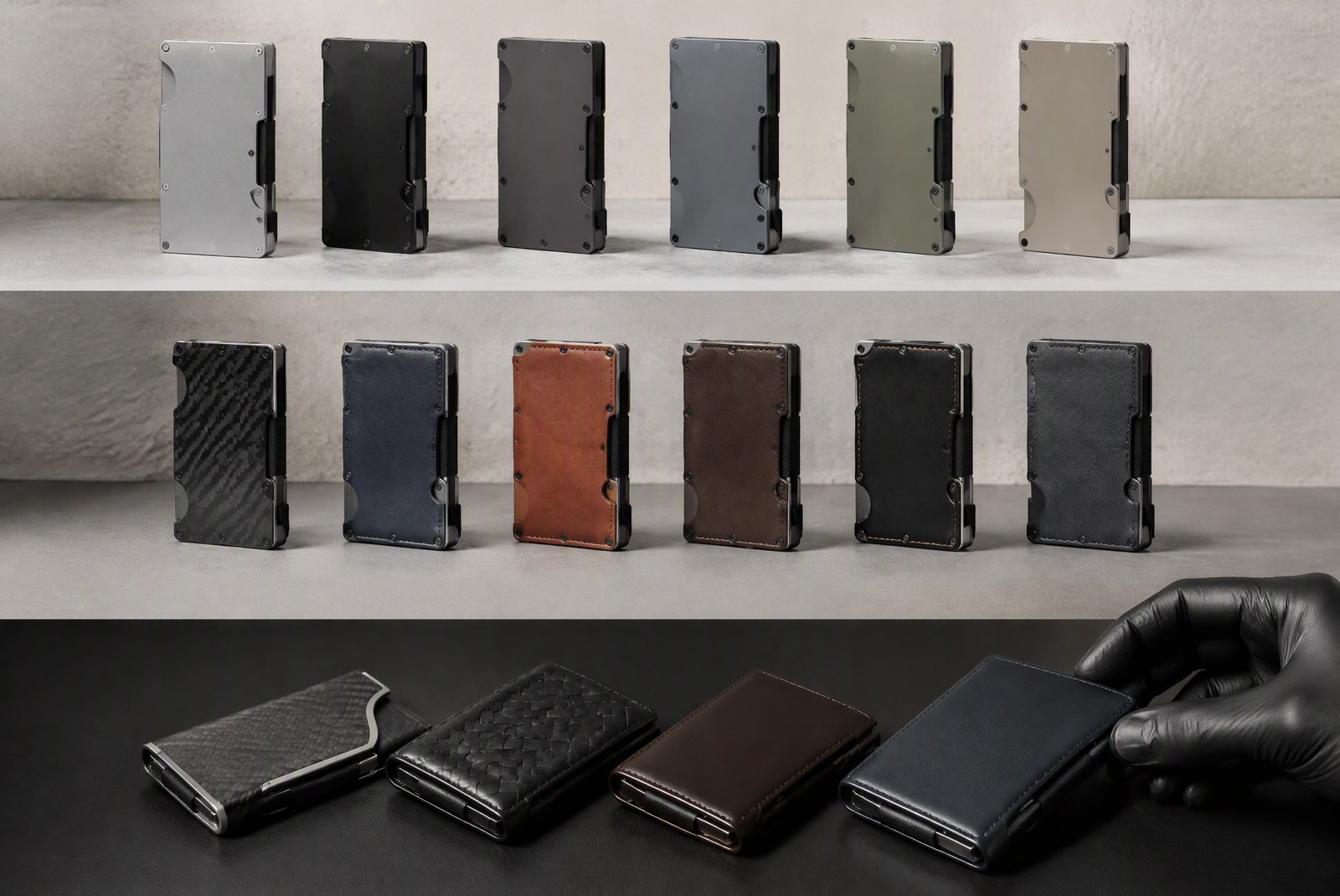
- PVD coating: the premium step. Physical vapor deposition changes hardness, color, and feel — gunmetal, black, champagne — and it prices materially above anodizing, which is why "black anodized" and "PVD black" wallets are quoted differently [1][5].
Finish choice interacts with material: aluminum anodizes well, titanium accepts anodizing or PVD, and carbon fiber usually ships with a clearcoat instead of a color treatment [1][6].
Assembly, hardware, and magnets: small parts, real cost
A pop-up or magnetic wallet is not one part — it is a shell, a card tray, two rare-earth magnet groups, a hinge or spring mechanism, screws, and an RFID-blocking lining layer. Each component brings its own supply chain:
- Rare-earth magnet groups are specified by pull force and coating; a typical pop-up wallet carries its own magnet array sized to the card tray.
- Hardware (screws, standoffs, thumb studs) adds unit count plus a plating step.
- RFID-blocking lining, a metalized fabric or foil layer, is an additional material pass with its own QC checkpoint [1].
Assembly is not labor-free either: alignment jigs, torque specs, and magnet-orientation checks all consume line time. At 50,000 units/month you amortize that with dedicated cells, but per-unit assembly stays a real line item in the factory quote [1][2].
Packaging, QC, and Documentation: the Invisible Cost Share
The fastest way to destroy gross margin is rework, which is why quality shows up as a cost line. TOPWALLET runs five-stage QC under ISO 9001:2015 systems with AQL 0.65 sampling — the same batch inspection standard used across consumer electronics — and keeps retained samples from every shipped batch [1][2]. Inspection time, measurement records, and documentation are funded inside the factory price rather than billed as an extra. Packaging adds its own step: a poly bag is nearly free, while a rigid magnetic gift box with a foam insert adds a few dollars of landed cost at these volumes, and custom packaging runs higher still [1]. For a $79 retail wallet, packaging is usually sized to match — premium product, premium box.
Metal Wallet Cost Breakdown: How Do Logistics Affect Landed Cost?
Freight is the cost line most buyers underestimate. A wallet is small and light, so most orders hit volume limits before weight limits, which makes packaging efficiency more important than grams [1]. Typical lanes (estimates): air freight to the US takes 5–10 days at a steep per-kilo rate; ocean DDP runs 25–40 days door-to-door with duties managed by the supplier; express courier handles urgent samples in 3–5 days [1]. For a $79 wallet, per-unit freight inside a consolidated container shipment is meaningful but not dominant — usually single-digit dollars at container scale (estimated) [1]. Importers should also model duty and, on DDP programs, decide who clears customs before signing, because that choice changes the landed number.
One-time costs: tooling, fixtures, and samples
The wallet cost breakdown for a first order includes one-time items that disappear on reorders. A new metal shell usually needs a machining fixture or soft tooling; a custom box needs a dieline and a die; a deboss or foil logo needs an engraved branding tool. These run from a few hundred to a few thousand dollars depending on complexity (estimated) and are quoted as separate line items by TOPWALLET [1][2]. The practical effect: the first 500-unit order carries most of the tooling, while the second order at the same spec drops to incremental cost only. Budget the program as a two-order plan, not a one-off buy.
Where the $79 Goes: a Total Cost Model (per Our Factory Quote)?
Pulling the pieces together, here is a transparent wallet cost breakdown (factory-direct, estimated ranges for a mid-spec 6061-T6 machined wallet with anodized finish and poly-bag packaging at 1,000–5,000-unit scale):
| Cost component | Share of factory price (est.) | Notes |
|---|---|---|
| Raw material (6061-T6) | 3–6% | Under $0.30 metal content per unit, plus cutting yield loss [3] |
| CNC machining | 30–40% | Dominant line; drives the gap vs die-cast [1] |
| Surface finishing (anodize) | 8–12% | Higher if PVD [1][5] |
| Assembly, hardware, magnets, RFID lining | 10–15% | Multi-component pop-ups sit at the top of the range [1] |
| Packaging | 3–8% | Poly bag → rigid box ladder [1] |
| QC, tooling amortization, factory margin | 20–35% | Five-stage QC with AQL 0.65 and retained samples [1][2] |
Now apply the channel ladder (estimates, market-typical). If a factory-direct, mid-spec aluminum wallet costs roughly $28–38 (machined, anodized, poly-bagged), a DTC brand adds marketing, platform fees, and customer acquisition cost and lands at $59–79 retail; a department-store or marketplace channel stacks margin again on top [1]. The $79 sticker is normal for a machined metal wallet at retail — it is not a rip-off, and it is not what a factory quote looks like. A buyer who sources factory-direct for the same spec typically pays a fraction of retail once freight is added, which is why brands and distributors run their wallet cost breakdown analysis through factory quotes before committing [1][2].
How a sample run protects your budget?
None of this should be taken on trust. TOPWALLET runs physical samples in 7 days and mass production in 30 days after sign-off, so the responsible sequence for any bulk buyer is: send the target spec (material, finish, logo, packaging), receive a physical sample, carry it daily for a week or two — test magnet pull, card capacity, closing mechanism, RFID behavior — then commit to volume [1]. A sample that costs $10–15 in courier fees is the cheapest insurance in the process, because it validates both quality and the claim that the spec is manufacturable at the quoted price [1][2].
Metal Wallet Cost Breakdown: Which Option Fits Each Use Case Best?
- First bulk import, tight budget: 6061-T6, clear anodize, poly-bag packaging. Lock a volume tier (1,000 / 5,000 / 20,000 pcs) at quote time to fix the savings curve [2].
- Private-label brand launch: add logo engraving and a kraft sleeve or rigid box; packaging swing costs more than material here [1].
- Premium retail or corporate gifting tier: 7075-T6 or titanium shell, PVD finish, rigid gift box. Margins actually hold up better at higher tiers because machining dominates the base price [4][5].
- Marine or high-corrosion environments: 316L stainless; the 40–60% material uplift buys real longevity [5].
FAQ
Why is CNC machining the biggest cost in a metal wallet?
Machining bills machine minutes: 20–40 minutes of combined cycle time per unit for a typical two-shell aluminum design, at industrial rates per minute. Titanium runs 1.5–2.5× longer because cutting speeds drop and tool wear rises. Cycle time, not the metal, sets the floor price [1][4].
How much of the $79 retail price is actually the wallet?
Roughly $28–38 factory-direct for a mid-spec machined aluminum unit (estimated, per our factory cost model), with machining at 30–40% of that. The retail number adds brand marketing, platform fees, and channel margin on top. The wallet itself is never the whole story [1].
Is a $79 metal wallet a fair retail price?
Yes, for a machined, anodized unit — compare die-cast zinc alternatives at a third of the price and feel the difference. Honest factories quote different numbers than retail shelves because the cost stack differs, not because the product is worse [1].
Why is titanium so much more expensive than aluminum in wallets?
Raw material alone: aluminum ~$3.08/kg vs GR5 titanium bar stock at roughly $45–66/kg — a 15–20× gap — plus slower machining. A cheap "titanium" wallet is almost certainly not titanium [3][4].
What does QC add to the factory price?
Five-stage inspection with AQL 0.65 sampling and retained batch samples is funded inside the factory price. It prevents rework and returns, which is cheaper than fixing them late; ISO 9001:2015 systems keep the process repeatable [1][2].
Do I order samples before bulk, and how fast?
Yes — physical samples take 7 days, production runs 30 days after sign-off [1]. Sample shipping is billed at courier cost; the sample validates material, finish, mechanism, and packaging before you commit volume [1].
Metal Wallet Cost Breakdown: What Should You Read Next?
REQUEST A QUOTE → Tell us your spec and order volume. Or REQUEST A SAMPLE first — 7-day sampling, 30-day mass production, flexible MOQ.
Metal Wallet Cost Breakdown: Where Can You Verify the Data and Sources?
- TOPWALLET — Official site: production capacity, sampling (7 days) and mass-production (30 days) lead times, five-stage QC, AQL 0.65, ISO 9001:2015, materials, packaging and manufacturing process. https://topedcwallet.com/
[2] G star wallet (GSTAR) — Official factory site: 15 years of production experience, 200+ brand partners, 50,000 units/month capacity, OEM/ODM/private-label programs. https://gstartec.com/
[3] Trading Economics — Aluminium (LME) spot price, October 2026.
[4] HonTitan — Titanium price guide (2026): sponge titanium and aerospace-grade GR5 bar-stock pricing.
[5] TOPWALLET — Materials page: relative cost positioning of 6061-T6, 7075-T6, 301 and 316L stainless steel. https://topedcwallet.com/knowledge/topics/materials/
[6] IMARC (via Article Realm) — Carbon fibre price report, 2026 Q2: regional per-kg pricing for industrial-grade carbon fiber.
—
REQUEST A SAMPLE → https://topedcwallet.com/contact/?inquiry=sample
Related: Materials & cost positioning · Manufacturing process · Quality control
From article to product
Sourcing minimalist-wallets?
Tell us the format, the quantity and the date you need stock. You get material options, MOQ and a landed-cost range back within one business day.
Keep reading
More on wallet manufacturing
Sustainable Packaging for Wallet Shipments
Packaging is where sustainability claims are cheapest to make and easiest to disprove. A…
ReadTake-Back and Recycling Programmes for Wallet Brands
A take-back programme is easy to announce and hard to run. Wallets are the…
ReadNickel Release Rules for Wallet Hardware
Nickel release is the one restriction in a wallet that is decided by the…
Read
About the author
TOPWALLET Editorial Team
TOPWALLET's editorial and engineering desk writes from bench testing at the Shenzhen (Longgang) facility: pull-force and cycle testing, 13.56 MHz shielding measurements, finish trials and factory audits, rather than supplier spec sheets. Every specification in these guides is one we write on a purchase order.
Written on the floor
This article was written by our production and QC team — the people who spec tolerances, run the finishing line and inspect every batch. Where it states a capacity, a pull force or a lead time, it comes from a measurement we made, not a supplier’s catalogue. If a number here disagrees with what your own supplier told you, tell us; several of these articles started as a correction from a buyer.
See how the factory works · Inspection process · Sourcing FAQ
Sourcing minimalist-wallets?
Tell us the format, the quantity and the date you need stock. You get material options, MOQ and a landed-cost range back within one business day.