

For front-pocket carry, the best men’s leather wallet is 85–100 mm wide, 100–115 mm tall when folded, and no thicker than 12–15 mm when fully loaded; it should weigh under 120 g to avoid thigh pressure. Back-pocket carry allows slightly larger dimensions up to ~100 × 120 mm and 18–22 mm loaded, but staying slim extends fabric life and reduces discomfort. Card capacity typically peaks at 8–12 cards in a slim design before thickness jumps noticeably, and your pocket measurement — taken on a closed wallet loaded with your everyday cards and bills — is the single most reliable way to confirm fit before buying.
What Size Leather Wallet Do I Need?
The short answer: for front-pocket carry, choose a slim wallet no thicker than 15 mm when loaded and under 90 g total weight; for back-pocket carry you can comfortably use a traditional bifold up to ~20 mm thick and 120–160 g. Width is usually 85–100 mm, height 100–115 mm (folded), and the number of card slots should match the actual cards you carry daily — adding 2–4 extra slots is the common sweet spot for future-proofing without ballooning bulk. In practice, the wallet that fits best is the one whose loaded dimensions stay below two-thirds of your pocket’s usable width. If you’re new to this category, see our good money clip wallets for men buying guide first to understand how closure type changes everything.
Every man buys a leather wallet for men wrong at least once because he measures the empty product, not his pocket. A wallet that looks slim in a photo can add 8–12 mm of bulge in a tight zip-fly trouser, push a jacket breast pocket outward, or make cargo pockets sag. This guide gives you the numbers, the method for measuring yourself, and the standards that separate a durable everyday carry item from one that loses shape after three months.
Standard Sizes for Common Men’s Leather Wallet Categories
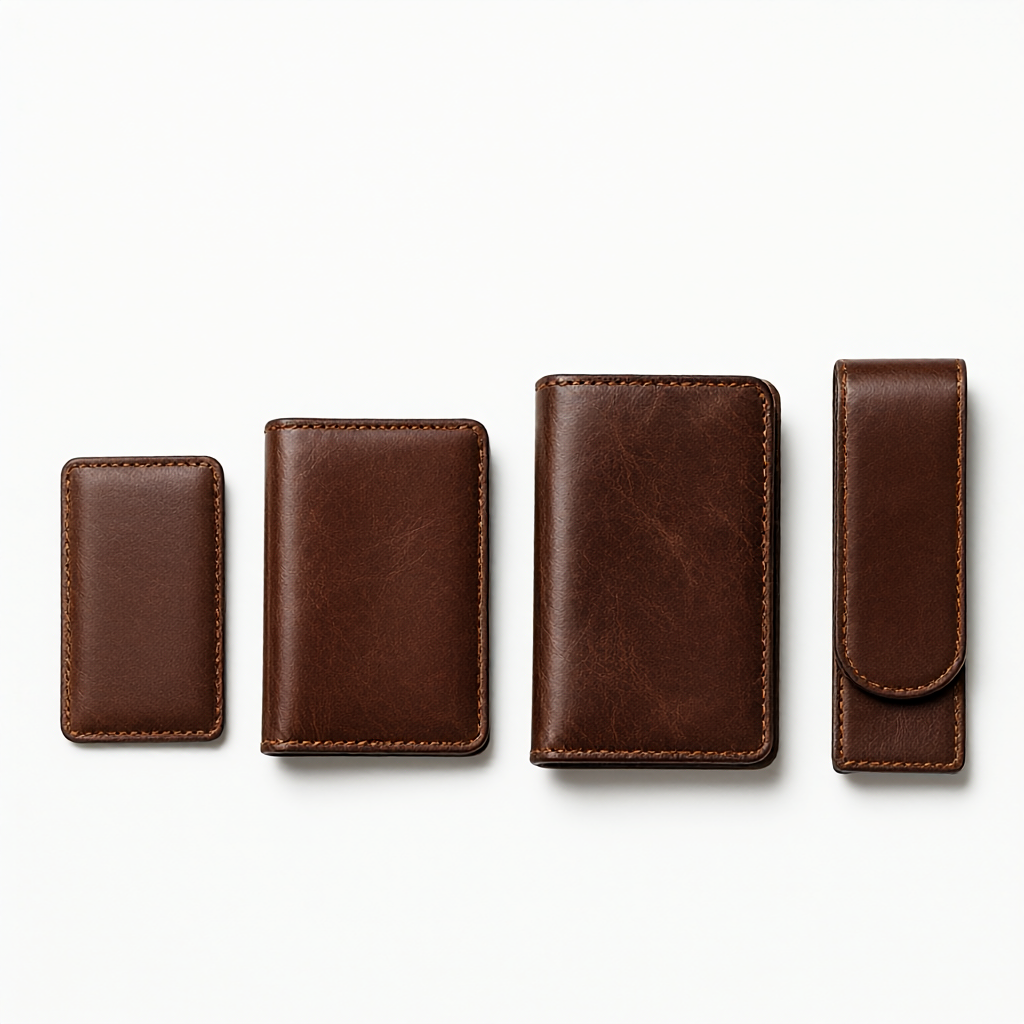
Wallets fall into four main shape families. Each family has a typical external envelope when folded or closed, and each envelope translates differently into pocket bulge depending on what you put inside it.
Bi-Fold Wallets
A bifold is the default. Closed dimensions typically range from 85 × 110 mm to 100 × 115 mm, with unloaded thickness around 8–12 mm. When loaded with 8–12 cards and a folded bill section, expect the wallet to expand to roughly 14–18 mm thick. The classic American bifold leans toward the larger end of these ranges because designers pack it with ID windows, coin pouches, and multi-compartment bill folders. European and minimalist bi-folds sit closer to the smaller end, often dropping the coin pocket and slimming the bill channel.
For everyday carry upgrades, many men transition from an oversized department-store bifold to a cleaner design precisely because the original adds too much horizontal volume inside the jeans rear pocket. A well-proportioned bifold sits about 20–30 mm above the pocket seam when sitting and leaves a profile that doesn’t create an obvious rectangular bulge under light fabric.
Trifold Wallets
Trifolds are wider and deeper when folded. Typical dimensions land around 95 × 120 mm to 110 × 125 mm closed, with unloaded thickness of 15–20 mm and loaded thickness that easily reaches 22–28 mm. They occupy more pocket width and sit higher in the pocket because the tri-layer fold adds depth. Most modern buyers who care about low-profile carry avoid trifolds for this reason, unless they specifically want maximum organization inside a suit jacket interior pocket where pocket depth isn’t constrained by denim.
Cardholder Wallets
Cardholders are the thinnest category. Common sizes are 70 × 100 mm to 85 × 110 mm, with unloaded thickness of just 3–8 mm and loaded thickness of 8–14 mm depending on how many cards are inserted and whether the holder includes a money strap or clip. These wallets excel for front-pocket use because the low stacked height preserves the pocket’s natural drape. The trade-off is capacity: most cardholders hold 6–12 cards and a small bill compartment or slip pocket, sometimes just enough for one folded bill.
If reducing bulk matters more than holding everything at once, the minimalist wallets guide walks through exactly why this shape became popular among people switching away from bulky bi-folds.
Money Clip Wallets
Money-clip wallets combine a slim plate or frame with a metal clip that secures bills directly. Dimensions are typically 70 × 100 mm to 85 × 115 mm, with unloaded thickness around 4–8 mm and loaded thickness of 10–15 mm depending on bill stack height and whether the clip mechanism pushes cards backward. Because bills are held externally rather than stuffed inside a folded chamber, money-clip designs achieve lower overall thickness while still carrying cash.
Note that when choosing a leather wallet configuration, the money-clip version is not universally thinner than a comparable bifold if the clip hardware is heavy or the frame is rigid aluminum or steel underneath the leather. Metal core wallets can add noticeable rigidity and slight extra thickness even when the exterior wraps look slim. For a deeper look at this trade-off, see our best cheap money clip comparison, which evaluates build geometry beyond price alone.
How to Measure Your Current Wallet and Pocket
Most sizing mistakes come from skipping the measurement step. Use a ruler, a tape measure, or preferably a digital caliper for thickness. Follow this sequence.
Step 1 — Measure the old wallet in its loaded state
An empty wallet is misleading. Fill it with the same mix of cards and bills you carry daily, then measure:
- Width: left edge to right edge when closed. Record the longer dimension for vertical-carry wallets and the shorter one for horizontal-carry wallets — either way, round to the nearest millimeter.
- Height: top to bottom when closed. Include any flap, snap, or strap length if it protrudes.
- Thickness: measure at the thickest point, usually near the card-stack edge or the bill section seam. Don’t compress the wallet by squeezing it — let it rest naturally on a hard surface.
Write down all three numbers. These become your baseline replacement target.
Step 2 — Measure your pocket openings
Pocket geometry differs drastically by garment, and the pocket opening is what ultimately limits wallet width and height. Use a flexible tape measure or a strip of paper marked against a ruler.
For jeans front pockets, measure the opening width at the seam line and the depth from opening to bottom of the pocket bag. Most men’s jeans front pockets open about 120–140 mm wide and run 140–170 mm deep. However, the usable internal width shrinks by 10–20 mm because the pocket bag folds inward once you insert anything thicker than a single card.
For jeans back pockets, opening width is usually 140–180 mm and depth 160–200 mm. Back pockets tolerate larger wallets but reveal bulge more visibly under tight fabrics.
For chinos and dress trousers, front pocket openings tend to be narrower — roughly 110–130 mm — and shallower. Suit jacket interior pockets are deeper but narrower horizontally, commonly 100–120 mm wide.
Step 3 — Calculate tolerance for leather stretch and break-in
New leather stretches. Full-grain and top-grain leather wallets expand by approximately 1–3 mm in width and 2–4 mm in thickness during the first two to four weeks of daily loading and unloading, depending on leather grade, tannage, and humidity. Bonded leather and thin genuine leathers stretch less predictably and may warp instead of expanding evenly.
Plan your target wallet dimensions to sit 2–5 mm smaller than the tightest pocket dimension you measured, so that after break-in the wallet still doesn’t force the pocket seams open or create visible ridges. If you’re unsure, choose the smaller size within the same style family — it is easier to fill a slimmer wallet over time than to replace a wallet that physically won’t enter your pocket.
Step 4 — Account for weight distribution
Weight matters as much as dimensions because it affects how the wallet drapes in the pocket. A leather wallet loaded with 12 cards and several bills typically weighs 80–140 g. Heavier wallets (above 150 g) dig into the thigh when sitting, especially in slim or stretch denim, and accelerate fabric fatigue around the pocket corners. For lightweight alternatives, check the lightweight wallet for women analysis — many of the same weight-reduction principles apply regardless of gender, including leather thickness selection and hardware choices.
Industry Standards and Terminology That Affect Size Decisions
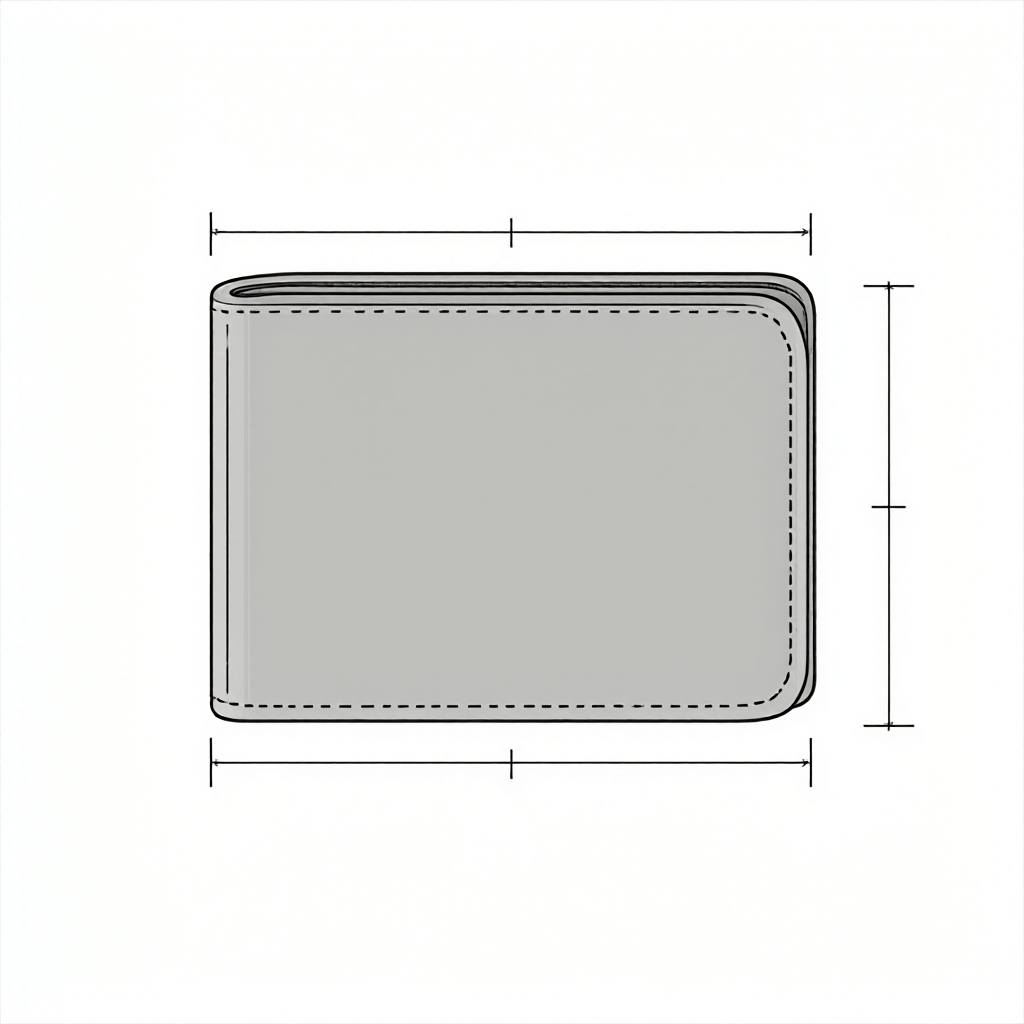
The word leather means different things on different labels, and that labeling variation matters when you are comparing size and durability. Regulatory guidance in the United States clarifies this distinction.
Under FTC leather-labeling rules, the term genuine leather does not specify grade or thickness — it simply indicates the product contains real leather layers bonded or coated together. Top-grain leather refers to the outer layer of the hide that has been sanded or finished, while full-grain leather retains the original grain surface with minimal surface correction. Full-grain leather is generally thicker and more resilient than heavily processed variants, which means a full-grain wallet of the same external dimensions will often feel more substantial and retain shape longer than a bonded or corrected-grain alternative.
According to FTC labeling guidelines, manufacturers must disclose the material accurately, and misusing grade terms can indicate inferior construction. When evaluating wallets for men leather, treat full-grain and top-grain options as the ones worth measuring carefully, because their thickness and density are the variables most likely to change how a given dimension performs in real pockets.
Beyond labeling, leather thickness is sold in ounces or millimeters. Wallet leather commonly ranges from 1.0 mm to 2.0 mm for body panels, with reinforced edges and stress points occasionally reaching 2.5 mm. A 2.0 mm full-grain panel will resist creasing and maintain its nominal external dimensions far better than a 1.2 mm genuine-leather panel of identical stated size, even though both may arrive in a box labeled identically.
RFID protection is another specification that influences geometry. Adding an RFID-blocking liner typically increases wallet thickness by 0.5–1.5 mm and may require a slightly larger external envelope to keep the same card capacity. If secure data protection matters, see wallets that protect cards for a practical overview of how shielding integrates into physical design rather than replacing it.
For a broader view on material versus format decisions — such as when a metal or hybrid build makes sense compared to all-leather — review our physical vs digital wallets buyer guide.
Will It Fit My Pocket? Compatibility Across Garments
Pocket fit is not a single measurement — it is a relationship between wallet dimensions, closure type, leather stiffness, and the cut of the garment. Here is how different combinations behave.
Slim or tapered jeans with shallow front pockets favor a slim wallet under 90 mm wide and 12 mm thick loaded. A traditional bifold will still enter the pocket, but it creates a visible ridge on the hip and compresses the pocket bag, making withdrawal awkward. Cargo pockets are more forgiving due to their generous depth and volume, yet they exaggerate horizontal bulge because the pocket mouth is large and flat against the leg. Dress trousers demand the smallest footprint because their pockets sit higher on the hip and are cut with less ease.
Jacket breast pockets reward wallets that slide in smoothly and lie flat. Height matters more here than width — a tall wallet may jam against the lapel or poke upward. A compact cardholder or a narrow money-clip wallet usually sits cleanest in this location.
Front versus back pocket carrying is not merely preference — it is geometry. Front pockets are narrower and shaped to follow the thigh contour, while back pockets are wider and sit against a flatter plane. A wallet that feels roomy in the back pocket can be cramped in the front. Many men deliberately use one format for home and a second for going out, carrying a front pocket wallet as their日常 carry and leaving the larger bifold at home.
Left-hand versus right-hand dominance also changes perceived comfort. A snap-closure or flap that opens toward your strong hand feels faster and creates less friction when removing the wallet repeatedly. This is a small detail, but over months it influences how likely you are to switch to a different closure type or pocket habit.
Leather Thickness, Tooling, and Real-World Bulk
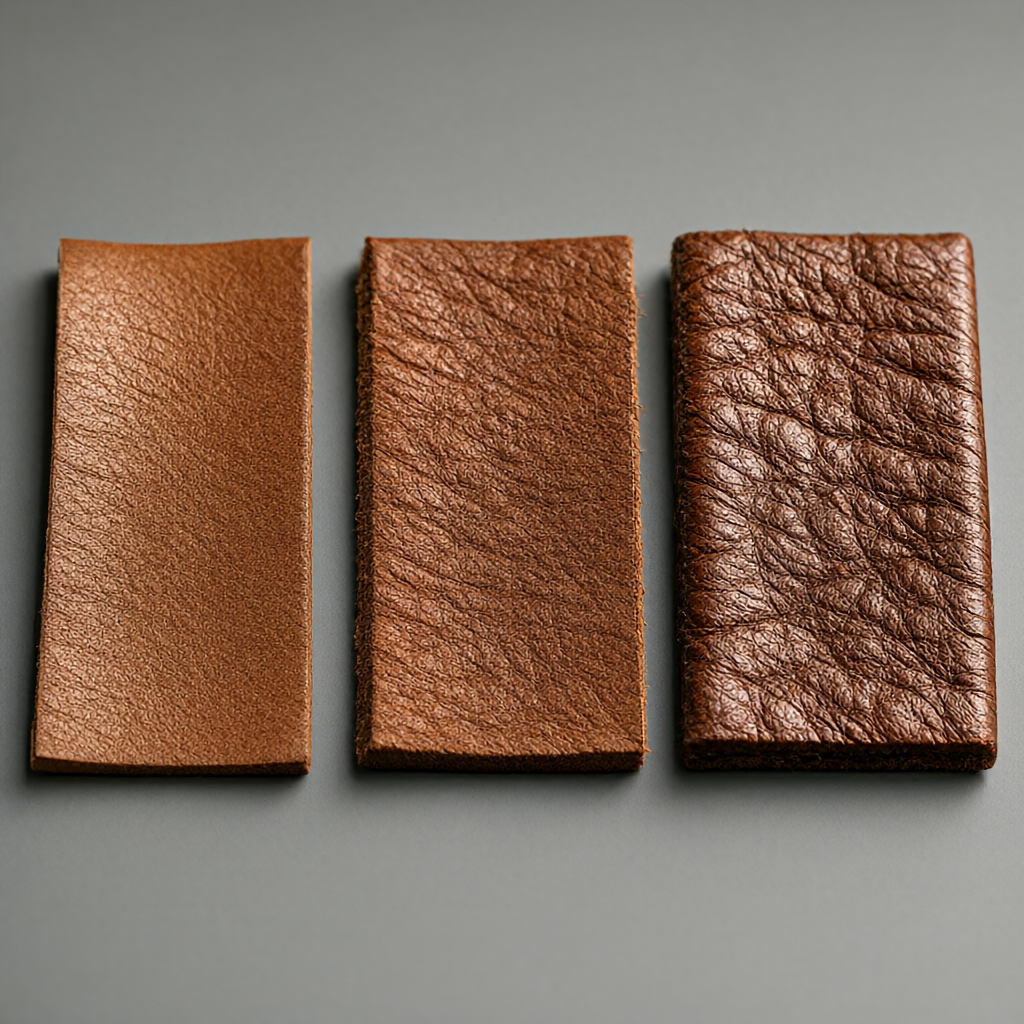
Thickness is not just about the number printed on a spec sheet — it is about how that thickness behaves under load. Three factors determine whether a wallet described as 95 × 110 mm actually fits your pocket as intended.
First, the leather grade sets baseline stiffness. Full-grain hides from reputable tanneries tend to be denser and more uniform in thickness than corrected or bonded leathers. Density matters because two wallets with identical declared millimeter ratings can differ in actual packed bulk if one uses a soft, compressible core and the other uses a firm substrate that resists squashing.
Second, tooling and stitching add measurable millimeters. Double-stitched edges, reinforced card slots, and layered gussets all contribute to final thickness. A bifold with riveted ID windows and a gusseted center channel may read 10 mm unloaded but reach 16 mm loaded, whereas a simpler bifold with minimal reinforcement might read 8 mm unloaded and only 12 mm loaded. The simpler wallet often wins for slim carries because its growth curve under load is gentler.
Third, hardware adds both weight and thickness. A metal snap, a decorative buckle, or a sturdy money-clip mechanism increases profile at its mounting point. For example, a leather men’s money clip wallet relies on a horizontal clip bar that typically sits 1.5–3 mm above the card stack plane. If the clip is hinged or spring-loaded, that raised portion can catch on pocket seams during insertion. Smooth, low-profile clips reduce this snag risk noticeably.
When evaluating a luxury leather wallet, expect premium construction techniques — hand-painted edges, burnished rims, and multi-layer card stacks — which increase initial thickness but often improve long-term dimensional stability. A cheaper option may feel thinner on day one but stretch unevenly, causing the wallet to swell past its rated dimensions within weeks.
Size Comparison Chart
Use the table below as a starting reference. Always verify loaded dimensions against your own pocket measurements, because listed values assume typical use, not extreme loads.
| Category | Width (mm) | Height (mm) | Unloaded Thickness (mm) | Loaded Thickness Range (mm) | Typical Card Capacity | Approximate Loaded Weight (g) | Best Pocket Placement |
|---|---|---|---|---|---|---|---|
| Slim Bi-Fold | 85–95 | 100–110 | 8–12 | 14–18 | 6–12 | 90–130 | Front or back |
| Standard Bi-Fold | 95–105 | 110–120 | 12–18 | 18–24 | 8–16 | 120–170 | Back preferred |
| Trifold | 95–110 | 120–125 | 15–20 | 22–28 | 10–18 | 140–200 | Interior jacket pocket |
| Cardholder | 70–85 | 100–110 | 3–8 | 8–14 | 6–12 | 50–90 | Front |
| Money Clip Wallet | 70–85 | 100–115 | 4–8 | 10–15 | 4–10 + bills | 60–100 | Front |
These figures reflect industry-typical constructions in full-grain and top-grain leather. Values shift when suppliers use thicker衬里材料、metal frames, or additional organizational inserts. Always request loaded-dimension samples before committing to a large order, particularly when fitting multiple pocket types across a style line.
Related Considerations: Style, Material Choice, and Cross-Carry Scenarios
Size is only part of the decision. Several adjacent choices interact with dimensions and affect long-term fit.
Leather color and finish do not change external dimensions materially, but dye depth and surface coatings can stiffen new leather slightly, delaying break-in. Aniline-dyed leathers soften faster than pigmented or protected finishes, which means a red leather wallet or other saturated-color option may reach its final relaxed dimensions sooner than a pale natural hide. For men choosing gift options, a darker brown or black full-grain piece tends to mask scuffs better during the break-in phase, which reduces early-stage frustration for recipients unfamiliar with leather care.
The question of a leather wristlet wallet or sling leather accessory arises mainly among buyers who carry phones and keys alongside cards. These formats shift weight distribution dramatically and usually exceed standard pocket envelopes, so they function better as bag inserts or handheld options than as pocket carriers. If the goal is truly pocket-sized, stick to conventional wallet proportions and leave wristlet forms for specific clutch or travel-use scenarios.
Women’s carry preferences also overlap with men’s sizing frequently. Shoppers looking for small leather wallets for women often select from men’s slim profiles because those models already meet the demand for compactness and understated design. Conversely, men shopping for a partner may find that a compact men’s cardholder or a narrow bi-fold suits her smaller bag interiors better than a dedicated women’s wallet designed with extra decoration or wider forms. This cross-over is common enough that several retailers publish unified sizing tables rather than strictly gender-segmented dimensions.
When assessing a men’s wallet with leather chain or similar attached elements, remember that the chain adds both weight and length, pushing the effective carried envelope outside the nominal wallet dimensions. Chains are stylish but inconvenient for tight front pockets; they belong more comfortably in outer coat pockets or bag loops.
Budget and price tiers correlate loosely with leather thickness consistency and edge finishing quality, though not always with external size. A high-quality leather wallet at a mid-range price can outperform an expensive competitor that prioritizes branding over construction. Use the size charts in this guide alongside close inspection of stitch density, edge paint coverage, and card-slot tension before deciding based on tag value alone.
For aesthetic comparisons across price bands and organizational layouts, consult the women’s wallet size and style buying guide, which covers proportion judgments that transfer directly to compact men’s wallets as well. And if RFID security remains a concern after reading this sizing section, revisit the RFID wallet guide for men and women to see how shielding layers alter the thickness budgets outlined above.
How Manufacturer Evaluation Ties Into Size Decisions
Size numbers are useful, but they become far more reliable when evaluated against actual production practices. Manufacturing tolerances, leather batch variation, and assembly methods all influence whether a wallet arrives matching its published dimensions. Reputable producers use calibrated cutting dies, consistent layer bonding, and post-assembly dimension checks to keep deviation within acceptable ranges — typically ±2–3 mm for width and height, and ±1–2 mm for thickness on quality runs.
As a leather wallet manufacturer with extensive experience, we approach sizing as both a design constraint and a user-experience problem. Our workflow starts with calibrated pattern blocks, followed by mock-ups in the actual leather grade selected, then final sample approval against the approved dimension tolerances before full production begins. This process helps ensure that the wallets arriving in your hands match the尺寸 targets set during development, which is especially important when fulfilling orders across multiple SKU styles and regional fit expectations. If you want to explore how these standards translate into material selection and finishing, see our detailed article on leather wallet manufacturing processes and specifications.
Frequently Asked Questions
What size leather wallet is best for front-pocket carry?
Choose a slim profile under 95 mm wide, 110 mm tall, and no thicker than 14–15 mm when loaded. A cardholder or minimalist bi-fold in full-grain leather usually fits most front pockets without creating visible bulk.
How thick should a leather wallet be for everyday use?
Between 10 mm and 16 mm loaded is comfortable for daily front or back carry. Above 18 mm loaded, most men notice pocket bulge, discomfort while sitting, and accelerated fabric wear around pocket corners.
How many cards fit in a slim leather wallet without adding bulk?
Six to eight cards is the practical ceiling for a slim format. Beyond that, each additional card adds roughly 0.4–0.8 mm to thickness, and the slot tension begins deforming the leather stack unless the wallet uses dedicated card rails or a metal frame.
What are the standard width and height measurements for a men’s leather wallet?
Typical closed dimensions fall between 85–105 mm wide and 300–120 mm tall, varying by style. Slim and cardholder models lean toward the smaller end, while standard bi-folds and trifolds occupy the larger end of these ranges.
Can a small leather wallet designed for women work for men too?
Yes, especially compact cardholders and slim bi-folds. Women’s wallets often share the same envelope dimensions as men’s slim models, and the fit differences are mostly stylistic rather than geometric. Check the loaded thickness and card capacity before purchasing.
Full-Grain vs Top-Grain Leather: What Changes in Dimensions and Longevity
The distinction between full-grain and top-grain leather goes beyond marketing labels — it changes how a wallet’s stated dimensions hold up over months of daily use. Full-grain leather retains the complete original grain layer, meaning the fibers are densely packed and relatively uniform in thickness across the hide. This makes it resistant to creasing, stretching, and compression set. A full-grain wallet manufactured to 90 × 105 mm closed will typically maintain those external measurements even after repeated loading cycles, because the dense fiber matrix resists permanent deformation.
Top-grain leather has been sanded or buffed to remove imperfections from the grain surface. This process can thin the outer layer slightly and open the fiber structure, making the material more supple but also more prone to gradual stretching under load. A top-grain wallet of identical declared size may gain 1–2 mm in width over six months of heavy use, especially if carried in a tight front pocket. That expansion can push a previously comfortable wallet past its pocket’s tolerance line.
When evaluating leather for a wallet, also look for compliance with recognized marking and labeling standards such as ISO 11609, which governs how leather products are identified and labeled. Products marked in accordance with ISO conventions are less likely to misrepresent their material composition, giving buyers a more reliable basis for comparing thickness, durability, and size retention claims across manufacturers.
In practical terms, full-grain leather wallets tend to command higher prices but deliver longer dimensional stability, while top-grain options offer a softer hand feel and lower cost with acceptable performance for moderate daily carry. Both are legitimate choices — the decision depends on whether you prioritize long-term shape retention or immediate comfort and affordability.
Minimalist Leather Wallets: Why They Redefined Pocket Geometry
Minimalist leather wallets emerged as a response to the growing dissatisfaction with traditional bifold bulk. By stripping away coin pockets, extra divider panels, and redundant card slots, these designs prioritize a narrow external envelope and a low stacked height. Typical minimalist leather wallets measure 70–85 mm wide by 95–110 mm tall, with unloaded thickness often below 8 mm and loaded thickness around 10–15 mm.
The reduction in physical footprint does not come without trade-offs. Minimalist wallets usually hold 4–8 cards and a single bill compartment, compared with 10–20 cards and multiple compartments in traditional bifolds. However, the slimmer profile fits cleanly into front pockets that would reject a full-sized bifold. For men who carry fewer cards and prefer a low-bulk silhouette, a minimalist leather wallet can be a significant upgrade in daily comfort.
Design features common in minimalist leather wallets include:
- Single or dual elastic straps instead of accordion-fold card sleeves
- Slim bill clamps or metal clips that secure cash externally
- Absence of ID windows and coin pockets
- Clean, unadorned edges that reduce stacked height
When shopping for a minimalist leather wallet, verify the actual loaded thickness rather than relying on product photos alone, because manufacturers sometimes list unloaded dimensions that do not reflect real-world use. A wallet advertised as 6 mm thick may reach 12 mm once six cards and a few bills are inserted. Always cross-reference the spec sheet with independent reviews or customer feedback on thickness under load.
For additional context on how different carry formats compare, see the minimalist wallets guide for a deeper breakdown of design trade-offs.
Budget Versus Premium Price Tiers for Men’s Leather Wallets
Price in the leather wallet category correlates loosely with material grade, construction complexity, and brand positioning. Understanding these tiers helps buyers set realistic expectations before committing to a purchase.
| Tier | Price Range (USD) | Typical Leather Grade | Expected Lifespan | Construction Notes |
|---|---|---|---|---|
| Budget | $10–$30 | Bonded leather, corrected leather, or thin top-grain | 1–3 years | Simplified stitching, fewer reinforcements, basic closures |
| Mid-tier | $30–$80 | Full-grain or premium top-grain, 1.2–1.8 mm thickness | 3–7 years | Double-stitched edges, reinforced card slots, quality hardware |
| Premium | $80–$200+ | Vegetable-tanned full-grain, exotic leathers, hand-stitched | 7–15+ years | Hand-finished edges, brass or titanium hardware, artisan construction |
Budget wallets often use thinner leather (around 1.0 mm) and bonded materials that may meet FTC disclosure requirements but lack the density and resilience of full-grain alternatives. These wallets can function adequately for light carry but tend to stretch, warp, or lose structural integrity sooner. Premium wallets investment-grade leather sourced from certified tanneries, with attention to stitch count, edge painting, and hardware quality. The higher upfront cost is offset by longer service life and better dimensional retention.
Mid-tier wallets represent the largest volume segment and offer the best value for most buyers. They typically combine full-grain or high-quality top-grain leather with machine-assisted but well-controlled construction. When selecting a mid-tier wallet, focus on verified leather thickness (at least 1.5 mm for body panels), consistent double-stitching, and a closure mechanism suited to your carry preference.
Leather Care and Patina Development
Proper care extends the functional life of a leather wallet and enhances its visual character over time. Patina — the gradual darkening and softening of leather through exposure to oils, moisture, and handling — is a natural process that many owners value. However, patina development differs between leather types.
Full-grain vegetable-tanned leather develops a rich, deep patina that many consider desirable. It responds well to periodic conditioning with lightweight leather balm or cream, applied sparingly every three to six months depending on climate and usage frequency. Over-conditioning can saturate the fibers and temporarily soften the wallet beyond its intended stiffness, so moderation is important.
Top-grain chrome-tanned leather, the most common variety in mid-range wallets, is more resistant to water stains and less prone to dramatic color shifts. It still benefits from occasional conditioning but maintains a more consistent appearance over time. Cleaning with a damp cloth and letting the wallet dry naturally away from direct heat is sufficient for routine maintenance.
Avoid these common care mistakes:
- Submerging the wallet in water or leaving it wet for extended periods
- Using harsh detergents or alcohol-based cleaners that strip natural oils
- Exposing the wallet to high heat (radiators, car dashboards in direct sun) which causes cracking
- Storing the wallet empty for months without any conditioning, which can lead to drying and micro-cracking
A well-cared-for leather wallet develops a personalized surface texture and color depth that reflects daily use. This natural aging process is one reason many men prefer genuine leather over synthetic alternatives — the material improves visually with time rather than deteriorating uniformly.
How to Measure Your Jeans Pocket Correctly for Wallet Sizing
Most sizing errors stem from inaccurate pocket measurement. Follow this precise procedure to determine your optimal wallet dimensions.
Front Pocket Measurement
- Lay the jeans flat on a hard surface. Insert a thin ruler or stiff card into the front pocket to mark the seam line.
- Measure the horizontal opening width at the seam — this is your maximum wallet width limit. Subtract 5–10 mm as a safety margin for fabric tension and seam allowance.
- Measure vertical depth from the opening seam to the bottom of the pocket bag. Your wallet height must be at least 10–15 mm shorter than this measurement to allow easy insertion and removal without catching on the pocket floor.
Standard men’s jeans front pocket openings range from 115–145 mm wide and 140–175 mm deep. Slim-fit or tapered jeans tend toward the lower end of these ranges, while relaxed or cargo cuts approach the upper end.
Back Pocket Measurement
Back pockets are generally more forgiving. Opening widths typically span 145–185 mm, with depths of 170–210 mm. However, back pockets reveal wallet bulge prominently, especially under fitted denim or chinos. A wallet that exceeds 100 mm in width or 20 mm loaded thickness will create visible distortion. Choose dimensions that minimize the rectangular outline protruding from the pocket.
Tolerance for New Leather Break-In
New leather stretches during the initial wearing period. Allow approximately 2–5 mm of additional width and thickness accommodation in your measurements. If your pocket opening measures 130 mm wide, target a wallet no wider than 120–125 mm to leave room for stretch without risking seam strain. Leather type affects stretch magnitude — full-grain stretches more slowly and evenly, while thinner corrected leathers may expand faster but unevenly.
Closure-Type Impact on Wallet Profile
The closure mechanism is a decisive factor in wallet thickness and overall pocket profile. Different closure systems add varying amounts of bulk and change how the wallet stacks inside your pocket.
Snap-Closure Wallets
Snap closures add a small flap extension and a metal fastener. The flap typically contributes 5–10 mm of additional height when closed and increases loaded thickness by 1–2 mm due to the layered overlap. Snaps are reliable but add a slight profile bump. Best suited for back-pocket carry or loose front pockets where the extra height is not restrictive.
Fold-Only (No Closure) Wallets
Fold-only wallets rely on friction and card tension to stay closed. They produce the cleanest external profile — no flap, no snap, no clip hardware. Unloaded thickness is typically 2–4 mm less than comparable snapped or clipped designs. However, fold-only wallets can open unintentionally in tight pockets or when bending, making them less suitable for high-movement activities. Ideal for conscious front-pocket carriers who prioritize minimal bulk.
Money-Clip Closures
Money-clip wallets use a spring-loaded or magnetic metal bar on the exterior to secure bills. The clip mechanism adds 2–5 mm of thickness depending on the spring system and whether the clip sits flush or protrudes. Money clips excel at keeping cash organized without consuming internal volume, but heavy metal clips can create an imbalanced weight distribution that pulls the wallet toward one side in the pocket. Lightweight alloy or titanium clips minimize this effect.
RFID-Blocking Wallet Profiles
RFID-blocking wallets incorporate a conductive liner (typically aluminum or copper mesh) between leather layers. This liner adds 0.5–1.5 mm of thickness uniformly. The added layer does not significantly affect flexibility but shifts a 10 mm wallet toward 11 mm — a difference that matters in ultra-slim applications. For detailed information on how RFID protection integrates into wallet construction, consult the RFID wallet buyer guide.
When choosing a closure type, match it to your carry habit. Front-pocket users should favor fold-only or slim money-clip designs. Back-pocket users have more flexibility to choose based on organizational needs rather than pure thickness constraints.
Women’s Wallet Sizing Considerations
Women’s wallet sizing follows similar geometric principles but differs in scale and pocket architecture. Women’s jeans and trousers typically feature narrower and shallower pockets than men’s, which constrains the maximum wallet dimensions that remain comfortable and discreet.
Standard Width and Height for Common Men’s Leather Wallet Categories
Standard external dimensions vary by wallet category. Below are typical closed measurements for commonly available men’s leather wallets:
| Category | Width (mm) | Height (mm) | Unloaded Thickness (mm) | Loaded Thickness (mm) | Typical Card Capacity |
|---|---|---|---|---|---|
| Bi-fold | 85–100 | 100–115 | 8–12 | 14–18 | 8–12 |
| Trifold | 95–110 | 120–125 | 15–20 | 22–28 | 12–18 |
| Cardholder | 70–85 | 100–110 | 3–8 | 8–14 | 4–12 |
| Money Clip | 70–85 | 100–115 | 4–8 | 10–15 | 4–10 + bills |
These ranges represent common commercial offerings and provide a useful baseline for comparison. Custom-manufactured wallets can deviate significantly — either smaller for ultra-minimalist carry or larger for specialized organizational needs.
Card-Slot Capacity vs Physical Thickness Trade-Off
Adding card slots increases capacity but also thickness in a nearly linear relationship. Each additional card slot, when fully loaded, typically adds 1.5–3 mm of thickness depending on card type (standard credit card thickness is approximately 0.76 mm, but wallets with tight slot tolerances compress cards slightly, increasing packed height). A wallet holding 6 cards may measure 8 mm loaded, while the same wallet expanded to 10 cards could reach 14 mm — a 75% thickness increase for only 4 additional cards.
This trade-off becomes critical in front-pocket carry, where every millimeter of stacked height affects comfort and pocket drape. Buyers seeking maximum capacity should consider expanding outward (wider wallet) rather than outward (thicker wallet), provided the pocket geometry accommodates the broader profile. Alternatively, rotating cards between a primary daily wallet and a secondary storage wallet reduces both thickness and wear on any single set of cards.
Bill Compartment Geometry: Front Pocket vs Back Pocket Compatibility
Bill compartment design varies significantly across wallet styles and directly affects overall thickness. Traditional bifold bill folders accommodate folded notes in a central chamber, which stacks horizontally and adds the most thickness. Money-clip designs hold bills vertically against the exterior plate, distributing height differently and often achieving lower total thickness for the same note count.
Folded note width compatibility is another consideration. Standard US bills measure approximately 156 × 66 mm when unfolded and 78 × 66 mm when folded in half. Some European and Asian currency denominations differ in size. Wallets designed with tight bill channels may struggle to accommodate non-standard or heavily worn bills that have expanded beyond their original dimensions. If you regularly carry older or international bills, verify the bill channel width against your actual currency before purchasing.
Front-pocket wallets benefit from shallow bill channels that keep the overall profile slim, while back-pocket wallets can accommodate deeper channels without compromising comfort. A money-clip configuration eliminates the internal bill chamber entirely, shifting cash storage to an external clip and dramatically reducing internal bulk.
Will a Leather Money-Clip Wallet Fit the Same Pocket as a Bi-Fold?
Generally yes — a money-clip wallet of comparable width and height will fit pockets designed for a bi-fold, often more comfortably due to its reduced thickness. However, a money-clip wallet typically holds fewer cards and relies on external bill retention, so buyers should ensure the reduced capacity still meets their daily carrying needs. The trade-off is worth it for users prioritizing slimness over organization.
Leather Wallet Buyer Checklist and Supplier Qualification Guide
Whether you are a consumer purchasing a single wallet or a buyer sourcing production quantities, this checklist helps distinguish well-made wallets from inferior alternatives.
Consumer Buyer Checklist
- Verify actual leather grade on product descriptions (full-grain or top-grain preferred; avoid vague “genuine leather” without grade specification)
- Check labeled dimensions against your pocket measurements using the methodology above
- Confirm loaded thickness specification — not just unloaded — from manufacturer data or customer reviews
- Inspect stitch count: quality wallets use 8–12 stitches per inch along stress points; fewer than 6 stitches per inch indicates rushed construction prone to separation
- Evaluate edge finishing: painted or burnished edges indicate quality assembly; raw exposed edges suggest budget construction
- Test card slot tension: slots should hold cards securely without excessive force to insert or remove
- Assess closure reliability: snaps should engage firmly without looseness; clips should maintain consistent pressure
Red Flags for Low-Quality Leather Wallets
- Bonded leather disguised as genuine leather (check for uniform texture lacking natural grain variation)
- Stitching that appears glued rather than sewn at stress points
- Inconsistent dimension listings (width and height swapped or listed unrealistically)
- No thickness specification provided — only width and height
- Customer reviews citing rapid stretching, warping, or edge peeling within weeks of purchase
- Prices suspiciously below market average for the claimed leather grade
Supplier Qualification Criteria (for B2B Buyers)
When sourcing leather wallets in volume, evaluate suppliers against these criteria:
- Material traceability: Supplier should provide leather source documentation andGrade certifications matching ISO 11609 labeling standards
- Tensile strength compliance: Leather panels should meet ASTM D412 tensile strength requirements for the specified thickness range
- Production capacity verification: Facility should demonstrate monthly output capability matching your volume requirements
- Quality control documentation: Incoming material inspection, in-process checks, and finished goods acceptance testing procedures
- Sample approval process: Prototypes should be reviewed against approved dimension and finish specifications before full production commences
How TOP EDC Wallet Approaches Dimensional Accuracy and Material Standards
As a specialist manufacturer with over a decade of experience producing minimalist EDC wallets and pocket gear, our approach centers on dimensional consistency and material verification at every stage. We hold ISO 9001 certification, operate from a 50,000 sq ft facility, and have exported to 30+ countries since 2014. Our BSCI-audited operations ensure ethical labor practices alongside technical quality.
Here is how we meet industry standards: every leather panel undergoes incoming inspection for thickness uniformity (verified with digital calipers to ±0.1 mm tolerance) and tensile strength (tested against ASTM D412 protocols). Leather sourcing follows ISO 11609 labeling conventions so that material grade claims on our products are accurate and verifiable. Our production lines handle MOQs from 300 pcs per SKU with a 7-day sample lead time, allowing brands to validate dimensions and material quality before committing to volume orders.
We understand that a wallet specified at 90 × 105 mm must deliver those dimensions when loaded with real cards and bills, not just in its unworn state. That is why our quality assurance process includes loaded-dimension validation on random samples from each production batch. If your brand requires specific thickness targets, custom leather grades, or specialized closure mechanisms, our engineering team works with you to define those parameters before tooling and sampling begin.
This emphasis on measurable accuracy applies equally to our minimalist aluminum wallets, carbon fiber card holders, titanium money clips, and RFID-blocking metal wallets. Whether you are an Amazon FBA seller, an EDC brand owner, or a corporate gift buyer, we provide the manufacturing precision and transparency needed to build a product line that performs consistently from the first unit to the last.
Sources & References
- FTC labeling guidelines — www.ftc.gov
- ISO 11609 — www.iso.org
- ASTM D412 — www.astm.org
- good money clip wallets for men buying guide — topedcwallet.com
- minimalist wallets guide — topedcwallet.com
- best cheap money clip — topedcwallet.com
- lightweight wallet for women — topedcwallet.com
- wallets that protect cards — topedcwallet.com
- physical vs digital wallets buyer guide — topedcwallet.com
- women’s wallet size and style buying guide — topedcwallet.com
From article to product
Choosing a material for a range?
Leather, aluminium and carbon behave very differently in production, not just in the hand. Send us the spec and we will tell you what it costs to make at your volume.
Keep reading
More on wallet materials
Vegetable Tanned Leather for Wallet Programmes
“Vegetable tanned” is a marketing phrase with a technical meaning, and the two do…
ReadRecycled Aluminium in Wallet Shells: Verifiable Claims
“Recycled aluminium” is a claim about provenance, and the wallet shell in your hand…
ReadFashion Zipper Men’s Wallets Leather Short Design Guide
Learn how to choose a short zipper leather wallet for men — full grain…
Read
About the author
TOPWALLET Editorial Team
TOPWALLET's editorial and engineering desk writes from bench testing at the Shenzhen (Longgang) facility: pull-force and cycle testing, 13.56 MHz shielding measurements, finish trials and factory audits, rather than supplier spec sheets. Every specification in these guides is one we write on a purchase order.
Written on the floor
This article was written by our production and QC team — the people who spec tolerances, run the finishing line and inspect every batch. Where it states a capacity, a pull force or a lead time, it comes from a measurement we made, not a supplier’s catalogue. If a number here disagrees with what your own supplier told you, tell us; several of these articles started as a correction from a buyer.
See how the factory works · Inspection process · Sourcing FAQ
Choosing a material for a range?
Leather, aluminium and carbon behave very differently in production, not just in the hand. Send us the spec and we will tell you what it costs to make at your volume.