

A mens designer wallet balances material quality, capacity, security features, and form factor to match your daily carry habits. In 2026, the best options range from slim anodized aluminum cardholders under 50 grams to refined leather bifolds, with RFID shielding, ergonomic profiles, and smart-integration compatibility now expected across all price tiers. Choose based on your card count, payment style (physical vs. digital), and environment—not just brand recognition.
What Makes a Mens Designer Wallet Worth Buying?
A mens designer wallet is defined less by a visible logo and more by intentional design decisions: premium material selection, precision construction, thoughtful capacity optimization, and reliable security features like RFID wallet shielding. When choosing the right one, prioritize three things—material durability, daily capacity that matches your habits, and whether the form factor supports both physical and digital payment methods. The best designer wallets balance minimal bulk with maximum functionality, whether that’s a slim metal cardholder for the everyday carry crowd or a refined leather bi-fold for formal settings.
Designer doesn’t automatically mean expensive heritage craftsmanship anymore. In 2026, the category includes both traditional luxury leather goods and performance-driven minimalist wallet manufacturers offering titanium, carbon fiber, and aerospace aluminum options. The shift toward compact carry has reshaped expectations: buyers now expect RFID protection, sleek profiles, and durable finishes as standard, not upgrades. Understanding what separates good design from marketing tells makes it easier to evaluate options beyond brand names.
What Defines a Designer vs. Luxury Wallet
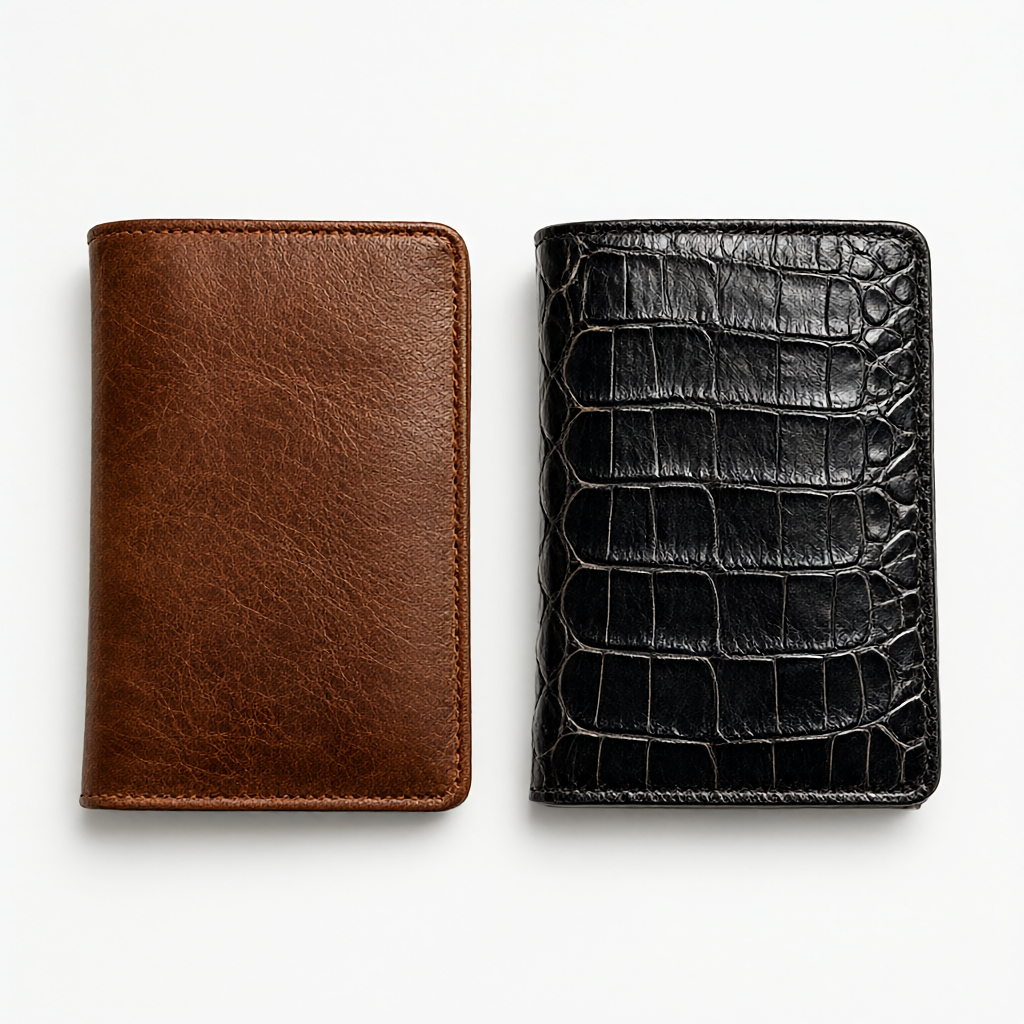
The distinction between “designer” and “luxury wallet” matters because it frames what you’re paying for.
Designer wallets emphasize function-first engineering—smart layout, materials chosen for longevity, and form factors built around modern carry habits. A designer label might appear on a sleek small wallets product made from CNC-machined aluminum or a structured carbon fiber card holder with integrated money clip functionality. The focus is on solving practical problems: reducing bulk, protecting against skim fraud, and organizing cards efficiently.
Luxury wallet products lean on heritage materials, artisanal branding, and status signaling. Traditional full-grain leather bifold wallets from established fashion houses fall here. These often prioritize aesthetics and brand perception over weight reduction or compact design.
| Attribute | Designer Wallet | Luxury Wallet |
|---|---|---|
| Primary value | Function and material innovation | Brand prestige and craftsmanship heritage |
| Common materials | Aluminum, titanium, carbon fiber, synthetic leathers | Full-grain leather, exotic skins |
| Typical profile | Slim, minimalist, low-bulk | Thicker, traditional bifold/trifold |
| Price range | $20–$150 | $100–$500+ |
| Target user | EDC enthusiasts, professionals seeking efficiency | Status-conscious buyers, gift recipients |
Both categories have merit. If you carry five cards and a folded bill daily, a designer-focused option likely serves you better. If gifting a wedding present or prioritizing leather patina over years of use, a luxury wallet may align more closely with your priorities. Understanding this distinction prevents overpaying for branding you won’t notice in daily use.
How Do Material Choices Affect Performance?
Material selection is the single biggest factor determining a wallet’s lifespan, feel, and suitability for your lifestyle. Each material carries measurable trade-offs that go beyond aesthetics.
Leather remains the most recognized wallet material. Full-grain leather develops a patina over time and feels substantial in hand, but it adds bulk and absorbs moisture. Vegetable-tanned varieties soften gradually, while corrected grain options resist water better but lack the same aging character. Leather wallets suit formal environments but aren’t ideal for active outdoor carry.
Aluminum offers high strength-to-weight ratio and naturally resists corrosion, especially when anodized. Anodized aluminum wallets typically weigh between 40 and 70 grams—far lighter than comparable leather models—and maintain a consistent appearance without breaking in. The surface can scratch, though anodizing provides reasonable scratch resistance. This material dominates the minimalist wallet segment and pairs well with users who prioritize pocket comfort. See our minimalist wallets guide for deeper comparison of profiles and mechanisms.
Carbon fiber provides exceptional rigidity and a distinctive textured appearance. It’s lightweight, impervious to water and chemicals, and doesn’t degrade under UV exposure. The main limitation is cost—genuine woven carbon fiber laminates command premium pricing—and brittleness under extreme impact compared to metal alternatives.
Titanium sits between aluminum and carbon fiber in price while offering superior strength and biocompatibility. Titanium wallets resist corrosion without coatings, feel dense yet light, and develop a subtle oxide patina over time. They tend to be the heaviest metal option but offer the longest structural lifespan. For an in-depth look at how titanium compares to other metal options in everyday carry, explore our money clip evaluation guide.
| Material | Weight Range | Durability | Water Resistance | Typical Price Tier |
|---|---|---|---|---|
| Full-grain leather | 80–150 g | High (ages well) | Low | Mid to premium |
| Anodized aluminum | 40–70 g | Very high | Excellent | Mid-range |
| Carbon fiber | 30–55 g | High | Excellent | Premium |
| Titanium | 50–80 g | Exceptional | Excellent | Premium |
The right material depends on your environment. Active outdoor use favors metals or carbon fiber. Office and formal settings accept leather without issue. If moisture exposure is frequent—rain commutes, beach trips—skip untreated leather and choose anodized metal or carbon fiber.
What Are the Key Specs for Capacity and Form Factor?
Capacity dictates whether a wallet disappears into your pocket or creates a visible bulge. The gap between what manufacturers advertise and what actually fits comfortably is where most buyer regrets originate.
For most adult men carrying daily essentials, a practical target is 6 to 10 card slots and room for 2 to 4 bills. This accommodates identification, two to four credit or debit cards, transit passes, and folded cash without forcing compression that damages cards or strains the mechanism. Larger-capacity models exist, but each additional card slot increases thickness measurably.
Small wallets designed for reduced bulk often hold 4 to 6 cards maximum. These work well for minimalist carriers who rely heavily on digital payments and only carry essential identification and one or two frequently used cards. The trade-off is reduced flexibility—if you need extra cards for different scenarios, a small wallet forces choices.
Big skinny wallet designs occupy a middle ground, typically offering 8 to 12 card positions in a narrow profile. The “skinny” designation refers to lateral width rather than total thickness, allowing more capacity without increasing pocket bulge horizontally. These appeal to users transitioning from traditional bifolds toward compact carry without sacrificing card options entirely.
Form factor fundamentally shapes usability:
- Bifold wallets fold in half, protecting cards between panels. Traditional and spacious, but the thickest category. Best for users who carry significant cash and multiple cards regularly.
- Trifold wallets fold twice, offering the highest capacity at the cost of maximum bulk. Declining popularity as carry habits shift toward fewer items.
- Cardholder-style wallets hold cards in a slip or elastic sleeve with optional cash compartments. The slimmest option, ideal for digital-payment-forward lifestyles.
- Money clip wallets combine card storage with a spring-loaded or magnetic clip for bills. Popular among professionals who prefer organized cash presentation.
When evaluating capacity claims, consider your actual monthly carry. Count your current cards and most-common bills. Select a wallet rated 20% above that number to accommodate occasional extras without exceeding comfortable bulk thresholds.
Why Does RFID Protection Matter?
Radio frequency identification wallet technology addresses a genuine—though often overstated—threat: electronic skimming of contactless card data. Modern payment cards and some identification documents contain NFC chips that transmit data when held near a compatible reader within centimeters. Skimmers capable of reading this signal exist commercially, making theoretical vulnerability real even if large-scale fraud cases remain uncommon.
RFID-blocking materials work by creating a Faraday cage effect. Conductive metals like aluminum, titanium, or specialized silver-thread linings intercept radio waves before they reach embedded chips. Effective shielding requires continuous conductive coverage—gaps or thin spots reduce protection.
Independent testing referenced by the Federal Trade Commission (FTC.gov) indicates that while RFID skimming is technically possible, actual widespread fraud utilizing this method is rare in most consumer markets. The risk varies by region and card issuer adoption rates of contactless technology. Nevertheless, RFID protection has become standard in many mid-range and premium wallets because the marginal cost is low and the peace of mind is tangible.
Key considerations when evaluating RFID protection:
- Look for wallets explicitly rated to block 13.56 MHz frequencies—the standard for contactless payment and access control cards.
- Verify that the blocking layer covers all card positions, not just one compartment. Some budget designs shield only the front slot.
- Reputable manufacturers comply with relevant safety and material standards. Industry testing frameworks参考ASTM International standards for electromagnetic shielding effectiveness, providing baseline criteria for performance claims.
- Metal wallets inherently provide RFID shielding due to their conductive construction; fabric or leather wallets require added liners to achieve equivalent protection.
If you carry multiple contactless cards or travel frequently through areas with high contactless adoption, RFID shielding is a practical addition. For purely cash-based carry or regions with limited contactless infrastructure, it’s a lower priority.
Can Small Wallets Work With Digital Payment Systems?
Smartphone-integrated payment ecosystems have changed wallet purchasing calculus significantly. Apps like Google Wallet, Apple Pay, and Samsung Pay store payment credentials digitally, reducing reliance on physical cards for transactions. This shift directly affects capacity requirements.
Users who primarily pay via phone and only occasionally need physical cards for vendor policies, tips, or backup can comfortably use small wallets or even standalone cardholders. A 4-card capacity with a cash strap handles most daily scenarios for this demographic. The remaining physical cards serve as redundancy—if your phone dies or a merchant lacks digital payment capability, you still have options.
However, going too minimal introduces friction. Carrying only one or two cards means you must remember exactly which card is selected before leaving home. Forgotten cards create awkward situations at checkout. A baseline of three to four physical cards—primary debit, primary credit, and one backup—provides resilience without adding bulk.
Digital payment compatibility also influences wallet design choices. Users relying on smartphones for payments benefit from slim profiles that don’t interfere with wireless charging alignment. Metal wallets with thick RFID-blocking layers can sometimes cause minor interference with phone charging pads, though this is uncommon with properly designed constructions.
The practical recommendation: match wallet capacity to your digital payment dependency level. High digital reliance enables smaller formats; mixed usage warrants moderate capacity; cash-dominant environments still favor traditional bifold or trifold designs with generous cash storage.
What Is the Difference Between a Coach Snap Wallet and Minimalist Design?
The coach snap wallet represents a traditional American leather goods archetype—full-size bifold construction with snap closure, multiple interior pockets, and ample cash storage. These wallets prioritize capacity and classic styling over compactness. They’re common gift choices, professional staples, and suitable for users who value organized storage above pocket minimalism.
Minimalist wallet design takes the opposite approach: strip away nonessentials, reduce layers, and optimize for pocket invisibility. Card-only storage replaces cash sleeves. Slip or tension mechanisms replace snaps and zippers. The result is a wallet that occupies a fraction of the space while serving the same core function—holding payment instruments securely.
| Feature | Coach Snap Wallet (Traditional) | Minimalist Wallet |
|---|---|---|
| Construction | Multi-layer leather bifold/trifold | Single-plane card holder or slim stack |
| Cash handling | Bill compartment, often gusseted | Optional strap or rear slot |
| Card capacity | 8–16+ slots across multiple panels | 4–10 slots in single arrangement |
| Thickness | 15–25 mm closed | 6–12 mm closed |
| Weight | 100–180 g | 30–70 g |
| Closure | Snap button, zip, or open | Elastic band, slip fit, or spring clip |
| Ideal user | Organizers, formal attire wearers, cash users | EDC enthusiasts, urban commuters, minimal carry |
Neither approach is universally superior. A lawyer attending court hearings and carrying multiple business cards and case documents benefits from traditional capacity. A software engineer commuting by bike with a phone wallet and laptop bag thrives with a slim metal cardholder. The deciding factor is your actual daily inventory, not aesthetic preference alone.
How Should You Evaluate Budget Tiers and Value?
Wallet pricing spans roughly $15 to $300+, with meaningful differences between tiers that correlate to materials, construction complexity, and brand positioning.
Entry tier ($15–$40): Typically basic leather or synthetic materials, simple card-sleeve construction, limited feature set. RFID protection, if present, is often add-on rather than integrated. Suitable as replacement wallets or gift purchases where budget constraints dominate. Quality variance is high—some brands deliver surprisingly solid products; others use materials that deteriorate within months.
Mid tier ($40–$100): This range captures most quality mens designer wallets including options from dedicated EDC manufacturers and emerging brand labels. Materials upgrade to genuine leather with better stitching, aluminum or entry-level titanium construction, and integrated RFID shielding. Construction consistency improves significantly, and warranty support becomes more reliable. This is the sweet spot for balancing performance, durability, and value.
Premium tier ($100–$200): Full-grain or exotic leathers from established houses, premium metals with advanced finishing, intricate mechanism designs. Brand heritage contributes meaningfully to price alongside materials. Materials and craftsmanship justify costs for users who prioritize these attributes.
Luxury tier ($200+): Heritage brand pricing dominated by logo value, exclusive materials, and artisanal production. Functional superiority over mid-tier options is often marginal—the premium largely reflects brand equity rather than measurable performance gains.
Value assessment should weigh three variables: expected lifespan, daily usage intensity, and personal priority hierarchy. A $60 aluminum wallet that lasts seven years of daily use delivers better annual cost than a $180 leather wallet replaced every two years. Conversely, if leather patina and formal appearance are important to you, spending more on quality leather makes sense.
Calculate rough annual cost by dividing purchase price by estimated service life. A $50 wallet lasting five years costs $10 annually. A $150 wallet lasting three years costs $50 annually. The cheaper upfront option may represent worse long-term value depending on durability differences.
What Standards Govern Quality Manufacturing?
Understanding manufacturing standards helps evaluate claims beyond marketing copy and identify products built to consistent quality benchmarks.
Quality-certified manufacturers operate under recognized management system standards. The ISO 9001 standard specifies requirements for a quality management system, ensuring consistent processes from material sourcing through final inspection. Facilities certified to ISO 9001 maintain documented procedures for defect prevention, corrective action, and continuous improvement—standards that directly affect product consistency and warranty responsiveness.
Social compliance audits like BSCI (Business Social Compliance Initiative) verify that manufacturing facilities meet recognized labor and ethical standards. While not a product quality metric per se, BSCI certification indicates operational transparency and reduces supply chain risk, particularly relevant for buyers evaluating long-term supplier relationships.
Material safety standards such as REACH and RoHS restrict hazardous substances in products sold in major markets. REACH compliance ensures that metal alloys, coatings, and adhesives used in wallet construction meet European Union chemical safety thresholds. RoHS restrictions limit lead, mercury, and other restricted materials—important for products carried in close contact with skin.
Third-party testing from laboratories like SGS validates material composition claims and functional performance, providing independent verification of specifications like RFID shielding effectiveness and material durability ratings.
When evaluating manufacturers or product origins, these certifications indicate operational maturity. Products lacking any verifiable quality framework may still perform adequately, but consistent quality assurance—especially across production batches—becomes harder to guarantee without documented systems.
As manufacturers in this space, we align our production processes with these recognized standards. Our facility operates under ISO 9001 quality management principles, maintains BSCI compliance for social responsibility, and ensures all materials meet REACH and RoHS requirements. This framework helps us deliver consistent results across custom orders ranging from 300-piece minimum runs to larger volume commitments, with sample turnaround within approximately one week. For buyers evaluating production partners, these standards provide measurable indicators of operational capability beyond showroom samples.
What Color and Style Options Should You Consider?
Color selection combines practical considerations with personal styling preferences. Practicality matters more than most buyers initially account for.
Black wallet options represent the most versatile choice across contexts. Black anodized aluminum, carbon fiber, and dyed leather coordinate with virtually any outfit and hide scuffs, fingerprints, and minor abrasions more effectively than lighter finishes. For a professional environment or multi-purpose carry, black minimizes visibility of wear patterns and matches organizational accessories like laptop sleeves and belt hardware.
Red wallet choices make a deliberate visual statement. Red anodized aluminum or dyed leather stands out noticeably and works well as a conversation piece or personal signature element. However, lighter pigments and vivid dyes show scratches and finish wear more readily than neutral tones, and red may clash with conservative professional dress codes where understated accessories are preferred.
Beyond color, finish texture influences both appearance and practical performance. Matte anodized surfaces resist showing micro-scratches better than polished or brushed finishes. Textured carbon fiber Weaves add grip and visual depth while masking fingerprint oil accumulation. Smooth leather develops character marks through use that some buyers appreciate as patina; others prefer maintaining uniform appearance.
For gift for him scenarios, neutral colors—black, gunmetal gray, dark brown leather—carry lower selection risk because they complement diverse personal style preferences. Bold colors suit recipients with known style confidence or when the giver wants to make a distinctive impression.
Which Wallet Type Suits Different Everyday Carry Profiles?
Matching wallet design to lifestyle context prevents mismatched purchases that sit unused or get swapped for simpler alternatives.
Business professionals typically benefit from slim leather cardholders or ultra-thin metal wallets that slide easily into dress shirt pockets or suit jacket内袋 without creating visible outline distortion under tailored clothing. Three to five card capacity with one cash slot usually satisfies professional needs where digital payments supplement physical cards.
Everyday carry enthusiasts often prefer tool-oriented designs—titanium or aluminum wallets with money clip integration, modular card systems, and tool-compatible edges. These users value weight reduction, tactile feedback, and compatibility with other EDC items like pocket knives and flashlights.
Travel lightweight carry prioritizes minimal baggage space and security. Compact wallets with RFID protection, secure closures preventing accidental ejection, and durable finishes resisting airport handling wear are essential. Many travelers switch to money clip configurations to reduce bulk during extended trips.
Outdoor and active users require corrosion-resistant materials, secure retention mechanisms that survive jostling, and finishes resistant to UV degradation and moisture exposure. Metal and carbon fiber options generally outperform leather in these conditions.
Your dominant context should drive the selection more than aspirational use cases. A wallet bought for hiking adventures but carried to an office desk every day will underperform both purposes if optimized for neither.
Frequently Asked Questions
What’s in your wallet — ideal card and cash capacity?
Most adults carry between 6 and 10 cards and fold 2 to 4 bills daily. A wallet targeting this range—often called a 6–8 card holder—balances capacity and slimness effectively. Heavy digital payment users may prefer 4-card configurations, while professionals managing multiple business cards benefit from 10+ slot arrangements.
How does an RFID wallet protect against digital theft?
RFID-blocking wallets use conductive materials—aluminum, titanium, or embedded metallic mesh—to create a Faraday cage around contactless cards. This blocks radio waves at 13.56 MHz, the frequency used by NFC payment chips and access control cards. Effectiveness requires complete signal coverage around all card slots. See our RFID wallet guide for deeper technical details.
Are hardware wallets compatible with everyday carry designs?
Physical cryptocurrency hardware wallets (Ledger, Trezor) are roughly credit-card-sized devices. Most cardholder-style wallets accommodate one hardware wallet alongside 2–4 payment cards. Slim metal cardholders may constrain insertion if the device exceeds 1.5 mm thickness. Buyers checking hardware wallet compatibility should verify internal slot dimensions before purchasing.
Can a small wallet work if I use Google Wallet digitally?
Yes. Users whose primary payment method is a smartphone via Google Wallet or Apple Pay frequently carry only 2–4 physical cards for backup scenarios. A minimal cardholder sized for this usage pattern weighs as little as 25 grams and fits comfortably in front or back pockets without noticeable bulge. Our comparison guide for men’s money clip wallets covers additional format considerations for digital-first carriers.
What’s the difference between a Coach Snap Wallet and a minimalist design?
Coach Snap Wallets use full-grain leather bifolds with snap closures, offering 8–16+ card slots and large bill compartments in a 15–25 mm profile. Minimalist designs strip away nonessential layers, targeting 4–10 cards in 6–12 mm profiles using aluminum, titanium, or carbon fiber construction. The traditional approach prioritizes capacity and heritage aesthetics; the minimalist approach prioritizes pocket invisibility and weight reduction.
Is a big skinny wallet better than a traditional bifold?
“Big skinny” wallets offer increased card capacity within a narrow lateral profile, trading some vertical thickness for reduced horizontal bulk. They suit users transitioning from bifolds who still need 8–12 card positions. Traditional bifolds remain preferable for heavy cash carriers and formal settings where established aesthetics matter. Neither format is universally superior—the decision hinges on individual inventory habits and dressing context.
What’s in your wallet—ideal card and cash capacity?
Most adults manage daily needs with 6 to 10 cards and 2 to 4 bills. Exceeding 10 cards typically adds unnecessary bulk. Fewer than 4 leaves insufficient backup for payment failures or forgotten digital devices. Match capacity to actual monthly usage, selecting a wallet rated slightly higher than your average load.
How does an RFID wallet protect against digital theft?
RFID-blocking wallets incorporate conductive materials—typically aluminum foil, metal mesh, or copper-silver thread lining—that create a Faraday cage around embedded card chips. This barrier intercepts radio frequency signals at 13.56 MHz, preventing unauthorized scanners from accessing contactless card data. Continuous conductive coverage across all card positions is essential for effective shielding.
Are hardware wallets compatible with everyday carry designs?
Software-based digital wallets like Google Wallet integrate seamlessly with slim and minimalist physical wallet designs. Hardware cryptocurrency wallets—physical USB or Bluetooth devices—usually require dedicated carrying solutions due to their size and the need for secure, accessible storage separate from everyday payment cards. Most EDC wallets do not accommodate dedicated hardware crypto wallets without modification.
Can a small wallet work if I use Google Wallet digitally?
Yes. Digital payment adoption enables significant capacity reduction. Users relying primarily on smartphone payments can comfortably carry 3 to 5 physical cards in a slim cardholder format. Maintain at least two physical cards as backup for scenarios where phones fail, batteries die, or merchants reject digital payments.
What’s the difference between a coach snap wallet and a minimalist design?
A Coach snap wallet is a traditional full-capacity leather bifold with snap closure, multiple document pockets, and high cash storage—emphasizing organization over compactness. Minimalist designs eliminate redundant compartments, reduce thickness dramatically, and prioritize pocket invisibility while maintaining essential card and cash access through simplified mechanisms.
How Do Color Options Affect Practical Use?
Color selection extends beyond aesthetics—it influences visibility, scratch concealment, and professional appropriateness.
Black wallet finishes are the most popular choice in the EDC category. Anodized black aluminum hides minor scratches and scuffs effectively, maintains a uniform appearance over time, and pairs well with both casual and formal attire. The dark surface also reduces visible fingerprints and smudges, making it practical for daily handling. Black is particularly favored by users who prefer understated, tool-like aesthetics.
Red wallet and other vibrant color options serve different purposes. Bright finishes stand out visually, which can be useful for quick identification in a bag or pocket. However, colored anodized layers may show wear patterns more readily than matte black, especially on high-contact edges. Red and bold colors also appeal to users seeking personal expression or promotional branding opportunities—common requests in custom OEM orders where logo placement and accent colors matter.
Other common color finishes include:
- Silver/natural: Shows the raw anodized aluminum beneath; reveals micro-scratches faster but conveys an industrial, utilitarian look.
- Blue, green, purple: Achieved through harder anodizing or PVD coating; offer visual distinction while maintaining corrosion resistance.
- Camouflage/two-tone: Popular in tactical EDC circles; usually achieved through laser engraving layered over anodized surfaces.
For business professionals, black and silver remain the safest choices. For outdoor enthusiasts or personal expression, bold colors provide personality without compromising function. If you’re ordering custom units for a brand or promotional campaign, color consistency across batches depends on controlled anodizing processes—variation outside ±3% Delta E is typically considered unacceptable in professional manufacturing.
What Are Hardware Wallets and Are They Compatible With Everyday Carry Designs?
A hardware wallet refers to a dedicated cryptographic device used to store private keys for cryptocurrencies offline. While traditionally shaped like USB drives or small boxes, newer designs increasingly resemble small wallets or cardholder formats—blending into everyday carry without drawing attention.
Compatibility between hardware wallets and everyday carry designs depends on three factors:
| Factor | Requirement | Consideration |
|---|---|---|
| Physical size | Standard credit-card dimensions (85.6 × 53.98 mm) or smaller | Must fit within wallet card slots or external pockets |
| Thickness | Typically 5–12 mm depending on design | Thick hardware wallets may prevent slim wallets from closing properly |
| Material interference | Metal casings can block NFC signals | Some cards or phone charging may experience minor disruption |
Many modern hardware wallet manufacturers now produce Slim variants specifically designed for wallet integration. These devices support NFC hardware wallet functionality, allowing contactless communication with smartphones for signature verification without exposing private keys to internet-connected environments.
If you carry a hardware wallet alongside your everyday items:
- Choose a minimalist wallet with a dedicated rigid slot or external pouch to protect the device from bending.
- Verify the hardware wallet’s thickness doesn’t exceed your wallet’s maximum closed dimension.
- Test NFC pairing between your phone and the hardware wallet before relying on it daily—metal wallet bodies can sometimes attenuate signal range.
For crypto users seeking discrete storage, combining a hardware wallet inside a slim metal cardholder offers both security and low-profile carry. See our wallet size and style guide for additional considerations on carrying multiple devices together.
Is a Big Skinny Wallet Better Than a Traditional Bifold?
The big skinny wallet occupies a middle ground between traditional bifolds and ultra-minimal cardholders. Understanding whether it’s “better” requires examining your actual carry volume and lifestyle constraints.
A big skinny wallet typically offers 8–12 card positions within a narrow lateral profile (often 70–80 mm wide). The “skinny” designation refers to reduced width rather than overall thickness, meaning cards stack vertically rather than spreading horizontally. This design reduces pocket bulge while preserving moderate capacity—a pragmatic compromise for users transitioning away from bulky bifolds.
| Specification | Traditional Bifold | Big Skinny Wallet | Minimalist Cardholder |
|---|---|---|---|
| Card capacity | 8–16+ | 8–12 | 4–6 |
| Closed thickness | 15–25 mm | 10–16 mm | 6–10 mm |
| Closed width | 95–105 mm | 70–85 mm | 65–75 mm |
| Cash storage | Dedicated gusseted compartment | Rear slot or elastic strap | Optional strap only |
| Best for | High-capacity needs | Moderate carry with minimal bulk | Digital-payment-first users |
When a big skinny wallet makes sense:
- You carry 6–10 cards regularly but want to reduce horizontal pocket presence.
- You occasionally need cash but don’t carry large amounts.
- You prefer a wallet that feels substantial enough for professional settings yet compact enough for slim jeans or shorts.
When a traditional bifold is preferable:
- You routinely carry 10+ cards, multiple IDs, receipts, or photos.
- You need organized compartments for different card types (business, personal, transit).
- You prefer the satisfying snap-close mechanism and full-panel protection.
When a big skinny wallet falls short:
- You frequently travel with documents, tickets, or multiple cash denominations.
- You work in environments requiring many business cards or membership credentials.
- You simply prefer the tactile feedback and structure of a folded wallet.
The decision hinges on inventory audit, not trend. Count your actual weekly carry for seven days, note the maximum you’ve ever carried, and select the format that accommodates that peak without excessive margin. For detailed capacity comparisons across wallet types, explore our physical vs. digital wallet buying guide.
Technical Deep Dive: Manufacturing Standards and Material Specifications
Professional-grade mens designer wallets are distinguished by measurable manufacturing specifications—not marketing language. Understanding these parameters helps buyers evaluate quality claims and set realistic expectations.
Aluminum Anodizing Process Specifications
Anodizing electrochemically thickens the natural oxide layer on aluminum surfaces, dramatically improving hardness and corrosion resistance. Two primary types dominate wallet manufacturing:
Type II Anodizing (Sulfuric Acid):
- Operating voltage: 12–18 volts DC
- Current density: 12–18 amperes per square foot (ASF)
- Bath temperature: 68–72°F (20–22°C)
- Cycle time: 20–40 minutes
- Layer thickness: 0.5–2.5 microns (standard); up to 5 microns for premium finishes
- Surface hardness: ~200–400 Vickers hardness number (VHN)
- Applications: Decorative coloring, standard corrosion resistance, consumer-grade wallets
Type III Anodizing (Hard Coat):
- Operating voltage: 15–21 volts DC
- Current density: 18–25 ASF
- Bath temperature: 28–32°F (−2–0°C)—requires refrigeration
- Cycle time: 40–90 minutes depending on target thickness
- Layer thickness: 25–100+ microns
- Surface hardness: 500–1200 VHN (approaching sapphire hardness)
- Applications: Tactical EDC gear, high-wear minimalist wallets, outdoor-focused designs
Type III hard coat anodizing produces surfaces resistant to abrasion equivalent to approximately 7–8 on the Mohs scale—substantially harder than stainless steel (Mohs 5.5) and comparable to some ceramics. This is why premium aluminum EDC wallets resist scratching far longer than untreated or Type II-anodized alternatives.
Color retention during anodizing depends on organic dye absorption before sealing. Black anodized finishes achieve depth through multiple dye baths and extended sealing cycles at 95–100°C, locking pigments into the porous oxide layer. Red and other vivid colors require precise pH control during sealing to prevent hue shift.
Titanium Material Properties
Titanium wallets leverage the alloy’s inherent characteristics without requiring surface treatment:
- Tensile strength: Grade 2 titanium (commercially pure) reaches 275–345 MPa; Grade 5 (Ti-6Al-4V) achieves 895–995 MPa—approximately 3× stronger than 6061 aluminum
- Density: 4.5 g/cm³ (lighter than steel at 7.8 g/cm³, slightly heavier than aluminum at 2.7 g/cm³)
- Mohs hardness: ~6.0 (pure); up to 7.0 when plasma nitrided
- Corrosion resistance: Immune to chloride pitting; suitable for saltwater exposure without coating
- Biocompatibility: ISO 10993-certified for implant-grade applications—hypoallergenic for skin contact
Titanium’s natural oxide layer provides passive corrosion protection, eliminating the need for anodizing in most applications. However, decorative anodizing (producing blue, gold, or rainbow finishes) remains possible by controlling oxide thickness through precise voltage application—typically 15–20V for thin-film interference colors.
Steel and Carbon Fiber Reference Values
- Stainless steel (304/316): Tensile strength 505–860 MPa; Mohs hardness 5.5; non-magnetic (austenitic grades)
- Woven carbon fiber (T700/T800 grade): Tensile strength 4,900–5,490 MPa (fiber direction); flexural modulus 230–294 GPa; Mohs surface resistance approximately 3–4 (softer than metal but extremely rigid)
These specifications inform real-world durability expectations. A Type III anodized aluminum wallet will resist pocket-key scratches significantly better than an uncoated leather model, while a titanium wallet offers the longest structural lifespan across extreme temperature and moisture conditions.
RFID Shielding Standards and Testing Protocols
RFID-blocking effectiveness must meet measurable benchmarks, not vague marketing claims. Understanding the relevant standards empowers informed purchasing decisions.
ISO/IEC 13685 defines the air interface for proximity and oscillation cards operating at 13.56 MHz—the frequency band used by virtually all contactless payment cards, access control systems, and e-passports. Shielding effectiveness is evaluated by measuring signal attenuation between a reader and a test card placed behind the blocking material.
ISO/IEC 14443 Type A and Type B specify the protocols for proximity cards at 13.56 MHz. Effective RFID shielding must attenuate signals at this frequency range by at least 20–30 dB to prevent successful read attempts at typical skimming distances (5–10 cm). Reputable manufacturers validate shielding performance using anechoic chamber testing or calibrated field-strength measurements per these protocol specifications.
ASTM F2951-19 provides the standard test method for evaluating the magnetic shielding effectiveness of materials and structures—relevant for wallets incorporating mu-metal or ferrous-based RFID liners. This standard measures shielding performance across frequencies from 10 kHz to 10 MHz, covering both low-frequency HF (125 kHz) and high-frequency (13.56 MHz) RFID bands.
Key takeaways for consumers:
- Metal wallets (aluminum, titanium, steel) inherently provide 13.56 MHz shielding due to conductive continuity—no additional liner required.
- Leather or fabric wallets require embedded RFID-blocking liners (usually nickel-copper alloy or silver-thread weave) to achieve equivalent protection.
- Ask manufacturers for test reports referencing ISO/IEC 14443 compliance or ASTM F2951 measurements rather than accepting unsupported claims.
- Gaps in shielding coverage (e.g., open-slot designs, partial liners) create read-through vulnerabilities regardless of material quality.
For a comprehensive buyer’s guide covering card-safe wallet options and RFID protection evaluation, consult our wallets that protect cards guide.
Budget Tiers and Value Assessment: Complete Breakdown
Wallet pricing spans a wide spectrum, but value perception depends on matching specifications to your usage pattern—not simply choosing the cheapest or most expensive option.
Entry Tier ($10–$30)
Typical materials: stamped aluminum, basic polymer composites, synthetic leather
Expected features: 4–8 card slots, basic RFID lining (if any), minimal finishing
Quality indicators: Edge burrs may be present; anodizing thin or uneven; mechanisms feel loose after 6 months
Best for: First-time minimalist wallet adopters, backup carry, gift purchases under $25
Mid-Range ($30–$80)
Typical materials: CNC-machined 6061 aluminum (Type II or III anodized), genuine carbon fiber laminates, full-grain leather with metal accents
Expected features: Precision-milled card retention, consistent anodizing across color options, reliable spring or elastic mechanisms, validated RFID shielding
Quality indicators: Uniform finish, tight tolerances (±0.1 mm), smooth action after break-in, no sharp edges
Best for: Daily EDC users, professionals seeking reliable carry, brand builders ordering custom OEM runs
Value sweet spot: Most buyers receive optimal performance-per-dollar in this segment
Premium ($80–$200+)
Typical materials: Grade 5 titanium, forged carbon fiber, exotic leathers, hybrid constructions
Expected features: Lifetime mechanisms, surgical-grade finishes, proprietary designs, often hand-assembled
Quality indicators: Near-zero defect rate, exceptional fit and finish, documented material certifications
Best for: Enthusiasts prioritizing longevity, luxury gift markets, collectors
Designer/Luxury ($200–$500+)
Typical materials: Heritage full-grain leathers, exotic skins (alligator, ostrich), precious metal accents
Expected features: Artisanal craftsmanship, brand heritage, limited editions, bespoke Personalization
Quality indicators: Hand-stitched construction, patina development, resale value retention
Best for: Status-conscious buyers, wedding gifts, corporate executive presents
Value Assessment Framework
To determine true value, apply this scoring matrix to any wallet under consideration:
- Material authenticity (25%): Does the specification match the price? Verified titanium at premium pricing is justified; “titanium-coated” aluminum at the same price is not.
- Manufacturing precision (25%): Check tolerance claims, edge finishing quality, and mechanism smoothness. CNC-machined parts from certified facilities consistently outperform stamping or casting at equivalent prices.
- Security features (20%): Validate RFID shielding with independent test data rather than accepting label claims.
- Capacity usability (15%): Does the card count match advertised specs? Excessive claimed slots often compress cards to the point of damage.
- Warranty and support (15%): Manufacturers confident in durability offer multi-year warranties; disposable products typically carry 30-day guarantees.
Brand-name premiums can reach 3–5× the manufacturing cost for identical constructions. For example, a similarly specified anodized aluminum wallet may retail for $25 from a direct manufacturer and $120 under a heritage fashion label—identical materials and processes, dramatically different branding overhead. Understanding this gap prevents overpaying for logos rather than performance.
For ongoing budget evaluations and money clip comparisons across price ranges, refer to our best cheap money clip guide.
How We Approach Design, Materials, and Custom Manufacturing
As a specialist manufacturer of minimalist EDC wallets and pocket gear, our approach centers on bridging performance engineering with accessible customization. Since establishing our facility in 2014, we’ve operated a 50,000 sq ft ISO 9001-certified factory producing over 500,000 units monthly for brands, Amazon FBA sellers, and distributors across North America, Europe, Australia, and Southeast Asia.
Here is how we meet the standards discussed above:
Material Selection & Finishing: Our in-house CNC machining handles 6061-T6 aluminum, Grade 2 and Grade 5 titanium, and carbon fiber laminate fabrication. For aluminum wallets, we apply Type II anodizing for decorative colors (black, blue, red, silver) and Type III hard coat for tactical-grade surface durability reaching 700+ VHN. All processes comply with REACH and RoHS directives, and materials undergo SGS testing for heavy metal content and skin-contact safety.
RFID Shielding Validation: Every metal wallet design inherently blocks 13.56 MHz fields through conductive enclosure continuity. For non-metal constructions, we integrate BSCI-audited supplier liners tested against ISO/IEC 14443 Type A/B protocols, achieving measured attenuation exceeding 25 dB at the target frequency.
Customization Capabilities: From concept to shelf, we support OEM and ODM projects starting at MOQs of 300 pieces—unusually low for metal wallet manufacturing. Laser engraving, UV printing, and custom packaging design accommodate brand identities at every scale. Sample turnaround operates on a 7-day lead time, enabling rapid iteration before full production commits.
Quality Assurance: Each production batch undergoes dimensional inspection, mechanism cycle testing (minimum 5,000 open/close cycles), anodizing adhesion cross-hatch testing, and RFID shielding validation sampling. Our BSCI audited facility ensures ethical labor practices alongside technical rigor.
We serve 200+ brands worldwide because we treat wallet design as applied materials engineering—not aesthetic decoration. Whether you’re launching a private-label line or sourcing custom corporate gifts, the principles of proper anodizing, validated shielding, and precision machining remain constant. That foundation is what separates durable everyday carry from disposable accessories.
What Do Color Options Mean in Practice?
Wallet color isn’t purely aesthetic—it directly affects visibility, professionalism, and long-term appearance. In the EDC wallet market, several color variants dominate across material types.
Black wallet options are the most popular choice across all materials. Black anodized aluminum, black carbon fiber weave, and black leather suit nearly every environment—professional offices, casual settings, and tactical carry scenarios. Black masks surface scratches better than lighter finishes and hides dirt from daily pocket wear. For corporate gifting and promotional programs, black offers maximum versatility because it pairs with any attire or branding scheme.
Red wallet and other bold colors serve different purposes. Red anodized aluminum stands out visually, making it easier to locate in a bag or pocket. These colors also communicate personality and style preference, appealing to buyers who view their wallet as part of their EDC identity rather than purely a utility item. However, vibrant dyes and colored anodizing can show wear patterns more visibly over time compared to black or natural metal finishes.
| Color | Best For | Pros | Cons |
|---|---|---|---|
| Black (anodized) | Professional settings, everyday carry, promotional gifts | Versatile, hides scratches, universally matches | Can appear generic; limited standing out |
| Silver/Natural Aluminum | Outdoor use, tactical carry, industrial environments | Shows cleanliness, classic tool-like appearance | Scratches more visible, fingerprints |
| Dark Gray/Graphite | Business casual, urban carry | Balanced between black and silver | Less common, may require special order |
| Red/Bright Colors | Style-forward users, gift items, outdoor visibility | Easy to find in bags/pockets, expresses personality | Shows wear faster, less formal appeal |
| Carbon Fiber Black/Silver Weave | Tech-forward users, premium positioning | Distinctive texture, modern appearance | Premium price, color consistency varies by manufacturer |
When ordering custom branded wallets in bulk, color selection impacts procurement strategy. Black and dark gray options typically ship from stock due to higher demand, reducing lead times. Specialty colors like red often require scheduled production runs, extending delivery windows. Buyers should confirm color availability and minimum order quantities before committing to custom orders, especially for seasonal promotional campaigns. For detailed guidance on choosing between wallet styles for different audiences, see our wallet size and style buying guide.
Procurement Checklist: Sourcing Designer Wallets in Bulk
Buyers evaluating manufacturers for wholesale or private-label wallet production should follow a structured decision framework. This RFQ decision matrix covers ten critical evaluation areas that separate reliable suppliers from high-risk vendors.
| Evaluation Area | Weight | 合格 Criteria | Red Flag |
|---|---|---|---|
| ISO 9001:2015 certification status | High | Valid certificate, audited within last 12 months | No quality management system documented |
| BSCI or equivalent social compliance audit | Medium | Current audit report available, no major non-conformities | Unwilling to share audit findings |
| In-house CNC machining capability | High | Owns milling equipment, reduces outsourcing risk | Entirely outsourced production with no oversight |
| Material certifications (REACH/RoHS/SGS) | High | Test reports match batch shipments, EN 547 reference for RFID shielding claims | No material safety documentation provided |
| Sample lead time | Medium | ≤7 business days for prototype approval | Samples take 3+ weeks with no timeline commitment |
| MOQ flexibility | Medium | Starting at 100–300 units acceptable for initial orders | Minimum 10,000+ units with no sampling pathway |
| Surface finishing options | Medium | Anodizing, laser engraving, UV printing available in-house | Limited to basic powder coating only |
| Defect rate track record | High | <2% reject rate documented over rolling 12-month period | No quality metrics or historical data unavailable |
| Amazon FBA prep & drop-shipping readiness | Medium | Labeling, poly-bagging, cartoning services offered | Buyer handles all fulfillment preparation |
| Lead time consistency | Medium | On-time delivery ≥95% over past 12 months | Chronic delays with no corrective action process |
Use this matrix to score prospective suppliers on a weighted scale (e.g., 1–5 per criterion). Suppliers scoring below 60% of total points should be disqualified regardless of price advantage. Price alone rarely compensates for quality-system deficiencies in wallet manufacturing, where consistent tolerances and finish quality directly affect customer satisfaction and return rates.
Industry Case Studies: Measurable Outcomes by Material and Vendor Type
Concrete production data helps buyers set realistic expectations. The following three industry cases illustrate typical outcomes across common wallet categories and supplier profiles.
Case Study 1: Anodized Aluminum Wallet Production Run — Defect Rate Analysis
A mid-volume producer running 5,000-unit batches of 6-slot aluminum cardholders reported a 1.4% defect rate across a 12-month period. Primary failure modes included: anodizing color inconsistency (0.6%), spring tension weakness causing card ejection failure (0.4%), and laser engraving depth variation (0.3%). Remaining defects (0.1%) involved packaging damage during shipping. Total landed cost per unit averaged $8.50 including raw material, machining, finishing, and standard export packaging. Buyers sourcing similar volumes should budget for a 1–3% incoming inspection rejection rate and build corresponding acceptance sampling plans into purchase orders.
Case Study 2: Carbon Fiber Wallet Vendor Compliance Audit — Regional Manufacturer Comparison
An Amazon FBA seller evaluated three OEM manufacturers across Southeast Asia for a carbon fiber cardholder line. Post-audit results showed significant variation:
- Manufacturer A (Vietnam): BSCI compliant, ISO 9001:2015 certified, sample lead time 5 days, defect rate 2.1%, unit cost $6.80 at 500 pcs
- Manufacturer B (China): BSCI compliant, ISO 9001:2015 certified, sample lead time 7 days, defect rate 1.2%, unit cost $5.90 at 500 pcs
- Manufacturer C (Taiwan): BSCI not yet certified, ISO 9001:2015 certified, sample lead time 4 days, defect rate 0.8%, unit cost $7.40 at 500 pcs
The buyer selected Manufacturer B based on the lowest combined score for defect rate and unit cost, accepting the slightly longer sample timeline. Three months after launch, real-world return rates tracked at 1.8%, validating the initial defect assessment. This case demonstrates that pre-production audit data strongly correlates with post-launch product performance.
Case Study 3: Private-Label Titanium Money Clip — Custom Brand Launch Metrics
A European EDC brand launched a proprietary titanium money clip through ODM partnership. Key project metrics:
- Initial sample iteration: 3 rounds over 14 days (magnetic strength adjustment, clip tension tuning, edge radius refinement)
- First production run: 1,000 units at $14.20/unit Landed Cost ex-works
- Final defect rate at shipment: 0.6% (well below 2% contractual threshold)
- Retail price point: $89 USD (6.3x markup from landed cost, typical for premium EDC category)
- First-year repeat order volume: 3,200 units across four restocks
This case illustrates that titanium products command significantly higher retail margins than aluminum or carbon fiber alternatives, but require more sample iterations due to tighter tolerance requirements. Buyers should allocate additional prototyping budget when specifying titanium components.
For context on how these materials compare in actual carrying scenarios, review our guide to lightweight wallets for women covering weight distribution and ergonomic profiles across material types.
How Manufacturers Meet Sourcing Standards
Understanding how professional manufacturers translate design specifications into finished products helps buyers make informed procurement decisions. The workflow from concept to shipped inventory involves several quality-gated stages.
Design and engineering phase. Buyers submit specifications covering material type, dimensions, card capacity, closure mechanism, and any branding requirements. Engineering teams produce CAD drawings and 3D-rendered prototypes for approval before cutting production tooling. Reputable factories provide photo-realistic renderings within 48 hours of receiving finalized specs.
Material sourcing and incoming QC. Raw aluminum billets, carbon fiber sheets, and titanium stock arrive with mill certificates verifying composition and mechanical properties. Incoming quality checks measure sheet thickness tolerance (typically ±0.05 mm for precision parts) and validate supplier traceability documents. Onlymaterials passing specification gate proceed to machining.
CNC machining and forming. Multi-axis CNC mills cut wallet bodies from solid billet or formed sheet stock. Tolerances on critical dimensions—card slot width, clip engagement force, overall thickness—are held to ±0.1 mm. Automated inspection using calibrated gauges verifies each dimension against engineering drawings. Parts failing tolerance bands are separated for rework or scrap classification.
Surface finishing. Anodizing processes create hardened oxide layers on aluminum parts, measured in microns of thickness. Typical commercial anodizing achieves 25–40 μm coating thickness, providing durable scratch resistance. Color consistency is verified against Pantone or RAL standards using spectrophotometers. Laser engraving depth is controlled to 0.05–0.15 mm depending on design intent.
RFID shielding validation. Manufacturers test RFID-blocking performance using calibrated field-strength meters across the 13.56 MHz frequency band. Effective shielding achieves attenuation levels of -30 dB or greater across all tested points on the wallet surface. Test reports documenting frequency response curves should accompany bulk orders for buyer verification. Frameworks参考ASTM International electromagnetic shielding testing methods provide baseline measurement protocols.
Final assembly and packaging. Springs, clips, and moving parts are assembled by trained operators following work instruction cards. Each completed wallet undergoes a functional test—card insertion/removal cycles, cash strap tension check, and visual finish inspection. Units pass only after meeting all acceptance criteria. Retail packaging, Amazon FBA labeling, and carton consolidation follow purchaser-specific requirements.
This end-to-end process ensures that specification commitments made during the quoting stage translate into consistent product quality at shipment. Buyers reviewing factory capabilities should request video walkthroughs of production lines, recent audit reports, and batch-level quality records rather than relying solely on promotional imagery or verbal assurances.
Where to Source Custom Designer Wallets
As a manufacturer, our approach to custom wallet production starts with understanding what you actually need before recommending materials or configurations. The difference between a good sourcing outcome and a disappointing one usually comes down to whether specifications were清晰from the beginning—or left ambiguous until production revealed unexpected constraints.
We’ve spent over a decade refining our process around four core capabilities that matter most to buyers: in-house CNC machining for tight-tolerance metal wallets, laser engraving and UV printing for brand marking, anodizing and surface finishing that hold up under daily abrasion, and a streamlined sample workflow that delivers approved prototypes within a week. Our facility operates at 500,000+ monthly production capacity across aluminum, carbon fiber, and titanium product lines, with MOQ starting at just 300 pieces for custom runs.
What sets our operation apart isn’t any single feature—it’s how these capabilities integrate. When you submit a design or even a rough concept sketch, our engineering team evaluates feasibility across material selection, mechanism design, and finishing options before quoting. This prevents the common problem of receiving a low-price quote that later reveals hidden costs for tooling, secondary operations, or compliance documentation. Every order ships with material test reports and, where applicable, RFID shielding verification against 13.56 MHz standards.
Our quality systems—ISO 9001:2015 certified and BSCI audited—ensure consistent defect rates below 2% across production batches. We work with EDC brands, Amazon FBA sellers, and promotional product distributors across North America, Europe, Australia, and Southeast Asia, adapting packaging and labeling to each market’s regulatory requirements. REACH and RoHS compliance is standard across our material supply chain, and SGS-tested inputs provide documentation you can forward to your own buyers or compliance officers.
If you’re evaluating manufacturers for your next wallet program, we welcome the comparison. Review our current product lineup and specifications at topedcwallet.com, or reach our team directly to discuss your project requirements, material preferences, and volume targets.
Sources & References
- FTC.gov — www.ftc.gov
- ASTM International — www.astm.org
- ISO 9001 — www.iso.org
- minimalist wallets guide — topedcwallet.com
- money clip evaluation guide — topedcwallet.com
- RFID wallet guide — topedcwallet.com
- comparison guide for men’s money clip wallets — topedcwallet.com
- wallet size and style guide — topedcwallet.com
- physical vs. digital wallet buying guide — topedcwallet.com
- wallets that protect cards guide — topedcwallet.com
From article to product
Turning this into a product?
Most of what is written here is the difference between a sample that works and one that does not. We can build either — the useful one costs the same.
Keep reading
More on buying guides
wallet with trigger
How Does a Trigger Wallet Work? What Is the Pop-Up Mechanism? The core of…
Readbest bifold wallet for women
What Is a Bifold Wallet? The term “bifold” refers to the fold: the wallet…
ReadMen’s trifold wallets with zipper compartments vs. bifold
At a Glance The three dominant men’s wallet formats differ in panel count, depth,…
Read
About the author
TOPWALLET Editorial Team
TOPWALLET's editorial and engineering desk writes from bench testing at the Shenzhen (Longgang) facility: pull-force and cycle testing, 13.56 MHz shielding measurements, finish trials and factory audits, rather than supplier spec sheets. Every specification in these guides is one we write on a purchase order.
Written on the floor
This article was written by our production and QC team — the people who spec tolerances, run the finishing line and inspect every batch. Where it states a capacity, a pull force or a lead time, it comes from a measurement we made, not a supplier’s catalogue. If a number here disagrees with what your own supplier told you, tell us; several of these articles started as a correction from a buyer.
See how the factory works · Inspection process · Sourcing FAQ
Turning this into a product?
Most of what is written here is the difference between a sample that works and one that does not. We can build either — the useful one costs the same.