

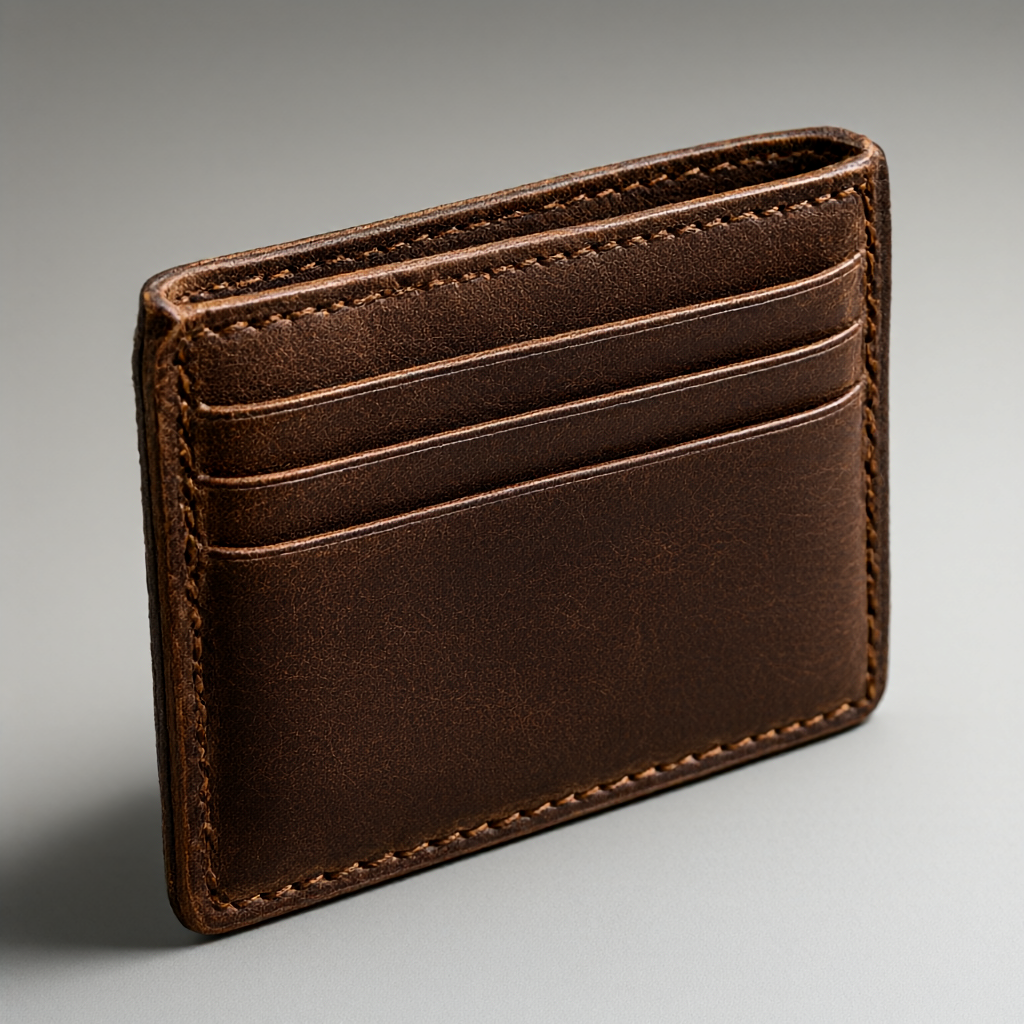
A vintage leather cowhide wallet is a premium everyday-carry organizer crafted from mature cattle hide processed through traditional vegetable tanning or hand-distressing techniques to achieve a weathered aesthetic that ages uniquely with use. Unlike mass-produced alternatives made from corrected splits or bonded leather, authentic vintage cowhide retains its natural grain structure, develops a rich patina over years of carry, and is built with reinforced stitching and burnished edges designed to last decades rather than months.
Quick Answer
A vintage leather cowhide wallet is a pocket organizer made from mature cattle hide that has been deliberately aged, oiled, or finished to look worn-in while still offering real durability. The leather is typically full-grain or top-grain, meaning the original grain surface is intact. Vegetable-tanned or oil-waxed finishes give it that classic weathered appearance. A well-made vintage cowhide wallet will darken and develop a unique surface sheen over years of use — something factory-fresh synthetic or bonded leathers never achieve.
The difference between a true vintage-style piece and a cheap “distressed” wallet comes down to three things: leather grade, tanning process, and construction quality. Full-grain cowhide with hand-applied patina and reinforced stitching will age gracefully; lower-grade hides treated with heavy pigments or surface seals will crack and peel within months.
For more background on how materials affect long-term performance, you can explore our guide on leather wallet manufacturing processes and material selection.
Detailed Explanation
How does full-grain cowhide differ from lower-grade leathers?
Cowhide comes in several quality tiers, and the distinction matters because it determines how a wallet ages and whether it survives daily carry.
Full-grain leather retains the complete outer layer of the hide, including the natural grain pattern and character marks such as insect bites, stretch lines, or minor scars. This layer is the densest and most fiber-rich portion of the hide, which is why full-grain wallets resist abrasion and tear far longer than alternatives. Over time, the surface develops a rich patina rather than cracking — the oils in the hide migrate to the surface where they absorb light and deepen in tone.
Top-grain leather has been sanded or buffed to remove imperfections, then usually receives a pigment or corrective coating. It looks smoother and more uniform than full-grain right out of the package, but that protective coating restricts natural aging. Once the surface seal wears through, the leather beneath often dries out faster because the coating prevented breathable conditioning from reaching the fibers.
Genuine leather is a catch-all term used on budget products. It refers to any layered or split hide that has been reconstituted, embossed, or heavily processed. Genuine leather wallets tend to feel stiff initially, may emit a chemical odor, and rarely develop a desirable patina — they simply thin and fray.
When shopping, look for product descriptions that specify “full-grain cowhide” or “top-grain leather,” not just “genuine leather.” If the seller cannot confirm the grade, assume the lowest tier and adjust your expectations accordingly.
Why do vegetable-tanned leathers develop better patina over time?
Tanning transforms raw hide into stable leather by replacing its proteins with stabilizing agents. Two dominant methods exist, and they produce very different end results for a vintage wallet.
Vegetable tanning uses natural extracts from tree bark, leaves, and fruits — primarily tannins found in chestnut, quebracho, and mimosa. The process takes weeks or even months, depending on hide thickness and desired firmness. The resulting leather carries a warm, honey-to-amber palette straight from the drum, and it accepts dyes beautifully. Because the tannin structure remains open and breathable, regular exposure to skin oils, sunlight, and ambient moisture encourages gradual color darkening and a soft luster — the hallmark of a developing patina.
Chrome tanning relies on chromium salts and completes in hours rather than months. The output is softer, more water-resistant, and available in a wider spectrum of colors — including deep blacks, navy, and vibrant hues. Chrome-tanned leather resists staining better than veg-tan, but it also ages differently. Instead of deepening naturally, chrome-tanned surfaces tend to lose their dye unevenly under heavy friction, leaving pale scuff patches that look worn rather than refined.
If your goal is an antique-looking wallet that matures gracefully with use, vegetable-tanned full-grain cowhide remains the strongest choice. For a more colorful, stain-resistant option that still offers good longevity, high-quality chrome-tanned top-grain blends are acceptable — just recognize the trade-off in patina potential. You can also compare how money clip wallets integrate with leather choices by reviewing our money clip wallet buying guide for men.
What construction features determine long-term value?
Patina and grain grade mean little if the stitching or edges fail first. Here are the elements that separate durable vintage-style wallets from disposable ones.
Stitch quality should be measured in stitches per inch (SPI). A well-built wallet typically runs 8–12 SPI using waxed nylon or polyester thread. Fewer than six SPI invites separation under stress; more than twelve SPI suggests unnecessary precision without added strength. Check corner bar-tacking — small reinforcement stitches at the end of any seam prevent tearing at load points.
Edge finishing signals attention to detail. Traditional luxury wallets use burnished edges created by saturating cut leather with gum tragacanth or water and rubbing them smooth. Lower-cost pieces rely on edge paint, which chips and flakes as the wallet flexes. Braided or rope-edged finishes offer both visual interest and functional coverage, especially on bifold formats where the gusset line bears repeated bending.
Hardware type matters less for leather longevity but strongly influences aesthetics. Brass clips, stainless steel rivets, and solid zinc-alloy snaps each behave differently. Brass develops its own patina over years; stainless stays bright; aluminum finishes can scratch easily and look worn faster than the surrounding leather. Avoid plated alloys in humid environments unless the plating is thick — cheap electroplated hardware peels within a single season of sweating pockets.
How do you clean and condition a leather wallet safely?
Proper maintenance preserves both appearance and structural integrity. The routine is straightforward but requires compatible products.
Step one is dust removal. Use a soft brush or dry microfiber cloth to clear surface grit before any liquid touches the leather. Grit left under a conditioner becomes abrasive and scratches the grain.
Step two is testing. Apply any new cleaner or conditioner to a hidden area — interior seam allowance or underside of a flap — and wait twenty-four hours. Discoloration or whitening indicates incompatibility; proceed with caution or switch brands.
Step three is gentle cleaning. Dampen a cloth with lukewarm water mixed with a small amount of saddle soap or pH-neutral leather cleanser. Wipe in circular motions across flat panels, avoiding seams where trapped moisture could weaken thread. Never soak the wallet; excess water causes fibers to swell and shrink unevenly, warping the shape.
Step four is conditioning. After cleaning, apply a thin layer of neatsfoot oil, beeswax-based conditioner, or lanolin blend using a soft cloth. Rub until the leather absorbs the product and no residue remains on the surface. Heavy applications attract dust and leave a greasy feel; minimal amounts penetrate deeply without compromising breathability.
Step five is drying. Allow the wallet to air-dry at room temperature away from direct heat sources. Radiators, hair dryers, and car dashboards accelerate moisture loss and crack the grain — conditions opposite to what a vintage wallet needs to stay supple.
Perform this routine every two to three months under normal carry, or monthly if the wallet sees heavy sweat exposure or frequent travel.
Key Specifications
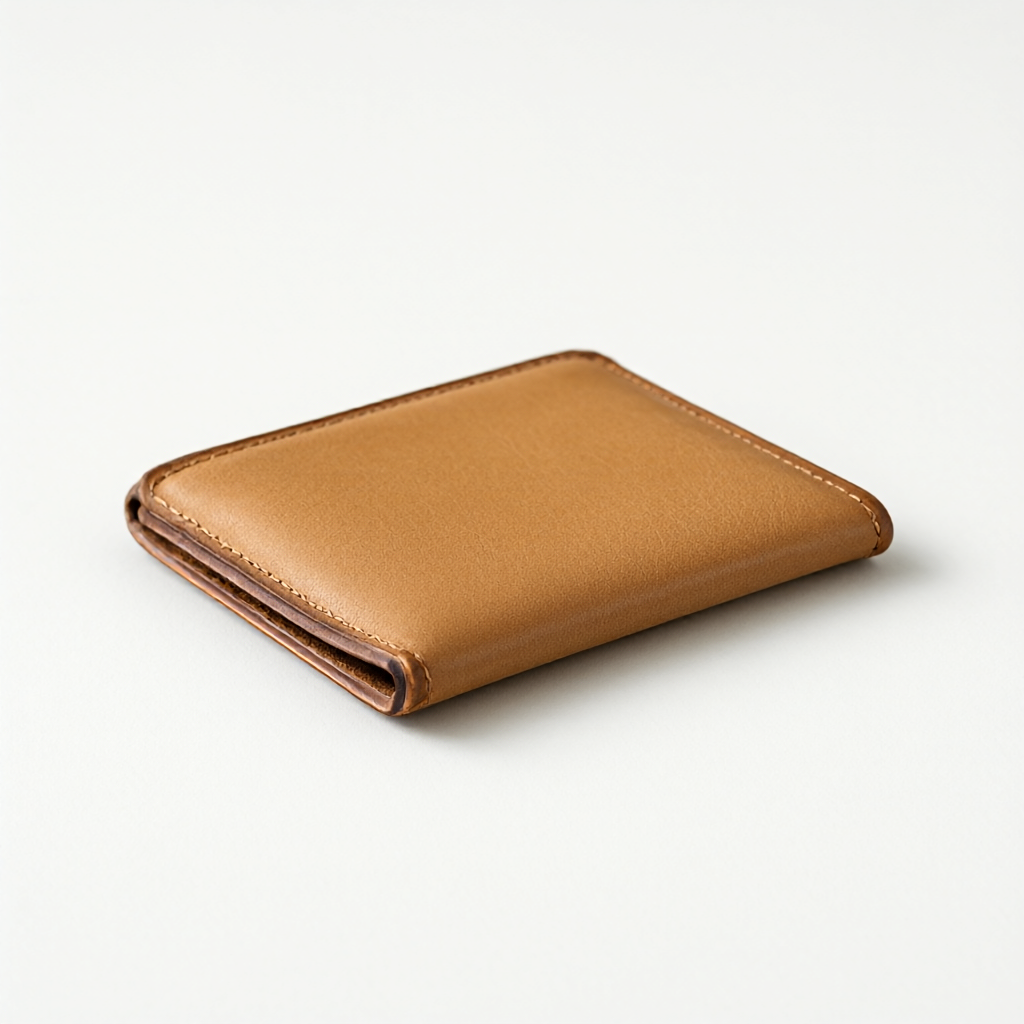
Understanding measurable parameters helps buyers compare offerings objectively instead of relying solely on photographs or marketing claims.
| Parameter | Typical Range | What to Look For |
|---|---|---|
| Leather grade | Full-grain / top-grain | Reject if labeled “genuine” without qualification |
| Thickness | 1.2 mm – 1.6 mm | Under 1.0 mm risks premature wear; over 2.0 mm adds bulk |
| Stitch count | 8 – 12 SPI | Verify at stress points like corners and strap anchors |
| Gusset depth | 15 mm – 25 mm | Determines folded bill capacity; deeper gussets hold more cash |
| Card slot count | 4 – 12 slots | Balances capacity against profile thickness |
| Total weight | 40 g – 90 g | Heavier wallets may feel premium but fatigue front-pocket carry |
| Hardware finish | Brass, stainless, gunmetal | Matte coatings show fewer scratches than polished surfaces |
Price bands roughly follow these specifications: entry-level wallets using corrected leather and machine-sewn edges run $15 – $35; mid-tier options in full-grain veg-tan with burnished edges sit in the $40 – $80 range; artisan pieces incorporating exotic grain variations or hand-tooling exceed $100. Prices vary by region, sourcing origin, and brand markup — these figures represent typical retail ranges rather than factory costs.
Standards & Requirements
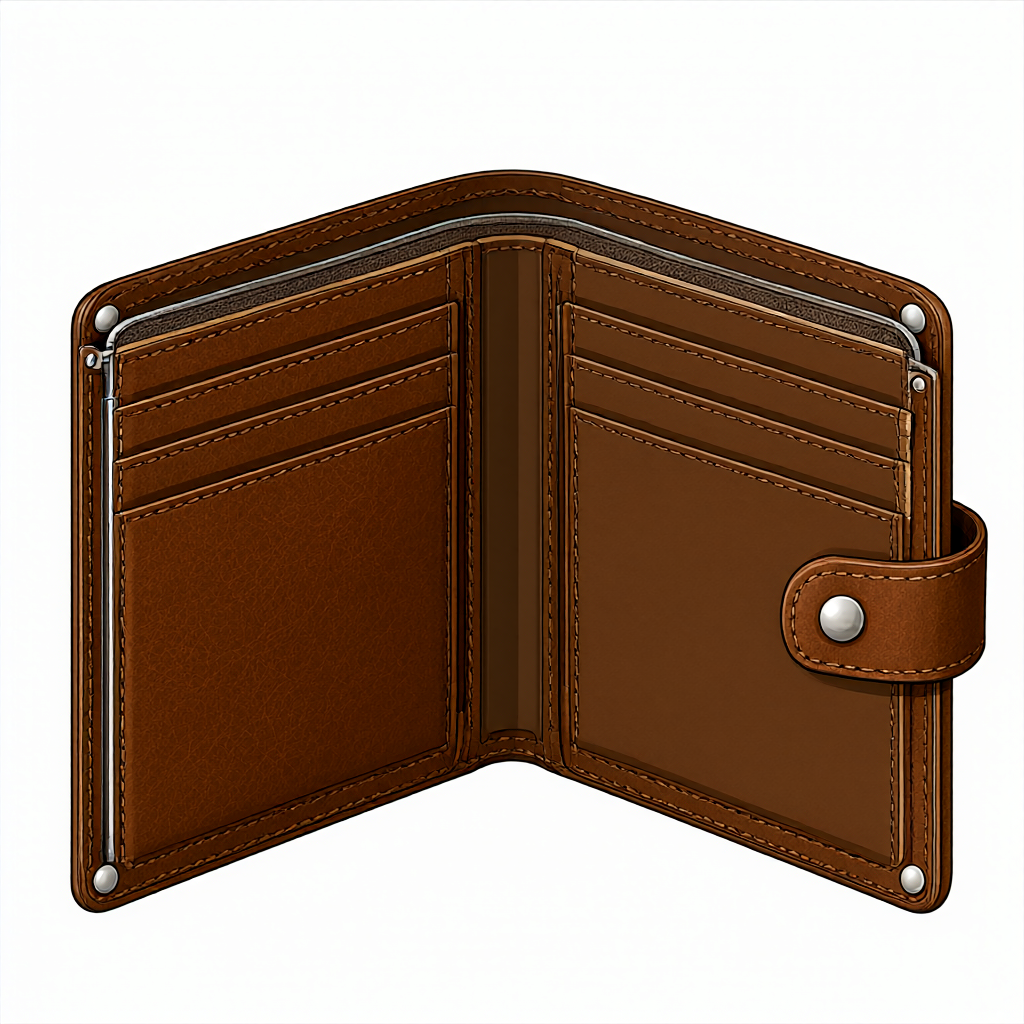
Responsible manufacturing follows recognized frameworks that protect both workers and consumers. When evaluating a supplier or asking about production ethics, reference these benchmarks:
- ASTM International publishes material testing standards such as ASTM D412 for tensile strength and ASTM D2092 for leather abrasion resistance. Reputable manufacturers subject incoming hides and finished goods to these tests internally or through accredited labs.
- The U.S. Federal Trade Commission (FTC) enforces truth-in-labeling rules requiring accurate disclosure of leather composition. Terms like “genuine leather” must reflect actual material content; mislabeling can result in consumer complaints and recalls.
- Export-oriented producers often pursue ISO 9001 quality management certification and BSCI social compliance audits. These programs verify consistent production practices and responsible labor conditions, though neither guarantees specific product performance.
Buyers should request test reports when placing larger orders or sourcing private-label stock. Small sample purchases rarely include documentation, so build relationships with suppliers who proactively share quality metrics.
Related Considerations
Several factors influence the final purchase decision beyond technical specs.
Authenticity markers help distinguish true vintage styling from superficial distressing. Hand-applied patinas show variation — darker creases, lighter highlights, subtle streaks where oils pooled during processing. Spray-on dyes look too uniform and sit atop the surface rather than penetrating the grain. Pressed-in scratches appear identical across multiple units; real wear marks are random and asymmetrical.
Sizing conventions differ between regions. European wallets generally measure narrower to accommodate slim profiles favored in front pockets. American designs prioritize capacity and often run slightly wider. Women’s minimalist card holders trend toward compact rectangular formats, while men’s bi-fold styles emphasize stack height for bills and coins. Review our women’s wallet size and style guide for additional comparison details.
Travel and corporate gifting contexts favor certain formats. RFID-blocking inserts add security without significant bulk and appeal to frequent flyers. Custom laser engraving on full-grain panels creates memorable branded gifts suitable for client appreciation or employee recognition. Our companion articles cover best cheap money clip comparisons and minimalist wallet options if you prefer sleeker silhouettes.
Care commitment should match usage patterns. Front-pocket daily carry accelerates natural aging — expect visible softening and color shifts within three to six months. Occasional weekend use slows patina development considerably. Either way, storing the wallet in a breathable cotton pouch when not in use prevents excessive scuffing and keeps dust out of seams.
How We Approach Quality Standards
As a manufacturer focused on vintage-style leather goods, we evaluate every material batch before it reaches production. Incoming cowhide undergoes visual inspection for grain consistency and thickness verification using calibrated micrometers. We prefer full-grain hides sourced from regions known for traditional tanning — Italian vegetable-tanned stocks and American bridle leathers remain our baseline selections.
Our team matches tanning methods to end-use expectations. Customers requesting rapid color depth and water resistance receive chrome-tanned options; buyers prioritizing organic patina progression are directed toward vegetable-tanned variants. Stitch density, edge treatment, and hardware sourcing follow documented workmanship checklists reviewed by quality auditors before shipment.
If you would like to review our current catalog or discuss custom specifications for your own brand, you can reach us directly.
Cowhide Properties — Thickness, Grain Patterns, and Natural Character Marks
Cowhide is distinguished from other leathers by the maturity and thickness of its fiber matrix. Mature cattle produce hides in weights ranging from 9 oz (approximately 360 g/m²) to 14 oz (roughly 560 g/m²), compared with calfskin at 5–7 oz or exotic leathers like ostrich at 6–9 oz. Thicker hides yield greater tensile strength — typically 18–25 N/mm² for full-grain cowhide versus 10–15 N/mm² for split leathers — which translates directly into wear resistance for high-friction applications such as daily pocket carry.
The grain surface carries unique character marks: stretch lines from the animal’s movement, insect bite scars, vein impressions, and neck wrinkles. These features are not defects; they authenticate the hide’s origin and contribute to each wallet’s one-of-a-kind appearance. Hides graded for premium vintage wallets are selected to retain these marks while excluding areas with severe scarring or disease damage that could compromise structural integrity.
For vintage styling specifically, cowhide is preferred because its dense collagen structure supports deep oil absorption during conditioning and develops a glossy surface sheen through repeated flexing — a trait lighter leathers cannot replicate. Good Money Clip Wallets for Men: 2026 Buying Guide provides additional context on how material selection affects long-term carry performance.
Vegetable-Tanned vs Chrome-Tanned Leather — Process Differences, Scent, Color Range, and Patina Development
Vegetable tanning and chrome tanning represent fundamentally different chemical pathways with distinct outcomes for vintage wallet construction.
Vegetable tanning immerses hides in progressively concentrated baths of natural tannins extracted from chestnut, quebracho, mimosa, and other plant sources. This drum process runs 30–60 days for thick wallet-grade stock, allowing tannins to penetrate deeply and form stable cross-links with collagen fibers. The resulting leather emits a characteristic earthy, slightly sweet bark odor when warmed — a reliable authenticity indicator. Color palette begins warm (honey, tan, amber) and accepts dye penetration uniformly because the fiber structure remains open. Patina development follows a predictable darkening curve: initial exposure to skin oils and ambient UV shifts the surface 2–4 shades darker within the first three months, reaching near-maximum depth after 12–18 months of regular use.
Chrome tanning employs chromium(III) sulfate salts in a process lasting 4–12 hours. Chromium bonds rapidly to collagen, producing softer, more pliable leather with higher inherent water resistance. Color range extends far wider — including jet blacks, navies, and saturated reds — because chrome-base stocks accept direct dyes more aggressively. However, chromtanned leather retains a faint sulfur-like smell even after curing, and its closed fiber structure limits patina development; instead of deepening, colored chrome leather tends to fade unevenly under abrasion, creating contrast scuff patches rather than a uniform darkening effect.
| Property | Vegetable-Tanned | Chrome-Tanned |
|---|---|---|
| Process duration | 30–60 days | 4–12 hours |
| Base color palette | Honey, tan, amber, brown | Wide spectrum including black, navy, red |
| Odor profile | Earthy, bark-like | Faint sulfurous after curing |
| Water resistance | Moderate (requires treatment) | Naturally higher |
| Patina potential | High — gradual darkening | Low — fade/scuff pattern |
| ISO 105 colorfastness (typical) | Grade 4–5 (excellent) | Grade 3–4 (good to very good) |
| Shrinkage tolerance | ≤5% at 70°C dry heat | ≤3% at 70°C dry heat |
For wallets prioritizing aging character and organic texture evolution, vegetable-tanned full-grain cowhide is the industry standard. Chrome-tanned options serve buyers seeking color variety and quicker softness, though the patina trade-off is significant. Buyers evaluating suppliers should request the ISO 105 colorfastness rating and shrinkage tolerance values documented in the manufacturer’s test reports before approving bulk orders.
Vintage and Distressed Finishing Techniques — Hand-Patina, Oil-Wax Treatments, Tumbling, and Burnishing
Authentic vintage aesthetics are achieved through controlled finishing processes, not superficial spraying or mechanical abrasion alone. Each technique serves a functional purpose alongside the visual goal.
Hand-patina application involves brushing or sponge-applying concentrated leather dyes and oxidizers in irregular patterns across the hide surface. Artisans layer colors — typically darker tones in recesses and lighter highlights on raised grain — then seal with a thin wax coating. Genuine hand-patina shows micro-variation between units, especially along fold lines and stitch channels where pigment pools differently. Machine-sprayed finishes appear too uniform under magnification and sit atop the grain rather than penetrating it.
Oil-wax treatments combine neatsfoot oil, beeswax, and carnauba in heated mixtures applied while the leather is still warm from the finishing drum. This process conditions the fibers internally while depositing a protective surface film. Heavy oil-wax applications create a rich, semi-matte glow ideal for rugged vintage styles; lighter formulations preserve a drier, matte hand-feel suited to minimalist designs. Reapplication every six to twelve months maintains the finish without saturation.
Mechanical tumbling places finished wallet blanks in rotating drums with natural abrasives such as pumice stones or wooden media. The impact gently rounds edge profiles, softens stiff panels, and creates subtle surface whiskering that mimics years of pocket wear. Well-executed tumbling produces random, asymmetrical distressing — each unit looks different. Poorly controlled tumbling over-collapses the grain texture and weakens stress-point fibers.
Burnishing uses compressed natural gum (gum tragacanth or gum arabic) rubbed into cut edge surfaces with agate stones or wooden drivers. The result is a smooth, sealed edge that resists fraying and develops a glossy highlight with continued flexing. Burnished edges are the hallmark of quality construction; edges left raw or coated with acrylic paint will chip, peel, and fray within months of normal use.
Wallet Construction Styles — Stitching Quality, Edge Treatment, and Hardware Selection
Construction decisions determine whether a vintage leather wallet lasts five years or five months. Three elements warrant particular scrutiny.
Stitch architecture goes beyond thread count. Quality wallets employ 8–12 stitches per inch (SPI) using #69 or #92 bonded nylon thread — both waxed and color-matched to the leather. Bar-tack reinforcement at corner load points adds 3–5 additional stitches crossing perpendicular to the main seam, distributing tension away from single-thread vulnerabilities. Lockstitch seams resist unraveling better than chain-stitch alternatives when individual threads break. Thread tensile strength should exceed 4 N/tex for wallets carrying daily loads; sub-grade thread snaps under repeated insertion and removal of cards.
Edge treatment selection depends on wallet format. Bifold wallets承受 the most flex at the center gusset and require either burnished edges or braided rope edging for durability. Slim cardholder and money-clip formats experience less structural stress, allowing simpler painted or sealed edges on budget models. Edge painting alone is acceptable only on low-flex accessories; any wallet subjected to daily bending should use burnishing or braiding.
Hardware pairing should consider both aesthetics and corrosion behavior. Solid brass clips darken to a warm antique tone over time; stainless steel rivets retain brightness; aluminum-alloy mechanisms scratch readily and may gall against leather surfaces. Electroplated components in base alloys should be avoided in humid climates — plating failure exposes the substrate to oxidation within one season of sweat exposure. Heavy-duty YKK or Riri zippers, if used in travel formats, provide reliable operation across temperature ranges without sticking or tooth misalignment.
Best Minimal Wallets — A Buying Comparison Guide for 2026 covers additional format comparisons relevant to construction decisions.
Capacity and Layout Considerations — Card Slots, Bill Compartment, Coin Pocket, and Gusset Depth
Layout design determines real-world usability beyond the specs printed on a product page. Buyers should match wallet architecture to their carry habits.
Card slot configuration varies from 2 slots in ultra-slim profiles to 12+ in traditional bi-folds. Each additional slot increases folded thickness by approximately 1.5–2 mm. For front-pocket carry, 4–6 slots maintain a profile under 12 mm; rear-pocket or bag carry allows 8–10 slots with minimal bulk penalty. Slot orientation (horizontal vs vertical) affects card retention — horizontal slots hold cards tighter against spring tension but make withdrawal slower; vertical slots slide cards out faster with slightly reduced grip.
Bill compartment geometry defines cash capacity. Folded U.S. currency measures approximately 156 × 66 mm and stacks to about 0.11 mm per bill. A standard gusset holding 8–12 bills requires 15–20 mm of gusset depth when collapsed. Travel wallets with extended compartments accommodate 20+ bills plus boarding documents but add 8–12 mm to overall thickness. Buyers choosing capacity should account for bill condition — crisp new bills stack tighter than worn, folded notes that have been through circulation.
Coin pocket integration remains the most contentious layout feature. Zippered coin compartments add 6–10 mm of bulk and protect coins from scattering but complicate one-handed operation. Snap-button pockets or elastic loop systems sacrifice security for speed. Integrated coin pouches sewn inside the main compartment work best for users who rarely carry coins; external attachment loops allow modular flexibility. Budget wallets claiming “coin pocket” often deliver only a shallow slip compartment insufficient for standard-sized coins, creating false expectation gaps.
Gusset depth specification should always be confirmed separately from total wallet dimensions. A wallet listed as 110 × 85 × 15 mm may advertise a 15 mm gusset, but the actual usable depth — measured from stitched seam to inner panel fold — might be only 12 mm after accounting for layer thickness. Reputable manufacturers publish both overall dimensions and usable gusset measurements; ambiguous listings warrant direct supplier inquiry before committing to private-label orders.
Men’s Designer Wallets: How to Choose the Right One offers further guidance on matching layouts to daily carry volume.
What Are the Key Specifications Buyers Should Verify — A Procurement Checklist
When evaluating vintage cowhide wallet suppliers, buyers should assess materials, workmanship, and documentation against measurable thresholds rather than relying on photographic samples alone.
| Specification Category | Minimum Acceptable Threshold | Verification Method |
|---|---|---|
| Leather grade | Full-grain or top-grain cowhide, 9–14 oz equivalent | Microscopic grain inspection; reject split or reconstituted layers |
| Thickness consistency | ±0.15 mm across entire panel | Digital micrometer at 5 measurement points per hide section |
| Tensile strength | ≥18 N/mm² (full-grain cowhide) | ASTM D412 laboratory test report required |
| Tear strength | ≥45 N/mm (per ASTM D624) | Lab certificate or in-house test data |
| Colorfastness (dry rub) | ISO 105-X05 Grade 4 minimum | Supplier-provided lab report |
| Colorfastness (light) | ISO 105-B02 Grade 4 minimum | Required for wallets marketed as vintage/patina-developing |
| Shrinkage after conditioning | ≤5% linear dimensional change | Verified by soaking test protocol per supplier spec sheet |
| Stitch density | 8–12 SPI with bar-tack reinforcement at corners | Visual inspection of sample; count stitches across 25 mm span |
| Edge treatment | Burnished or braided (not edge-painted on flex zones) | Direct observation; tap edge to detect paint flaking risk |
| Hardware material | Solid brass, 304 stainless steel, or zinc alloy ≥2 mm throw | Magnet test (brass and stainless non-magnetic); measure gauge thickness |
| Adhesive type | Polyurethane or contact cement, solvent-free | Safety Data Sheet review; avoid formaldehyde-based adhesives |
| Packaging | Individual dust bag or rigid retail box with brand imprint | Visual confirmation on pre-production sample |
The FTC enforces truth-in-labeling for leather composition disclosures, requiring accurate grade representation on product packaging and e-commerce listings (U.S. Federal Trade Commission). Non-compliant labeling exposes brands to consumer complaints, marketplace takedowns, and chargeback liability — particularly in Amazon FBA channels where customer reviews frequently cite misleading material descriptions as return reasons.
Care and Restoration Basics for Vintage Leather Wallets
Preserving a vintage cowhide wallet requires understanding the leather’s interaction with common environmental stressors and applying targeted interventions when wear becomes apparent.
Routine maintenance follows a quarterly cycle: dry brush to remove grit, spot-clean with pH-neutral saddle soap applied sparingly, condition with a thin neatsfoot or beeswax blend, and allow 24-hour air drying away from heat sources. Under heavy daily carry or in humid climates, monthly intervals prevent oil depletion and fiber desiccation. Never use petroleum-based products — vaseline and similar hydrocarbons clog pores, trap moisture, and accelerate microbial growth inside the leather matrix.
Patina management is intentional, not accidental. Sunlight exposure accelerates darkening but also dries fibers; limit direct UV to 2–3 hours weekly for color enhancement, followed by conditioning to replace lost oils. Skin contact provides the most beneficial gradual darkening through natural sebum absorption — wallets carried in front pockets develop richer patina than those stored in bags. Consistent carry patterns produce predictable aging; erratic use (seasonal rotation between multiple wallets) slows patina progression significantly.
Restoration of dried or cracked leather requires progressive rehabilitation. Light surface crazing responds to repeated thin conditioning over 4–6 weeks. Deep cracks indicate irreversible collagen fiber separation and cannot be fully reversed — professional re-tanning may restore flexibility but will alter the existing patina pattern. In such cases, preserving the wallet’s character marks takes priority over cosmetic repair; aggressive sanding and re-dyeing destroys the vintage authenticity that justified the purchase.
Mold and mildew remediation demands immediate action. White or green powdery growth indicates moisture entrapment during storage. Remove surface spores with a dry brush, treat affected areas with a diluted white vinegar solution (1:4 ratio with distilled water), and air-dry completely in a ventilated space before reconditioning. Avoid bleach — it destroys leather proteins and causes permanent discoloration. Store restored wallets with cedar inserts or silica gel packets to maintain humidity below 55% relative during idle periods.
[Lightweight Wallet for Women — Compare Materials, Sizes &]() highlights alternative materials for users considering non-leather vintage-style options, while Wallet with Chain: Sizing Guide & Buying Guide 2026 explores hybrid formats combining leather with metal hardware chains.
Sourcing Your Vintage Cowhide Wallet Manufacturer
Selecting the right manufacturing partner determines whether your vintage leather wallet line delivers consistent quality, competitive pricing, and reliable lead times. The EDC wallet market has matured considerably since the mid-2010s, and buyers now expect transparent supplier relationships backed by verifiable quality documentation.
Here is how the industry works, and how we meet these standards. At TOP EDC Wallet, our sourcing philosophy centers on material traceability and process control from incoming hide inspection through final packaging. We select full-grain cowhide in the 9–14 oz weight range, verify tensile strength against ASTM D412 benchmarks, and require ISO 105 colorfastness ratings of Grade 4 or above before approving any batch for production. Our vegetable-tanned Italian and American bridle leather stocks undergo 30-day drum curing cycles, ensuring deep tannin penetration that supports the patina development our customers expect.
Our facility operates under ISO 9001 certification with BSCI social compliance audits, providing buyers with documented proof of responsible labor practices and consistent quality management systems. With 13+ years of export experience serving brands across America, Europe, Australia, and Southeast Asia, we understand the documentation and compliance requirements different markets demand — from REACH and RoHS substance restrictions in the EU to FTC labeling standards in the United States.
For buyers planning private-label runs, our MOQ starts at 300 pcs per SKU for full OEM customization (100 pcs trial order available for stock finishes) per SKU, enabling smaller brands and Amazon FBA sellers to test market response before scaling volumes. Our 7-day sample lead time allows design validation before bulk commitment, and our in-house CNC machining, laser engraving, and UV printing capabilities support end-to-end customization from logo placement to retail packaging design — all within a 50,000 sq ft factory operating at 500K+ monthly production capacity.
Vintage and Distressed Finishing Techniques
True vintage appearance comes from controlled aging methods applied after tanning, not from superficial dye washes or spray-on finishes commonly found on budget products. Understanding these techniques helps buyers separate authentic craftsmanship from marketing-driven pseudo-distressing.
Hand-patina application involves layering dyes and waxes by hand or sponge, creating natural tonal variation across the surface. Darker concentrations appear in creases and tooling details while lighter highlights remain on raised grain areas. This mimics how real wear accumulates organically over years of pocket carry. Machines producing uniform color passes this test poorly.
Oil and wax treatments penetrate the fiber structure rather than coating it. Full-grain cowhide absorbs neat’sfoot oil, mink oil, or beeswax blends during finishing, producing a soft sheen and improved water resistance without sealing breathability. Properly oil-waxed leather feels supple immediately upon unboxing — stiff, plastic-like surfaces indicate heavy pigment seals that will crack under repeated flexing.
Tumbling (drum aging) places raw cut leather pieces in large rotating drums with abrasive media such as pumice, sawdust, or rubber pebbles. This mechanical action softens fibers, rounds edges naturally, and creates micro-scratches that simulate years of handling. Tumbled leather requires less break-in time but should still be evaluated for fiber integrity — overly aggressive tumbling can damage grain strength.
Burnishing seals and smooths exposed leather edges using friction generated by wooden slickers, glass beads, or cork tools combined with edge dressings or gum tragacanth. Braided leather edging wraps thin leather strips around cut edges for both decoration and protection against fraying. Painted edges, conversely, sit on top of the material and chip predictably along fold lines within the first season of regular use.
These finishing approaches compound in quality vintage wallets. A well-executed piece may combine hand-patina coloring, light oil-wax saturation, gentle drum aging, and burnished edges — each step adding depth that single-process competitors cannot replicate. See our best men’s wallets selection guide for additional format comparisons.
How to Choose Between Bifold, Slim, Travel, and Money Clip Formats
Wallet architecture determines daily comfort, capacity limits, and how leather ages across high-flex zones. Each format subjects cowhide to different stress profiles during carry.
Bifold wallets fold centrally, creating maximum crease lines that experience repeated bending at the same locations. This accelerates patina development along the fold but demands thicker leather (1.4 mm minimum) to prevent premature fatigue. Card slots typically line one interior panel while the bill compartment occupies the reverse side. Bifolds suit users carrying folded bills regularly and prioritizing organized storage over pocket flatness.
Slim and cardholder formats eliminate folding mechanics entirely, reducing stress concentration points. These designs usually hold six to ten cards with or without a central cash sleeve. The absence of hinged flex zones means thinner leather (1.0 – 1.2 mm) remains durable because no single area endures cyclic bending. Slim wallets age more uniformly since surface exposure distributes wear evenly across the carry plane. Compare options in our best minimalist wallets buying comparison.
Travel wallets prioritize security and capacity over pocket discreetness. Typically featuring multiple zippered compartments, RFID-blocking pockets, and expandable gussets, they accommodate passports, boarding passes, and larger bill denominations. The increased complexity introduces more hardware attachment points — rivets, zippers, and snap closures — each creating localized stress concentration in the surrounding leather that warrants thicker stock and reinforced backing.
Money clip wallets combine a leather card carrier with a metal clasp mechanism for paper currency. The clip applies constant compressive force against any bills held, which can emboss or flatten high-denomination notes over extended periods. Leather panels in these designs rarely fold; instead they anchor the clip hardware with rivets or adhesive bonding. Check our money clip wallet buying guide for detailed analysis of clip mechanisms paired with leather bodies.
Format selection ultimately depends on daily carry volume, preferred pocket placement, and willingness to accept trade-offs between capacity and profile thickness. Try holding your typical contents against each format before committing — leather moldability improves with use regardless of initial stiffness.
Key Technical Specifications and Industry Standards
Beyond visual assessment, measurable parameters and certified testing standards provide objective evaluation criteria for wholesale and private-label purchasing decisions.
| Parameter | Industry Standard Range | Verification Method |
|---|---|---|
| Leather grade | Full-grain (ASTM D2092 rated) or top-grain | Microscopic grain examination; reject hides marked merely “genuine” |
| Hide weight | 9 – 14 oz (360 – 560 g/m²) | Gram-weight testing per square meter |
| Thickness | 1.2 mm – 1.6 mm for wallets | Calibrated micrometer at three measurement points per panel |
| Tensile strength | ≥ 18 N/mm² (per ASTM International D412) | Required for full-grain commercial grades used in pocket goods |
| Tear strength | ≥ 25 N for full-grain cowhide | Punch tear test on conditioned samples |
| Colorfastness | Grade 4+ on ISO 105–X12 scale | RubbingFastness testing with dry and wet crocking agents |
| Chromium VI limits | ≤ 3 mg/kg per Oeko-Tex Standard 100 | Laboratory extraction analysis for chrome-tanned stocks |
| Stitch density | 8 – 12 SPI (stitches per inch) | Visual verification at corner bar-tacks and strap anchors |
| Edge treatment | Burnished or braided recommended | Visual and tactile inspection; painted edges score lower on longevity tests |
| Gusset depth | 15 mm – 25 mm standard; up to 35 mm for capacity variants | Caliper measurement of expanded side profile |
Procurement checklist for incoming material inspection:
- Verify hide lot certificates confirm vegetable-tanned or chrome-tanned classification matching purchase order
- Spot-check five random panels per shipment for thickness consistency using digital micrometer
- Confirm no Chromium VI exceedance through third-party lab reports or in-house testing
- Inspect grain surface for excessive sanding marks indicating top-grain disguise as full-grain
- Test edge burnishing adhesion by gentle flexing; acceptable edge dressing should not flake under moderate stress
- Review stitch tension consistency across sample units; loose threads or broken stitches signal production quality issues
Supplier audit questions for B2B sourcing:
- Which tanneries supply your leather, and can you provide current batch test reports?
- Do you perform tensile and tear strength testing per ASTM standards, and what are typical passing values?
- What is your acceptance rate for incoming hide inspections before cutting begins?
- Can you produce samples meeting specified GSM weight ranges with ±0.1 mm thickness tolerance?
- What quality documentation accompanies orders above your MOQ threshold?
Cost-per-unit framework for budgeting:
- Corrected leather machine-sewn entry wallets: $4 – $8 factory cost → retail $15 – $35
- Full-grain vegetable-tanned mid-tier with burnished edges: $12 – $22 factory cost → retail $40 – $80
- Artisan hand-finished pieces with exotic grain and tooling: $25 – $50 factory cost → retail $100 – $250
- Private-label margins typically range 40% – 60% at mid-tier and 50% – 70% at artisan levels depending on volume commitments and packaging complexity
Procurement Framework for B2B Buyers
Structured evaluation reduces sourcing risk when placing custom leather wallet orders at scale. Follow this three-phase approach from specification to delivery.
Phase one — Specification definition: Document exact requirements including leather type (vegetable vs chrome tanned), target GSM range, thickness tolerance bands, stitch count minimums, hardware finish preferences, and acceptable defect rates per hundred units. Specificity prevents supplier interpretation variance and establishes baseline quality metrics for incoming inspection.
Phase two — Sample evaluation and validation: Order physical prototypes representing your complete spec sheet. Evaluate samples against measurable criteria — thickness verified with micrometer, tensile results confirmed via lab report, stitch count measured along key seams, edge treatment assessed for durability under simulated flex cycles. Only proceed to bulk production after all sample criteria meet or exceed defined thresholds.
Phase three — Production monitoring and final inspection: Request pre-shipment inspection reports documenting random sampling results from completed lots. Confirm color consistency across units, verify hardware attachment security, and validate packaging accuracy matches approved artwork files. Third-party inspection services such as SGS provide independent verification when internal QA resources are limited.
Consistent specification enforcement across reorder cycles builds predictable quality outcomes and strengthens supplier relationships through clear communication channels.
Sourcing Authentic Vintage Cowhide Wallets
When evaluating manufacturers for vintage-style leather goods, several factors differentiate competent producers from those simply applying cosmetic distress effects. Material traceability, tanning process transparency, and construction methodology all influence final product longevity and authentic aging characteristics.
As a manufacturer specializing in this category since 2014, we evaluate every material batch before it reaches production. Incoming cowhide undergoes visual inspection for grain consistency and thickness verification using calibrated micrometers. We prefer full-grain hides sourced from regions known for traditional tanning — Italian vegetable-tanned stocks and American bridle leathers remain our baseline selections. Our 50,000 sq ft facility supports OEM and ODM programs with low MOQ starts at 300 pcs per SKU and sample lead times as fast as seven days. All materials meet REACH and RoHS compliance standards, and our ISO 9001 certified quality system ensures consistent batch-to-batch performance. For private-label projects requiring custom specifications, laser engraving, or specialized packaging, contact our team to discuss your requirements.
Sources & References
- ASTM International — www.astm.org
- U.S. Federal Trade Commission — www.ftc.gov
- leather wallet manufacturing processes and material selection — topedcwallet.com
- money clip wallet buying guide for men — topedcwallet.com
- women’s wallet size and style guide — topedcwallet.com
- best cheap money clip comparisons — topedcwallet.com
- minimalist wallet options — topedcwallet.com
- Get a Free Quote → — topedcwallet.com
- Men’s Designer Wallets: How to Choose the Right One — topedcwallet.com
- Wallet with Chain: Sizing Guide & Buying Guide 2026 — topedcwallet.com
From article to product
Sourcing minimalist-wallets?
Tell us the format, the quantity and the date you need stock. You get material options, MOQ and a landed-cost range back within one business day.
Keep reading
More on wallet care
Best Women’s Leather Wallets: Complete Buying Guide & Care
Compare leather grades, styles, specs, and care methods to choose the ideal leather wallet…
ReadHow to Polish, Clean & Repair a Leather Wallet: Complete Care Guide
Learn step-by-step how to polish, condition, and restore a leather wallet. Covers stains, dents,…
ReadHow to Take Care of a Leather Wallet — Full Care & Restoration
Learn how to condition, restore, sanitize, and tighten a leather wallet. Compare leather types,…
Read
About the author
TOPWALLET Editorial Team
TOPWALLET's editorial and engineering desk writes from bench testing at the Shenzhen (Longgang) facility: pull-force and cycle testing, 13.56 MHz shielding measurements, finish trials and factory audits, rather than supplier spec sheets. Every specification in these guides is one we write on a purchase order.
Written on the floor
This article was written by our production and QC team — the people who spec tolerances, run the finishing line and inspect every batch. Where it states a capacity, a pull force or a lead time, it comes from a measurement we made, not a supplier’s catalogue. If a number here disagrees with what your own supplier told you, tell us; several of these articles started as a correction from a buyer.
See how the factory works · Inspection process · Sourcing FAQ
Sourcing minimalist-wallets?
Tell us the format, the quantity and the date you need stock. You get material options, MOQ and a landed-cost range back within one business day.