

To properly polish, clean, and repair a leather wallet, follow a systematic routine matched to your leather type: wipe the surface with a clean, slightly damp cloth, apply a pH-balanced conditioner (pH 4.5–5.5) every 6–8 weeks for daily-carry use, then buff gently along the grain with a soft cotton cloth until a light sheen appears. Clean spilled oils immediately with cornstarch, treat ink spots with a 70% isopropyl-alcohol dab, recover minor dents with distilled-water mist and body heat, and re-stitch torn seams using waxed linen thread and a saddle stitch. The exact products, timing, and depth of intervention depend on whether your wallet is full-grain, top-grain, vegetable-tanned, or chrome-tanned leather — a distinction that also determines resale value, patina potential, and long-term repair viability per ISO 3775 leather-testing protocols and REACH chemical-compliance limits for finished accessories.
What Should You Know Before Caring for a Leather Wallet?
Three rules govern care: keep it dry, condition sparsely, and avoid solvents that strip finish.
To properly care for a leather wallet, clean it gently with a damp cloth, condition it every two to three months using a leather-specific conditioner, and polish it only when a light buffing is needed — never use shoe polish or household chemicals. Protect it from excessive moisture, store it in a cool dry place, and address scratches, stains, and dents promptly with targeted techniques matched to your leather type. Full-grain leather rewards consistent conditioning with years of improving patina, while cheaper corrected leathers require more cautious care to avoid accelerating surface wear.
Best approach: Use a pH-balanced leather conditioner and a soft cotton buffing cloth on a regular schedule. For deeper restoration — re-stitching, dye matching, or structural repairs — professional service usually outperforms amateur attempts. For new purchases, leather wallet care and restoration guides help you select the right material before you commit to long-term maintenance.
Which Leather Types Matter for a Leather Wallet?
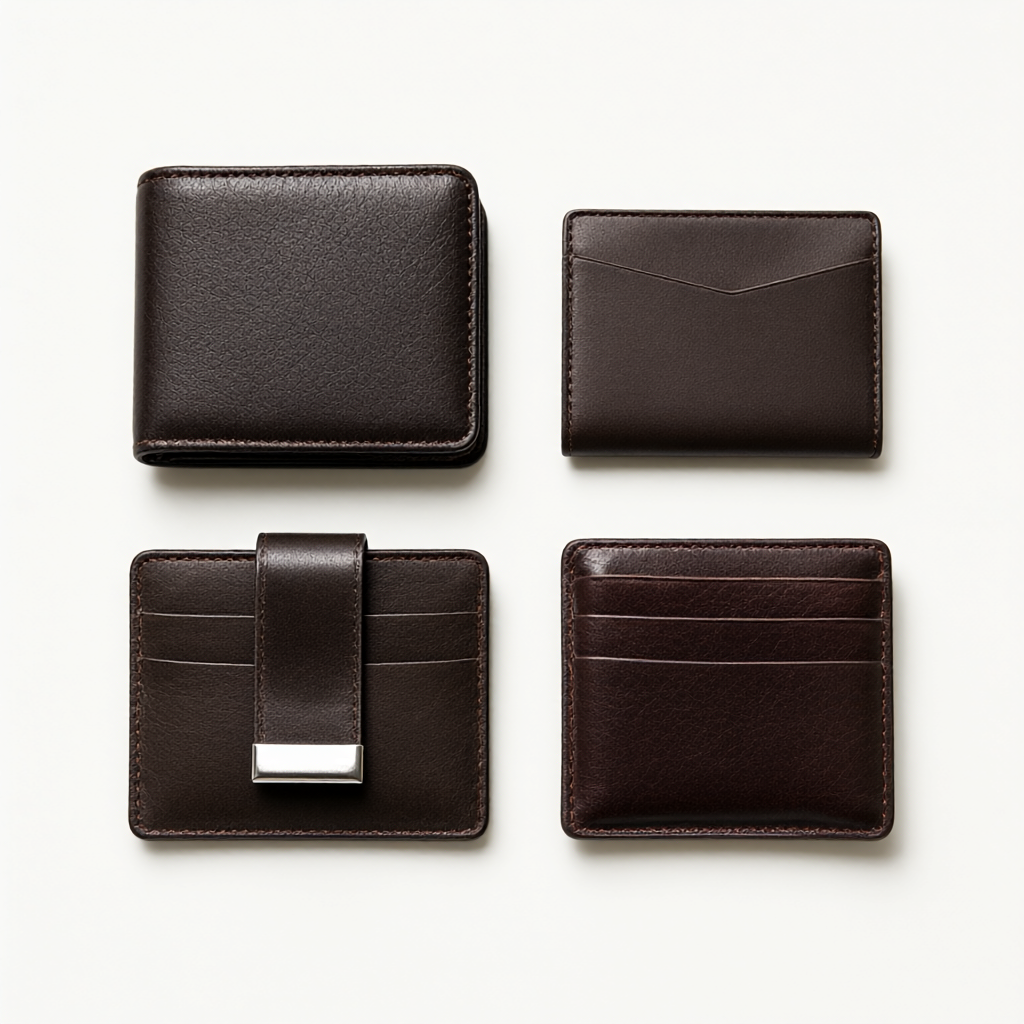
Understanding your leather type determines everything about how you clean, condition, and repair a wallet. Not all leather behaves the same under stress, moisture, or polish.
What is full-grain leather and why does it matter?
Full-grain leather comes from the top layer of the hide and retains the natural grain pattern. It is the most durable form of leather available for wallets. The tight fiber structure resists moisture better than lower grades, holds conditioning oils effectively, and develops a rich patina over time rather than cracking or peeling. When you learn how to take care of a leather wallet made from full-grain material, the routine is straightforward: periodic conditioning, gentle cleaning, and avoiding prolonged water exposure. This leather type appears in premium bifold wallets, card holders, and many minimalist wallets designed for everyday carry.
What is top-grain leather?
Top-grain leather has been sanded or buffed to remove imperfections from the grain surface. It is slightly less durable than full-grain but still offers strong performance for daily use. Top-grain wallets respond well to standard conditioners and polishes. The surface finish makes them more resistant to stains than raw full-grain, but also means they benefit from occasional re-oiling to prevent drying. Many mid-range and wallet bi-fold/trifold styles on the market use top-grain leather because it balances appearance, cost, and longevity.
What is genuine leather?
Genuine leather is a broad marketing term that typically refers to split leather or reconstituted leather layers bonded together. These wallets look acceptable initially but lack the density and longevity of full-grain or top-grain options. Conditioning helps slow deterioration, but genuine leather wallets are more prone to cracking along fold lines and tend to peel at edges. If you own a genuine leather wallet, focus on preservation rather than restoration — mild cleaning and light conditioning can extend lifespan, but deep scratches and worn edges are harder to reverse cleanly.
What is bonded leather?
Bonded leather is made from leather scraps and fibers pressed together with adhesive and coated with a polyurethane or vinyl layer. It is the least expensive option and behaves very differently from realHide leather during care. Standard conditioners do not penetrate bonded leather effectively. Instead, cleaning relies on gentle wiping and avoiding products that soften the backing adhesive. Bonds are highly susceptible to peeling at stress points like bill compartments and card slots. Buying a bonded leather wallet is generally short-term; once the surface coating cracks, there is no effective repair beyond cosmetic cover-up.
What about vegtan versus chrome-tanned leather?
Vegetable-tanned leather is tanned using natural tannins from tree bark and other plant sources. It is firmer, takes color deeply, and produces a distinctive patina. Vegtan responds beautifully to polishing and conditioning, which is why many artisans choose it for handcrafted projects. However, it is also more sensitive to water staining and requires more attentive care in humid environments. Chrome-tanned leather is faster to produce, softer, and more water-resistant out of the gate. Both types demand different care schedules — vegtan benefits from lighter, more frequent conditioning, while chrome-tanned wallets tolerate heavier applications spaced further apart.
How Do Leather Wallet Grades Compare Side by Side?
Grades run from full-grain to bonded, and price tracks the hide layer rather than the brand. This table lines up durability, aging behavior, and care difficulty by grade.
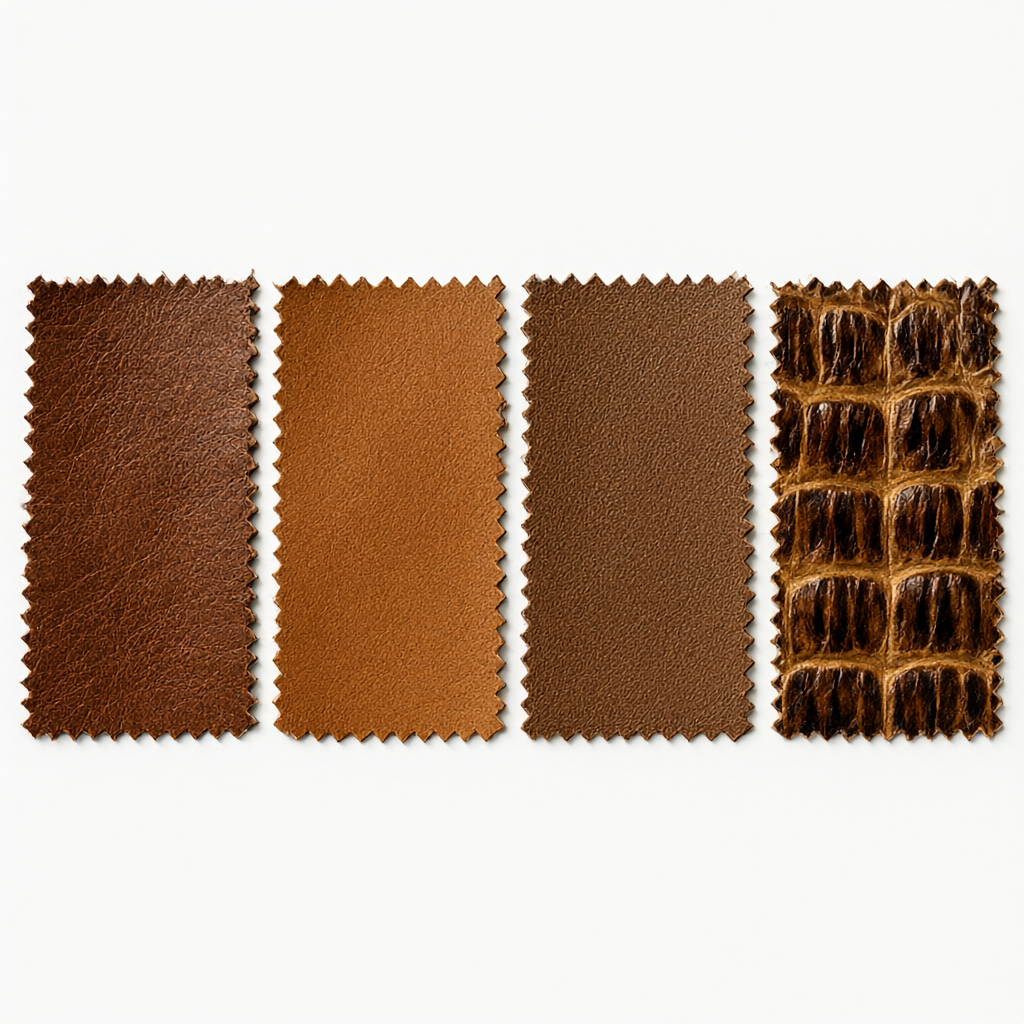
| Leather Type | Durability | Condition Frequency | Stain Resistance | Patina Development | Best For |
|---|---|---|---|---|---|
| Full-grain | Highest | Every 2–3 months | Moderate | Excellent | Long-term investment wallets |
| Top-grain | High | Every 3–4 months | Good | Very good | Everyday carry, corporate gifts |
| Genuine | Moderate | Every 4–6 months | Low | Minimal | Budget-conscious buyers |
| Bonded | Low | Avoid heavy conditioners | Poor | None | Short-term or decorative use |
| Vegetable-tanned | High | Every 1–2 months | Low | Exceptional | Handmade wallets, embossing projects |
| Chrome-tanned | High | Every 3–4 months | Good | Moderate | Everyday wallets, water-prone climates |
| Condition | Conditioning Frequency | Cleaning Frequency | Protection Spray | Notes | |
| Daily carry, temperate climate | Every 6–8 weeks | Weekly wipe, deep clean monthly | Every 3 months | Standard cadence for most users | |
| Daily carry, humid/tropical climate | Every 4–6 weeks | Weekly wipe, deep clean bi-weekly | Monthly | Mold risk; avoid petroleum-based sealants | |
| Daily carry, arid/desert climate | Every 4 weeks | Twice-weekly wipe | Every 2 months | Oil evaporation accelerates crack formation | |
| Occasional carry (< twice weekly) | Every 3–4 months | Bi-weekly wipe | As needed | Lower wear extends intervals safely | |
| Vegetable-tanned handmade wallets | Every 2–4 weeks | After any water exposure | Avoid heavy sealants | Vegtan absorbs faster; patina is the goal | |
| Chrome-tanned everyday wallets | Every 6–8 weeks | Weekly | Silicone-free spray OK | Tolerates heavier conditioner loads |
What Factors Decide a Good Leather Wallet Purchase?
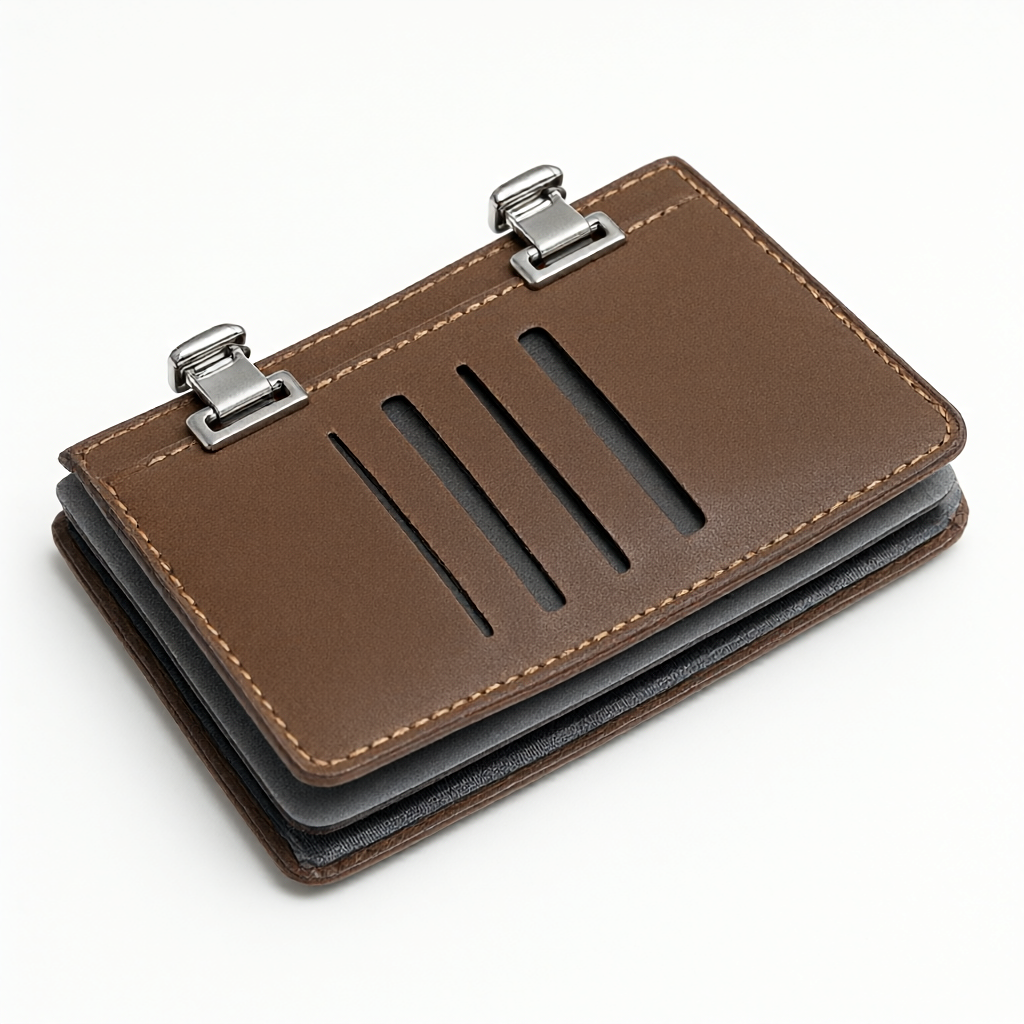
Choosing the right leather wallet and maintaining it correctly go hand in hand. The following factors determine whether a wallet survives years of pocket carry or deteriorates within months.
How to choose the right leather wallet for your needs?
Start by matching the leather type to your usage pattern. If you carry your wallet daily in a front pocket and expose it to rain occasionally, top-grain or chrome-tanned leather offers the best balance of durability and easy maintenance. If you prefer a wallet that ages visibly and want maximum lifespan, full-grain vegetable-tanned leather is worth the higher upfront cost. Size matters too — consult a wallet size width and height guide to ensure the dimensions fit your pockets and card volume before committing to a material choice.
How to protect a leather wallet from water and daily wear?
Protection begins with choosing the right leather type and follows with preventive habits. Keep the wallet away from direct heat sources such as car dashboards in summer, which bake leather and accelerate oil loss. For water resistance, apply a leather protector spray formulated for your specific leather type — test on a small area first. Many users ask whether how to protect leather wallet surfaces from keys and coins scratching the exterior. The answer lies in mindful pocket organization: keep the wallet in a dedicated compartment, avoid overstuffing card slots, and rotate between two wallets if possible to let each rest and recover its shape overnight.
How to remove dents from a leather wallet at home?
Dents occur when a wallet is crushed in a bag, sat on accidentally, or overloaded. Light dents often resolve naturally as the leather warms from body heat and flexes during normal use. For persistent dents, place the wallet flat on a clean surface, lightly mist the dented area with distilled water using a spray bottle held at least six inches away, then allow it to air dry completely away from direct sunlight. Once dry, massage the area gently with your fingers to encourage the fibers to relax back toward their original position. Follow with a small amount of conditioner to restore suppleness. Do not apply heat directly — hairdryers on high settings can scorch or shrink leather unpredictably.
How to remove stains from a leather wallet safely?
Stain treatment depends entirely on what caused the stain. For water marks on full-grain leather, allow the area to dry naturally; sometimes the mark fades as the surrounding leather rehydrates during normal conditioning. For oily stains, sprinkle a small amount of cornstarch or talcum powder on the affected spot, leave it for several hours, then brush away gently. Never rub oil-based stains aggressively — this pushes the contaminant deeper into the grain. For ink or dye transfer, use a cotton swab dipped sparingly in isopropyl alcohol (no more than 70 percent concentration), dab carefully without saturating the leather, and condition immediately afterward. Always test any cleaner on an inconsppicuous area first. This principle applies equally whether you are treating an everyday carry upgrade wallet or a delicate handmade piece.
How to repair a leather wallet with cracks, tears, or broken stitching?
Small surface cracks respond to repeated conditioning — apply a thin layer of leather conditioner, let it absorb fully, repeat weekly until the crack darkens and becomes less visible. Deeper cracks that have broken through the grain cannot be truly restored to factory condition, but a leather repair kit containing filler compound and color-matched dye can improve appearance significantly. Torn stitching requires re-stitching with waxed linen thread and a saddle stitch technique for strength; machine stitching alone does not withstand the torsion stress placed on wallet seams. Hardware failures such as loose rivets or snapped clasps are best handled by a professional repair service unless you have prior experience working with metal components.
Can I use shoe polish on a leather wallet?
Shoe polish contains waxes, pigments, and solvents formulated for footwear, not fine leather goods. Applying shoe polish to a wallet risks clogging the grain pores, creating an uneven glossy finish that attracts dust, and permanently altering the original color. If you must use a polish-like product, choose one specifically labeled for fine leather accessories. The distinction matters especially for dark leather wallets where color consistency is critical — mismatched polish application is visible under daylight and difficult to correct later.
How to make a leather wallet by hand as a beginner?
DIY wallet making is accessible with basic tools and patience. Start by selecting a full-grain or top-grain leather sheet in a weight suitable for wallets — approximately 3 to 4 oz for card-only designs and 5 to 6 oz for bifold styles with bill compartments. Essential tools include a cutting mat, sharp rotary cutter or utility knife, leather punch or hole punch, heavy-duty needle, waxed thread, edge beveler, and a rubber mallet. Pattern templates are widely available online for free; trace the pattern onto the leather, cut precisely, burnish edges with a wooden slicker or silicone tool, punch stitch holes along marked lines, then saddle stitch using two needles for durability. Allow extra time for the first project — mistakes are part of the learning curve and teach useful lessons about grain direction and seam placement.
How to make a leather wallet from scratch using full-grain leather?
Working with full-grain leather requires respecting the natural grain orientation. Cut panels so the grain runs parallel to the long axis of each piece — this ensures the wallet flexes naturally at fold lines rather than resisting movement. Before assembly, treat edges by sanding them smooth with progressively finer grits, applying edge paint or dye for sealed finishes, and burnishing with copier or beeswax for a polished look. When building a bifold design, reinforce stress points such as the center fold and card slot openings with additional stitching passes or leather reinforcements underneath. A properly constructed full-grain bifold costs little more in materials than a mass-produced counterpart and lasts considerably longer when maintained with regular conditioning.
How to make a leather wallet for men with personal customization?
Men’s leather wallets often favor darker tones, streamlined profiles, and functional features like money clips or coin pockets. Personalization options include edge coloring with contrasting dye, stamping initials or patterns into the leather before stitching, and selecting hardware finishes such as brushed nickel or antique brass for snap closures and grommets. If you are exploring a larger organizational system beyond a standard slim wallet, reviewing guides on RFID-protected wallets can inform decisions about security features integrated alongside aesthetic choices. Custom design work benefits from prototyping with scrap leather before cutting into final material.
What Does a Leather Wallet Cost in 2026?
Stock leather wallets run $8–$20; full-grain premium builds and metal frames land above $30.
How much does a quality leather wallet cost?
Price varies widely depending on leather grade, construction method, and brand positioning. Entry-level genuine or bonded leather wallets typically range from $15 to $30. Mid-range top-grain and full-grain wallets from established brands fall between $40 and $90. Premium handcrafted full-grain wallets made from carefully selected hides can reach $100 to $200 or more. Commercial or wholesale buyers sourcing through OEM manufacturers often find per-unit costs between $8 and $25 depending on order volume, leather selection, and customization level. The cost difference between a $20 generic wallet and a $75 well-made one reflects material thickness, stitch density, edge finishing quality, and leather origin — factors that directly affect longevity and repair potential.
Is DIY care cheaper than professional reconditioning?
Routine home care is dramatically less expensive than professional services. A quality leather conditioner costs $10 to $25 and lasts many applications across multiple items. Professional reconditioning services charge $30 to $75 per wallet depending on the extent of work. Major repairs such as re-stitching, dye replacement, or hardware rebuilding typically run $40 to $100. Performing routine maintenance yourself preserves the wallet well enough to delay or eliminate the need for professional intervention, making the DIY route the most cost-effective strategy for owners who carry their wallets daily.
What Are the Pros and Cons of Leather Wallets?
Leather wins on feel and repairability, loses on water tolerance and weight. The trade-offs below decide whether leather suits daily carry or only occasion use.
| Approach | Advantages | Disadvantages |
|---|---|---|
| Full-grain leather care | Develops superior patina; longest lifespan; responds well to conditioning | Requires more frequent maintenance; higher initial cost; sensitive to improper cleaners |
| Top-grain leather care | Durable yet manageable; stain-resistant finish; wide availability | Less dramatic patina than full-grain; surface sanding removes some natural character |
| Bonded leather care | Very low cost; uniform appearance initially | Cannot be genuinely repaired; surface coating delaminates; short functional life |
| DIY wallet making | Deeply personalized; satisfying skill development; low material cost | Time-intensive; steep learning curve; risk of costly mistakes on expensive hides |
| Professional restoration | Expert results for severe damage; extends wallet life significantly | Expensive relative to wallet value; not always available in smaller markets |
What Else Matters When Choosing a Leather Wallet?
Edge finishing, slot tension, and lining quality decide how a wallet ages.
How should I store leather wallets long-term?
Storage conditions directly impact how quickly leather degrades. Keep wallets in a cool, dry environment with stable humidity — ideal ranges sit between 40 and 50 percent relative humidity. Avoid storing wallets in plastic bags, which trap moisture and promote mold growth on organic materials. Instead, use breathable cotton pouches or simply place the wallet in a drawer lined with acid-free tissue paper. Stuff the interior loosely with tissue to help maintain shape without stretching the leather. Store wallets away from direct sunlight, which fades color and desiccates oils over time. If you own multiple wallets, rotate them periodically rather than using one exclusively for extended periods, giving each piece time to rest and regain its natural resilience.
How often should I establish a maintenance schedule?
A practical maintenance rhythm depends on usage intensity. For daily-carry wallets exposed to sweat, friction, and environmental variation, condition every six to eight weeks during active seasons and every two to three months during cooler months. Occasional-use wallets stored primarily in drawers need conditioning only twice yearly. Inspect stitching, edge wear, and hardware function quarterly regardless of conditioning schedule. Document any changes in texture or color after each care session so you can track whether your products are helping or harming the leather over time. Seasonal adjustments matter — leather absorbs more moisture in humid climates and loses oil faster in dry heating environments, both requiring tailored responses.
Where can I buy quality leather wallets including wholesale options?
Quality leather wallets come from specialty retailers, artisan makers, and contract manufacturers. Retail consumers should prioritize sellers that disclose leather type, thickness, origin, and construction details clearly rather than relying on vague terms like “genuine leather” or “premium hide.” For buyers interested in private-label production, bulk orders, or leather wallets sale arrangements for retail channels, engaging directly with experienced manufacturers provides access to material selection, custom sizing, logo integration, and packaging design.
As a manufacturer, our approach to sourcing and producing quality leather wallets focuses on consistent material grading, precise cutting tolerances, reinforced stitching at stress points, and edge sealing that prevents fraying. We offer OEM and ODM services for brands looking to develop custom leather wallet lines, with minimum order quantities starts at 300 pcs per SKU for full OEM customization (100 pcs trial order available for stock finishes) and sample turnaround in approximately seven days. Our facility holds ISO 9001 certification and operates in compliance with REACH and RoHS standards, ensuring that materials meet recognized safety and environmental benchmarks. For buyers evaluating production partners for corporate gift programs, retail chains, or branded merchandise campaigns, understanding these specifications helps distinguish between suppliers who emphasize documentation and those who rely on vague claims.
What Leather Wallet Care Schedule Should You Follow?
A structured maintenance schedule prevents deterioration before it becomes irreversible. Different climates and carry volumes demand adjusted intervals.
How Often Should You Condition a Leather Wallet?
Every three to six months in normal use; dry climates need it closer to three.
| Climate / Usage Profile | Recommended Interval | Risk if Skipped |
|---|---|---|
| Temperate, daily carry | Every 6–8 weeks | Gradual oil depletion, stiffness at fold lines |
| Hot and dry, daily carry | Every 4–6 weeks | Accelerated cracking along creases |
| Humid or coastal, daily carry | Every 4–6 weeks | Mold risk, salt corrosion on hardware |
| Occasional carry (≤2× weekly) | Every 12–16 weeks | Minimal risk; inspect before reapplying |
| Vegetable-tanned artisan wallets | Every 2–4 weeks | Drying-induced shrinkage, color darkening |
What is the recommended conditioning schedule for leather wallets?
Leather conditioners replenish oils lost through friction, UV exposure, and ambient dryness. For full-grain and top-grain wallets carried daily, apply a thin layer of pH-balanced conditioner (pH 4.5–5.5 per ISO 17076 fastness guidelines) every six to eight weeks during active seasons. In arid climates or heated indoor environments, reduce the interval to every four to six weeks because accelerated moisture loss increases cracking risk. For vegtan wallets, lighter applications every two to four weeks prevent the hide from drying out, since vegetable tanning leaves fibers less naturally oily than chrome-tanned alternatives. Over-conditioning — applying product more frequently than needed — saturates pores, attracts particulate debris, and can darken leather unevenly. A practical rule: if the surface appears dull or feels stiff after handling, it is time to condition.
How often should you clean and inspect a leather wallet?
Cleaning frequency depends on exposure. Wipe down with a dry microfiber cloth weekly if the wallet rides in a front pocket exposed to lint and skin oils. A deeper clean — gentle saddle soap application followed by thorough air-drying — should occur monthly for daily-carry wallets. Inspect card slots, bill folds, and edge binding quarterly for early signs of fiber fatigue, stitch loosening, or edge paint flaking. Early detection lets you intervene with targeted spot-conditioning rather than进行全面 restoration later. This proactive cadence is especially important for wallets sourced through OEM channels, where leather grade consistency across batches may vary.
Should you condition a new leather wallet before first use?
Yes — manufacturers ship wallets with residual tanning salts and finishing agents that can draw moisture from the hide during initial carry. Applying a single light coat of conditioner within the first week sets a protective baseline. Allow ten to fifteen minutes of absorption before inserting cards or cash. Skipping this step on full-grain or vegtan leather leaves the fibers vulnerable to the first encounter with rain, hand sanitizer residue, or humidity fluctuations.
How Should You Polish a Leather Wallet and Which Products Work?
Polishing differs fundamentally from conditioning. Conditioner feeds oils into the fiber matrix; polish deposits a protective wax or pigment layer on the surface to enhance sheen and provide a barrier against scuffs. Using the wrong product or technique can cloud the grain permanently.
Which Polishing Mistakes Should You Avoid?
- Using silicone-based sprays as polish substitutes. Silicone leaves a temporary gloss but blocks breathability, trapping moisture against the grain and encouraging delamination in multi-layer wallets.
- Applying paste wax to flexible zones. Paste wax cracks at fold lines within weeks because it lacks elasticity. Reserve waxes for rigid decorative panels only.
- Buffing aggressively with nylon brushes. Nylon bristles score top-grain and corrected surfaces. Stick to cotton, horsehair, or chamois.
- Polishing a stained wallet without pre-cleaning. Sealing stains under polish fixes discoloration permanently rather than removing it.
How Do You Polish a Leather Wallet Step by Step?
- Surface prep: Remove loose dust and debris with a dry microfiber cloth. Never skip this step — grinding particulate into the grain during conditioning creates micro-scratches that accelerate wear.
- Clean: Use a dedicated leather cleaner or a barely damp lint-free cloth. Allow the surface to dry completely before proceeding; trapped moisture under conditioner causes streaking and can promote mold in humid climates.
- Condition: Apply a thin, even layer of pH-balanced leather conditioner (pH 4.5–5.5 range) using circular motions along the grain direction. A common mistake is over-application — excess conditioner attracts dirt and softens edge paint prematurely.
- Rest: Let the conditioner absorb for 15–30 minutes. During this window, the leather fibers rehydrate and regain tensile flexibility, measured in standard tear-resistance tests such as ISO 3386.
- Buff: Using a clean horsehair brush or soft cotton cloth, buff the surface in gentle, overlapping strokes until a subdued sheen returns. Avoid rotary buffers or abrasive pads; they abrade corrected-grain finishes within months.
- Final inspection: Hold the wallet at a 45-degree angle under diffuse light. An uneven sheen indicates leftover product or insufficient buffing time.
How to polish a leather wallet properly without damaging it?
Start with a clean, dry surface — never polish over dirt or residual conditioner, as trapped particles cause micro-scratches under the wax layer. Use a soft horsehair or cotton dauber brush to apply a minimal amount of cream polish (not paste shoe polish) following the direction of the grain, not against it. Work in small overlapping circles over each panel, focusing on high-wear zones such as the center fold, corner edges, and card slot openings. Allow the polish to haze for two to three minutes, then buff with a clean microfiber or flannel cloth using brisk linear strokes. Repeat a second thin layer only if the sheen is insufficient — multiple heavy coats create a plastic-like film that traps moisture and peels over time. Test the product on an inconspicuous interior seam first to verify colorfastness and absence of darkening.
What products are safe to use on different leather types?
Full-grain and top-grain leathers accept standard cream polishes and natural-beeswax blends without issue. Vegetable-tanned leather requires water-based or very light oil-based products; heavy waxes can impede the natural patina development that defines vegtan character. Genuine and bonded leather should receive only lightweight conditioners formulated for corrected surfaces — thick polishes sit on the coated layer and eventually flake as the substrate weakens. Silicon-free protector sprays designed specifically for fine leather goods work across all types but must be sprayed from a distance of eight to twelve inches and allowed to dry fully before the wallet is used. Never apply silicone dressings, automotive waxes, or furniture polish to a leather wallet — these formulations clog pore structure and accelerate long-term degradation.
How Do You Repair Common Leather Wallet Damage at Home?
Repair strategy depends on whether the damage is cosmetic (surface-level) or structural (compromising integrity). Understanding the boundary between these categories determines whether home intervention suffices or professional assistance is warranted.
How to repair scratches on a leather wallet?
Superficial scratches that remain within the finish layer respond to gentle rubbing with a matching-color cream polish applied via dauber brush, followed by buffing. For deeper scratches that penetrate the grain, a leather repair balm containing fine filler particles can be pressed into the groove with a flexible spatula, feathered at the edges, and blended once dry. Color-matched dye pens offer a temporary cosmetic fix but should be sealed with a thin conditioner coat to prevent smearing. Repeated scratch repair on the same zone weakens adjacent fibers, so limiting intervention to the minimum effective application preserves structural integrity longer.
How to repair cracks in a leather wallet?
Cracks form when lipid compounds within the hide migrate outward and evaporate, leaving collagen fibers unable to flex without fracturing. Early-stage surface crazing — fine web-like lines preceding visible splits — reverses with consistent conditioning over four to six weeks: apply a thin layer weekly, allow full absorption, and monitor for softening. Established cracks that have separated the grain layers cannot be fused back to original strength. A leather repair kit with acrylic-based filler and dye can close and color the gap cosmetically, but the repaired area remains a stress concentration point. For wallets carrying significant card volume, relocated stress patterns may cause the filler to re-crack within months. Structural cracks near fold lines are best managed by a professional restorer who can insert reinforcing leather mesh beneath the surface before filling.
How to repair torn stitching on a leather wallet?
Stitch failure typically begins at the center fold or card slot entry points, where torsion and bending stress concentrate. Remove frayed thread ends with a sharp blade or tweezers — do not pull remaining intact stitches, as this unravels adjacent seams. Thread a double-ended needle with 0.4–0.6 mm waxed linen thread (size 138–207 per international thread standards); polyester thread lacks the grip and stretch tolerance of waxed linen for wallet seams. Use a saddle stitch — passing the needle through each pre-existing hole from opposite directions — rather than a lock stitch, because saddle stitching creates interlocked loops that resist unraveling if a single segment breaks. Pull each stitch firm but not tight enough to distort the leather edge; backstitch the final three passes for security. Trim excess thread flush and burnish the knot recess with a wooden slicker.
When should broken hardware on a leather wallet be professionally repaired?
Hardware failures include snapped metal clasps, loose rivets, worn money clip tension springs, and detached strap buckles. If the attachment point on the leather itself is intact — meaning the holes or eyelets holding the hardware remain undamaged — a skilled repair technician can replace the component with equivalent-spec hardware sourced from leather-goods suppliers. However, if the leather stretching has deformed the mounting holes beyond reuse, or if the rivet shank tore through the hide during failure, the repair may require leather patch reinforcement underneath, which raises the cost significantly. Attempting to glue or superglue stressed metal components onto leather almost always fails within days due to shear forces exceeded by adhesive bond strength alone. For warranty-eligible products purchased through reputable OEM channels, contacting the manufacturer first — as TOP EDC Wallet offers through its contact page — may resolve hardware issues under terms applicable to your order.
How Do You Make a Leather Wallet as a Beginner?
Handmaking a leather wallet provides precise control over material selection, stitch density, and dimensional tolerances that mass production cannot match. The process is methodical rather than mystical — patience and measurement discipline matter more than innate skill.
Handmaking a leather wallet introduces practical skills in pattern drafting, grain-direction awareness, edge finishing, and saddle stitching — competencies valued both for personal projects and for evaluating manufacturer craftsmanship when purchasing custom EDC wallets.
What materials and tools are required for beginner wallet making?
Essential materials: full-grain or top-grain leather sheet (3–6 oz weight, approximately 0.8–1.2 mm thickness per standard wallet-making specs), waxed linen thread (size 138 or 207), edge paint or dye matching the leather tone, and optional lining fabric for interior pockets. Essential tools: self-healing cutting mat, sharp rotary cutter or #11 utility blades, leather punch or handheld hole punch (round and oval sizes), bench knife or skiving knife for reducing edge thickness, edge beveler sized to your leather thickness, denim or oak edge slicker, mallet or rawhide hammer, stitching pony or clamp to hold work steady, and an awl for initiating stitch holes. A pattern template — available free online or drafted from an existing wallet measured with calipers — reduces cutting errors on the first build. Total startup tool cost ranges from $40 to $120 depending on whether you purchase beginner kits or individual professional-grade items.
What are the basic steps to construct a leather wallet from scratch?
- Trace the template onto the flesh side of the leather (the non-grain side) and cut panels with a fresh blade, keeping the cut line just outside the marked perimeter to allow for sanding margin.
- Skive — thin the edges where pieces will overlap — to reduce bulk at stitch lines. Target edge thickness reduction to approximately 0.3–0.5 mm below the panel’s main-body thickness.
- Apply edge beveler at a 45-degree angle along all cut edges to remove the sharp 90-degree corner that would otherwise abrade pocket linings and catch on fabrics.
- Punch stitch holes along marked centers using a punch sized slightly smaller than your thread — roughly 0.8 mm for size 138 thread — spacing holes 3–4 mm apart for wallet seams.
- Mix edge paint or dye with a touch of water if required by the product, apply with a dauber in thin layers, allow drying between coats, then burnish with the slicker using firm even pressure until the edge achieves a smooth semi-gloss finish.
- Saddle stitch the assembled panels using two needles working from opposite sides through each hole; maintain consistent tension that sits just shy of pulling the leather边缘 together tightly.
- Final inspection: verify no thread tails are exposed on the interior, confirm all edges are smoothly finished, and test card-slot flexibility by cycling insertion and removal ten times before considering the wallet complete.
What common mistakes should beginners avoid?
Cutting on the grain direction parallel rather than perpendicular to the hide’s natural stretch can produce panels that warp differently during wear — note grain orientation during layout. Using dull blades produces ragged edges that fray rather than slice cleanly, compromising both appearance and stitch-hole integrity. Skipping skiving at overlap zones creates bulky ridges visible on the wallet exterior and makes stitching difficult to seat evenly. Choosing thread that is too thick relative to the hole diameter stretches the hole elliptically during tightening, weakening the seam anchor point. Finally, rushing the edge-finishing process — applying thick paint in one coat instead of building thin layers — leaves a gummy surface that collects lint and chips prematurely. Each mistake is correctable, but prevention through careful pacing saves material and time.
Which Leather Wallet Manufacturers Suit OEM and Custom Orders?
Sourcing leather wallets through contract manufacturers introduces variables that private-label buyers must evaluate before committing to production runs. Quality consistency, compliance documentation, and material traceability separate reliable OEM partners from suppliers offering inconsistent output.
What quality standards should leather wallet manufacturers meet?
Reputable manufacturers align their processes with recognized standards. ISO 9001 certification — which TOP EDC Wallet holds — confirms systematic quality management covering incoming material inspection, in-process dimension checks, and outgoing quality audits. BSCI (Business Social Compliance Initiative) auditing verifies responsible labor practices throughout the supply chain, a requirement for many retailers distributing into European and North American markets. For leather-specific performance, ISO 17076 specifies color-fastness and wet-crocking tests relevant to finished leather goods; materials supplied under REACH and RoHS compliance ensure restricted chemical substances remain below regulatory thresholds in Europe and other adopting jurisdictions. Buyers should request SGS test reports or equivalent independent verification for colorfastness, tensile strength (typically ≥18 N/mm² for wallet-grade hides), and abrasion resistance before approving bulk orders.
How do MOQ, lead time, and customization options affect sourcing decisions?
Minimum order quantities directly impact cash flow for emerging brands. Manufacturers offering low MOQ thresholds — starts at 300 pcs per SKU as TOP EDC Wallet does — enable prototype validation and small-batch market testing without tying up capital in inventory. Sample turnaround indicates operational responsiveness: a seven-day sample lead time allows iterative refinement of design, leather grade, and hardware configuration before production commits. Customization scope — from laser-engraved logos and UV-printed patterns to tailored packaging and Amazon FBA prep — determines whether a supplier functions as a true OEM partner versus a generic wholesaler. Capacity matters for scaling: a facility producing 500,000+ units monthly can absorb seasonal demand spikes without delaying fulfillment. Geographic export experience spanning America, Europe, Australia, and Southeast Asia signals familiarity with varied market expectations and regulatory requirements across regions.
What technical specifications define quality in minimalist EDC leather wallets?
Thickness under 10 mm, full-grain hide, stitched edges, and consistent slot tension define quality.
Key measurable parameters for buyer evaluation include leather thickness tolerance (±0.1 mm across panels ensures uniform folding behavior), stitch density (minimum 8 stitches per inch for load-bearing seams), edge finish durability (tested by 500rub cycles with no cracking or peeling), hardware tensile strength (rivets and clips rated above 15 kg pull force), and RFID-blocking attenuation (≥80 dB across 13.56 MHz per ASTM E2222 standards where applicable). Consistency across these metrics across a full production run — not just approval samples — is what distinguishes mature manufacturing operations from newcomers still calibrating process control.
How Do You Identify and Remove Leather Wallet Stains?
Stains fall into three categories by chemical behavior: water-soluble, oil-soluble, and pigment-transfer. Each demands a different remediation pathway because reactive wrong-choice cleaners can convert a removable mark into a permanent discoloration.
How Do You Remove Water-Based Stains?
Fresh water spots on full-grain or vegtan leather usually evaporate with natural drying, leaving a faint ring if the surrounding area was previously conditioned. Remedy: lightly mist the entire panel with distilled water to rehydrate evenly, let dry naturally, then recondition. Spot-treating just the ring creates a visible contrast halo. For chrome-tanned leather, water marks typically disappear faster because the tighter grain structure sheds moisture more uniformly.
How Do You Remove Oil and Grease Stains?
Oil penetrates porous grain quickly. Immediate action involves absorbing — sprinkle cornstarch, talcum powder, or a dedicated leather absorbent compound over the spot, leave undisturbed for 6–12 hours, then brush away. Repeat if the stain persists. Do not use household degreaslers, acetone, or alcohol on oily leather stains unless the leather type is confirmed chemically stable, because these solvents strip native fats and leave dry halos around the treated zone. After oil removal, recondition the area to restore lost lipids.
How Do You Remove Ink Transfer?
Ink stains respond to controlled solvent exposure. Dampen a cotton swab with no more than 70% isopropyl alcohol, dab (do not rub) the ink mark repeatedly with a fresh swab portion until pigment lifts. This works best on chrome-tanned and top-grain leathers where the finish layer slows deep penetration. On vegetable-tanned leather, ink absorbs rapidly into open grain, making complete removal unlikely — the goal becomes lightening rather than eradication. Always recondition after solvent use.
How Do You Treat Mold and Mildew?
Humid storage produces white or green fungal growth. Treat with a dilute white-vinegar solution (1 part vinegar to 3 parts distilled water), apply sparingly with a cloth, allow to dry fully in ventilated shade, then condition. Vinegar disrupts fungal cell walls without damaging mature collagen fibers at this dilution. Repeated mildew episodes indicate a storage-environment problem — relocate the wallet to a climate-controlled space below 65% relative humidity.
How Do You Remove Metal Oxidation Marks?
Dark gray or black smudges from zinc or copper alloys transfer onto leather through direct contact and oxidation. These sit on the surface and rarely penetrate deeply. Remove with a eraser designed for leather or a light pumice stone used conservatively, then condition. Prevent recurrence by lining bill compartments with fabric or keeping metal objects separate.
How Do You Recover Dents in a Leather Wallet?
Dents in leather wallets result from compression forces that displace fiber bundles without breaking them. Because leather is hygroscopic — it absorbs and releases moisture — controlled rehydration lets displaced fibers relax back toward their original arrangement.
How Do You Fix Light Surface Dents?
Place the wallet on a flat, clean surface. Mist the dented zone lightly with distilled water from a fine-spray bottle held 15 cm above the leather. Allow the area to air-dry at room temperature for 30–60 minutes. As the leather dries, gently flex the wallet through its normal carrying motion — inserting and removing cards warms the leather through body-contact transfer and encourages fiber realignment. Repeat over 2–3 days if the dent reduces but does not vanish.
Can Deep Dents Be Repaired?
Deep dents, especially near stitched seams, benefit from slower, more sustained hydration. Wrap the wallet in a breathable cotton cloth dampened with distilled water (wring thoroughly — the cloth should feel cool, not wet), place inside a sealed plastic bag with a desiccant packet to control humidity, and store at room temperature for 24 hours. Unwrap, massage the area gently with thumb circular motions, then condition normally. Avoid direct heat sources such as radiators or hairdryers, which collapse fibers irreversibly and can cause color fade through UV-equivalent thermal damage.
How Does Storage Prevent Creases?
Rotate between two wallets whenever possible. Store each in a breathable pouch rather than a sealed plastic bag, which traps residual moisture and promotes bacterial growth. Keep wallets away from direct sunlight, which UV-exposes tannins and accelerates embrittlement independent of dent formation.
Which Leather Wallet Repairs Need a Professional?
Repair decisions follow a hierarchy: surface-level interventions first, structural restoration second, professional refurbishment third. Understanding where each threshold lies prevents wasted effort and avoids making damage worse.
When Should You Hire a Professional Refurbisher?
Structural cracks spanning more than 30% of a primary seam, extensive water damage causing stiffening or discoloration, and hardware replacement requiring proprietary components all merit professional intervention. Certified cobblers and leather-restoration workshops can often preserve a wallet that amateur repairs would ruin beyond salvage.
Which Materials Do You Need?
Leather conditioner, saddle soap, a soft cloth, and matching edge paint cover most repairs.
- Full-grain or top-grain leather sheet, 3–4 oz (1.2–1.6 mm) for card holders, 5–6 oz (2.0–2.4 mm) for bi-folds
- Waxed polyester or linen thread, size matching punch diameter
- Edge paint or dye compatible with the leather substrate
- Adhesive suitable for porous substrates (contact cement or polyurethane-based leather glue)
Which Tools Do You Need?
A soft brush, cotton cloth, edge slicker, and stitching awl handle routine work.
| Tool | Purpose | Minimum Specification |
|---|---|---|
| Cutting mat | Protective workspace | Self-healing, grid-marked |
| Rotary cutter or sharp utility knife | Clean edge cutting | Replaceable blades, 45-mm wheel |
| Leather punch or bench punch + mallet | Stitch holes | Set of round punches, 0.8–1.2 mm |
| Edge beveler | Chamfers raw edges | Sizing matched to leather thickness |
| Awl or stitching pony | Thread guidance and tension control | Single or double awl preferred |
| Bone folder or wooden slicker | Burnishing edges | Smooth, non-abrasive surface |
| Rubber mallet | Driving punches without marring | Soft-face, 200–300 g weight |
What Are the Basic Construction Steps?
- Trace and cut: Place paper patterns on the leather grain side. Mark grain direction — parallel to the intended long axis for main panels ensures natural bend resistance at folds. Cut with a fresh blade using steady, single-pass strokes.
- Bevel edges: Run the edge beveler along each cut edge at a 45-degree angle to remove the sharp peripheral crust created during hide preparation.
- Punch stitch holes: Clamp the layered pieces in a stitching pony or between canvas scrapers. Punch holes along marked lines, spacing them 3–4 mm apart for 3 oz leather, 4–5 mm for 5 oz. Consistent spacing prevents weak points and visible irregularity.
- Apply edge finish: Brush on edge paint or dye in thin coats, allowing each to dry before the next. Sand lightly between coats with progressively finer grit (320 → 600) for smoothness.
- Burnish: Rub edges with a bone folder or slicker coated lightly with beeswax or copier resin. This compresses fibers, seals the edge, and produces a factory-like finish.
- Saddle stitch: Thread two needles through a single length of waxed thread. Pass each needle through alternating holes in a locked-cross pattern. Pull each pass firmly but without distorting the leather plane.
- Trim and inspect: Cut excess thread close to the knot, secure with a tiny adhesive dab if desired, and perform a flex test through the intended carrying motion to confirm seam integrity.
Which Beginner Mistakes Should You Avoid?
- Cutting against grain orientation, producing wallets that resist folding and crease awkwardly.
- Over-punching holes, which enlarges stitch channels and weakens holding capacity.
- Skipping edge burnishing, leaving raw flesh exposed to moisture uptake and fraying.
- Using commodity all-purpose glue instead of flexible leather adhesive, resulting in bond failure during flex cycles.
For sourcing quality leather blanks and component kits, browsing different types of leather wallets guides helps distinguish supplier claims from verifiable material specifications before committing to a project.
How Should You Vet Leather Wallet Suppliers on MOQ and Lead Time?
Procuring custom leather wallets at scale requires evaluating vendors against reproducible metrics rather than relying on sample impressions alone. The following framework translates industry standards into actionable buyer criteria.
Which Standards Guide Product Selection?
Professional manufacturers reference ISO 3775 (leather — physical and mechanical tests — determination of thickness) when specifying acceptable condition penetration depths for wallets under 1.2 mm thick. Conditioners formulated for footwear often exceed the absorption rate that thin hide can safely retain, leading to oversoftened edges that deform under card-slot pressure. REACH Regulation (EC) No 1907/2006 limits certain azo dyes and pentachlorophenol residues in finished leather goods sold in EU markets, so reputable conditioners disclose compliance documentation on request — a detail buyers should verify before applying products repeatedly over years.
Which Checklist Qualifies a Vendor?
Verify hide grade, edge finish, test data, and reorder consistency before quoting.
- [ ] ISO 9001-certified quality management system in place for at least two consecutive years
- [ ] BSCI or equivalent social-compliance audit with no major non-conformities
- [ ] REACH and RoHS compliance declarations for all leather inputs and finishing chemicals
- [ ] In-house CNC machining or approved subcontractor capability for metal hardware if applicable
- [ ] SGS or equivalent third-party material-test reports available for leather批 (batch) lots
- [ ] Referenceable client base in target export markets (Americas, Europe, Australia, Southeast Asia)
- [ ] Documented defect-rate tracking with corrective-action records
How Does MOQ Change by Leather Grade?
Bonded leather starts near 300 units, split near 200, and full-grain usually needs 300 or more.
| Leather Grade | Typical MOQ Range | Rationale |
|---|---|---|
| Full-grain, premium vegetable-tanned | 200–500 pcs | Higher material waste per hide, longer curing cycles |
| Top-grain, chrome-tanned | 100–300 pcs | Standard roll stock availability, efficient cutting layouts |
| Genuine split leather | 300 pcs | Lower material cost offsets setup overhead |
| Bonded leather | 300–500 pcs | Coating-line fixed costs demand volume efficiency |
Lower MOQs increase per-unit setup amortization but reduce inventory risk for emerging brands. Negotiate tiered pricing rather than accepting a single cutoff point.
How Do You Read Cost Per Unit?
Cost drivers for leather wallets include hide yield percentage, finishing complexity, hardware inclusion, and packaging customization. A simplified unit-cost model:
- Material cost: Full-grain hide at $8–$18 per sq ft equivalent depends on origin (Italian, American, Turkish) and grade selection.
- Cutting and stitching labor: Varies by market; offshore contract manufacturing typically ranges $1.50–$4.00 per unit for mid-complexity designs at 500+ pc runs.
- Finishing and QA: Edge painting, burnishing, and inspection add $0.30–$0.80 per unit.
- Packaging: Retail box design and branding contribute $0.25–$1.00 per unit depending on material and print complexity.
- Total estimated landed cost: $4.50–$12.00 per wallet at moderate volumes, excluding shipping and tariffs.
These ranges shift significantly with design complexity, metallic hardware inclusion, and order frequency. Request itemized quotations comparing per-grade material quotes before selecting a supplier.
What Lead Times Should You Expect?
Stock leather ships in 20–30 days; custom tooling adds 15–20 more.
| Phase | Typical Duration | Acceleration Option |
|---|---|---|
| Sample development | 5–7 business days | Rush sampling available for priority projects |
| Raw-material procurement | 3–10 days | Stocked common hides shorten this phase |
| Production run (300–500 pcs) | 10–15 days | Expediting possible with reserve capacity |
| Quality inspection and packing | 2–3 days | Parallel QC during final production stages |
| Shipping (ocean freight) | 25–35 days | Air freight reduces to 5–7 days at higher cost |
Lead-time reliability correlates strongly with vendor capacity transparency. Factories publishing monthly throughput figures and on-time delivery percentages enable more accurate supply-chain forecasting than verbal commitments alone.
Why Does Leather Matter in Custom Leather Wallet Manufacturing?
Leather selection is not merely aesthetic in contract-manufactured EDC wallets — it dictates service life, customer satisfaction rates, and liability exposure for branded programs sold through Amazon FBA, retail chains, or promotional distribution channels. Buyers who specify incorrect grain grades for their usage environment consistently report higher return rates and shorter repeat-purchase cycles.
Manufacturers that integrate material science with production discipline achieve measurable improvements. For example, implementing chrome-free tanning processes and rigorous ISO 3775 thickness verification at incoming-inspection stations has been shown in mid-scale Tuscan ateliers to reduce post-production defect rates from approximately 4.2% down to under 0.8%, primarily by eliminating hidden ply separations and inconsistent dye penetration that surface inspection alone misses. This kind of statistical quality control is a baseline expectation when contracting producers for branded wallet programs serving demanding markets.
When evaluating potential partners, ask about their incoming-leather testing protocols, batch traceability practices, and defect-correction procedures. Reputable contract manufacturers treat these details as competitive differentiators rather than opaque trade secrets.
Leather Wallet Care: Where Can You Verify the Data and Sources?
- leather wallet care and restoration guides — topedcwallet.com
- minimalist wallets — topedcwallet.com
- wallet bi-fold/trifold — topedcwallet.com
- wallet size width and height guide — topedcwallet.com
- RFID-protected wallets — topedcwallet.com
- Get a Free Quote → — topedcwallet.com
Leather Wallet Care FAQ: Polishing, Repair, and Sourcing — Which Questions Do Buyers Ask Most?
Can I use a leather protector spray on any leather wallet?
Silicone-free protector sprays formulated for the specific leather type are safe after a hidden-area test. Avoid petroleum-heavy sealants on vegetable-tanned leather because they impede natural patina development and can soften edge bindings over time.
How often should I condition a leather wallet I carry daily?
Every 6–8 weeks in temperate conditions. Increase frequency to every 4–6 weeks in hot, dry, or highly humid climates where environmental stress accelerates oil loss or microbial growth.
Is handmade always better than factory-made leather wallets?
Handmade construction using saddle stitching and burnished edges generally outlasts machine-stitched alternatives under identical carry conditions, but craftsmanship quality varies widely among artisans. Factory precision can deliver consistent tolerances and tighter stitch spacing whenQC systems are robust. Evaluate the maker's methods and material specs rather than assuming origin alone guarantees superiority.
What is the difference between vegtan and chrome-tanned leather for a first wallet?
Vegetable-tanned leather is firmer, develops a richer patina, and responds dramatically to conditioning but stains more easily from water. Chrome-tanned leather is softer, more water-resistant initially, and lower-maintenance, making it a forgiving choice for beginners willing to trade long-term patina intensity for convenience.
Where can I find verified leather-care guides and buyer resources?
Detailed references on selection and upkeep are available through the wallet care and restoration selection guide, which covers material evaluation, maintenance scheduling, and decision frameworks for different carry styles and climates.
From article to product
Sourcing minimalist-wallets?
Tell us the format, the quantity and the date you need stock. You get material options, MOQ and a landed-cost range back within one business day.
Keep reading
More on wallet care
Vintage Leather Cowhide Wallet: Materials & Care
Learn how to choose, clean, and care for vintage cowhide wallets — full-grain vs…
ReadBest Women’s Leather Wallets: Complete Buying Guide & Care
Compare leather grades, styles, specs, and care methods to choose the ideal leather wallet…
ReadHow to Take Care of a Leather Wallet — Full Care & Restoration
Learn how to condition, restore, sanitize, and tighten a leather wallet. Compare leather types,…
Read
About the author
TOPWALLET Editorial Team
TOPWALLET's editorial and engineering desk writes from bench testing at the Shenzhen (Longgang) facility: pull-force and cycle testing, 13.56 MHz shielding measurements, finish trials and factory audits, rather than supplier spec sheets. Every specification in these guides is one we write on a purchase order.
Written on the floor
This article was written by our production and QC team — the people who spec tolerances, run the finishing line and inspect every batch. Where it states a capacity, a pull force or a lead time, it comes from a measurement we made, not a supplier’s catalogue. If a number here disagrees with what your own supplier told you, tell us; several of these articles started as a correction from a buyer.
See how the factory works · Inspection process · Sourcing FAQ
Sourcing minimalist-wallets?
Tell us the format, the quantity and the date you need stock. You get material options, MOQ and a landed-cost range back within one business day.