

Ladies Leather Wallet: What Is the Quick Answer?
The best ladies leather wallet for a B2B buyer is one that matches a clear product specification — genuine full-grain or top-grain leather, robust stitch-and-hardware construction, and compliant materials — offered by a supplier who can deliver consistent quality at the target price point. For wholesale programs, “best” does not mean the single most expensive option; it means the configuration that satisfies your customers’ carry profile, passes regulatory checks in your market, and lands within your unit-cost target after tooling and customization are factored in.
The following sections walk through how to evaluate leather quality, compare specifications, apply relevant compliance standards, choose between leather and alternative materials, and set realistic expectations for MOQ, sampling, and lead time on private-label programs.
Ladies Leather Wallet: How Does It Work in Detail?
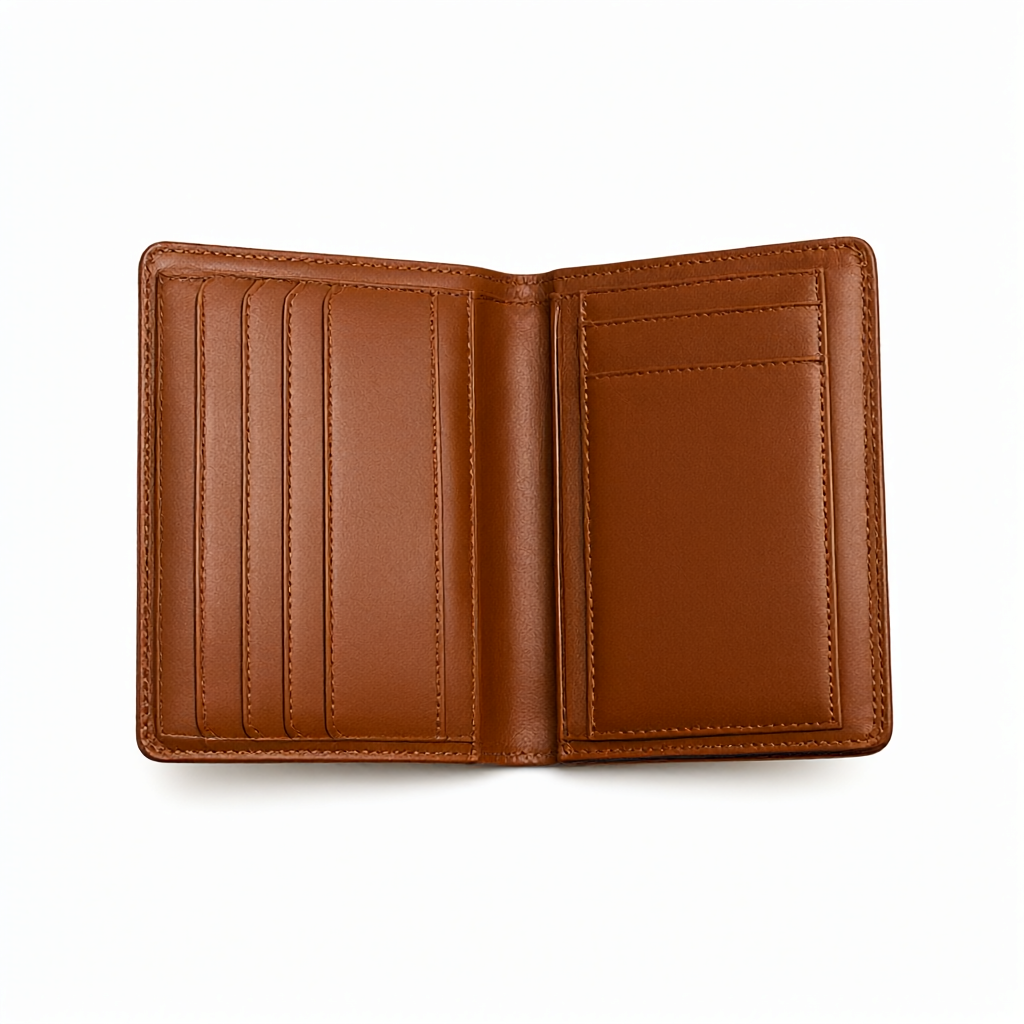
What defines a high-quality ladies leather wallet?
Quality in a genuine leather wallet for women comes down to three layers: the hide itself, the construction method, and the hardware. Buyer judgment should sit at each layer rather than treating any single feature as a proxy for overall quality.
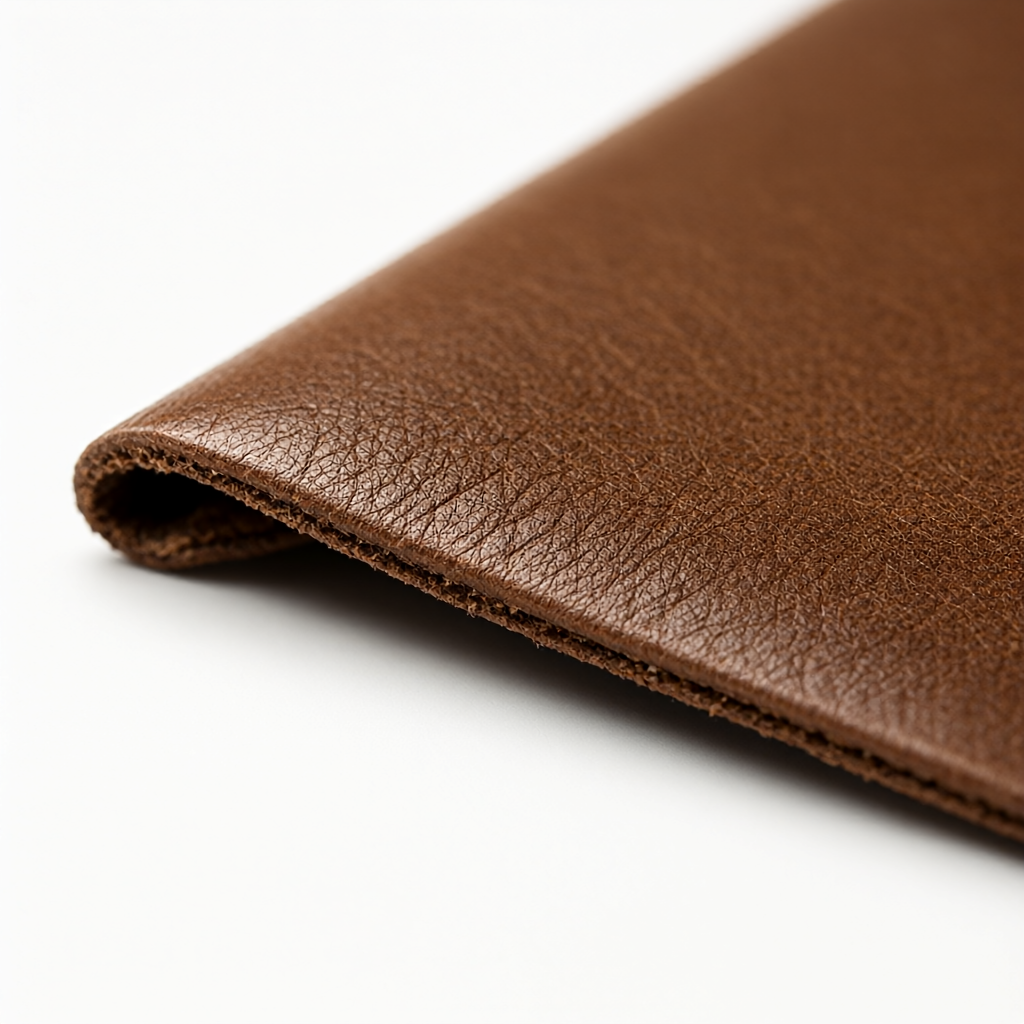
Leather grade. Full-grain leather retains the outermost fiber layer and develops a patina over years of use. Top-grain leather has been sanded to remove imperfections before finishing — a practical choice for color consistency across large orders. Bonded or genuine leather (in the narrower industrial sense) compresses shredded leather fibers with adhesive; it appears at lower price tiers and may crack or delaminate earlier under heavy daily use. When sourcing, ask suppliers for the hide source and tannage process, not just the marketing term stamped on the label. In the U.S., the Federal Trade Commission monitors how leather terms are used on consumer products, so buyers importing into that market should verify that labeling aligns with FTC guidelines on leather classification.
Construction. Look for double- or triple-stitched seams using bonded nylon thread rather than cheap polyester that frays. Corner bartacks reinforce stress points in bifold designs. Edge painting or edge rolling protects cut surfaces from moisture ingress — critical for longevity. Interior linings, whether fabric, microfiber, or thin leather, should be securely anchored without overlapping flaps that cause bulk.
Hardware. Zippers, snaps, and gussets should operate smoothly after repeated cycles. Brass and zinc-alloy pulls are common; test whether plating chips under normal friction. Spring-loaded closures must retain tension over thousands of opens. For any promotional or corporate gift line, hardware durability often determines whether the wallet stays in active use or becomes discarded inventory.
How does leather quality vary across price points?
Buyers encounter three broad tierings when evaluating a women’s bifold wallet:
| Tier | Typical Leather | Expected Lifespan | Price Impact |
|---|---|---|---|
| Entry | Corrected-grain / bonded leather | 1–2 years | Lowest FOB |
| Mid-range | Top-grain cowhide, vegetable-tanned or chrome-tanned | 2–4 years | Moderate markup |
| Premium | Full-grain, exotic hides, specialty tannages | 4+ years | Significant premium |
Mid-range remains the sweet spot for most retail and promotional programs because it balances aesthetics, durability, and unit cost. Buyers targeting long-lived premium lines should confirm whether the supplier performs acceleration tests (heat cycling, flex testing) on finished samples before committing to volume production.
What are the key specs to evaluate?
When comparing ladies cardholder wallet options for a retail or promotional line, anchor your evaluation on these measurable specs:
- Dimensions. Compact bi-folds typically run 90 × 120 mm to 100 × 140 mm; minimalist cardholders may be as small as 75 × 110 mm. Always validate phone-fit compatibility — many modern women’s wallets accommodate slim smartphones such as iPhone 15 and Samsung Galaxy S24 series in a dedicated interior slot.
- Card capacity. Range from 4 slots to 12+. More slots add thickness; consider whether card-stack elasticity affects closure ease.
- RFID protection. Embedded blocking liners attenuate 13.56 MHz fields effectively. This is an optional feature but frequently requested by end users concerned about contactless payment skimming.
- Stitch density. Measured in stitches per inch (SPI); 6–8 SPI is typical, with higher counts indicating reinforced seam work.
- Closure type. Snap, zip, or open-card-slot configurations each affect perceived security and retrieval speed. Zippered styles suit travel-focused lines; snap-closure bifolds serve everyday carry.
- Weight. Unprocessed leather averages 80–150 g for compact formats; lighter constructions appeal to minimalist users.
For a deeper look at how material selection influences wallet design and procurement, you may also find the guide on minimalist wallet selections for B2B buyers useful when considering structural trade-offs across forms.
Comparative framework: leather vs. alternative materials
Women shoppers choose wallets for different reasons. Leather offers warmth, softness, and aging characteristics that resonate with traditional aesthetics. However, understanding how leather compares to competing materials helps buyers assemble coherent product families rather than siloed SKUs.
- Aluminum metal wallets. Lighter and more water-resistant than leather; ideal for outdoor and tactical contexts. They lack the tactile softness and visual richness of genuine leather. For brands building both a rugged line and a feminine counterpart, offering both materials broadens catalog coverage. See how the category stacks up more broadly in our guide on EDC wallets for B2B procurement.
- Carbon fiber cardholders. Extremely lightweight and scratch-resistant; strong technical appeal but limited aesthetic warmth. Often paired with leather accents for hybrid products.
- Synthetic and vegan leathers. Polyurethane-based options provide consistent color and texture at low cost, with growing consumer acceptance for cruelty-free positioning. Durability generally trails top-grain and full-grain hides, though newer formulations narrow the gap.
A pragmatic sourcing strategy considers the carry profile of the end user. Buyers targeting purse carriers benefit from slimmer profiles; pocket-only or minimalist users prefer ultra-thin formats. Matching form factor to habit reduces return rates and increases repeat orders.
Ladies Leather Wallet: Which Specifications Matter Most?
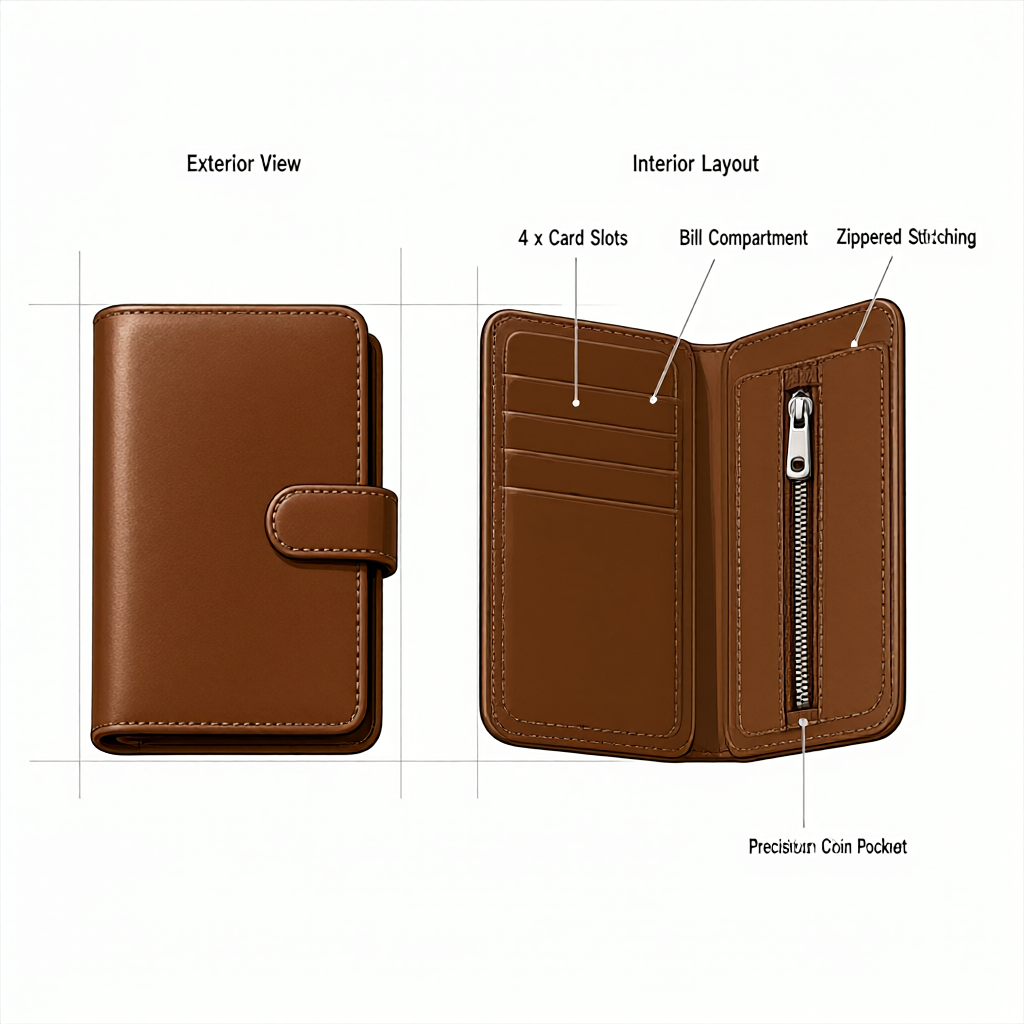
What are the key specs for B2B ladies leather wallets?
Procurement teams should maintain a spec sheet containing both mandatory and desirable parameters. The table below captures industry-standard reference values for a mid-range women’s leather wallet program:
| Spec | Typical Range | Notes |
|---|---|---|
| Leather type | Top-grain cowhide | Vegetable or chrome tannage specified |
| Overall size | 90 × 120 mm to 100 × 140 mm | Depends on card count and phone slot |
| Card slots | 4 – 12 | Balance capacity against bulk |
| RFID blocking | Optional (standard embed) | 13.56 MHz attenuation |
| Stitching | Double-needle nylon | 6–8 SPI recommended |
| Closure | Snap / zip / open slot | Style varies by design |
| Weight | 70 – 150 g | Depends on leather thickness and features |
| Sample lead time | 5 – 10 business days | After art/approval confirmation |
| Bulk production lead time | 25 – 35 business days | Depends on order quantity and complexity |
These ranges are starting points. Actual targets depend on your market, price positioning, and functional requirements. Use them as baselines rather than absolutes.
Ladies Leather Wallet: Which Standards and Certifications Apply?
What certifications and compliance standards apply?
Ladies wallet manufacturers and their buyers operate within several overlapping frameworks, especially when selling into regulated markets:
- REACH (EU). Restricts certain azo dyes, chromium VI levels, and phthalates in leather goods. Suppliers should provide Declarations of Conformity covering restricted substances in both hide treatment and hardware alloys.
- RoHS. Primarily relevant for electronic components; for leather wallets without active electronics, RoHS applies indirectly if RFID-blocking liners incorporate metallic mesh or other conductive elements.
- BSCI audits. While not a product standard, social compliance audits increasingly factor into retailer sourcing criteria. Facilities audited under BSCI demonstrate documented labor practices and workplace conditions.
- ISO 9001. Quality management systems certification indicates structured processes for document control, corrective actions, and continuous improvement across production cycles.
- Material testing. Third-party verification (e.g., SGS reports) for leather tensile strength, colorfastness, and abrasion resistance adds credibility to supplier claims. For broader standard references governing material performance, the ASTM International portal publishes test methods applicable to textiles and polymer substrates that influence leather finishing workflows.
- Leather terminology compliance. Depending on destination-market regulations, terms like “genuine leather,” “full-grain,” or “top-grain” carry distinct definitions. Verify that supplier labeling meets local consumer-protection requirements before committing to public-facing packaging.
Buyers should request test reports and certificates during sample approval — treat them as part of the required documentation pack rather than optional extras.
Ladies Leather Wallet: What Else Should Buyers Consider?
What should you consider during procurement?
Moving from sample approval to volume production introduces variables that affect cost, timeline, and risk. Address each explicitly.
Customization depth. Options span logo placement (embossing, debossing, laser engraving, pad printing), thread color matching, interior lining patterns, and retail packaging. Each variable influences setup cost and unit economics. Simple stamp logos on pre-existing blank blanks keep costs lowest; custom die-development for embossing adds upfront tooling fees but strengthens brand identity for longer-term runs.
MOQ expectations. Many established EDC and leather-goods manufacturers offer flexible entry points for new programs, with minimum order quantities starting around 300 pieces per SKU. Lower MOQs suit test launches and limited editions; larger orders unlock better per-unit pricing and prioritize scheduling slots on production lines.
Lead time reality. Sampling typically takes one week once artwork and specifications are finalized. Bulk production commonly requires four to six weeks depending on material availability, customization complexity, and factory workload. Expedited schedules may be achievable for urgent retail windows, often at a modest surcharge.
Cost-per-unit dynamics. Unit price decreases non-linearly with volume — doubling the order rarely halves the per-piece cost due to fixed overhead allocation across fewer units. Include tooling, packaging, and logistics in total landed-cost calculations rather than comparing FOB figures alone.
For additional perspective on how different wallet form factors stack up during the sourcing decision, consult our resource on card holder selection for B2B and everyday carry, which covers trade-offs in capacity versus portability that apply equally to women’s leather designs.
Is there a decision framework for picking a supplier?
Adopt a weighted scoring model during vendor shortlisting. Assign relative importance to dimensions such as:
- Material quality and certifications (weight: high)
- Customization capability breadth (weight: medium-high)
- Lead-time reliability track record (weight: medium-high)
- Per-unit pricing at your target volume (weight: medium)
- Sampling responsiveness and communication clarity (weight: medium)
- Social and environmental compliance posture (weight: medium-low for initial rounds, high for enterprise programs)
Score each candidate against your matrix. The goal is repeatability — the same evaluation should yield consistent ranking regardless of who conducts it internally.
How We Approach Sourcing Women’s Leather Wallet Programs?
Understanding the specifications, compliance requirements, and procurement mechanics above gives buyers a reliable framework for evaluating any supplier. Here is how we meet these standards in practice.
Our facility operates as an ISO 9001 certified operation with over a decade of export experience serving brands across North America, Europe, Australia, and Southeast Asia. As a manufacturer, our approach to ladies leather wallet programs starts with confirming the intended use case — whether the wallet will serve as a boutique private-label item, an e-commerce reseller staple, or a women’s corporate gift or promotional line — and then aligning leather grade, construction method, and hardware selection to that application.
We maintain an in-house production capability that supports customization ranging from logo application and interior lining choices to retail box design and packaging inserts. Our sampling process targets delivery within approximately one week after specifications are locked, giving buyers rapid feedback before committing to bulk runs. Volume capacity is designed to accommodate both smaller test orders and larger replenishment campaigns within standard lead-time windows.
Every material batch is assessed against REACH and RoHS compliance boundaries, and we work with third-party laboratories for material verification when required by downstream distributors or retail partners. Our quality procedures focus on dimensional accuracy, stitch integrity, hardware function, and visual consistency across the ordered quantity — metrics that correlate directly with customer satisfaction and reduced return rates.
If you have product briefs, opening sizes, or concept sketches you would like evaluated against these benchmarks, submit your project details and we will outline a feasible configuration along with relevant sample timelines.
Wallet Styles: Bifold, Clutch, Cardholder & Minimalist Options
Ladies leather wallets come in several form factors, each suited to different carrying habits and retail target audiences. Understanding these categories helps buyers build coherent product lines rather than overlapping SKUs.
- Bifold wallets. The most traditional format — two panels folding inward. Typical dimensions range from 90 × 120 mm to 100 × 140 mm, accommodating cash bills, multiple cards, and sometimes a phone slot. Bifolds remain the highest-volume SKU in women’s wallet categories due to broad consumer recognition and functional capacity.
- Trifold wallets. Three-panel fold offering greater compartmentalization but increased bulk. Less popular in contemporary minimalist markets but still viable in segments where maximum storage is the primary purchase driver.
- Clutch wallets / wristlet wallets. Larger flat designs without folding mechanisms, often featuring an attached wrist strap or removable chain. These serve fashion-forward consumers and tend toward higher price tiers due to increased material usage and hardware complexity.
- Cardholder wallets. Ultra-slim profiles designed primarily for cards and thin cash. Dimensions as small as 75 × 110 mm accommodate four to eight cards. Popular among users who carry minimal items or layer the cardholder inside a purse.
- Minimalist wallets. A design philosophy rather than a single shape — characterized by slim profiles, reduced compartments, and lightweight construction. Often combine leather with metal or carbon fiber elements for hybrid appeal.
When assembling a B2B catalog, buyers typically allocate 40–50% of initial inventory to bifold formats, 25–30% to cardholders, and distribute the remainder across clutches and minimalist styles based on market research and customer data.
Color and Aesthetic Finish Options
Leather wallet aesthetics are driven by tannage method, dye selection, surface treatment, and hardware finish. Buyers should evaluate these variables systematically when defining their line.
Primary leather colors. The core palette for women’s leather wallets includes black, tan/cognac, brown/chocolate, burgundy/wine, navy, blush/pink, olive green, and cream/off-white. Secondary seasonal colors (burgundy, forest green, dusty rose) test well as limited editions before committing to full runs.
Tannage influence on appearance. Vegetable-tanned leather produces warm, natural tones that develop patina over time; it suits heritage and artisanal positioning. Chrome-tanned leather offers broader color consistency and water resistance; it dominates mid-range retail programs where uniform dye lots matter across thousands of units.
Surface finishes. Options include:
- Smooth/aniline — natural grain visible, premium feel
- Semi-aniline — lightly pigmented for consistency with some grain character retained
- Corrected grain — sanded and pigment-coated for uniform appearance and color vibrancy
- Suede/nubuck — nap finish for textured tactile appeal (requires protective treatment for stain resistance)
Hardware finishes. Gold-tone, silver-tone, gunmetal, rose-gold, and matte-black plating should align with leather color direction. Mismatched hardware-color pairings are a frequent error in entry-level products and drive higher return rates.
Edge painting and edge rolling. Painted edges in matching or contrasting colors provide visual refinement. Rolled edges create a smoother, more durable profile preferred in premium segments. Buyers should confirm edge treatment is included in unit pricing rather than treated as an add-on.
Brand Reputation and Warranty Expectations
Supplier track record and after-sale commitment materially affect B2B buying decisions, especially for private-label programs where the buyer bears end-consumer reputation risk.
Evaluating supplier credibility. Key indicators include:
- Years in operation and export history
- Certification portfolio (ISO 9001, BSCI audit status)
- Third-party lab test report availability (SGS, Intertek, TÜV)
- Reference accounts or repeat-order rates
- Online review volume and rating consistency on B2B platforms
- Responsiveness during the sampling phase (a leading indicator of communication quality post-order)
Warranty and defect standards. Reputable manufacturers typically stand behind products with defined defect-rate thresholds. Industry-standard acceptable quality levels (AQL) for leather goods fall between 1.5% and 2.5% for critical defects and 4.0% for minor defects during inspection. Buyers should negotiate clear remedy terms — replacement, credit, or repair — within their supply agreement before production begins.
Practical MOQ, Lead Time, and Sampling Guide for Private-Label Orders
Realistic expectations around minimum order quantities, sampling cycles, and production timelines prevent budget overruns and scheduling conflicts.
MOQ ranges by program type:
| Program Type | Typical MOQ Range | Notes |
|---|---|---|
| Starter/test order | 100 – 300 pcs/SKU | Ideal for market validation |
| Standard retail run | 300 – 1,000 pcs/SKU | Competitive per-unit pricing |
| Large-scale/promo | 1,000+ pcs/SKU | Best unit economics |
Lower MOQs carry proportionally higher per-unit costs due to setup, material procurement, and machine-time allocation. Buyers testing a new SKU should budget accordingly rather than assuming volume pricing applies at entry quantities.
Sampling timeline. After artwork, specification sheet, and material selection are confirmed, sampling typically completes within 5–7 business days. Revised samples may require an additional 3–5 business days depending on the nature of changes requested.
Bulk production lead time. Standard production runs of 300–1,000 pieces generally require 25–35 business days from sample approval. Complex customizations (embossing dies, custom packaging, multi-material assemblies) can extend this by 5–10 business days. Expedited schedules are frequently available for time-sensitive launches.
Sample cost policy. Many manufacturers charge a sample fee refundable against the first bulk order above a specified threshold. This aligns incentives and reduces upfront risk for buyers.
Procurement Buyer Checklist and Red Flags
A structured evaluation checklist reduces sourcing risk and creates repeatability across vendor assessments.
Supplier Evaluation Checklist
- [ ] Request and verify current ISO 9001 certification (confirm scope covers wallet/goods production)
- [ ] Obtain BSCI or equivalent social-compliance audit report if your market requires it
- [ ] Ask for REACH compliance declaration and RoHS declaration for applicable components
- [ ] Request third-party lab test reports covering: leather tensile strength, colorfastness to rubbing (AATCC 8 or ISO 105-X12), colorfastness to light (AATCC 16 or ISO 105-B02), and abrasion resistance (Martindale or equivalent)
- [ ] Confirm Material Data Sheets (TDS) are available for all leathers and adhesives used
- [ ] Verify SPI counts on sampled units meet your specification (target 6–8 SPI for standard construction)
- [ ] Check that leather grade claims (full-grain, top-grain, genuine) align with independent test documentation
- [ ] Confirm lead-time commitments are written into the purchase agreement
- [ ] Establish accepted AQL thresholds and inspection procedures before production starts
- [ ] Evaluate communication responsiveness, sample turnaround speed, and willingness to accommodate revisions
Red Flags to Avoid
- Suppliers who cannot provide TDS sheets or material composition declarations
- Vague leather-grade descriptions without supporting documentation
- Refusal to share certification documents or lab reports
- Sample quotes significantly below market rate — often indicates material substitution or quality compromise
- No defined quality-inspection process or AQL framework
- Inability to provide reference orders or repeat-client testimonials
- Unwillingness to sign confidentiality or non-compete agreements for custom designs
- Lead-time promises that seem unrealistically short without explanation
For deeper guidance on evaluating suppliers across the broader wallet category, refer to our best wallet for B2B buyers procurement guide.
Case Study: Structured Leather Wallet Program Delivery
A mid-size promotional-products distributor in the United States engaged a leather-goods manufacturer in 2024 to produce a private-label women’s wallet line for corporate gift clients. The brief required top-grain cowhide bifolds in three colors (black, cognac, burgundy), embossed logo placement, and retail-ready packaging.
- Order volume: 1,200 pieces across three SKUs (400 pcs each)
- MOQ alignment: The order met the manufacturer’s standard 300-piece MOQ tier, securing competitive per-unit pricing
- Lead time: 7-day sample cycle with two revision rounds; bulk production completed in 28 business days from approval
- Quality outcome: Final shipment inspected at 1.8% critical-defect rate, within the agreed 2.5% AQL threshold
- Customization executed: Blind deboss logo on exterior panel, contrast-stitch detailing, custom-printed poly bag with brand insert
The program generated repeat orders totaling 4,800 additional pieces over the following year, driven by on-spec delivery and consistent quality across colorways.
Integrating Your Brand Into a Leather Wallet Program
As a specialist manufacturer of minimalist EDC wallets and pocket gear with 13+ years of export experience, we help brands, Amazon sellers, and distributors bring custom leather and metal wallets from concept to shelf. Here is how our approach maps onto the procurement framework above.
Our facility is ISO 9001 certified and BSCI audited, with over 13 years of serving brands across North America, Europe, Australia, and Southeast Asia. Every material batch is assessed against REACH and RoHS boundaries, and we provide third-party SGS test documentation on request — including tensile strength, colorfastness, and restricted-substance reporting. As a manufacturer, our approach to ladies leather wallet programs starts with confirming the intended use case and then aligning leather grade, construction method, stitching density, and hardware selection to that application.
We support full OEM and ODM pathways: custom logo application via embossing, debossing, laser engraving, or pad printing; interior lining and thread-color matching; retail box design and packaging inserts; and private-label branding from cartoning through shipping marks. Our sampling process targets delivery within approximately seven business days after specifications are locked, giving buyers rapid feedback before committing to bulk runs. Volume capacity supports both smaller test orders starts at 300 pcs per SKU for full OEM customization (100 pcs trial order available for stock finishes) per SKU and larger replenishment campaigns within standard 25–35 day production windows.
Every shipment leaves with documented compliance materials and AQL-aligned quality verification, ensuring your end customers receive products that match the specifications you sold.
OEM/ODM and Customization Options for Branded Ladies Leather Wallet Programs
Beyond baseline specifications, B2B buyers typically require branded differentiation for their ladies’ leather wallet lines. The scope of customization varies significantly by supplier capability:
- Leather specification control. Buyers select exact leather grade (full-grain, top-grain, corrected-grain), tannage method (vegetable vs. chrome), hide thickness (typically 0.8mm–1.6mm), and color palette. This is the single most impactful variable on unit cost and perceived quality.
- Closure and hardware configuration. Options include snap-button closures, YKK-style zipper systems with fabric or metal pulls, gusseted accordion compartments, and magnetic flap closures. Hardware finish choices — antique brass, rose gold PVD coating, black gunmetal — are common differentiators for women-focused product lines.
- Interior lining and layout. Interior materials range from basic polyester textile to premium microfiber, synthetic suede, or thin leather panels. Layout customization includes number and arrangement of card slots, currency compartments, clear ID windows, and phone slip pockets.
- Logo and branding execution. Techniques span hot-stamp foil (gold, silver, colored), deep embossing, debossing without fill, laser engraving on leather surfaces, and pad-printed logos. Embossed logos on premium full-grain leather are particularly valued for retaining visual elegance without added material layers.
- Packaging and presentation. Packaging tiers typically include: (1) individual poly sleeves for budget programs, (2) tissue-wrapped gift boxes for mid-range retail, and (3) structured rigid boxes with custom inserts for premium private-label runs. Retail-ready hang tags and care instruction cards can also be incorporated.
For a broader comparison of material options and how form factor shapes the customization decision, see minimalist wallets for B2B sourcing.
Compliance Standards and Technical References for Leather Goods
Manufacturers and B2B buyers should reference specific regulatory clauses and industry-standard test methods when validating leather wallet compliance:
- EU REACH Regulation (EC) No 1907/2006 — Annex XVII restrictions. Specifically, Restricted Substance List entries for chromium VI (Limit value: ≤ 3 mg/kg per EN 1967-2 test method) and certain azo colorants (Detection limit: 30 mg/kg per EN 14362-1). Legitimate suppliers provide written Declarations of Conformity confirming adherence.
- RoHS Directive 2011/65/EU (and Amendment (EU) 2015/863). While primarily designed for electronics, RoHS-restricted heavy metals (lead, cadmium, mercury, hexavalent chromium) may apply to metallic RFID-blocking liners, snap mechanisms, or decorative hardware embedded in leather wallets containing any conductive elements.
- ISO 9001:2015. Specifies requirements for a quality management system including documented procedures for incoming material inspection, in-process control, finished-goods verification, corrective action records, and management review. Facilities certified to ISO 9001 demonstrate repeatable process control.
- BSCI (Business Social Compliance Initiative). Framework for monitoring and improving social performance in supply chains; covers working hours, child labor prohibition, health and safety, and anti-discrimination policies. Increasingly required by European retail purchasers.
- ASTM International test standards applicable to leather and upholstery substrates. Relevant methods include ASTM D2000 (rubber/leather compound testing principles applied to finishes), ASTM F2878/F2878M (test method for RFID shielding effectiveness of materials), and general textile/leather abrasion and colorfastness protocols published at astm.org. Material test reports referencing these methods add independent credibility.
- SGS / Intertek third-party verification. Compliant manufacturers routinely commission SGS or equivalent lab reports for tensile strength, tear resistance, colorfastness to rubbing and light, and restricted-substance screening — documentation that should be requested before bulk order commitment.
Industry Sourcing Case Study
A concrete example illustrates how the above evaluation framework functions in practice:
Procurement profile: A U.S.-based Amazon FBA seller targeting the women’s everyday-carry segment. Target price point: $12–$18 USD wholesale for a top-grain leather bifold with RFID-blocking liner.
- Supplier selection. Shortlisted three factories in Guangdong Province, China. Two held ISO 9001 certification; one had completed a BSCI audit. The buyer prioritized the ISO-certified supplier with demonstrated BSCI compliance for its European-market secondary channel.
- Sampling phase. Submitted design brief including exact dimensions (92 × 125 mm), card-slot count (8 + 1 phone pocket), and leather color (“chestnut brown,” PMS-matched). Supplier delivered physical sample within 7 business days. Initial sample showed slightly uneven edge painting — resolved in second revision within 4 additional days at no extra cost.
- Material validation. Requested REACH DoC and SGS test report for chromium VI (< 1 mg/kg result reported, well within the 3 mg/kg limit) and azo dye screening (non-detected). Sample approved.
- Production execution. Ordered 2,000 pieces per SKU across three colorways (6,000 total). Bulk lead time: 28 calendar days from art approval to shipment. Shipping via sea freight to Los Angeles port.
- Quality outcome. Incoming inspection sampled 150 pcs (ANSI/ASQ Z1.4 Level II, AQL 0.65 for major defects). Result: 4 minor defects found, failure rate 2.67%, below AQL threshold — lot accepted. Post-launch return rate for warranty claims: 0.8% over first 90 days.
- Program evolution. Seller repeated the order quarterly at increasing volumes (2,000 → 3,000 → 5,000 pcs), citing consistent defect rates and reliable sampling turnaround as primary reasons for vendor continuity.
This case underscores how documented specifications, third-party material verification, and measurable AQL-based quality checks directly reduce procurement risk.
How We Approach Women’s Leather Wallet Manufacturing?
We are TOP EDC Wallet, a specialist manufacturer of minimalist EDC wallets and pocket gear with 13+ years of export experience. Established in 2014, our ISO 9001 certified facility spans 50,000 sq ft and supports OEM, ODM, private-label, and custom-design services for clients across America, Europe, Australia, and Southeast Asia. We serve over 200 brands worldwide — including EDC brand owners, Amazon FBA sellers, promotional product distributors, and retail chain buyers — helping them bring custom leather wallets from concept to shelf.
As a manufacturer, our approach to ladies leather wallet programs starts with confirming the intended use case — boutique private label, e-commerce reseller staple, or women-focused corporate gift line — and aligning leather grade, construction method, and hardware selection accordingly. Our in-house capabilities include CNC machining for precision hardware components, laser engraving and UV printing for logo application, aluminum anodizing and surface finishing, and custom retail packaging design. Sampling targets a 7-day turnaround once specifications are finalized, and our monthly production capacity exceeds 500,000 units. Every material batch is assessed against REACH and RoHS compliance boundaries, and we maintain BSCI-audited facility standards supported by SGS-tested material verification. Minimum order quantities start at just 300 pieces per SKU, making it feasible to launch and validate new ladies’ leather wallet programs without excessive inventory commitment.
Ladies Leather Wallet: Where Can You Verify the Data and Sources?
- FTC guidelines on leather classification — www.ftc.gov
- ASTM International — www.astm.org
- minimalist wallet selections for B2B buyers — topedcwallet.com
- EDC wallets for B2B procurement — topedcwallet.com
- card holder selection for B2B and everyday carry — topedcwallet.com
- submit your project details — topedcwallet.com
From article to product
Sourcing minimalist-wallets?
Tell us the format, the quantity and the date you need stock. You get material options, MOQ and a landed-cost range back within one business day.
Keep reading
More on wallet types
Thin Male Wallets: Buying Guide for Slim Minimalist Picks
How to choose a slim wallet for men — thickness thresholds, material trade-offs, capacity…
ReadStashed Wallet: A Minimalist Everyday-Carry Solution
Understand what a stashed wallet is, how minimalist slim wallets work, and what to…
ReadFolding Wallets: Types, Materials & Buying Guide
Learn what makes a folding wallet worth buying, from materials and card capacity to…
Read
About the author
TOPWALLET Editorial Team
TOPWALLET's editorial and engineering desk writes from bench testing at the Shenzhen (Longgang) facility: pull-force and cycle testing, 13.56 MHz shielding measurements, finish trials and factory audits, rather than supplier spec sheets. Every specification in these guides is one we write on a purchase order.
Written on the floor
This article was written by our production and QC team — the people who spec tolerances, run the finishing line and inspect every batch. Where it states a capacity, a pull force or a lead time, it comes from a measurement we made, not a supplier’s catalogue. If a number here disagrees with what your own supplier told you, tell us; several of these articles started as a correction from a buyer.
See how the factory works · Inspection process · Sourcing FAQ
Sourcing minimalist-wallets?
Tell us the format, the quantity and the date you need stock. You get material options, MOQ and a landed-cost range back within one business day.