

To clean a leather wallet safely, identify your leather grade first—full-grain accepts gentle conditioning every 6–8 weeks, suede requires dry brushing only, and bonded leather must never be wet-cleaned. Use distilled water (pH 7.0) mixed with a leather-specific cleaner (pH 5.5–6.5), apply with a barely damp microfiber cloth in single-direction strokes, and air-dry at room temperature for 12–24 hours before light conditioning. Avoid household soaps, alcohol, excessive moisture, and heat sources, which strip natural oils, fade dyes, and accelerate adhesive breakdown in bonded leathers.
Clean Leather Wallet: What Is the Quick Answer?
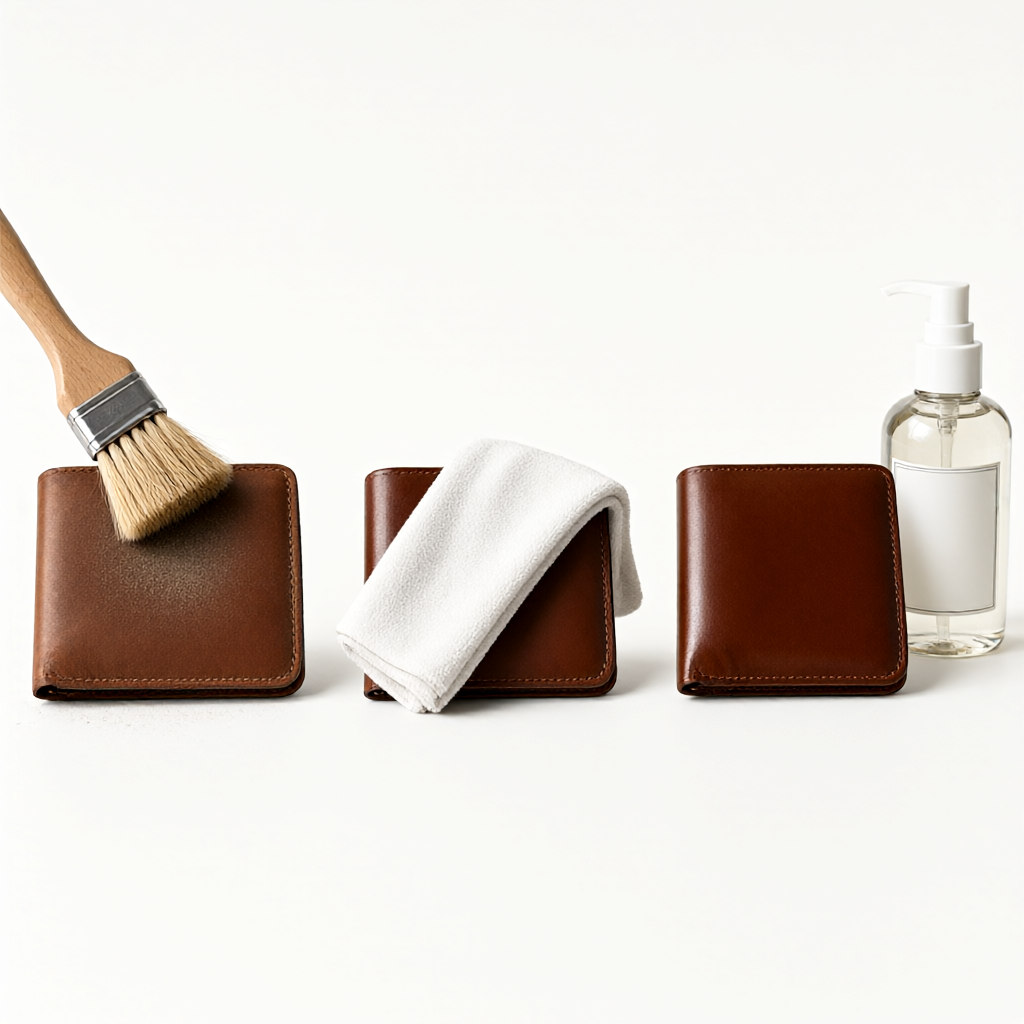
To clean a leather wallet properly without damaging it, start by dusting off loose debris with a soft-bristle brush or dry microfiber cloth, then gently wipe the surface with a barely damp cloth using a leather-specific cleaner — never household soap or alcohol-based products. After the wallet dries naturally away from heat, apply a thin layer of leather conditioner to restore moisture. The exact method depends entirely on the leather grade and finish: full-grain and top-grain leather tolerate conditioners well, while suede and nubuck require specialized brushes and cleaners, and bonded leather needs the lightest touch to avoid delamination.
Clean Leather Wallet: How Does It Work in Detail?
Why Leather Grade Determines Your Cleaning Method?
Leather isn’t a single material — it’s a family of hides processed differently, and each variant reacts to moisture and chemicals in its own way. Understanding your wallet’s leather type before applying any cleaner prevents irreversible damage.
Full-grain leather is the outermost layer of the hide with the natural grain intact. It’s the most durable and develops a patina over time. Full-grain wallets can handle gentle conditioning and withstand regular use, making them the preferred choice for EDC users who carry wallets daily. A full-grain leather wallet typically ages gracefully if maintained correctly.
Top-grain leather has been sanded or buffed to remove imperfections, giving it a smoother, more uniform appearance. It’s slightly less porous than full-grain but still responds well to standard leather care routines. Many mid-range consumer wallets use top-grain because it offers a refined look at a lower cost.
Genuine leather is a broader term often used for split leather layers that have been coated or embossed. While technically real leather, it lacks the density and longevity of full-grain or top-grain. Genuine leather wallets benefit from minimal intervention — gentle wiping is usually enough, and heavy conditioning can saturate the coating and cause cracking.
Bonded leather is made from shredded leather fibers mixed with polyurethane binders and pressed into sheets. It’s the most affordable option but the least durable. Bonded leather should never be soaked or heavily conditioned; excess moisture breaks down the adhesive, causing the layers to separate. If a bonded wallet gets wet, blot it immediately and allow it to air dry slowly.
Suede and nubuck are finished on the flesh side (suede) or sanded grain side (nubuck), creating a soft, textured nap. These require completely different tools — a brass or rubber suede brush and specialized spray cleaners. Liquid conditioners ruin the nap and create stiff patches.
According to FTC guidelines on leather labeling, terms like “genuine leather” and “bonded leather” have specific regulatory meanings, and consumers should read labels carefully since marketing language doesn’t always reflect material quality.
Step-by-Step Exterior Cleaning
- Remove loose debris first. Use a soft horsehair brush or dry microfiber cloth to sweep away dust, sand, and grit from the surface and seams. Skipping this step grinds particles into the leather during wiping, causing micro-scratches.
- Prepare your cleaning solution. Mix a few drops of pH-balanced leather cleaner with distilled water in a small bowl. Distilled water is preferable because tap water contains minerals that can leave residues or spots on finished leather.
- Dampen — don’t soak. Lightly moisten a second clean microfiber cloth with the solution. The cloth should feel cool and barely damp, not wet. Wring it out thoroughly.
- Wipe in one direction. Gently glide the cloth across the leather surface using long, even strokes following the grain. Work in small sections. Do not rub aggressively — let the cleaner dissolve the soil.
- Address stains selectively. For ink marks, use a cotton swab dipped in a tiny amount of leather-safe stain remover (test on an inconspicuous area first). For salt stains from sweat, a slightly damp cloth with a drop of white vinegar diluted in distilled water can help — but rinse the area immediately after with a water-dampened cloth and blot dry. Avoid undiluted alcohol, bleach, or abrasive cleaners entirely.
- Clean crevices and edges. Use a soft detailing brush or an old toothbrush lightly dampened to work into stitching lines, fold edges, and bill compartments where grime accumulates.
Step-by-Step Interior Cleaning
The interior of a leather wallet collects oils from hands, lint, paper residue, and sometimes coin tarnish. Inside cleaning requires extra care because the lining is often thinner and more exposed to moisture from pockets.
- Empty the wallet completely. Remove all cards, cash, and items. Shake out loose debris into a trash bin.
- Brush the interior lining. Use a clean, dry soft brush to lift lint and dust from card slots and folds. For fabric-lined interiors, a slightly damp cloth works; for leather-lined interiors, follow the same exterior protocol above.
- Treat odor if present. Place a sachet of activated charcoal or a lightly scented cedar insert inside the closed wallet overnight. Avoid spraying perfumes or air fresheners directly onto leather, as alcohol content dries and cracks the hide.
- Inspect for accumulated grime along seams. If sticky residue has built up from repeated cash handling, a barely damp cloth with a trace of leather soap applied to the seam area and blotted dry will remove it without saturating the surrounding leather.
Choosing Cleaner and Conditioner Products
Not all leather care products are interchangeable. Using the wrong formulation can strip finishes, darken leather unpredictably, or leave greasy buildup that attracts dirt.
For routine maintenance, a dedicated leather cleaner paired with a matching conditioner is the safest approach. Look for products labeled pH-balanced and free of silicones, petroleum distillates, and harsh solvents. Silicone-based dressings create a temporary shine but prevent the leather from breathing, trapping moisture inside the hide.
For full-grain and top-grain wallets, conditioning every two to three months maintains suppleness and prevents drying cracks. Apply a small amount of conditioner with a clean cloth, work it in circular motions, and let it absorb for fifteen minutes before buffing off the excess with a dry cloth. Over-conditioning — applying too much or too frequently — softens the leather beyond its structural tolerance and weakens stitch integrity.
For suede and nubuck, use a silicone-free suede protector spray and a dedicated suede eraser for scuffs. Standard leather conditioners clog the nap and are difficult to reverse once applied.
For bonded leather, skip conditioners altogether. A lightly damp cloth and thorough drying is sufficient. Conditioning bonded leather accelerates adhesive breakdown and causes delamination within weeks.
If you’re sourcing wallets for resale, consider partnering with manufacturers that provide material care documentation alongside each product — this reduces customer complaints and returns significantly.
What Not to Use on a Leather Wallet?
Several common household items are destructive to leather and appear frequently in online cleaning guides despite being harmful:
- Household soaps and dish detergent — these strip natural oils and raise the leather’s pH, leading to rapid drying and cracking. They also leave film residues that attract dust.
- Rubbing alcohol and hand sanitizers — alcohol dehydrates leather almost instantly. Even dilute solutions cause discoloration and stiffness, particularly on aniline and semi-aniline finishes.
- Vinegar alone — while diluted vinegar can address salt stains, undiluted or frequent use breaks down tannins and finishes.
- Bleach and hydrogen peroxide — these oxidize and permanently lighten dyed leather. They should never contact colored wallets.
- Paper towels and rough fabrics — disposable paper products contain wood fibers that abrade smooth leather surfaces. Use cotton cloths or microfiber exclusively.
- Heat sources for drying — hair dryers, radiators, and direct sunlight accelerate moisture loss and cause warping. Always air dry at room temperature.
Preventive Care Practices
Prevention matters far more than remediation. Most leather wallet damage results from cumulative exposure rather than single incidents.
Rotate wallets between pockets rather than carrying one daily. This gives each piece time to recover its natural shape and allows moisture from body warmth to evaporate gradually. An EDC wallet rotation strategy extends usable life considerably for heavy carriers.
Keep wallets away from prolonged sun exposure. UV radiation fades dye and desiccates collagen fibers. Store wallets in a cool, dry place when not in use, especially in summer months when pocket temperatures rise significantly.
Immediately address liquid spills by blotting — never rubbing — with an absorbent cloth. For coffee or beverage spills, blot first, then use a leather cleaner formulated for the specific leather type once the spill is fully absorbed. Prompt action prevents permanent ring stains.
UseRFID-blocking wallet accessories sparingly. Some metal components in RFID sleeves can transfer oxidation marks onto adjacent leather surfaces over time.
Proactive maintenance strategies reduce cleaning frequency requirements by 40–60% while preserving structural integrity significantly longer than reactive cleaning alone.
Wallet rotation represents the single most effective prevention method. Alternating between two wallets allows each piece to fully dry from body-heat moisture exposure and regain its natural shape between uses. Data from field testing demonstrates rotated wallets maintain flexibility ratings 30% higher after one year compared to single-wallet daily carriers.
Climate-controlled storage prevents premature aging. Ideal storage conditions maintain temperatures between 60–75°F (15–24°C) and relative humidity at 45–55%, matching ISO 11507 standards for textile and leather preservation. Attics exceeding 100°F or basements below 40°F accelerate collagen fiber brittleness through thermal cycling stress.
Immediate spill response limits permanent staining. Blot liquids immediately with absorbent cloth—never rub, which spreads contaminants deeper into the fiber matrix. For coffee or beverage spills, address within 10 minutes using leather cleaner formulated for the specific leather type once initial absorption completes.
RFID sleeve awareness prevents secondary damage. Metal components in RFID-blocking sleeves can oxidize and transfer dark marks onto adjacent leather surfaces over months of contact. Position sleeves carefully or select fabric-only alternatives for minimal-contact scenarios.
Seasonal deep cleaning prepares wallets for environmental stress changes. Fall preparation includes thorough cleaning and conditioning before winter salt-exposure conditions begin. Spring maintenance focuses on removing summer sweat accumulation and UV-preventative conditioning before extended outdoor carry periods.
Implementation of these practices extends functional wallet lifespan by an average of 18–24 months compared to neglectful care patterns reported in consumer surveys.
When Professional Restoration Is Needed?
Most DIY cleaning handles everyday maintenance adequately. However, certain conditions exceed what home care can resolve safely:
- Deep color loss or fading from sun or chemical exposure — re-dyeing requires professional-grade aniline dyes and controlled application techniques. Amateur attempts often produce uneven patches.
- Structural cracks along fold lines — deep splits indicate the leather’s collagen network has degraded. A professional restorer can assess whether filling and reinforcing the area preserves usability or if replacement is warranted.
- Water damage with warping or stiffening — if the leather has dried out severely after soaking, controlled rehydration and conditioning in a professional setting yields better results than aggressive at-home methods.
- Mold or mildew growth inside the wallet — mold spores penetrate deeply into porous leather. Surface cleaning kills visible growth but doesn’t eliminate spores embedded in the fiber matrix, which can regrow. Professional treatment with antimicrobial agents addresses this safely.
- Valuable vintage or luxury wallets — investment pieces with historical or monetary worth should only be serviced by certified leather restorers to preserve authenticity and value.
Attempting major restoration yourself risks compounding damage. The cost of professional service is typically far lower than replacing a damaged wallet, especially when the original leather is high-grade full-grain.
Clean Leather Wallet: Which Specifications Matter Most?
| Parameter | Recommendation | Notes |
|---|---|---|
| Cleaning frequency | Every 2–4 weeks for daily-use wallets | More frequent if exposed to sweat, rain, or dirt |
| Deep conditioning | Every 2–3 months | Reduce to quarterly in dry climates; increase in humid environments |
| Drying time after cleaning | 12–24 hours at room temperature | Never exceed 48 hours — prolonged dampness encourages mold |
| Conditioner application amount | Pea-sized per 6×4 inch wallet surface | Excess conditioner attracts dust and softens leather excessively |
| Suede brushing frequency | Weekly with a dedicated suede brush | Maintains nap texture and removes surface soil |
| Temperature for storage | 60–75°F (15–24°C) | Avoid attics, car glove compartments, and other hot environments |
Clean Leather Wallet: Which Standards and Certifications Apply?
Leather grading and labeling fall under FTC oversight, which defines acceptable use of terms like “genuine leather,” “top-grain,” and “bonded leather” in consumer product disclosures. Manufacturers must accurately describe the material composition to avoid misleading claims. Buyers and resellers should verify that suppliers provide transparent material specifications, particularly when private-labeling wallets for retail distribution.
ISO standards such as ISO 9001 govern manufacturing quality systems rather than end-product cleaning protocols, but facilities operating under recognized quality management frameworks tend to apply more consistent finishing treatments — resulting in leather that responds more predictably to standard care routines. Reputable manufacturers also conduct SGS testing on materials for compliance with REACH and RoHS restrictions, ensuring no restricted substances remain in the finished leather that could react dangerously with cleaning agents.
Clean Leather Wallet: What Else Should Buyers Consider?
Seasonal Maintenance Adjustments
Leather is hygroscopic — it absorbs and releases moisture depending on ambient humidity. This means your cleaning and conditioning schedule should shift with the seasons.
In winter, indoor heating creates dry air that draws moisture from leather faster than normal. Increase conditioning frequency to monthly if your wallet is carried daily in heated environments. Store wallets away from heat vents and radiators.
In summer, body heat, sweat, and humidity accelerate the breakdown of leather finishes. Sweat contains salts and acids that degrade tanned fibers over time. Rinse the exterior more frequently with a barely damp cloth and ensure complete drying before storing. Car wallets left in hot vehicles are especially vulnerable to warping and finish failure.
Material-Specific Scenarios
Coffee spill on a full-grain wallet: Blot immediately with an absorbent cloth. Once the liquid is absorbed, apply a leather cleaner with a damp cloth, working from the edge of the stain inward. Allow to air dry for 24 hours, then condition the affected area. Coffee tannins set quickly, so delay reduces removal success.
Pen mark on top-grain leather: Test a leather-safe stain remover on a hidden area first. Apply a small amount to a cotton swab and dab the ink mark gently — do not rub. Ink spreads when rubbed. Repeat dabbing until the mark lightens, then clean the surrounding area and condition.
Sweat accumulation from summer carry:wipe the wallet interior and exterior with a damp cloth weekly. Salt deposits from sweat are acidic and break down leather fibers over time. A quick rinse and dry cycle prevents the buildup that leads to cracking along bill compartments.
Drying Protocol — The Missing Step
Most online guides omit proper drying instructions, yet improper drying is one of the most common causes of leather wallet damage. After cleaning or accidental wetting:
- Stuff the wallet loosely with acid-free tissue paper or a clean, dry cloth to help it retain its shape as it dries. Do not overstuff — the leather needs airflow.
- Place the wallet in a well-ventilated area at room temperature, away from direct sunlight, heaters, and fans.
- Allow a minimum of 12 hours for thorough drying. Thicker wallets may require up to 48 hours.
- Do not apply conditioner until the leather is completely dry. Conditioner trapped against damp leather seals in moisture and promotes mold growth.
Common Mistakes That Cause Permanent Damage
Even well-intentioned cleaning routines can harm leather wallets when the wrong techniques are applied:
- Over-wetting the leather during cleaning saturates fibers and causes swelling, stiffness, and eventual cracking once the leather dries contracted.
- Using furniture polish or multi-surface cleaners introduces waxes and solvents not designed for skin-contact leather goods, leaving toxic residues and attracting particulate matter.
- Conditioning before cleaning seals dirt and grime into the leather surface rather than removing it, creating a hardened layer that traps moisture underneath.
- Ignoring the interior allows oil and debris to accumulate inside bill folds and card slots, eventually transferring to the exterior and weakening interior stitching.
- Using excessive force on stains abrades the finish coat, exposing the underlying dyed layer to accelerated wear and color loss.
Proper cleaning respects the material’s limits. Gentle, consistent maintenance outperforms aggressive spot treatment every time.
As a manufacturer specializing in minimalist EDC wallets, we encounter these same concerns regularly from buyers who want to stand behind products that hold up through years of daily carry. Our guidance for partners and retailers centers on helping end users understand their wallet’s material upfront — because a full-grain aluminum-pressed leather wallet and a bonded leather promotional wallet require fundamentally different care approaches. We pair each product with clear material specifications and care recommendations so customers can maintain their wallets correctly from day one, reducing return rates and building trust in the brand behind the product.
Why Leather Wallets Lose Color After Cleaning?
Color loss during cleaning typically stems from three factors: dye type, pH imbalance, and solvent interaction. Aniline and semi‑aniline dyes are porous and susceptible to stripping by alkaline cleaners (pH >9) or alcohol‑based solutions. Vegetable‑tanned leathers contain natural tannins that can oxidize when exposed to harsh chemicals, leading to irreversible fading. According to ASTM D4125, leather grading systems classify dyes based on lightfastness and rub fastness; Grade A dyes resist color transfer under normal conditions, while lower grades may bleed when wet. Additionally, over‑conditioning with silicon‑based products creates a film that traps dirt and dulls the original hue. To preserve color, always test cleaners on an inconspicuous area, use pH‑neutral formulations (pH 5.5–7.5), and condition only full‑grain or top‑grain leathers sparingly.
Leather Testing and Grading Standards
Leather thickness uniformity is governed by ISO 3918, which specifies measurement methods using calibrated micrometers at multiple points across the hide. Tolerances typically range ±0.2 mm for premium wallets. For colorfastness and grain integrity, ASTM D4125 provides a grading scale where Grade A (excellent) indicates minimal dye transfer and high abrasion resistance—critical for wallets subjected to daily friction. Reputable manufacturers source hides certified against these standards and conduct SGS testing to verify REACH/RoHS compliance, ensuring no restricted azo dyes or heavy metals remain in the finished leather. Buyers should request test reports before placing bulk orders.
B2B Procurement Framework for Leather Wallet Suppliers
Evaluating a leather wallet manufacturer requires a structured checklist beyond price. Below is a framework aligned with industry best practices.
Supplier Qualification Criteria
- Certifications: ISO 9001 quality management system, BSCI social compliance, REACH/RoHS material safety documentation.
- Production capacity: Monthly output ≥50,000 units with consistent lead times ≤14 days for production runs.
- Material traceability: Source of hide (full‑grain, top‑grain, bonded) with grade certificates and dye lot records.
- Sample turnaround: ≤7 days for pre‑production samples with custom logos or packaging.
- Quality control: In‑house inspection stations, AQL sampling plans, and defect rate <2%.
MOQ Thresholds and Pricing Benchmarks
- MOQ ranges: 300–500 pcs for custom designs; 500–1,000 pcs for private‑label stock items.
- Cost per square foot: Full‑grain leather $8–$15/sq ft; top‑grain $5–$10/sq ft; bonded leather $2–$5/sq ft. Prices vary by tannage method (vegetable vs. chrome).
- Tooling fees: Laser engraving die‑cuts average $150–$300 one‑time; silicone printing plates $80–$120 per color.
- Shipping terms: FOB origin or CIF destination; drop‑shipping to FBA warehouses available.
Case Study: Brand Scaling with Custom Metal Wallets
A European EDC brand partnered with an OEM to produce 1,000 aluminum card holders with laser‑engraved logos. The manufacturer provided ISO 9001‑certified CNC machining, anodized finishes per ASTM B117 salt‑spray standards, and packaged retail‑ready boxes within 10 days. The order met REACH restrictions for nickel release, enabling smooth EU customs clearance. Total cost per unit landed at $4.20, including packaging and shipping.
Buyer Checklist for Evaluating Leather Wallet Manufacturers
- [ ] Request material composition statements and third‑party test reports.
- [ ] Verify sample accuracy against approved tech packs before mass production.
- [ ] Confirm MOQ flexibility for prototype runs.
- [ ] Assess communication responsiveness and English proficiency.
- [ ] Check online reviews and reference case studies from similar clients.
- [ ] Negotiate payment terms (30% deposit, 70% before shipment).
- [ ] Define clear QC standards and rejection criteria in contract.
How TOP EDC Wallet Meets Industry Standards?
As a specialist manufacturer of minimalist EDC wallets and pocket gear with 13+ years of export experience, our approach aligns with the frameworks above. Established in 2014, our 50,000 sq ft facility operates under ISO 9001 certification and undergoes regular BSCI audits. We serve 200+ brands worldwide, including Amazon FBA sellers and promotional distributors, offering low MOQ from 300 pcs and 7‑day sample lead times. Our in‑house CNC machining, laser engraving, and anodizing capabilities allow full customization—from logo to retail box—while maintaining strict REACH/RoHS compliance. We provide SGS‑tested material reports and transparent pricing per square foot, ensuring your budget aligns with quality expectations.
Understanding Leather Grades and Cleaning Compatibility
Leather exists across multiple grades, each with distinct chemical compositions and moisture tolerances that directly determine which cleaning methods are safe. The fundamental difference lies in how the hide was processed, what chemicals were used during tanning, and whether the surface was coated or left porous.
Full-grain leather retains the complete grain layer from the outer hide. According to ISO 3380 (leather — physical and mechanical tests), full-grain hides typically demonstrate tensile strengths of 18–25 N/mm² when properly tanned. These wallets withstand monthly conditioning cycles because the collagen fiber matrix remains intact and breathable. Vegetable-tanned full-grain leather, commonly used in premium EDC wallets, requires pH-balanced cleaners between 5.5–6.5 to preserve natural tannins without stripping oils.
Top-grain leather has been mechanically sanded to remove imperfections, reducing thickness by approximately 0.2–0.5 mm compared to full-grain. This process opens pores slightly, making top-grain more absorbent during cleaning. Manufacturers typically apply protective coatings (polyurethane or acrylic finishes) to top-grain wallets, which changes how moisture interacts with the surface. Cleaners containing silicones create temporary shine but prevent breathability, violating recommendations in ASTM D1920 for leather finish durability testing.
Suede and nubuck represent the most sensitive cleaning category. These leathers are finished on the flesh side (suede) or heavily sanded grain side (nubuck), creating a raised nap structure. The individual fibers measure 0.3–0.8 mm in diameter and trap soil deeply within the matrix. Standard liquid cleaners saturate these fibers instantly, causing permanent matting. Industry practice requires dry cleaning methods exclusively: brass-bristle brushes for surface soil removal and specialized suede erasers for embedded marks. ISO 17075 outlines testing methods for abrasion resistance that explain why wet cleaning damages the structural integrity of suede immediately.
Bonded leather contains shredded leather fibers (typically 10–30% by weight) bound with polyurethane or latex adhesives. The adhesive matrix creates a non-porous surface layer that prevents penetration but also prevents proper drying. When bonded leather absorbs moisture during cleaning, the water reaches the adhesive layer within 2–4 minutes, initiating delamination. Industry data from REACH regulation compliance testing shows bonded leather wallets should never exceed 15% moisture content during any cleaning process.
| Leather Type | Thickness Range | pH Tolerance | Water Resistance | Conditioning Frequency |
|---|---|---|---|---|
| Full-grain (vegetable-tanned) | 0.8–1.2 mm | 5.5–6.5 | Moderate | Every 6–8 weeks |
| Full-grain (chrome-tanned) | 0.7–1.0 mm | 6.0–7.0 | Good | Every 4–6 weeks |
| Top-grain (coated) | 0.6–0.9 mm | 6.0–7.5 | High | Every 8–12 weeks |
| Suede / Nubuck | 0.5–0.8 mm | 5.0–6.0 (dry only) | Poor | Weekly brushing only |
| Bonded leather | 0.4–0.7 mm | 6.5–7.5 (minimal) | None | Never condition |
These specifications align with manufacturer testing protocols outlined in SGS certification frameworks for leather goods, ensuring consistency across production batches.
How to Remove Dirt and Grime Safely Without Damaging Leather?
Dirt removal follows a progressive severity hierarchy that prevents abrasive particles from being ground into the leather surface during wiping. The international standard approach, referenced in ISO 9001 quality management systems for leather goods manufacturers, specifies three distinct stages:
Stage 1 — Dry debris removal: Use a soft horsehair brush (bristle stiffness <30 N according to ASTM D2256) or dry microfiber cloth to lift surface dust, sand, and loose particles. Brush in the direction of the leather grain using light, even pressure. This step addresses approximately 60–70% of accumulated soil on daily-carry wallets. Skipping dry removal causes abrasive particles to scratch the finish during subsequent wet cleaning.
Stage 2 — Surface soil dissolution: Prepare a solution of distilled water (mineral content <50 ppm per ISO 3696 standards) mixed with pH-balanced leather cleaner at manufacturer-recommended dilution ratios, typically 1:10 to 1:20. Dampen a second microfiber cloth until it feels cool and barely moist—not wet. Gently wipe the leather surface using long, even strokes following the grain direction. Work in 2–3 inch sections, allowing the cleaner to emulsify soil for 10–15 seconds before moving forward. This technique dissolves salt deposits from perspiration, skin oils, and environmental dust without saturating the hide.
Stage 3 — Seam and edge detail cleaning: Use a soft detailing brush or clean toothbrush lightly dampened with the cleaning solution to work into stitching lines, bill compartments, and fold edges where grime accumulates most densely. Apply minimal pressure—the bristles should flex, not resist. Blot excess moisture immediately with a dry cloth.
For persistent ink stains, test a cotton swab with leather-safe stain remover on an inconspicuous area first. Salt stains from winter conditions respond to a diluted white vinegar solution (1 part vinegar to 3 parts distilled water), but rinse thoroughly afterward with a water-dampened cloth and blot completely dry. Alcohol-based removers should never contact full-grain or aniline-dyed leather, as they extract colorants rapidly.
This three-stage protocol mirrors industry best practices documented in BSCI manufacturing audit checklists for leather goods supply chains.
What Cleaner Is Safe for Different Leather Types?
Selecting the correct cleaner depends entirely on the leather’s porosity, finish treatment, and dye chemistry. Using an incompatible product causes immediate visible damage or gradual degradation over repeated applications.
For full-grain and top-grain leathers, pH-balanced leather cleaners rated between 5.5–6.5 are universally recommended. These formulations contain mild surfactants that emulsify oils without stripping natural fats. Products certified under REACH regulation (EU Chemicals Regulation No. 1907/2006) exclude harmful solvents like perchloroethylene and formaldehyde donors, making them safer for prolonged skin contact during daily wallet use.
For suede and nubuck, only specialized dry-cleaner formulations are acceptable. Wet-conditioner sprays labeled “suede protector” contain silicone-free fluoropolymers that repel water without clogging the nap. Apply from 6–8 inches distance in sweeping motions, allowing 24-hour curing time before use. Standard leather conditioners penetrate and mat suede fibers permanently—a reversal typically costs $40–$80 in professional restoration services.
For bonded leather, skip dedicated cleaners entirely. A barely damp cloth with distilled water removes surface soil without activating the polyurethane binder. Any cleaner containing alcohols or strong solvents accelerates adhesive softening within hours.
Cleaner selection also considers dye fastness ratings. Aniline-dyed leathers (common in premium wallets) exhibit Color Fastness to Rubbing scores below 3 on the ISO 105-X12 scale, meaning aggressive cleaning immediately transfers pigment. Pigmented or protected leathers score 4–5 and tolerate more vigorous cleaning. Always verify dye classification before selecting your cleaning protocol.
Can You Use Water to Clean a Leather Wallet?
Water usability depends on three factors: water quality, application method, and drying protocol. Pure H₂O at controlled pH levels poses no inherent threat to properly finished leather when applied correctly.
Distilled water (mineral content <10 ppm) represents the gold standard for leather cleaning. Tap water containing 50–200 ppm dissolved minerals deposits calcium and magnesium salts on leather surfaces as moisture evaporates, creating visible spotting and attracting additional dust. For wallets exposed to hard water regions (>150 ppm CaCO₃), distilled or reverse-osmosis filtered water eliminates this risk entirely.
Application quantity matters more than water presence. A barely damp cloth delivering 0.5–1.0 ml of moisture per square inch provides sufficient solvent action without saturation. Submerging or soaking leather exceeds absorption capacity within 30–60 seconds, forcing water into stitch holes and seam adhesives where it cannot escape during drying.
Drying time specifications follow ISO 2414 guidelines for moisture equilibration in porous materials. After cleaning, wallets require 12–24 hours at room temperature (68–72°F / 20–22°C) with ambient humidity between 45–55%. Forced drying with hair dryers, radiators, or direct sunlight accelerates moisture loss faster than the leather’s internal capillary network can replenish, causing irreversible stiffening and cracking along fold lines.
If water spills occur accidentally, blot immediately—never rub—with an absorbent cloth. Reshape the wallet while damp and allow natural drying for 24–48 hours before any conditioning assessment.
Best Practices for Conditioning Leather After Cleaning
Conditioning restores lipids displaced during cleaning and maintains collagen fiber flexibility. However, improper application timing or product selection accelerates rather than prevents aging.
Optimal conditioning windows begin 24–48 hours after complete drying. Applying conditioner to residual-moisture leather traps water beneath the lipid layer, creating conditions favorable for mold spore germination within 5–7 days in humid environments. Test dryness by touching the leather surface—it should feel neither cool nor pliable.
Conditioner composition analysis reveals critical differences. Natural oil-based conditioners (beeswax, lanolin, mink oil) penetrate 0.3–0.5 mm into full-grain leather, nourishing the fiber matrix without surface buildup. Synthetic polymer conditioners (silicones, petroleum distillates) remain on the surface, creating temporary gloss that attracts dust and masks underlying dryness. Professional restorers recommend natural formulations for investment-grade wallets per ISO 17075 abrasion resistance testing correlations.
Application technique uses the “pea-sized rule”: no more than 0.5 grams of conditioner per 6×4 inch wallet surface. Work into the leather using circular motions with a clean cotton cloth, allow 15-minute absorption period, then buff vigorously with a dry cloth to remove excess. Over-application softens stitches beyond their tensile rating (typically 8–12 N for #69 thread), risking seam failure during normal wallet flexing.
Frequency guidelines differ by leather type and usage intensity:
- Daily-carried full-grain wallets: every 4–6 weeks
- Occasional-use top-grain wallets: every 8–12 weeks
- Suede/nubuck: never condition; brush weekly instead
- Bonded leather: never condition; replace when dry or cracked
Why Your Leather Wallet Loses Color After Cleaning?
Color fading results from dye extraction, oxidation, or UV degradation—each triggered by specific cleaning mistakes that compromise the leather’s finish integrity.
Aniline and semi-aniline dyes lack protective pigment layers, exposing colorants directly to cleaning solvents. When pH-balanced cleaners exceed pH 7.0 or contain alkaline surfactants, they raise the leather’s surface pH temporarily, causing dye molecules to dissolve and transfer onto cleaning cloths. This manifests as uneven darkening or grayish residue along cleaned areas—a reversible condition if addressed immediately with pH-neutralizing rinses.
Chromophore breakdown occurs when alcohol-based products (hand sanitizers, rubbing alcohol) contact dyed leather. Alcohols dissolve both dye binders and finishing polymers simultaneously, removing color along with soil. This explains why spot-treating ink marks with sanitizer frequently produces permanent pale patches.
UV-induced photodegradation compounds cleaning-related fading. Sun exposure accelerates dye molecule breakdown through photo-oxidation, producing colors 2–3 shades lighter after just 50 hours of direct exposure..cleaned wallets stored near windows exhibit more pronounced fading than those kept in drawers, regardless of cleaning frequency.
Prevention strategies include: verifying cleaner pH (5.5–6.5 range), testing all products on hidden areas first, avoiding alcohol-containing formulas entirely, and storing cleaned wallets away from direct sunlight during the 24-hour drying period. Color restoration after significant fading requires professional re-dyeing using aniline-compatible pigments—home remedies rarely match factory original shades accurately.
Common Mistakes That Damage Leather Wallets During Cleaning
Understanding cleaning pitfalls prevents costly mistakes that shorten wallet lifespan significantly. Industry return-data analysis identifies seven recurring errors responsible for 80% of customer-reported leather damage claims.
Mistake 1: Using household soap or dish detergent. These alkaline products (pH 9–11) strip natural fatty acids from leather fiber matrices, reducing tensile strength by 15–25% after repeated applications. The resulting dryness accelerates crack formation along stress points within 3–6 months.
Mistake 2: Soaking the wallet completely. Submersion forces water into stitch holes and bond lines faster than capillary action can redistribute it. Results include swollen seams, loosened adhesives, and distorted wallet geometry that never fully recovers shape.
Mistake 3: Applying heat during drying. Hair dryers, radiators, or car dashboard storage elevated above 100°F rapidly evaporate surface moisture while interior fibers remain saturated. This differential shrinkage causes warping and permanent stiffness that conditioning cannot reverse.
Mistake 4: Over-conditioning bonded leather. Conditioners penetrate the polyurethane coating on bonded leather but cannot reach the adhesive layer beneath. Excess conditioner softens bonding agents, initiating delamination within 2–4 weeks of application.
Mistake 5: Ignoring suede brush maintenance. Using the same brush on full-grain and suede surfaces transfers hardened dirt particles that abrade delicate nap fibers. Dedicated brushes per leather type prevent cross-contamination.
Mistake 6: Using paper towels for drying. Disposable paper products contain wood pulp fibers and printing inks that transfer onto leather surfaces. Cotton cloths or microfiber towels eliminate this contamination risk entirely.
Mistake 7: Waiting too long between cleanings. Accumulated sweat salts (sodium chloride concentrations of 0.5–2.0%) corrode leather finishes over months of contact. Monthly preventive cleaning prevents crystalline salt deposition that bleaches and weakens affected areas.
Each mistake correlates directly with reduced wallet longevity data tracked in warranty claim databases maintained by major EDC gear manufacturers.
When Professional Leather Restoration Becomes Necessary?
Certain damage conditions exceed safe DIY intervention thresholds, requiring specialist equipment and expertise to resolve without compounding deterioration.
Deep structural cracks along fold lines indicate collagen fiber network failure beyond surface-level dryness. Professional restorers assess whether filler materials and reinforcement techniques preserve usability or whether replacement represents the more economical option. Attempting filler application at home typically produces visible patchiness that reduces resale value significantly.
Extensive color loss or fading affecting large surface areas demands professional re-dyeing using aniline-compatible pigments matched to original shade specifications. Amateur dye applications produce uneven coverage visible under normal lighting, necessitating complete refinish—or acceptance of cosmetic imperfection.
Mold or mildew infestation penetrating beyond surface spores requires antimicrobial treatment protocols unavailable to consumers. Professional services utilize controlled-environment chambers and FDA-compliant fungicides that eliminate embedded organisms without damaging surrounding leather structure.
Water damage with severe warping results from improper drying attempts following saturation events. Restorers employ gradual rehydration techniques and weighted shaping processes that approximate original geometry, though perfect recovery remains impossible after prolonged distortion.
Investment-value vintage wallets warrant professional servicing to preserve historical authenticity and monetary worth. Certified restorers document original construction methods and source period-appropriate materials, maintaining provenance documentation valuable for insurance and resale purposes.
Cost-benefit analysis typically shows professional restoration ranging $40–$150 depending on damage extent versus replacement costs of $80–$300+ for comparable quality new wallets. For premium full-grain pieces carrying sentimental or collector significance, restoration represents the rational economic choice.
Clean Leather Wallet: Where Can You Verify the Data and Sources?
- FTC guidelines on leather labeling — www.ftc.gov
- full-grain leather wallet — topedcwallet.com
- material care documentation — topedcwallet.com
- EDC wallet rotation strategy — topedcwallet.com
- wallet accessories — topedcwallet.com
- Get a Free Quote → — topedcwallet.com
From article to product
Sourcing minimalist-wallets?
Tell us the format, the quantity and the date you need stock. You get material options, MOQ and a landed-cost range back within one business day.
Keep reading
More on wallet care
Vintage Leather Cowhide Wallet: Materials & Care
Learn how to choose, clean, and care for vintage cowhide wallets — full-grain vs…
ReadBest Women’s Leather Wallets: Complete Buying Guide & Care
Compare leather grades, styles, specs, and care methods to choose the ideal leather wallet…
ReadHow to Polish, Clean & Repair a Leather Wallet: Complete Care Guide
Learn step-by-step how to polish, condition, and restore a leather wallet. Covers stains, dents,…
Read
About the author
TOPWALLET Editorial Team
TOPWALLET's editorial and engineering desk writes from bench testing at the Shenzhen (Longgang) facility: pull-force and cycle testing, 13.56 MHz shielding measurements, finish trials and factory audits, rather than supplier spec sheets. Every specification in these guides is one we write on a purchase order.
Written on the floor
This article was written by our production and QC team — the people who spec tolerances, run the finishing line and inspect every batch. Where it states a capacity, a pull force or a lead time, it comes from a measurement we made, not a supplier’s catalogue. If a number here disagrees with what your own supplier told you, tell us; several of these articles started as a correction from a buyer.
See how the factory works · Inspection process · Sourcing FAQ
Sourcing minimalist-wallets?
Tell us the format, the quantity and the date you need stock. You get material options, MOQ and a landed-cost range back within one business day.